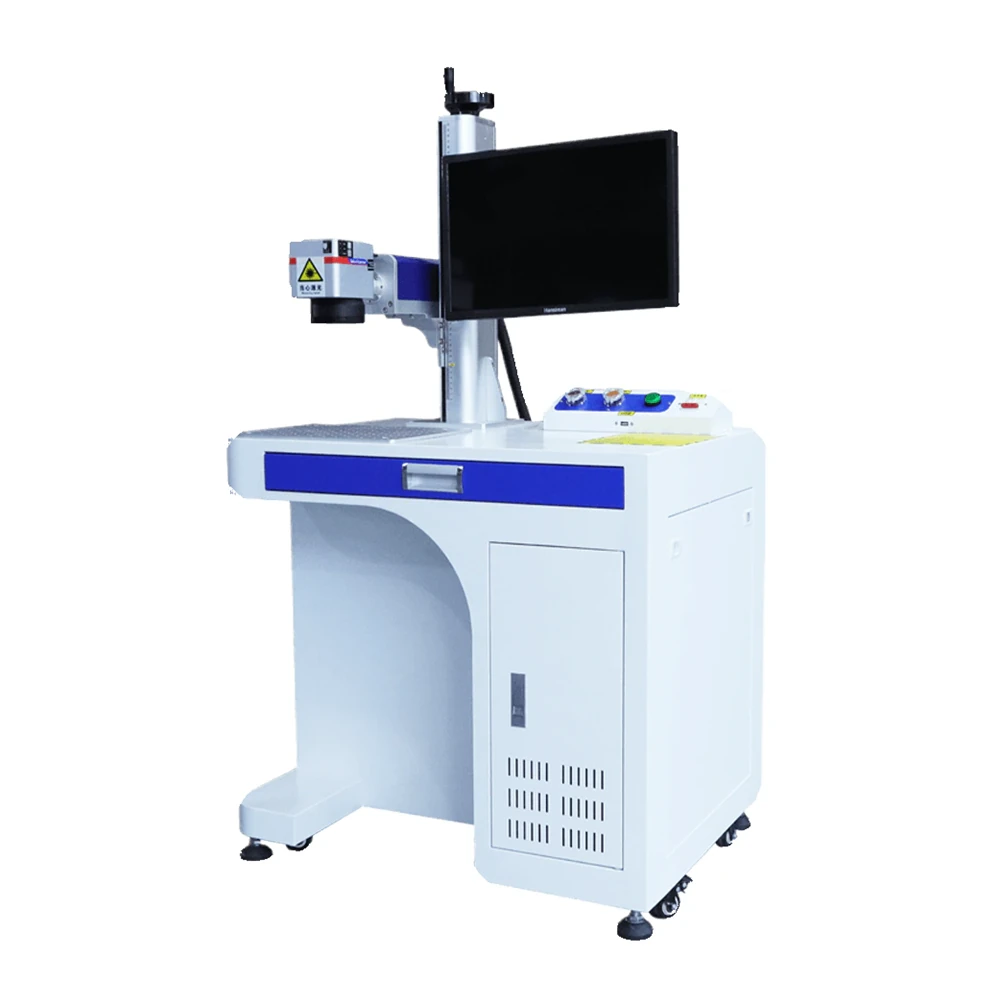
Desktop MOPA Laser Marking Machine
Adjustable pulse width for colour marking on stainless steel and high-contrast marks on anodised aluminium.
View modelA 355 nm ultraviolet source breaks chemical bonds instead of heating the surface, so delicate plastics, glass, ceramics and wafers take a permanent mark without melting, burring or distorting. Water-cooled, enclosed and built for continuous production.
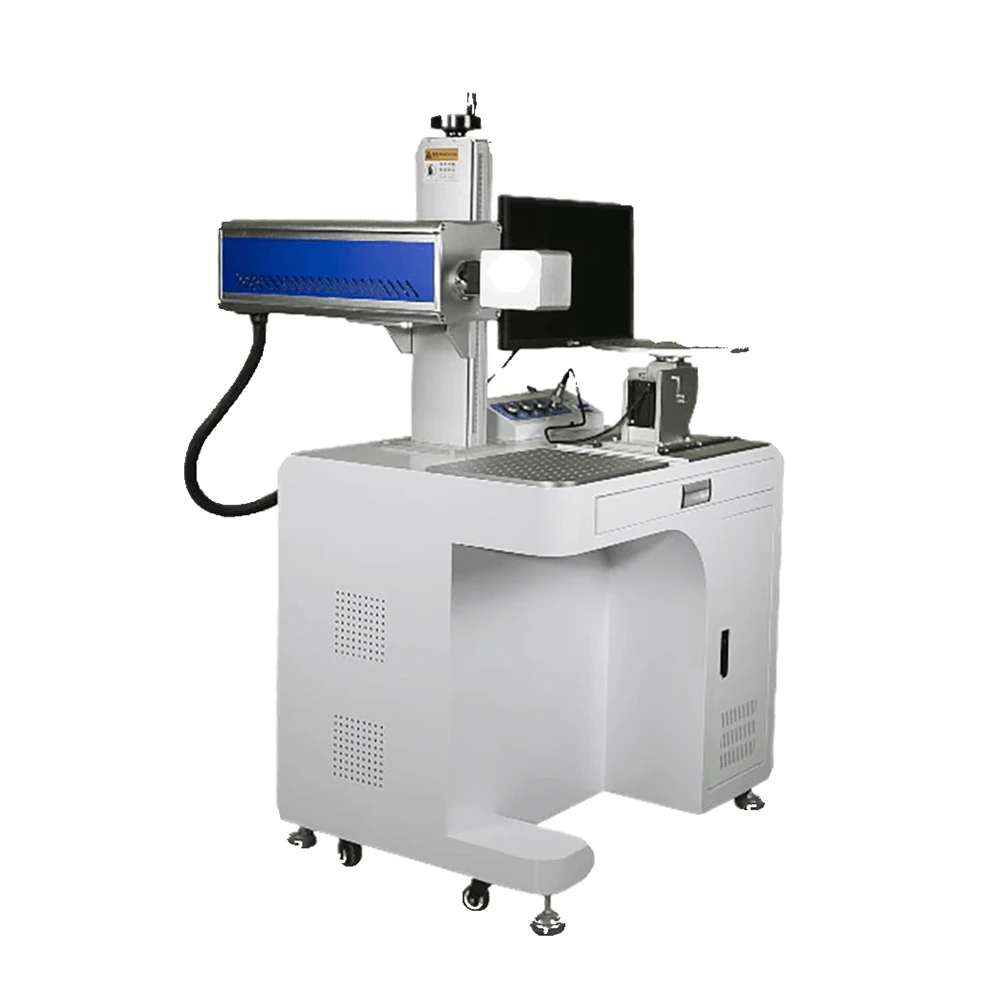
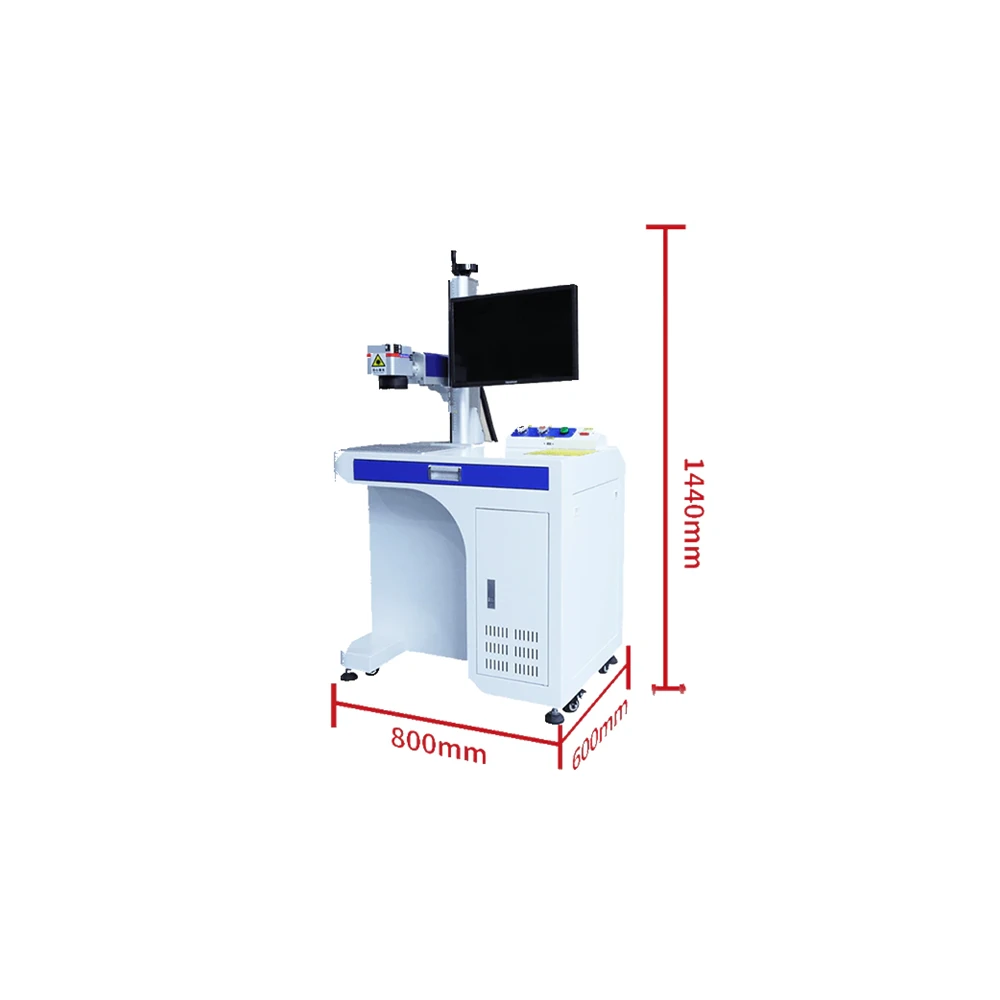
Infrared lasers mark by heating a surface until it oxidises or vaporises. A 355 nm ultraviolet beam works differently: its short wavelength carries photon energy high enough to break the chemical bonds of the material directly, so the mark forms without a heat input that would distort the part.
The ultraviolet beam is invisible and the optical path is short, so the machine is built as a closed unit rather than an open marking head on a bench.
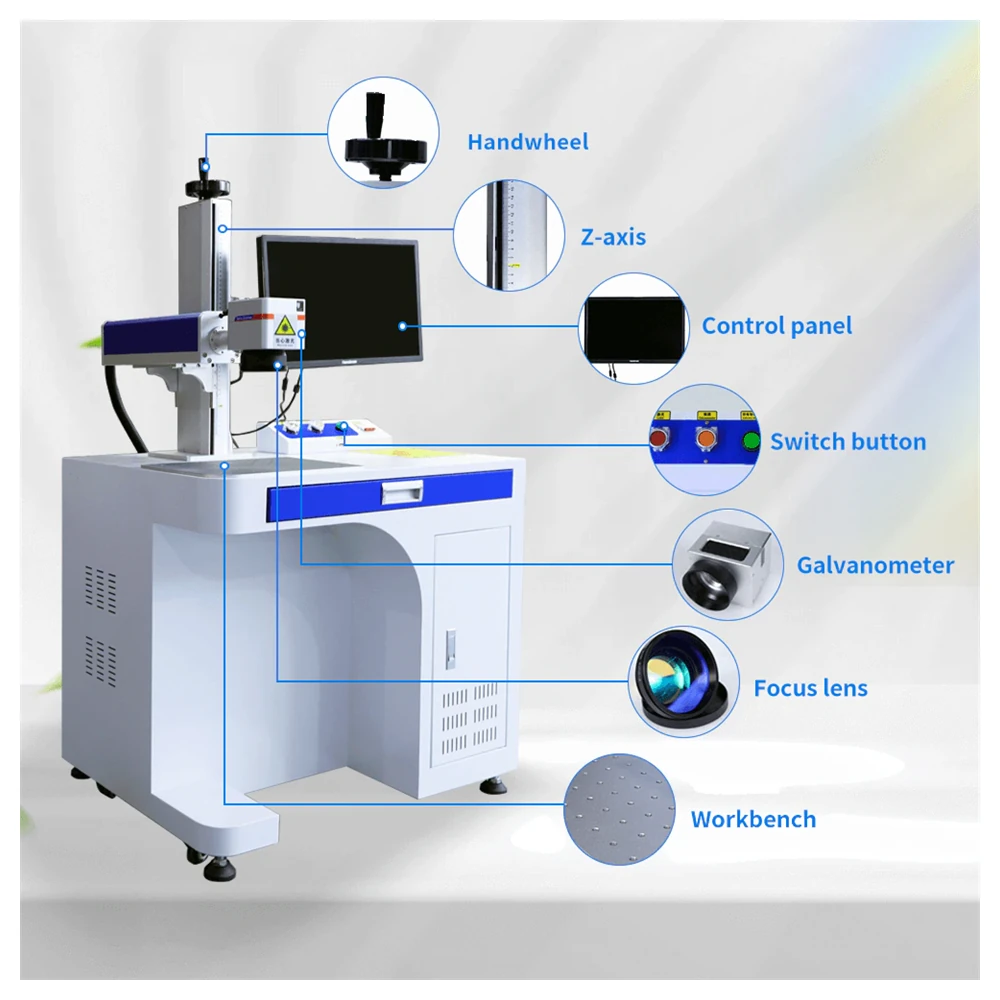
The part is loaded through the front of the cabinet. Once the door is shut, the entire optical path from the scanner down to the workpiece sits inside the housing.
A filtered viewing window lets the operator watch the mark form in real time without exposure, which makes first-article inspection a part of the cycle instead of a separate step.
Emission stops when the chamber is open, so the workstation does not need a separate dark room, curtain or dedicated laser cell on the shop floor.
The same part, marked two ways. This is the table we use when a customer asks whether an infrared laser would have been good enough.
| Behaviour | UV 355 nm cold marking | Thermal infrared marking |
|---|---|---|
| Interaction with the material | Photochemical bond breaking at the surface | Photothermal melting, oxidation or vaporisation |
| Heat affected zone | Minimal to none | Visible on thin sections |
| Risk to thin or clear plastics | Low | High — warping and charring likely |
| Typical mark appearance | Smooth, matte, high contrast | Dark oxidation or a removed layer |
| Glass and ceramics | Fine surface marks without micro-cracks | Stressed marks with a risk of chipping |
| Best-fit substrates | ABS, PE, PC, PVC, glass, ceramics, silicon wafers | Steel, aluminium, brass, coated metals |
Datasheet note: the 3W, 5W and 10W ultraviolet configurations are listed as KR-MOPA3D, KR-MOPA5D and KR-MOPA10D. The model code follows the platform family, and the fitted source is a 355 nm JPT UV laser with the parameters shown in the table below.
Optics, scanner and mechanics are shared across the range. The output power is what changes.
| Parameter | KR-MOPA3D | KR-MOPA5D | KR-MOPA10D |
|---|---|---|---|
| Output Power | 3W | 5W | 10W |
| Laser Source | JPT | JPT | JPT |
| Wavelength | 355 nm | 355 nm | 355 nm |
| Repetition Rate | 20 kHz – 150 kHz | ||
| Marking Area | 110 × 110 mm | ||
| Beam Quality | M² ≤ 1.2 | ||
| Beam Diameter | 0.55 ± 0.15 mm | ||
| Supply Voltage | DC 12V | ||
| Cooling Method | Water-cooled with industrial chiller | ||
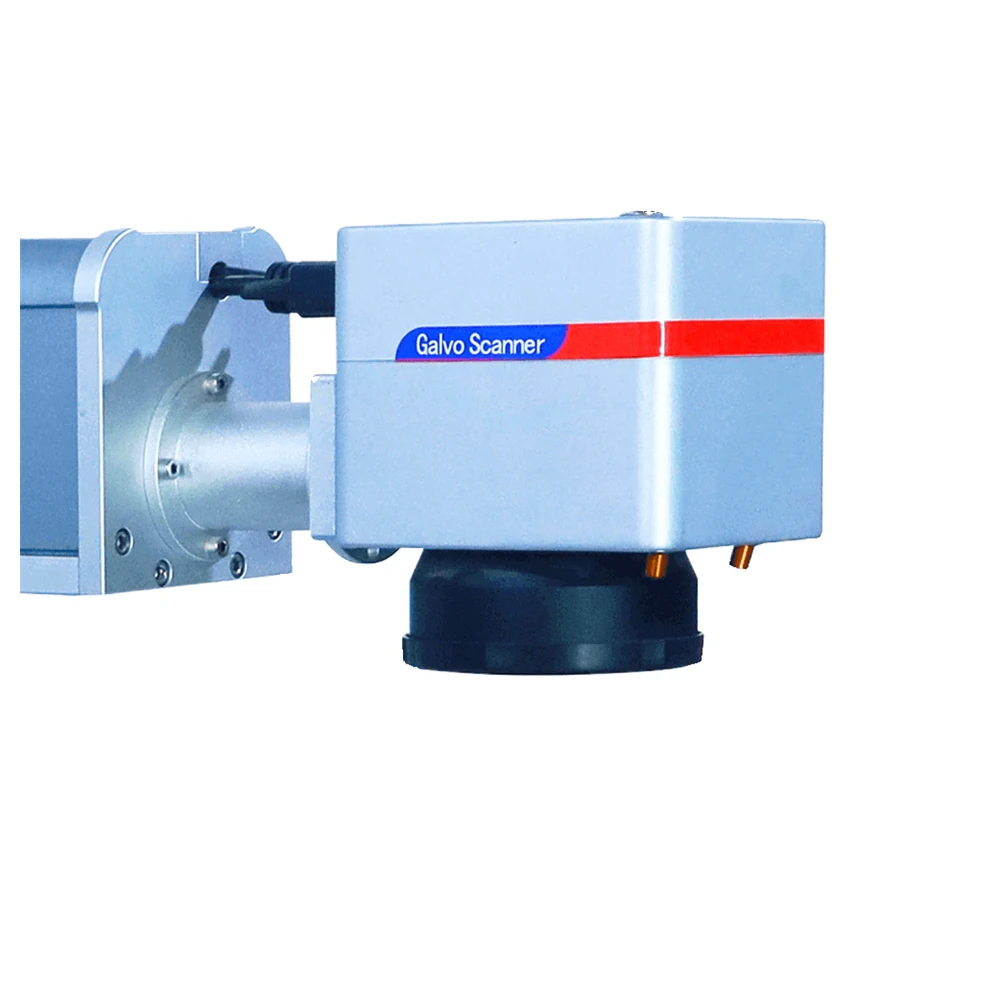
| Galvanometer | Sino-galvo RC1001 | ||
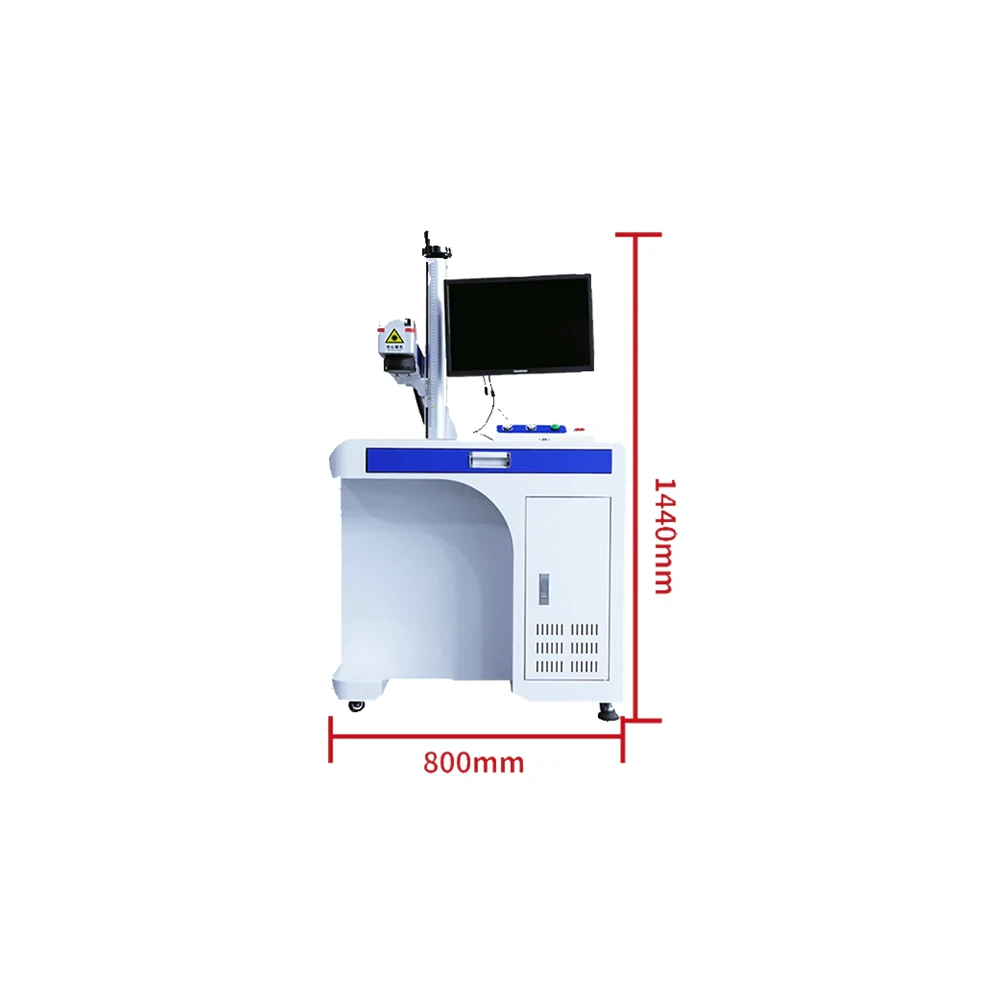
| Machine Dimensions | 890 × 775 × 1430 mm | ||
Lens sets, rotary axis and custom fixtures are specified per order. Send the substrate and the mark you need and we will confirm the configuration, then ship the machine with the parameter file already tested.
Where an infrared laser has to be de-tuned to avoid damage, a UV source simply starts with more headroom.
ABS, PE, PC and PVC take a clean matte mark. Contrast is set by the repetition rate, so a white grade and a black grade can be tuned separately.
Frosted, crack-free marks on vessels, display stands and technical ceramics. No micro-cracking around the character, which matters on thin wall sections.
Wafer and solar cell marking where micron-level accuracy decides yield. The narrow spot keeps track marks inside the permitted zone.
Stainless, aluminium and gold parts that cannot tolerate a heat tint or a raised recast layer still take a readable, permanent code.
Layer-selective marking removes only the coating, exposing the substrate underneath without attacking a finished cosmetic surface.
Selected organic substrates and fine packaging films mark without burning through, which keeps barrier properties and print quality intact.
Every application below shares one requirement: the mark must survive without the part changing shape, colour or conductivity.
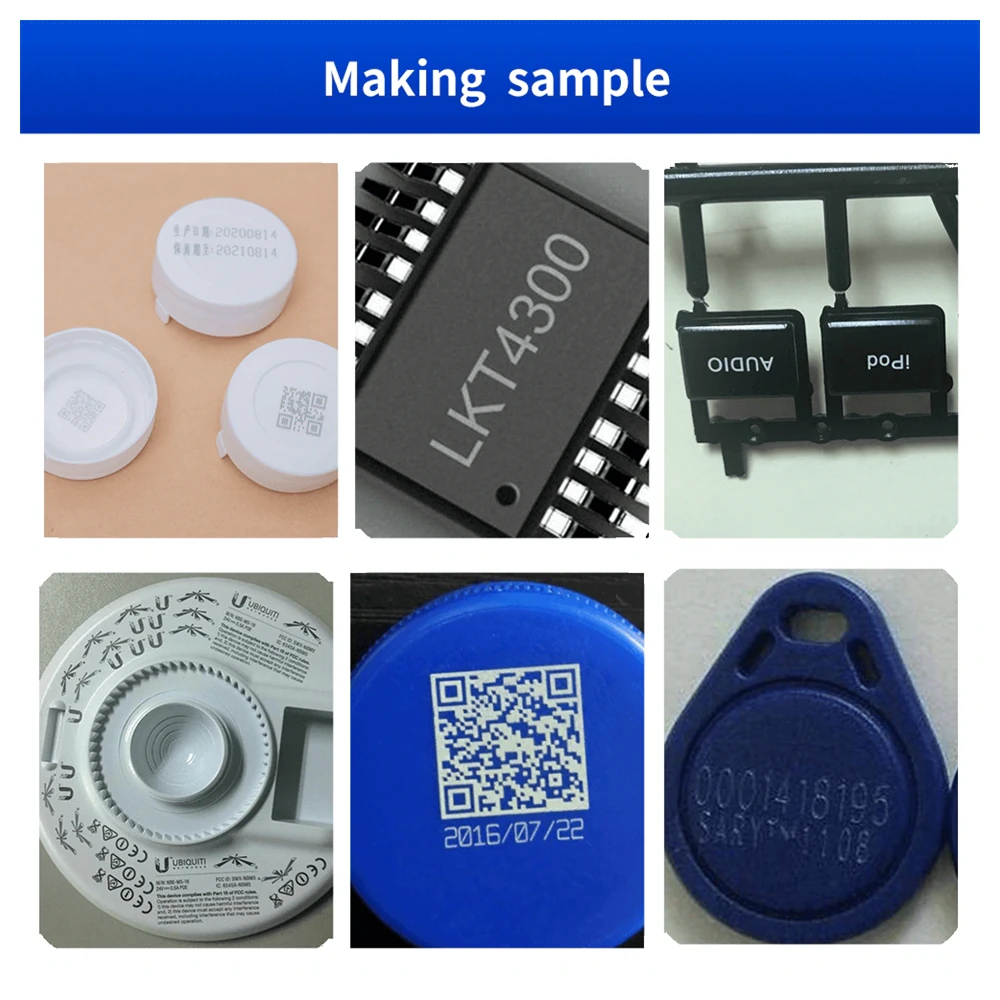
PCB panels, IC packages and connectors marked with barcodes, serial numbers and traceability codes that stay legible at very small character heights.
Permanent, non-toxic marks on instruments and drug packaging, meeting traceability rules without deforming a sterile or sensitive surface.
Identification numbers on durable parts and fine decorative detailing on trim, both specified because the mark has to outlast the vehicle.
Glass and plastic containers branded with crisp, long-lasting marks that support anti-counterfeiting programmes and protect brand presentation.
Shelf life dates, batch numbers and lot codes applied without contact, so the barrier film stays intact and the information stays readable.
Cell and wafer marking and scribing where a micron of deviation changes the grade, carried out with the narrow beam and tight repeatability of the RC1001 scanner.
The cabinet arrives assembled and tested. Only the chiller hoses and the fixture plate need fitting on site.
Fill and connect the water chiller, plug into 110V or 220V single-phase mains and switch the cabinet on with the single-key power control.
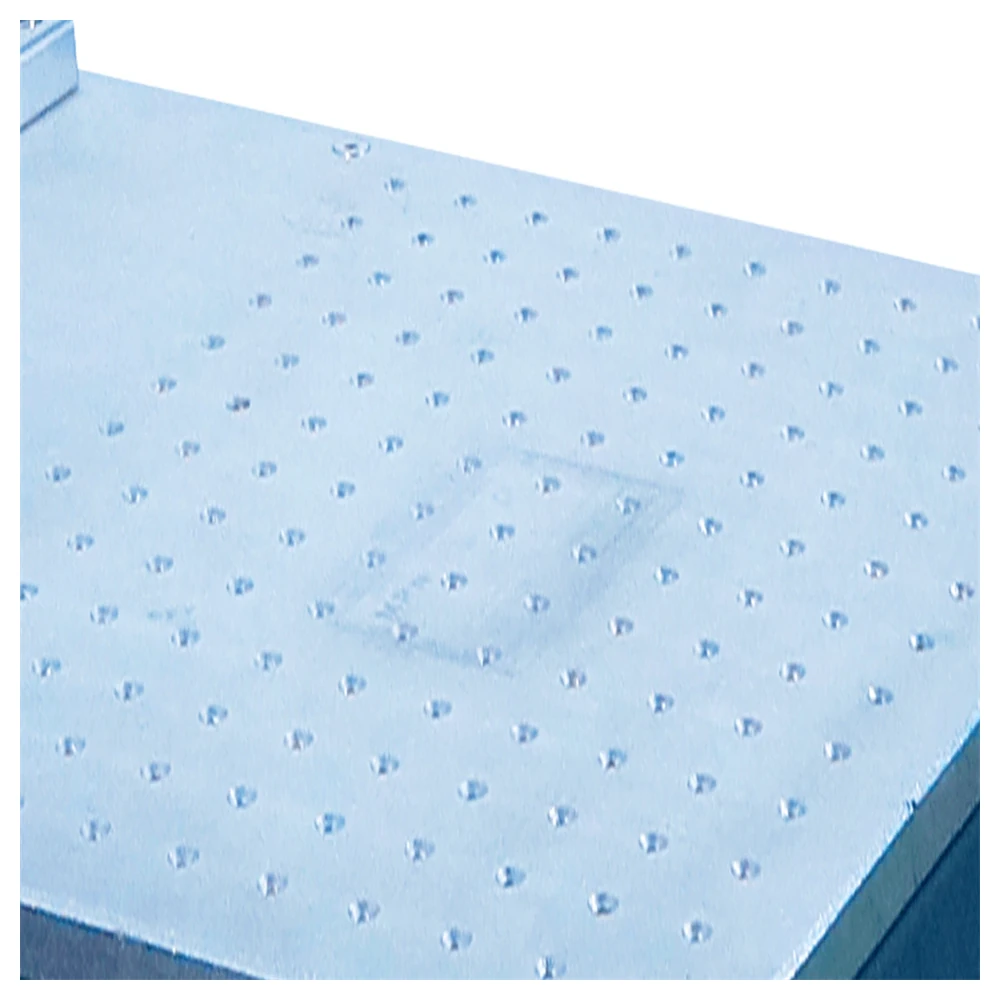
Locate the part on the aluminium workbench using the adjustable clamps and fixture holes, so repeated loads sit in the same position.
Enter power, repetition rate and marking area in the software interface, load the graphic or code and preview it inside the 110 mm field.
Close the enclosure and start from the console. Compare contrast against the approved sample, then clean the protective window at the end of the shift.
What ships with the machine, and what happens after it lands.
Supplied as standard. It holds the UV source at a stable temperature through long shifts, which protects the optics and keeps contrast from drifting.
Two years of cover with free replacement parts for any failure in the period, plus lifetime engineering support by email, WhatsApp and remote session.
Air express with DHL, FedEx, TNT or UPS for single units, and air or sea freight for larger quantities. Tracking is shared as soon as the crate leaves.
T/T bank transfer, PayPal and Western Union are accepted. Volume terms are agreed per order. Incoterms and documentation are confirmed before production starts.
Plastics such as ABS, PE and PC, metals, glass, ceramics and silicon wafers are all supported. The 355 nm source is at its best on parts that need fine, high-detail marking, including medical devices, electronic components and automotive parts.
The 355 nm beam works as a cold marking process. Its short wavelength carries high photon energy that breaks chemical bonds in the material directly, so marking happens with minimal heat input. There is no melting, no burr and no measurable heat affected zone, which is why smooth plastics and thin glass keep their original properties.
Yes. Every UV configuration ships with an industrial water chiller that holds a stable working temperature during long runs, protects the internal optics from thermal stress and keeps marking quality consistent.
The platform is built for long unattended production and the laser source is rated for a service life of up to 100,000 hours. There are no consumables to replace, so maintenance is limited to routine cleaning and chiller care.
The marking unit is fed at DC 12V and the configuration runs on 110V or 220V, 50/60 Hz single-phase mains. Voltage and plug type are confirmed for your region before the machine is shipped.
Machines ship by air express with DHL, FedEx, TNT or UPS, or by air and sea freight for larger quantities. Every unit carries a 2-year warranty with free replacement parts, plus English online support and remote assistance.
If the substrate is not heat sensitive, a fiber or MOPA platform will often mark faster and deeper for the same job.
Adjustable pulse width for colour marking on stainless steel and high-contrast marks on anodised aluminium.
View model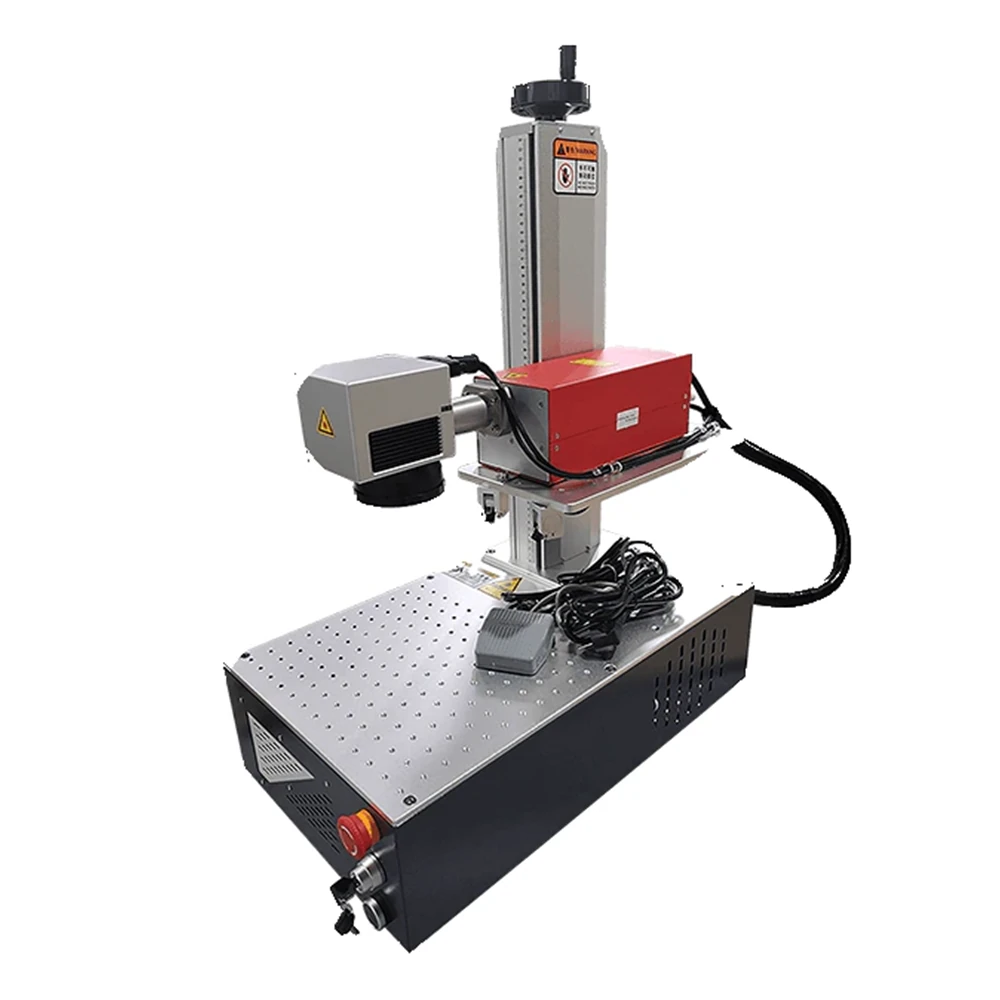
The same 355 nm cold marking process in a single portable body with the chiller built into the case.
View model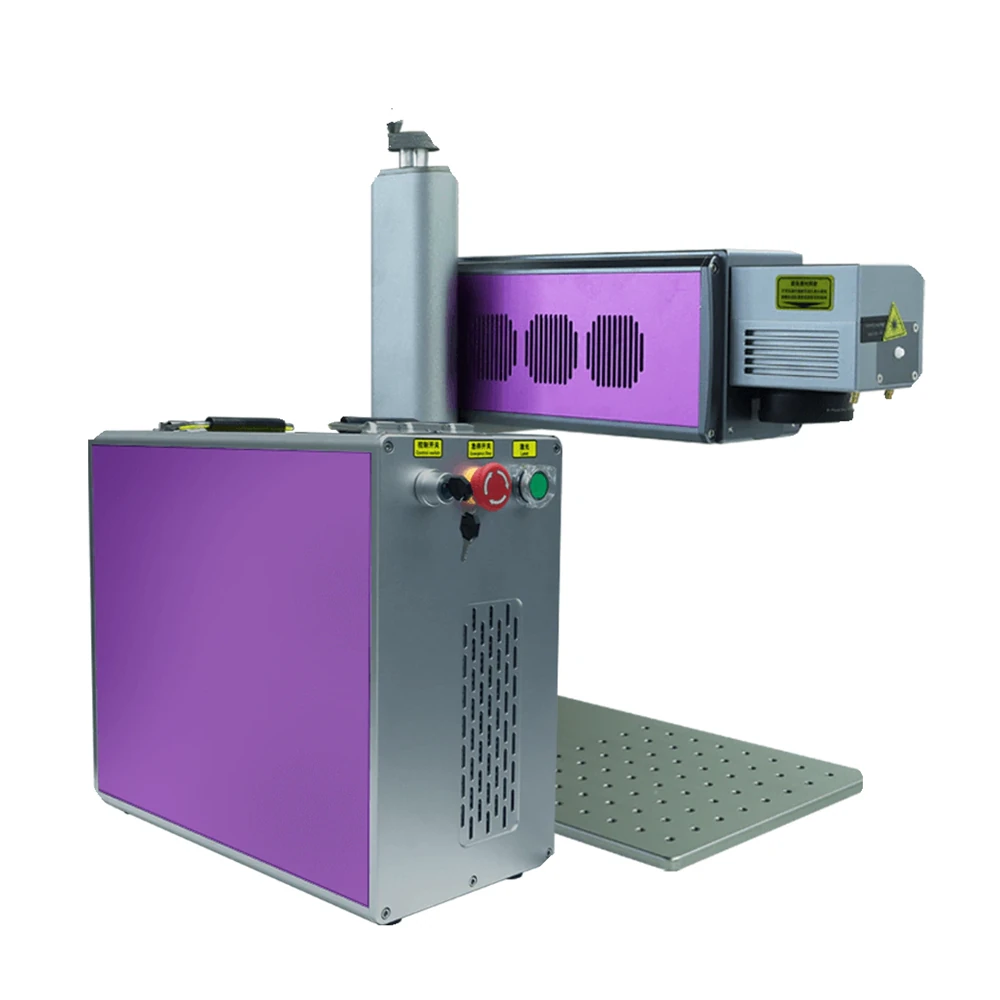
UV cold marking with the head separated from the cabinet, for integration over a conveyor or inside a glovebox.
View model