100W 2-in-1 Cleaning & Marking System
Clean a weld seam and mark the serial number with one air-cooled unit — switch between cleaning and marking mode on the touchscreen.
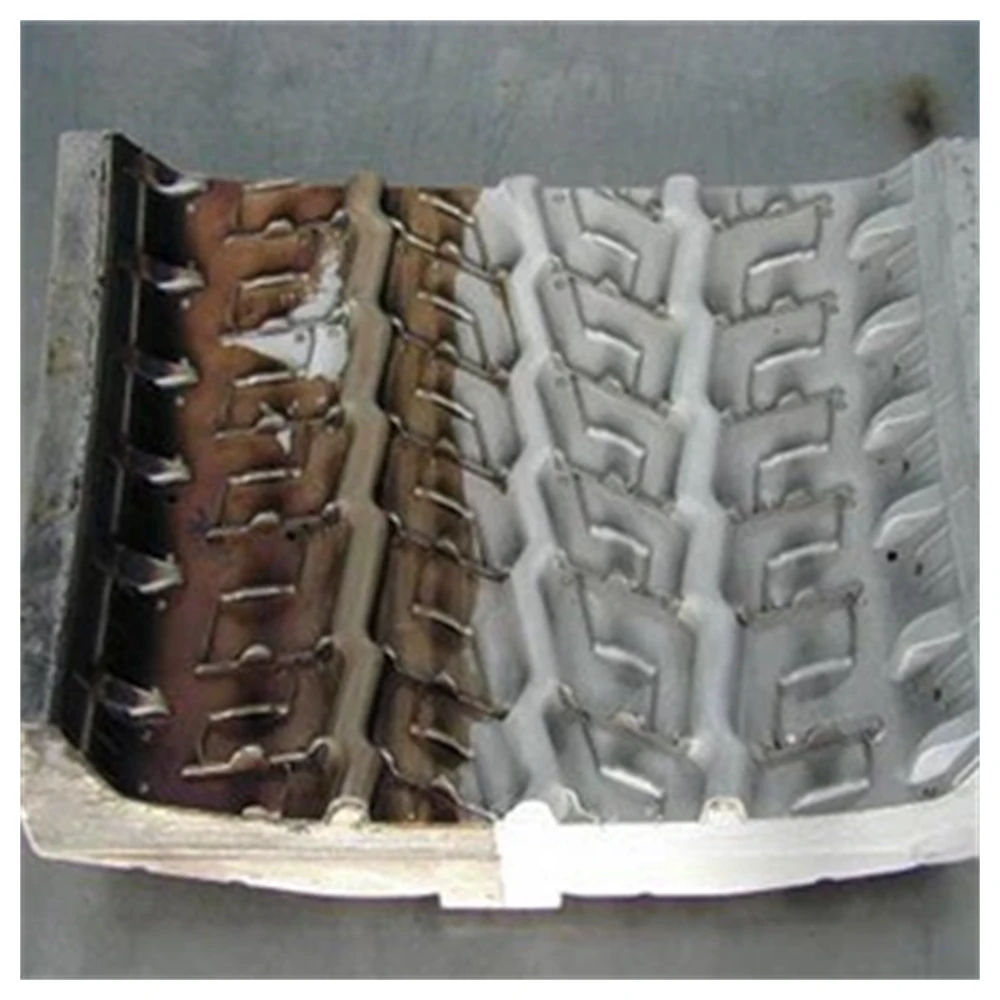
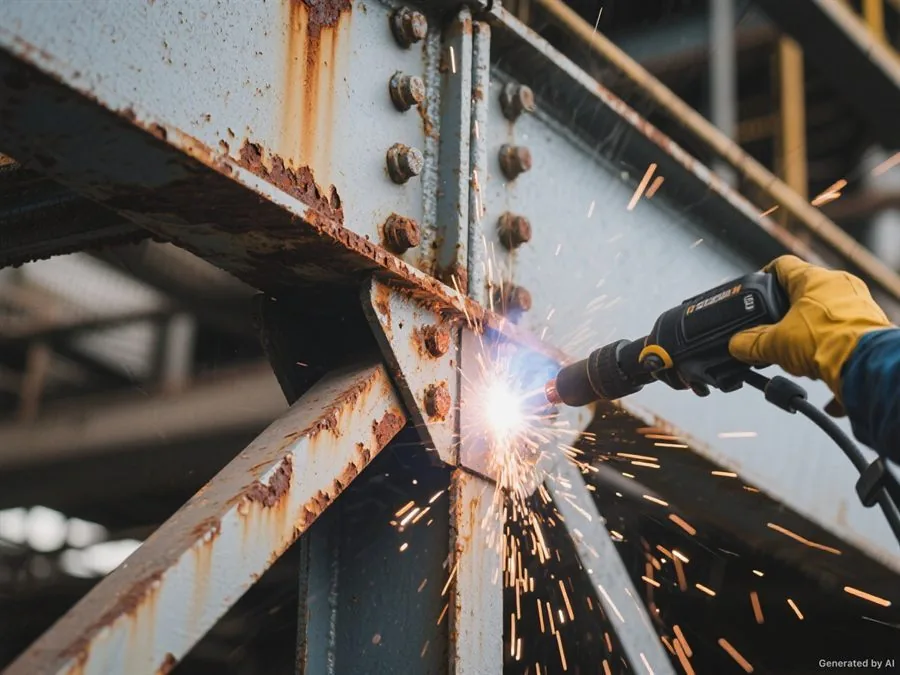
View detailsStrip rust, paint, oxide, mill scale and oil film from metal without a single abrasive or chemical. A focused laser beam is absorbed by the contamination layer and lifts it away while the substrate underneath stays cool, dimensionally accurate and ready for welding, coating or inspection. Nine systems run from a 100W wearable unit to a 6000W continuous station, so the same process scales from a repair bench to a shipyard.
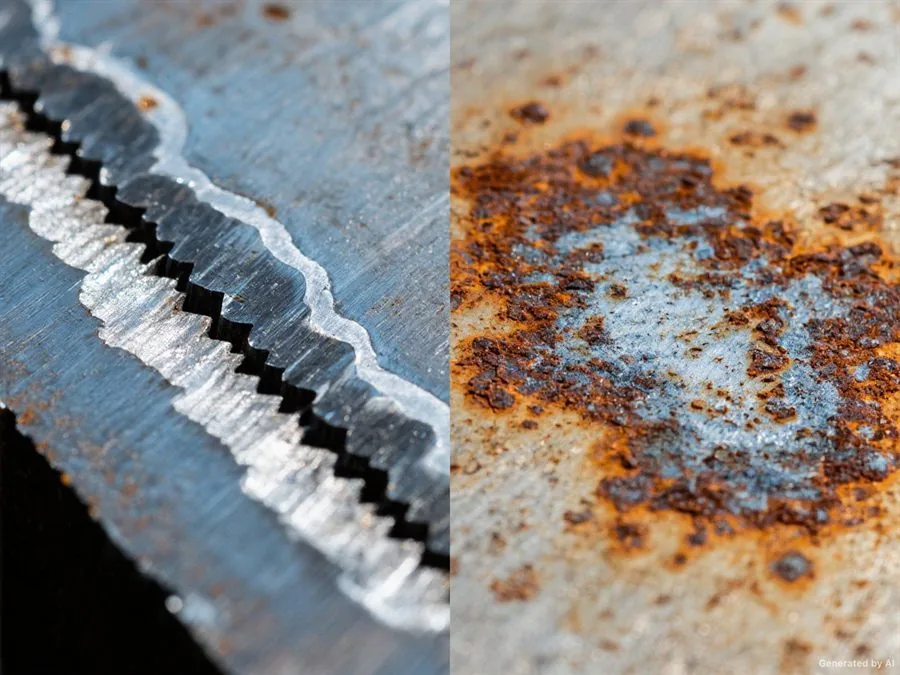
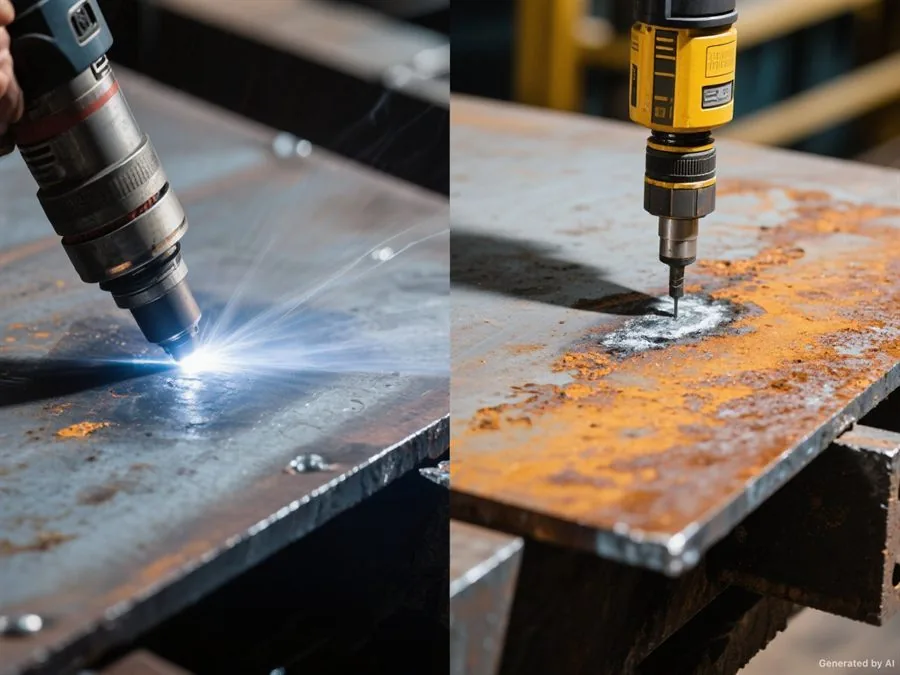
Grit, acid and wire brushes all remove base material along with the contamination. A laser removes only what absorbs its wavelength, which is exactly the property that separates rust, paint and oxide from sound metal underneath.
Power, pulse length, scan pattern and cooling are the four variables that decide whether a machine cleans a weld seam or a ship hull well.
Rust, oxide and paint absorb the beam far more strongly than polished metal, so energy turns them into vapor and fine dust instead of grinding them off.
Nanosecond pulses vaporize contamination before heat conducts into the base metal, which keeps the heat-affected zone close to zero.
Removal rate scales with average power, so 100W suits spot cleaning and 6000W continuous is reserved for large painted or corroded areas.
Air-cooled heads keep portable units light; water-cooled heads hold frequency and output stable through long, uninterrupted shifts.
Listed from the lightest handheld unit to the largest continuous system. Every machine below uses the same non-contact cleaning principle.
Clean a weld seam and mark the serial number with one air-cooled unit — switch between cleaning and marking mode on the touchscreen.
View details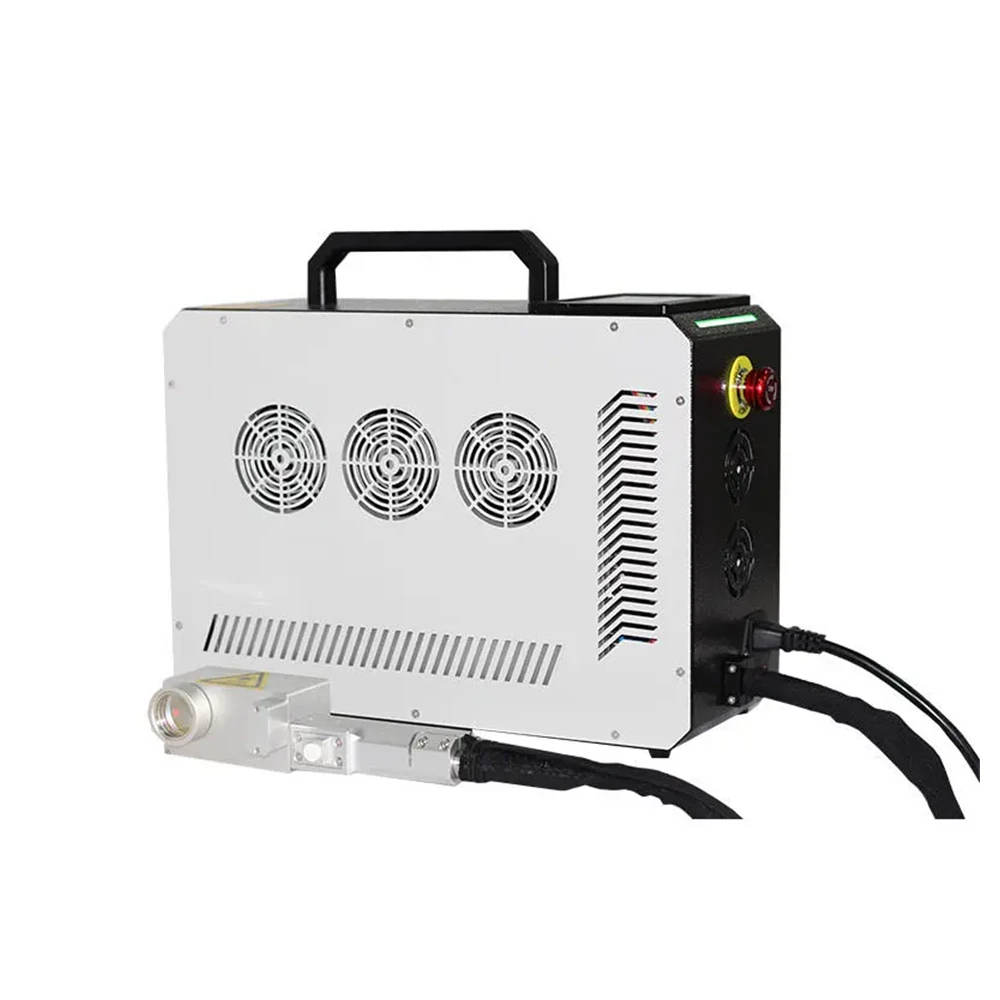
Wearable MOPA system for scaffolding, towers and confined spaces that no trolley can reach, with an optional battery for off-grid work.
View details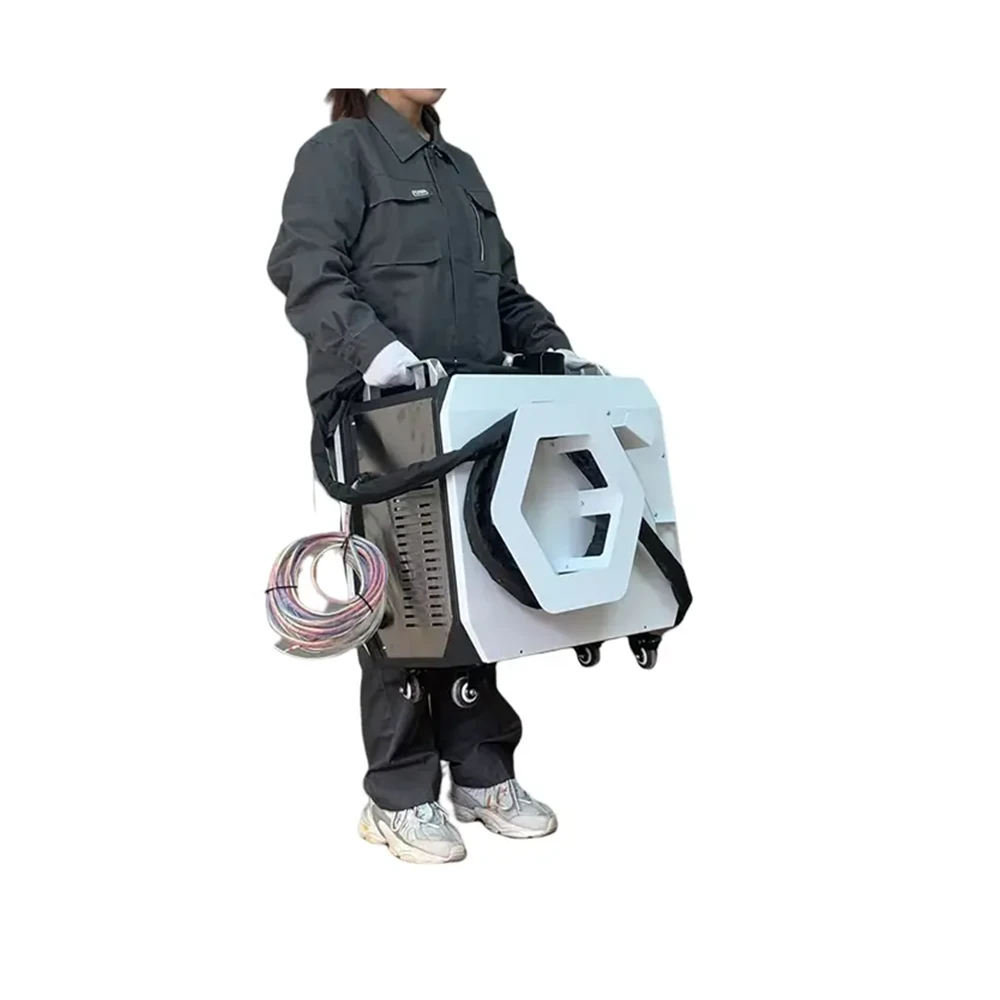
All-in-one unit in a rugged case: wheel it in, plug it in and start cleaning resin, oil, rust and coatings with no water or chemistry.
View details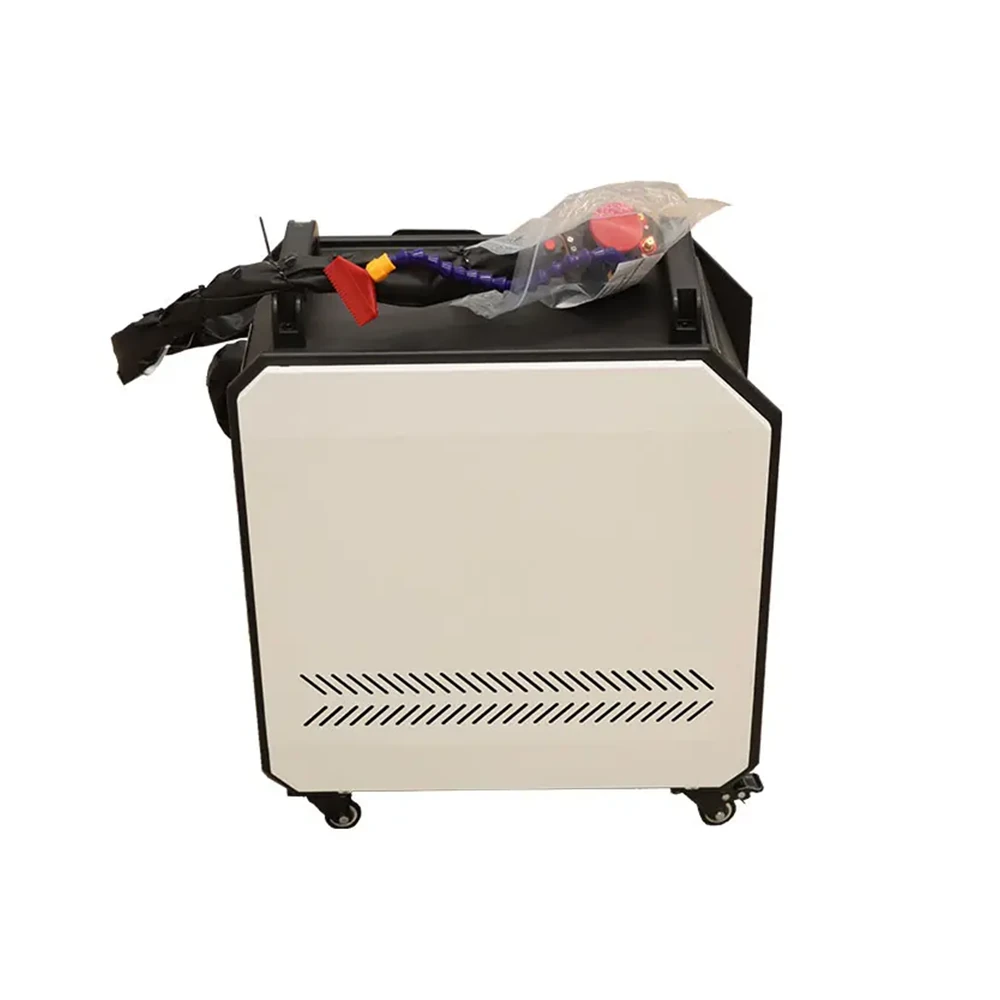
Retractable-handle case that a single technician carries and rolls, with MOPA precision and eight cleaning paths for field service.
View details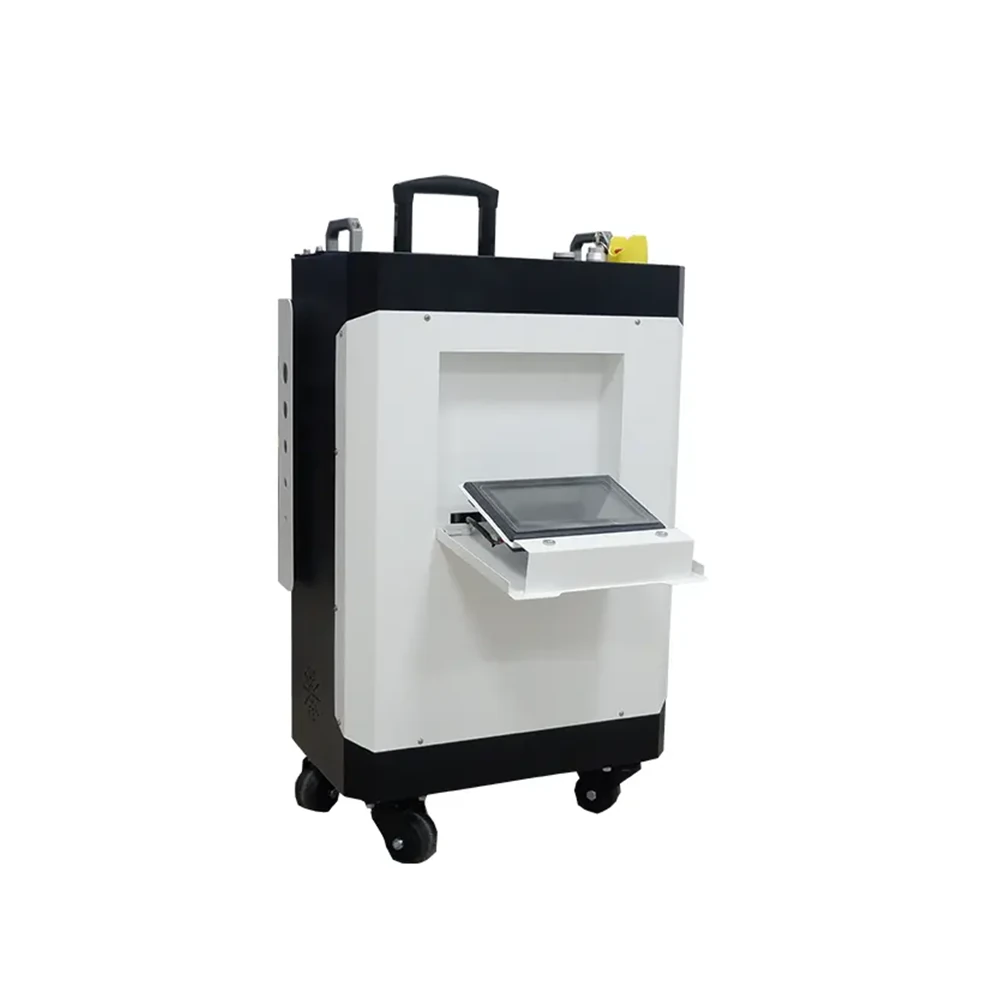
A 0.85 kg pull-rod gun reaches inside pipes, dies and flanges, with five scan patterns and integrated fume extraction.
View details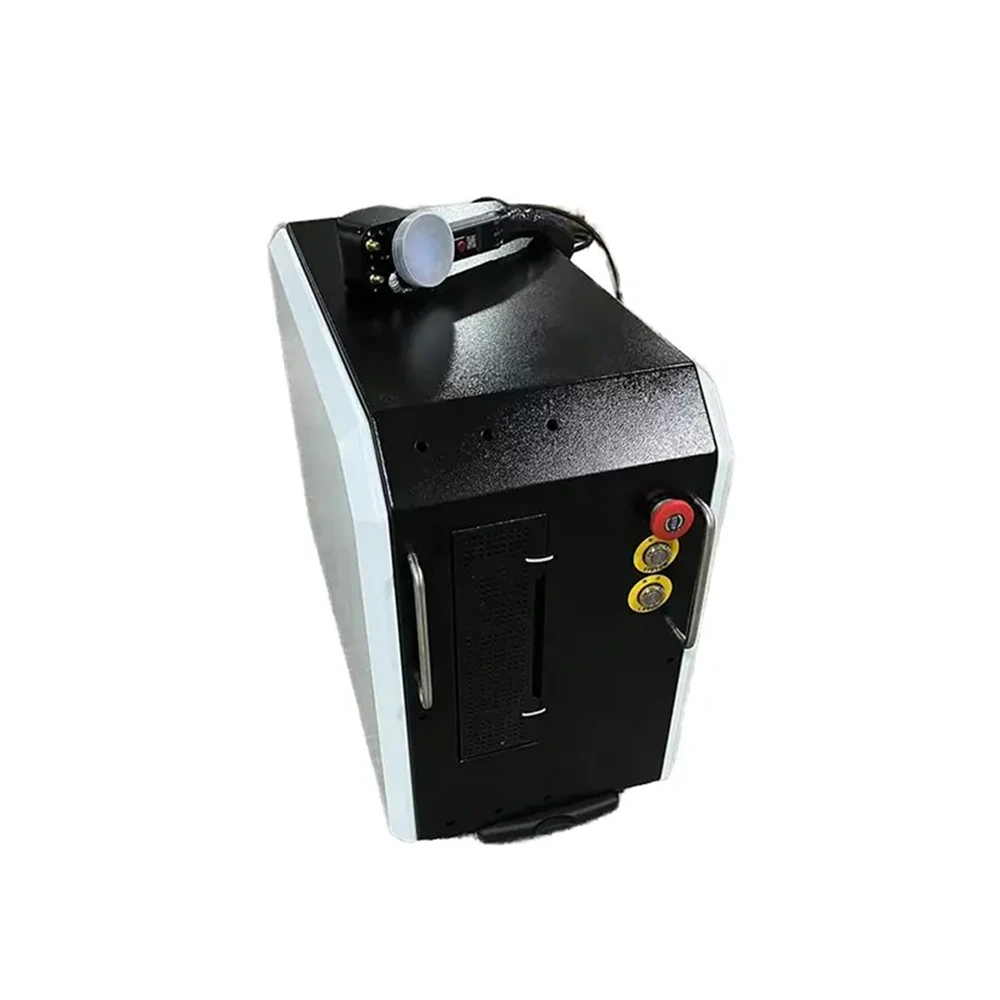
Motorized dual-axis head and eight scan modes for furniture, curved panels and mold cavities, with no zebra striping.
View details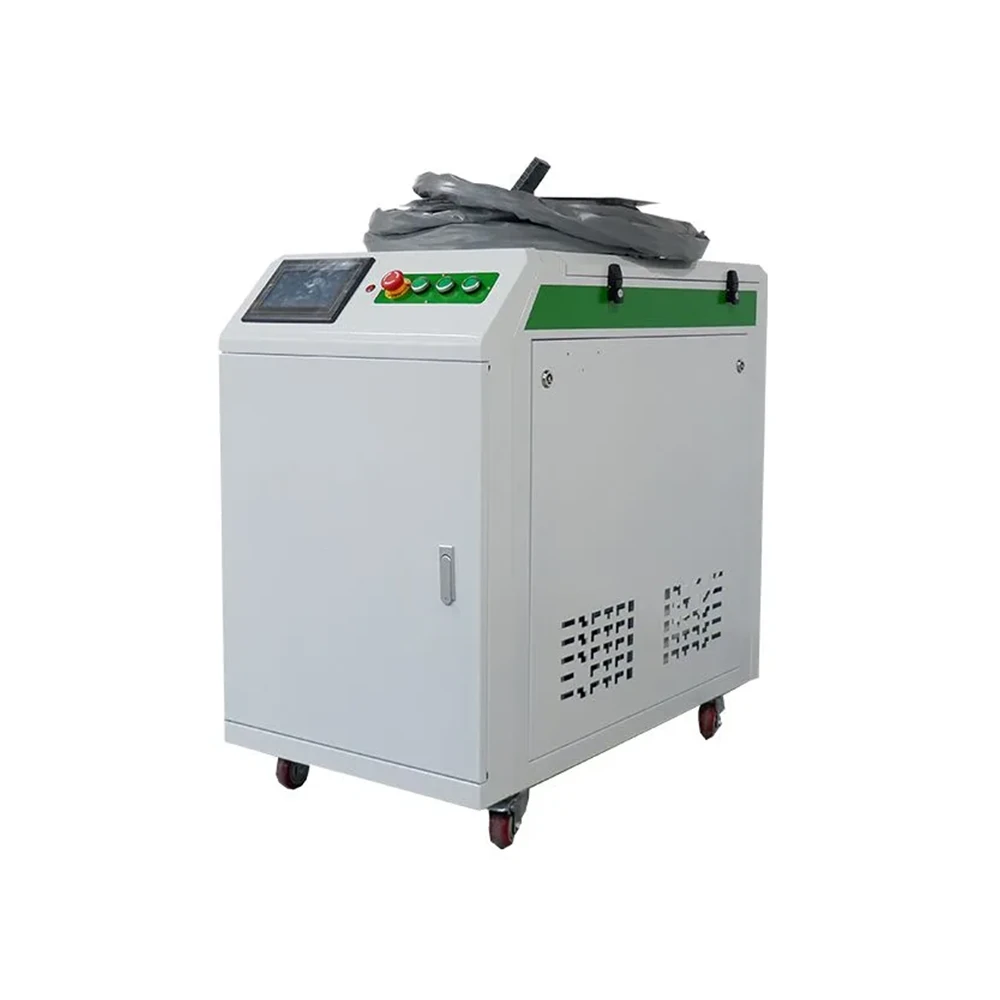
Integrated industrial chiller holds frequency stable all shift, cleaning to Sa3.0 with substrate loss below 0.0005 mm.
View details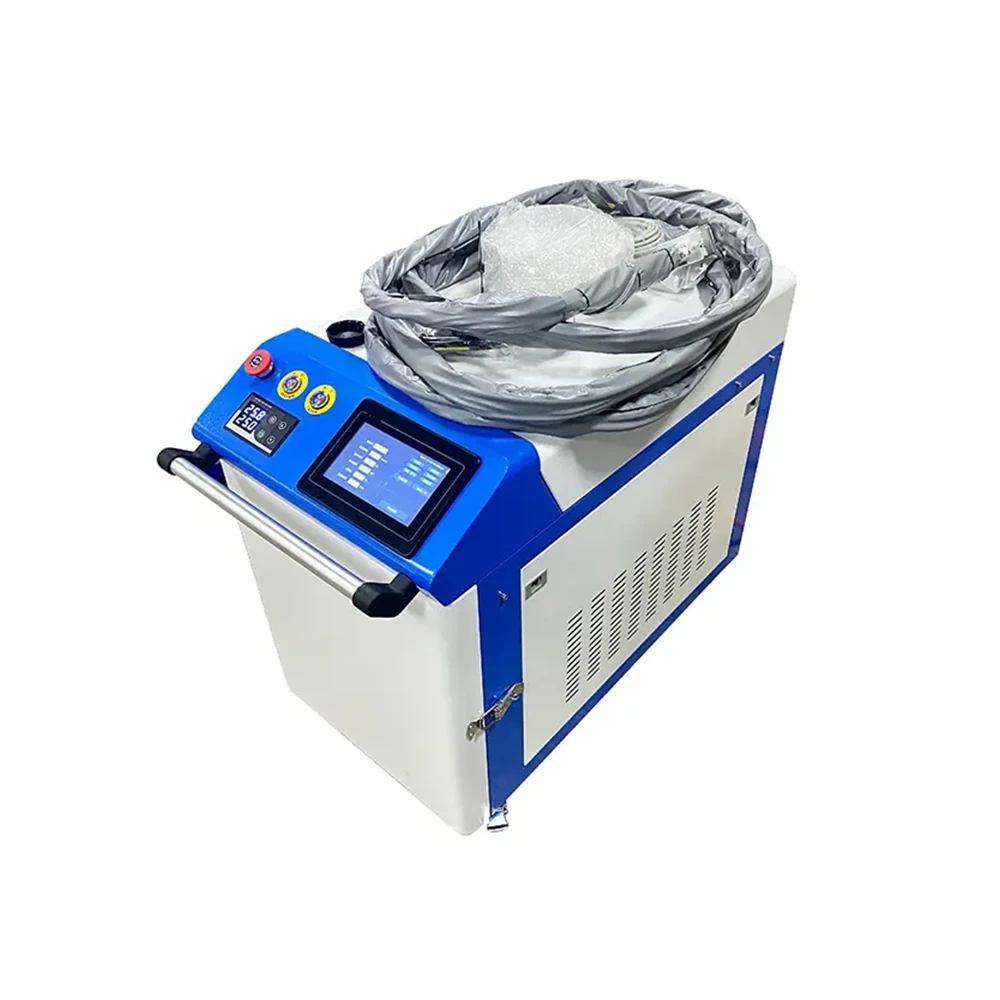
Water-cooled 1500W to 3000W platform with a 300 mm beam that strips heavy rust, paint and grease at up to 50 m²/h.
View details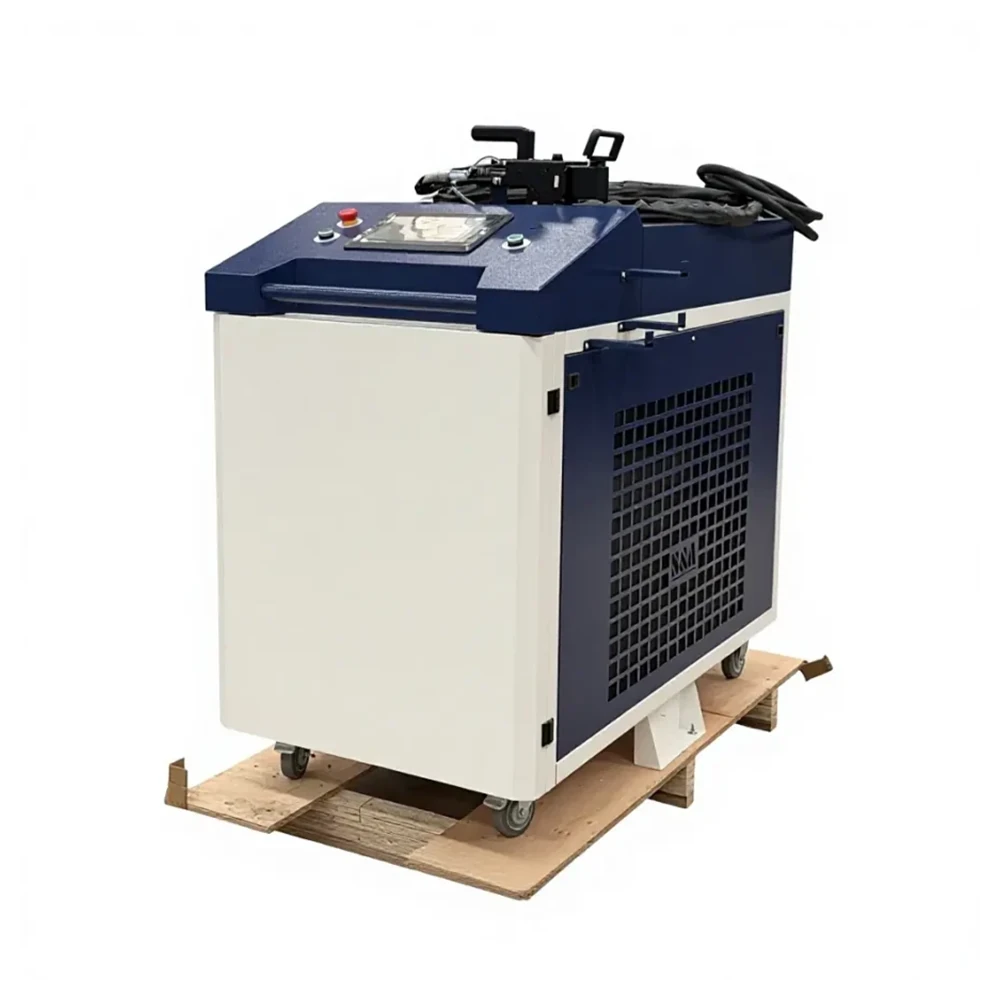
100% duty-cycle continuous-wave station for ship hulls, tanks and heavy steel, with HEPA and carbon fume filtration built in.
View detailsEvery figure is taken from the machine datasheet. Scroll the table sideways to compare cooling, portability and working range.
| Parameter | 2-in-1 100W | Backpack | Suitcase 300W | Trolley Case | Pull-Rod | Dual-Axis | Water-Cooled | 3000W | 6000W CW |
|---|---|---|---|---|---|---|---|---|---|
| Laser Type | Pulsed fiber | MOPA pulsed | Pulsed fiber | MOPA pulsed | JPT pulsed | MOPA pulsed | Pulsed fiber | Continuous wave | Continuous wave |
| Power Range | 100–110W | 100–200W | 100–300W | 100–300W | 100–500W | 100–500W | 500–1000W | 1500–3000W | 6000W |
| Wavelength | 1064 ± 3 nm | 1064 nm | 1064 nm | 1064 nm | 1064 nm | 1064 nm | 1064 nm | 1064–1080 nm | 1064–1080 nm |
| Cleaning Width | 100 × 100 mm | 10–120 mm | 10–150 mm | 0–150 mm | 10–160 mm | 10–160 mm | 10–200 mm | 0–300 mm | 50–300 mm |
| Cooling | Air | Air | Air | Air | Air | Air | Water chiller | Water chiller | Dual-loop water |
| Fiber Cable | 3 m | 5–10 m | 5–10 m | 5–10 m | 5–10 m | 5–10 m | 5–15 m | 10–20 m | 15–20 m |
| Machine Weight | 21 kg | 12–16 kg | 45 kg | 25–45 kg | From 25 kg | 25–45 kg | 75 kg | 180–260 kg | 650 kg |
| Carry Format | Detachable scan head | Wearable backpack | Wheeled case | Retractable handle | Pull-rod gun | Motorized dual-axis | Mobile cabinet | Water-cooled trolley | Mobile cart & reel |
| Best For | Clean plus mark | Height & access | Fast deployment | Field service | Deep & narrow areas | Curved & fine work | Long precision duty | Heavy rust & paint | Ship hulls & tanks |
Cleaning width depends on the fitted lens and working distance. Removal rate depends on contaminant type and thickness, so we recommend a free cleaning test on your own part before final selection.
Most buyers settle on a configuration after answering these three questions in order.
Light oil film and mold release agent need 100W. Layers of rust and paint need 300W to 500W. Thick corrosion, mill scale and multi-layer marine coatings move to 1500W and above.
Bench work suits a water-cooled cabinet. Large parts on the floor suit a trolley or continuous system. Height, scaffolding and confined spaces point to a backpack or a long-cable handheld unit.
Intermittent spot cleaning is fine on an air-cooled machine. Continuous production shifts call for a water-cooled head, which keeps frequency and output power stable without derating.
The process crosses industries because the problem — a contaminated metal surface — is always the same.
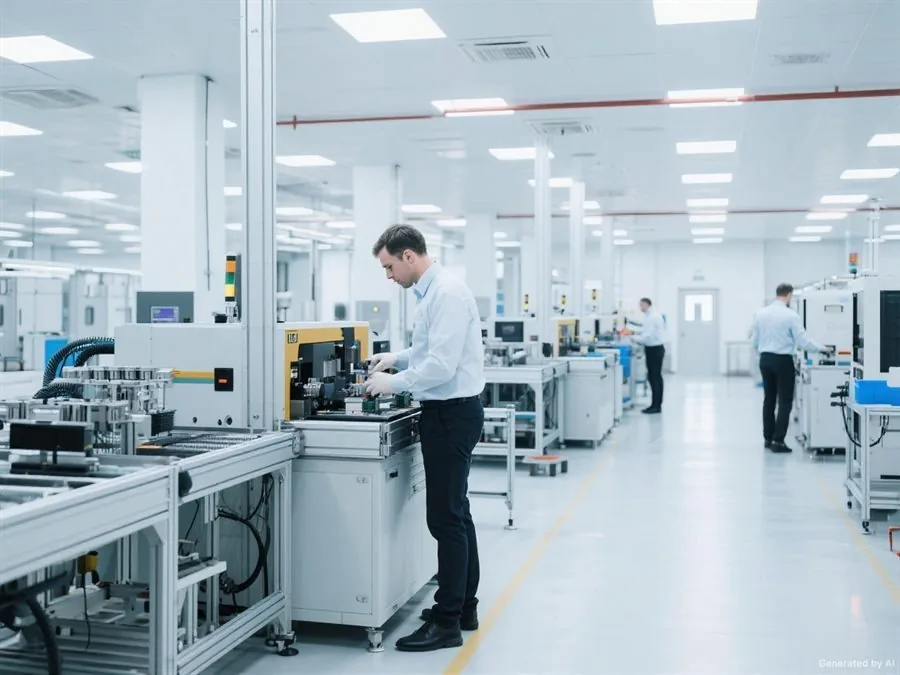
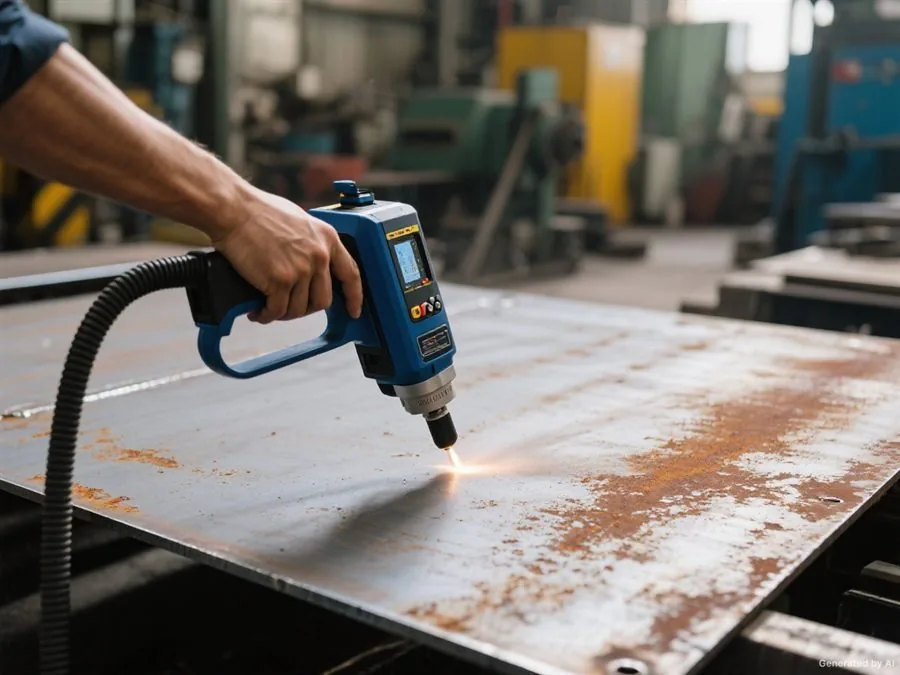
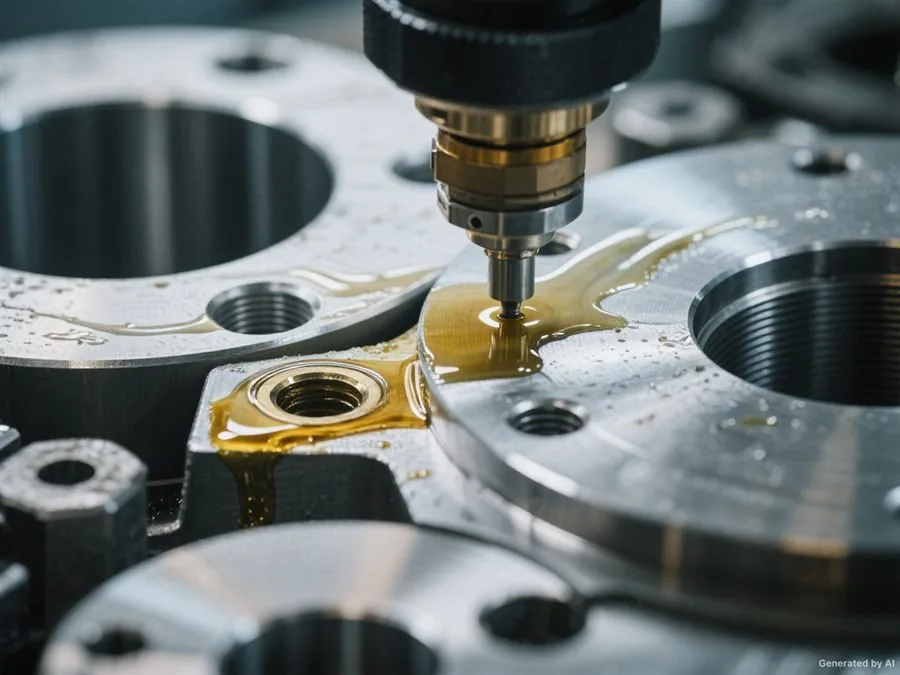
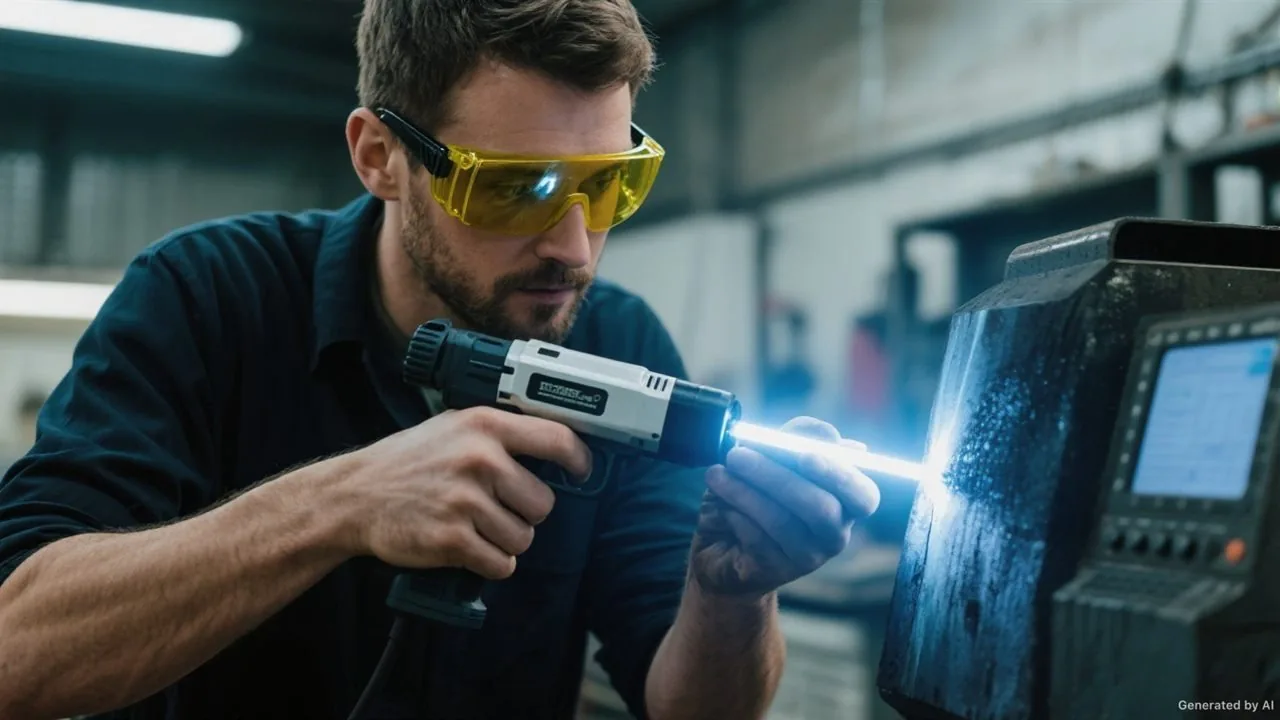
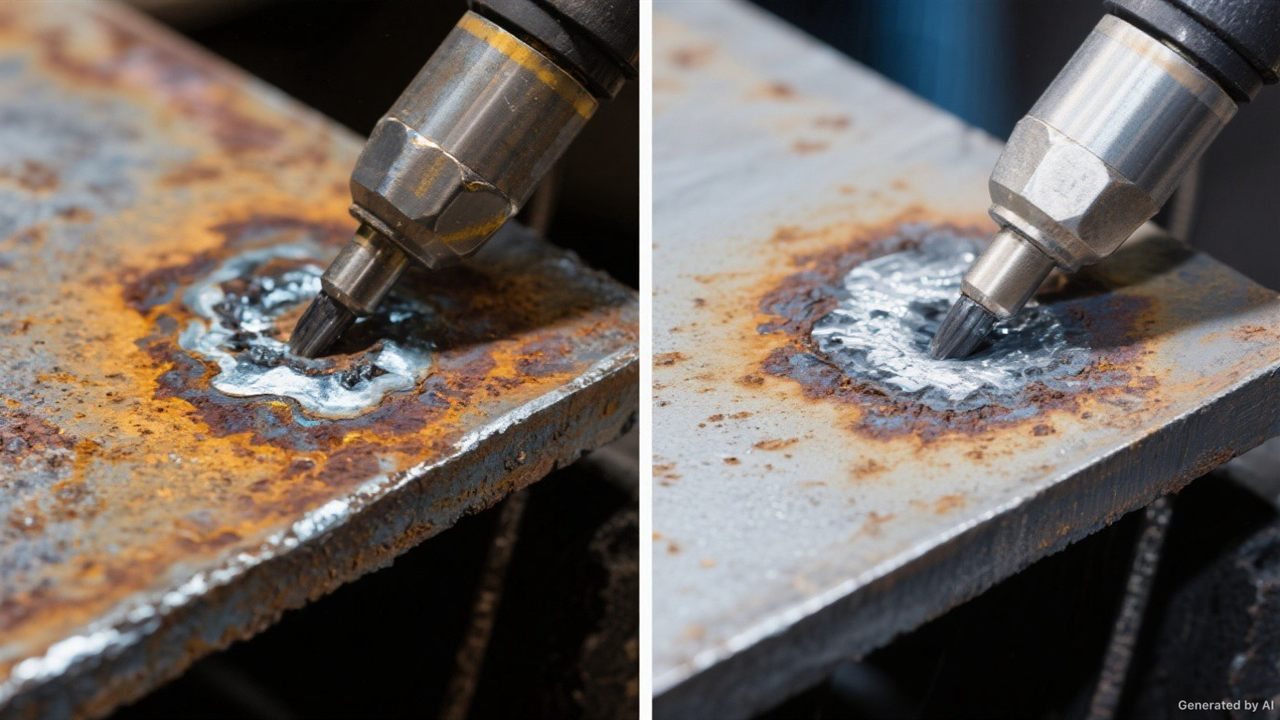
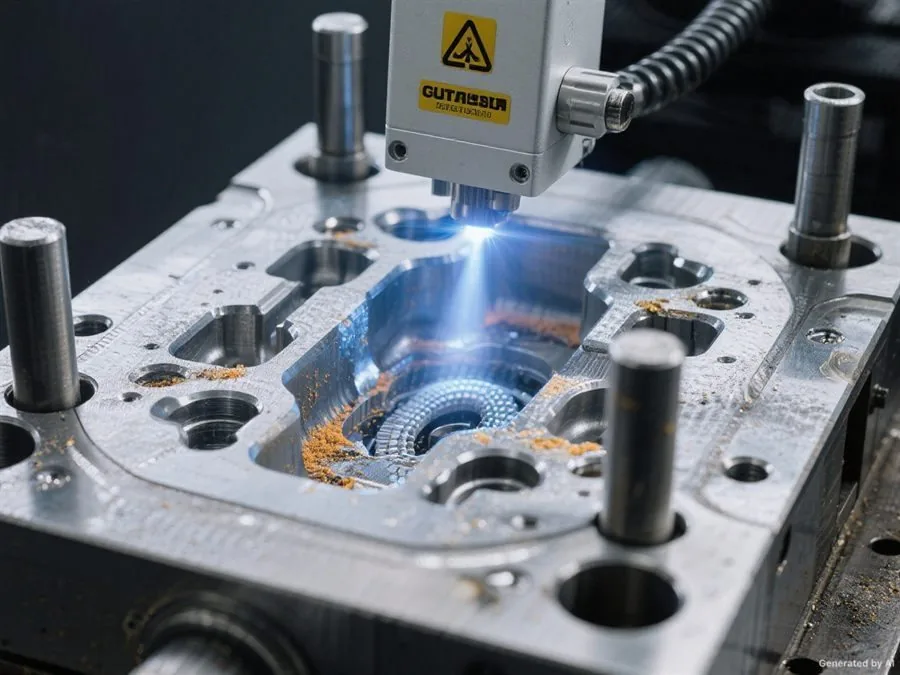
Hull, deck and ballast-tank corrosion removal and coating strip without blasting media reaching the water.
Chassis and panel rust removal, busbar oxide cleaning for battery welding and no-heat paint stripping.
Release agent, rubber residue and burnt polymer removed from cavities without rounding edges or changing dimensions.
Mill scale, rust and oil stripped before coating or welding, with uniform surface preparation across large plates.
Oxide and coating removal from aluminium and superalloy parts with no heat-affected zone and no abrasive embedment.
Varnish, soot and corrosion lifted from bronze, stone and timber without scorching or erasing original detail.
Rust and corrosion, paint and powder coating, oxide and mill scale, oil and grease film, mold release agent, rubber residue, weld discoloration and general surface contamination on metals, ceramics, stone and some composites. The same beam also prepares weld seams and roughens surfaces for bonding.
When the parameters are set correctly the pulsed energy is absorbed by the contamination layer rather than the substrate, so the base metal is not melted, thinned or deformed. That is why the process works on thin sheet, precision molds and polished surfaces where abrasives would cause damage.
100W to 200W suits light rust, oil film and mold cleaning. 300W to 500W handles moderate rust and paint on typical industrial parts. 1000W and above, including continuous-wave systems up to 6000W, is specified for heavy corrosion, thick coatings and large steel structures.
Pulsed lasers release nanosecond bursts of energy that vaporize contamination before heat reaches the substrate, giving virtually no heat-affected zone. Continuous-wave lasers deliver a constant beam for the highest removal rate on thick rust and large areas. The right choice depends on whether substrate safety or throughput is the deciding factor.
Air-cooled units from 100W to 300W are lighter, need no chiller and suit field work and intermittent duty. Water-cooled units from 500W upward hold output power stable across long production shifts and are the standard choice for heavy, continuous cleaning.
There are no abrasive or chemical consumables. The system runs on electricity, with a protective window or lens replaced at long intervals and fume extraction filters as the only routine item. Nothing has to be stored, mixed, neutralized or disposed of.
Machines include key control, emergency stop, over-temperature and water-flow protection plus an interlock output for enclosure integration. Operators need class-appropriate eye protection, a controlled work zone and local fume extraction where coatings are removed. Every unit ships with a full safety and operation manual.
Yes. We supply fixed-head stations, motorized dual-axis heads, turntables, conveyor integration and robot-mounted cleaning heads with stored parameters per part number, so results stay repeatable from the first part to the last.