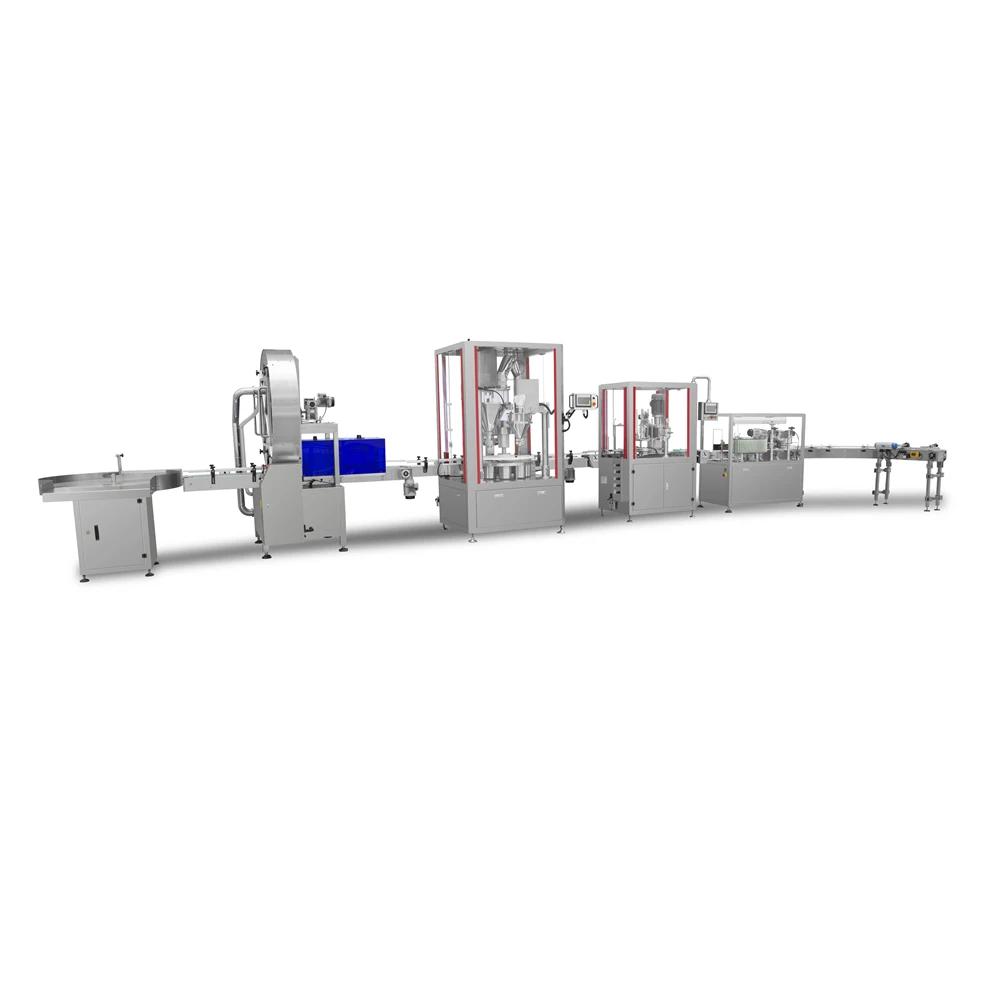
Tin Can Milk Powder Filling Line
Complete vacuum-nitrogen line for milk powder and nutritional blends, from can unscrambling and purge through dual-head weigh filling to seaming, cleaning and lid pressing.
View detailsA filling machine is chosen by the product first and the container second. Thin liquids, viscous sauces, particle-laden products and free-flowing powders each demand a different dosing principle, and the pouch, bottle, cup or can format then decides the sealing and capping station behind it. This range covers all four dosing routes and every common container format, from a compact rotary pouch filler to a complete vacuum-nitrogen tin can line.
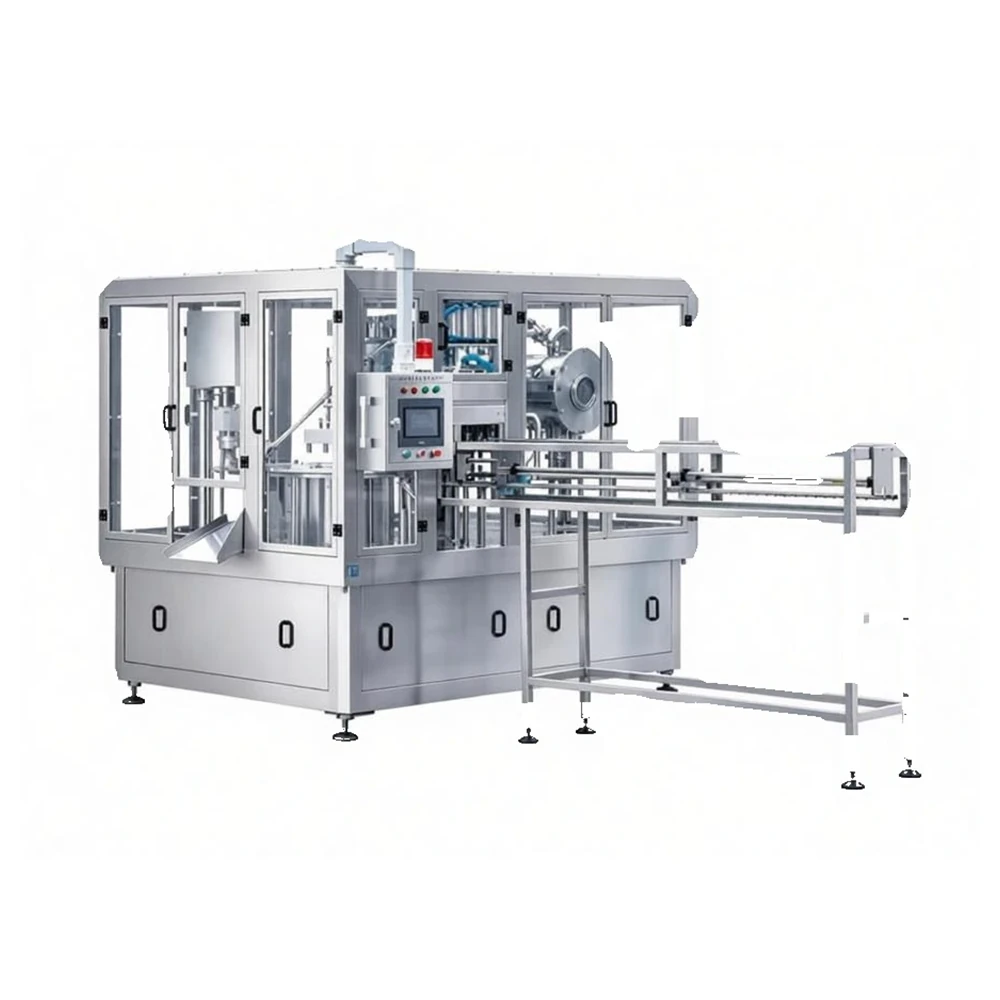
Every machine here fills a container and hands it to a sealing, capping or seaming station. What changes is how the dose is measured and how the container is held while it happens.
For thin, free-flowing liquids such as water, juice, soy sauce and rice wine. Product drops into the container under its own weight, the fill is trimmed by a nozzle, and a three-stage profile stops foaming. Used on the inline filling and capping machine and the bottle filler.
For sauces, pastes, gels and products carrying particles. A stainless piston draws a measured volume and pushes it through a nozzle with an anti-drip suck-back, holding about plus or minus 0.5 percent. Used across the ZLD pouch range, the rotary machine and the cup and pouch filler.
For free-flowing powders such as milk powder, protein powder and nutritional blends. A screw feeder drops product into the container while a load cell weighs the fill in line, or a dual-head weigher splits the dose for speed. Dust extraction keeps the sealing zone clean on the powder lines.
From a compact tin can powder line through pouch, bottle, cup and rotary formats up to a 12,000 pouch per hour eight-head machine. Start with the container you already pack in.
Complete vacuum-nitrogen line for milk powder and nutritional blends, from can unscrambling and purge through dual-head weigh filling to seaming, cleaning and lid pressing.
View details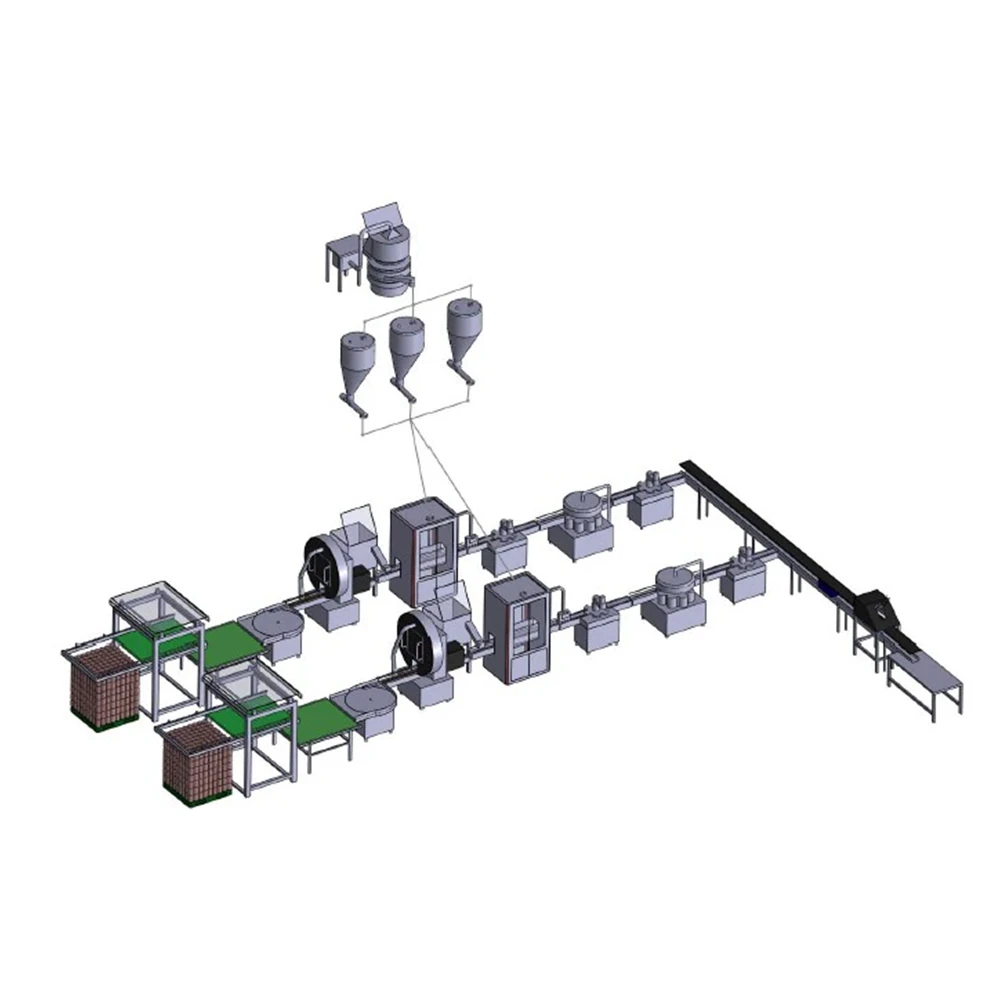
A linked can line built to GMP rhythm: depalletising, sterilising, spoon feeding, dual-head metering, seaming, ion-air cleaning and soft lid pressing in one continuous chain.
View details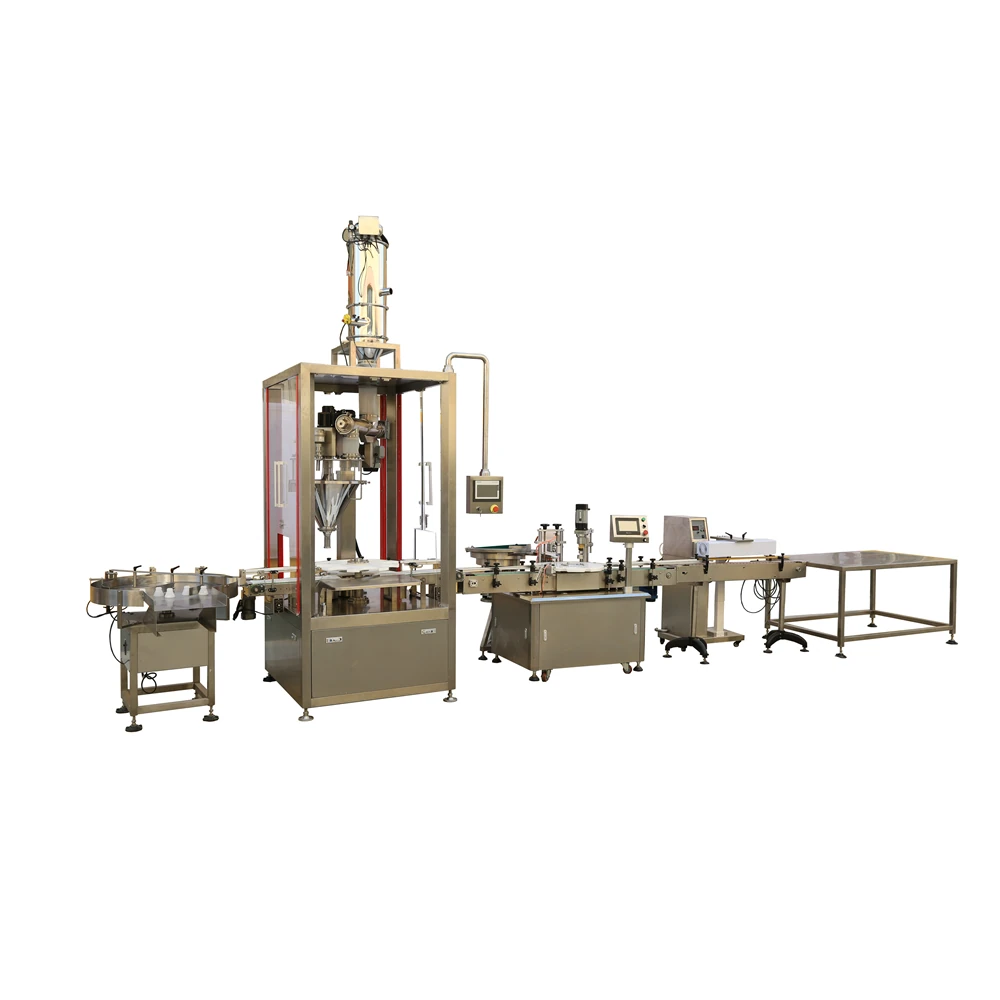
Inline weigh filling for protein and nutritional powders into PET and plastic cans, with cap unscrambling, foil sealing, can cleaning, labelling and coding in one flow.
View details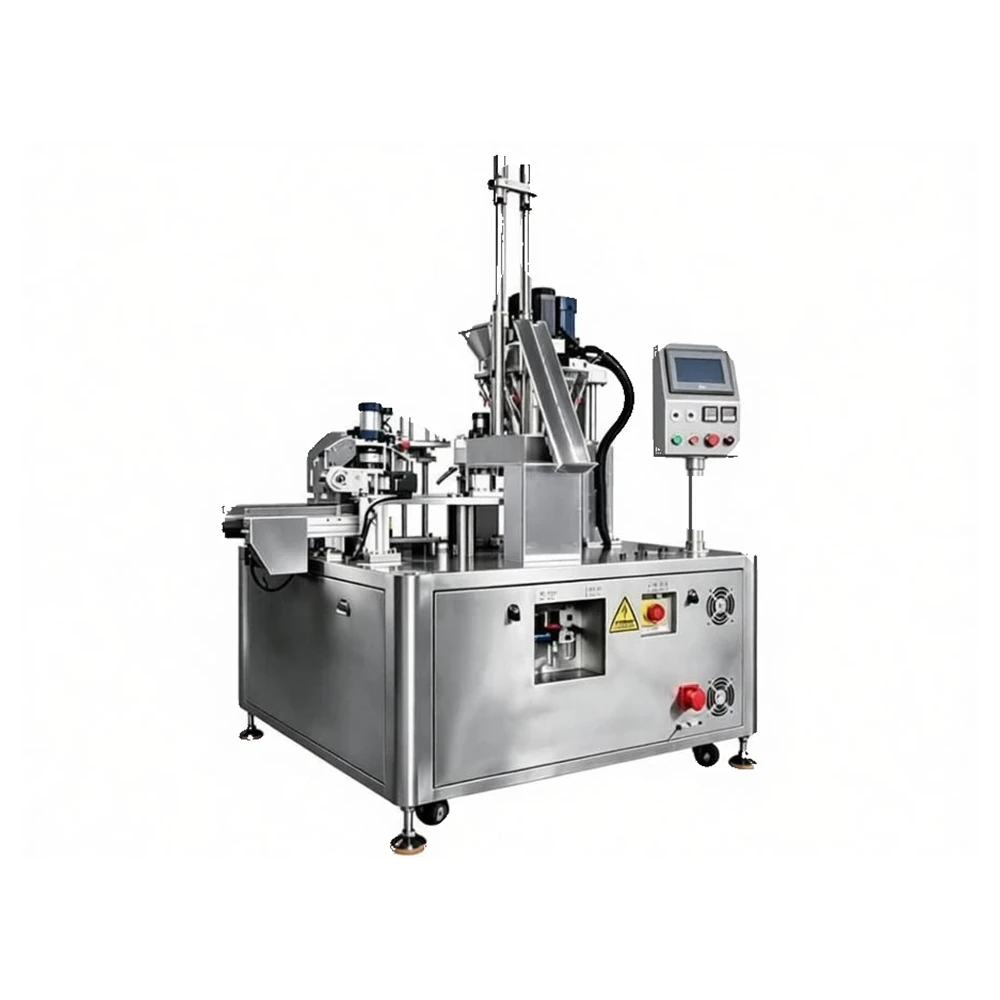
Multi-station indexer that drops the cup, doses the product, lays and heat-seals the film and ejects the finished cup without stopping, with missing-cup and missing-film protection.
View details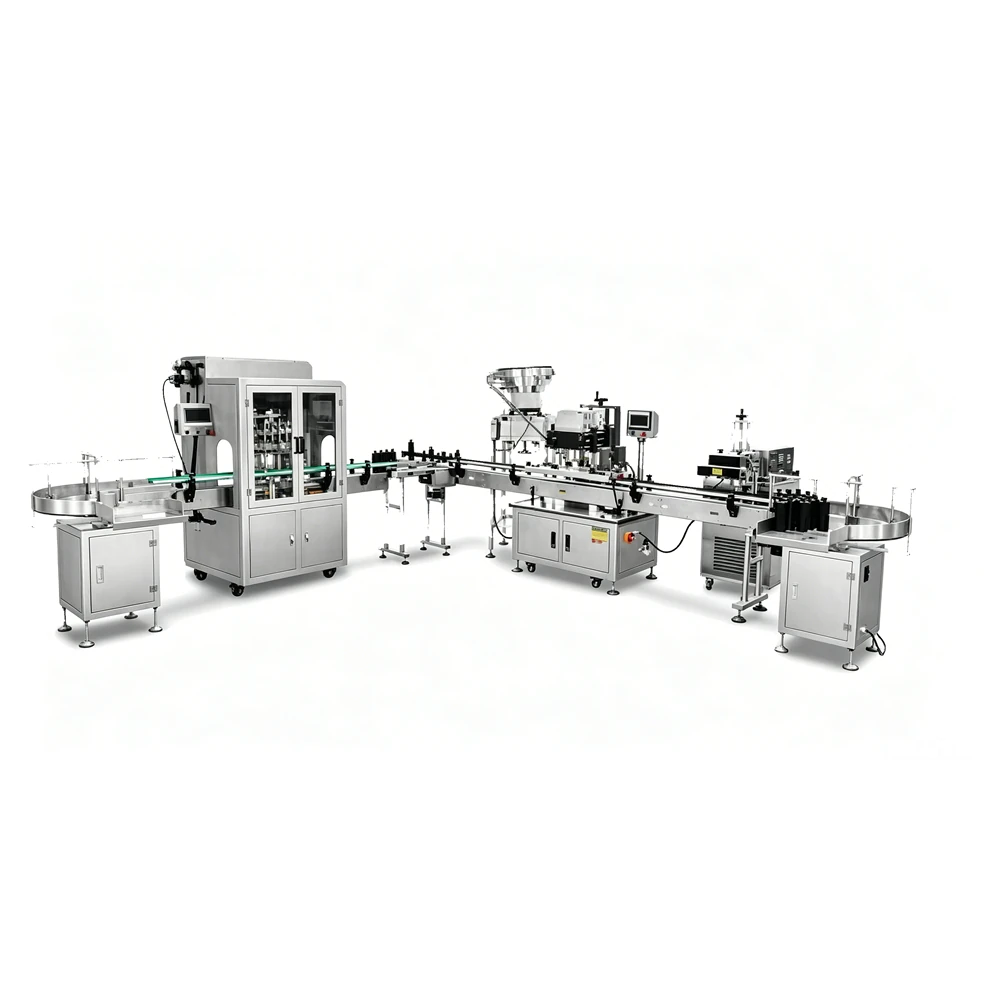
Three-stage anti-foam filling for juices, milk tea, soy sauce, rice wine and similar liquids, with rapid format change and a touchscreen recipe library.
View details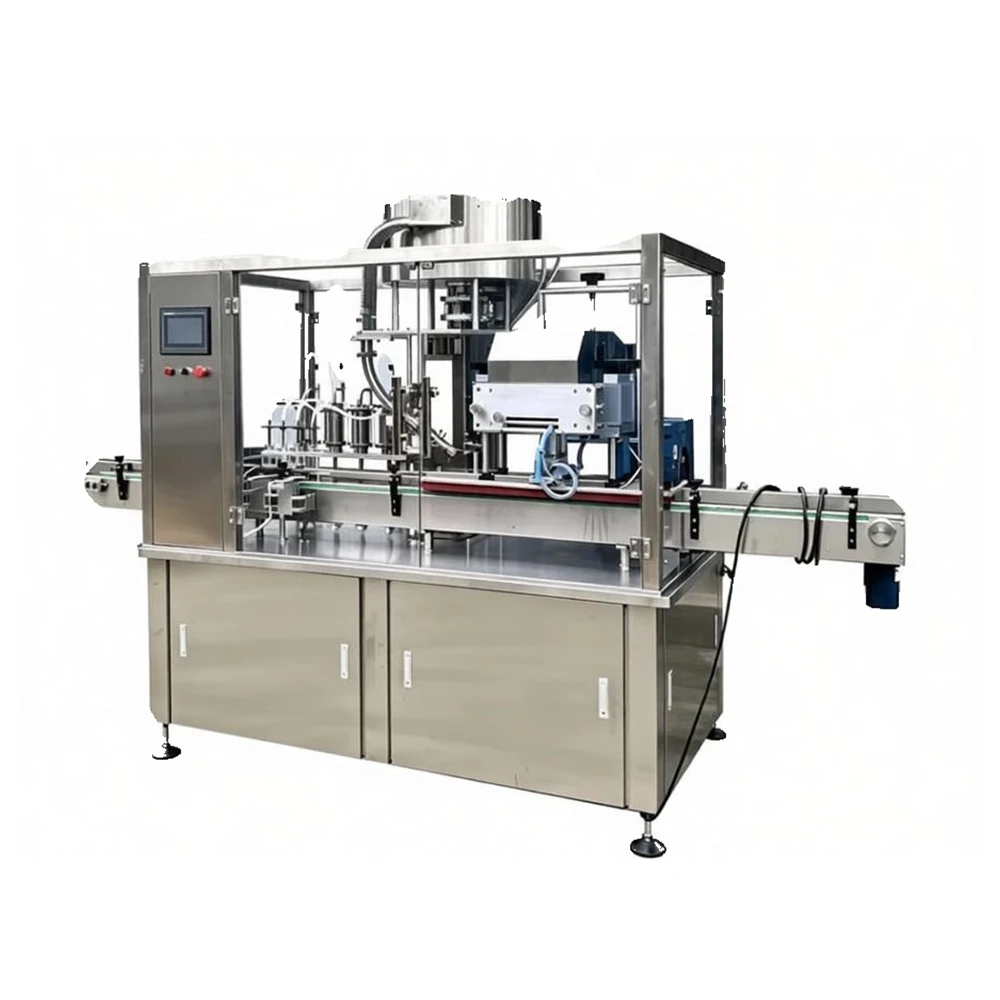
Twelve-head linear filler for large bottles and jars from 500 to 5,000 ml, with atmospheric filling and an integrated capping station for continuous production.
View details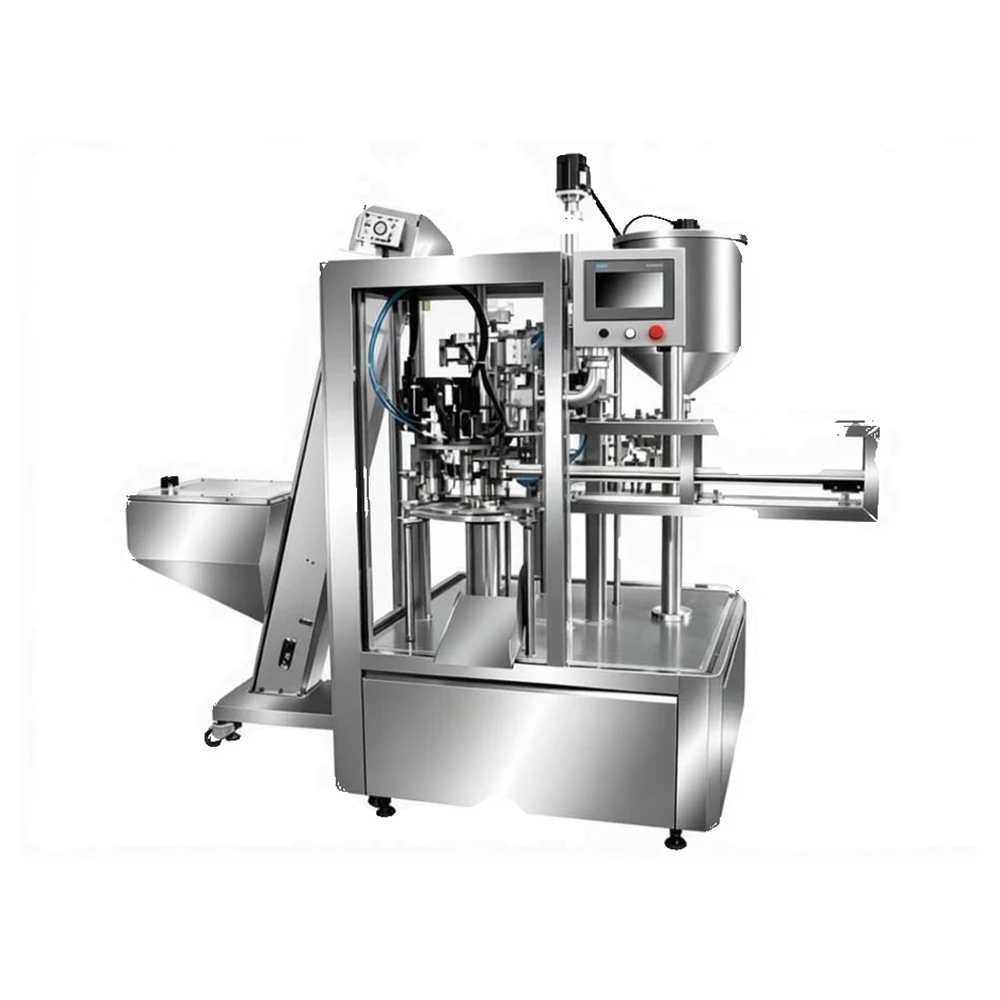
Compact two-head rotary filler for small-batch, multi-product work, with a small footprint and a fill range of 30 to 100 ml.
View details
Four-head rotary platform for 60 to 390 ml fills, balancing output and changeover speed for medium-volume pouch production.
View details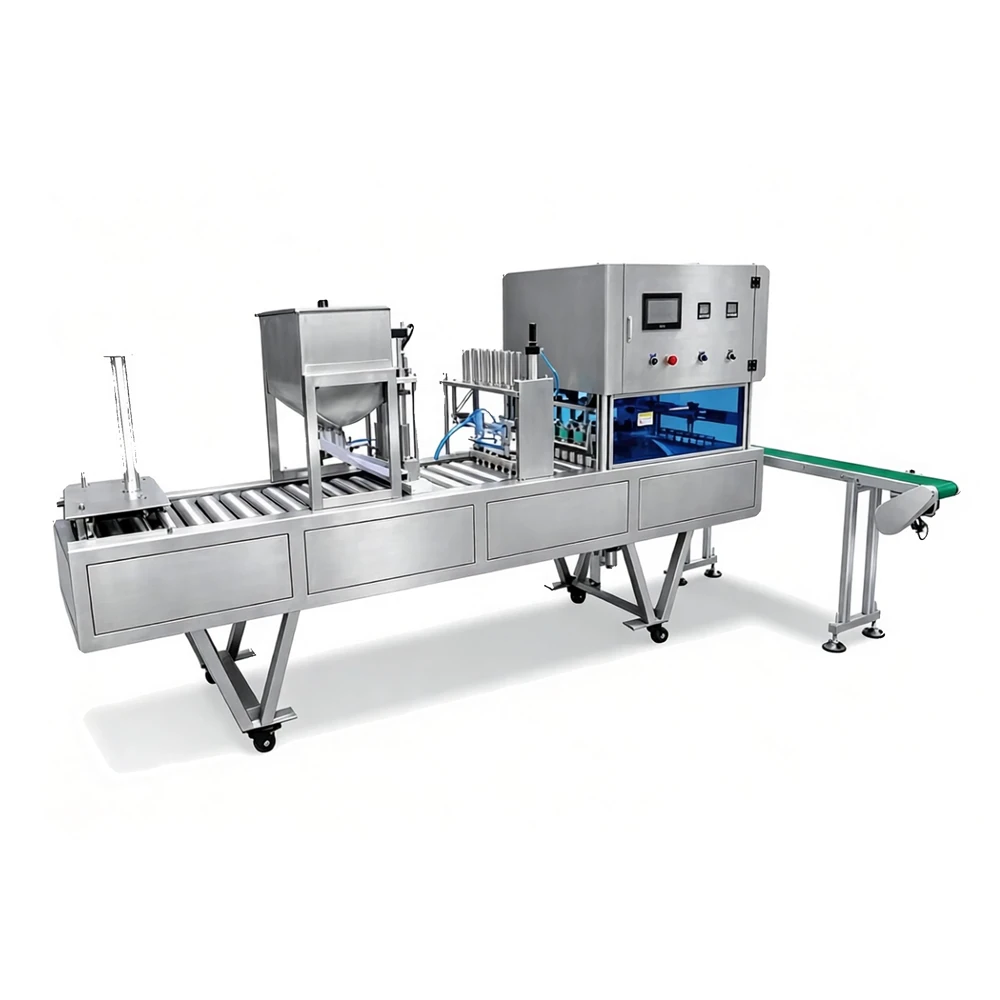
Inline six-head filler and film heat sealer for cups and pouches, with an independent PID seal profile and an optional date-coding wheel.
View details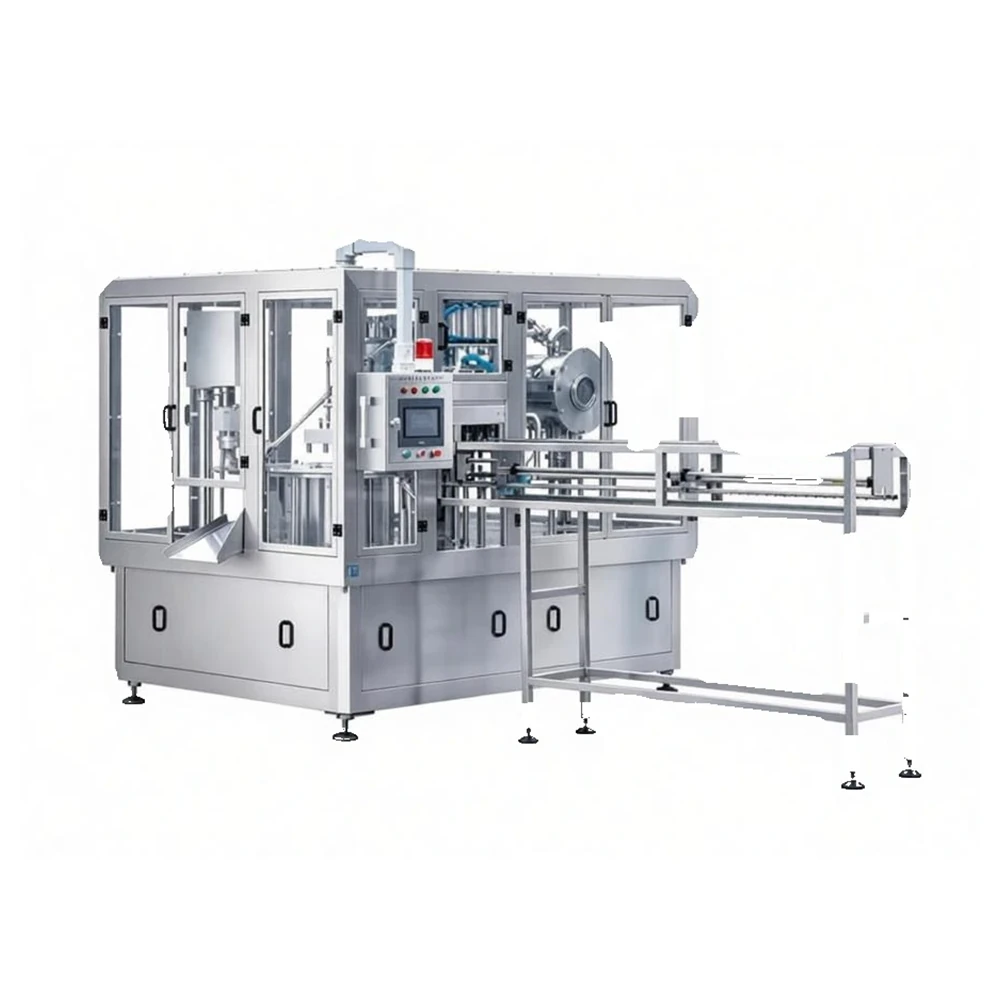
Six-head version for continuous pouch output from 5,400 to 9,000 per hour, sharing tooling and recipe structure with the rest of the ZLD range.
View details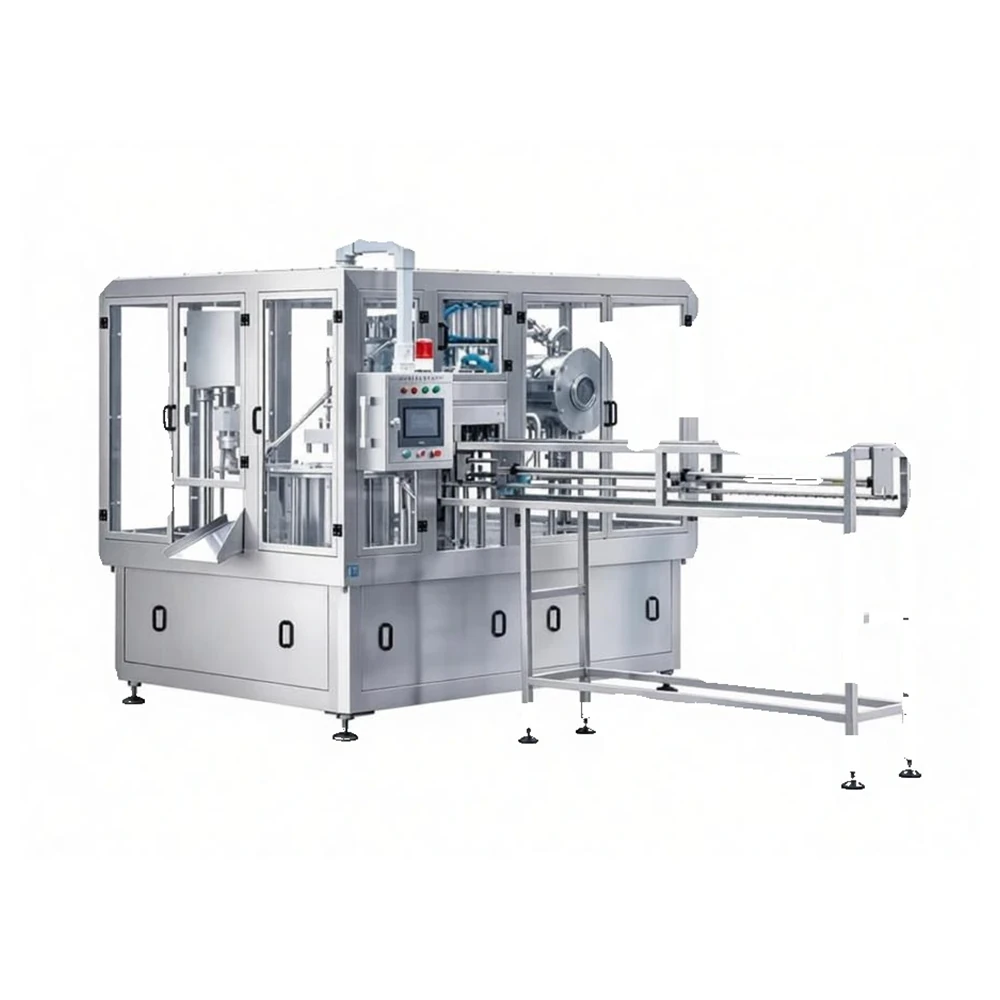
The high-volume end of the pouch platform, running eight filling heads up to 12,000 pouches per hour for single-product, high-shift output.
View detailsRows are the parameters that decide the machine, columns are the models in output order. Scroll the table sideways to compare the whole range at once. Where a value is not published it is confirmed at order rather than guessed.
| Parameter | Tin Powder Line | Can Filling Line | PET Powder Line | Rotary Filler | Bottle Filler | Inline Filler | ZLD-2 | ZLD-4 | Filling & Sealing | ZLD-6 | ZLD-8 |
|---|---|---|---|---|---|---|---|---|---|---|---|
| Container format | Tin can #300–#502 | Tin can 502#/401#/300# | PET or plastic can | Cup or tray | Bottle, jar or tube | Bottle | Stand-up pouch | Stand-up pouch | Cup or pouch | Stand-up pouch | Stand-up pouch |
| Dosing method | Dual-head weigh fill | Auger with weigh check | Inline weigh fill | Piston or magnetic pump | Volumetric, 3-stage | Atmospheric | Piston, pneumatic or servo | Piston, pneumatic or servo | Piston with film heat seal | Piston, pneumatic or servo | Piston, pneumatic or servo |
| Fill range | 100–1,000 g | 100–1,500 g | 50–1,000 g | 1–30 ml | 100–1,000 ml | 500–5,000 ml | 30–100 ml | 60–390 ml | 10–300 ml | 60–390 ml | 60–390 ml |
| Published output | 12–48 cans/min | 20–45 cans/min | 20–40 cans/min | 30–40 cups/min | 30–60 bottles/min | 40–70 bottles/min | 800–3,000 pouches/h | 3,600–6,000 pouches/h | 4,800–5,400 cups/h | 5,400–9,000 pouches/h | 7,200–12,000 pouches/h |
| Dosing accuracy | ±1–1.5 g | ≤±1 g / ≤±2 g | ≤±1–5 g | ±0.5% | 0.5% | ±0.5% | ±0.5% | ±0.5% | ±0.5% | ±0.5% | ±0.5% |
| Filling heads | 2 (dual head) | 2 (dual head) | Inline weigh station | 2 | On request | 12 | 2 | 4 | 6 | 6 | 8 |
| Sealing / capping | Vacuum nitrogen seaming | Seam plus soft lid press | Screw cap plus foil seal | Film heat seal | Screw, press, plug or foil | Screw cap | Heat seal | Heat seal | Film heat seal | Heat seal | Heat seal |
| Supply | 3-phase 380V, 48.33 kW line | 3-phase 380V, 18 kW | 3-phase 380V | 220V single phase, 1.2 kW | 220V, 1.2 kW | 380V, 1.5 kW | 220V single phase, 2.2 kW | 380V, 8.05–8.55 kW | 220V, 4.0 kW | 380V, 8.05–8.55 kW | 380V, 8.05–8.55 kW |
| Contact material | Polished stainless interior | Stainless, GMP layout | Stainless, food grade | 304 stainless | 304 stainless, GMP | Stainless, food grade | SUS304 / 316L | Stainless, food grade | SUS304 | Stainless, food grade | Stainless, food grade |
The tin can milk powder line quotes 48.33 kW for the complete line, excluding ancillary plant; the can filling line quotes 18 kW excluding self-supplied equipment such as the inkjet coder. Fill ranges are printed per model as published. Head counts, moulds, nozzle sets and conveyor lengths are specified per order.
Six common formats, read across the same six criteria. The dosing method and the container drive everything else, including the sealing station that follows.
| Criterion | Liquid | Powder | Stand-Up Pouch | Bottle | Can | Rotary Cup |
|---|---|---|---|---|---|---|
| Typical dosing method | Atmospheric or gravity with 3-stage trim | Auger feed with inline weigh check | Piston pump, pneumatic or servo driven | Volumetric, anti-foam, anti-drip | Dual-head weigh fill | Servo piston or magnetic pump |
| Representative fill range | 500–5,000 ml | 50–1,500 g | 30–390 ml | 100–1,000 ml | 100–1,500 g | 1–30 ml |
| Published output | 40–70 bottles/min | 20–48 cans/min | 800–12,000 pouches/h | 30–60 bottles/min | 20–45 cans/min | 30–40 cups/min |
| Sealing or capping station | Screw capping head | Screw cap plus foil induction seal | Heat-seal spout capping | Screw, press, plug or foil | Vacuum nitrogen seaming | Film heat seal and die cut |
| Best suited to | Water, juice, soy sauce, rice wine | Milk powder, protein and nutrition blends | Sauces, gels, juice with pulp | Beverages, dairy, edible oil | Powder packed for shelf life | Condiment and dessert cups |
| Model to start from | Inline Automatic Filling & Capping | PET Bottle Powder Filling Line | ZLD Series | Automatic Bottle Filling Machine | Tin Can Milk Powder Filling Line | Rotary Filling & Sealing Machine |
Powders migrate. The lines here pair auger or weigh dosing with vacuum feeding, local dust extraction and polished contact surfaces so the sealing zone stays clean and the fill stays inside 1 to 5 g.
On a rotary pouch platform, output scales with the number of filling heads rather than with speed. Two heads suit small batches; eight heads take the same machine to 12,000 pouches per hour.
When the filler, seamer, cleaner and coder are linked, the slowest station sets the line rate. The can and tin lines publish output per minute and per number of seaming units so the rhythm can be planned.
The same dosing hardware serves food, beverage, nutrition and cosmetics producers. What changes is the container and the hygiene regime around it.
Medical food, protein powder, milk powder and nutritional blends into PET cans and tin cans, with foil sealing on the plastic format and vacuum-nitrogen seaming on the metal one.
Juice, milk tea, soy sauce, rice wine and edible oil filled into bottles and jars, with screw capping, foil sealing or shrink-band finishing downstream.
Condiments, dressings, jellies and desserts in pouches and cups, plus cream, gel and sample formats where piston dosing holds the fill to within half a percent.
A filler rarely works alone. These sibling ranges cover the sealing, vacuum and washing duties either side of the filling station.
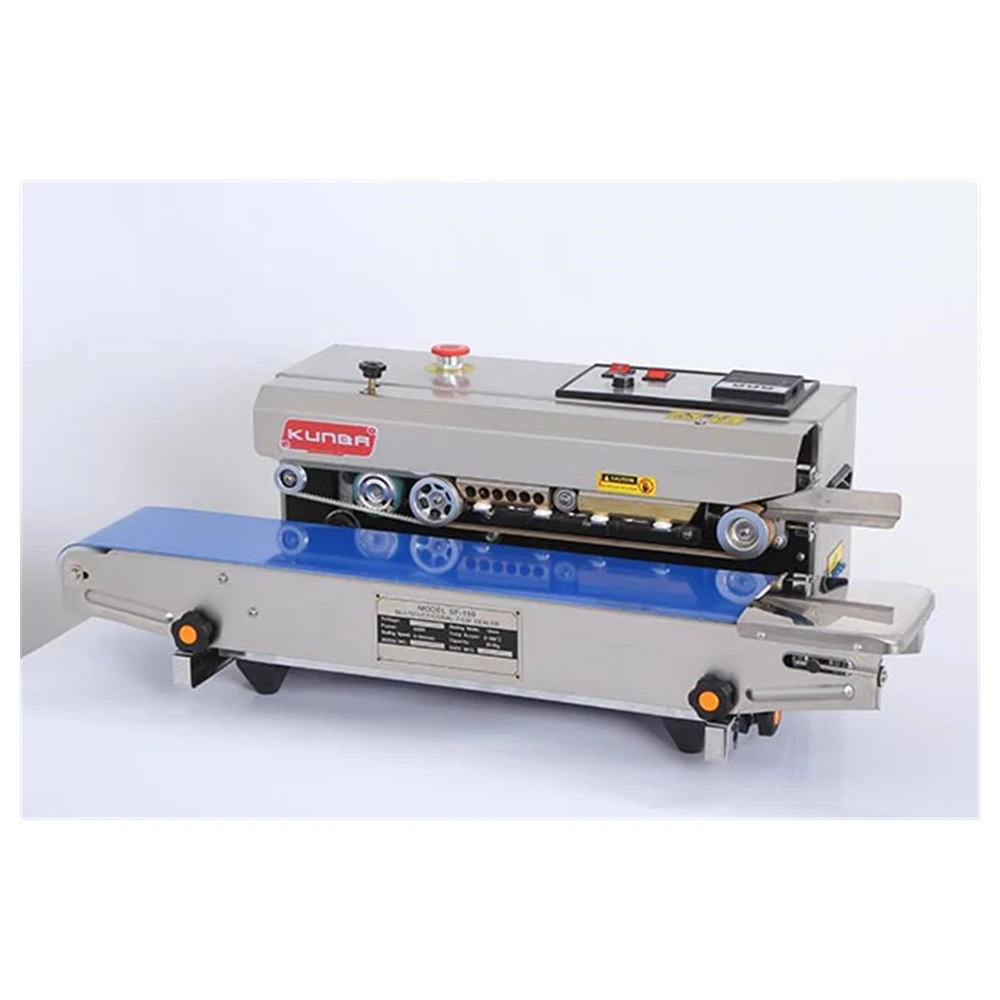
Continuous, foot-operated, induction and coding sealers that close the bag, cup or tray the filler has just filled.
View the range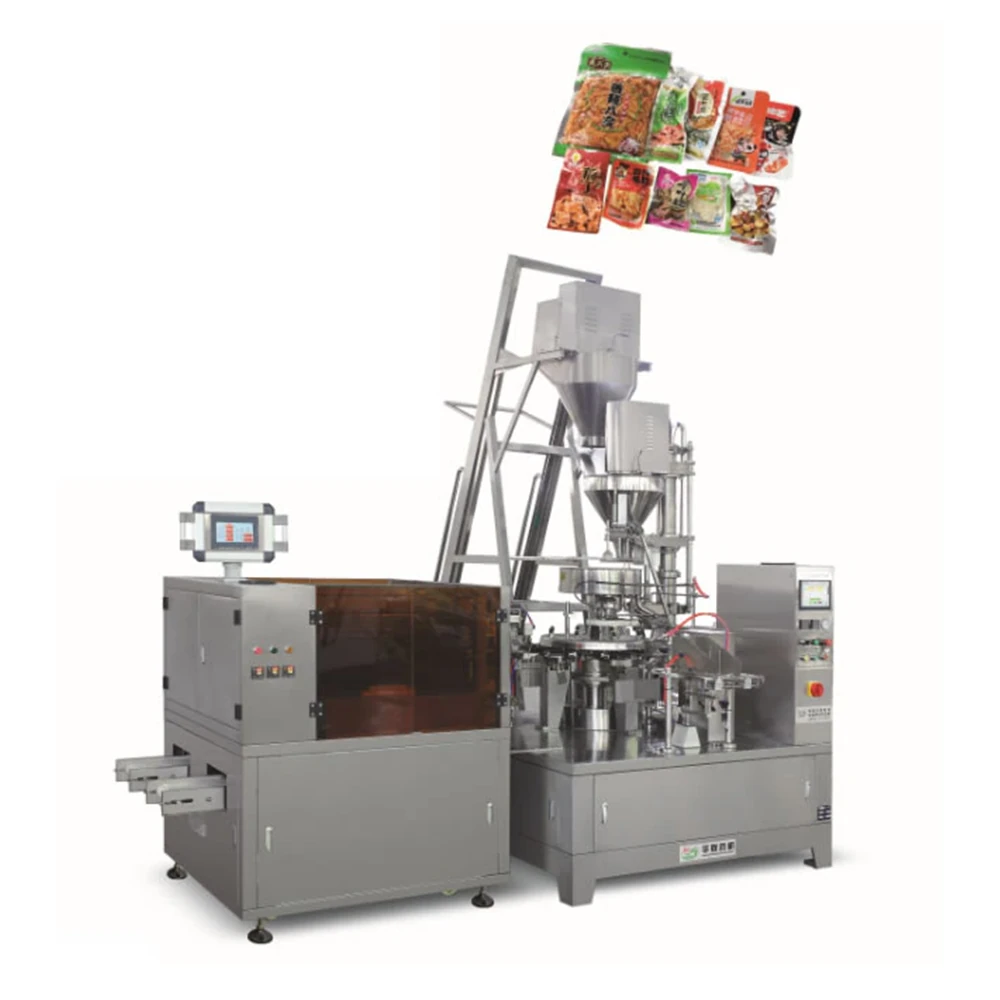
Bag-feeding vacuum and modified-atmosphere packers for products that need the air removed rather than simply sealed in.
View the range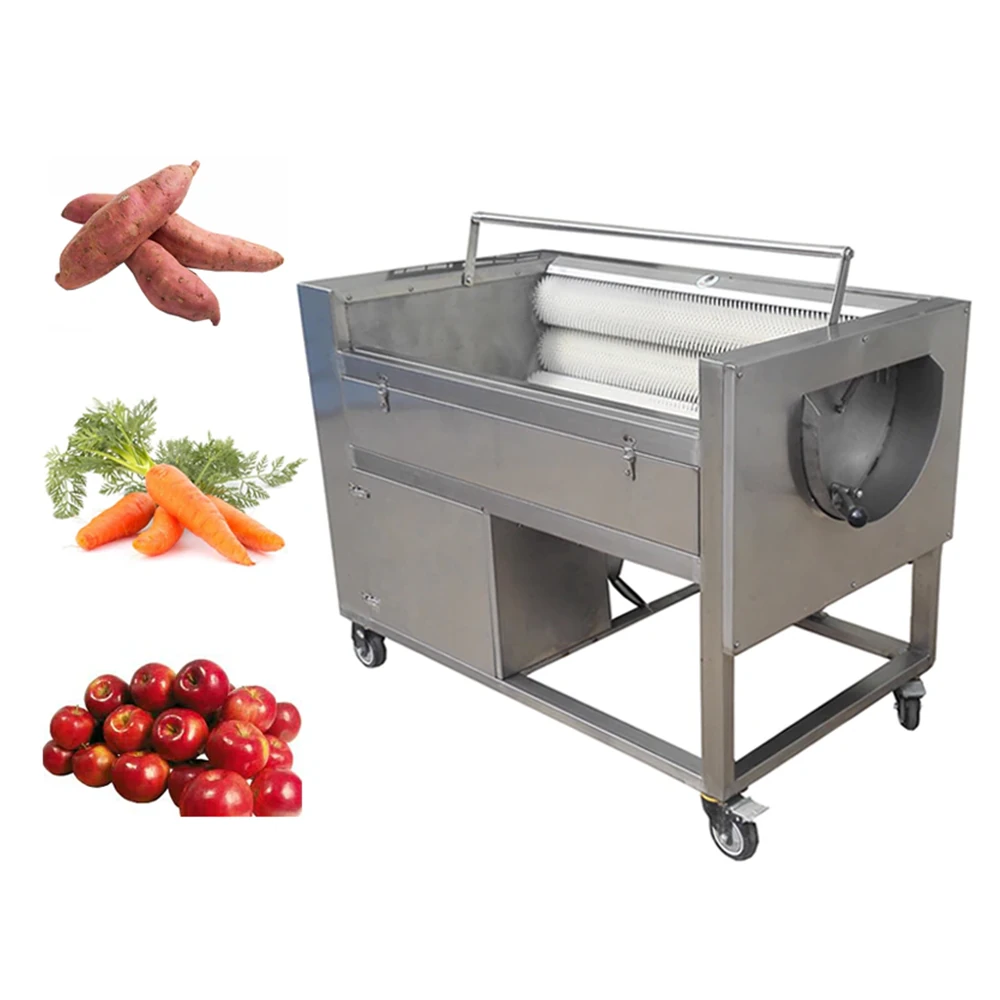
Bubble, spray, brush and ozone washers that prepare raw produce upstream of the filling and packing stage.
View the rangeStart from the product, not the machine. Thin liquids that level by themselves suit atmospheric or gravity filling, as on the inline filling and capping machine. Viscous pastes, sauces and products with particles need a piston pump, which is what the stand-up pouch and bottle models use. Free-flowing powders are dosed by auger or by weight, as on the PET bottle powder line and the tin can milk powder line. Send us the product, the container and the target fill and we confirm the dosing method.
Output is set by the fill volume, the number of filling heads and the sealing or capping cycle. The published range runs from 12 cans per minute on a single-station tin can powder line up to 12,000 pouches per hour on the eight-head ZLD-8. Adding heads, running two shifts or linking a second filling station raises output without changing the product format.
Liquid and paste models hold about plus or minus 0.5 percent of the set fill, which is the figure published for the ZLD range, the bottle filler, the inline filler and the rotary machine. Powder lines are quoted by weight instead: the PET bottle line holds within 1 to 5 g and the tin can milk powder line within 1 to 1.5 g. Accuracy is verified with your own product during the sample test.
Yes, within the published envelope of each model. The ZLD pouch machines take pouch formats up to 120 mm wide and 260 mm high, the inline filler covers bottles from 30 to 350 mm high and 30 to 110 mm in diameter, and the tin can line takes 300, 307, 401 and 502 cans from 60 to 200 mm tall. Changeover is done with quick-change moulds and recipe recall on the touchscreen.
Frames and all product-contact parts are stainless steel. The ZLD pouch machines use SUS304 for the frame and 316L for wetted parts, the PET bottle powder line and rotary machine are built in 304 stainless, and the tin can milk powder line polishes the interior of every product-contact vessel. Designs follow food hygiene and GMP requirements with smooth, crevice-free surfaces.
No. Hoppers, filling pipes and nozzles are designed as quick-release parts so a shift change or product change is a wash-down rather than a strip-down. The rotary and pouch machines lift their tooling and moulds without special tools, and the powder lines use polished, easy-to-clean internal surfaces plus dust extraction to keep the filling zone clear.
Yes. Send a product sample, the container and the target fill weight or volume, and we run a filling trial on the recommended machine. You receive the filled sample, the measured accuracy across a run and the parameter set we used, so the specification is confirmed on your own material rather than on a datasheet.