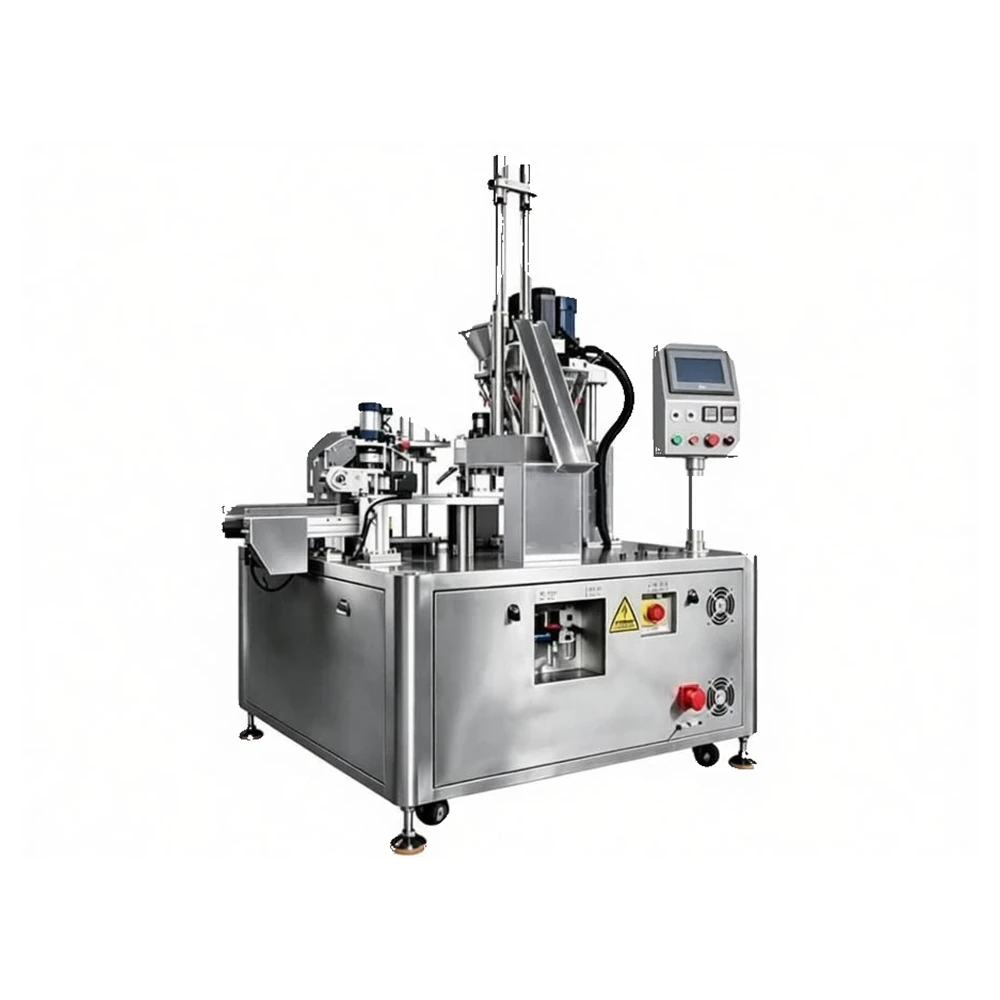
Rotary Filling & Sealing Machine
A multi-station indexer for cups and trays, with four, six or eight stations and quick-change moulds.
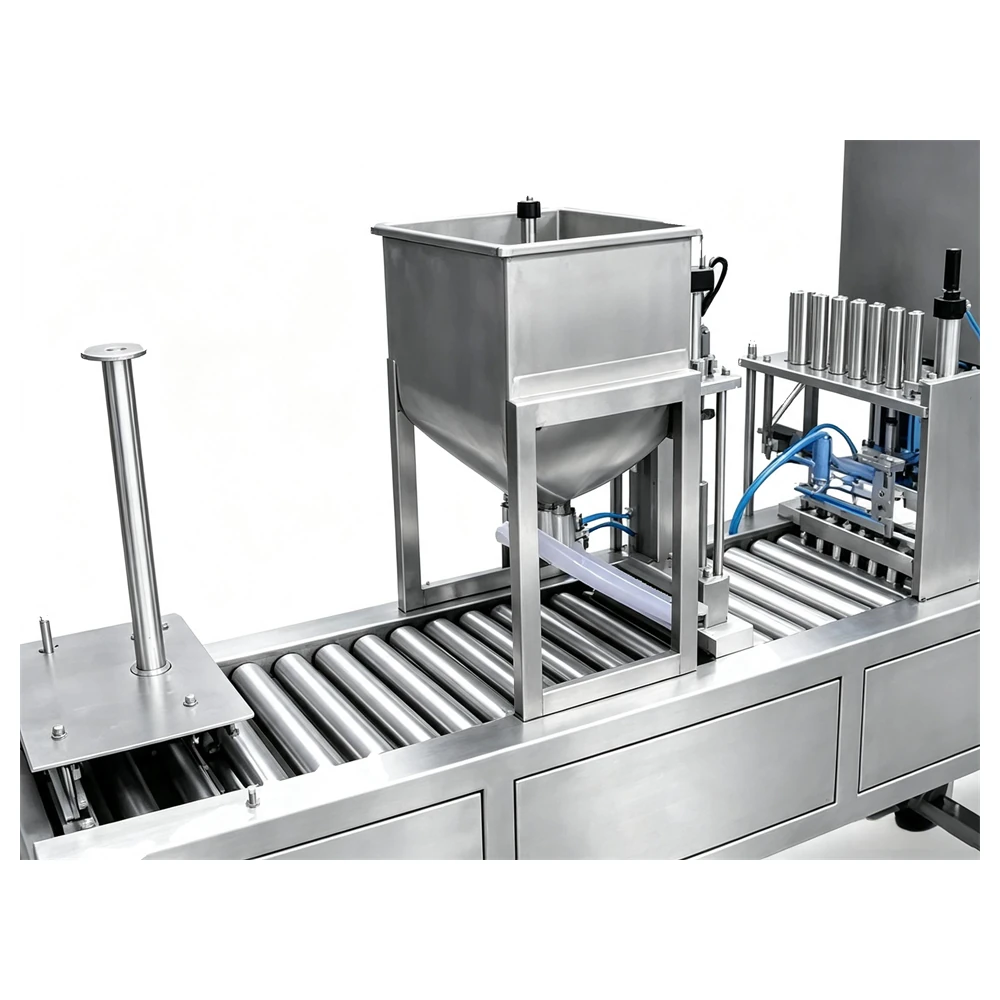
View modelThis is the machine for the middle of a packing line: six heads dose the product, the pack travels over the sealing film on a conveyor, and the seal closes behind it. It runs PE bags, composite bags and foil bags as well as sealed cups, between 10 and 300 ml, at 4,800 to 5,400 packs an hour, with an independent PID loop holding the seal temperature steady through a full shift.
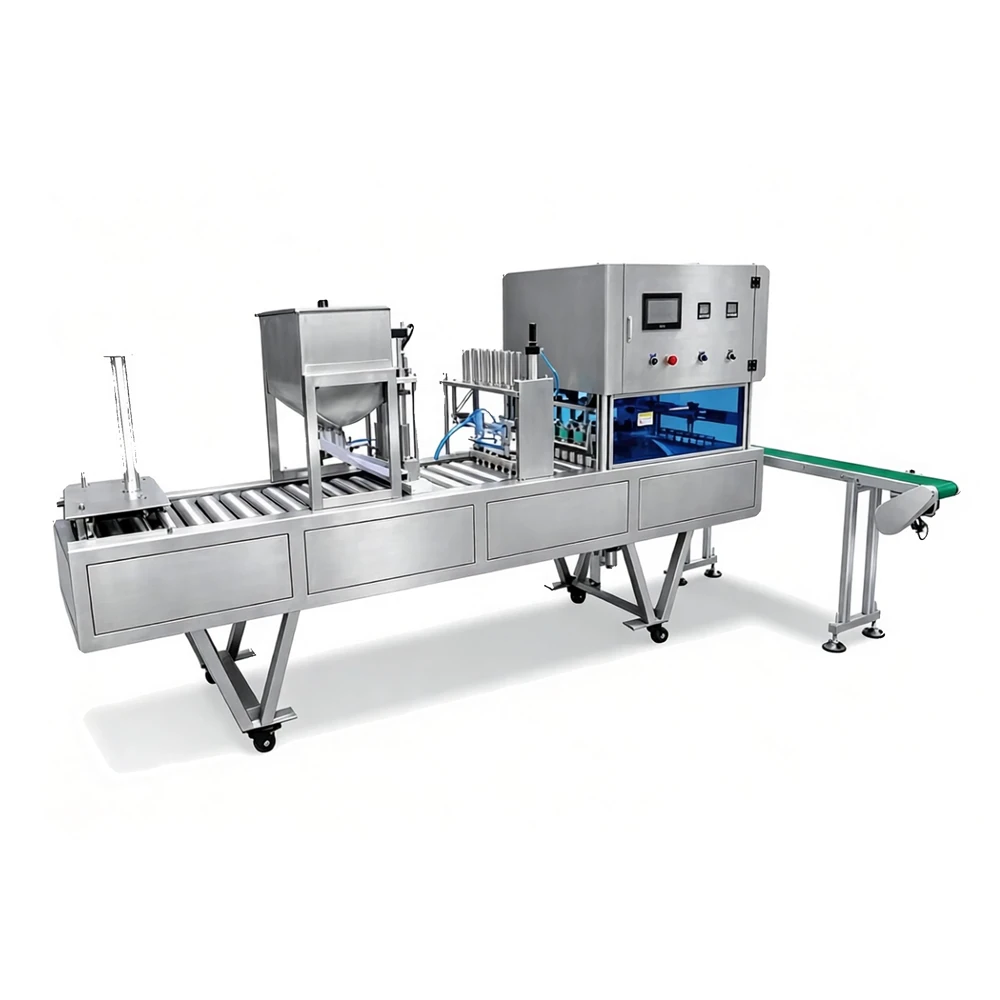
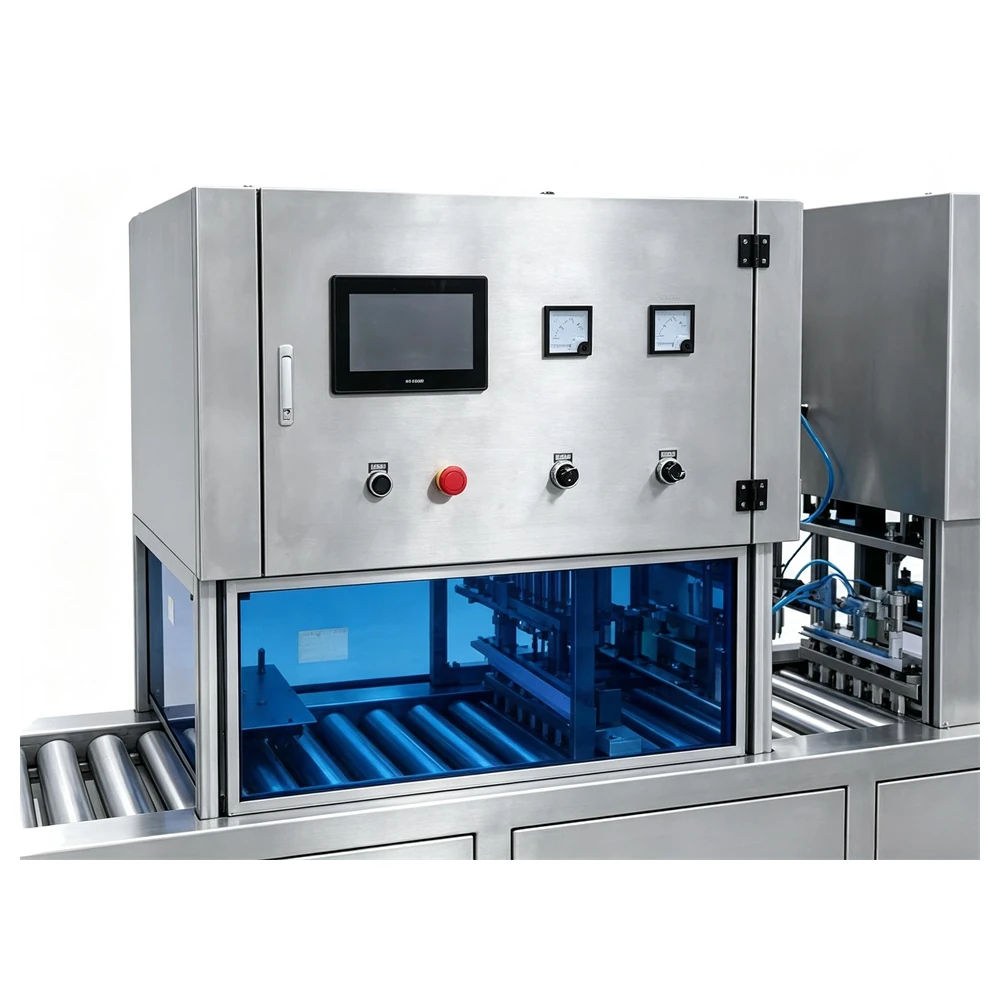
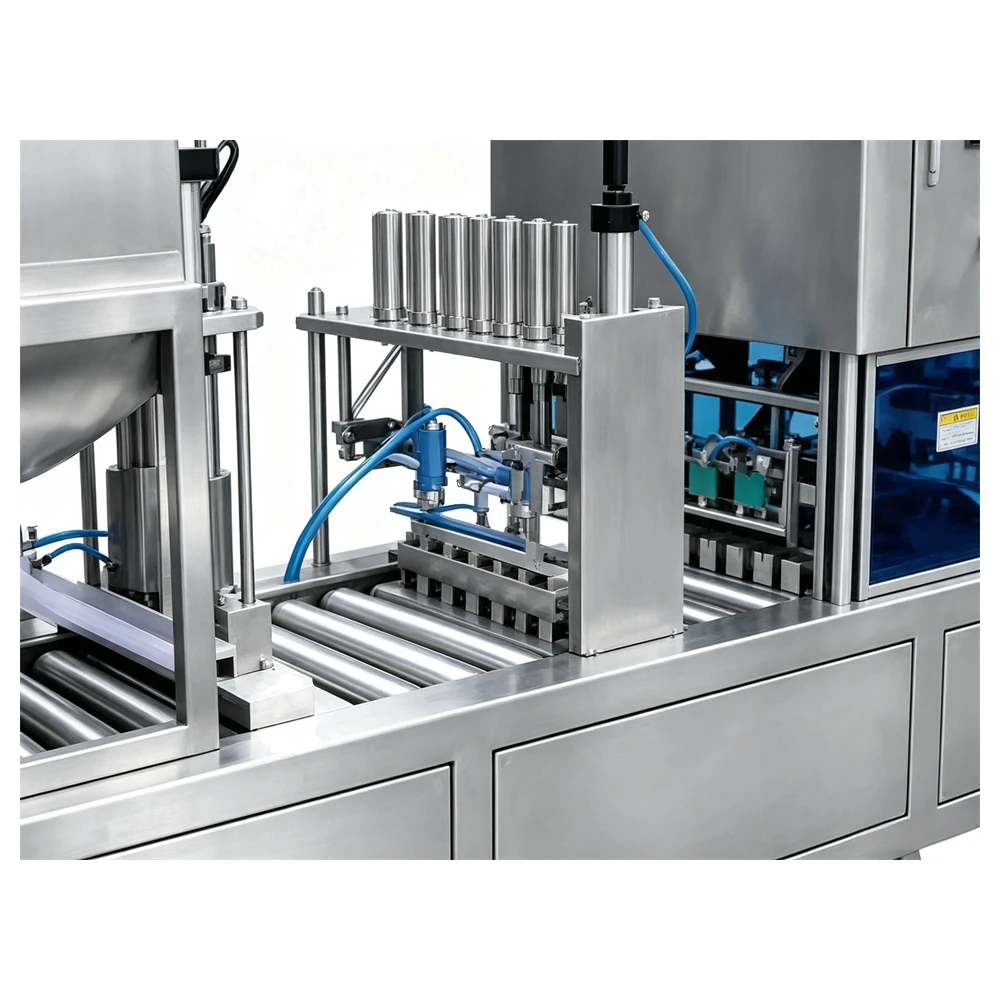
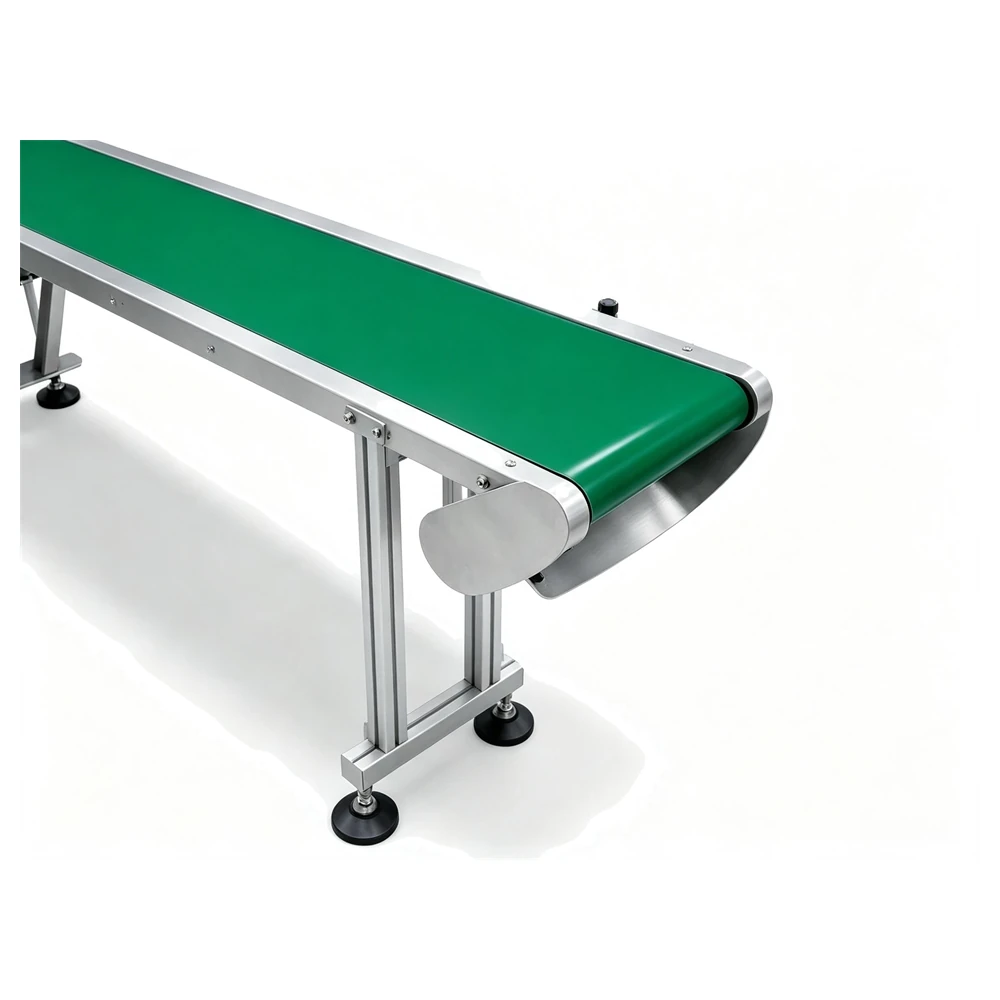
The machine combines a six-head filler with a film heat sealer in one integrated stainless body, so a filled pack is closed before it can be knocked over, contaminated or left standing open. Product is metered into the pack, the pack is carried forward on a belt, and the sealing film is brought over it and closed by a heated bar with its own temperature loop.
A heat seal is only as good as the balance between film, temperature and time under pressure. This table sets out how the setting changes with the pack.
| Packaging film | Seal behaviour | Temperature setting | What to watch |
|---|---|---|---|
| PE bag | Softens and bonds across a wide band | Lower to mid range | Overheating thins the seal and weakens it |
| Composite bag | Seals through an inner heat-seal layer | Mid range | Outer print layer must not be scorched |
| Aluminium foil bag | Seals on the inner layer, foil carries heat away | Mid to upper range | Longer dwell to compensate for heat loss |
| Cup sealing film | Film bonded to the cup rim | Mid range, matching rim material | Rim cleanliness decides seal integrity |
Set by the PID loop and held steady. Film reels vary slightly in thickness, so a stable setpoint is what keeps the seal uniform from reel to reel.
Set by belt speed. Because the conveyor runs at a constant rate, the time each pack spends under the seal bar is repeatable without adjustment.
The seal bar applies even pressure across the pack, closing the joint flat so the result is a firm, leak-free seam rather than a partly bonded one.
The machine provides the independent temperature control and the constant-speed conveyor; the exact setpoint and dwell for a given film are established on your own packaging material during commissioning, because film formulations differ between suppliers even within the same nominal type.
Values are reproduced from the manufacturer specification.
| Parameter | Specification |
|---|---|
| Filling speed | 4,800–5,400 cups/hour |
| Fill range | 10–300 ml |
| Filling heads | 6 |
| Supply voltage and rated power | AC 220V, 50/60 Hz, 4.0 kW |
| Machine weight | 1,200 kg |
| Machine dimensions | 4,500 × 1,200 × 1,200 mm |
| Packaging film | PE bag, composite bag, aluminium foil bag |
| Product-contact material | SUS304 stainless steel |
| Process sequence | Cup or pack drop, metering, filling, film placement, sealing, finished pack output |
| Sealing control | Independent PID temperature loop |
| Optional | Date and batch coding wheel, cooling fan, line integration with conveyors |
The specification lists output in cups per hour and film types that include bags, which reflects the platform's ability to run both cup and pouch formats once the tooling is set for the format. Pneumatic demand is not published and is confirmed with the order. Conveyor length and take-away arrangements are specified per line layout.
Power, speed, fill range and size are the figures that decide where this machine fits.
Runs from a standard 220V supply at 4.0 kW, which keeps installation straightforward in workshops without a three-phase feed.
The 4,500 mm length comes from the conveyor and sealing stage, so plan the floor for a straight run rather than a compact footprint.
The machine is built for long uninterrupted runs, with a cooling fan specified to keep the sealing zone from overheating during extended production.
Consistency in a heat-seal machine comes from controlling three things and keeping them independent of everything else.
The PID loop holds the seal bar setpoint rather than oscillating around it, so a run of packs gets the same thermal input rather than a varying one.
Dwell time is a product of belt speed and seal bar length. A constant belt speed means dwell does not drift as the shift goes on.
SUS304 contact parts resist corrosion from sauces, dressings and cleaning agents, and wipe down without trapping product.
The linear layout accepts a coding wheel, an infeed conveyor and a take-away table, so the machine can grow with the line around it.
The sequence is automatic; an operator keeps the hopper and the film reel supplied.
Empty cups or packs are fed onto the conveyor and indexed under the filling heads.
Six heads dose the set volume into the pack, from 10 to 300 ml, within the cycle time set by the line speed.
The sealing film is brought over the filled pack and the heated bar closes it under pressure at the set temperature.
An optional wheel prints the date or batch through the seal, and sealed packs are delivered to the take-away station.
The machine is a general-purpose filler and sealer, so it turns up wherever small packs are filled and closed.
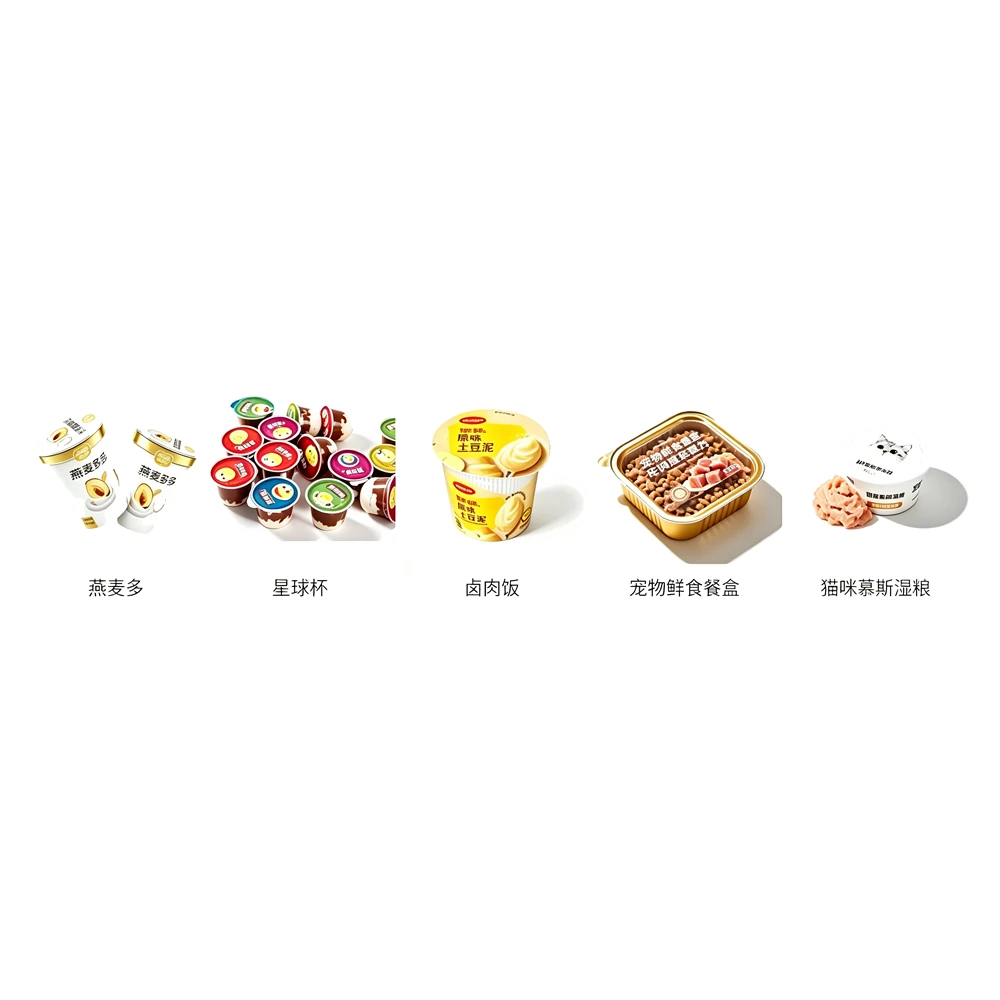
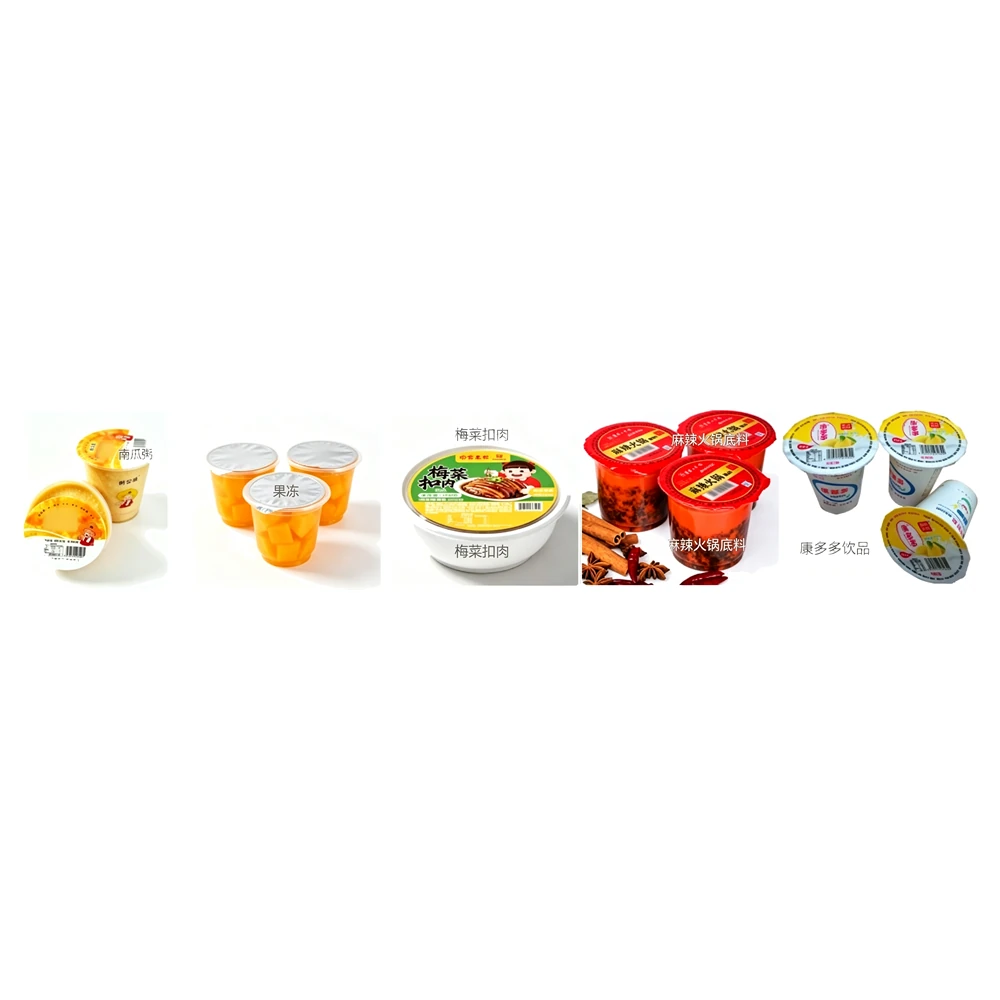
Nuts, dried goods, braised snacks, prepared dishes and snack packs in foil and composite bags, sealed with the date printed in line.
Mask and skincare sachets, travel-size paste packs, and dust-proof packs for masks, swabs and reagent bags.
Tea and local specialty shops packing dry goods, and repacking operations covering cables, small parts and hardware accessories.
Published output is a top figure. What a line actually achieves depends on how much product goes into each pack, because a short fill cycles faster than a full one.
| Fill band | Typical product | Cycle demand | Practical output position |
|---|---|---|---|
| 10–50 ml | Condiment sachets, samples, sauces | Shortest fill time | Towards the upper published rate |
| 50–150 ml | Dressings, jams, snack sauces | Moderate fill time | Mid to upper published rate |
| 150–300 ml | Prepared dishes, larger pouches | Longest fill time | Towards the lower published rate |
Practical output positions are a planning guide derived from the published 10 to 300 ml fill range and the published 4,800 to 5,400 cups per hour rate; they are not separate performance guarantees.
The machine is assembled and run before dispatch, and the seal settings are established on your film.
Standard builds are quoted at roughly 20 to 30 working days, then sea or air freight with export packing.
12-month parts warranty with free replacement components, plus lifetime technical advice.
English manuals plus remote support for seal temperature, dwell and fill volume setup on your packaging material.
Cup moulds and pouch guides, the coding wheel and the cooling fan are chosen with the order. Volume terms are agreed per order.
The machine is built around film-fed packaging: PE bags, composite bags and aluminium foil bags, as well as cups closed with a sealing film. Because the bag or cup travels over the film on a conveyor belt and is closed by a heated seal bar, any flexible film that accepts heat sealing can be run once the sealing temperature and dwell are set for it.
The seal head runs on an independent PID temperature loop, which means the setpoint holds steady rather than swinging around it. That matters when the line runs continuously, because film thickness varies between reels and a drifting temperature produces weak seals on the thin sections and burn-through on the thick ones.
Yes. An ink wheel can be fitted to print the production date or batch code onto the seal as the pack passes, which removes a separate coding station from the line and keeps the code and the seal in step with each other.
The published figures are 4,800 to 5,400 cups per hour with a fill range of 10 to 300 ml across six filling heads. Output is affected by the fill volume, because a short fill cycles faster than a full one, and by the number of heads running. The machine is supplied on a 220V single-phase supply drawing 4.0 kW.
The published specification lists electrical supply and power only: AC 220V at 50 or 60 Hz and 4.0 kW. The pneumatic demand depends on the actuator configuration specified, so the air requirement is confirmed with the order once the head count and the sealing arrangement are fixed.
The machine is designed for long uninterrupted operation, and a cooling fan is fitted to prevent heat build-up from becoming a fault. In practice an operator still has to keep the hopper and the film reel supplied and to clear finished packs, so the realistic staffing is one person supervising the line rather than a fully unattended machine.
Yes. The machine runs as a stand-alone unit or as part of a line, with an infeed conveyor feeding it and a take-away conveyor or table collecting the sealed packs. It is commonly combined with a coding station, a counting station and a cartoning unit where the volume justifies it.
If the pack is a bottle, a can or a stand-up pouch, these machines handle the same filling duty in a different container.
A multi-station indexer for cups and trays, with four, six or eight stations and quick-change moulds.
View model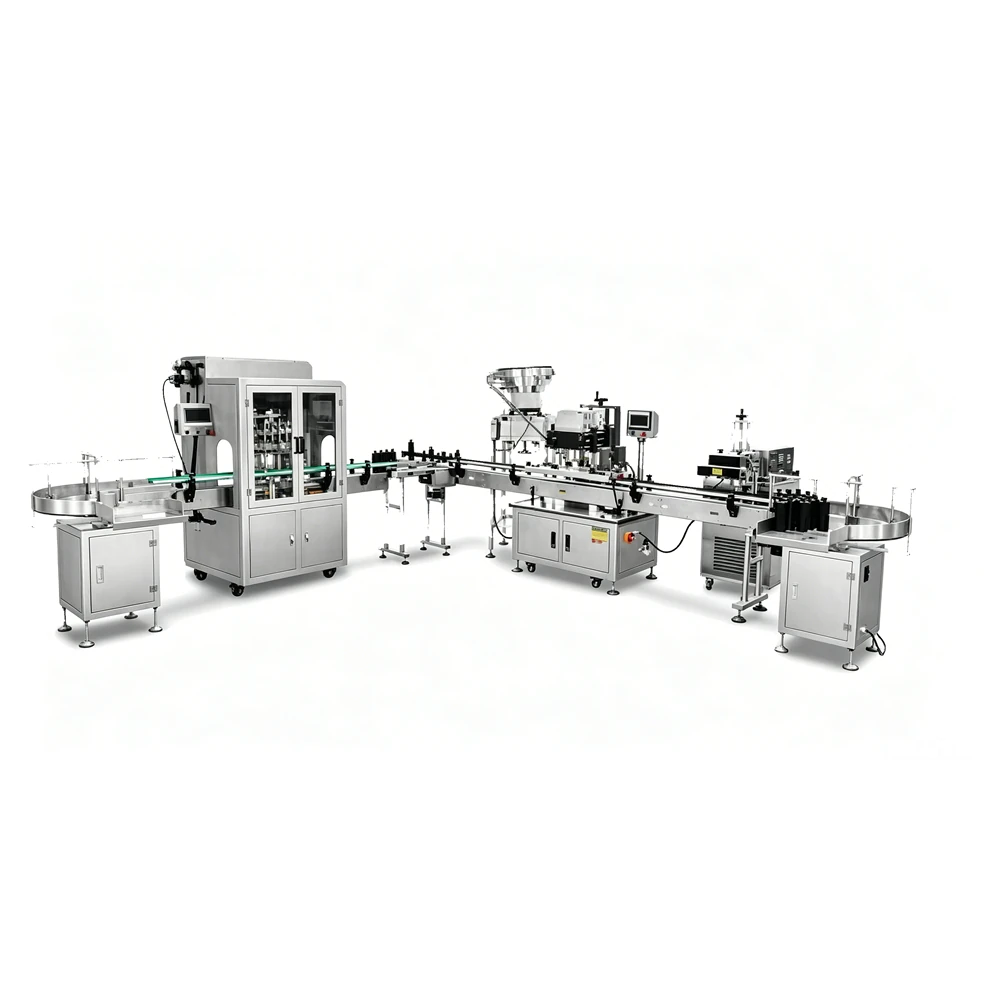
Liquid filling into bottles and jars from 100 to 1,000 ml, with three-stage anti-foam control.
View model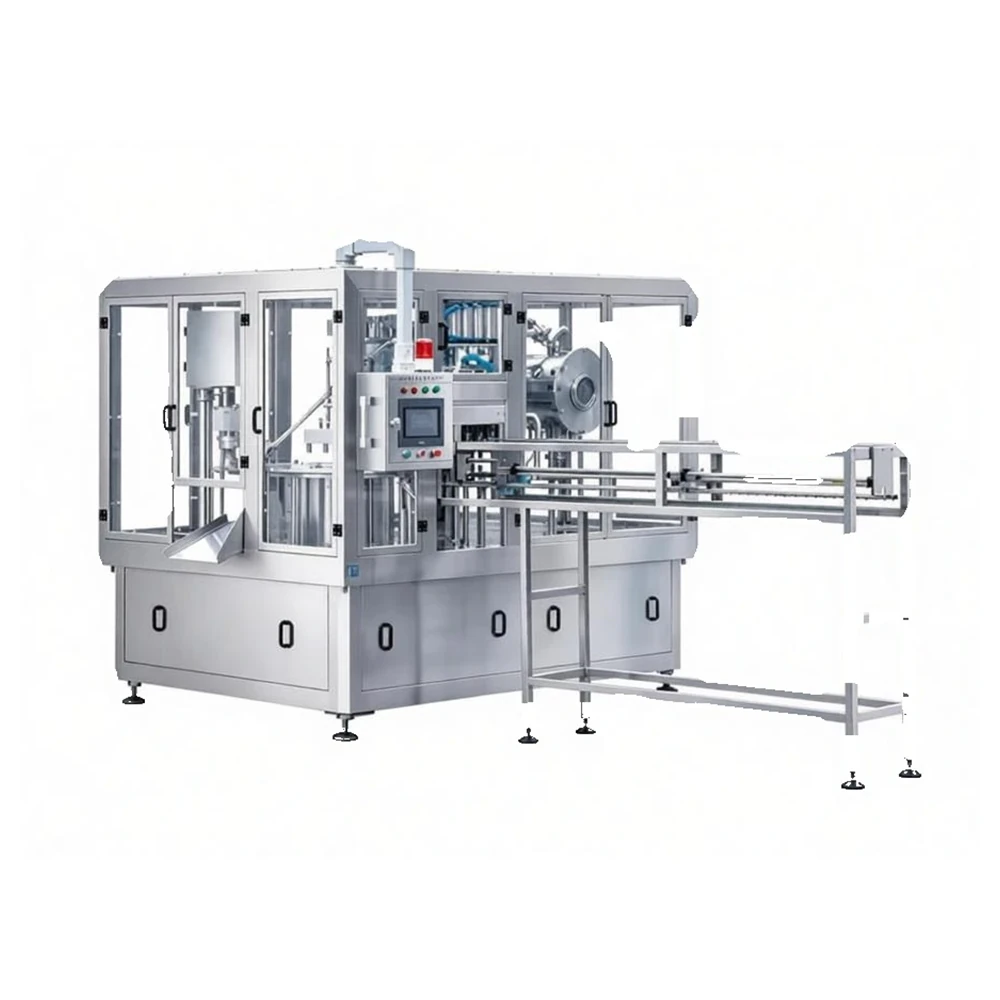
Four-head rotary filling for spouted stand-up pouches from 60 to 390 ml, with heat-sealed spouts.
View model