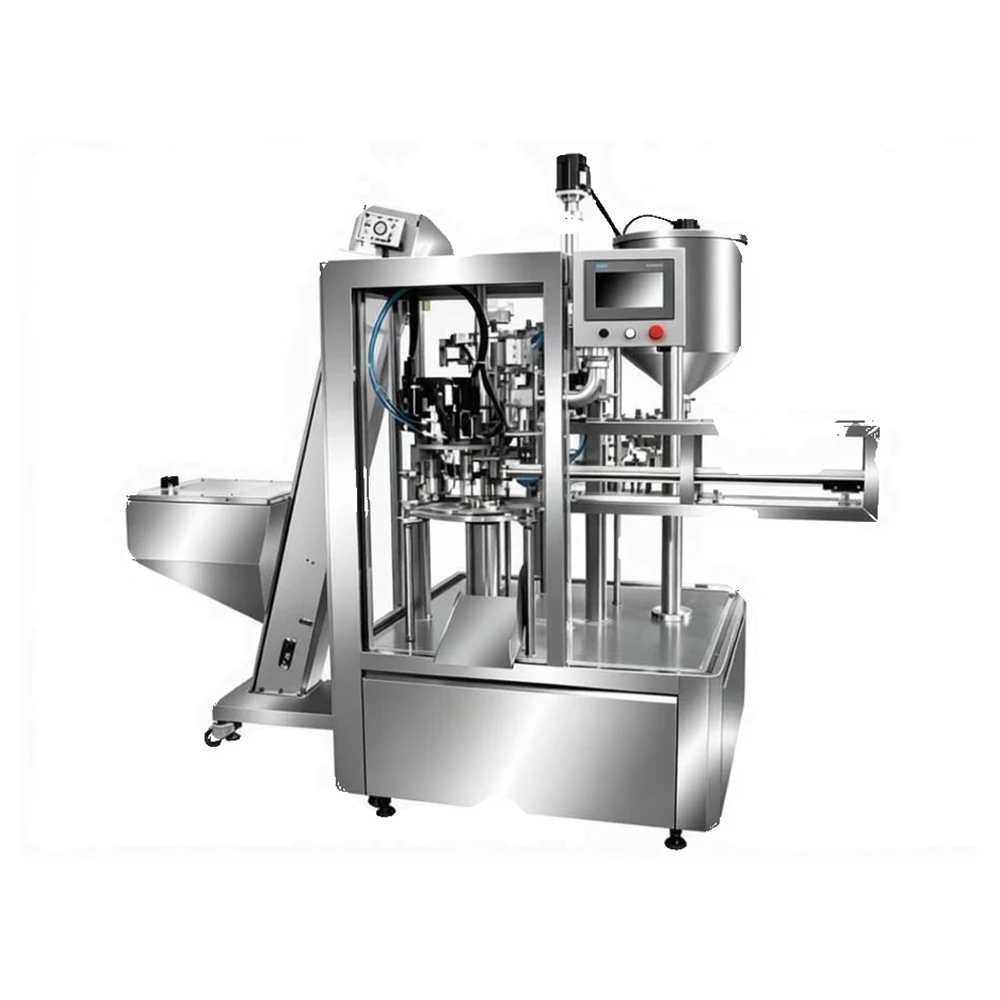
ZLD-2 Stand-Up Pouch Filling & Capping Machine
Two heads and a single-phase supply for pilot runs and small batches from 30 to 100 ml.
View modelFour heads is where a pouch line stops being a pilot plant and starts being a production asset. The ZLD-4 fills and seals spouted stand-up pouches from 60 to 390 ml at 3,600 to 6,000 per hour, holds the dose to about plus or minus 0.5 percent, and runs pastes, sauces and liquids on the same carousel with nothing more than a nozzle and recipe change.
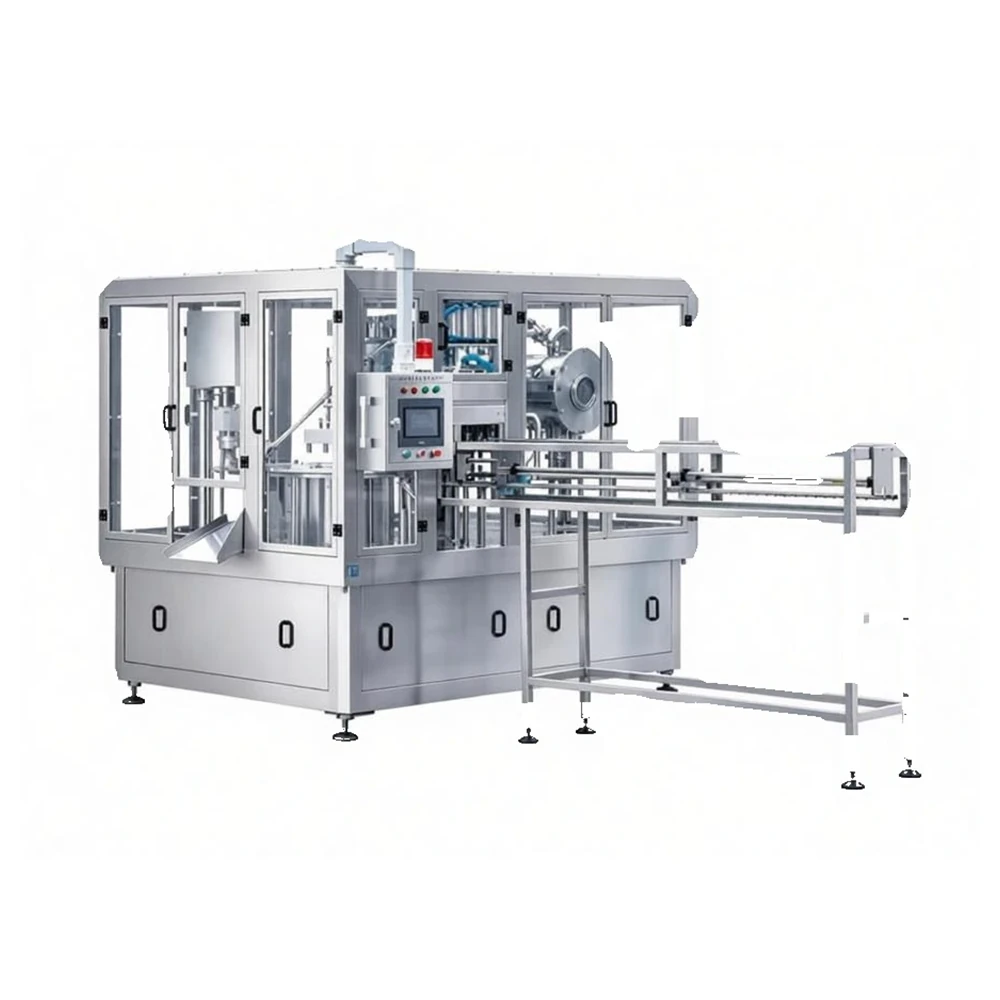
The ZLD-4 sits where output matters but the product range is still wide. It is built to keep changeover quick and the dose steady, shift after shift.
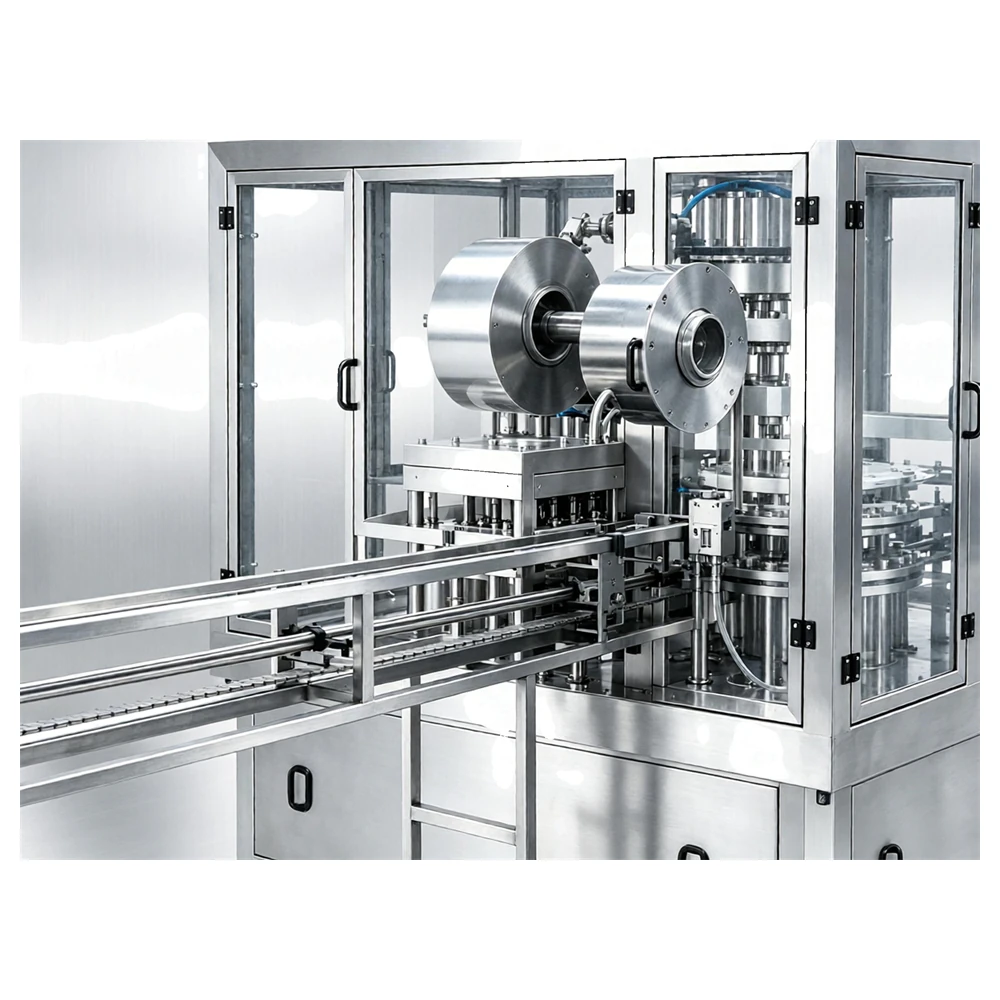
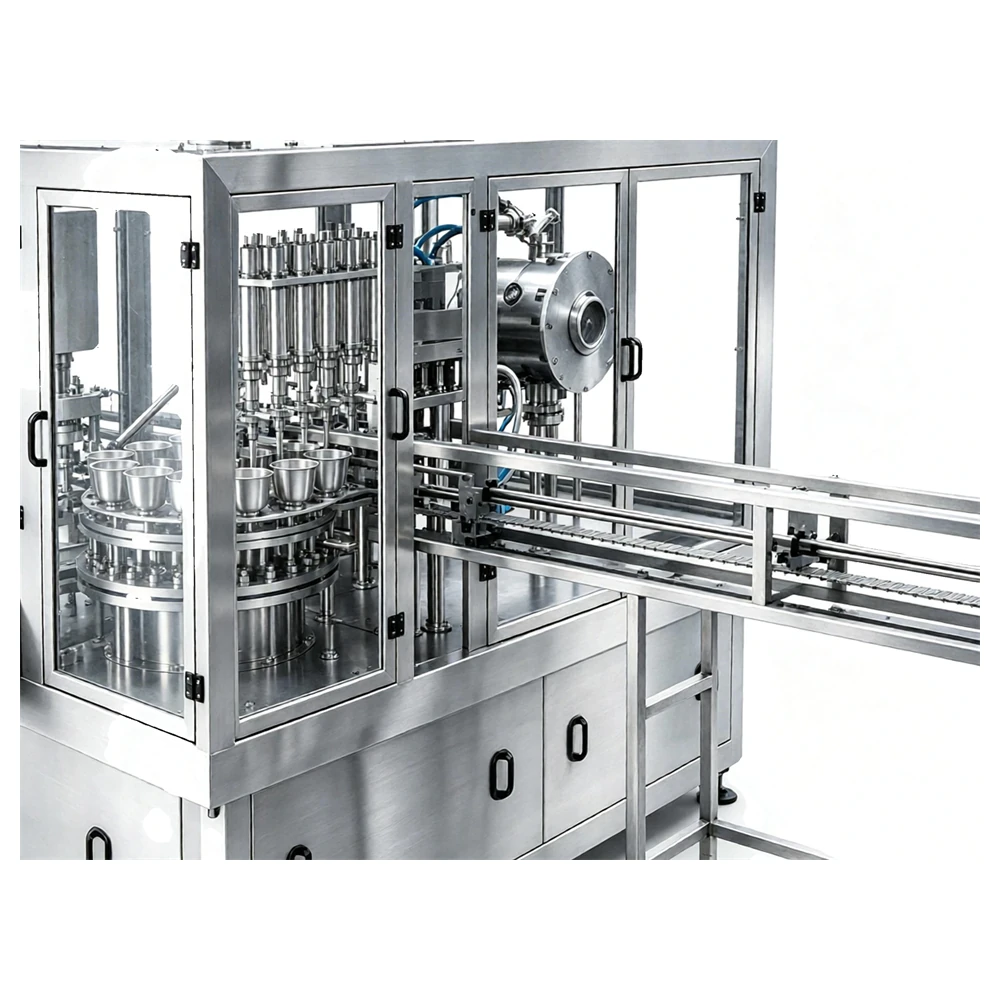
The carousel turns without stopping. While one pouch is filled, another is being clamped and a third is being sealed, so output is set by head count rather than by indexing time.
The dose is set by piston volume, driven either by air cylinders or by servo motors, which is why the accuracy holds across thick pastes and thin liquids alike.
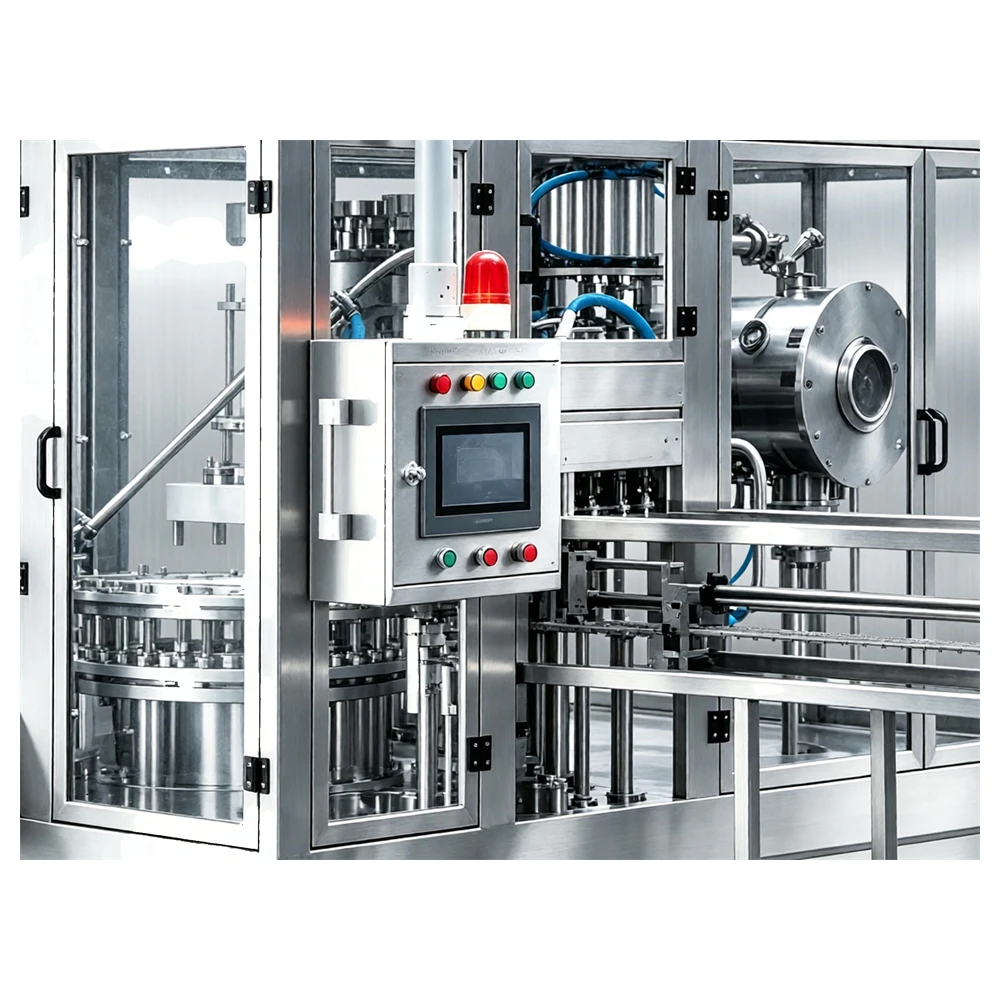
Pouch clamps and moulds change quickly and the HMI stores product recipes, so a short retail run and a larger pack can share the same machine in one shift.
The table turns at a uniform rate and the indexer locates each station precisely, so pouches sit in the same place under the nozzle and the seal closes squarely.
A rotary platform has fewer transfers and actuators than an equivalent linear line, which lowers the failure rate and simplifies day-to-day maintenance.
The frame and all product-contact parts are stainless steel with smooth surfaces, built to food hygiene requirements with no crevices where product can collect.
Figures are taken directly from the four-head model datasheet.
| Parameter | ZLD-4 — Four-Head Model |
|---|---|
| Model | ZLD-4 |
| Filling heads | 4 |
| Packaging speed | 3,600–6,000 pouches/hour |
| Fill volume | 60–390 ml |
| Maximum pouch format | 120 mm × 260 mm × 60 mm (W × H × L) |
| Packaging type | Stand-up pouch |
| Filling accuracy | ±0.5% |
| Filling method | Volumetric dosing, pneumatic cylinder or servo motor drive |
| Applicable product | Liquid, paste and sauce, including particles up to 3 mm |
| Speed control | Variable frequency drive |
| Supply voltage | 380V / 50 Hz |
| Total power | About 8.55 kW with dual servo filling, about 8.05 kW with single servo filling |
| Air consumption | 0.65 m³/min |
| Compressed air pressure | 7 kg/cm² |
| Machine dimensions | 2,960 × 2,180 × 1,700 × 2,350 mm |
| Machine weight | About 2,900 kg |
The datasheet lists four dimension values for the ZLD-4, reproduced here in the order printed. Mould sets, pouch clamps, nozzle bores and the choice of pneumatic or servo dosing are specified per order.
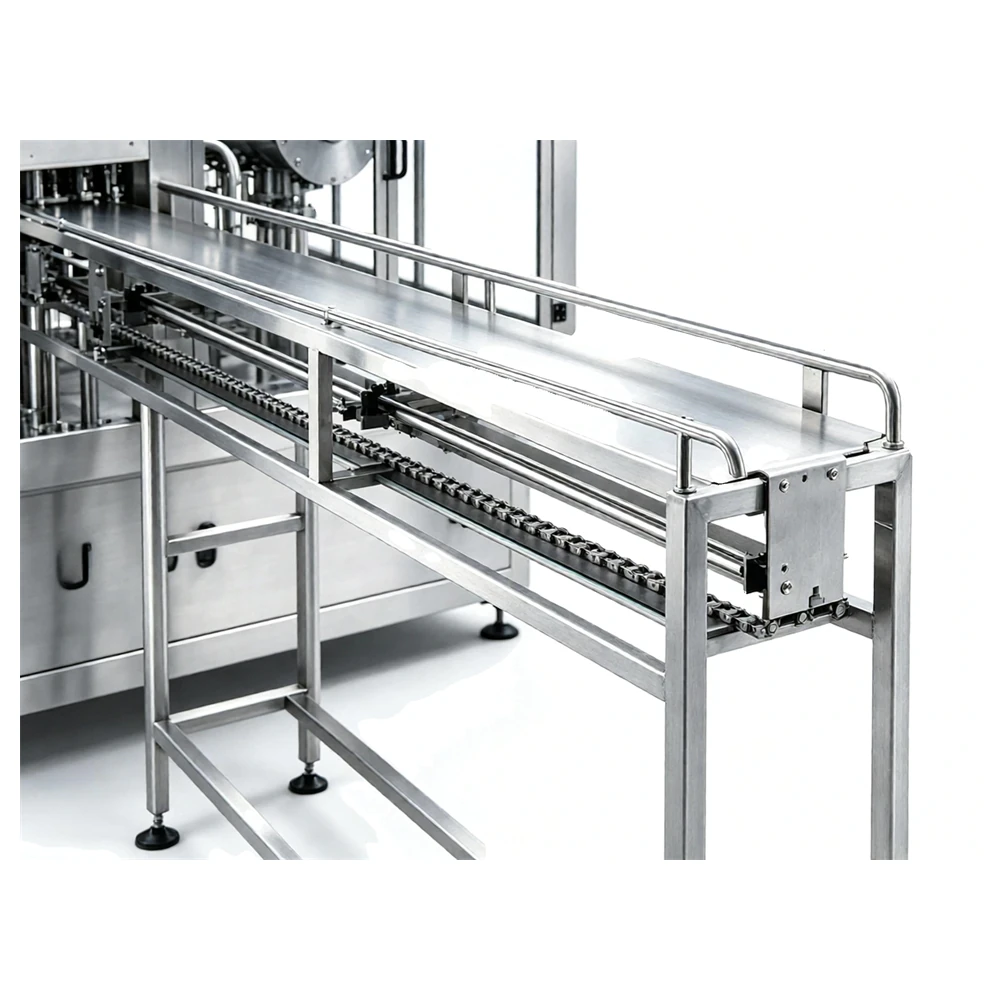
Pouches are clamped around a rotating table. As the table indexes from station to station, each pouch is opened, dosed, sealed and released in sequence. Because every operation happens on the same carousel, there is no transfer conveyor between filling and sealing and no window in which a part-filled pouch can leave the machine.
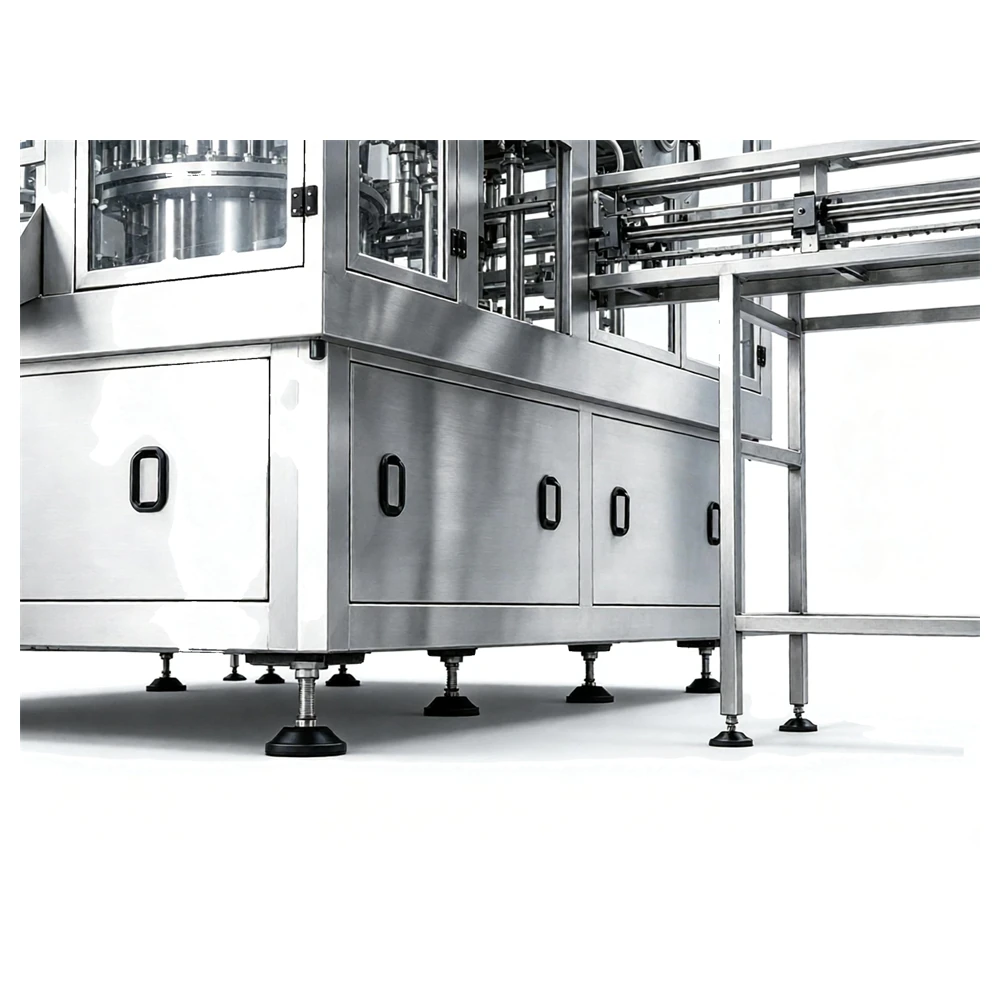
The four ZLD machines share one carousel, one dosing principle and one set of controls. The number of heads is the only variable that changes the rate, and it also sets how wide the fill range can be.
| Parameter | ZLD-2 | ZLD-4 | ZLD-6 | ZLD-8 |
|---|---|---|---|---|
| Filling heads | 2 | 4 | 6 | 8 |
| Pouches per hour | 800–3,000 | 3,600–6,000 | 5,400–9,000 | 7,200–12,000 |
| Fill volume | 30–100 ml | 60–390 ml | 60–390 ml | 60–390 ml |
| Pouch envelope | 120 × 260 × 60 mm | 120 × 260 × 60 mm | 120 × 260 × 60 mm | 120 × 260 × 60 mm |
| Total power | About 2.2 kW | 8.05–8.55 kW | 8.05–8.55 kW | 8.05–8.55 kW |
| Pouches per kW at top rate | High, low absolute volume | About 700 per kW | About 1,050 per kW | About 1,400 per kW |
| Fits | Pilot and small batch | Medium-volume factory | Continuous production | High-volume single product |
Efficiency per kilowatt is calculated from the published top rate divided by the published dual-servo power of the model, and is shown here as a planning aid rather than a datasheet value. Actual consumption depends on product viscosity, fill volume and shift pattern.
Output, accuracy, fill range and utilities decide whether the ZLD-4 fits your line.
380V at 50 Hz, which suits an established food or cosmetics production floor rather than a single-phase workshop.
The carousel speed is set electronically, so the machine can be run slowly for a trial batch and then opened up for production.
A working pressure of 7 kg/cm² at 0.65 m³/min covers both the pneumatic actuators and any air-driven dosing set.
With automatic pouch feeding, filling, sealing and discharge, one operator loads pouches and collects finished product.
The same carousel serves three industries; the difference is the product path finish and the seal parameters.
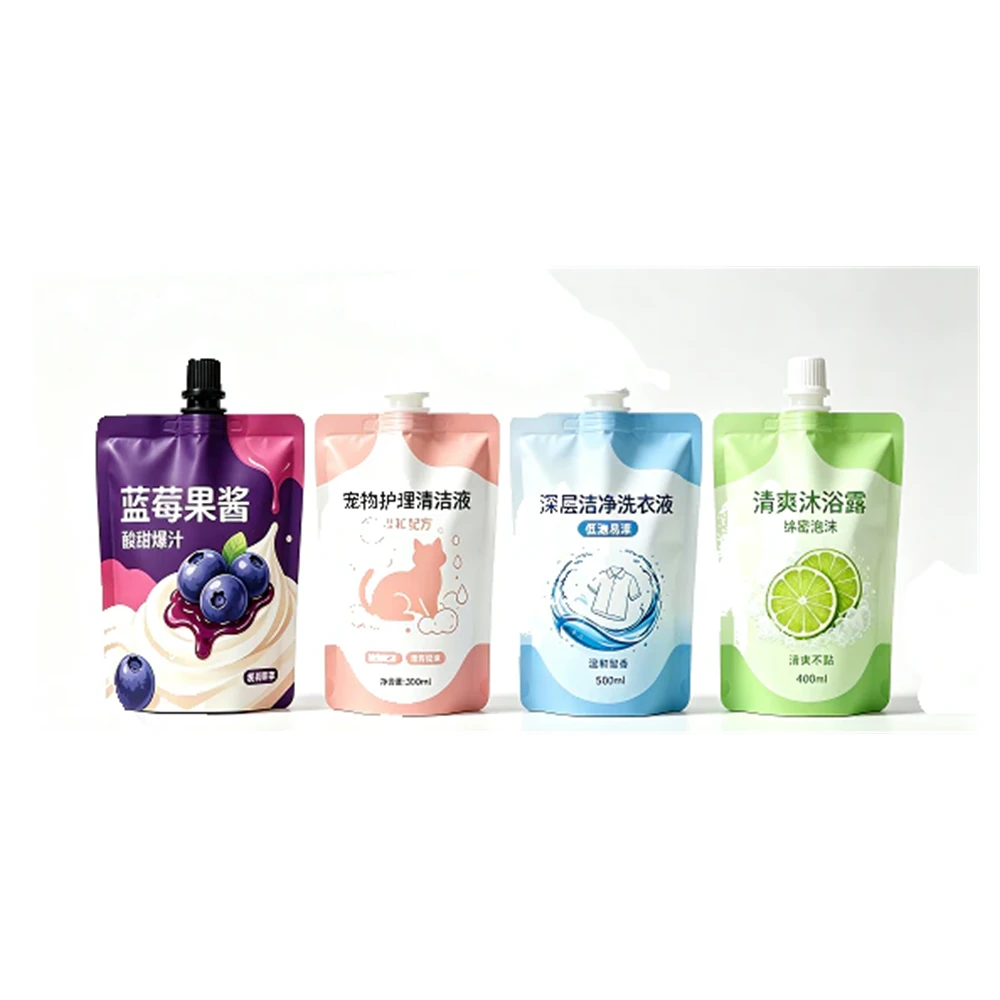
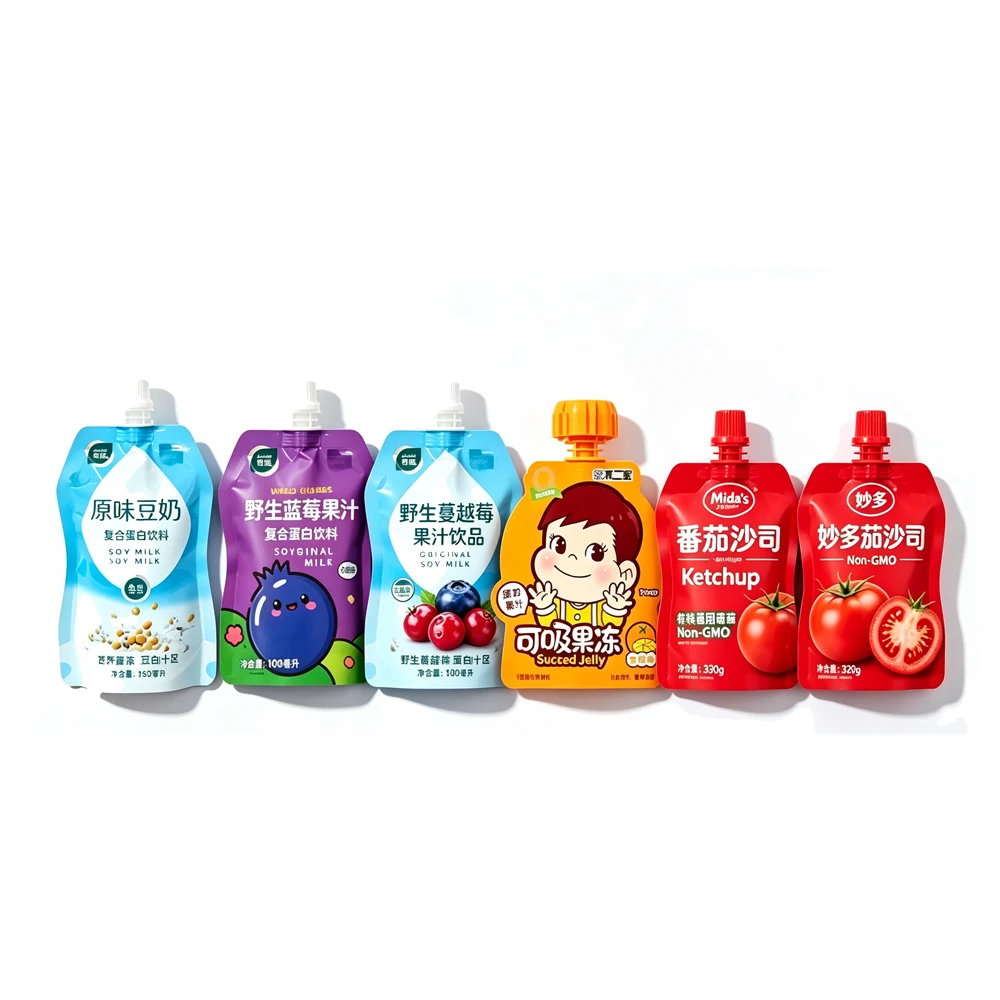
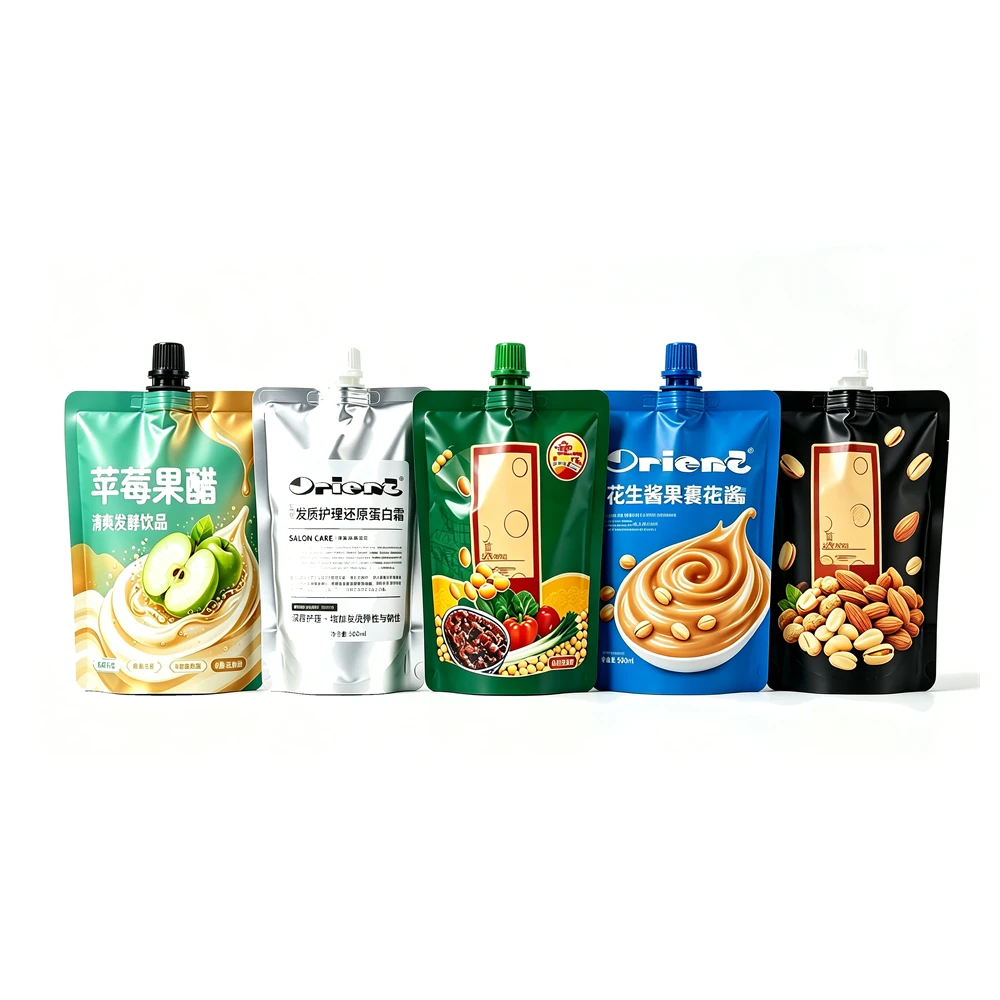
Yogurt, jelly, pudding, juice, milk tea and sour plum juice, plus ketchup, jam and peanut butter, and particle products such as pulp juice or pearl milk tea.
Shampoo, conditioner and skincare products, along with medicinal liquids and oral liquids, filled into standing pouches on the same platform.
Edible and technical oils, alcoholic drinks and cleaning and washing products, where the wide 60 to 390 ml range covers both sachet and retail pouch sizes.
Once the recipe is stored, the operator loads pouches and the machine repeats the same sequence unattended.
Spouted pouches are placed into the clamps; the indexer advances the table and opens the pouch at the filling station.
The piston pump dispenses the set volume through the nozzle, with an anti-drip action as the nozzle lifts clear.
The sealing station closes the pouch under controlled temperature and pressure, producing a flat, leak-free joint.
Sealed pouches are released at the discharge station and sampled against the approved standard for fill and seal quality.
Volumetric dosing is the constant; the drive behind it and the nozzle in front of it are chosen per product. This table pairs the published fill bands with the recommended drive.
| Product type | Recommended drive | Typical fill band | Particle limit | Nozzle notes |
|---|---|---|---|---|
| Thin liquid | Servo dosing | 60–150 ml | None | Small bore with anti-drip suck-back |
| Paste and sauce | Pneumatic or servo | 150–390 ml | Up to 3 mm | Wide bore, slow lift to avoid stringing |
| Particle-bearing fluid | Pneumatic, wide stroke | 100–300 ml | Up to 3 mm | Clearance for the largest particle plus margin |
| High-value concentrate | Servo dosing | 60–200 ml | Up to 3 mm | Tight repeatability to protect batch value |
Four heads are the middle of the platform. Two heads suit pilot and small-batch output, while six and eight heads are aimed at continuous single-product production. Four heads give 3,600 to 6,000 pouches per hour, which covers most medium-volume factories running one or two shifts, and the wider 60 to 390 ml fill range than the two-head model opens the machine to larger retail pouches.
Volumetric dosing on the ZLD-4 can be driven by air cylinders or by servo motors. Pneumatic drive is simpler and cheaper to maintain and is ample for most pastes and sauces. Servo drive gives finer control of the fill profile, which helps with thin liquids, sticky products and short fills. The datasheet quotes about 8.05 kW with a single servo filling set and about 8.55 kW with a dual servo set.
The published fill range is 60 to 390 ml, and the pouch envelope is up to 120 mm wide, 260 mm high and 60 mm across the base. Products carrying particles up to 3 mm can be dosed with the appropriate nozzle. Pouch clamps and moulds are quick-change parts, so one machine can cover more than one retail format.
The carousel turns at constant speed and a precision indexer locates each station, so the pouch sits in the same position under the nozzle every cycle. The dose itself is set by the piston pump volume and, where servo drive is fitted, by a programmable fill profile. Together they hold accuracy at about plus or minus 0.5 percent across a run.
Liquids, pastes and sauces. Typical examples are yogurt, jelly, pudding, juice, milk tea and sour plum juice on the liquid side; ketchup, jam and peanut butter among thick pastes; and pulp juice or pearl milk tea where particles are present. The same platform serves shampoo, conditioner and skincare products, and medicinal or oral liquids.
The machine has few moving parts and the product path is built from stainless components. Hoppers, filling pipes and nozzles release quickly, so a product change is a wash-down. Change the mould set for a different pouch, load the stored recipe on the HMI and the machine is ready for the next product.
Yes. It runs stand-alone or linked with a capping machine, a labelling machine and a coding machine. The utilities it needs are a three-phase 380V supply and 0.65 m³/min of compressed air at 7 kg/cm², and the layout leaves space for an infeed conveyor and an outfeed accumulation table.
Assembly, wiring, dry run and a product trial all happen before the machine is packed.
Standard builds ship in roughly 20 to 30 working days, with sea freight for the machine and a spare-parts kit packed alongside.
Parts and labour covered for 12 months, with free replacement components and lifetime access to technical advice.
English manuals, installation drawings and remote video support for mechanical setup, electrical connection and first-product run.
One pouch mould set is included with the machine; additional formats are quoted with the order. Volume terms are agreed per order.
The ZLD-2, ZLD-6 and ZLD-8 use the same carousel, so moving between them keeps the tooling philosophy and the controls familiar.
Two heads and a single-phase supply for pilot runs and small batches from 30 to 100 ml.
View model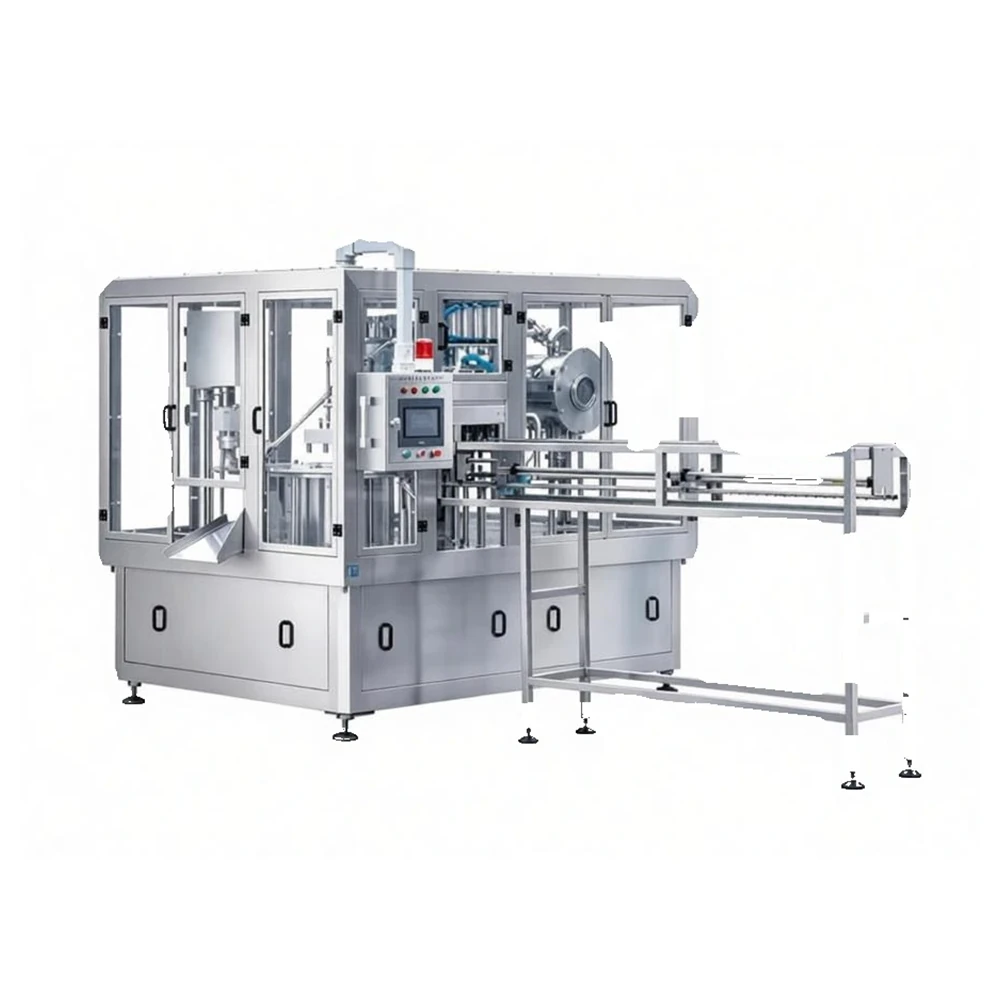
Six heads for continuous production from 5,400 to 9,000 pouches per hour on the same fill range.
View model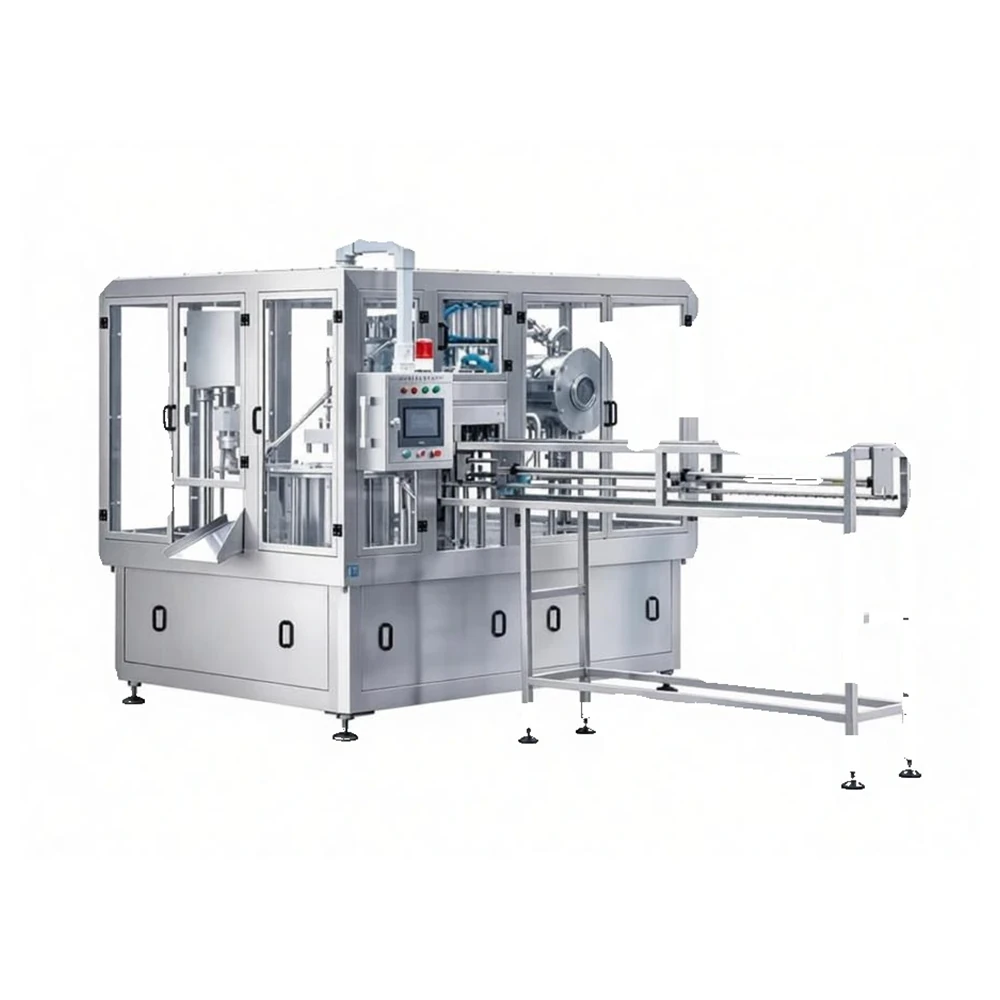
Eight heads and up to 12,000 pouches per hour for single-product, high-shift output.
View model