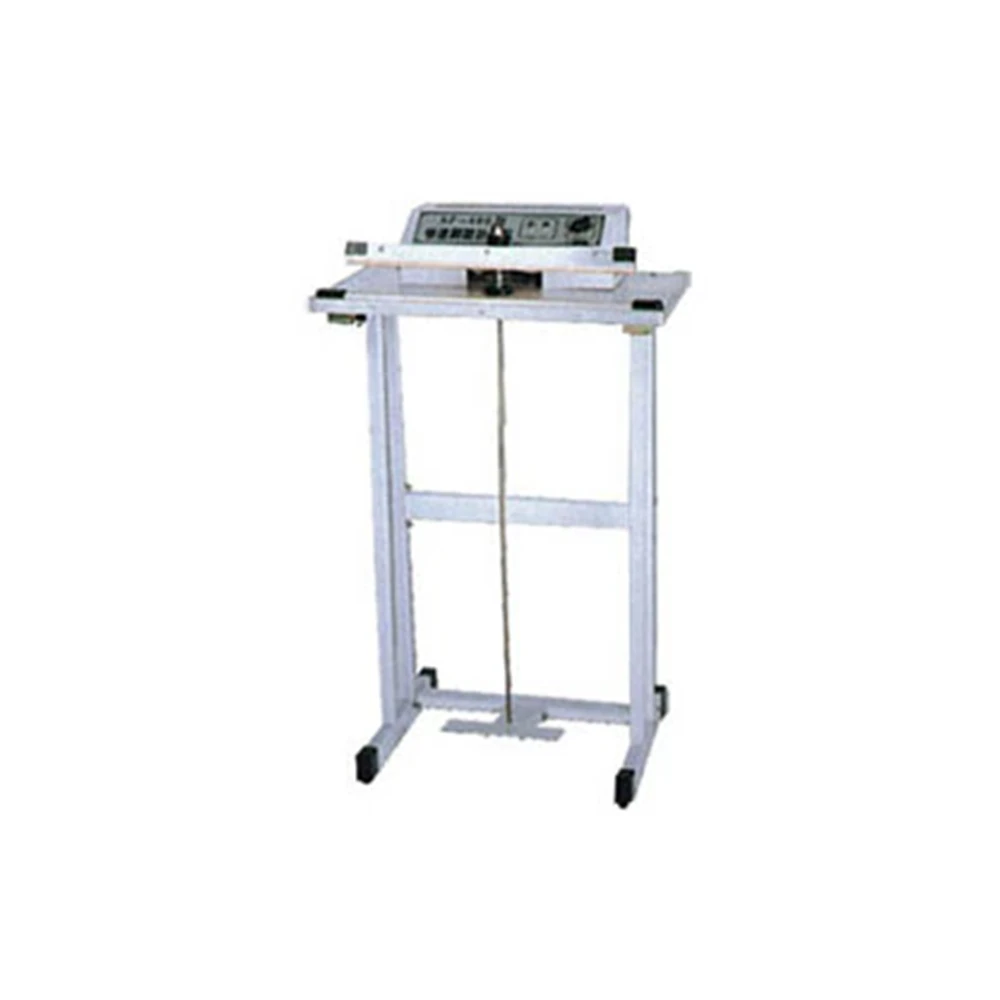
Foot-Operated Sealing Machine FRS-400JT
An impulse pedal sealer that shortens the heating cycle from 2–4 seconds to 0.2–2 seconds with an adjustable timer.
View detailsA packaging line is only as good as its seal. This range covers every practical route to a closed pack — continuous rotary heat sealing, impulse foot-operated sealing, pneumatic vertical sealing for heavy sacks, high-frequency electromagnetic induction foil sealing for bottles, and ink-wheel, inkjet and laser coding built into the sealing head. Twenty-two models span a 10 cycles per minute pedal sealer to a 250 bottles per minute induction line.
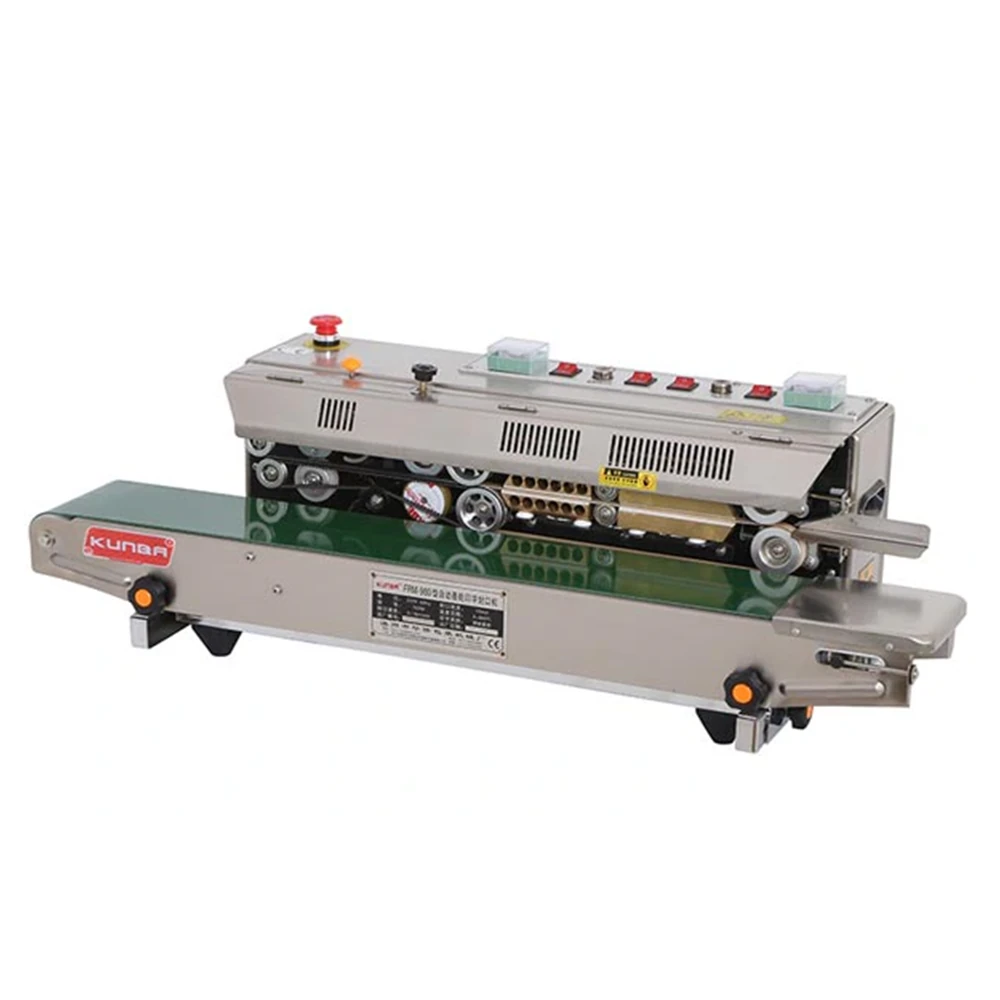
Sealing failures rarely come from a weak heater. They come from the wrong mechanism for the material, the fill weight or the line speed. A laminated barrier film needs a controlled heat-and-cool cycle; a five kilogram powder sack needs a jaw that clamps hard and holds; a shampoo bottle needs a foil membrane welded under the cap.
Ordered from the smallest impulse sealer to the largest continuous induction system. Every card opens the full datasheet for that model.
An impulse pedal sealer that shortens the heating cycle from 2–4 seconds to 0.2–2 seconds with an adjustable timer.
View details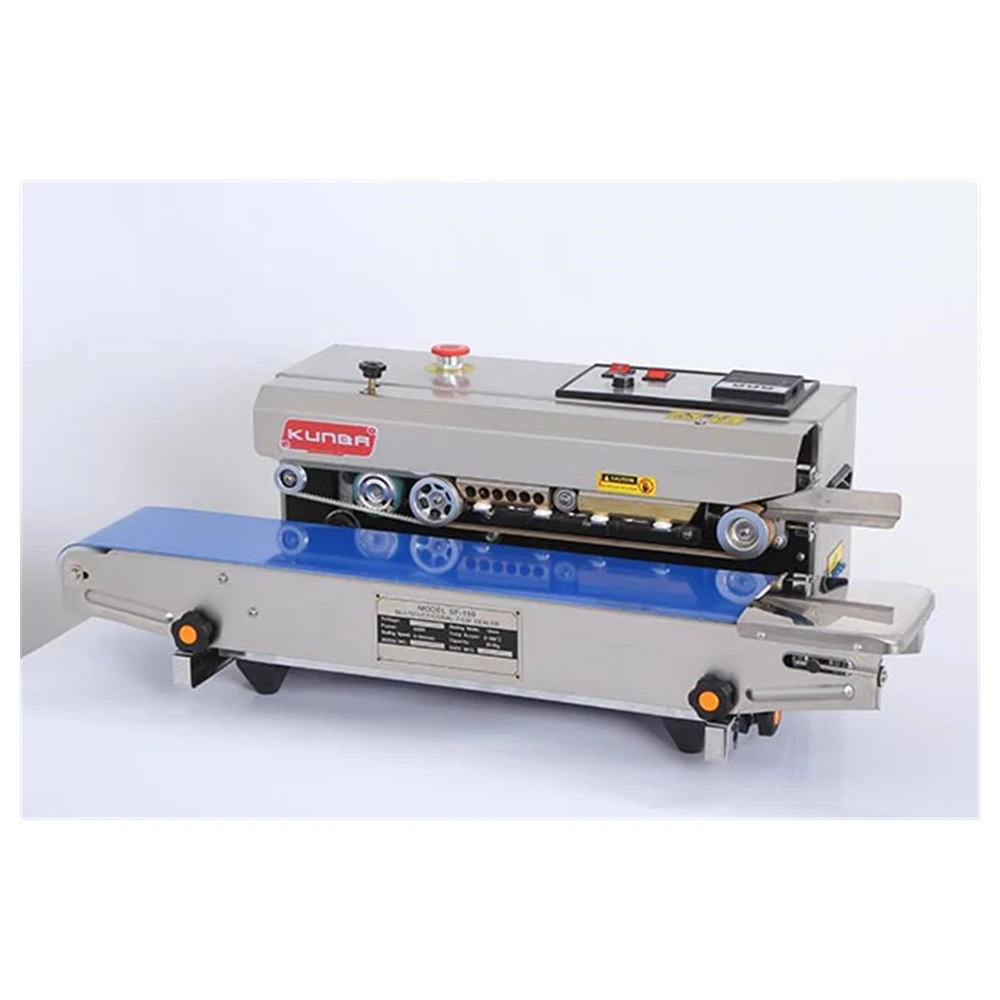
Electronic constant-temperature control with 0–14 mm seal width and an unlimited seal length for bench bag production.
View details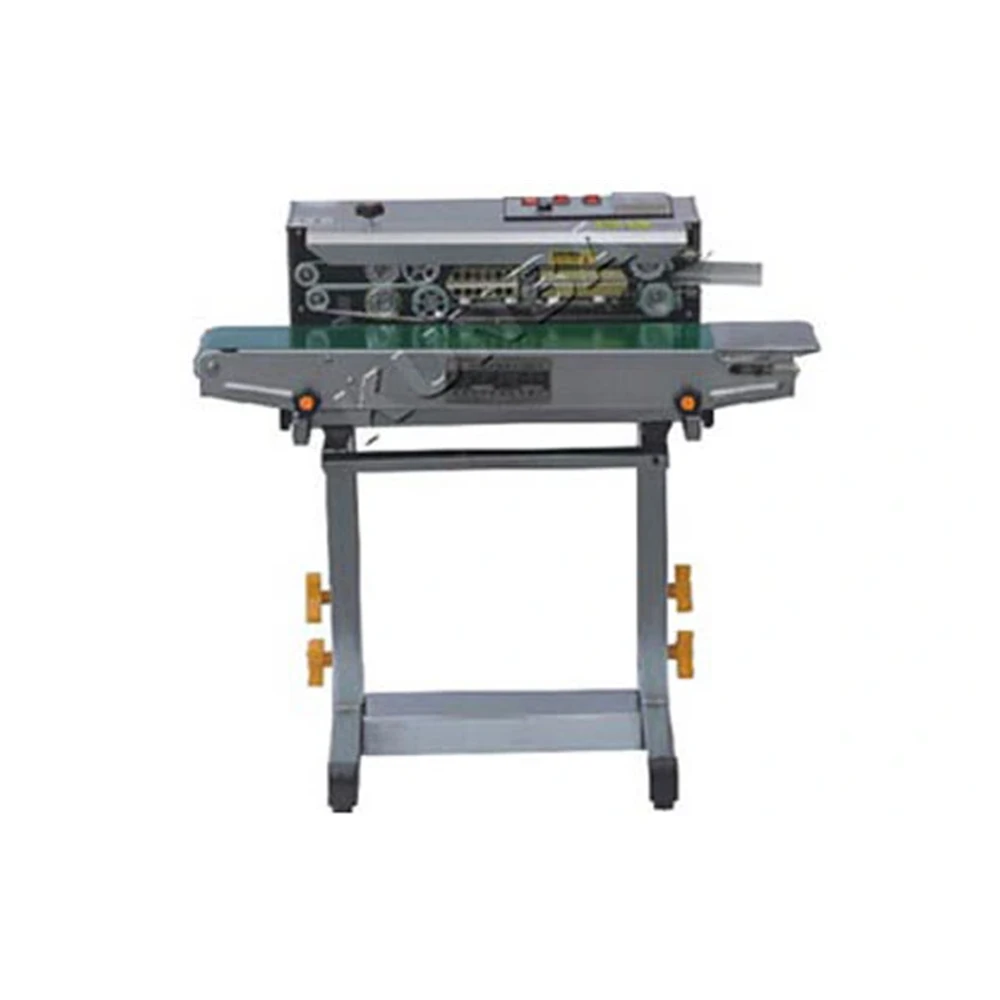
The SF-150 platform on a floor frame, switchable between horizontal and vertical sealing for film, foil and laminate bags.
View detailsHeat sealing, steel embossing and coloured ink-wheel printing in one pass, with a widened H59 brass heating block.
View details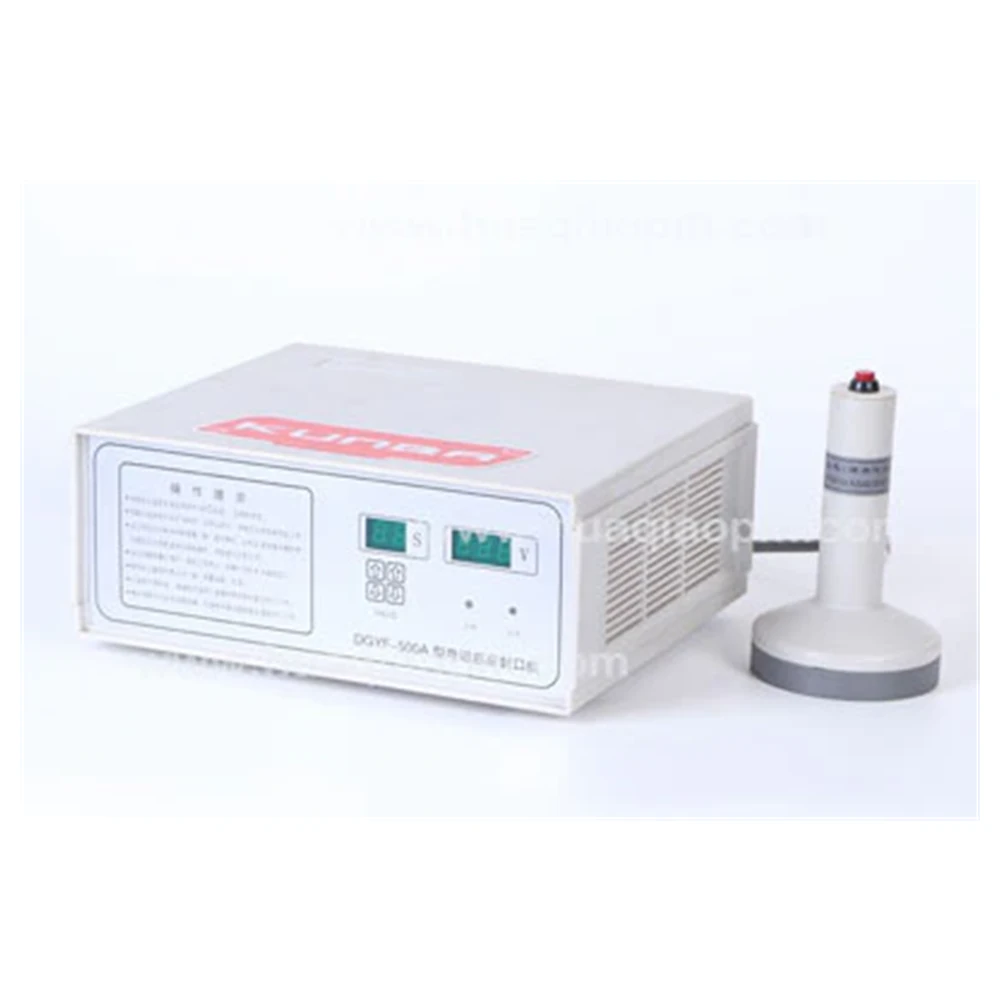
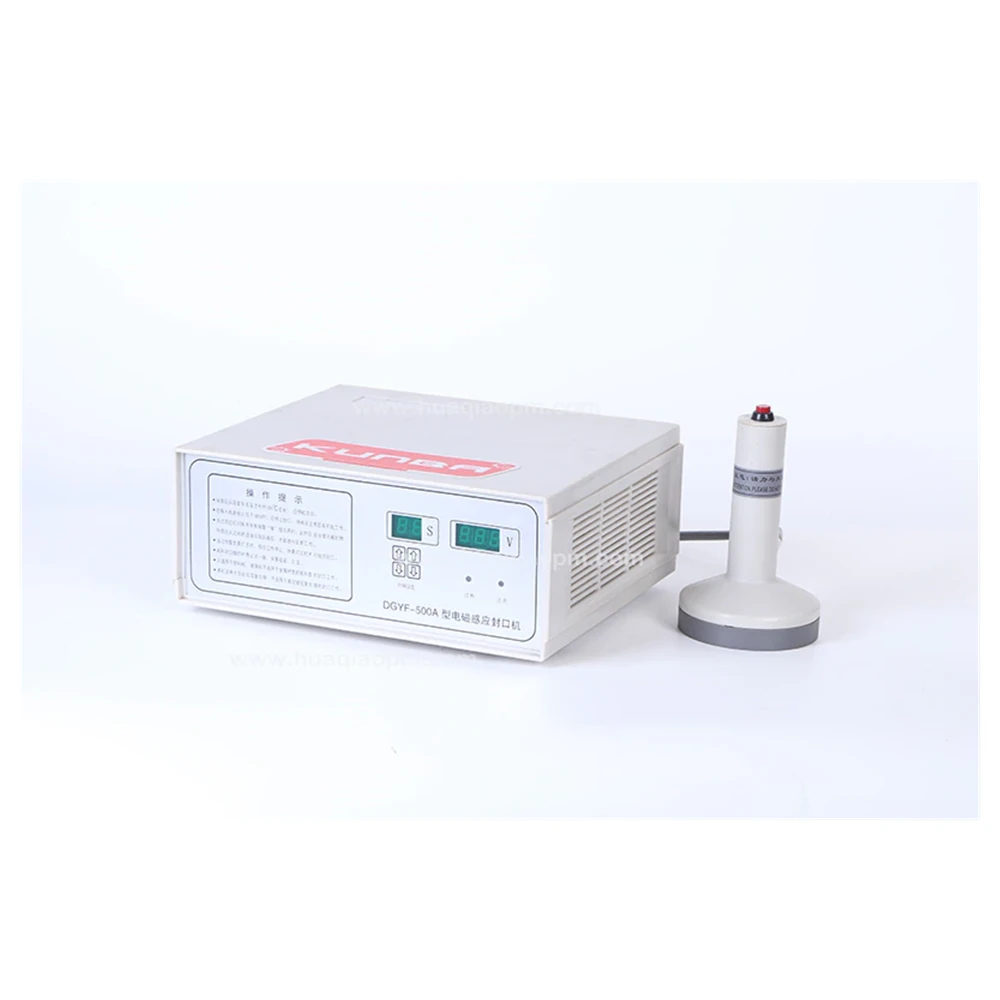
A 5 kg manual induction head that foil-seals non-metallic bottles at 0–50 bottles per minute with foil detection.
View details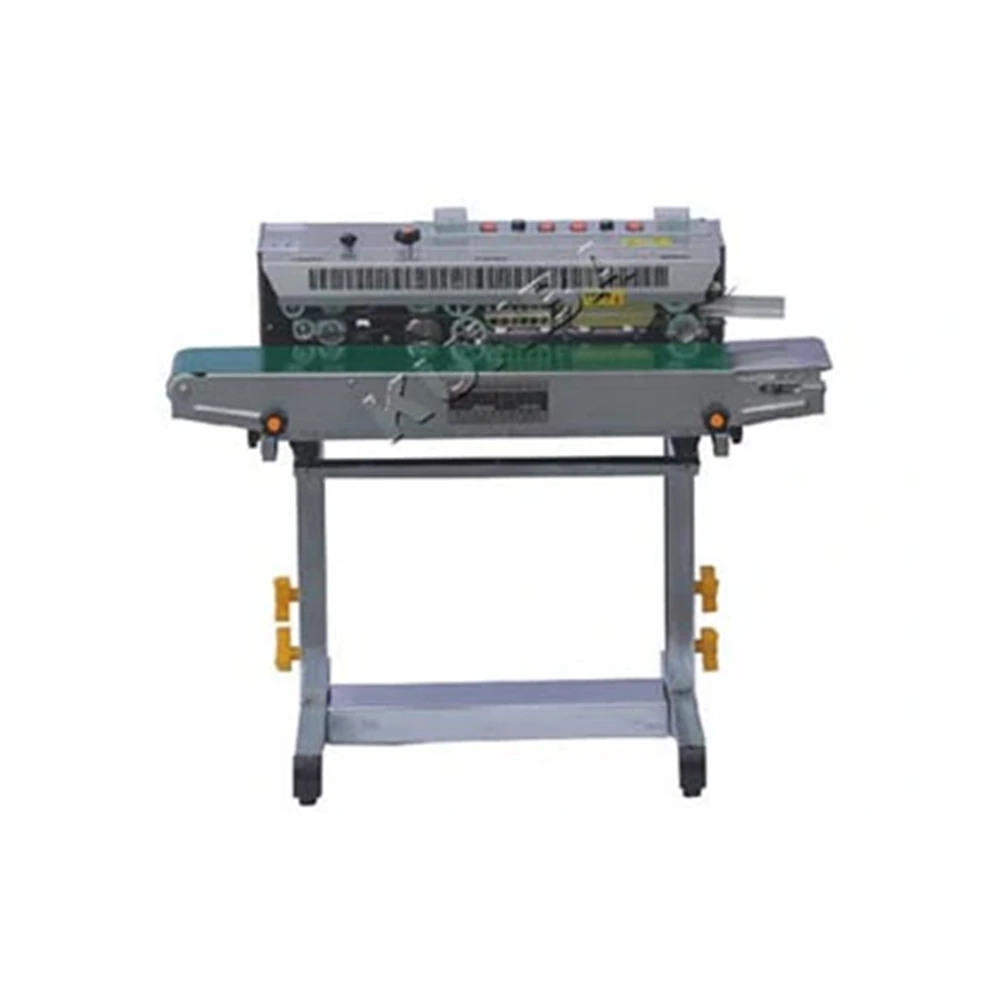
A floor-standing ink-wheel sealer that prints three lines of date, shelf life and batch data while sealing.
View details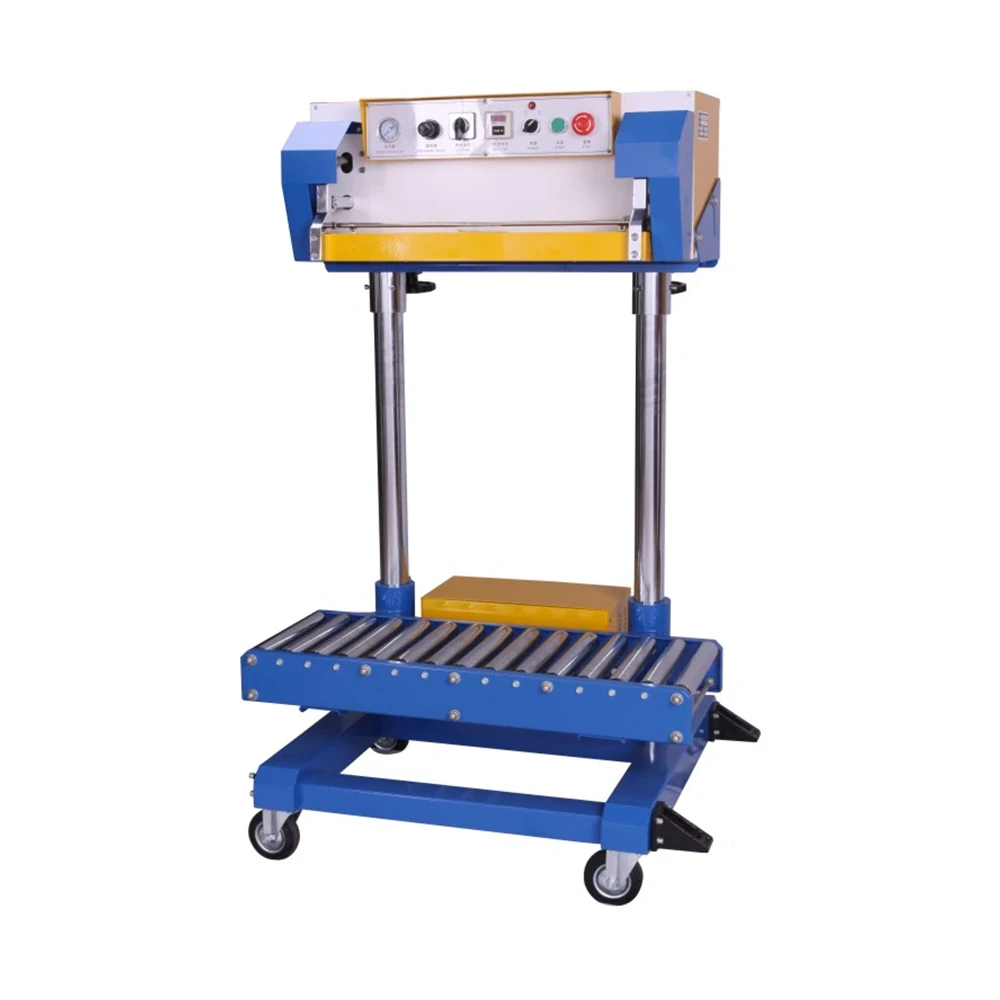
A pneumatic vertical sealer for bags up to 600 mm long and 50 kg, with adjustable jaw pressure and a 20° head angle.
View details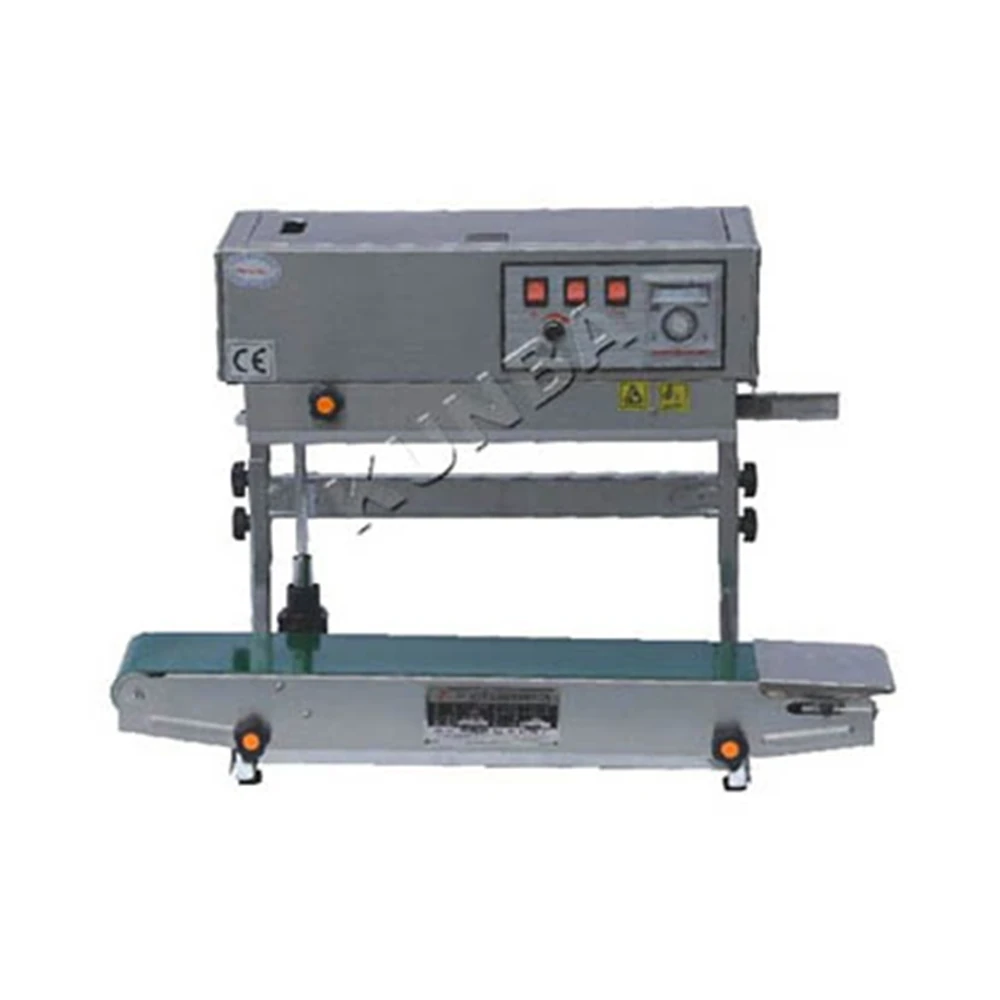
A compact vertical unit for small sachets in PE, PP and foil, with an optional date embossing system.
View details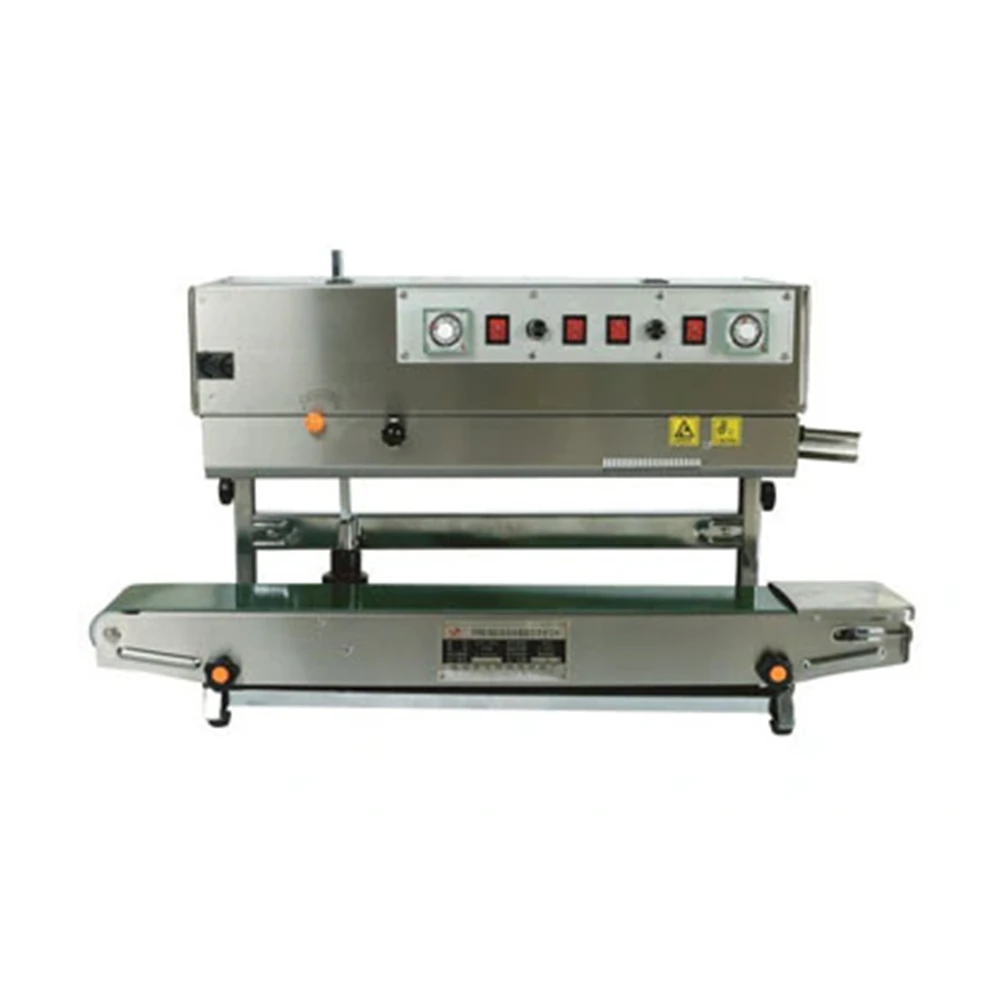
Vertical and horizontal duty in one frame, with grid, strip, smooth and alphanumeric embossing modes.
View details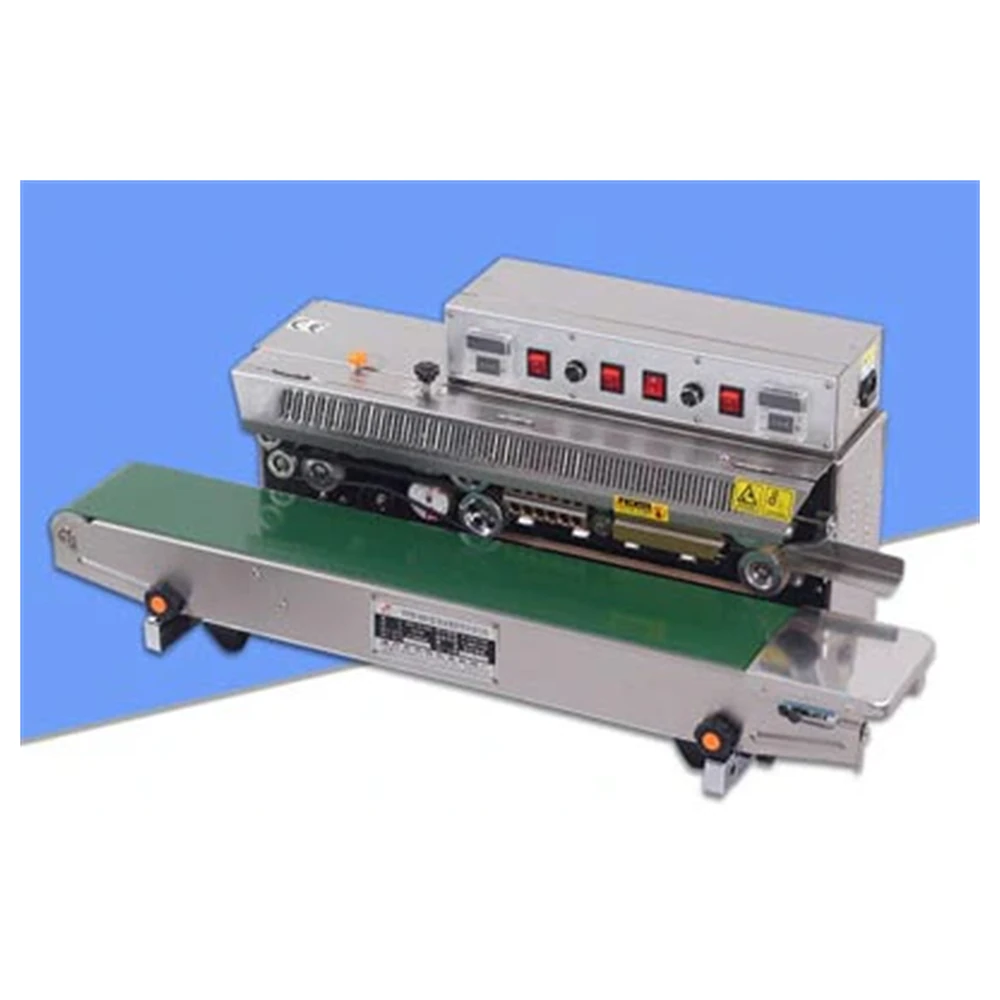
Adjustable temperature and speed with a cooling fan that keeps thin film flat and free of wrinkles.
View details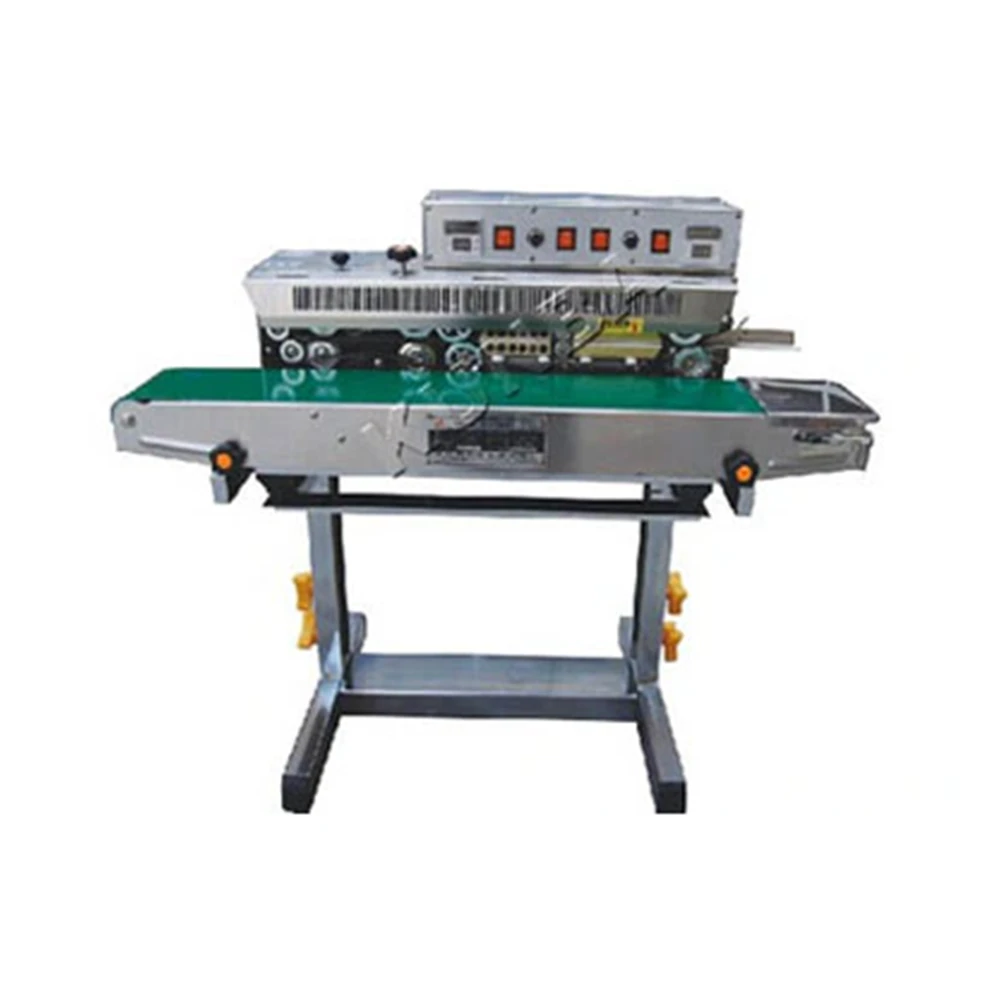
A floor-standing deluxe build with a full frame, speed-reduction drive and ink-wheel print in a single pass.
View details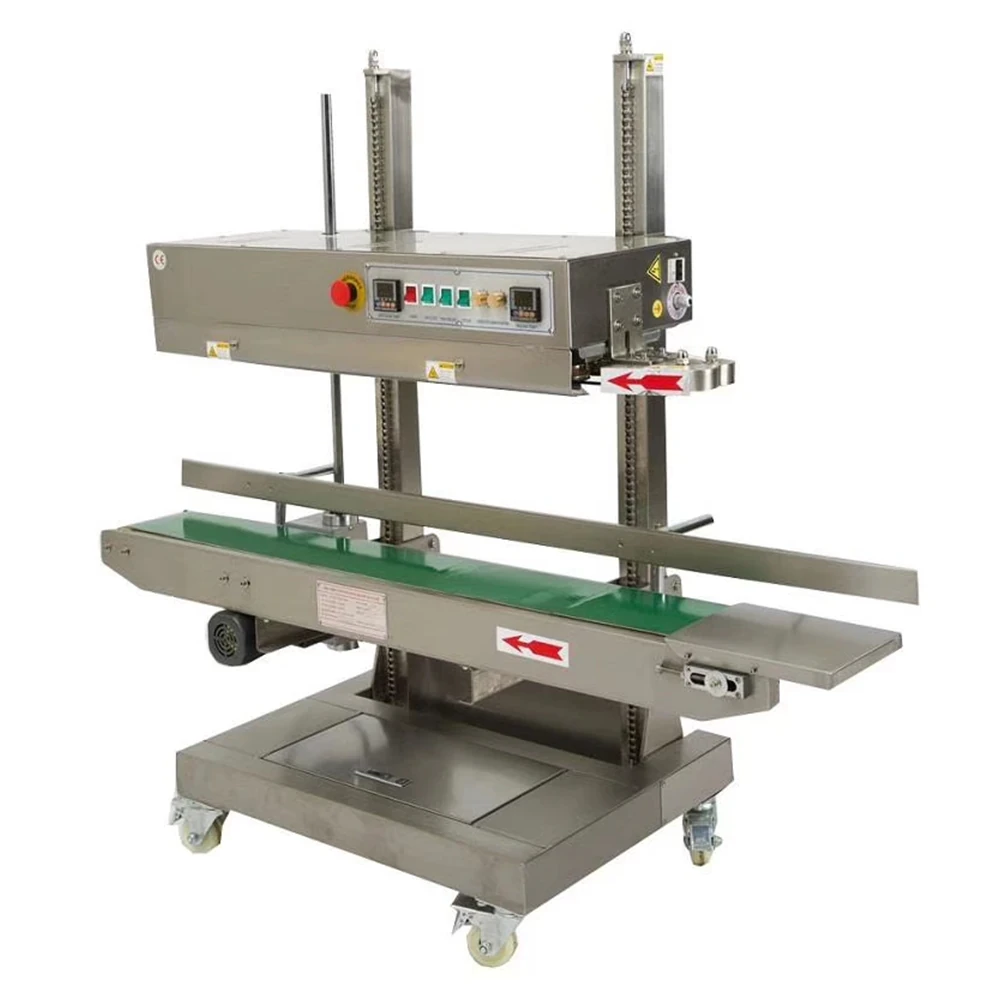
A 304 stainless steel console with a 20 kg conveyor load, ink-wheel printing and an optional air extraction unit.
View details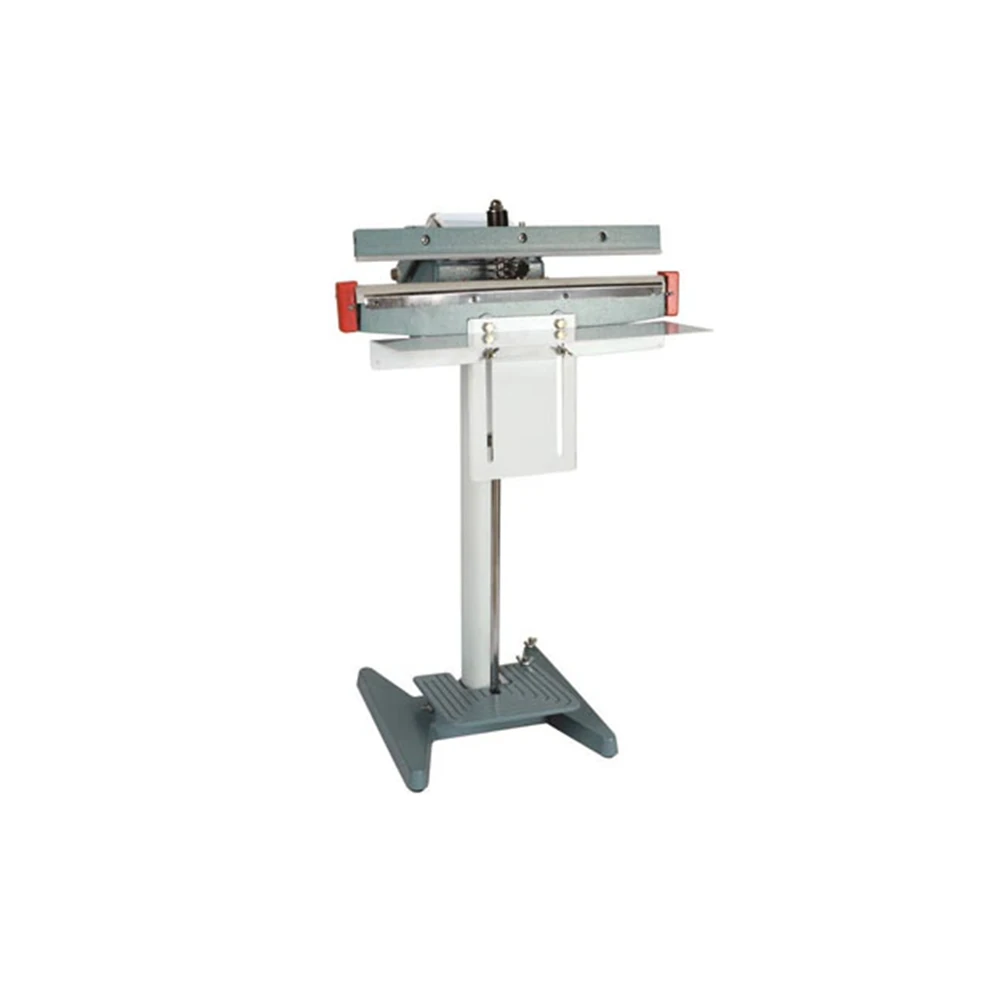
A pedal-operated impulse sealer on a floor frame, running from 350 mm to 800 mm seal bars at 1200–1800 W.
View details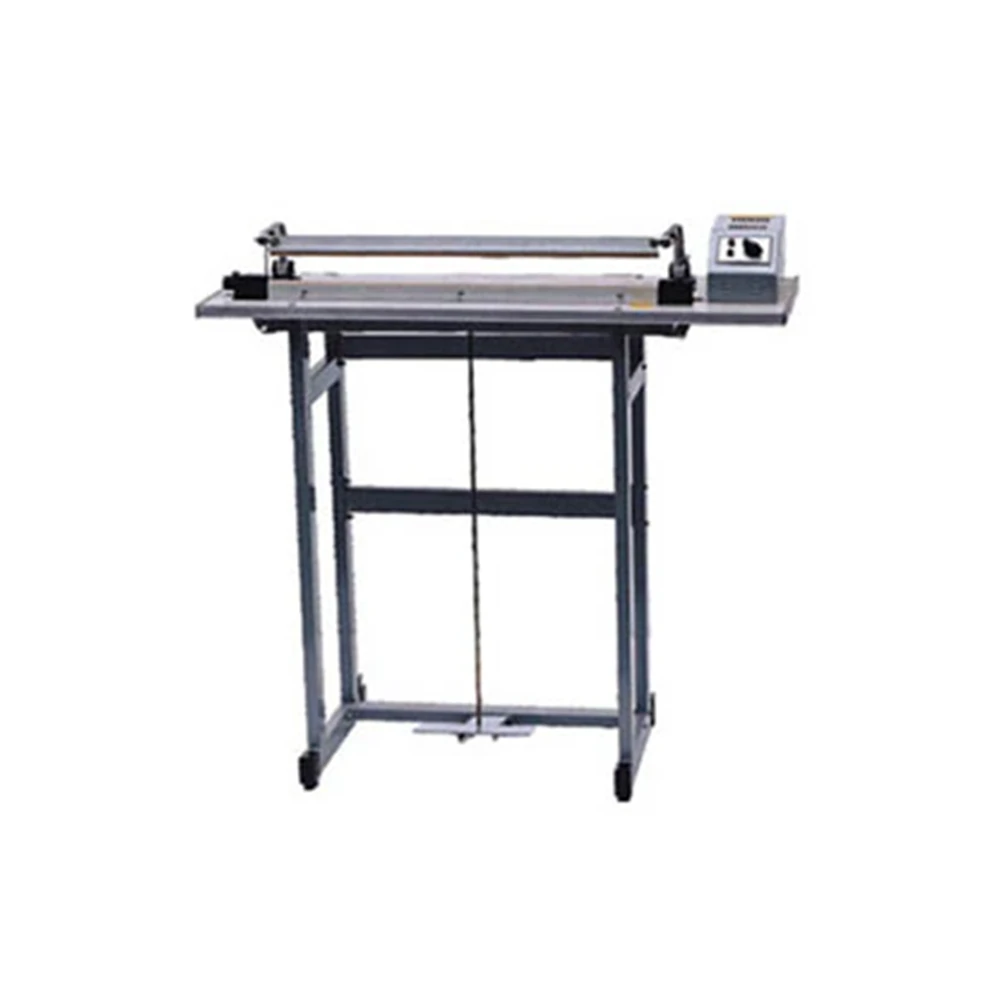
A pass-through pedal sealer with a 0.2 second pulse and long seal bars for oversized film and foil bags.
View details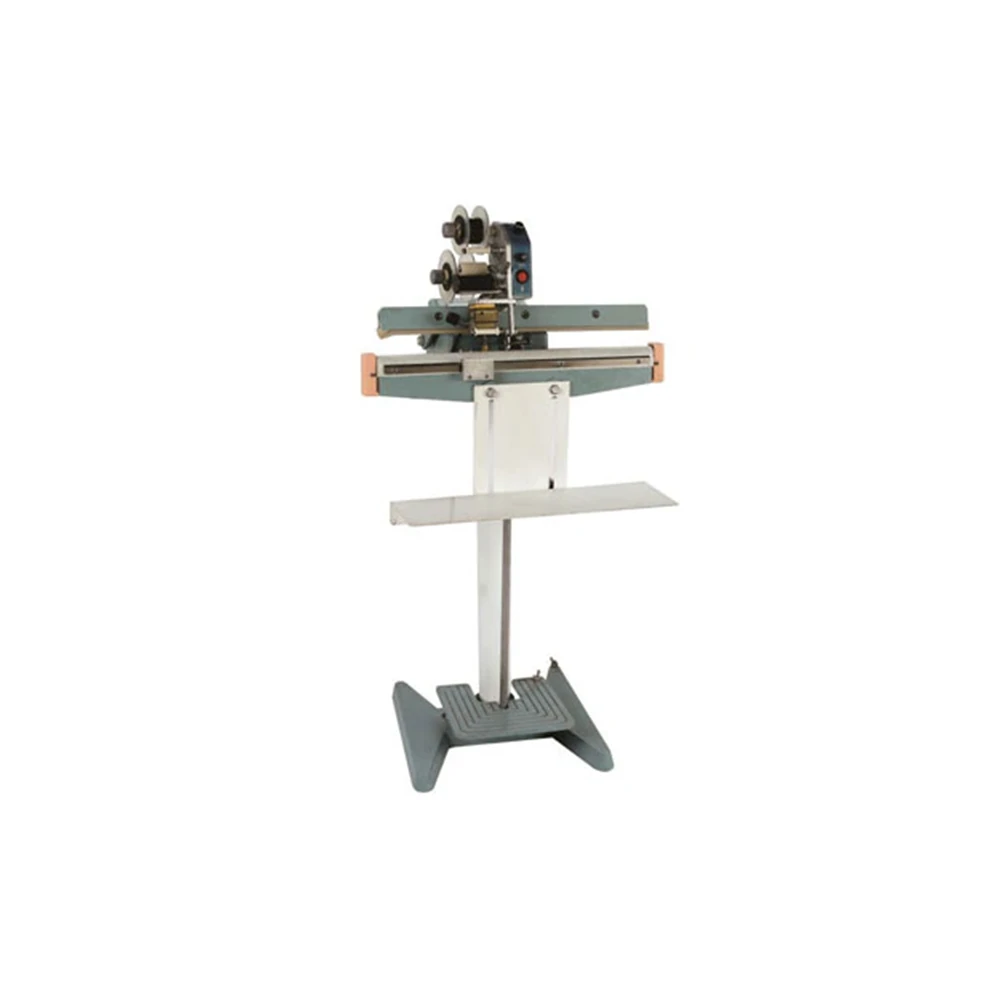
Combines an impulse seal and an embossed date code in a single pedal stroke, in 350–800 mm bar lengths.
View details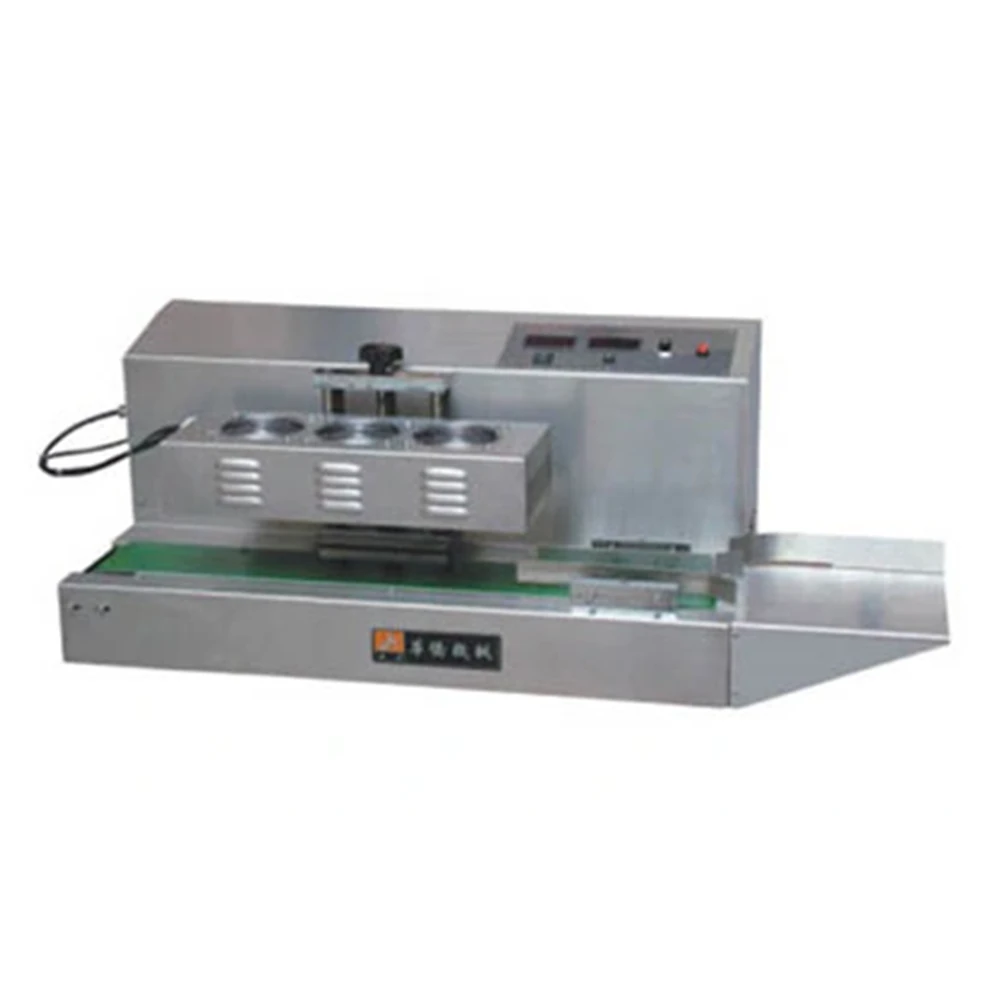
An air-cooled in-line induction sealer for 15–60 mm bottle necks at up to 200 bottles per minute.
View details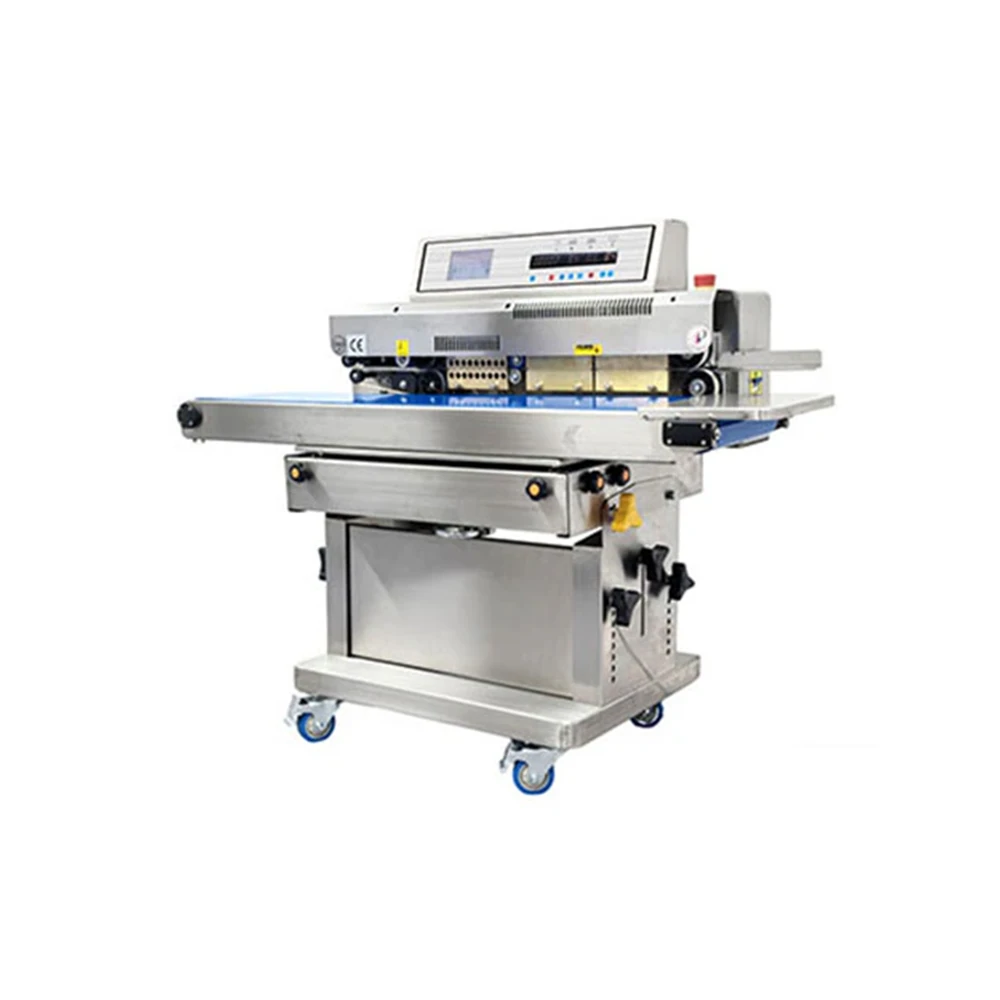
A four-core Linux control platform with a 5-inch touchscreen, printing while it seals at 0–25 m/min.
View details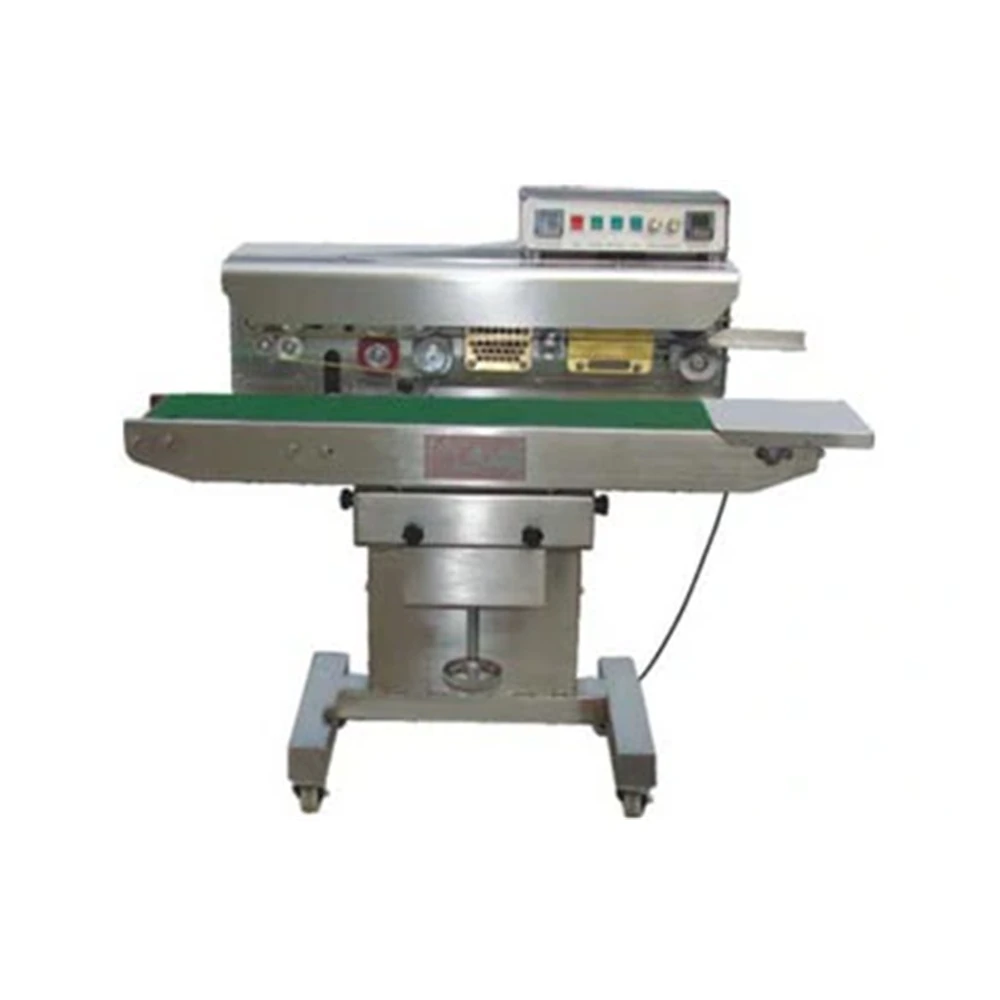
A high-power continuous platform for sealing, bag making and printing, with overload protection on the heater.
View details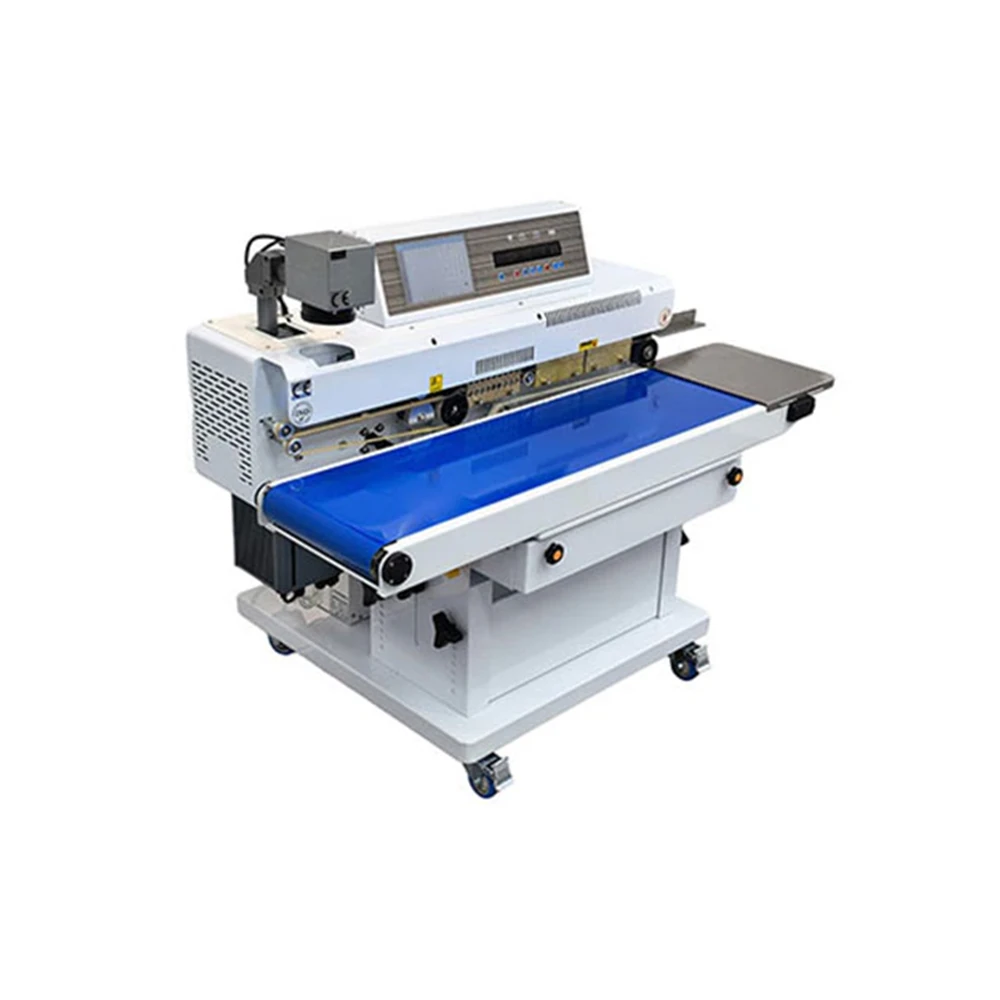
Thermal laser coding needs only electricity, with dual independent temperature channels and a 7-inch touchscreen.
View details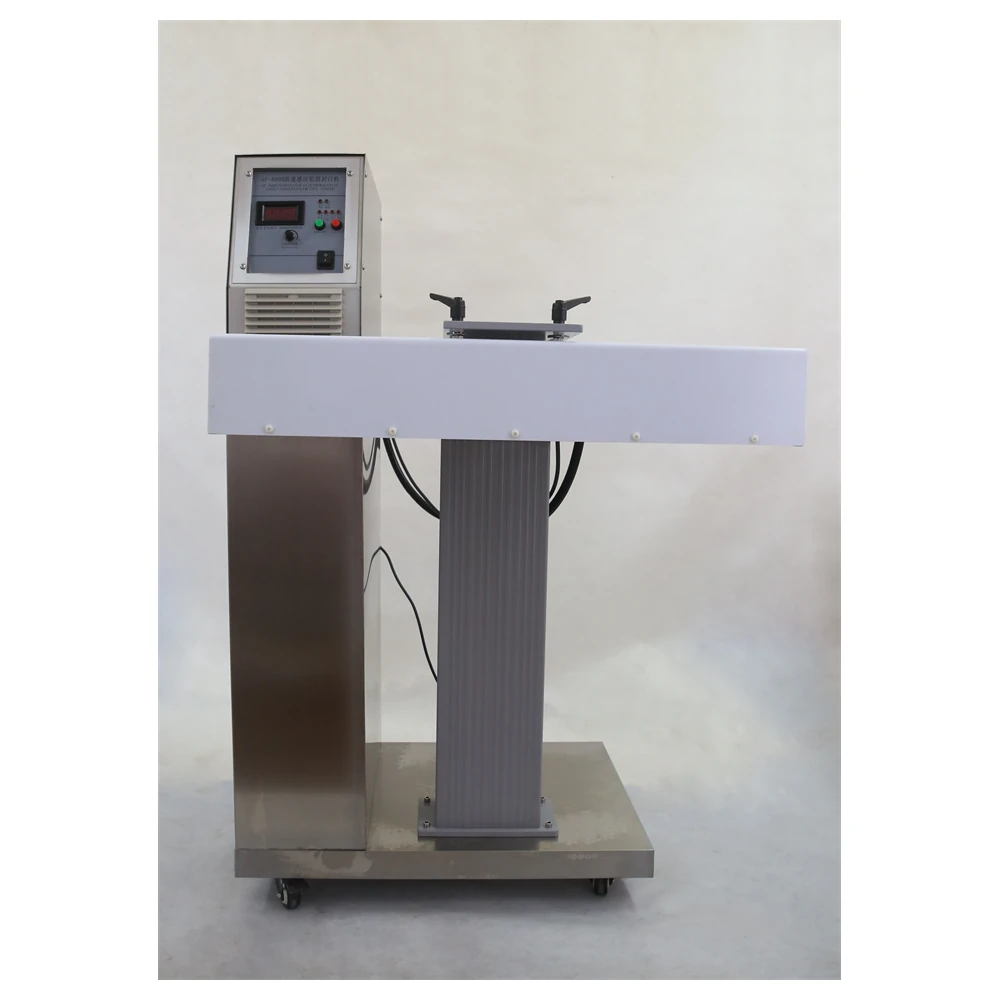
A water-cooled induction console sealing 15–130 mm necks at up to 250 bottles per minute, built to GMP practice.
View details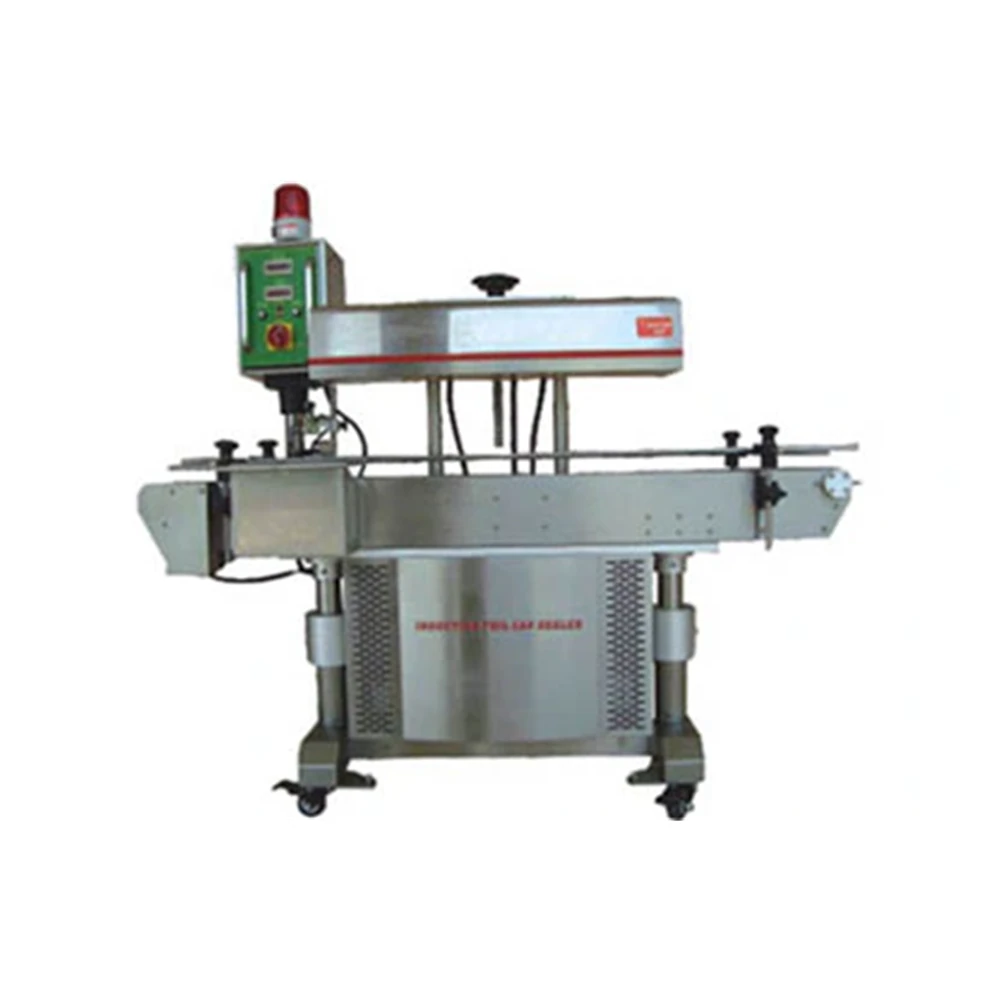
A heavy-duty continuous induction system for pharma, agrochemical, lubricant and cosmetic bottle lines.
View details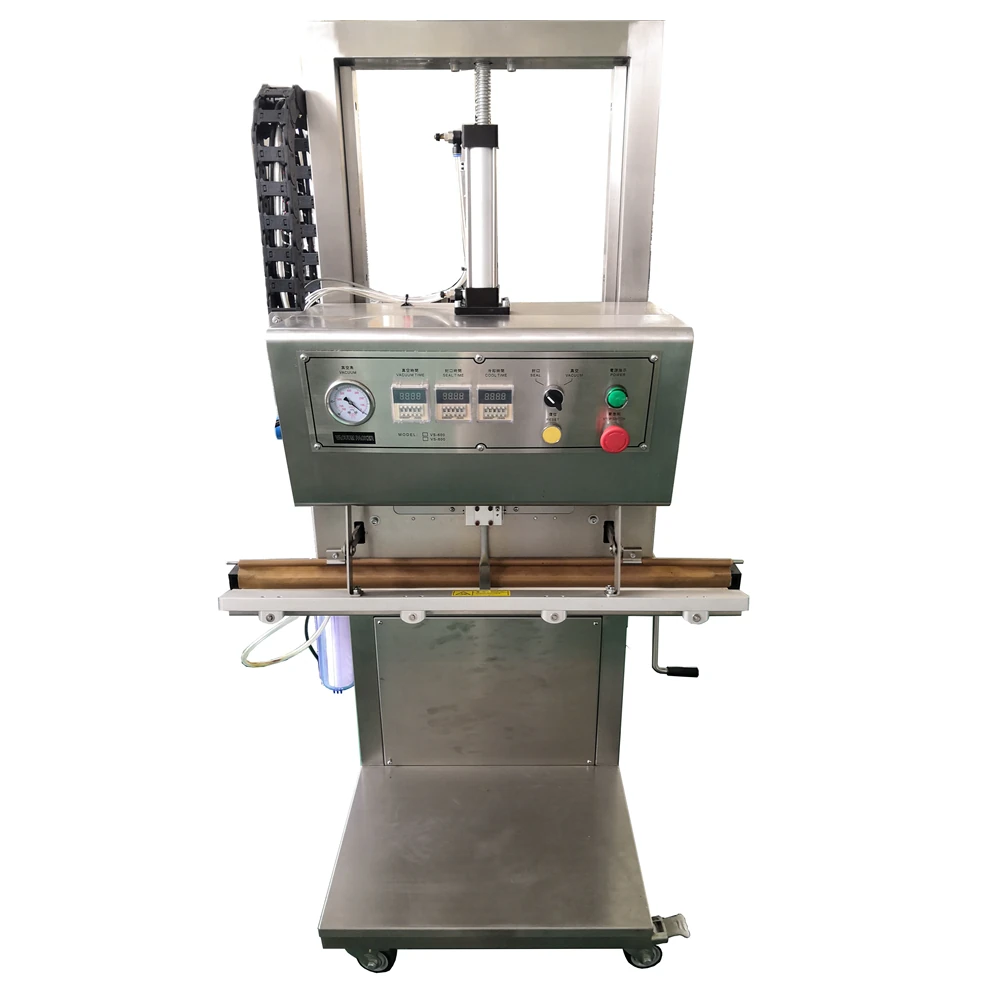
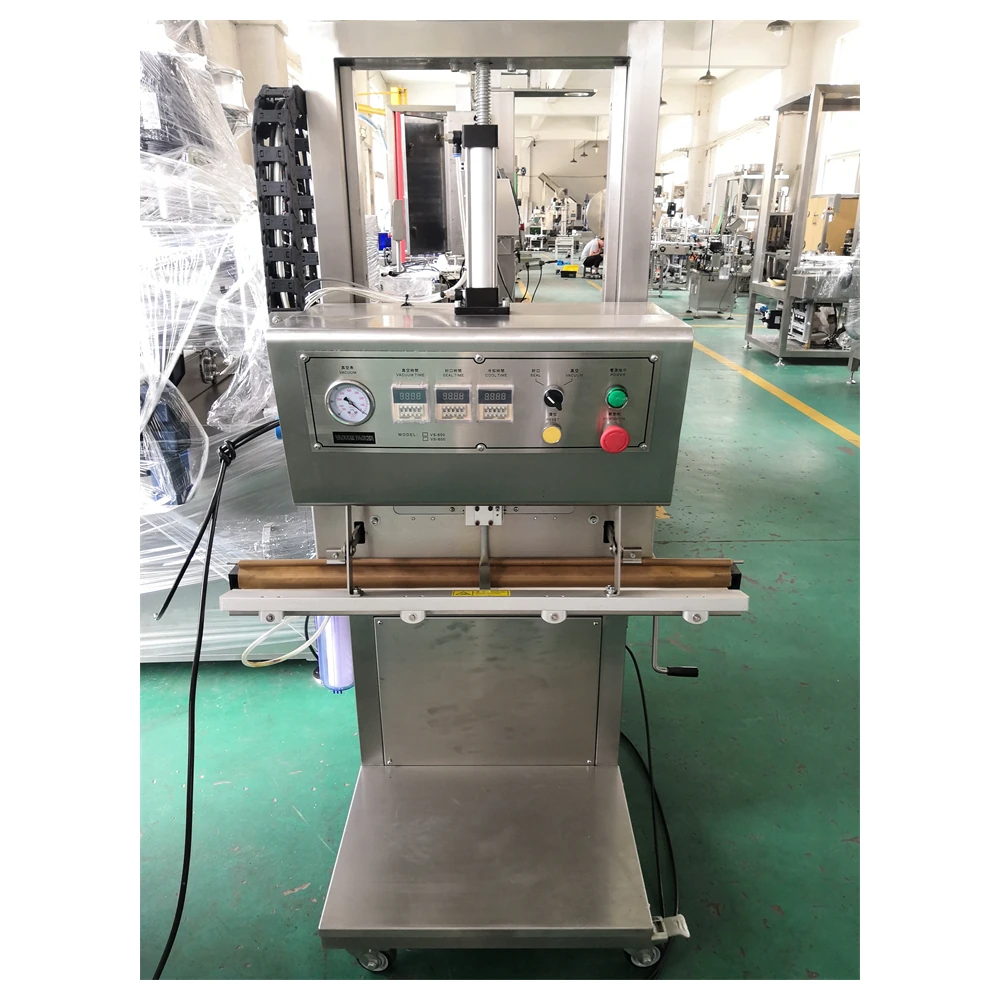
Combines vacuum, gas flushing and air-powered sealing up to 600 mm, with a 304 stainless frame on braked castors.
View detailsRead down a column to see one machine, or across a row to compare a single parameter. Values are taken directly from each model datasheet.
| Parameter | FRS-400JT | SF-150W | SF-150LD | FRM-980W | GLF-500 | FRM-980LD | JS-600L | SF-150LW | FRM-980LW | FRD-980AI | FRD-980AIII | JS-1100V | PFS-350JT | FRS-400TG | PFS-350DM | GLF-900 | SMT-280 | CBS-1100H | Laser Coder | Induction Foil | FNJ-1900 | Vacuum Sealer |
|---|---|---|---|---|---|---|---|---|---|---|---|---|---|---|---|---|---|---|---|---|---|---|
| Sealing Method | Impulse, foot pedal | Continuous rotary heat | Continuous rotary heat | Continuous heat + ink wheel | Induction foil, handheld | Continuous heat + ink wheel | Pneumatic vertical heat | Continuous vertical heat | Continuous heat + emboss | Continuous heat + ink wheel | Continuous heat + ink wheel | Continuous heat + ink wheel | Impulse, floor pedal | Impulse, pass-through | Impulse + date code | Induction foil, in-line | Heat + inkjet or steel stamp | Continuous heat, high power | Heat + laser coding | Induction foil, in-line | Induction foil, continuous | Vacuum, gas flush + heat |
| Seal Width / Length | 400 mm bar | 0–14 mm | 6–15 mm | 6–10 mm | 28–65 mm neck | 6–10 mm | 8–10 mm / 600 mm | 10 mm | 10 mm | 10 mm | 10 mm | 5–10 mm | 350 mm bar | 400 mm bar | 350 mm bar | 15–60 mm neck | 10 mm | Continuous band | 10 mm | 15–130 mm neck | Large neck range | 600 mm seal, 8 mm wide |
| Sealing Speed | 0.2–2 s pulse | 0–13 m/min | 0–12 m/min | 0–24 m/min | 0–50 bottles/min | 0–24 m/min | Intermittent cycle | 0–24 m/min | 0–24 m/min | 0–24 m/min | 0–24 m/min | 0–12 m/min | Pulse cycle | 0.2 s pulse | Pulse cycle | 0–200 bottles/min | 0–25 m/min | Continuous | 0–25 m/min | 0–250 bottles/min | Continuous line | PLC cycle |
| Temperature | Adjustable timer | 0–300 °C | 0–300 °C | 0–250 °C | Induction field | 0–250 °C | Constant heat | 0–300 °C | 0–300 °C | 0–300 °C | 0–300 °C | 0–300 °C | Adjustable timer | Adjustable timer | Adjustable timer | Induction field | 0–300 °C | Overheat protected | 0–300 °C | Induction field | Induction field | 0–300 °C heat seal |
| Film / Bag Range | Thermoplastic film | Plastic film | 0.02–0.08 mm | 0.02–0.80 mm | Aluminium foil caps | 0.02–0.08 mm | ≤0.10 mm, 450–750 mm bag | PE, PP, foil | Plastic film | Plastic film | Plastic film | 0.02–0.80 mm | Thermoplastic film | Plastic film and foil | Thermoplastic film | Composite foil caps | Film, foil, kraft, retort | Plastic film | Film, foil laminate | Composite foil caps | Foil caps | 550 × 900 mm bags |
| Rated Power | 0.5 kW | 500 W | 500 W | 500 W | 500 W | 620 W | 250 W | 280 W × 2 heat | 280 W × 2 heat | 280 W × 2 heat | 280 W × 2 heat | 1200 W | 1200 W | Pulse heater | 1500 W | 1300 W | 1600–1650 W | High power | 2200–2700 W | 2600 W | Large frame | 1 kW + 750 W pump |
| Form Factor | Bench, foot pedal | Bench, horizontal | Floor, horizontal or vertical | Bench, horizontal | Handheld gun | Floor console | Vertical pneumatic stand | Vertical bench | Vertical or horizontal | Bench, horizontal | Floor console | Floor console | Floor, foot pedal | Pass-through, floor | Floor, foot pedal | In-line conveyor | Floor line module | Bench, horizontal | Floor line module | Floor console, water-cooled | In-line, heavy duty | Floor cabinet, braked castors |
Where a datasheet lists a family (for example PFS-350JT to PFS-800JT), the table shows the base model. Bar length, aperture, voltage and coding options are confirmed against your bag size before production.
Each method exists because some pack cannot be sealed well by the others. Here is what separates them in practice.
Two thermoplastic plies are pressed between heated jaws or blocks and held under pressure until the polymer chains fuse, then released. Temperature, dwell and pressure must be tuned per film.
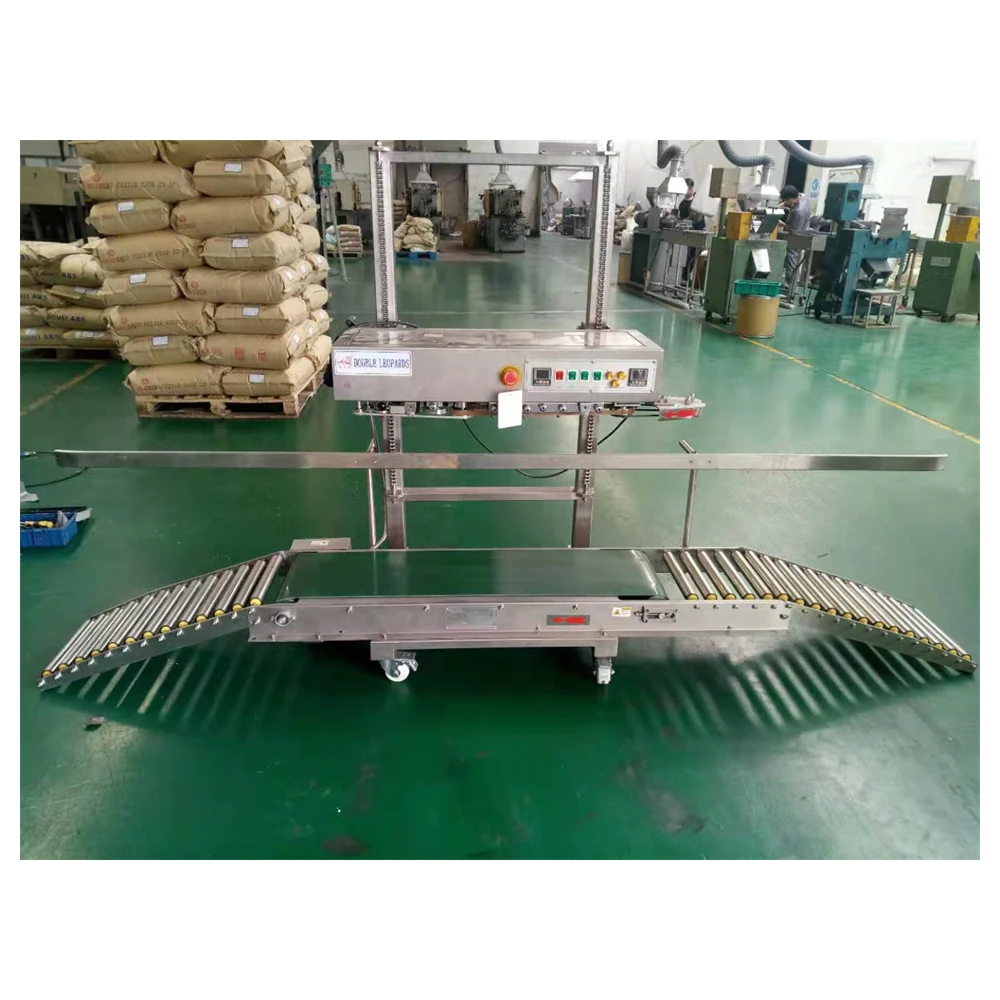
The bag mouth travels between two moving belts through a heated zone and a cooled zone, then through a knurled pressure wheel. Seal length is unlimited and output holds steady at up to 25 m/min.
A jaw closes only while the pedal is held and the heater pulses for 0.2–2 seconds, so power is consumed in bursts. Ideal for thick, gusseted or oversized bags that are hard to steer through belts.
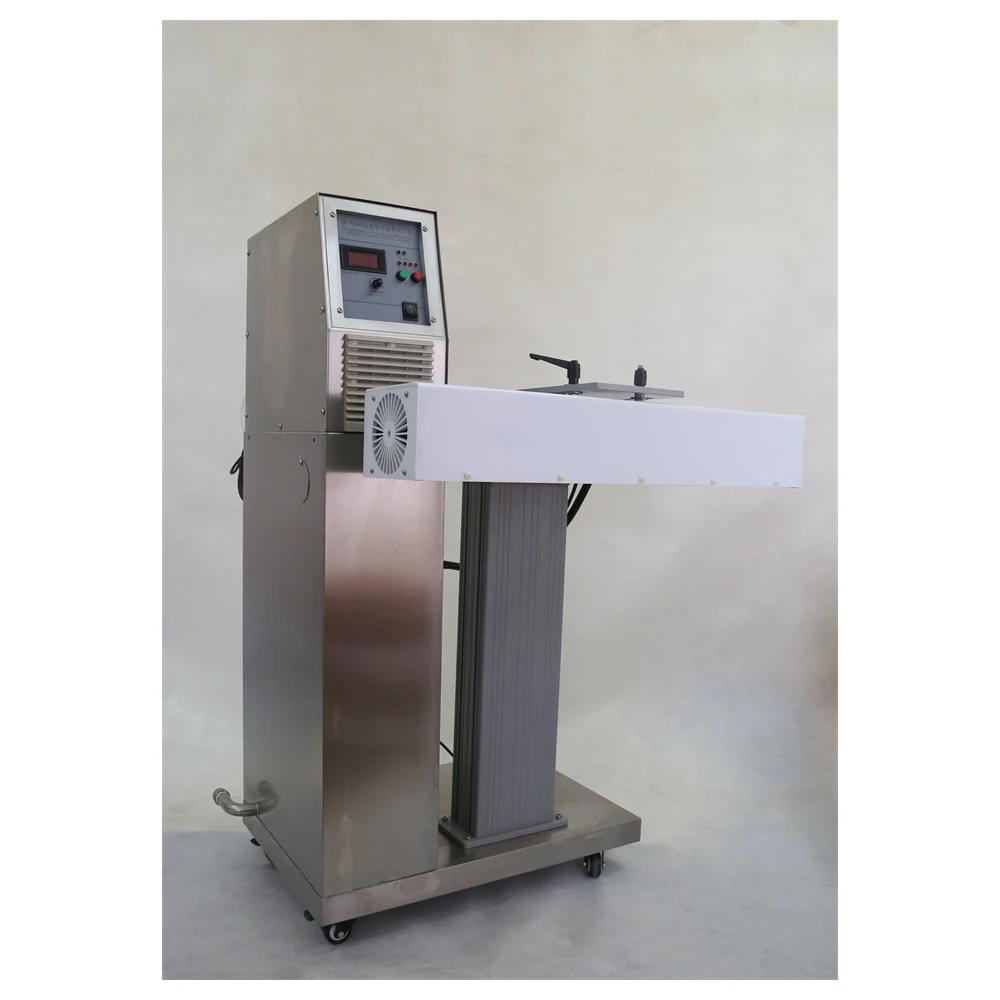
A high-frequency coil induces eddy currents in a foil disc inside the cap, heating it until the polymer coating bonds to the bottle neck. The bottle stays cool and the seal is tamper-evident.
A heated type wheel picks ink from a roller and presses date, batch and lot data onto the film as the seal is formed. Colour print, dozens of characters, and consumables limited to ink and type.
Inkjet prints variable multi-line data with a programmable head. Laser coding removes ink and solvent entirely, marking film with permanent high-contrast characters at up to 3000 mm/s.
Food, pharma, agrochemical and industrial packers all buy from this same range for the same reason: the seal has to hold on every unit, not the average one.
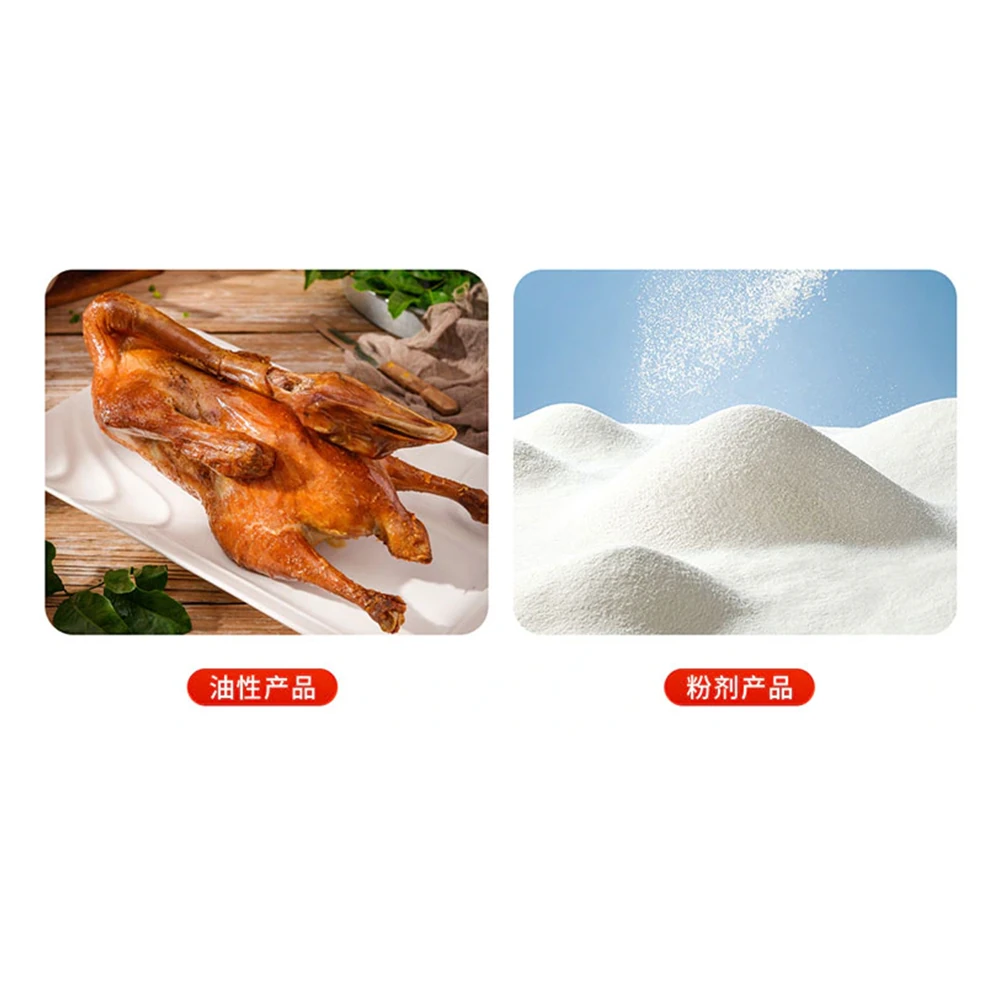
Snack, noodle, tea, coffee and frozen packs on continuous sealers; juice, sauce and dairy bottles on induction foil lines.
Foil-sealed tablet, syrup and supplement bottles where a tamper-evident moisture barrier is a regulatory requirement.
Fertiliser, pesticide and lubricant packs in heavy gauge film, sealed with a permanent batch and licence code.
Choose continuous rotary sealing when the bag mouth can be fed between moving belts and you need steady throughput from 12 to 25 m/min with an unlimited seal length. Choose foot-operated impulse sealing for short runs, thick or gusseted bags and oversized pouches that are hard to steer, because the jaw closes only while the pedal is held and the seal length is fixed by the bar.
Heat sealing melts and presses two layers of thermoplastic film together with a heated bar or block. Induction foil sealing uses a high-frequency field to heat a laminated aluminium foil disc inside a bottle cap so it welds to the container neck, giving a tamper-evident, moisture-proof membrane for liquids, powders and granules.
Continuous heat sealers typically handle 0.02 mm to 0.80 mm of PE, PP, laminated and aluminium-coated film. Impulse foot sealers accept the full range of thermoplastic films with heat time set by the dial. Induction foil sealing works with foil-lined caps on PE, PP, PET, PS, ABS and glass containers, but never on metal bodies or metal caps.
Ink-wheel coding is the economical route for short dates and batch numbers on film and gives a colour print from a heated type wheel. Inkjet coding offers more lines, fonts and variable data. Laser coding removes ink and consumables entirely, printing permanent legible codes on film at high line speed and needing only electricity.
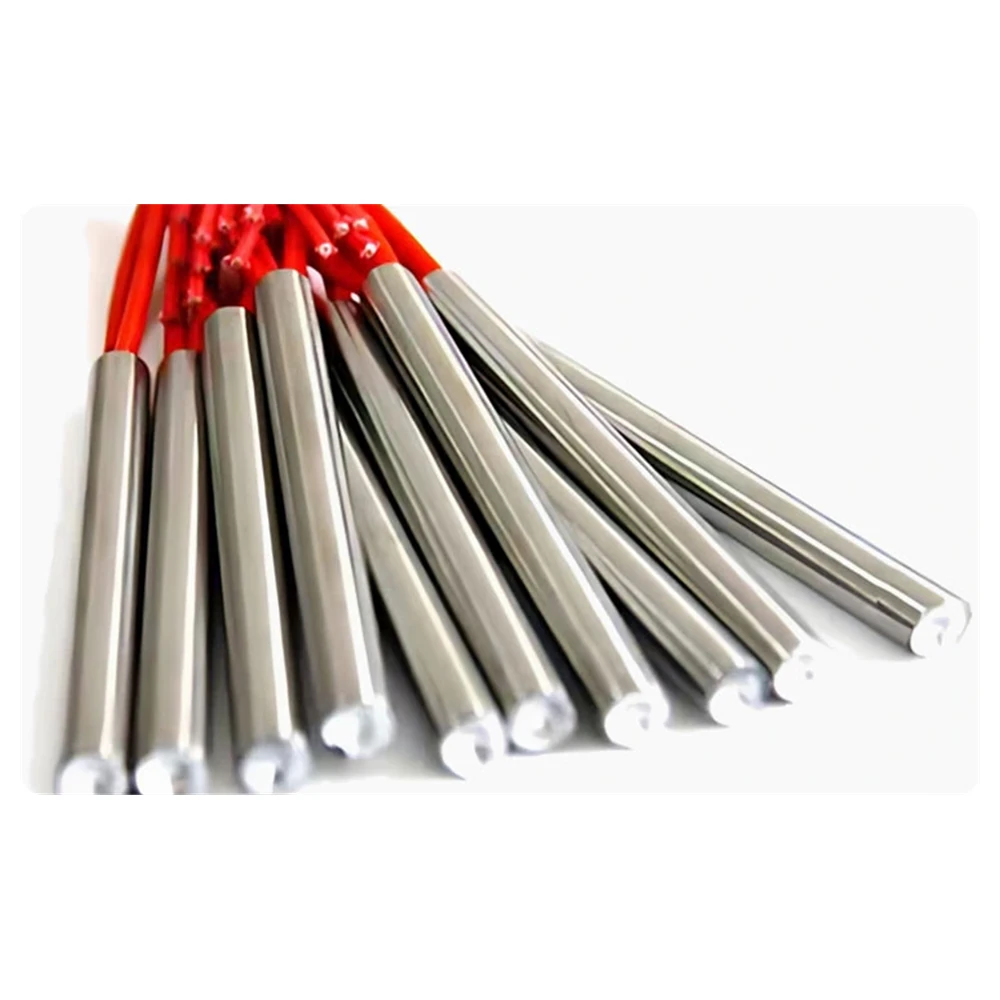
Start from a trial on waste bags. As a reference point an 8 c coating seals around 180 C, 10 c around 190 C and 12 c around 200 C, with the ink-wheel temperature between 120 C and 160 C. Increase the temperature gradually and check the peel strength by hand.
Every machine is assembled and load-tested before dispatch and ships in a double-layer carton with foam cushions. Spare heating elements, high-temperature cloth and fuses are supplied as consumables. Standard production is about 5 working days with express transit of roughly 4 to 6 working days.
Yes. Bench and floor-standing sealers run on single-phase 110V or 220-240V at 50 or 60 Hz. Induction foil systems with higher output and the large continuous models may require a dedicated circuit; we confirm the voltage, fuse rating and plug type against your region before production.
Sealing is one station. These are the machines that usually sit before and after it.
Fill bottles, jars and pouches by volume, weight or level before the pack reaches the sealer.
Explore filling machinesRemove air or backfill with gas before sealing for longer shelf life and smaller transport volume.
Explore vacuum packersBubble, spray and brush washers that prepare produce upstream of packing and sealing.
Explore washing machines