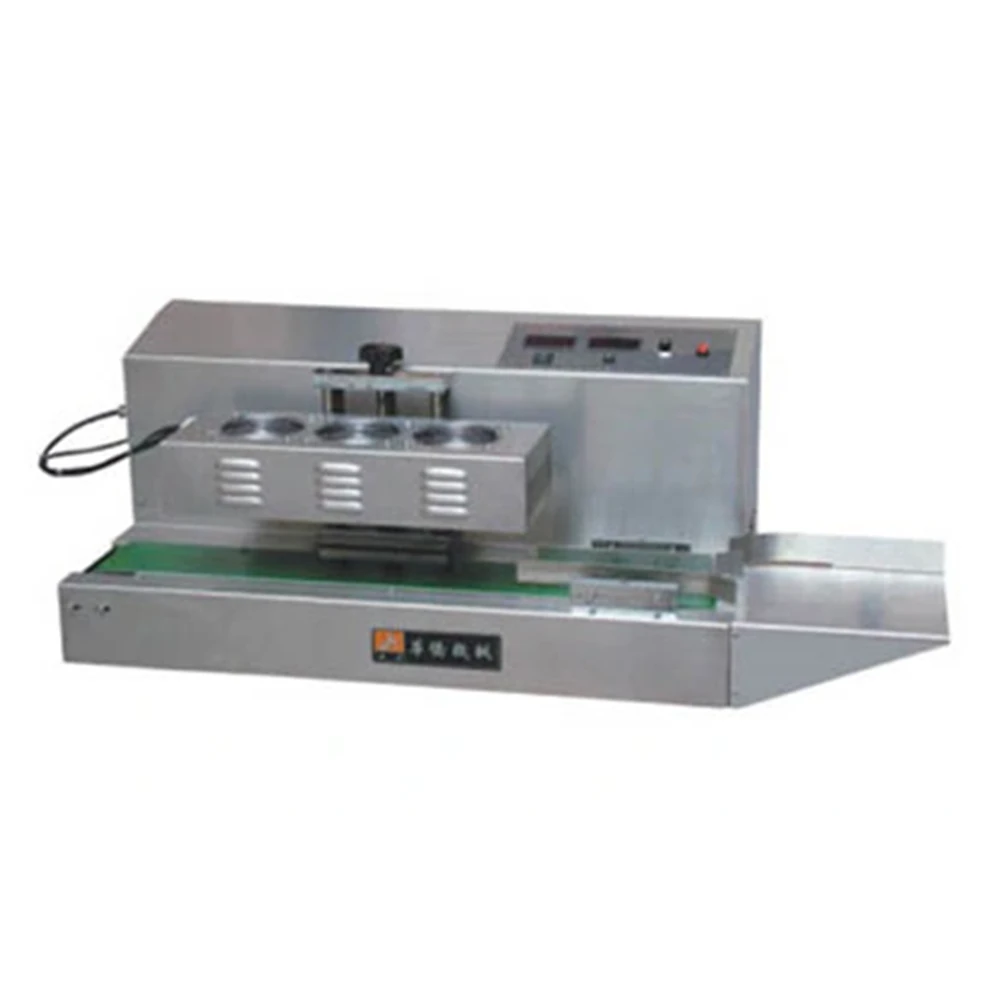
GLF-900 Induction Sealer
An air-cooled in-line sealer for 15–60 mm necks at up to 200 bottles per minute.
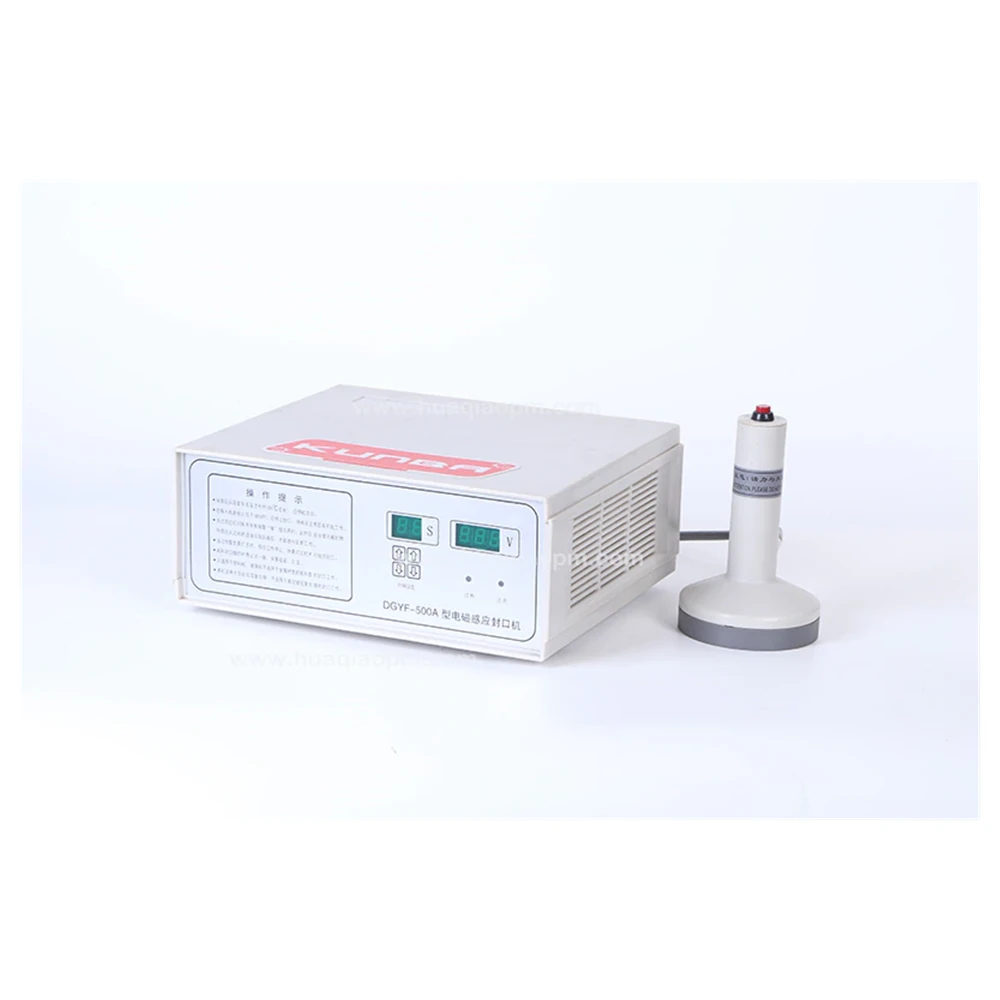
View modelA seal that no cap can replace. The FNJ-1900 uses an electromagnetic field to heat the aluminium foil disc inside each cap and weld it to the bottle neck in a fraction of a second, giving a moisture-proof, leak-proof and tamper-evident membrane. As a continuous machine it runs with the conveyor, so bottles are sealed at line speed rather than one at a time.
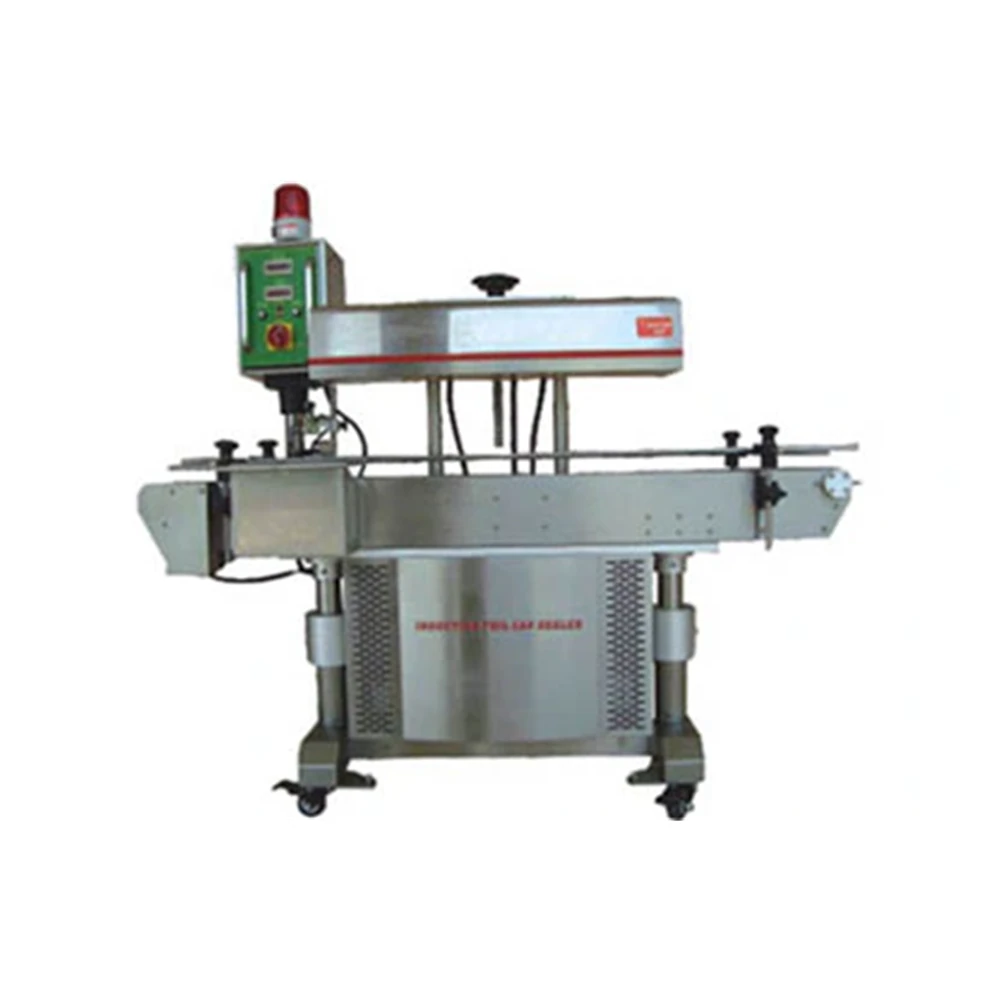
Induction sealing is a non-contact process. The energy goes straight into the foil disc, so heat never has to travel through the bottle wall or the product.
High-frequency alternating current in the sealing coil creates a rapidly reversing magnetic field under the head.
The field induces circulating eddy currents in the aluminium foil disc held inside the capped bottle.
Electrical resistance in the foil turns those currents into heat within a fraction of a second, melting the polymer coating.
The molten coating fuses to the container neck, and the foil sets as a sealed, tamper-evident membrane.
For liquids, powders and granules, a foil membrane is the most reliable barrier that still opens with the cap. The FNJ-1900 brings that seal to a continuous conveyor.
The foil blocks moisture and air, stops leakage and keeps mould and contamination out of the pack.
A bonded foil disc cannot be removed and refitted unnoticed, which reassures the buyer and protects the brand.
Bottles pass under the head on the conveyor, so sealing keeps pace with filling and capping upstream.
Energy is generated inside the foil itself, so there is no warm-up lag between packs on the line.
Suits the plastic and glass bottles and the cap formats used across pharma, food and chemical packing.
The main wear item is the high-temperature cloth over the head, which is easily replaced on a set schedule.
The datasheet describes this model by principle and duty rather than by numeric limits, so the table below lists the parameters exactly as supplied.
| Parameter | FNJ-1900 |
|---|---|
| Model | FNJ-1900 |
| Sealing Principle | Electromagnetic induction |
| Heat Source | Eddy currents induced in the aluminium foil disc |
| Seal Type | Foil welded to the bottle neck under the cap |
| Contact | Non-contact; the coil never touches the pack |
| Sealing Effect | Moisture-proof, leak-proof, mould-proof |
| Tamper Evidence | Bonded foil membrane, visible if broken |
| Duty | Continuous line operation |
| Container Materials | PE, PP, PET, PS, ABS and glass |
| Not Suitable For | Metal bottles and metal caps |
| Main Consumable | High-temperature cloth |
| Typical Sectors | Pharmaceutical, agrochemical, food, lubricant, cosmetics |
Neck diameter, line speed and foil format are confirmed against your bottle before production. The machine must not be used on metal containers or caps.
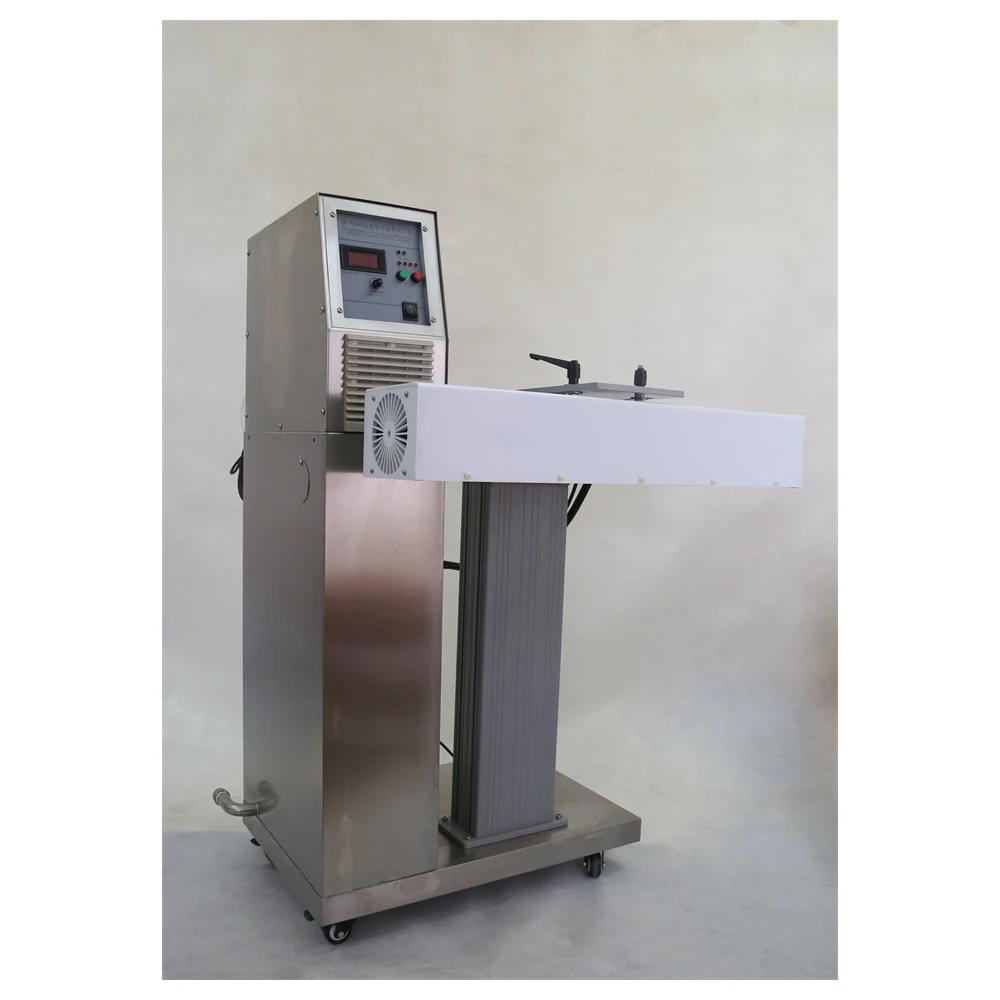
Induction sealing is not only about keeping the product in. It changes how long the pack can be stored and how the buyer reads it on the shelf.
Induction sealing depends on the foil disc, not on the bottle wall, but the container material still decides whether the process is safe and repeatable.
| Container | Typical Product | Cap | Suitability |
|---|---|---|---|
| PE and PP bottles | Liquids, powders, granules | Foil-lined cap | Supported |
| PET and PS bottles | Beverages, cosmetics | Foil-lined cap | Supported |
| ABS bottles | Chemicals, supplements | Foil-lined cap | Supported |
| Glass bottles | Oils, syrups, spirits | Foil-lined cap | Supported |
| Metal bottles or cans | Not applicable | Foil-lined cap | Not supported |
| Metal caps on any container | Not applicable | Metal closure | Not supported |
A foil disc must sit inside the cap for the seal to form. Send us the bottle and cap and we will confirm the foil format and the line speed.
The common factor is a bottled product that must stay sealed, documented and safe from tampering through a long supply chain.
Syrups, suspensions and tablets in bottles where a sealed, tamper-evident barrier is a regulatory requirement.
Pesticides, fertilisers and lubricants where leakage in transit is both a safety and a cost problem.
Sauces, oils, supplements and skincare in bottles that must reach the consumer fresh and untouched.
Induction sealing is easy to run well and easy to run badly. These are the steps that keep the seal consistent.
Clear the machine and the area around it before each run, so dust and product residue cannot reach the sealing head.
Confirm the plug, cable and screws are intact and tight; a loose connection is a common source of inconsistent power.
Make sure the high-temperature cloth is clean and undamaged, because it transfers the field evenly to the foil.
Never place hands on the hot cloth during operation; the head reaches temperatures that cause burns instantly.
Clean the surface every day so dust cannot build up on the head or the machine frame.
Check on a schedule and change the high-temperature cloth promptly; a worn cloth gives a patchy seal.
Heavy double-layer packing, shipped by express, air or sea and trackable from the factory door.
T/T bank transfer and other agreed methods, with terms confirmed on the proforma invoice.
A 2-year warranty covers parts and labour, with wear parts supplied quickly.
Remote guidance sets the power and line speed so the foil bonds evenly across the whole neck diameter.
An alternating current in the sealing coil creates a rapidly changing magnetic field. That field induces eddy currents in the aluminium foil disc sitting inside the cap, and the foil heats within a fraction of a second. The polymer coating on the foil melts and bonds to the container neck, so the seal forms while the bottle itself stays cool.
The welded foil disc blocks moisture, stops the contents leaking and keeps mould and contamination out, which extends the storage life of the product. Because the foil is bonded under the cap, the pack is also tamper-evident: the seal cannot be opened and replaced without leaving a visible break.
It seals bottles in pharmaceutical, agrochemical, food, lubricant and cosmetics packing, including liquids, powders and granules. The continuous format suits large batch production where bottles move along a conveyor rather than being sealed one at a time.
Clean the machine and the working area first, then check that the plug, cable and screws are sound and that the high-temperature cloth over the sealing head is undamaged. A worn or dirty cloth is the most common cause of a weak or patchy foil seal.
Never put hands on the high-temperature cloth while the machine is running, because the sealing head reaches temperatures that will burn. After each run, tidy the machine and put it safely to one side rather than leaving it in the traffic path of the line.
Wipe the surface daily so dust does not build up, and inspect the machine on a set schedule. Replace the high-temperature cloth as soon as it shows wear, since a clean, flat cloth is what keeps the foil heating evenly across the whole neck diameter.
The machine is assembled and tested before dispatch and ships in heavy double-layer packing. Standard production is about 5 working days with express transit of roughly 4 to 6 working days. High-temperature cloth and other wear parts are supplied as consumables.
From a handheld head for small batches to a high-speed in-line system.
An air-cooled in-line sealer for 15–60 mm necks at up to 200 bottles per minute.
View modelA water-cooled console sealing 15–130 mm necks at up to 250 bottles per minute.
View model
A 5 kg manual head for small batches and short runs on 28–65 mm necks.
View model