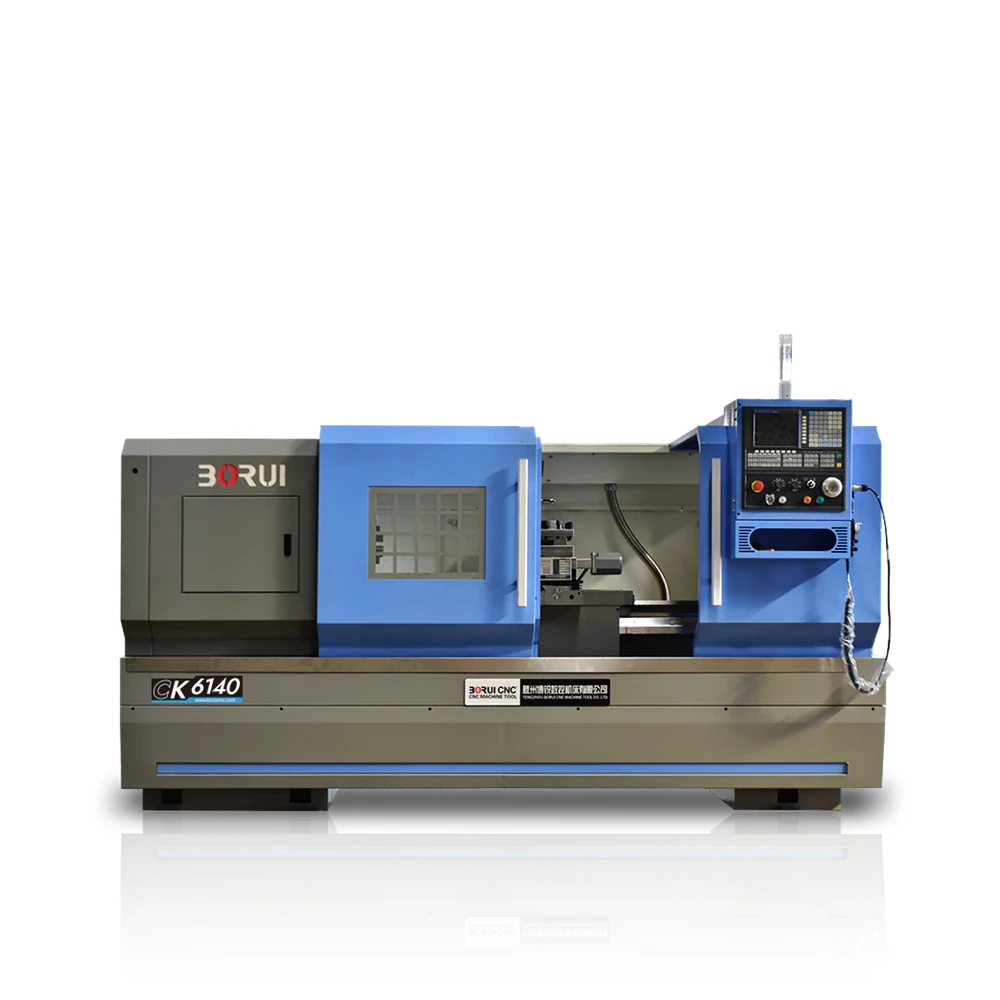
Flat-Bed CNC Lathe CK6140
400 mm swing and 750 to 2000 mm between centres. High-rigidity bed and a widened saddle for heavy cutting, with a 52 mm spindle bore as standard.
View detailsTurning is decided by the part, not the brochure. Long shafts and heavy disc work want a level bed with a long travel and a tailstock you can trust. High-volume production wants a 45° slant bed that sheds chips, keeps the tool close to the spindle and holds repeatability across a full shift. This range covers both, from a 400 mm swing flat-bed to a 7.5 kW slant-bed turning platform.
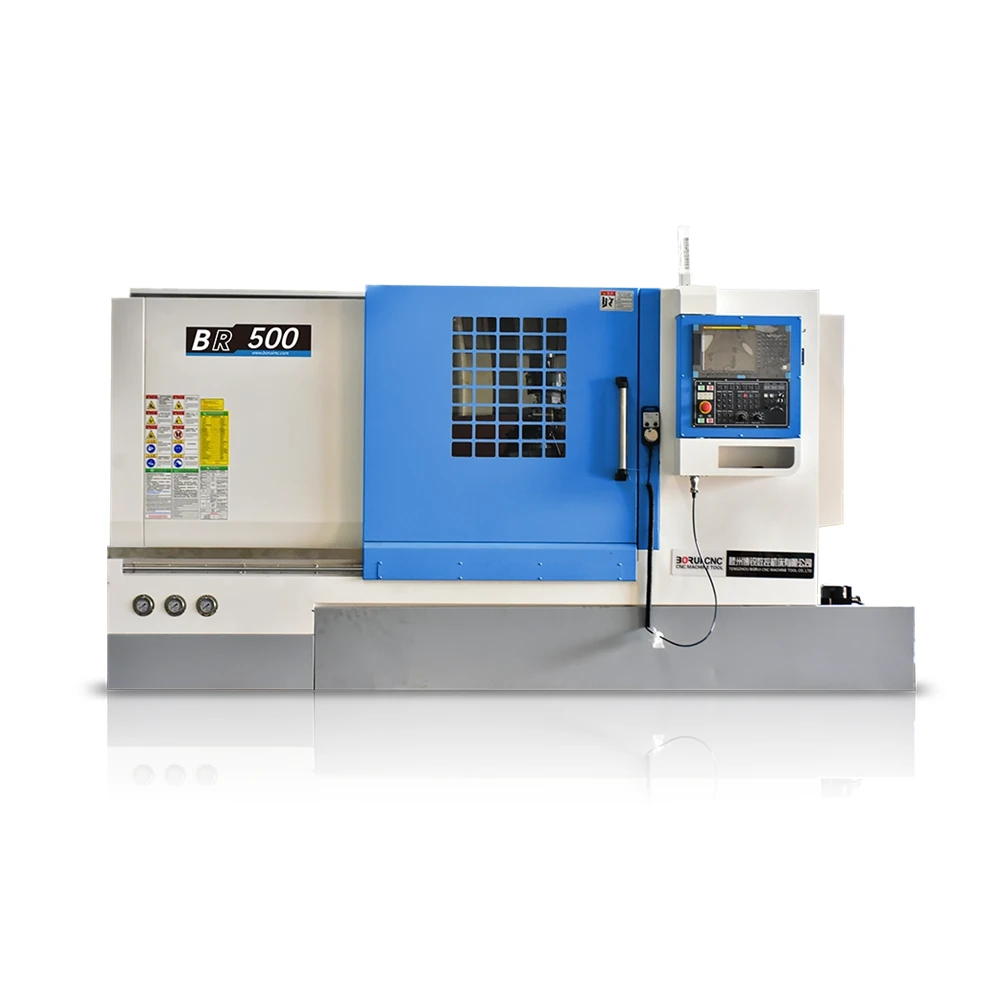
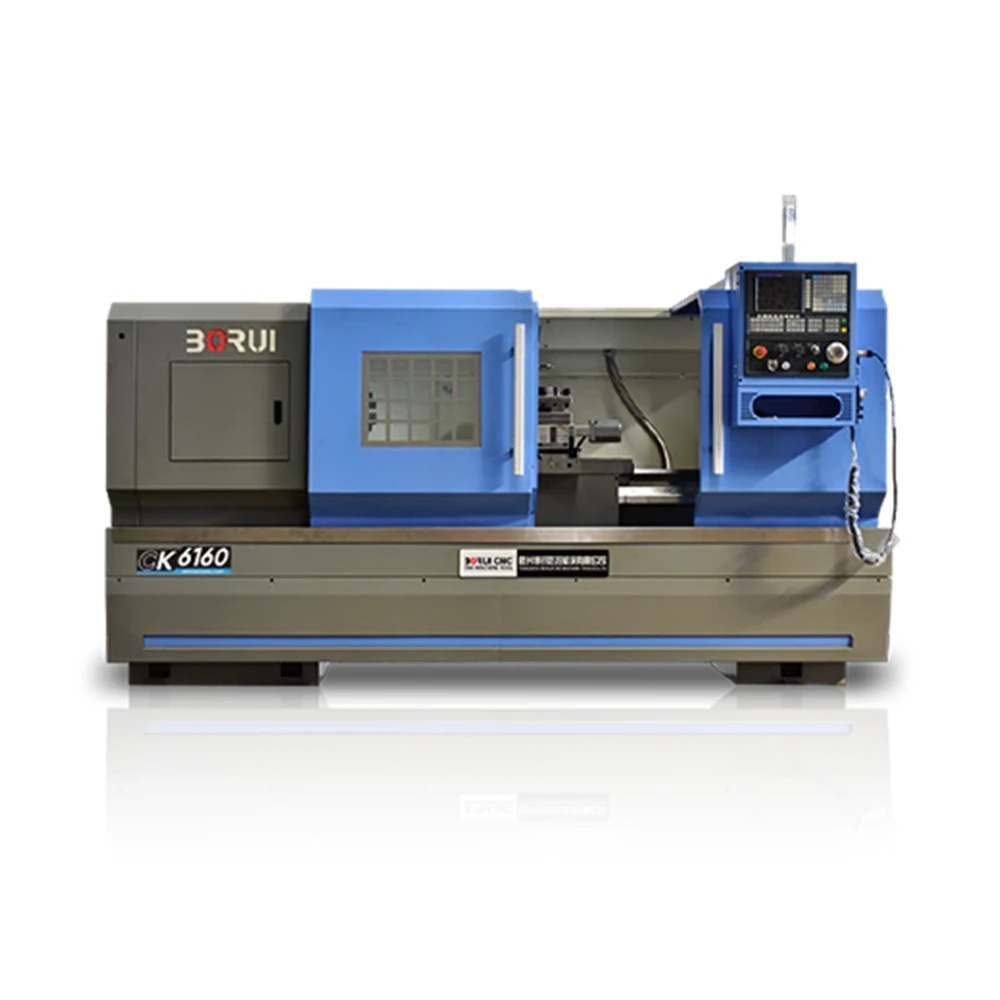
Every machine in this range follows the same turning logic: a rigid cast bed carries the saddle, a preloaded ball screw drives each axis, and a high-precision spindle bearing set holds the workpiece without chatter. What changes across the range is the bed angle, the spindle bore, the turret and the control.
From the compact flat-bed CK6140 up to the 7.5 kW slant-bed BR-500. Match swing and bar capacity to your largest and most frequent part first.
400 mm swing and 750 to 2000 mm between centres. High-rigidity bed and a widened saddle for heavy cutting, with a 52 mm spindle bore as standard.
View details
600 mm swing and high spindle torque for disc and shaft parts. GSK control, brand-name ball screws and forced automatic lubrication with low-oil alarm.
View details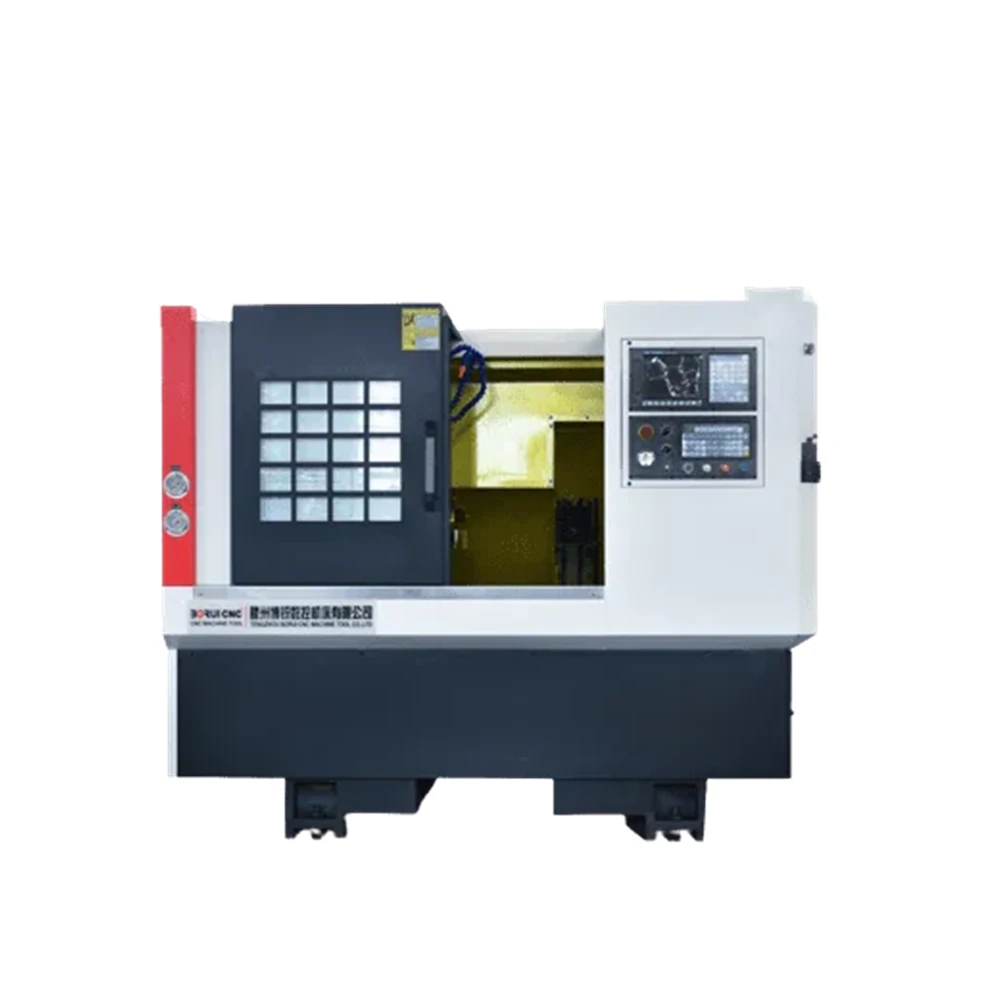
45° integral bed and a high-precision spindle unit in heavy-cutting or high-speed form. Taiwan linear guides and a spindle nose kept close to the operator.
View details
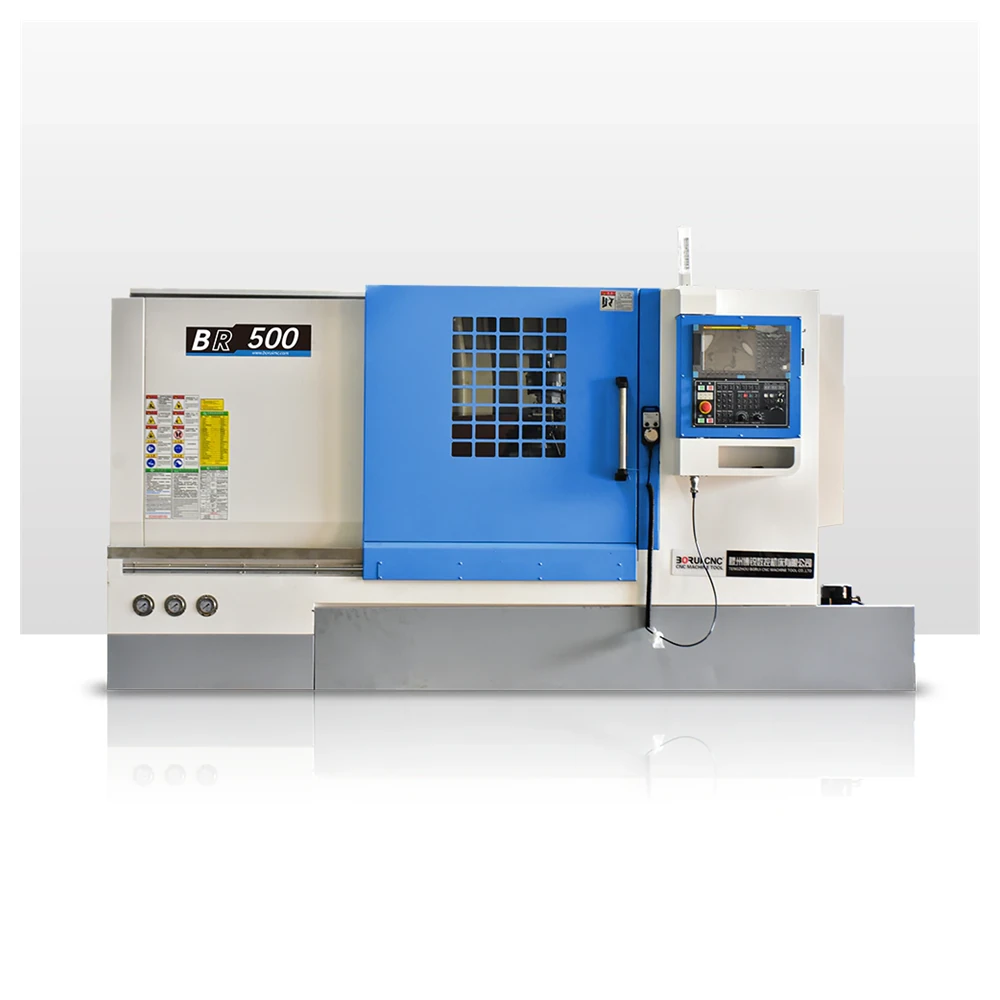
Full-function 45° turning platform with a 7.5 kW servo spindle, 8-inch hydraulic hollow chuck, 8-station servo turret and 20 m/min rapids. Can be built as a turn-mill machine.
View details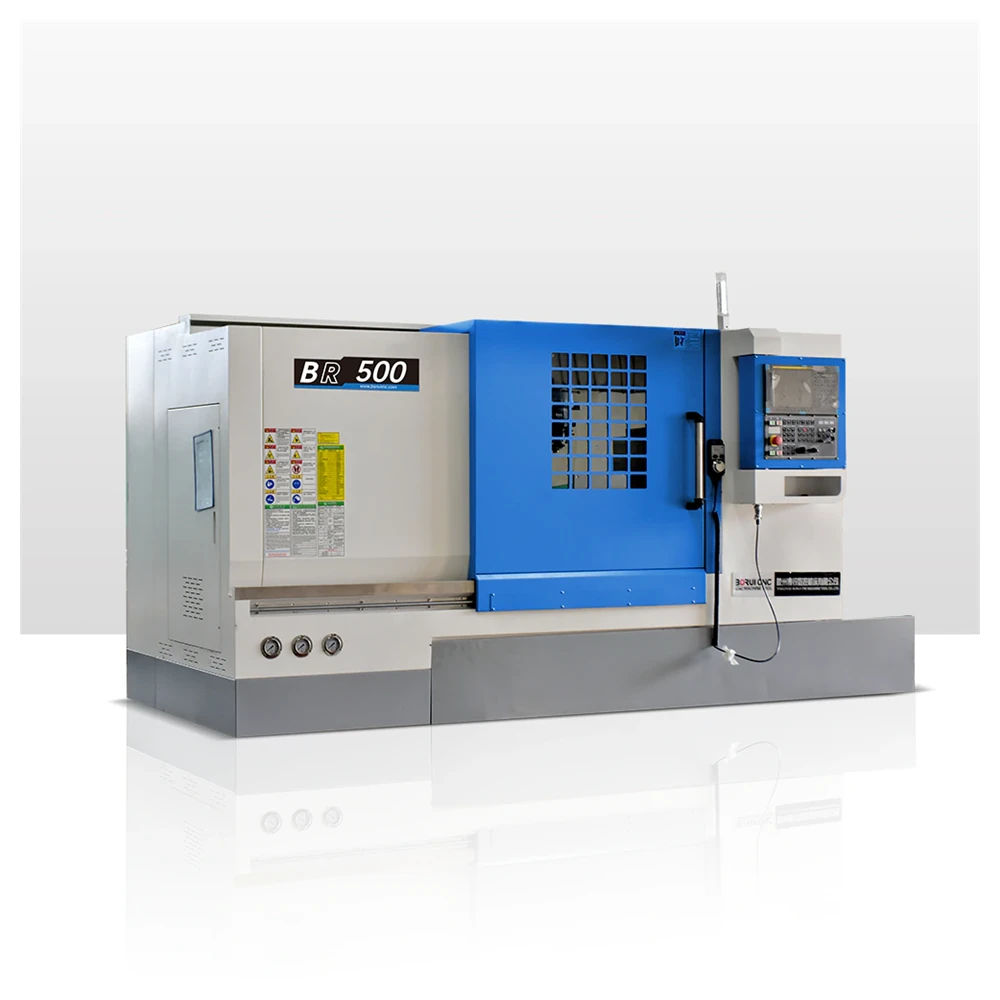
Send the drawing, material and tolerance. We cut a trial part, record the cycle and report the measured result against your specification.
Talk to an engineerRows are the turning parameters that decide the machine; columns are the four models. Where an item is not published for a model it is confirmed on request rather than guessed.
| Parameter | CK6140 | CK6160 | TCK6340 | BR-500 |
|---|---|---|---|---|
| Bed configuration | Flat bed | Flat bed | 45° integral bed | 45° integral bed |
| Max swing over bed | 400 mm | 600 mm | 400 mm | Φ500 mm |
| Max swing over cross slide | 210 mm | 350 mm | 140 mm | 240 mm |
| Centre distance / max machining length | 750 / 1000 / 1500 / 2000 mm | 750 / 1000 / 1500 / 2000 mm | 200 mm | 450 mm |
| Spindle bore | 52 mm (80 mm option) | 52 mm (80 mm option) | 56 mm | Φ62 mm |
| Bar capacity | On request | On request | 45 mm | 62 mm |
| Spindle nose | C6 | C6 | A2-5 | A2-6 |
| Spindle speed range | L 100–500 / H 500–1800 rpm | L 100–500 / H 500–1800 rpm | 50–3500 rpm, stepless | Up to 3500 rpm, servo stepless |
| Main motor power | 4 kW | 5.5 kW | 5.5 kW | 7.5 kW |
| Workholding | Manual chuck | Manual chuck | 8 in hydraulic or manual chuck | 8 in hydraulic hollow chuck |
| Turret / tool post | Electric 4-station | Electric 4-station | Gang tool post, optional turret | 8-station servo turret |
| Tool size | 25 × 25 mm | 25 × 25 mm | 20 × 20 / Φ25 mm | 25 × 25 / Φ32 mm |
| X-axis travel | 230 mm | 320 mm | 400 mm | 210 mm |
| Second-axis travel | 750–2000 mm | 750–2000 mm | 300 mm | 450 mm |
| Rapid traverse | X 6000 / Z 8000 mm/min | X 6000 / Z 8000 mm/min | 24 m/min | X/Z 20 m/min |
| Guideway type | Hardened cast iron ways | Hardened cast iron ways | Taiwan linear guides | Taiwan HIWIN / PMI linear guides |
| Positioning accuracy | On request | On request | On request | 0.01 / 0.01 mm |
| Repeat positioning accuracy | On request | On request | On request | 0.006 / 0.006 mm |
| Machining accuracy / finish | On request | On request | On request | IT6, Ra 0.8 µm or better |
| CNC control | Confirm at order | GSK | GSK, optional Siemens / Fanuc / Mitsubishi | GSK, optional Siemens / Fanuc / Mitsubishi |
| Net weight | 1700–2000 kg | 1900–2200 kg | 2300 kg | 3000 kg |
Accuracy and finish figures are published for the BR-500 and are verified by a geometric test on every machine before shipment. Where a value is not published for a model it is left open here and confirmed against your drawing rather than assumed. Spindle bore, chuck, turret, tailstock, chip conveyor and control are all specified per order.
The bed angle is the single biggest difference in how a lathe behaves day to day. It decides chip flow, access, rigidity under load and how the machine fits into a production cell.
A level, ribbed cast iron bed with hardened and ground slideways and a widened saddle. The horizontal layout takes long shafts between centres, handles heavy interrupted cuts, and keeps the whole workpiece visible to the operator. Best when parts are long, heavy, or changed often.
A 45° integral bed with enlarged linear guideways. Gravity clears chips away from the cutting zone, the saddle sits closer to the spindle for higher rigidity, and the operator reaches the spindle nose for fast loading. Best for high-volume, small and medium parts.
Read travel, swing and bar capacity together before choosing. Swing sets the largest disc, travel sets the longest shaft, and bore sets the largest bar fed through the spindle.
The same turning platform serves job shops and high-volume plants. The layout and turret decide which one fits.
Bodies, flanges, stems and threaded ends turned with repeatable threads, radii and tapers, ready for assembly without hand fitting.
Ring and disc parts held to tight runout and finish, with heavy-cutting spindle units handling the stock removal before a finishing pass.
Shafts, bushings and small housings produced in volume, where a slant bed with hydraulic chuck and servo turret keeps cycle time and consistency in check.
Flat-bed lathes like the CK6140 and CK6160 keep a level bed with a long travel, which suits long shafts between centres, heavy interrupted cuts and disc work where the operator needs to see the whole part. Slant-bed lathes like the BR-500 and TCK6340 use a 45 degree bed so chips fall away from the cutting zone and the tool can move closer to the spindle. That gives faster chip-to-chip time, better rigidity on high-speed turning and cleaner thermal behaviour in production.
The flat-bed models carry an electric four-station tool post with 25 by 25 mm tools and a manual chuck as standard, available with a larger 80 mm spindle bore. The slant-bed models carry an eight-inch hydraulic chuck on a hollow A2-6 or A2-5 spindle nose, a servo turret on the BR-500 and a gang tool post with an optional hydraulic turret on the TCK6340, plus a hydraulic tailstock for shaft work.
The BR-500 publishes 0.01 mm positioning accuracy on both axes and 0.006 mm repeat positioning accuracy, holding IT6 machining accuracy and a surface roughness of Ra 0.8 or better. The other models are built on hardened and ground guideways or preloaded linear guides with precision ball screws and are geometrically tested before shipment. Send your part drawing and tolerance and we confirm the achievable result.
All four machines turn carbon steel, alloy steel, stainless steel, cast iron and non-ferrous bar and castings. The CK6140 swings 400 mm over the bed, the CK6160 600 mm, and both take 52 mm bar as standard. The slant-bed lathes handle disc parts to 320 mm and shaft parts to about 260 mm, with bar capacity to 62 mm on the BR-500 and 45 mm on the TCK6340.
The turning range is delivered with GSK control as standard on the CK6160, BR-500 and TCK6340, with Siemens, Fanuc and Mitsubishi available as options on the slant-bed models. Control choice is matched to your operator skill level and to the programs you already run, and every machine ships with an English interface and parameter set.
Standard builds ship in roughly 30 to 45 working days, and customized bore, turret, control or bar-feeder configurations take a little longer. Each machine is assembled, aligned and trial cut before packing, and we provide English manuals, a parameter file, video commissioning and remote operator training, with lifetime support after delivery.