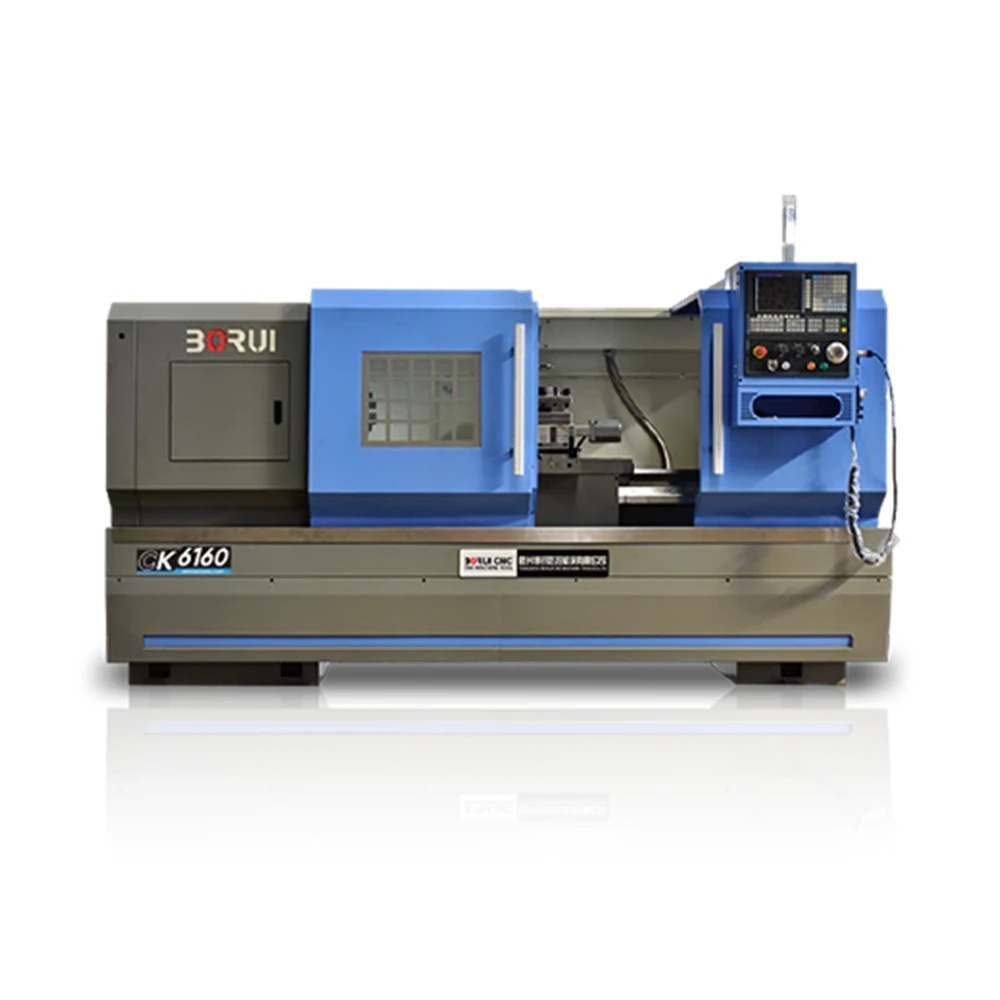
Flat-Bed CNC Lathe CK6160
The next size up: 600 mm swing over the bed, higher spindle torque and GSK control for larger disc and shaft parts.
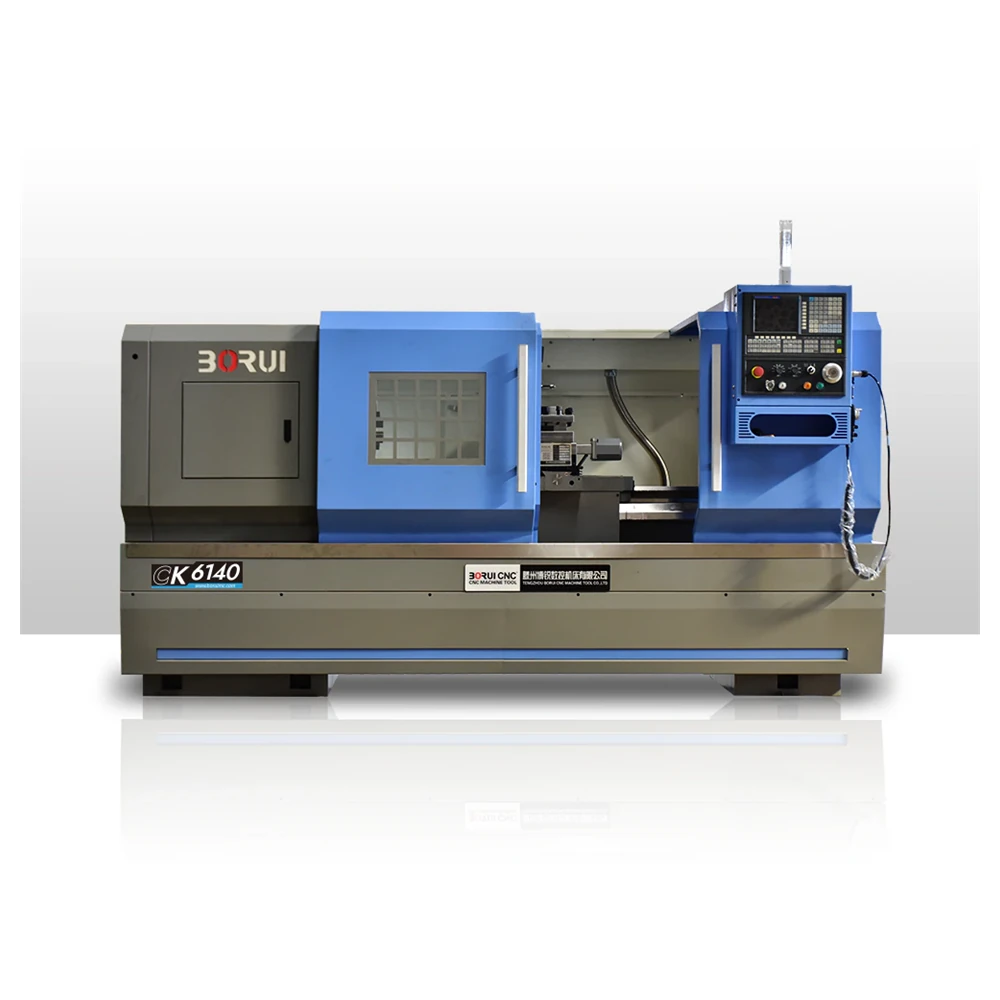
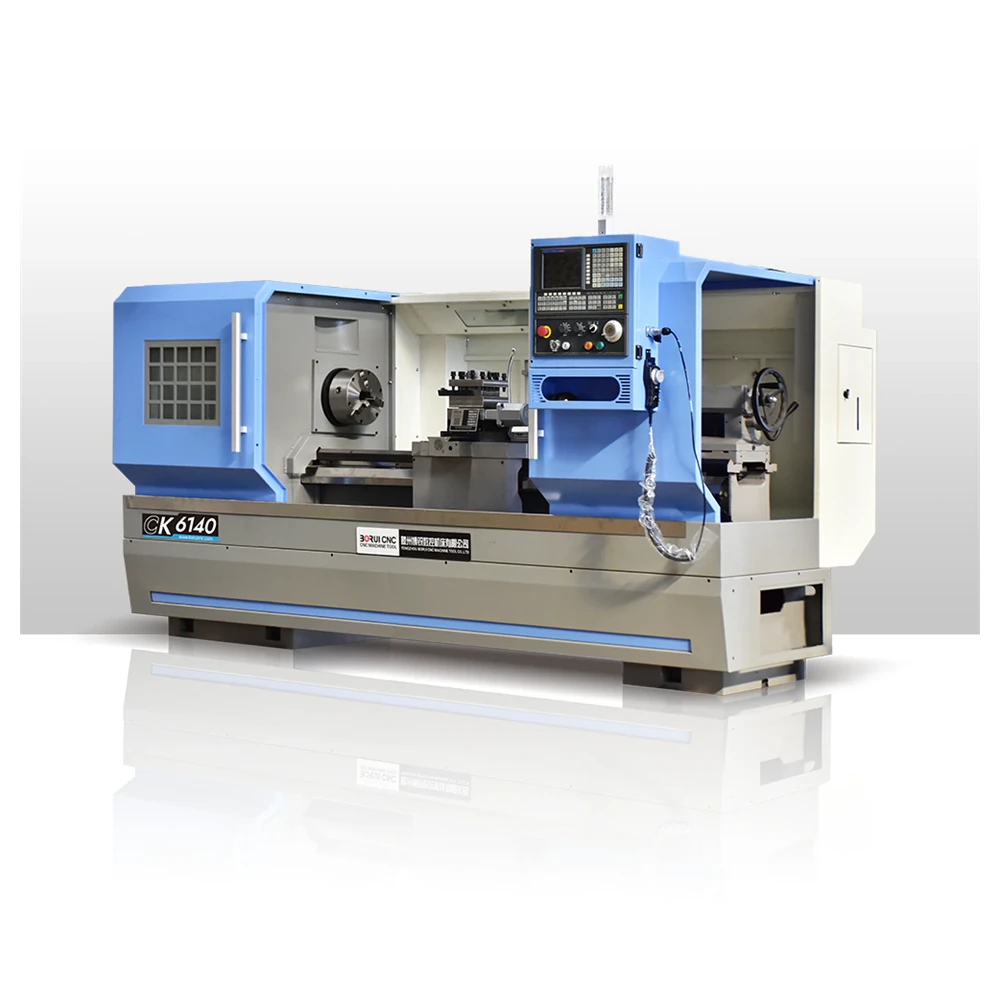
View modelThe CK6140 is the level-bed workhorse of the turning range: 400 mm of swing, up to 2 m between centres and a high-rigidity bed with a widened saddle. It turns cylinders, cones, arcs and end faces, and cuts metric and imperial single-start and multi-start threads — all on hardened and ground ways that keep geometry long after the first cut.
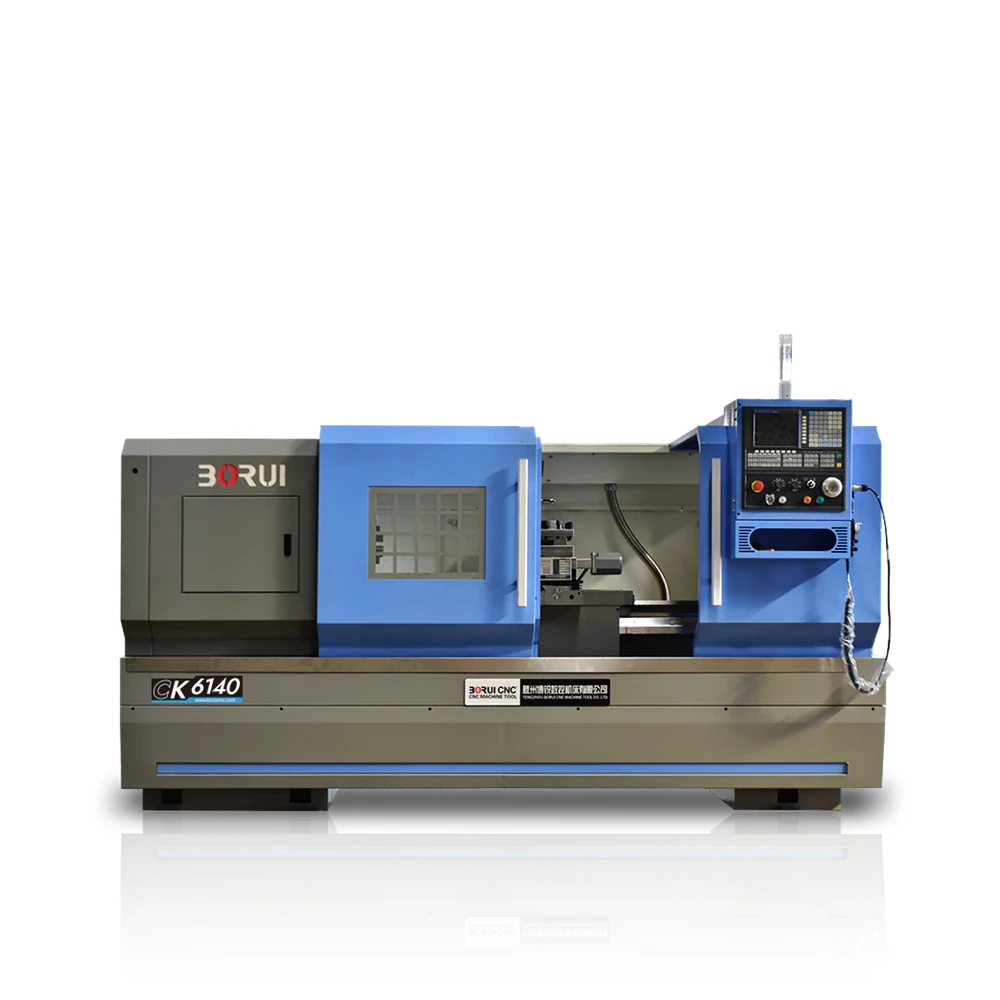
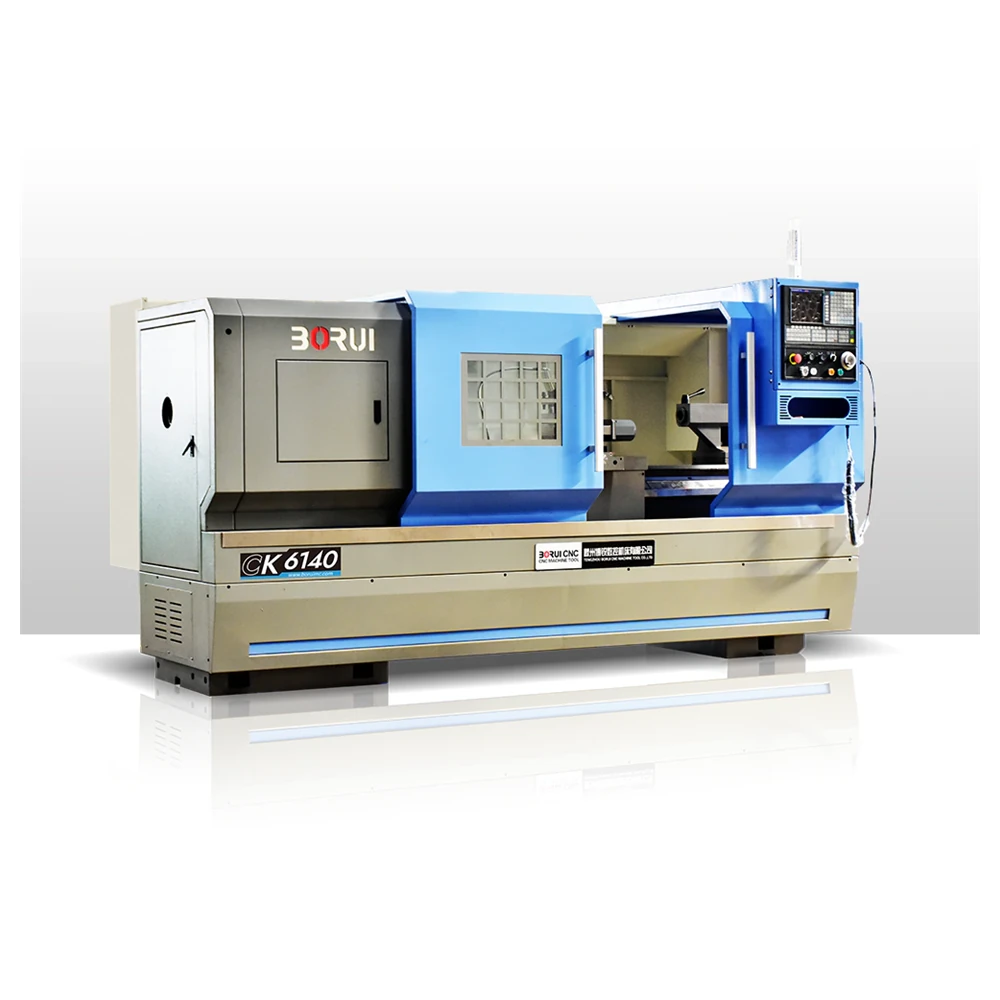
The CK6140 is not a compromise between turning and something else. Its whole design is aimed at stable, accurate turning of shafts and disc parts, which is why the structure and the drive train are specified the way they are.
Every figure below comes from the machine datasheet. Optional items are marked and confirmed on the build sheet.
| Parameter | Specification |
|---|---|
| Max swing over bed | 400 mm |
| Max swing over cross slide | 210 mm |
| Centre distance | 750 / 1000 / 1500 / 2000 mm |
| Spindle bore | 52 mm (80 mm option) |
| Spindle taper | MT6 |
| Spindle nose | C6 |
| Spindle speed steps | Manual 2 steps (stepless option) |
| Spindle speed range | L 100–500 rpm / H 500–1800 rpm (option 90–1800) |
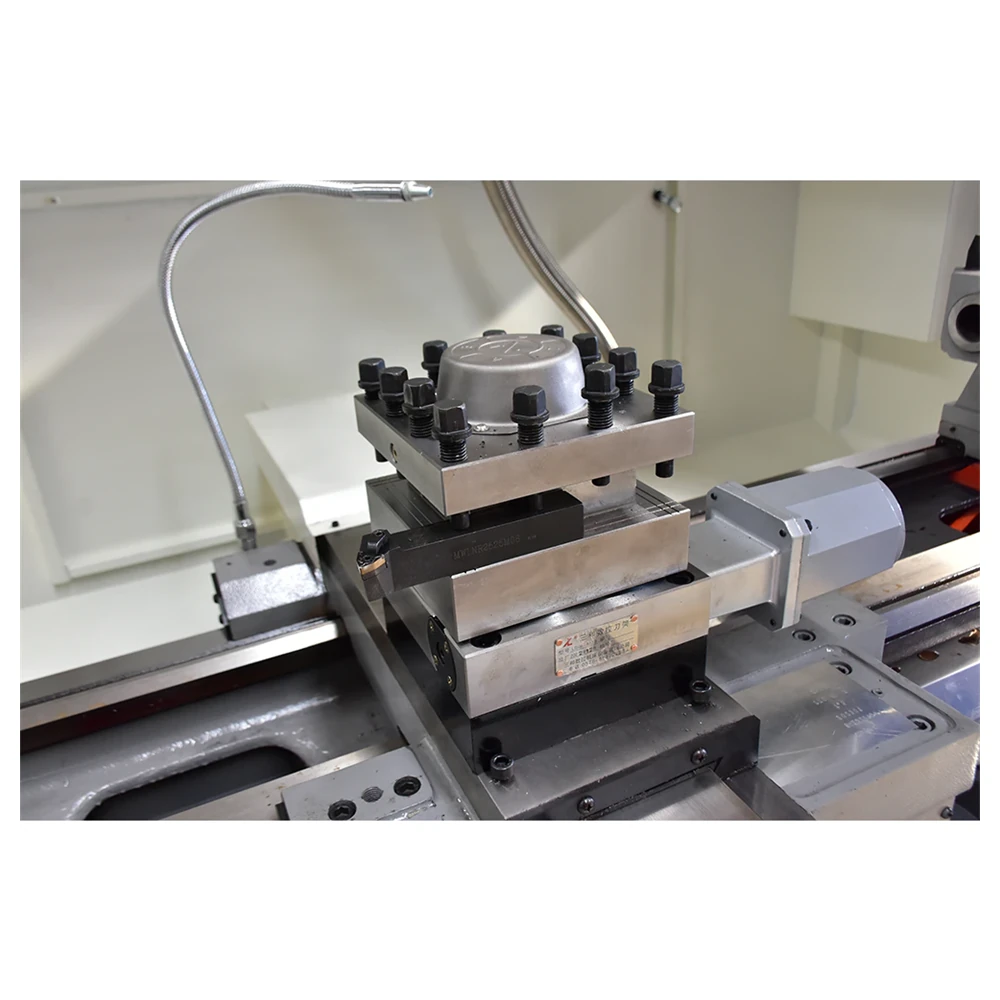
| Tool post | Electric 4-station |
| Tool size | 25 × 25 mm |
| X-axis travel | 230 mm |
| Z-axis travel | 750 / 1000 / 1500 / 2000 mm |
| X-axis rapid traverse | 6000 mm/min |
| Z-axis rapid traverse | 8000 mm/min |
| Tailstock quill diameter | 65 mm |
| Tailstock taper | MT4 |
| Tailstock quill travel | 130 mm |
| Main motor power | 4 kW |
| Coolant motor power | 0.09 kW |
| Net weight | 1700 / 1800 / 1900 / 2000 kg by centre distance |
| Overall dimensions | 2200–3500 × 1650 × 1700 mm by centre distance |
The source datasheet for the CK6140 lists the mechanical specification above; the CNC control is confirmed at order against the programs and operator skill level on site. Positioning and repeat positioning accuracy are verified by a geometric test on each machine before shipment rather than quoted as a single figure. Spindle bore, chuck, spindle speed form and bed length are all specified per order.
Read swing, travel and bore together. Swing sets the largest disc, travel sets the longest shaft, and bore sets the largest bar fed through the spindle.
| Envelope item | CK6140 | What it decides |
|---|---|---|
| Largest disc, over bed | 400 mm | Diameter of a flanged or disc part turned on the faceplate or chuck |
| Largest disc, over cross slide | 210 mm | Clearance for the tool to pass a larger diameter without fouling |
| Longest shaft, between centres | 750 to 2000 mm | Shaft length supported by the tailstock quill |
| Bar through the spindle | 52 mm (80 mm option) | Maximum bar stock fed through the spindle for continuous production |
| Tool cross travel | X 230 mm | Reach across the part for facing and diameter work |
| Tool longitudinal travel | Z 750 to 2000 mm | Length of cut in one program without repositioning |
Long parts supported between centres, stepped diameters, tapers and threads cut in a single program along the Z travel.
Facing, boring and outside diameter turning on parts that sit inside the 400 mm swing and the 210 mm cross-slide clearance.
Four published characteristics of the machine, and what each delivers over a working week.
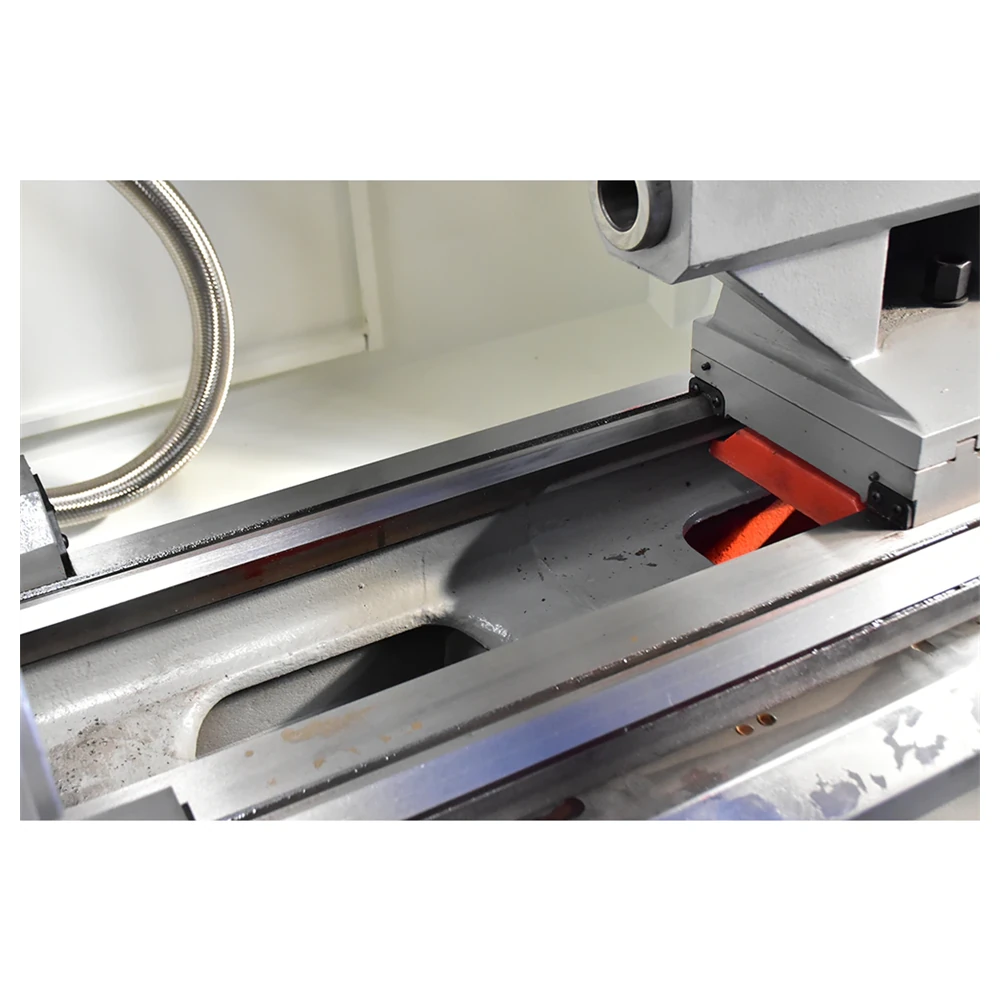
The bed and saddle guideways are hardened and ground, which is what keeps machining accuracy stable over long production.
The design emphasises stability and rigidity so the machine stays composed during heavy and interrupted cutting.
Precision spindle bearings and ball screw drive combine to give high productivity, high accuracy and an excellent surface finish.
Cylindrical, conical, arc and end-face profiles are all handled, along with standard and multi-start threading.
The standard 52 mm bore covers most bar work, and an 80 mm option opens the machine to larger stock.
A conventional level-bed layout keeps setup, tool changing and chip removal familiar to any turning shop.
Four figures that decide whether this machine fits the part.
Four centre distances let the same machine cover short production parts and long shafts without changing the model.
Rapid traverse on X and Z keeps non-cutting time short between features and tool positions.
Enough tailstock reach to support a long shaft and still leave room for the tool to work the end face.
The routine follows the level-bed layout: set, support, cut, check.
Load the part in the chuck, or feed bar through the 52 mm bore, then bring up the tailstock for shaft work.
Load the four-station tool post with 25 by 25 mm tools and enter the offsets for the job.
The machine turns the profile and any threads in one program, with rapid moves between features.
Check the first part against the drawing, then run the batch; the hardened ways hold the setting across the run.
The CK6140 suits shops that turn a wide mix of parts and value a layout the operators already know.
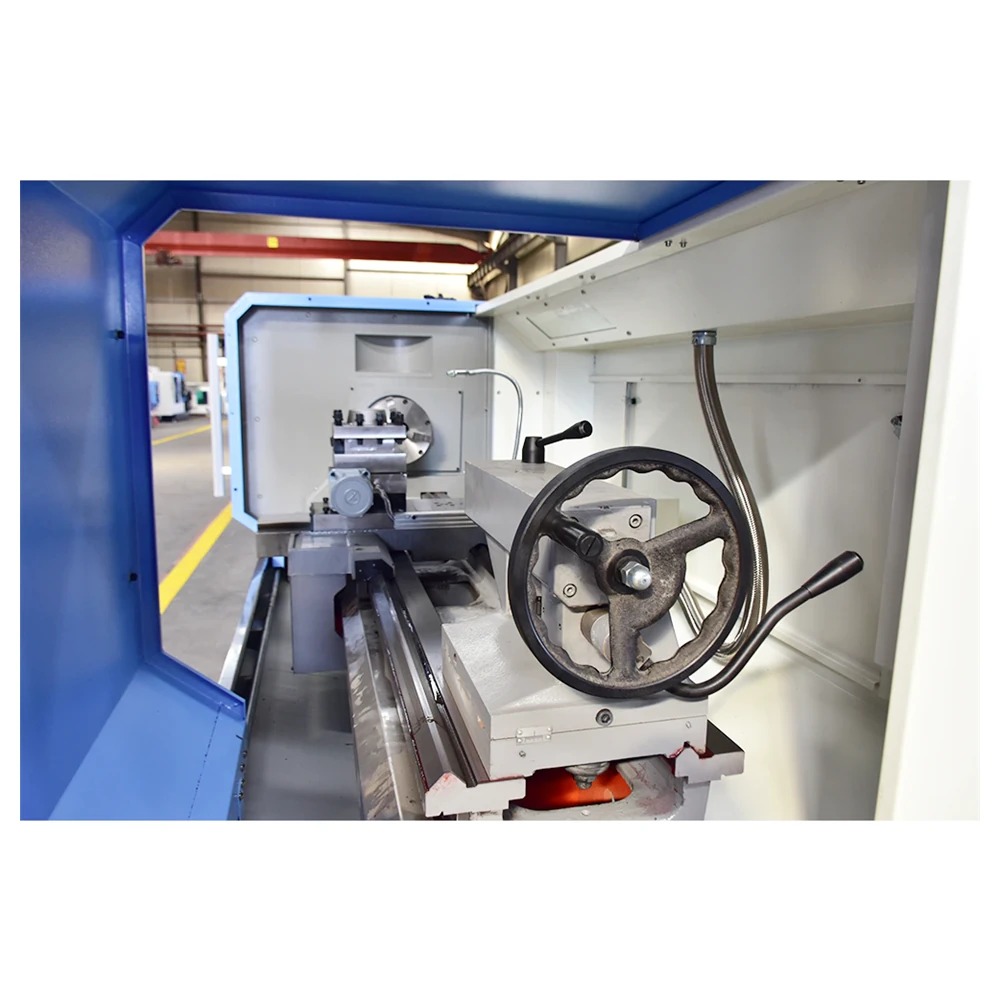
Stepped shafts, spindles and pins turned between centres with tapers and threads cut in the same program.
Faced, bored and turned outside diameters on parts within the 400 mm swing, ready for drilling or assembly.
Mixed batches where the level-bed layout and wide bore make changeover quick and tool setting familiar.
Configuration is agreed before production and support does not depend on shipping the machine back to us.
The machine is packed on a braced skid in a container, with the bed and saddle secured for transport.
Levelling, alignment and trial cut are covered by drawings and remote video commissioning.
Parts covered, with free replacement components and lifetime engineering support for the life of the machine.
Collets, chucks, tool holders and a starter tooling set can be shipped with the machine.
The CK6140 turns internal and external cylindrical, conical, arc and end faces, and cuts metric and imperial single-start and multi-start threads. Its level bed and long travel suit shaft work between centres, while the 400 mm swing and 210 mm cross-slide clearance cover a wide range of disc and flange parts.
Rigidity comes from the structure. The bed is a high-rigidity casting with a widened saddle, the guideways are wear-resistant cast iron hardened and ground so geometry is held over years of cutting, and the spindle runs in high-precision rolling bearings. That combination is what keeps the machine stable under heavy and interrupted cuts.
The spindle has a 52 mm bore as standard with an 80 mm option, an MT6 taper and a C6 nose. Speed is selected through two manual ranges, L 100 to 500 rpm and H 500 to 1800 rpm, with stepless speed as an option. An electric four-station tool post takes 25 by 25 mm tools, and the tailstock carries a 65 mm quill on an MT4 taper with 130 mm of travel.
The machine turns the usual shop materials: carbon and alloy steel, stainless steel, cast iron and non-ferrous bar and castings. Threading covers metric and imperial standards in both single-start and multi-start forms, and arc and conical profiles are programmed in the usual way.
The X-axis travel is 230 mm and the Z-axis travel matches the centre distance selected, from 750 up to 2000 mm. X-axis rapid traverse is 6000 mm per minute and Z-axis rapid traverse is 8000 mm per minute, with the saddle and cross slide driven through preloaded ball screws.
Standard builds ship in roughly 30 to 45 working days, with the 80 mm bore, stepless spindle or longer bed adding to that. Every machine is assembled, aligned and trial cut before packing, and we provide English manuals, a parameter file, video commissioning and remote operator training, with lifetime support after delivery.
For a larger swing stay flat-bed; for faster chip-to-chip time move to a slant bed. Compare them here, or see all CNC lathes.
The next size up: 600 mm swing over the bed, higher spindle torque and GSK control for larger disc and shaft parts.
View model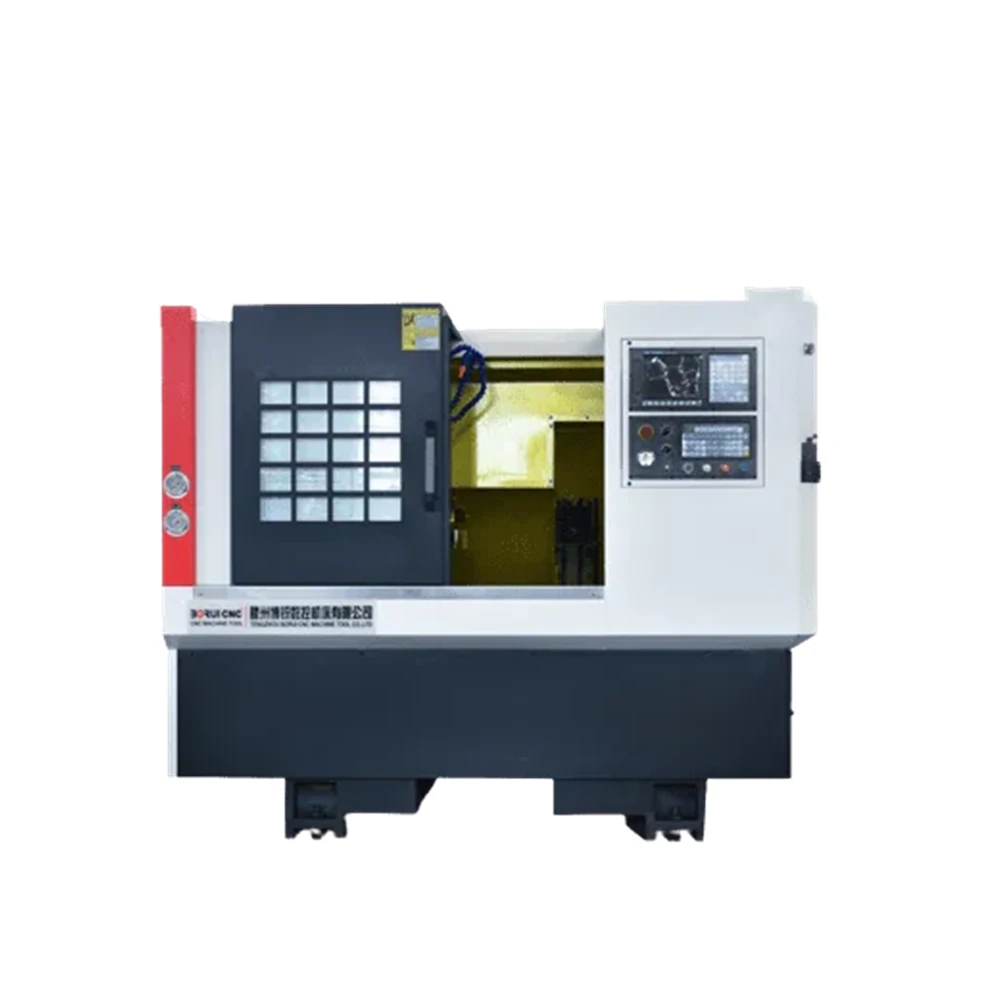
45° integral bed and Taiwan linear guides with a high-precision spindle unit, for faster cycles on small and medium parts.
View model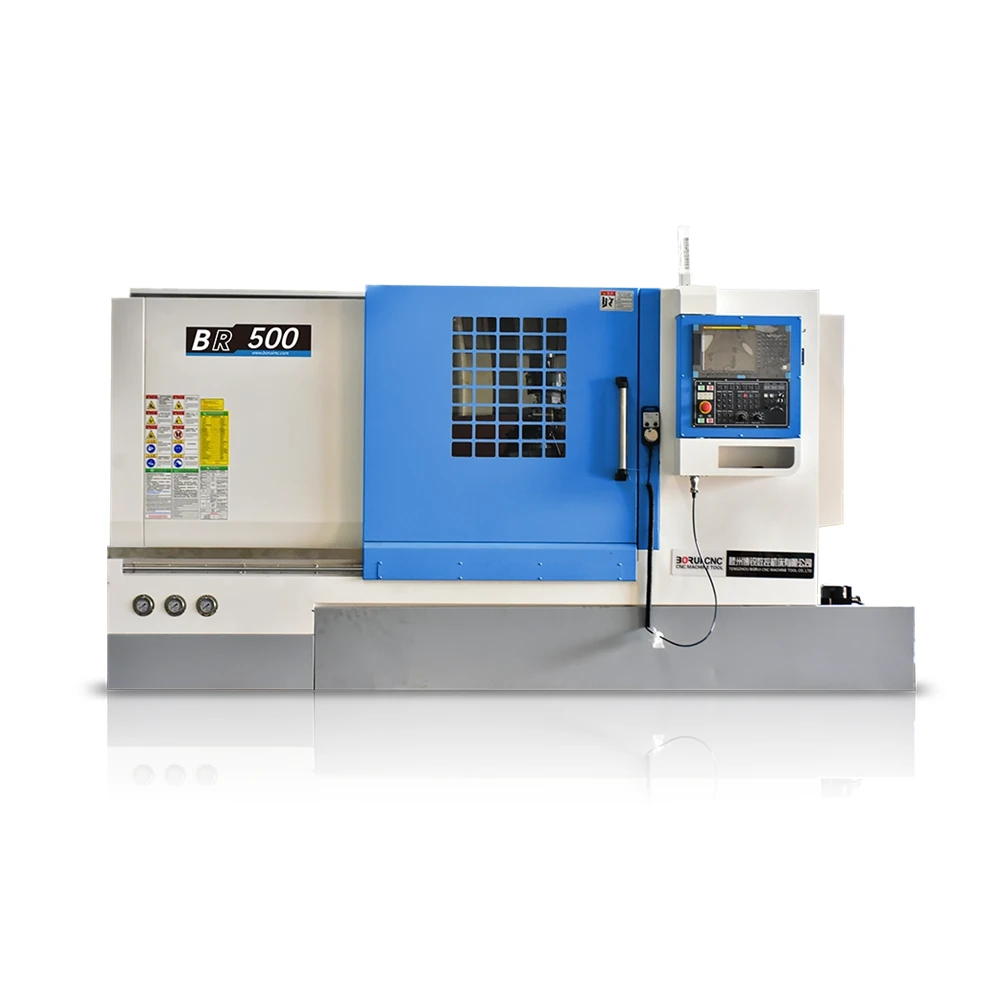
Full-function slant-bed platform with a 7.5 kW spindle, hydraulic chuck and 8-station servo turret, built for high-volume turning.
View model