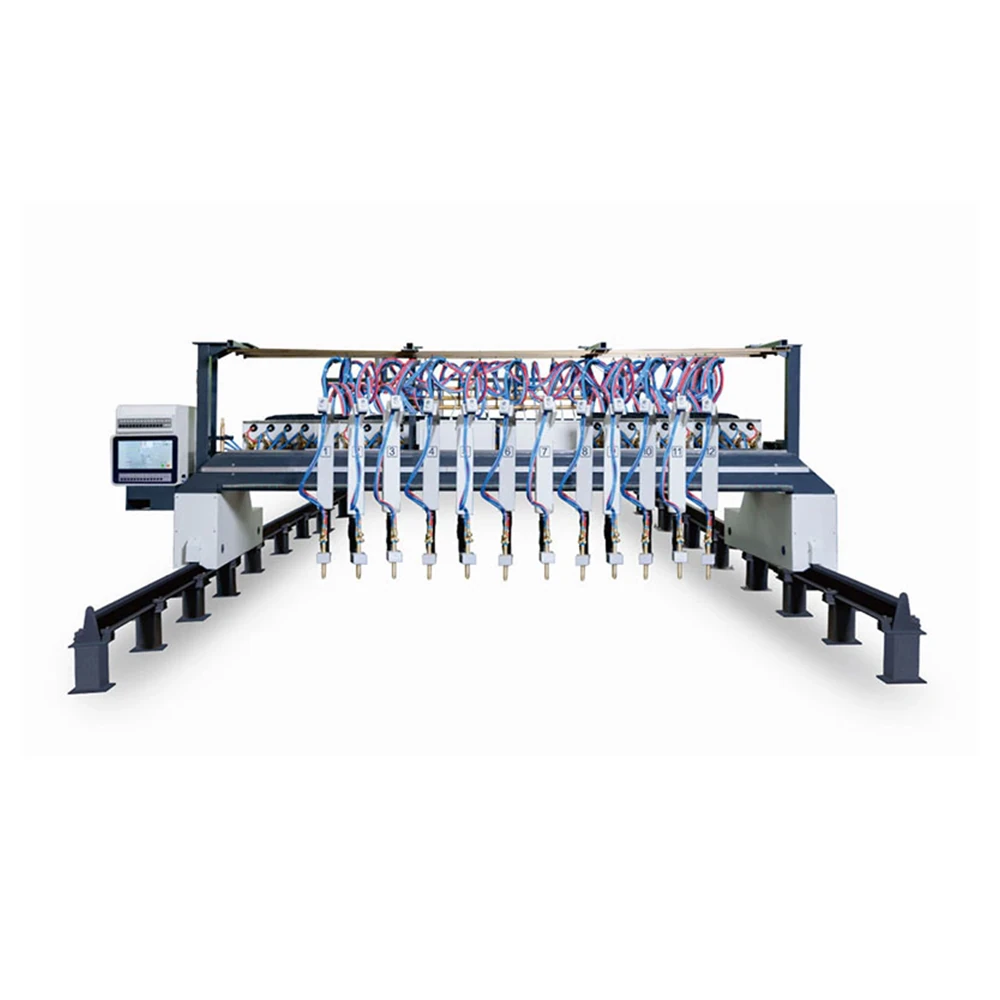
CNC Flame Cutting Machine
The BDIF intelligent cutting platform: automatic process selection by plate type, thickness and nozzle, with gas control that holds the edge consistent.
View detailsThermal cutting is decided by two things only: how thick the plate is and what the cut edge has to do next. This range covers the whole span — oxy-fuel flame cutting for heavy plate, precision plasma for fast thin and medium work, and dedicated bevel platforms that cut weld preparations in a single pass instead of grinding them by hand.
Every cutting platform here shares the same CNC motion, nesting and gas logic. What changes is the energy source at the torch and how many of them work at once.
Heavy plate specialist. The kerf is wide and the heat-affected zone is larger, so the edge is normally machined before welding — but for thick carbon steel no plasma comes close on cost per metre.
Fast, narrow kerf and a near-finished edge on thin and medium plate. Speed is high, dross is low, and one head can profile internal holes and complex outlines that flame tools leave rough.
Weld preparation cut into the plate. V, X, Y and K edges are produced with a rotating or tilting torch, replacing a second grinding or machining operation and keeping the root gap consistent.
Listed from the standard flame platform up to the highest-throughput build. Match the platform to your heaviest and thinnest plate, then to the daily output you need.
The BDIF intelligent cutting platform: automatic process selection by plate type, thickness and nozzle, with gas control that holds the edge consistent.
View details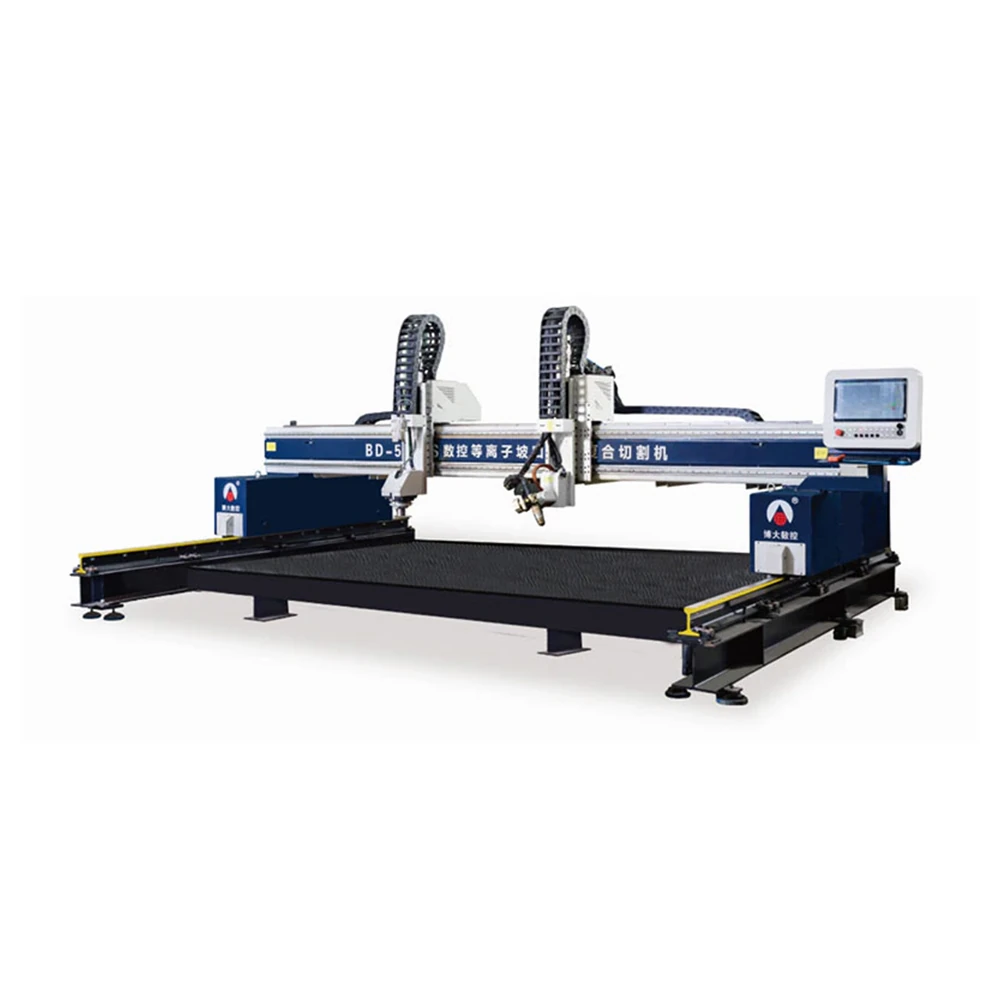
Fifth-generation bevel platform with 15 years of bevel-cutting experience behind it. Straight and bevel cutting on carbon and stainless plate, with an optional marking device.
View details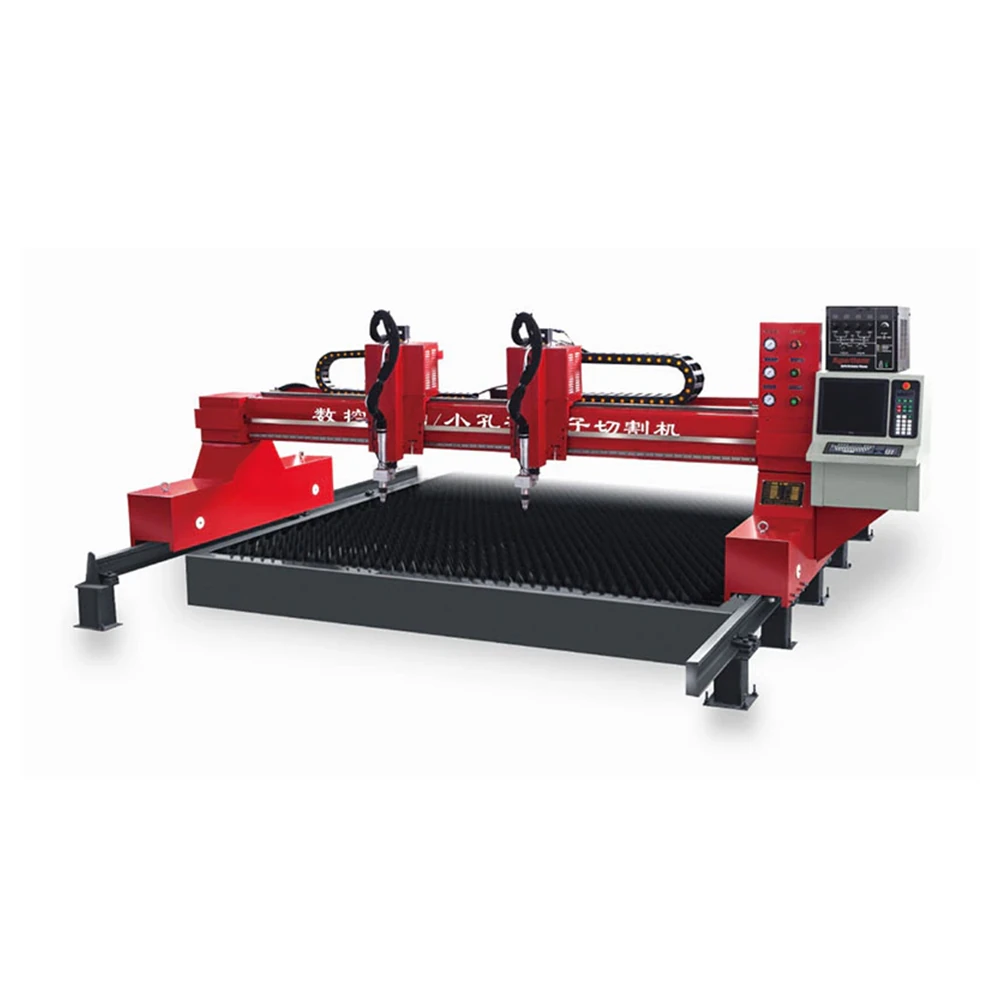
BDPC series high-precision platform that carries two plasma heads for parallel profiling, cutting flat parts such as arcs, slots and irregular outlines at roughly double the output.
View details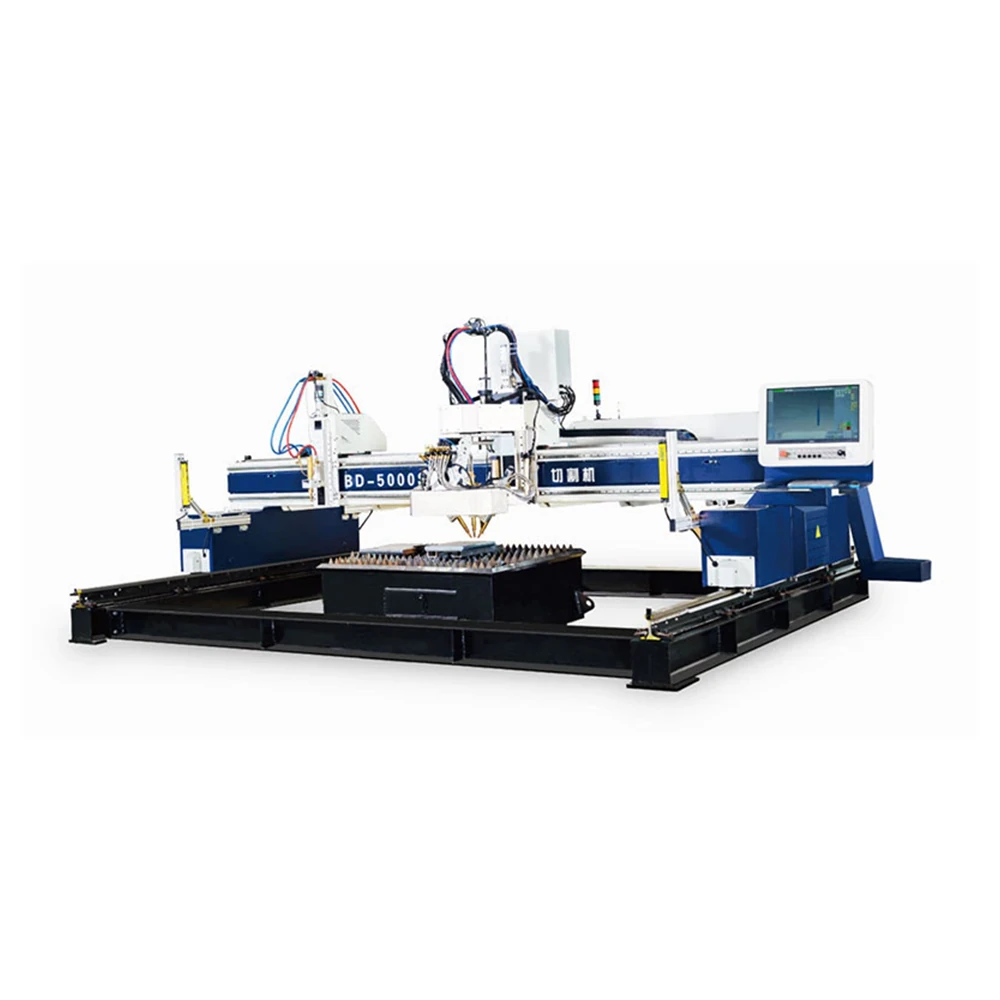
Rotary triple-torch flame platform for thick plate at volume. Three torches cut together and rotate for bevel work, with automatic gas control and optional marking.
View details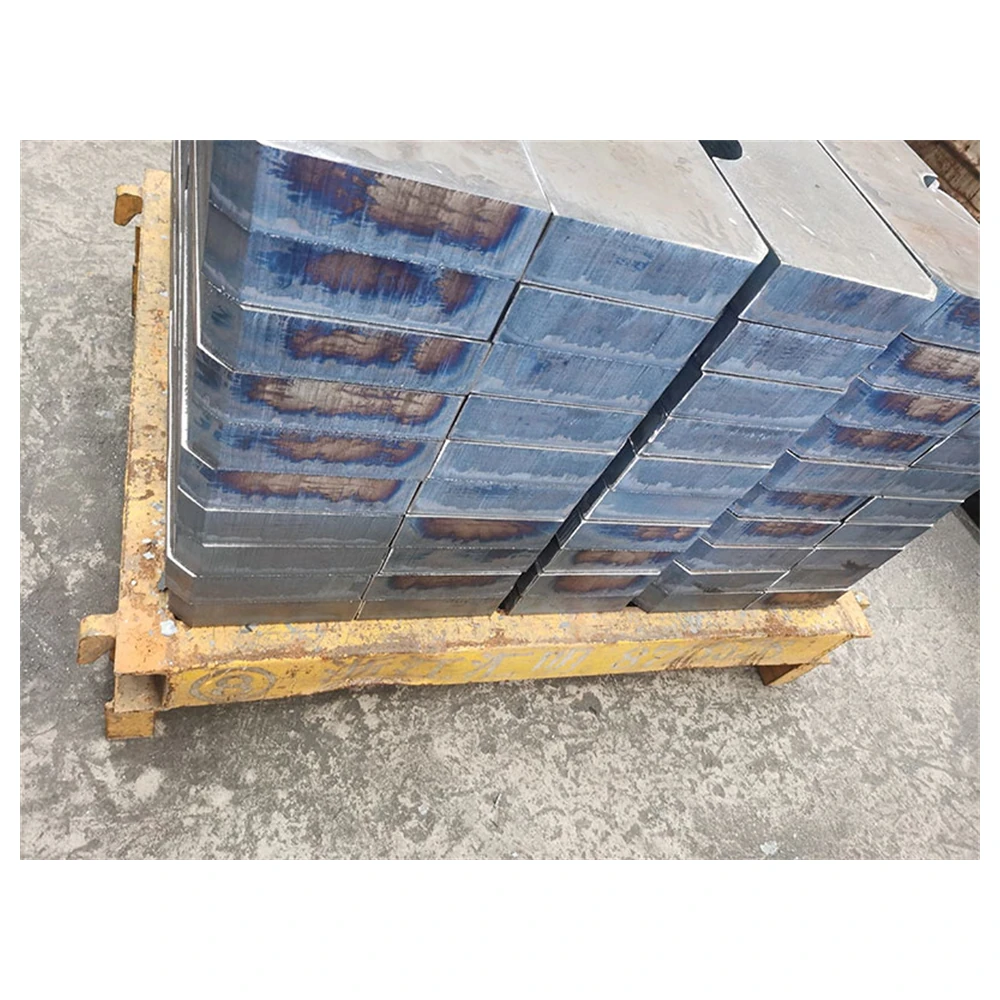
Send the plate grade, thickness range and the heaviest part outline. We match the process, table size and torch count in one reply.
Talk to an engineerRows are the parameters that decide the platform; columns are the four models. A dash means the item is not part of the standard build and is quoted on request.
| Parameter | CNC Flame (BDIF) | Plasma Bevel (5th gen) | Dual-Head Plasma (BDPC) | Triple-Torch Rotary Flame |
|---|---|---|---|---|
| Cutting process | Oxy-fuel flame | Plasma, straight and bevel | Plasma, straight | Oxy-fuel flame |
| Torches / heads | Single torch carriage | Single bevel torch | Two plasma heads | Three rotary torches |
| Bevel forms | V, X, Y, K on straight and curved paths | Straight and bevel cutting | Not part of the standard build | Rotary flame bevel cutting |
| Stated bevel accuracy | ±1 mm | ±0.5 mm | On request | On request |
| Materials | Carbon steel, thick plate | Carbon steel, stainless steel | Mild steel and common plate | Carbon steel, thick plate |
| Best thickness band | Heavy plate, roughly 6–300 mm | Medium plate with weld prep | Thin to medium plate, roughly 1–50 mm | Heavy plate at volume |
| Control system | BDIF intelligent cutting control | Dedicated fifth-generation CNC bevel control | CNC matched to the plasma source | CNC with rotary torch control |
| Automatic gas console | Supplied | Gas set matched to process | Matched to plasma source | Optional |
| Automatic edge detection | Extension module | On request | On request | Optional |
| Automatic marking | Extension module | Optional marking device | On request | Optional |
| Multi-torch auto spacing | Extension module | Not applicable | Not applicable | Three-torch group |
| Bus and IO control | Both supported | Supported | Supported | Supported |
Table size, track length, plasma power source and torch count are built to order. Bevel accuracy figures are the values published for each platform, measured on straight and curved paths under production conditions. Send a drawing and we confirm the configuration and the achievable edge quality for your plate.
The matrix below shows where each thermal process is the sensible choice. Bands overlap on purpose — the final decision also weighs edge quality, dross and downstream machining.
| Plate thickness | Oxy-fuel flame | Plasma | Plasma bevel | Cut edge after the process |
|---|---|---|---|---|
| 1 – 6 mm | Distortion risk | First choice | Possible on thin plate | Narrow kerf, light dross, minimal dressing |
| 6 – 20 mm | Workable, slower | First choice | Common weld-prep band | Near-finished edge, small heat-affected zone |
| 20 – 50 mm | Strong | Practical limit of most sources | Strong for thick weld prep | Edge may need light machining before welding |
| 50 – 100 mm | First choice | High-definition sources only | Rolled and bevel work | Wide kerf and heat-affected zone, machine the edge |
| 100 – 300 mm | Only practical option | Not applicable | Not the typical route | Slow, controlled cut, edge machined afterwards |
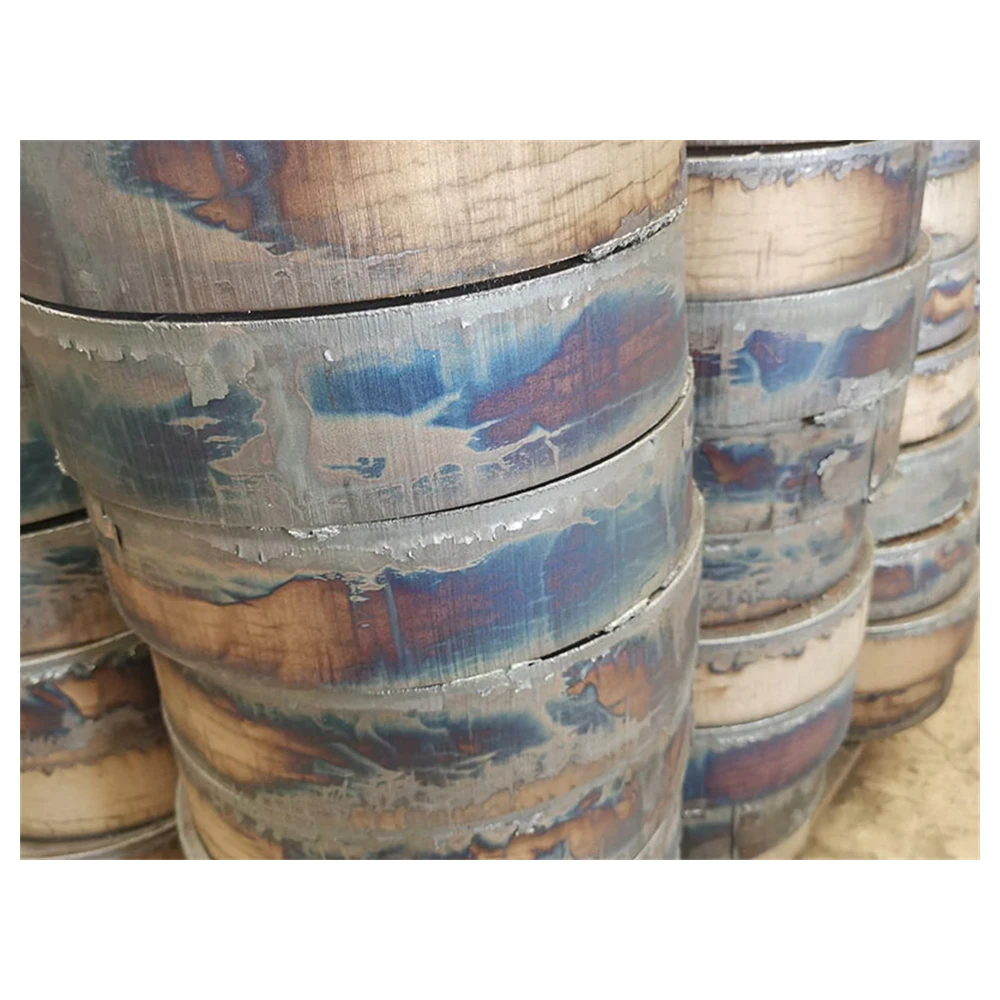
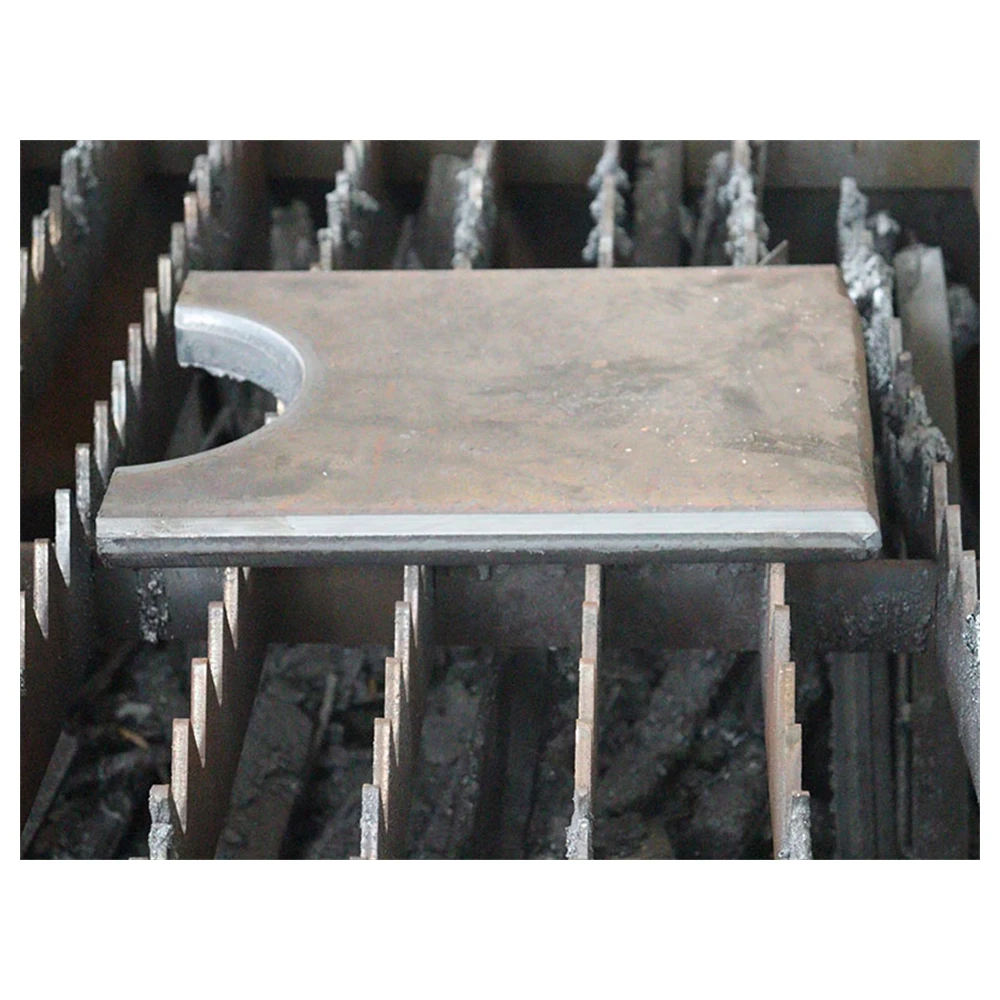
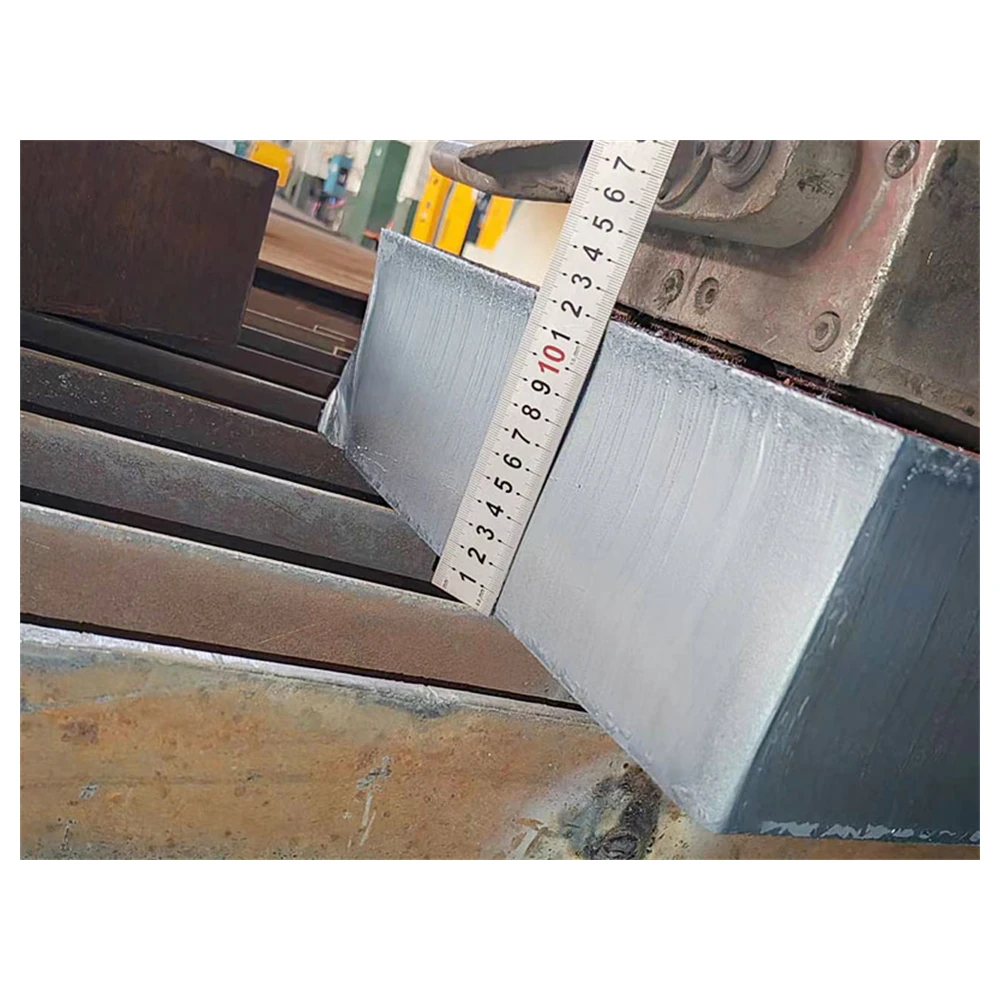
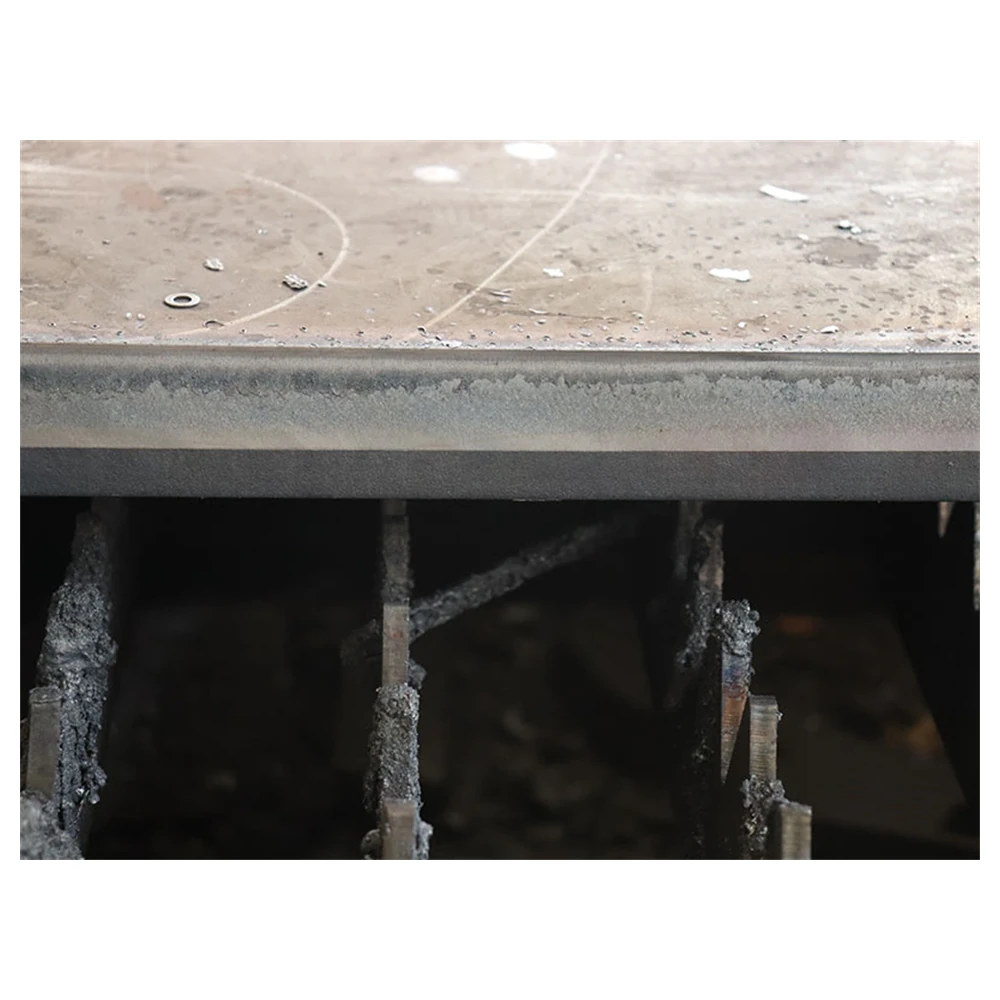
Wide kerf, visible drag lines and a larger heat-affected zone. The edge is square and strong but normally needs machining or grinding before a weld is made. That trade is worth it on heavy carbon plate.
Tighter kerf, less heat input and a cleaner, more vertical edge with little dross on thin and medium plate. Internal holes and tight outlines cut accurately, which flame tools cannot match at the same speed.
A rotating or tilting torch cuts the weld preparation into the edge in one pass. The flame platform holds these forms to about ±1 mm and the plasma bevel machine to about ±0.5 mm, so root gaps stay repeatable across the run.
Anywhere a flame or plasma table feeds a welding bay, a press or an assembly line, one of these four platforms is the right starting point.
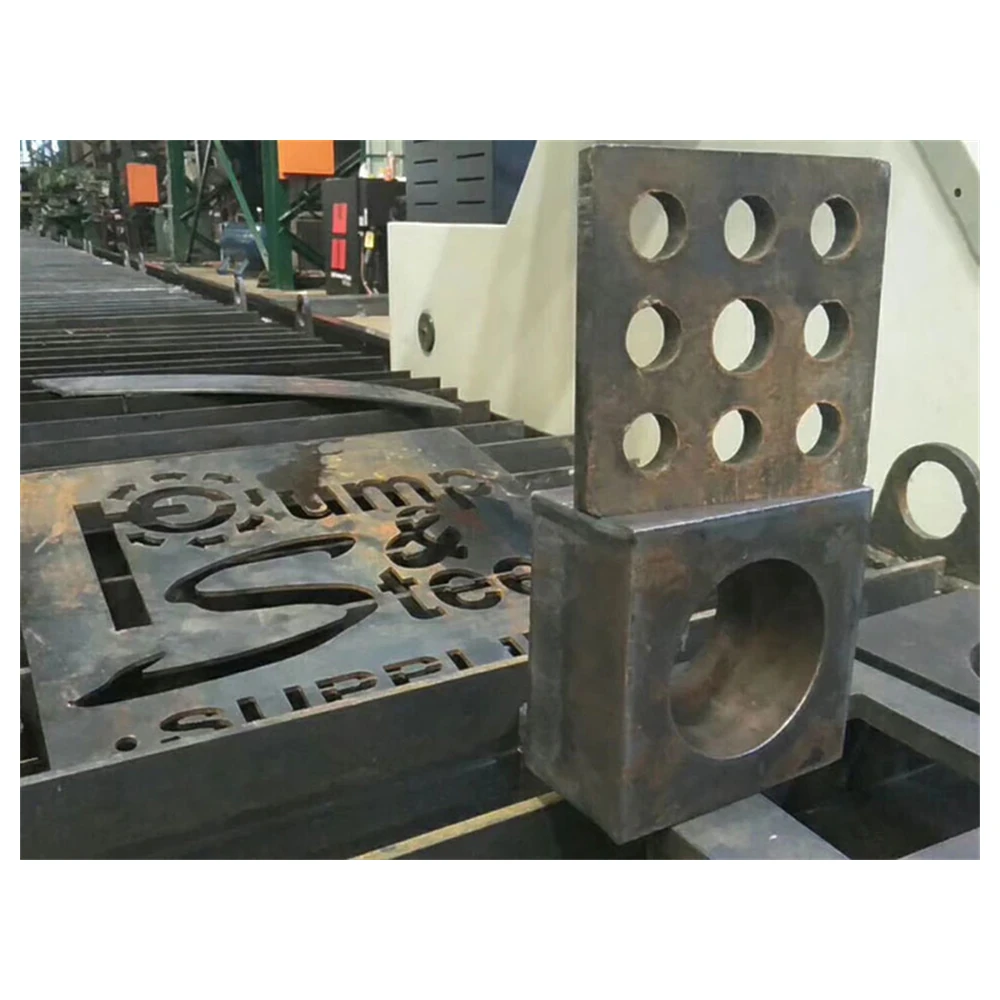
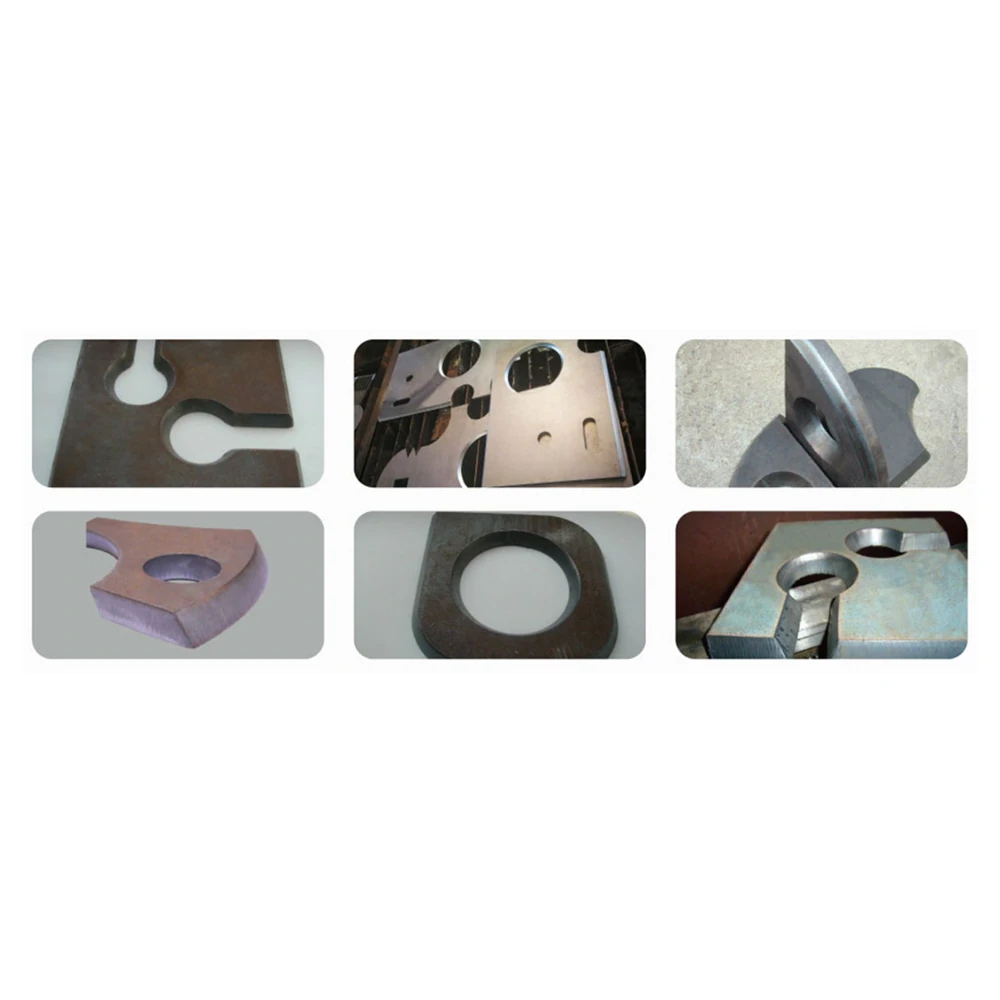
Gussets, base plates and stiffeners cut to size, with V and K bevels prepared in the same pass for full-penetration welds.
Shell plates and heads in carbon and stainless steel, with bevels that match the weld procedure and hold the root gap consistent.
Brackets, machine bases and fabricated frames cut from plate in one nesting, then stacked straight into the welding fixture.
Start with thickness and edge quality. Plasma is first choice for thin and medium plate up to roughly 50 mm because it cuts fast with a narrow kerf and a clean edge. Oxy-fuel flame cutting takes over on thick plate where plasma is no longer practical and the cut edge is machined afterwards. Choose a bevel machine when the part needs weld preparation with V, X, Y or K edges cut in one pass instead of being ground by hand.
As process guidance, plasma covers roughly 1 to 50 mm, high-definition plasma can reach thicker plate, and oxy-fuel flame cutting covers the heavy range from about 6 mm upward, where it is the only practical thermal process. The figures in the thickness matrix are typical industry bands, not fixed machine limits; send the material and thickness and we confirm the torch, gas set and cutting parameters for your plate.
The plasma bevel machine holds bevel cutting accuracy to about plus or minus 0.5 mm, and the flame cutting platform holds V, X, Y and K bevels to about plus or minus 1 mm on straight and curved paths. Straight-cut accuracy depends on the rail and drive system, the nesting and the plate condition, and is verified with your sample part before shipment.
Yes. The flame and plasma bevel platforms cut straight edges and bevelled edges on the same table. Bevel geometry such as V, X, Y and K is programmed in the nesting software and produced by a rotating or tilting torch, which removes a separate grinding or machining operation on weld preparation.
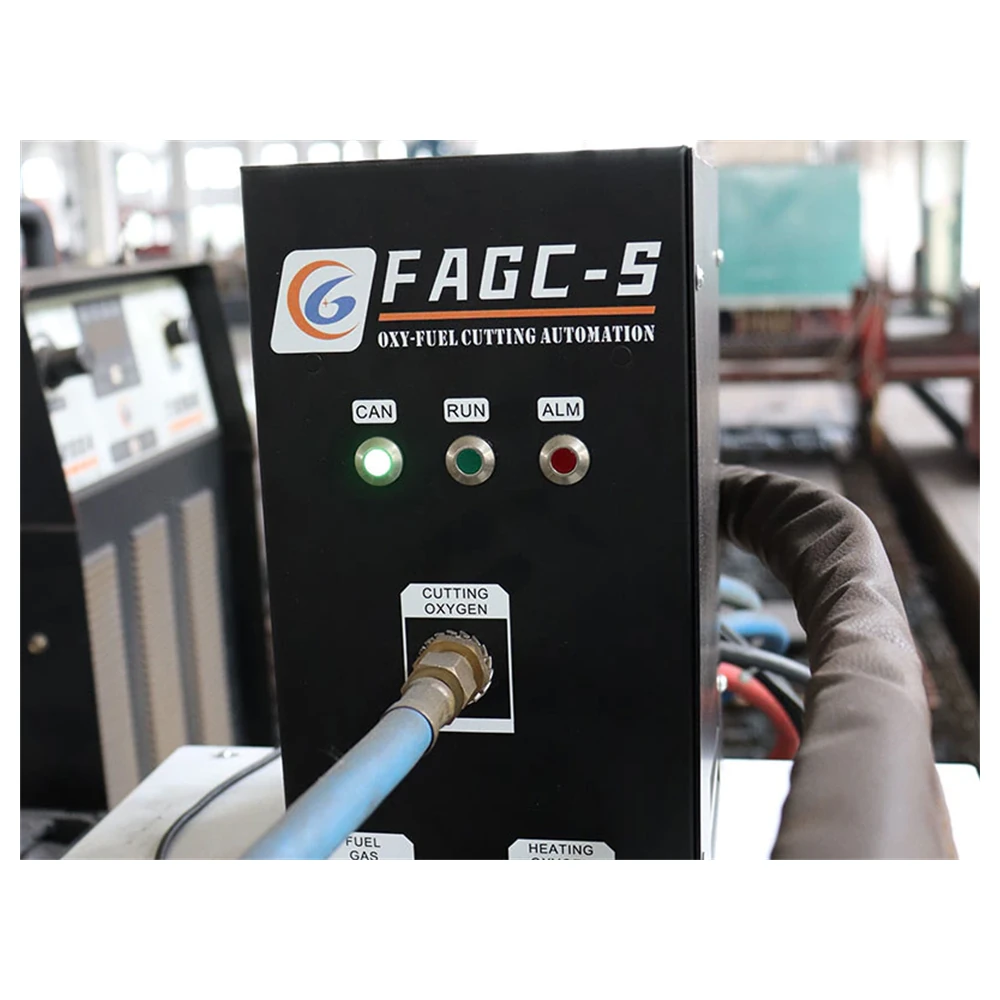
The flame platform runs a dedicated CNC cutting control system with a cutting parameter library, automatic gas console and both bus and IO control. Plasma builds use a CNC controller matched to the plasma power source. All systems are delivered with an English interface and accept standard nesting and CAD files, and we help map your post-processing on commissioning.
Standard cutting platforms ship in roughly 25 to 40 working days, with customized table size, torch count or plasma source adding to that. Machines are assembled, aligned and test cut before packing. We provide English manuals, drawings and remote video commissioning, and can arrange on-site installation for large gantry tables.
Yes. Send a plate sample or a drawing and we return the cut part, edge quality photos, bevel measurements and the parameter file we used. Operator training is covered by video, an English manual and live remote sessions, and our engineers stay available for the life of the machine.