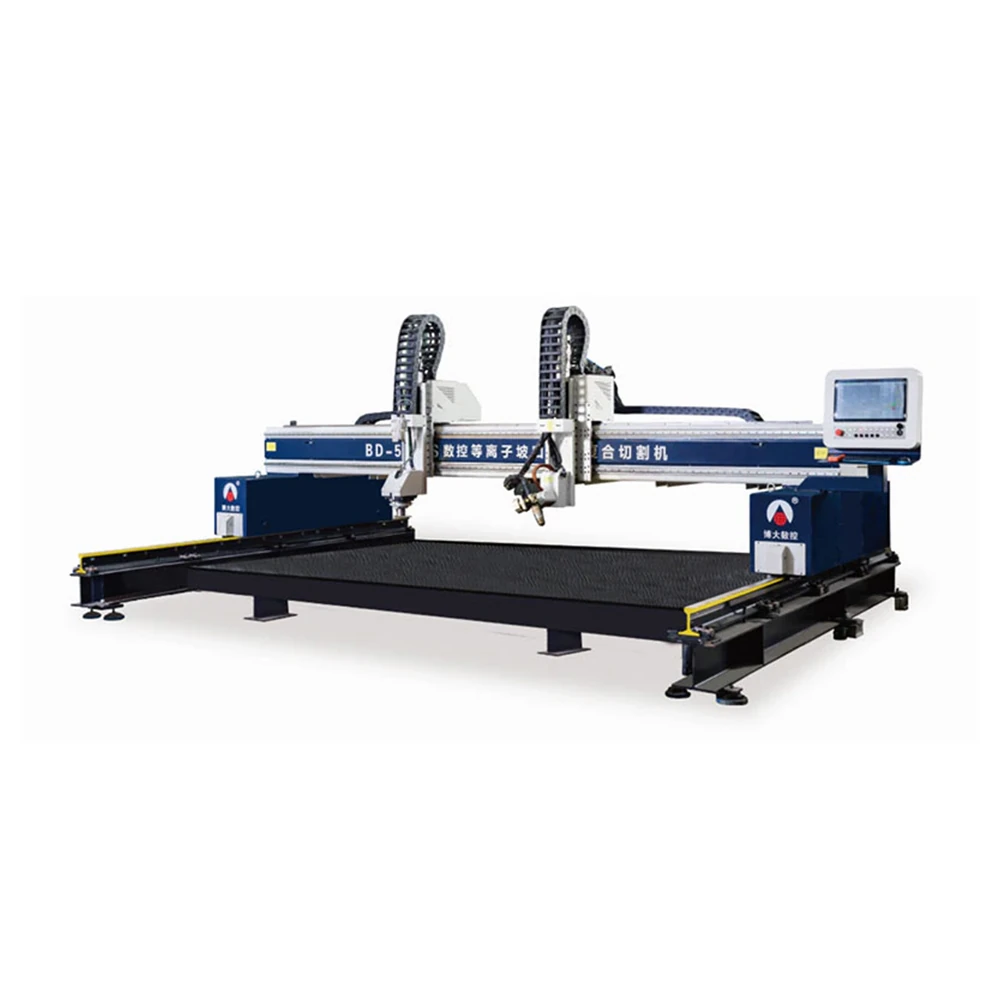
CNC Plasma Bevel Cutting Machine
Fifth-generation bevel platform for carbon and stainless plate, holding bevel accuracy to about ±0.5 mm with an optional marking device.
View modelOn flat plate, plasma already cuts fast. The remaining limit is the motion cycle, so the BDPC series carries two high-precision plasma heads on one industrial gantry and profiles two parts at once — arcs, long holes and irregular outlines come off the table with a narrow kerf and a clean edge.
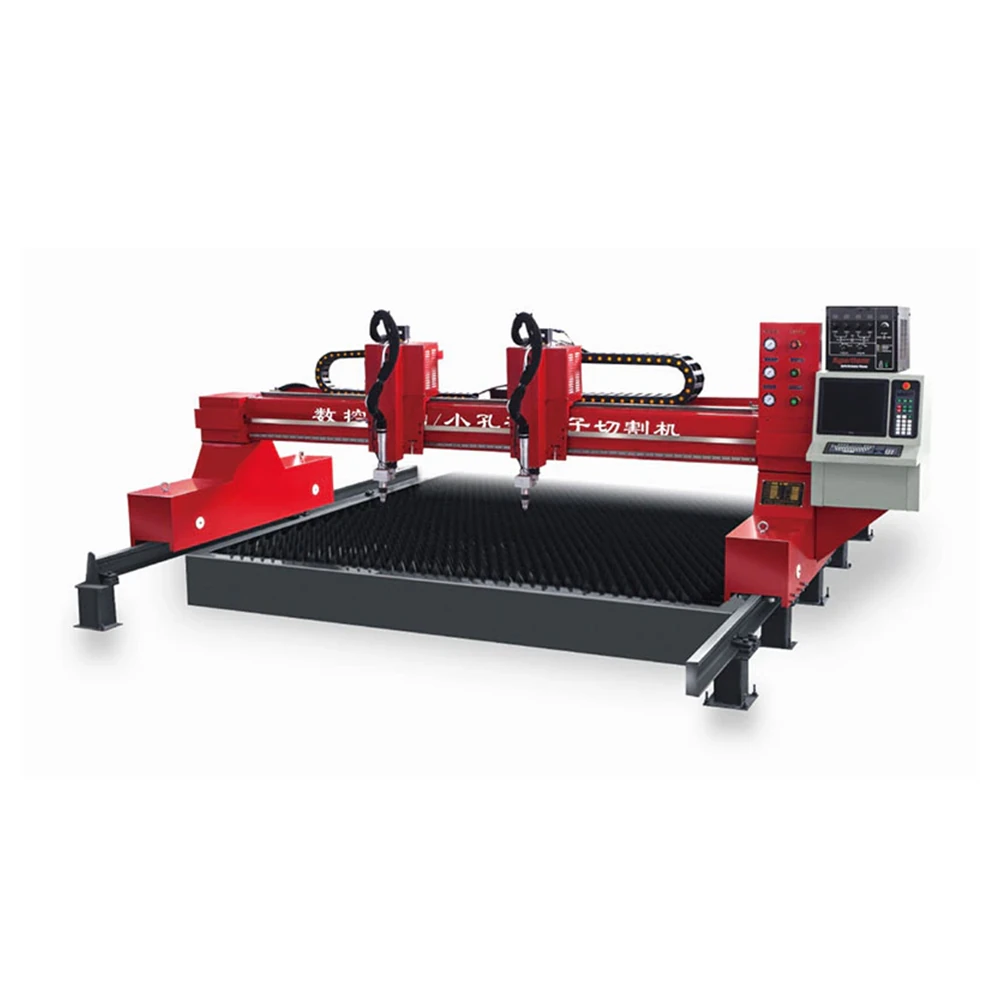
Four figures that define how this machine is specified.
Plasma leaves a tighter kerf and a cleaner, more vertical edge than flame cutting, with light dross that is easy to remove.
Slots, long holes and tight radii cut accurately, so parts come off the table ready for the next operation.
Two heads on one gantry mean two profiles per motion cycle, which is where the platform earns its throughput.
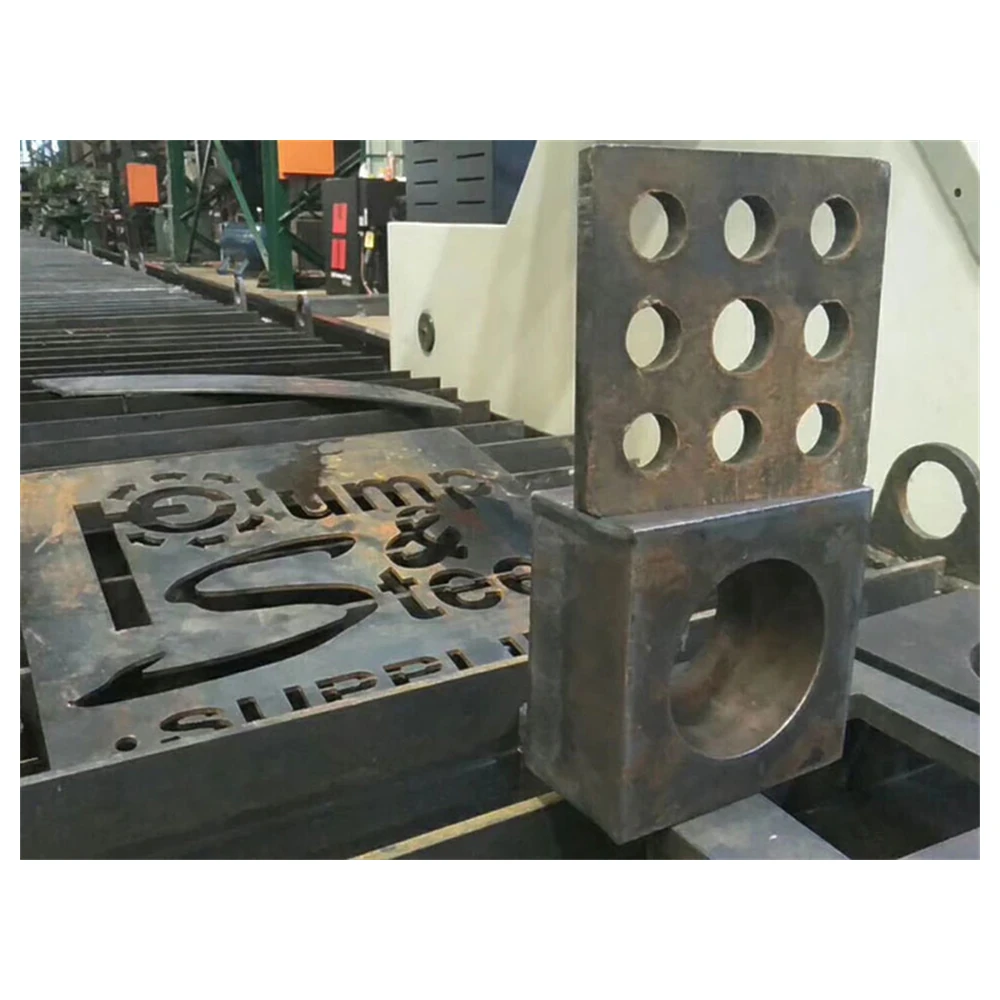
The BDPC series is a new-generation high-precision CNC plasma cutting machine built on an industrial design. The gantry, rails and torch height control are engineered as one system, so the two heads keep their cutting height and speed across a long plate without operator intervention.
Adding a second head is not simply doubling the torch. It changes how the plate is nested, how the kerf is planned and how the day's output is scheduled.
| Head configuration | How it cuts | Best fit | Throughput effect |
|---|---|---|---|
| Two heads, parallel same-part | Both torches cut the same outline side by side | Quantity parts with a single dominant outline | Highest — two identical parts per pass |
| Two heads, mixed parts | Each torch cuts a different part from the same plate | Mixed batches and job-shop plate work | High — one pass covers two jobs |
| Two heads, mirror nesting | Left and right hand versions cut as a matched pair | Symmetrical brackets, gussets and frames | High — matched sets in one motion |
| Single head, fine detail | One torch runs a tight or thin-wall outline alone | Fine detail or short runs | Standard single-head cycle |
The nesting staggers pierce points between the two heads so the plate is not preheated twice in the same spot, which keeps the kerf clean.
Web width between the two cut paths is planned in the nest, so both heads leave enough material for the part to stay flat and stable.
Each head runs at the correct speed for the thickness rather than being pushed faster, which protects electrodes and nozzles and holds edge quality.
Four design decisions that carry the machine from design sheet to production floor.
Two independent torch carriages on a shared gantry give flexible nesting without losing the rigidity that holds cut quality.
Imported or domestic high-precision sources deliver the ampere range and gas control needed for tight contours and clean edges.
The gantry, rails and bed are engineered for continuous plate production rather than occasional use, so accuracy holds across the shift.
The same platform is delivered with either power source, so the machine is matched to the plate mix and the consumables you prefer.
Table size, plasma source and head spacing are confirmed on the build sheet. The items below define the platform.
| Parameter | Specification |
|---|---|
| Series | BDPC |
| Cutting process | High-precision plasma cutting |
| Cutting heads | Two plasma heads |
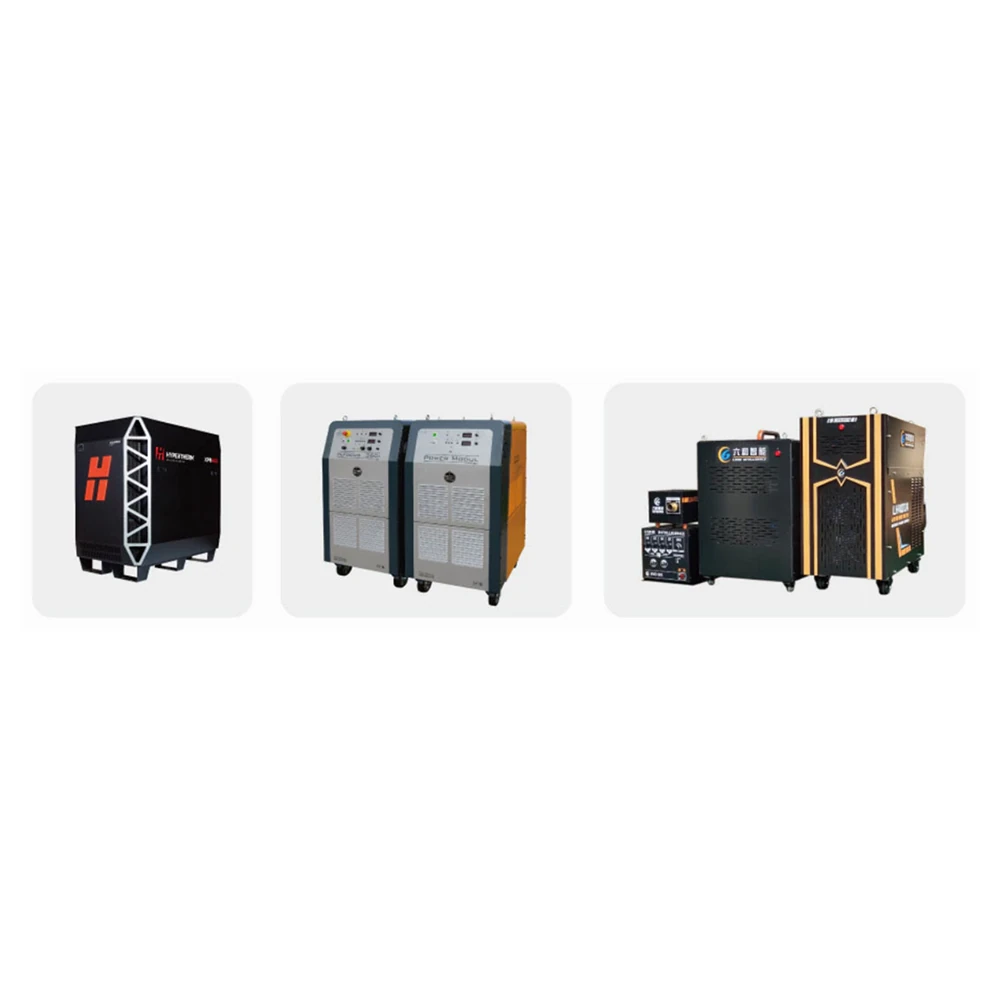
| Plasma power source | Imported or domestic high-precision source, matched to plate thickness |
| Typical parts | Flat plate parts with arcs, long holes, slots and irregular outlines |
| Typical thickness band | Roughly 1–50 mm (process guidance, not a fixed machine limit) |
| Torch height control | Automatic, following the plate surface |
| Nesting input | Standard CAD and nesting files |
| Table size | Built to order |
| Head spacing | Set to the nesting and part family at order |
| Design class | Industrial flat-plate cutting platform |
The source datasheet for this series describes the platform, the option of imported or domestic high-precision plasma sources and the flat plate parts it produces, rather than a fixed parameter list. Table size, track length, source ampere rating, gas set and head spacing are therefore confirmed against your drawing before production. Thickness bands are typical process guidance verified with a test cut on your plate.
The twin-head logic is planned in the nest and executed by the gantry. The routine stays simple.
Import the outlines and set the two cut paths, web widths and pierce points so both heads cut without interfering.
Match ampere rating, gas set and cutting speed to the plate thickness and material, then load the parameter set.
The gantry drives both torches; automatic height control keeps each at the correct stand-off across the plate.
Parts are removed and the next plate is nested, with head spacing adjusting to the next part family and batch size.
Anywhere a shop cuts brackets, plates and gussets from sheet and medium plate in quantity.
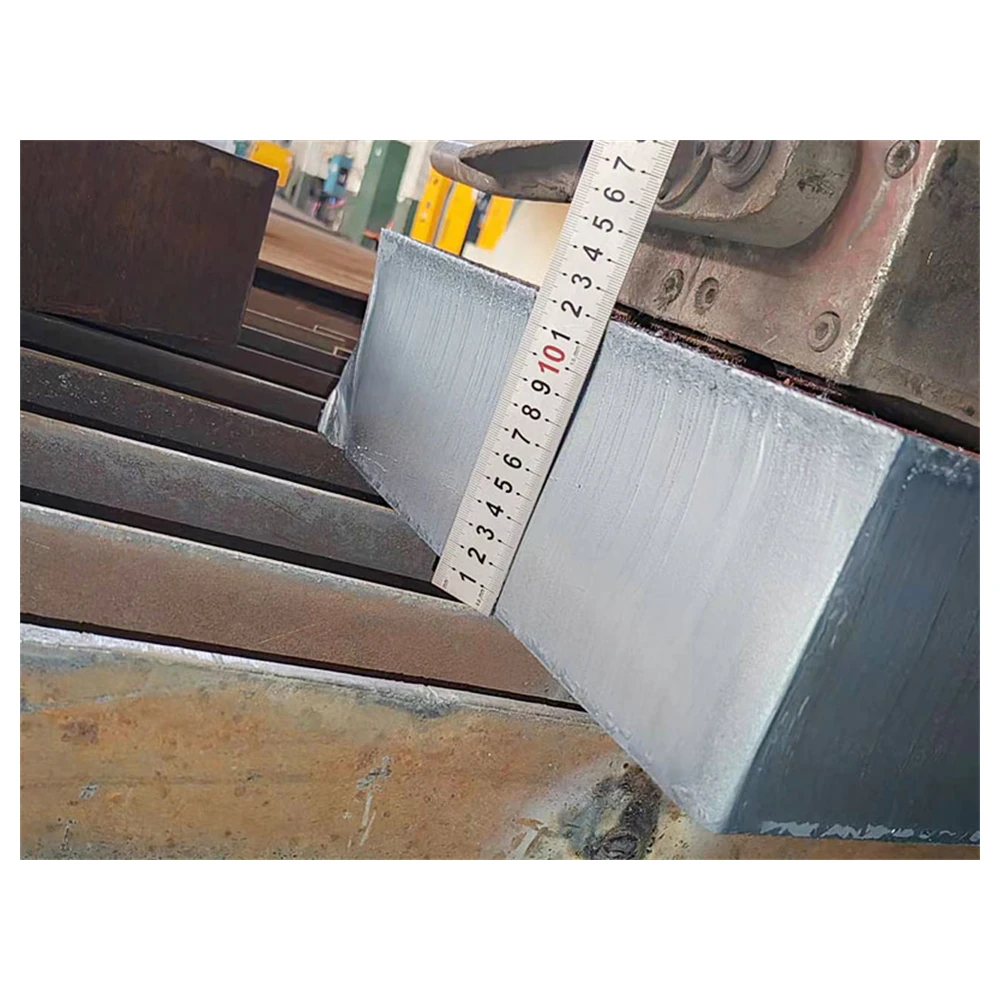
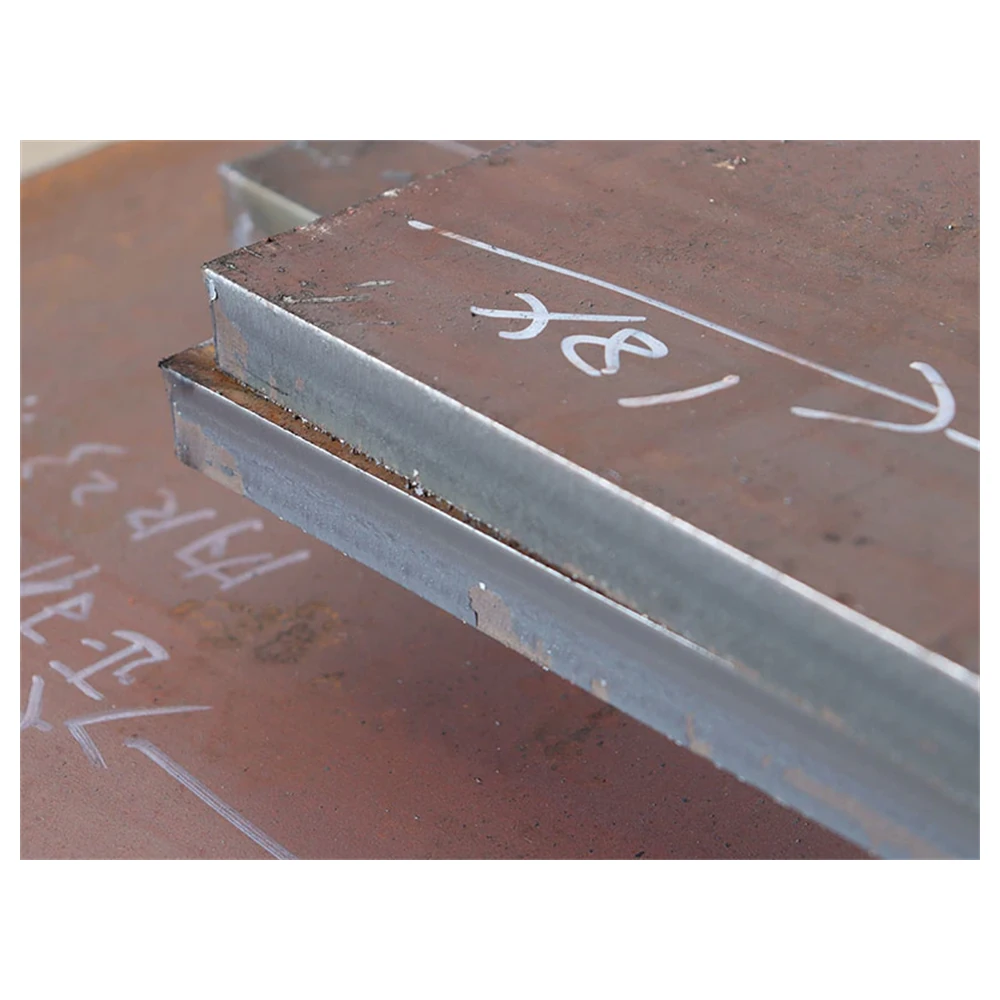
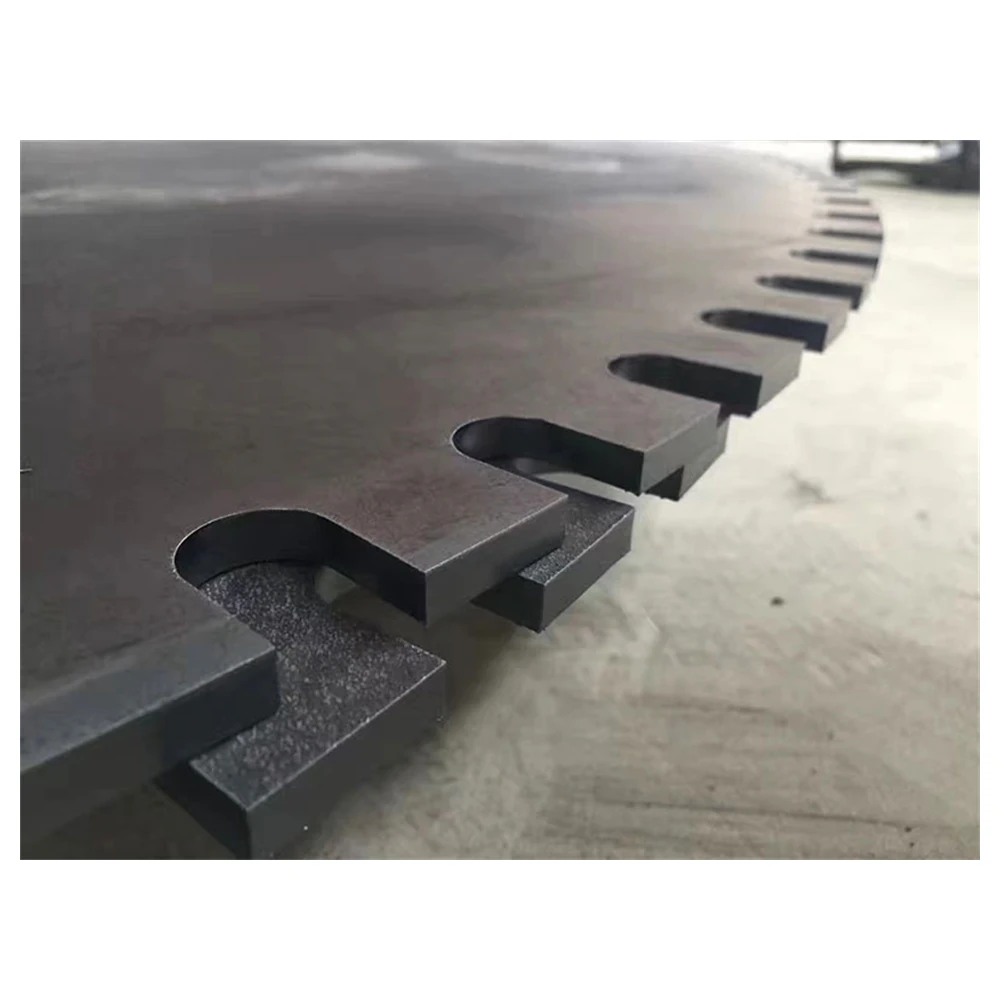
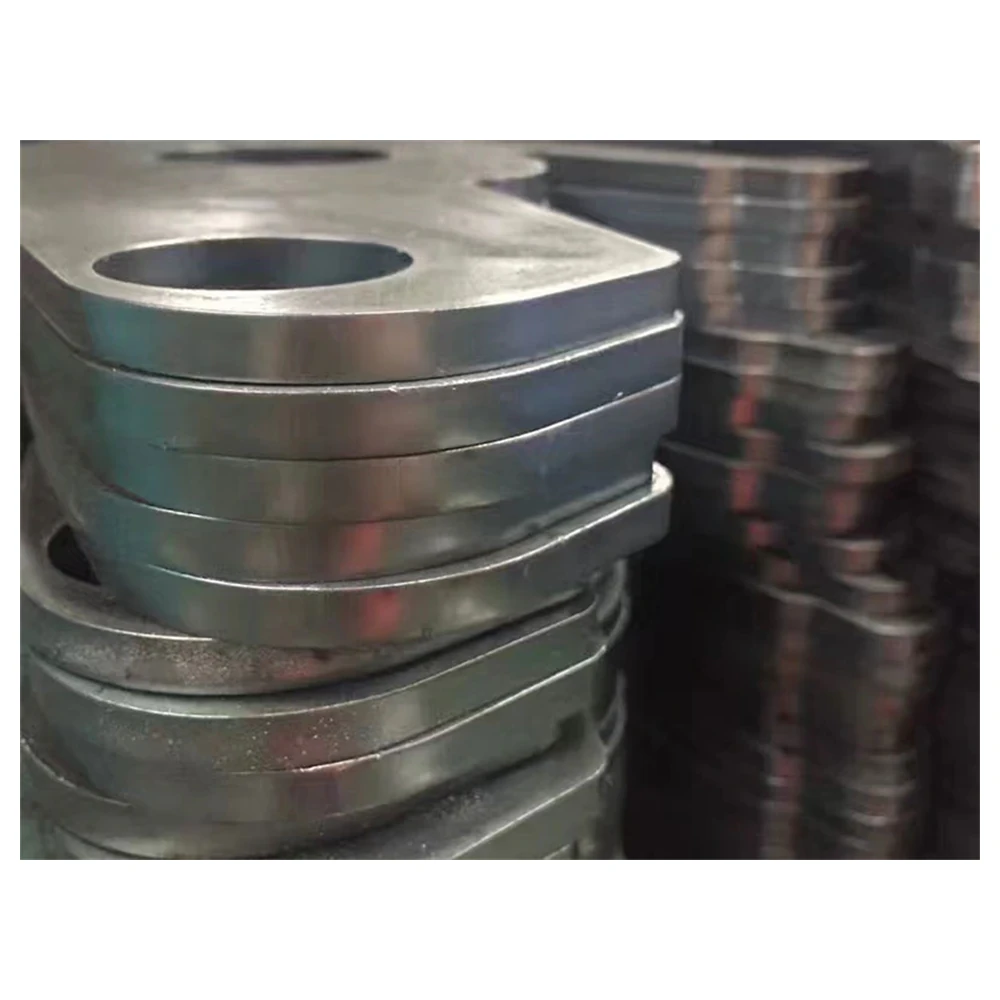
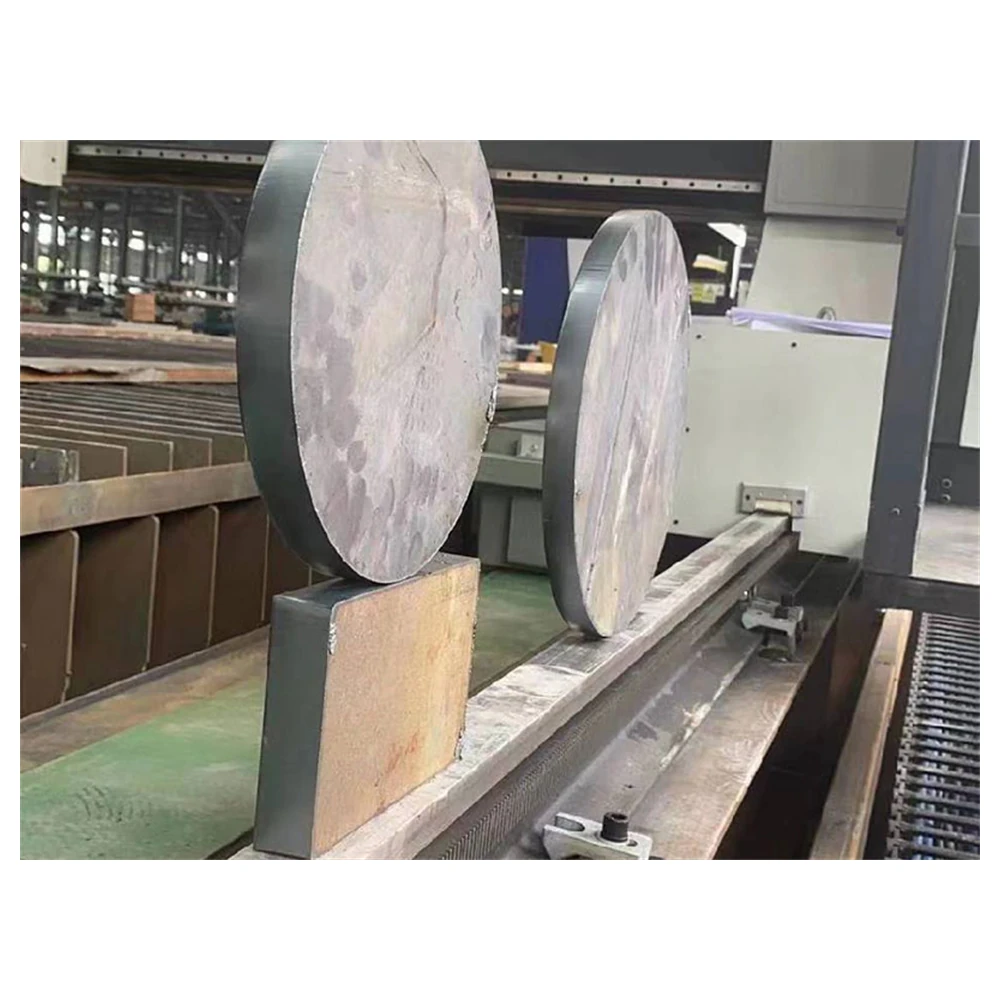
Brackets, covers and mounting plates cut in quantity, with circular holes and slots finished in the same pass as the outline.
Gussets, reinforcement plates and chassis components cut in matched left and right pairs for fast jig assembly.
Mixed plate work where one plate carries several different jobs, nested so each head cuts a separate part.
Configuration is agreed before production and support does not depend on shipping the machine back to us.
Sea freight for gantry tables, with air freight for urgent spare parts. Torch carriages are braced for transport.
Alignment and head setting are covered by drawings and remote video commissioning, with on-site assistance available.
Parts covered, with free replacement components and lifetime engineering support for the life of the machine.
Electrodes, nozzles and shields are supplied with the machine and kept in stock for repeat orders.
Two heads let the same CNC gantry profile two parts or two outlines at once. On thin and medium plate, where plasma cutting speed is already high, the limit is often the motion cycle; running two heads in parallel lifts output without pushing either torch beyond its correct cutting speed or degrading the cut edge.
The BDPC series can be equipped with either imported or domestic high-precision plasma power sources. The source is matched to the plate thickness, the material and the edge quality you need, and we confirm the ampere rating and gas set against your sample before the build.
It is designed for flat plate parts: arcs, long holes and slots, and irregular outlines such as brackets, plates and gussets. Because plasma produces a narrow kerf with a clean edge, internal holes and tight contours cut accurately, which is where a dual-head plasma table is faster and cleaner than flame cutting.
As process guidance, plasma covers roughly 1 to 50 mm on the BDPC platform, with high-definition sources reaching thicker plate. Plasma is first choice in the thin to medium band where speed and edge quality matter; oxy-fuel flame cutting takes over on heavy plate where plasma is no longer practical.
Head spacing follows the nesting. For quantity work the two heads can be set to cut the same outline in parallel, and for mixed batches they can be set to cut different parts from the same plate. The spacing is fixed on the build sheet against the part family you run most.
A standard BDPC build ships in roughly 30 to 45 working days depending on table size and plasma source. The machine is assembled, aligned and test cut before packing, and we provide English manuals, drawings, remote video commissioning and lifetime technical support.
Two plasma heads suit fast flat-plate profiling. Compare these builds from the same range, or see all CNC cutting machines.
Fifth-generation bevel platform for carbon and stainless plate, holding bevel accuracy to about ±0.5 mm with an optional marking device.
View model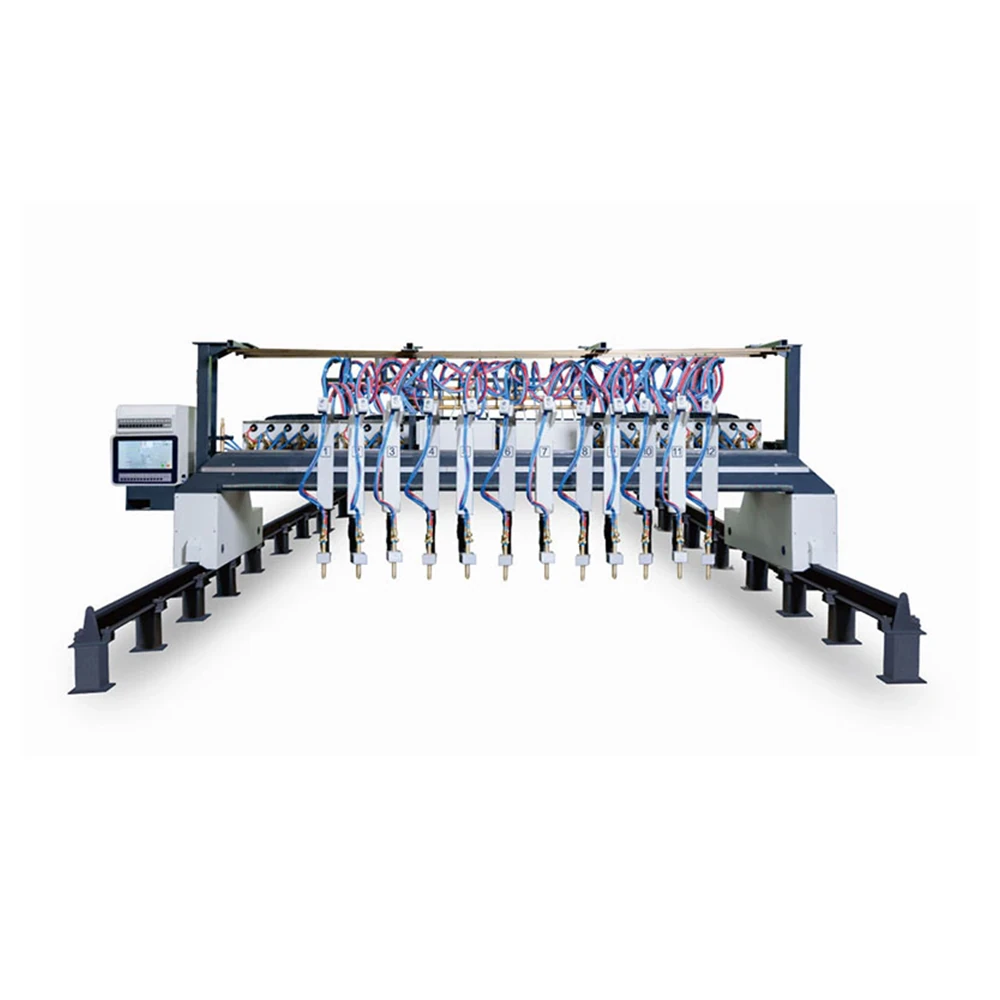
BDIF single-torch platform for heavy carbon plate, selecting the cutting process automatically and cutting V, X, Y and K bevels to about ±1 mm.
View model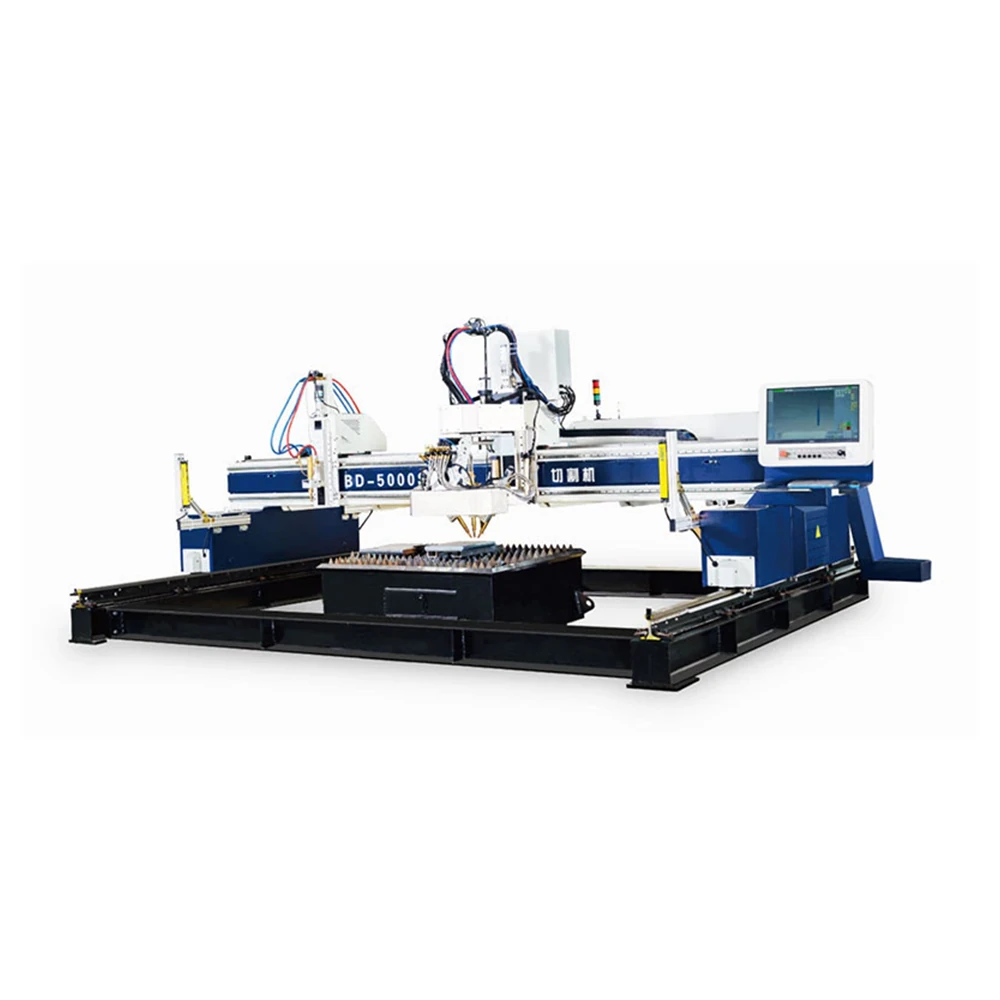
Rotary three-torch oxy-fuel platform for thick plate at volume, with automatic gas control and a rotary head for weld preparations.
View model