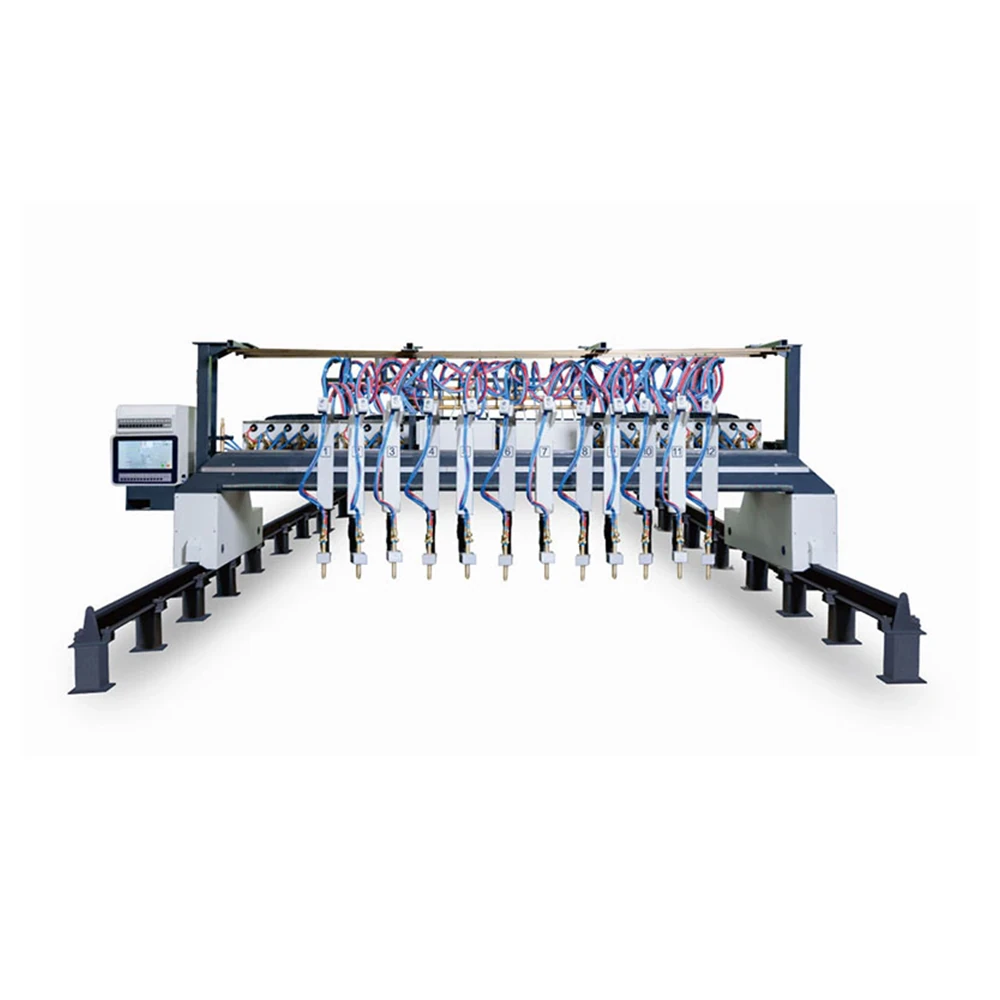
CNC Flame Cutting Machine
Single-torch BDIF platform that chooses the process from plate type, thickness and nozzle, with V, X, Y and K bevels to about ±1 mm.
View modelOn thick plate, cutting speed is not the limit — torch time is. This machine puts a rotary three-torch head on one CNC gantry so three identical profiles come off the table in the time one used to take, and the same head tilts to cut V, X, Y and K weld preparations while it profiles.
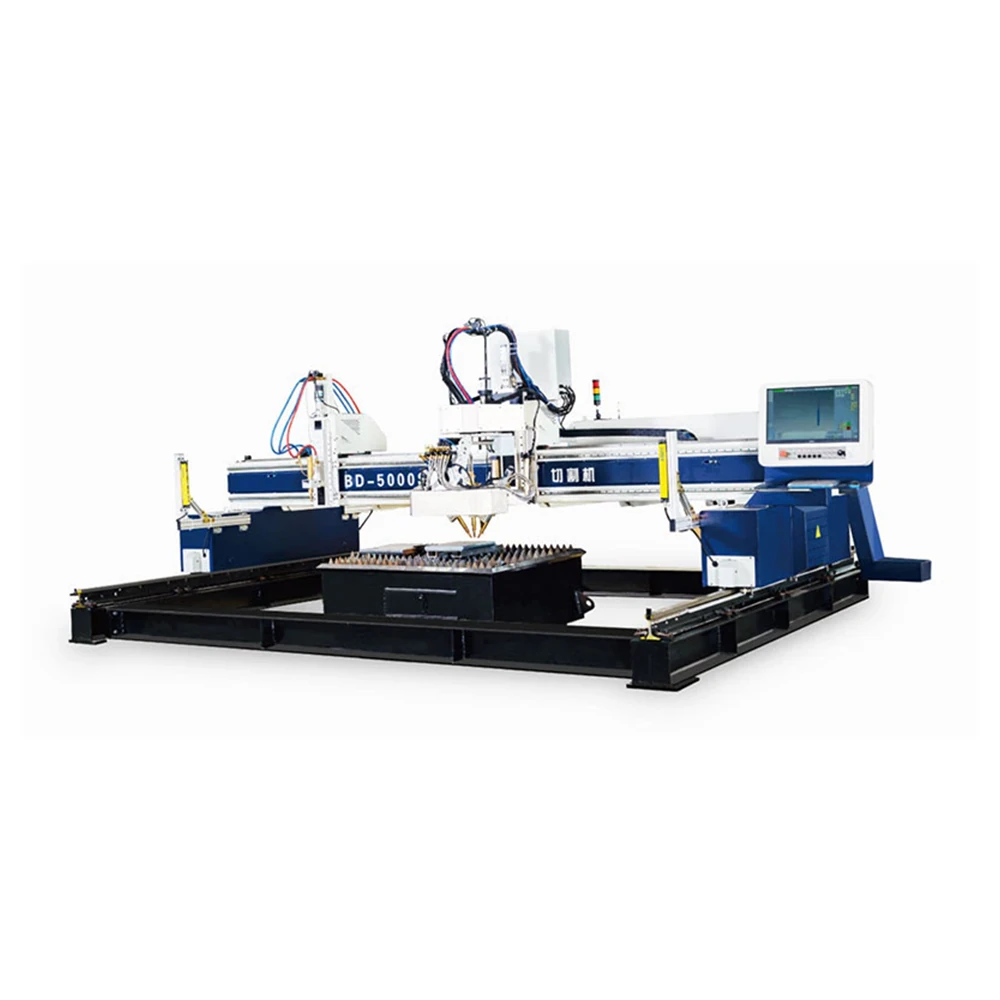
Flame cutting is slow by nature: the thicker the plate, the longer each metre of cut takes. Adding torches is the only way to raise throughput without compromising the cut, because each torch still runs at the correct speed for the thickness.
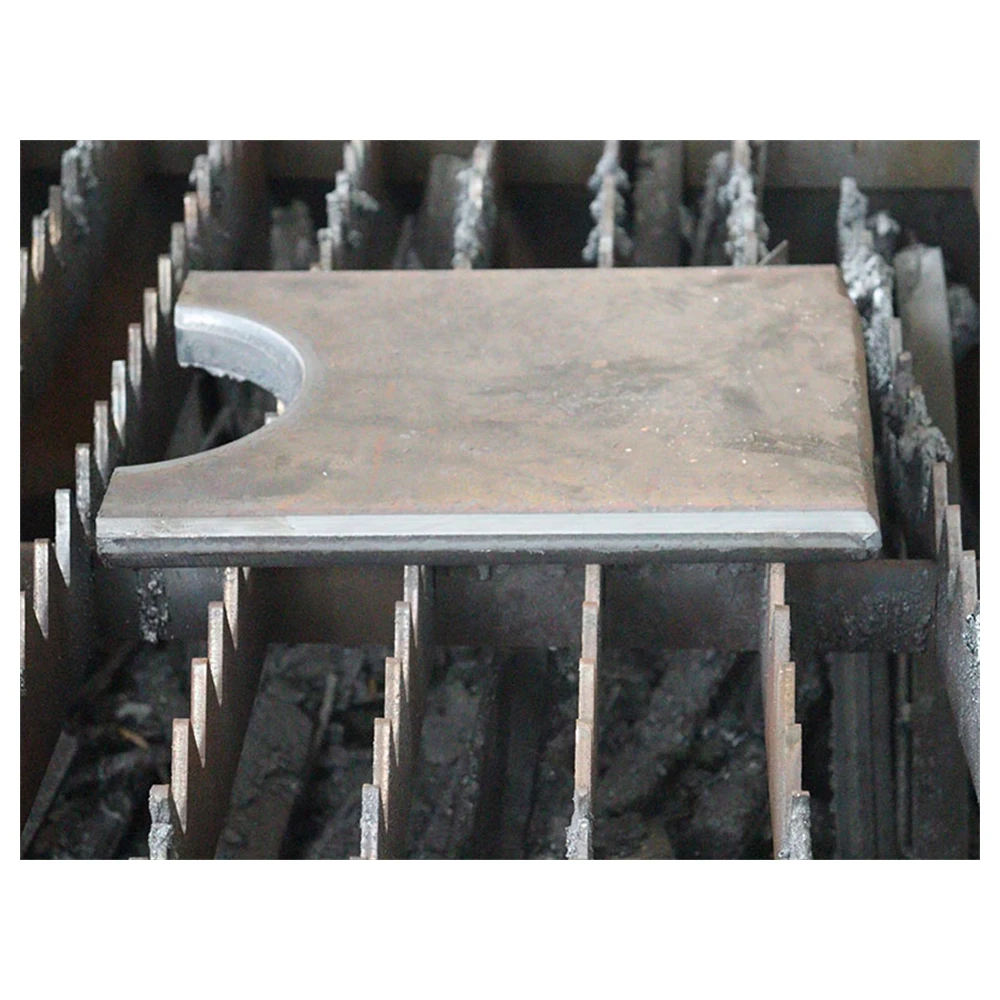
This platform is built around a rotary torch group. Table size, track length, torch spacing and option set are confirmed on the build sheet for each order.
| Parameter | Specification |
|---|---|
| Cutting process | Oxy-fuel flame cutting |
| Torch configuration | Rotary triple cutting torch, group mounted on one carriage |
| Bevel capability | Angled weld preparations produced by torch rotation and tilt |
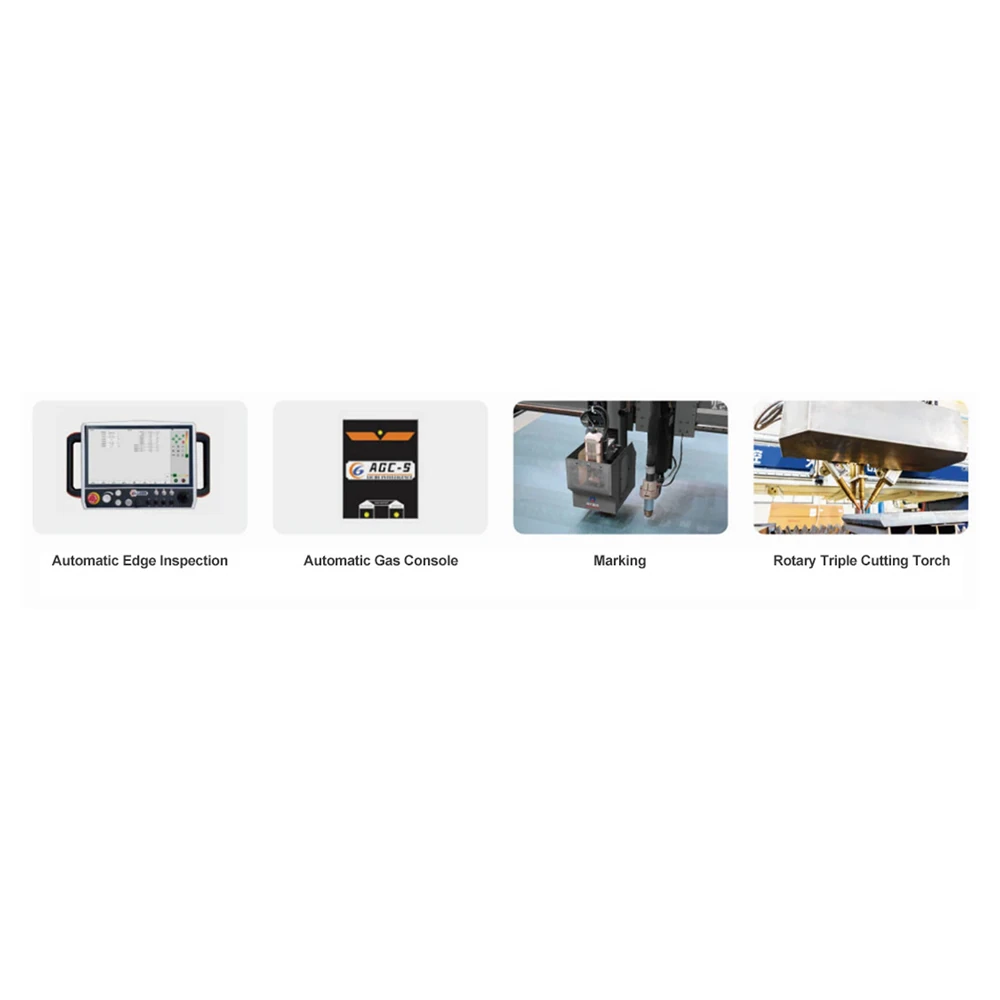
| Automatic gas console | Optional — manages pressure and flow per torch |
| Automatic edge inspection | Optional |
| Marking function | Optional |
| Control system | CNC cutting control with process parameter library |
| Drive and gantry | Motorized gantry with track, sized to the cutting table |
| Materials | Carbon steel and thick plate |
| Typical thickness band | Heavy plate, roughly 20–300 mm (process guidance, not a fixed machine limit) |
| Table size | Built to order |
| Torch spacing | Set to the nesting and part family at order |
The source datasheet for this platform lists the rotary triple torch and the optional modules rather than a fixed parameter list. Table size, track length, torch spacing, gas set and option combination are therefore confirmed against your drawing before production. Thickness bands are typical process guidance and are verified with a test cut on your plate.
Four things this machine does that a single-torch flame table cannot.
Three matched profiles per pass. Throughput scales with torch count while every flame stays at its correct cutting speed.
The head rotates and tilts so V, X, Y and K weld preparations are cut in the same pass as the outline.
An automatic gas console holds pressure and flow steady, which is what keeps three flames running identical edge quality.
Edge inspection, marking and gas control are chosen per order, so the machine carries what the job needs and nothing it does not.
Four numbers that describe the platform at a glance.
Oxy-fuel cutting runs on gas and a nozzle rather than electrodes and shields, which simplifies the running cost on heavy carbon plate.
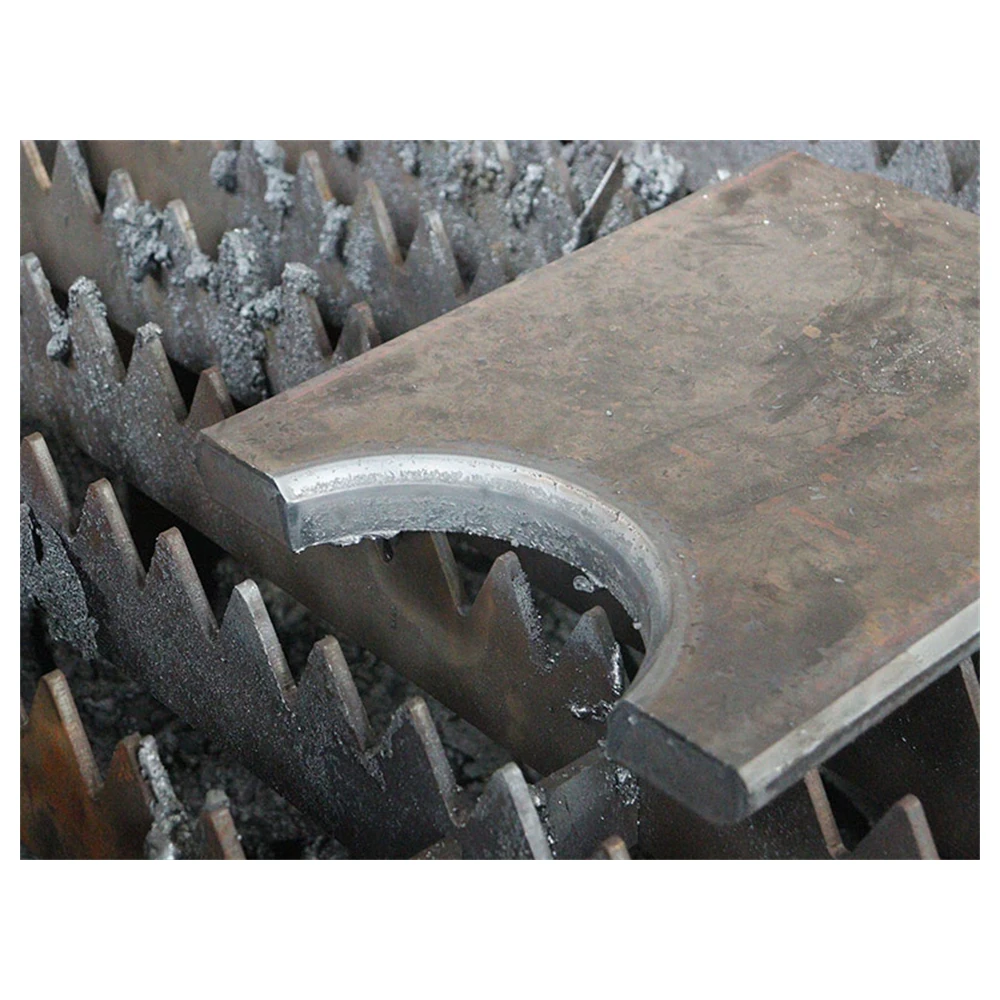
A flame-cut edge is square and mechanically sound. It carries a wider heat-affected zone, so the edge is normally machined before a critical weld.
The three torches travel as a single carriage, so spacing and alignment are set once and repeated on every plate in the nesting.
A square torch cuts a square edge. Rotate and tilt the head and the same nozzle cuts an angled face — the four standard weld preparations come from that single movement.
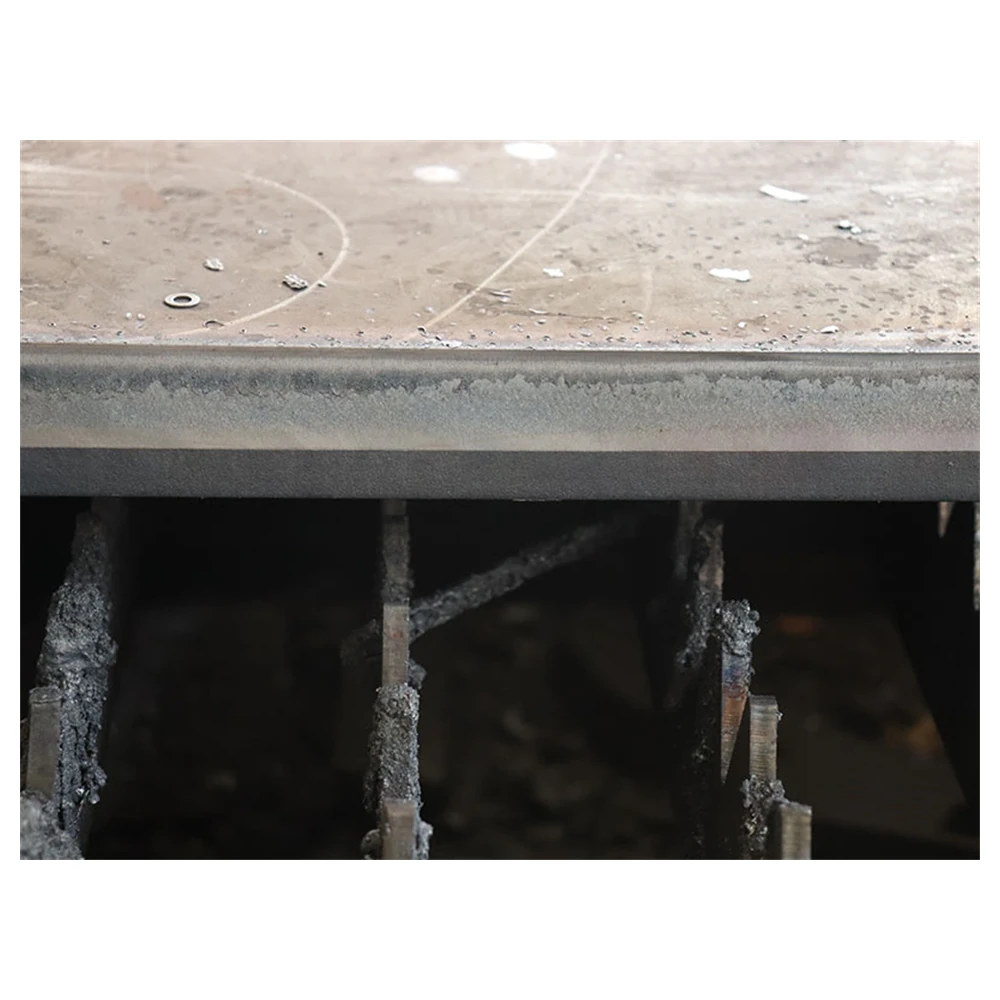
Both plates receive an angled face so the joint closes into a V. The most common single-sided weld preparation on medium to thick plate.
Angled faces on both sides of the plate. Used where the weld is made from both sides and full penetration is required.
A vertical land with an angled top face. It controls the root gap and suits heavy sections where a deep narrow weld is wanted.
A double-sided Y form. It gives a symmetrical weld preparation on thick plate that is welded from both faces.
The torch group changes the output, not the routine. The workflow stays the same as any CNC flame table.
Import the part outlines and set the nesting, including torch spacing for the three-torch group and any bevel geometry.
Choose the plate type and thickness so the control system selects the cutting parameters, gas pressures and cutting speed.
The gantry drives the group along the path while all three flames cut matched profiles at the same controlled speed.
If the marking option is fitted, part identification is applied before the plate is unloaded and the next nesting begins.
The triple-torch layout pays back fastest when the same heavy outlines repeat plate after plate.
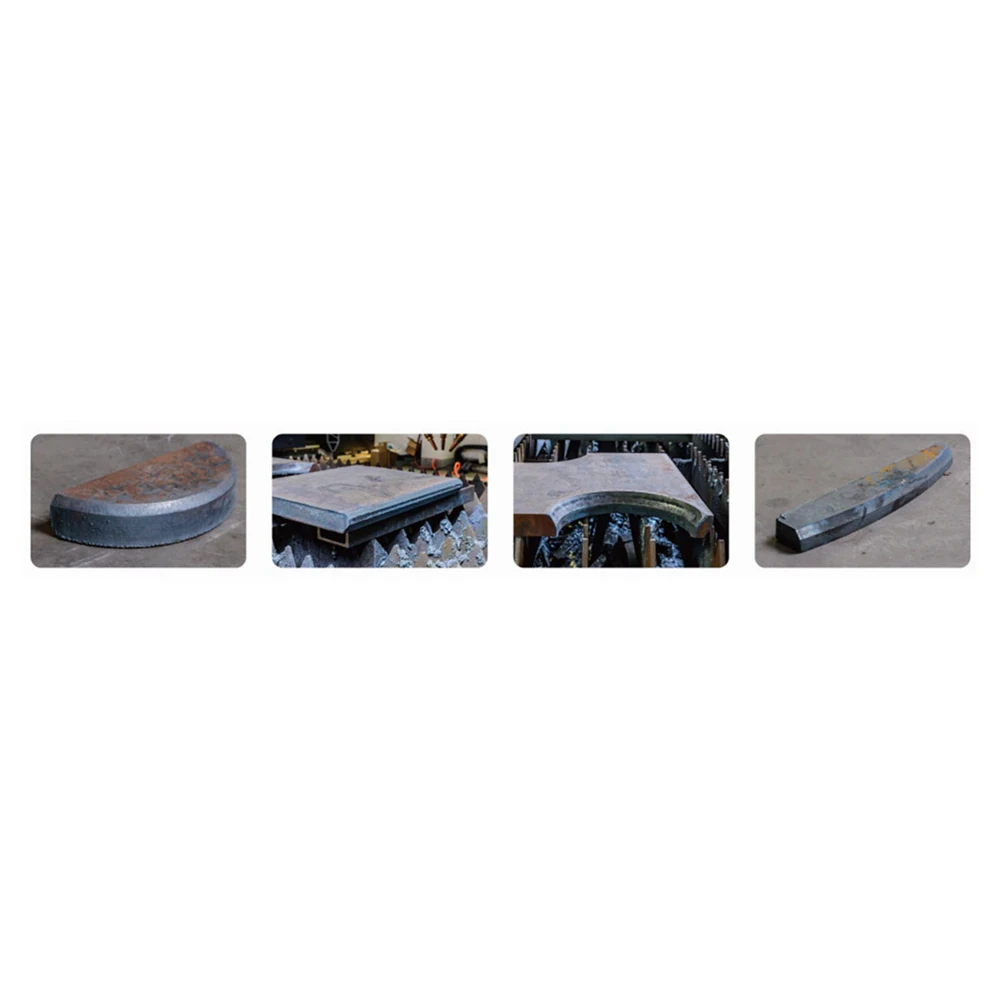
Base plates, gussets and stiffeners cut in matched sets, with bevels prepared for full-penetration welds.
Machine bases and frames cut from thick carbon plate, where the wide flame kerf and square edge suit the following machining step.
Nesting-driven cutting where the same heavy outlines repeat daily and the torch group multiplies throughput.
Configuration is agreed before production and support does not depend on shipping the machine back to us.
Sea freight for gantry tables, with air freight for urgent spare parts. Gantry and track are packed for container transport.
Alignment and track setting are covered by drawings and remote video commissioning, with on-site installation available for large tables.
Parts covered, with free replacement components and lifetime engineering support for the life of the machine.
Gantry, track and torch group are crated and braced separately so the alignment survives the journey.
Oxy-fuel flame cutting is the heavy-plate process. As a rule it starts to make sense from about 20 mm and is the only practical route beyond roughly 100 mm, where plasma sources no longer reach. The triple-torch build is aimed at that heavy range in volume. Send the plate grade and thickness band and we confirm nozzle, gas set and cutting speed for your work.
The rotary torch head tilts and rotates the nozzles so the cut edge can be angled rather than square. That produces standard weld preparations such as V, X, Y and K edges in the same pass as the profile, on both straight and curved paths, removing a separate grinding or machining operation.
A three-torch group is set up so the torches cut a matched set of profiles in one pass, which is how the machine multiplies output on thick plate. Torch spacing is set to the nesting and the plate layout, and the group can be configured for the part family you run most. Tell us the outline and batch pattern and we propose the spacing.
Four options are offered on this platform: automatic edge inspection, an automatic gas console, a marking function and the rotary triple cutting torch itself. They can be specified together or added according to the job, and are confirmed on the build sheet before production starts.
Oxy-fuel cutting uses oxygen with a fuel gas such as propane, natural gas or acetylene. The automatic gas console manages pressure and flow, and the exact mix and regulator set are matched to your plate and to the gas available on site, then confirmed before shipment.
A standard triple-torch gantry ships in roughly 30 to 45 working days, with table size, track length and option set adding to that. The machine is assembled, aligned and test cut before packing, and we provide English manuals, drawings, remote video commissioning and lifetime technical support.
Three torches suit thick plate at volume. Compare these builds from the same cutting range, or see all CNC cutting machines.
Single-torch BDIF platform that chooses the process from plate type, thickness and nozzle, with V, X, Y and K bevels to about ±1 mm.
View model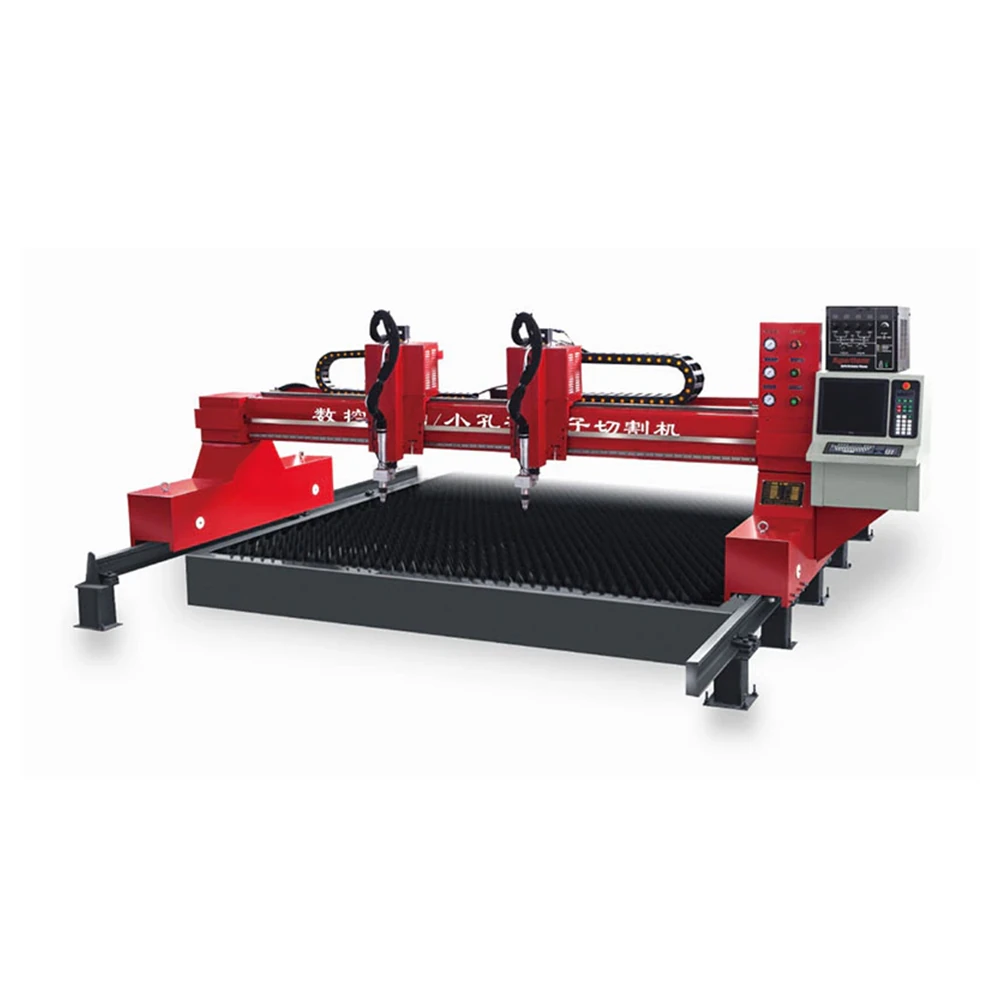
BDPC series with two plasma heads for fast, clean profiling of arcs, slots and irregular outlines on thin and medium plate.
View model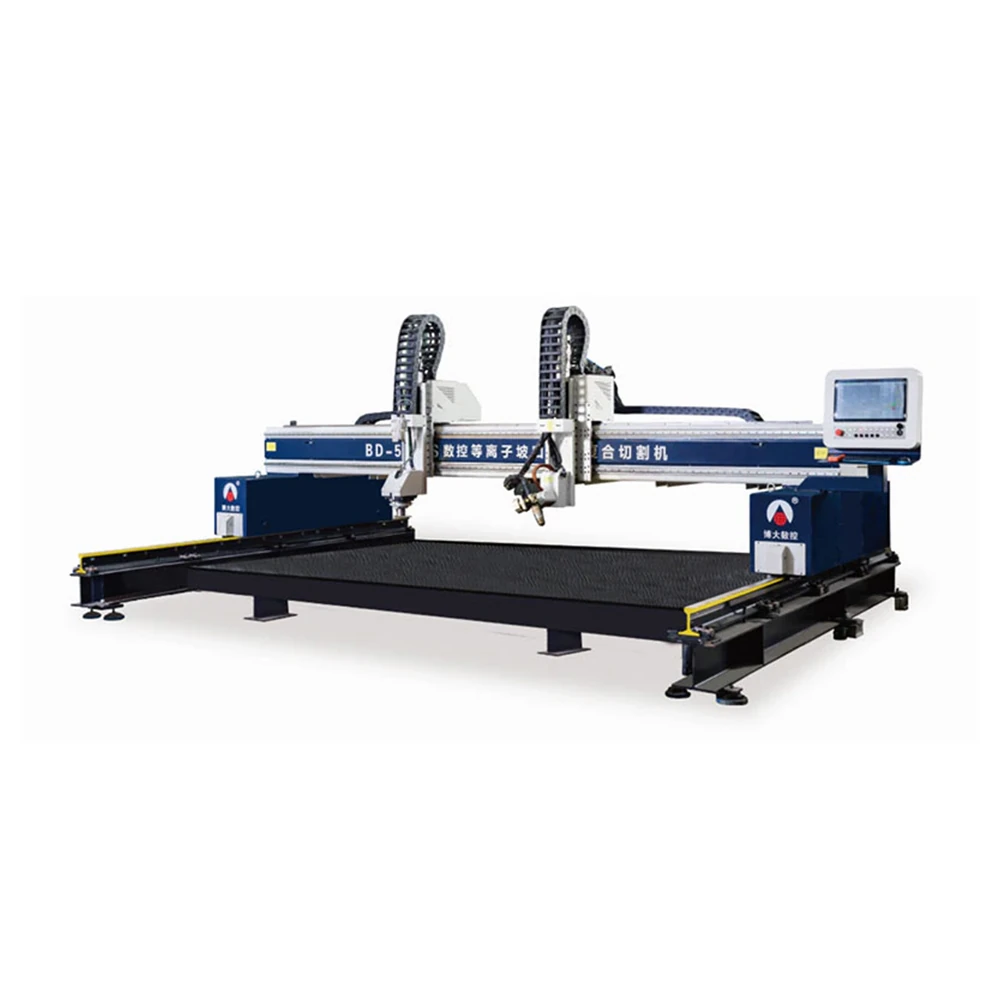
Fifth-generation plasma bevel platform for carbon and stainless plate, holding bevel cutting accuracy to about ±0.5 mm.
View model