01
Numbers From Testing
Cycle times, coverage rates, power ranges and tolerances come from measured work on real parts, not from brochure ranges copied between suppliers.
These articles are written by the engineers who configure and service the machines, not by a marketing team. They cover the decisions that actually change an outcome: which marking process survives a solvent wash, how much power a cleaning job really needs, what a maintenance schedule should contain, and where a laser stops being the right tool at all.
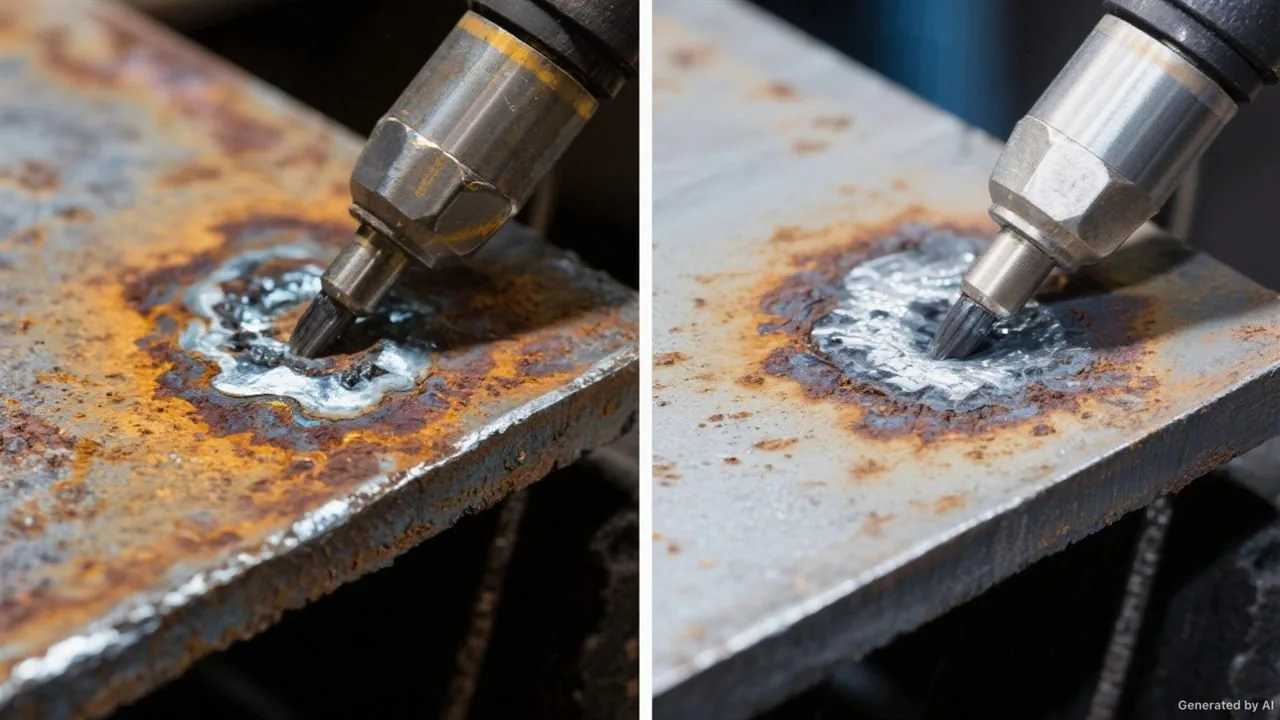
Each guide stands on its own, but together they follow the same logic: understand the process, size the machine to the job, then plan how it will be maintained and operated safely.
Cycle times, coverage rates, power ranges and tolerances come from measured work on real parts, not from brochure ranges copied between suppliers.
Where a laser is the wrong tool — thin flexible film, very large flat areas, deep blind radii — the article says so instead of steering around it.
Every guide ends with something you can act on: a checklist, a comparison table or a sizing rule you can apply to your own part and volume.
Parameters and machine configurations change. Guides carry a revision date and are corrected when our own application data changes.