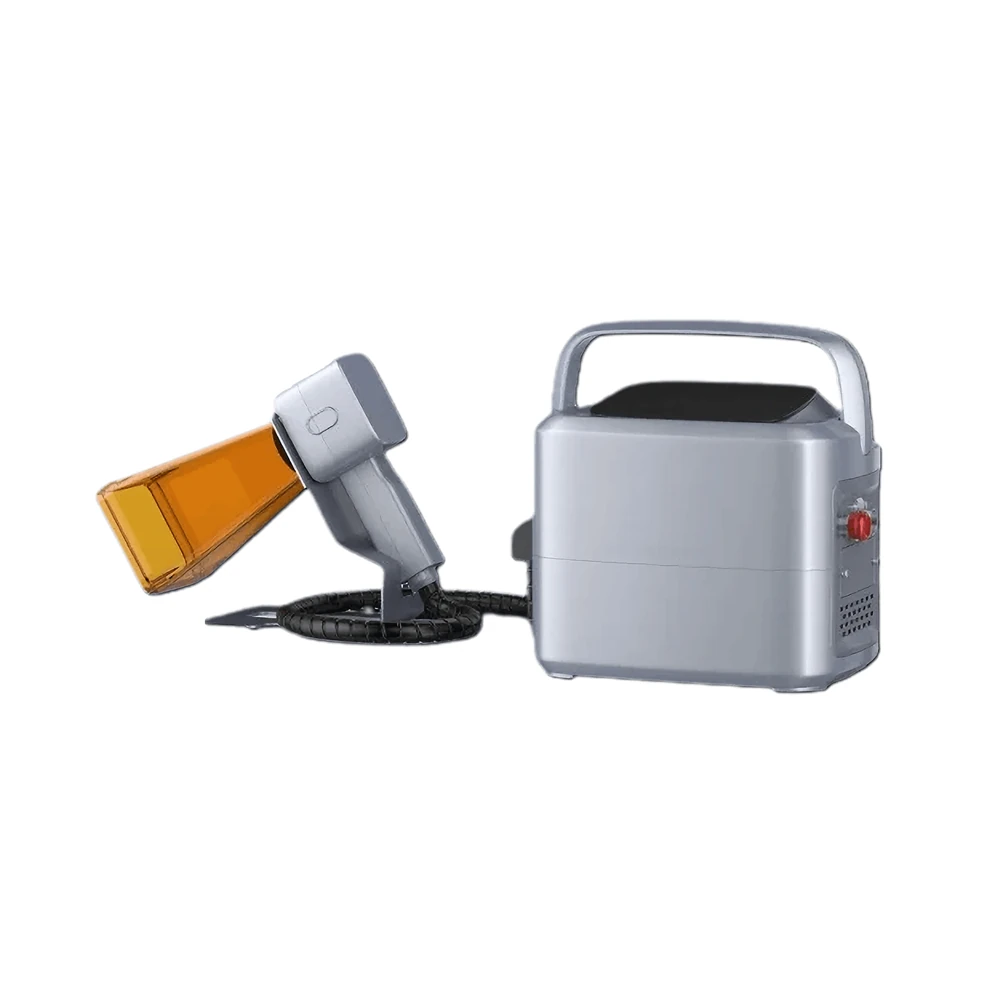
Handheld Laser Marking Machine
An 8.25 kg portable fiber marker with a 1.25 kg gun, integrated touchscreen and an optional battery that runs a full shift.
View detailsOne 1064 nm fiber platform covers four production processes: permanent marking, burr-free cutting, low-distortion welding and non-contact surface cleaning. Four specialised lines and 42 machine models run from a 20W benchtop marker to a 6000W continuous cleaning station or a 40 kW cutting system. Each machine is specified around your material, part geometry and output target rather than a fixed catalogue entry, and every unit is validated with a free sample test before you order.
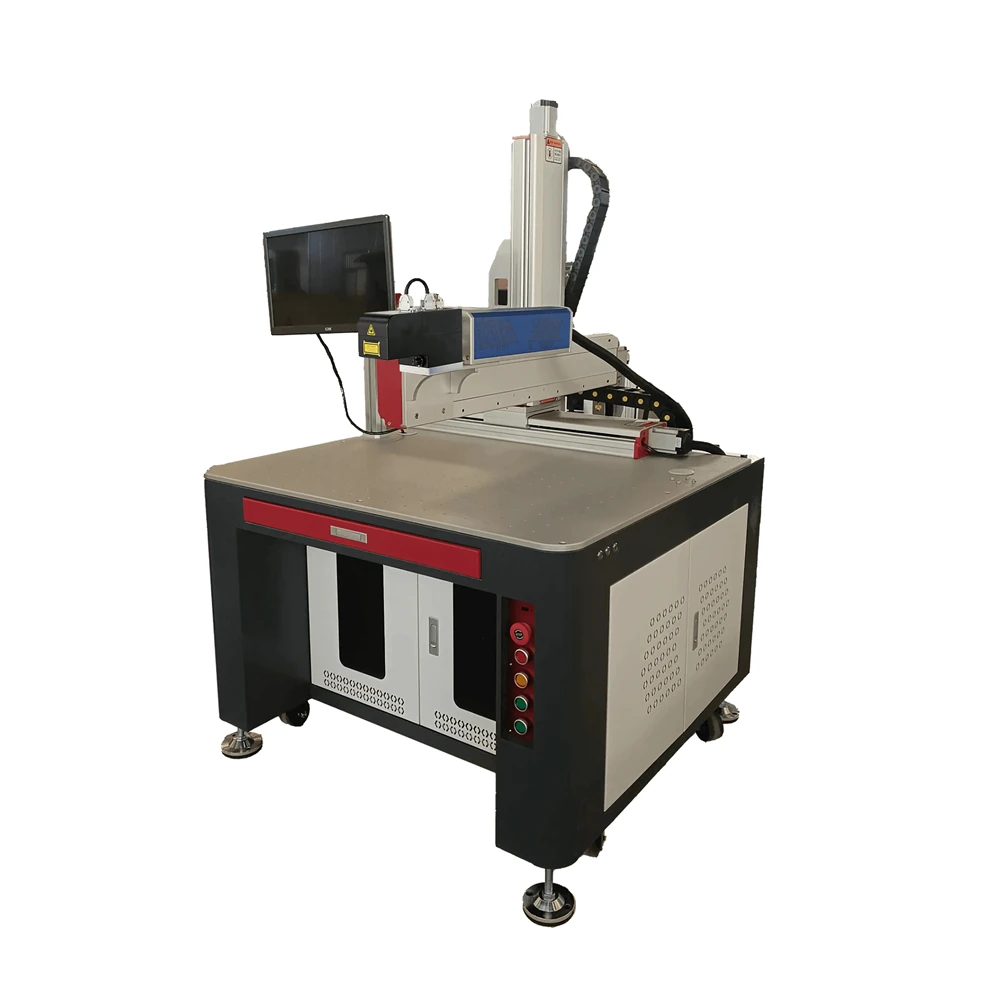
Fiber laser equipment concentrates a 1064 nm beam into a spot small enough to mark, clean, weld or cut metal with digital precision. Because the beam is delivered through a flexible fiber and steered by software, one platform can etch a serial number, strip rust from a weld seam, fuse a battery tab or sever a stainless sheet — with no tool wear and almost no consumables.
Buyers increasingly standardise on one fiber laser division instead of mixing inkjet printers, sandblasting cabins, TIG torches and plasma cutters — one supplier, one parameter philosophy and one spare-parts channel.
Each line is engineered around one process, then re-specified with the power, optics and automation your application needs. Open a line to see every model, its working range and its selection matrix.
21 models — handheld, all-in-one, split, foldable, desktop, flying, large-format and 3D markers in fiber, CO2, MOPA and UV. 20W to 100W for permanent codes, logos and deep engraving.
6 platforms — single table, exchange bed, tube and sheet, 2D-3D pipe and large format. 1000W to 40000W for carbon steel, stainless, aluminium and brass with burr-free edges.
6 builds — air-cooled handheld and split-cabinet four-in-one machines. 800W to 3000W for low-distortion seams, battery tabs and bright stainless without pickling.
9 models — suitcase, backpack, trolley, pull-rod, dual-axis, water-cooled and high-power stations. 100W to 6000W for rust, paint, oxide and coating removal.
Permanent, high-contrast marks on metal and engineering plastics. Choose the format first — handheld, all-in-one, split, desktop, flying, large-format or 3D — then match the source to the material and the power to your cycle time.
An 8.25 kg portable fiber marker with a 1.25 kg gun, integrated touchscreen and an optional battery that runs a full shift.
View details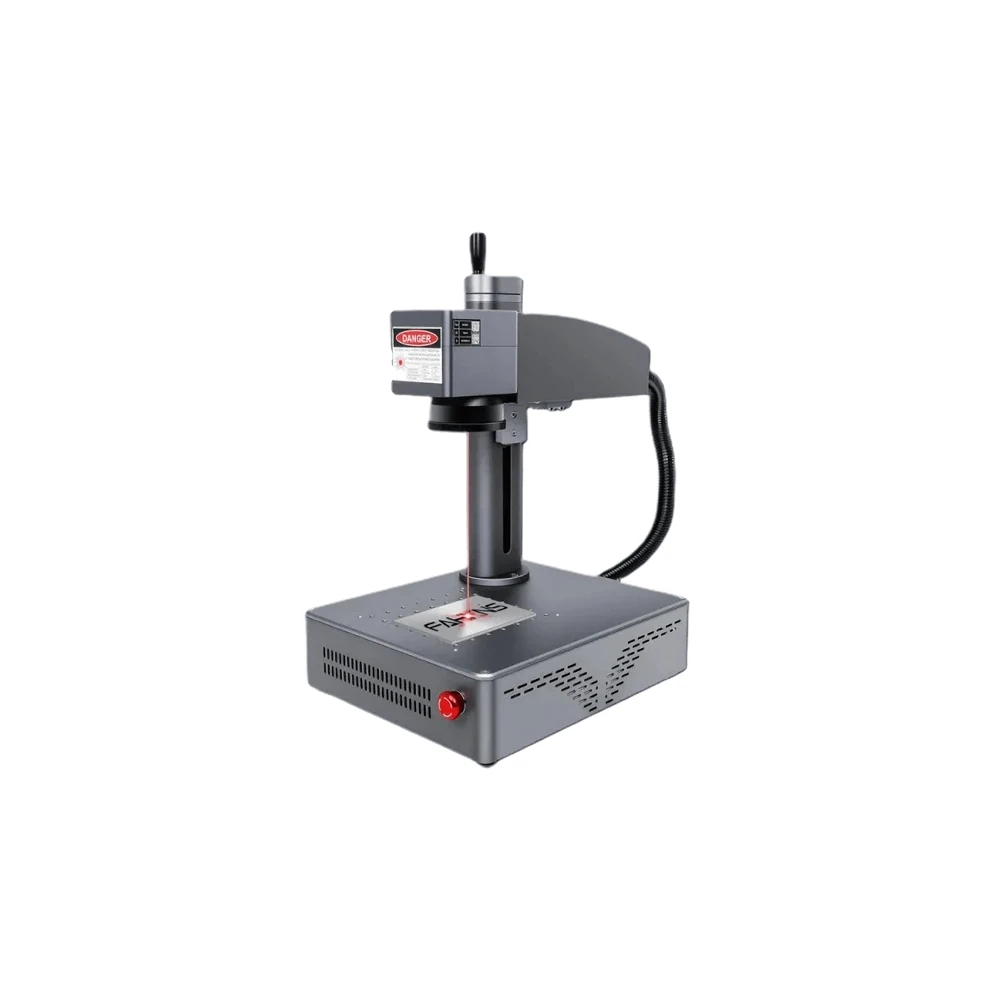
Integrated 20W–30W fiber marker from 15.5 kg with auto focus and no test-mark waste.
View details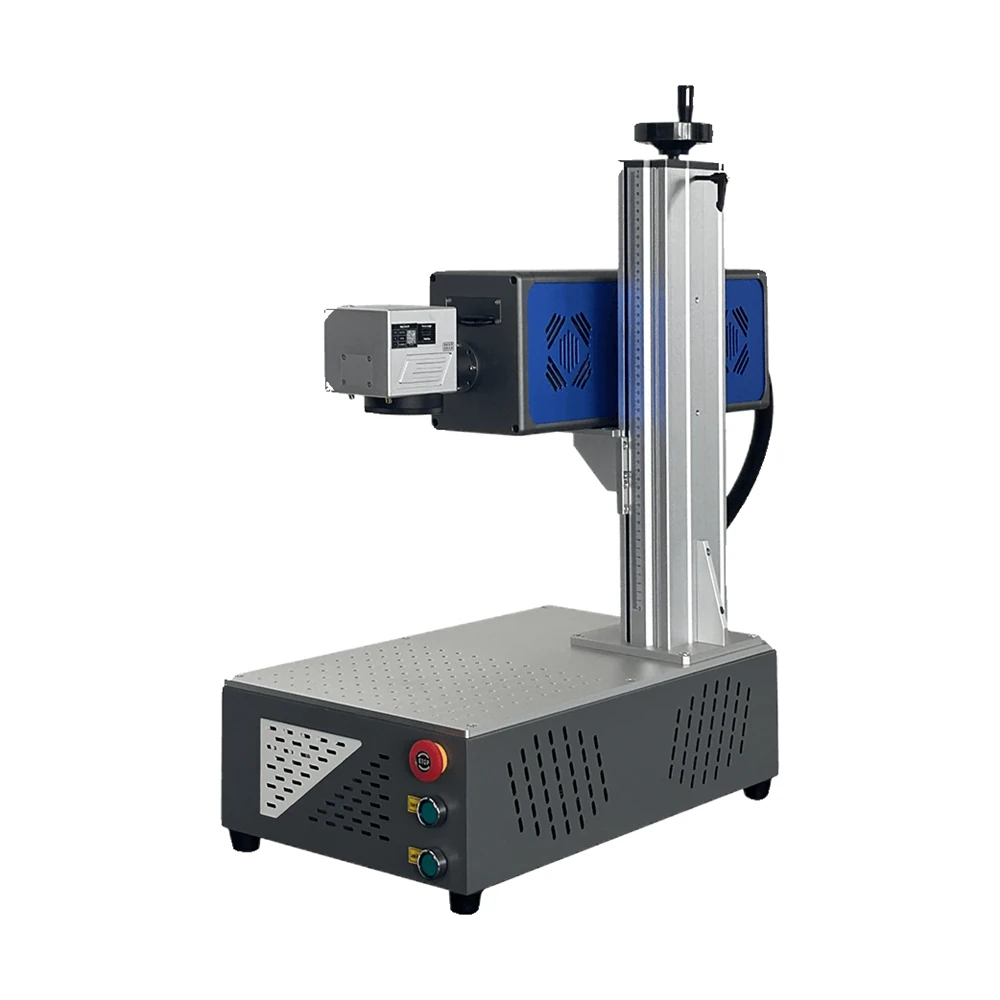
Air-cooled 30W–60W CO2 marker for wood, acrylic, leather, glass and coated board — no chiller required.
View details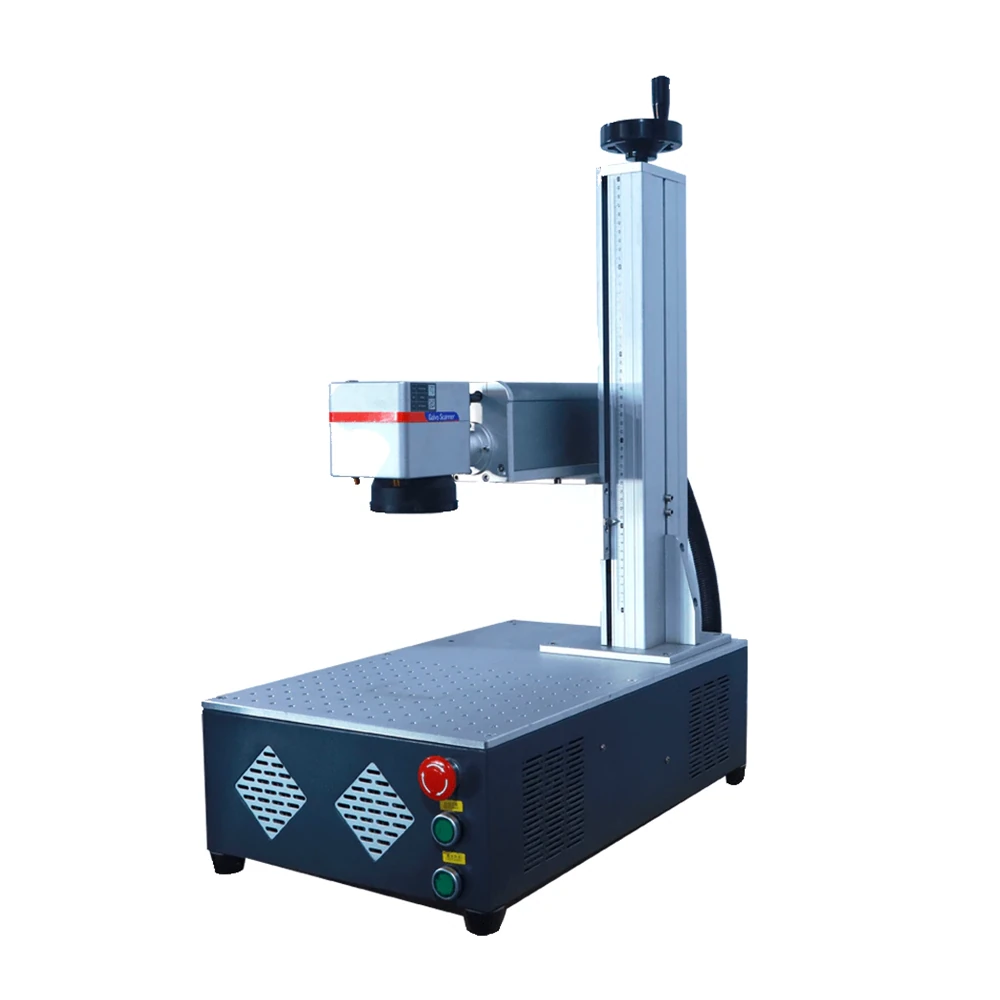
Adjustable pulse width from 20W to 100W for colour marking on stainless steel and deep black on anodized aluminium.
View details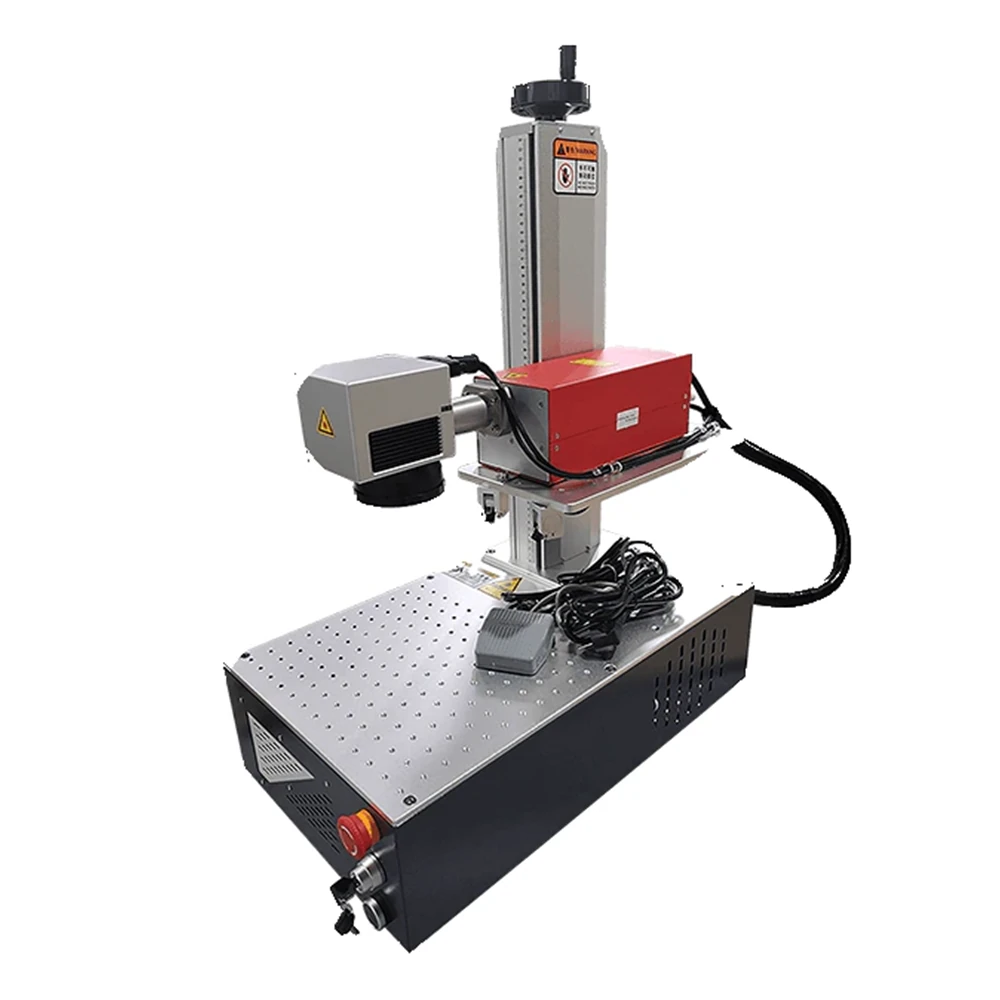
355 nm cold marking for heat-sensitive plastics, glass and thin films with a minimal heat-affected zone.
View details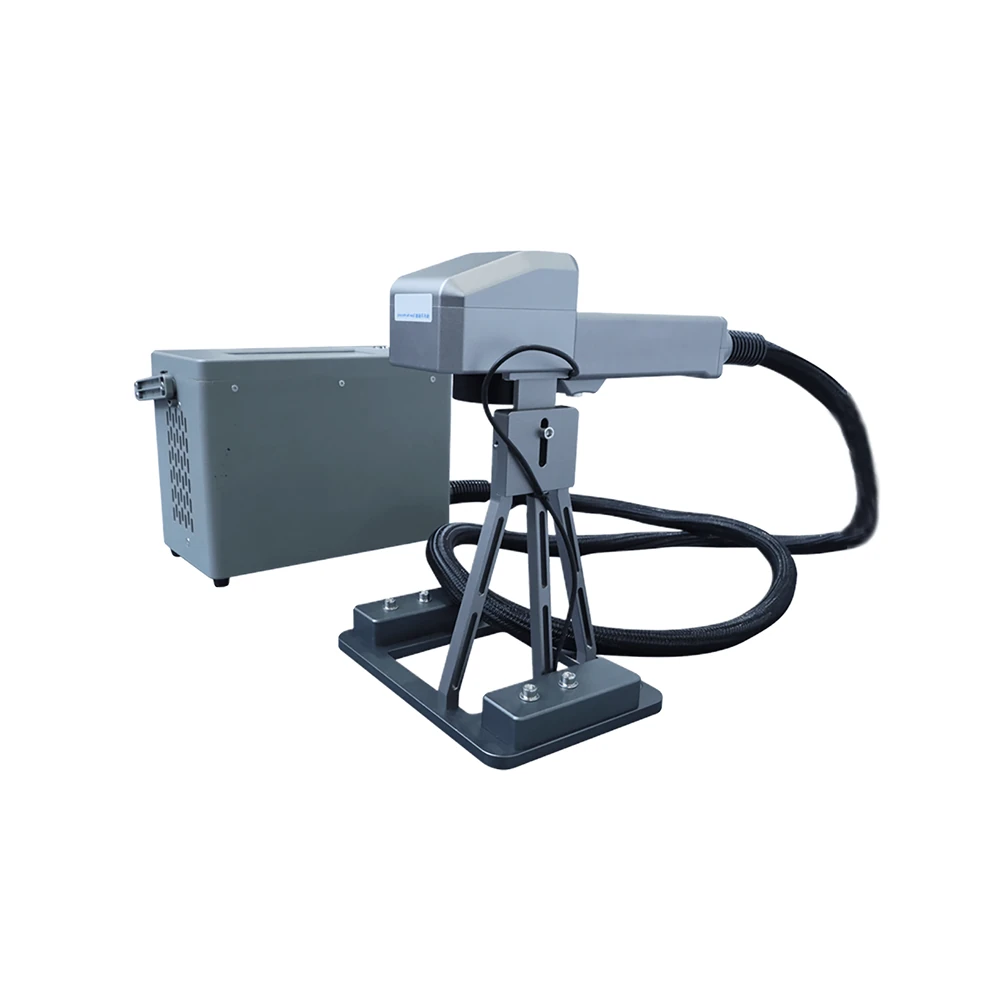
One 15.5 kg unit that works as a desktop station or switches to handheld use in seconds.
View details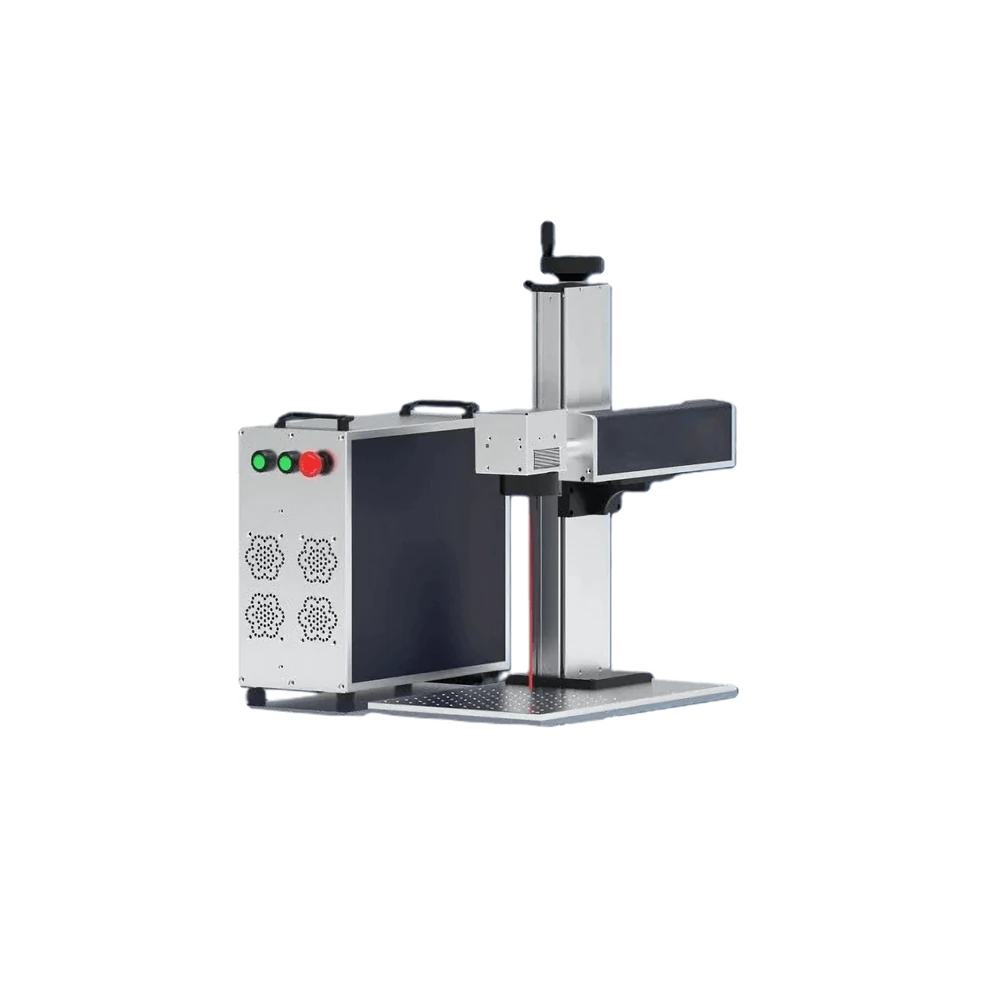
20W–100W with a 3 m fiber cable and auto-focus option for gantry, robot and conveyor integration.
View details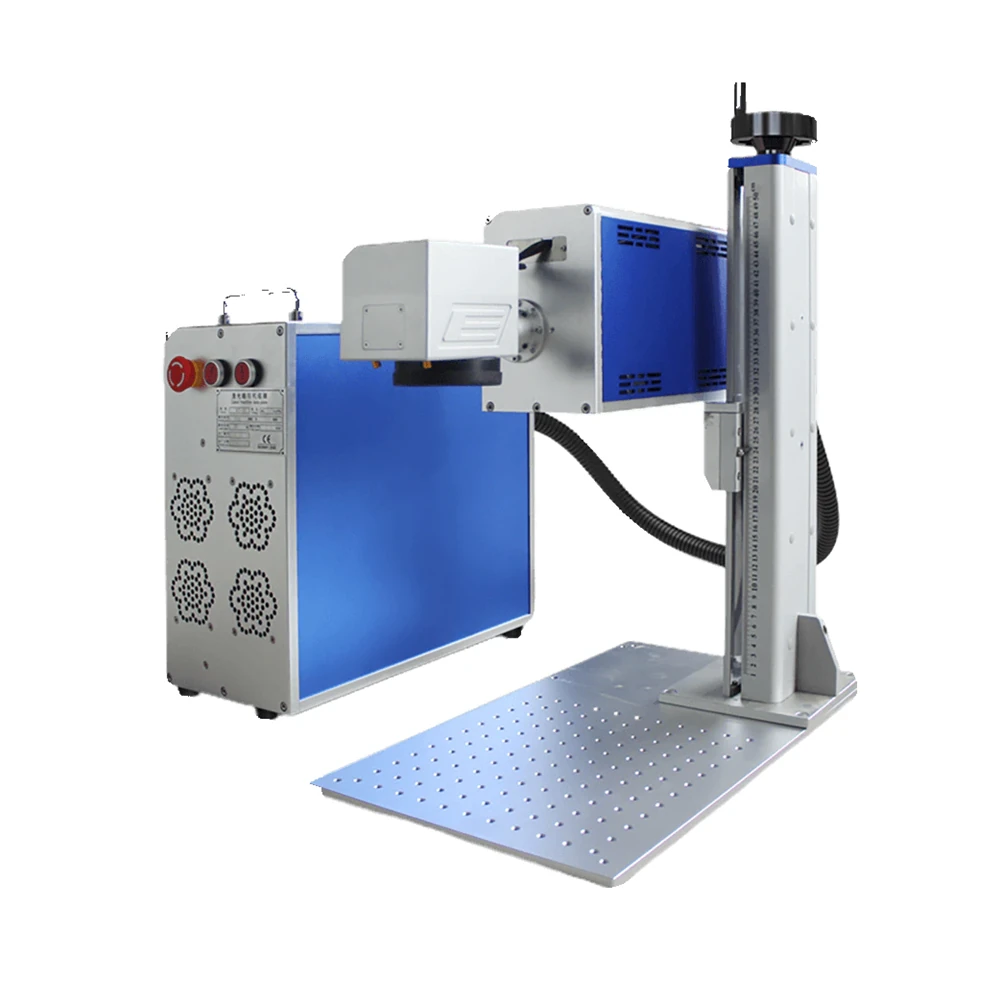
Air-cooled 30W–60W CO2 head on a separate cabinet, with a 20,000-hour source and no water chiller.
View details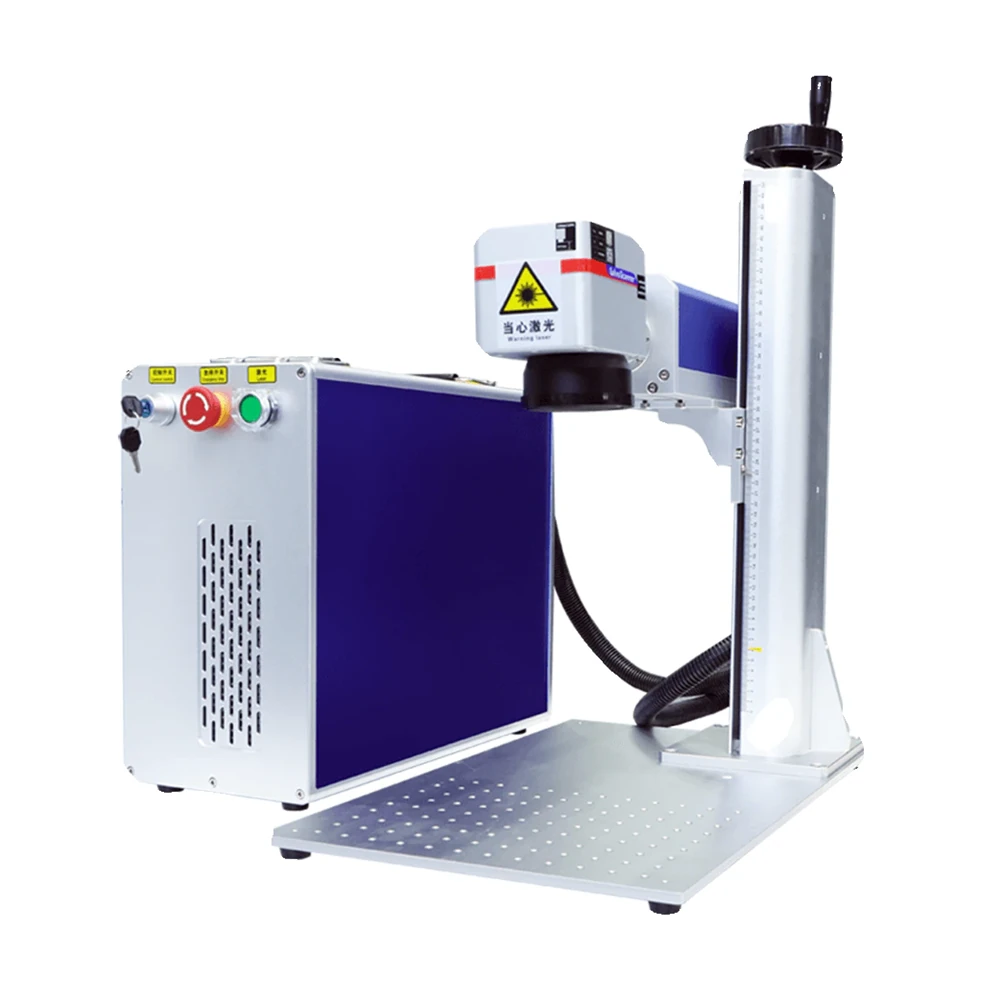
Adjustable-pulse 20W–100W MOPA source with a remote head for colour and black marking on stainless and aluminium.
View details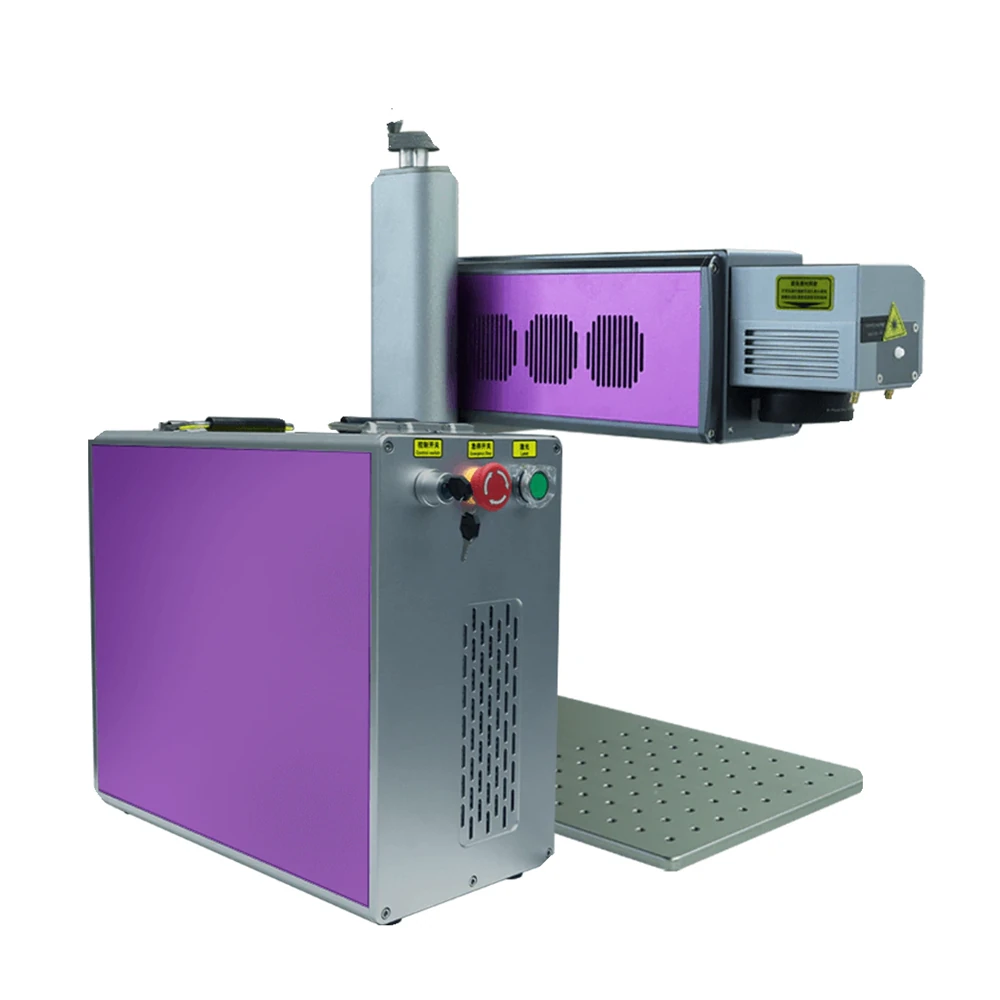
3W–10W 355 nm cold marking head mounted remotely for heat-sensitive parts and confined fixtures.
View details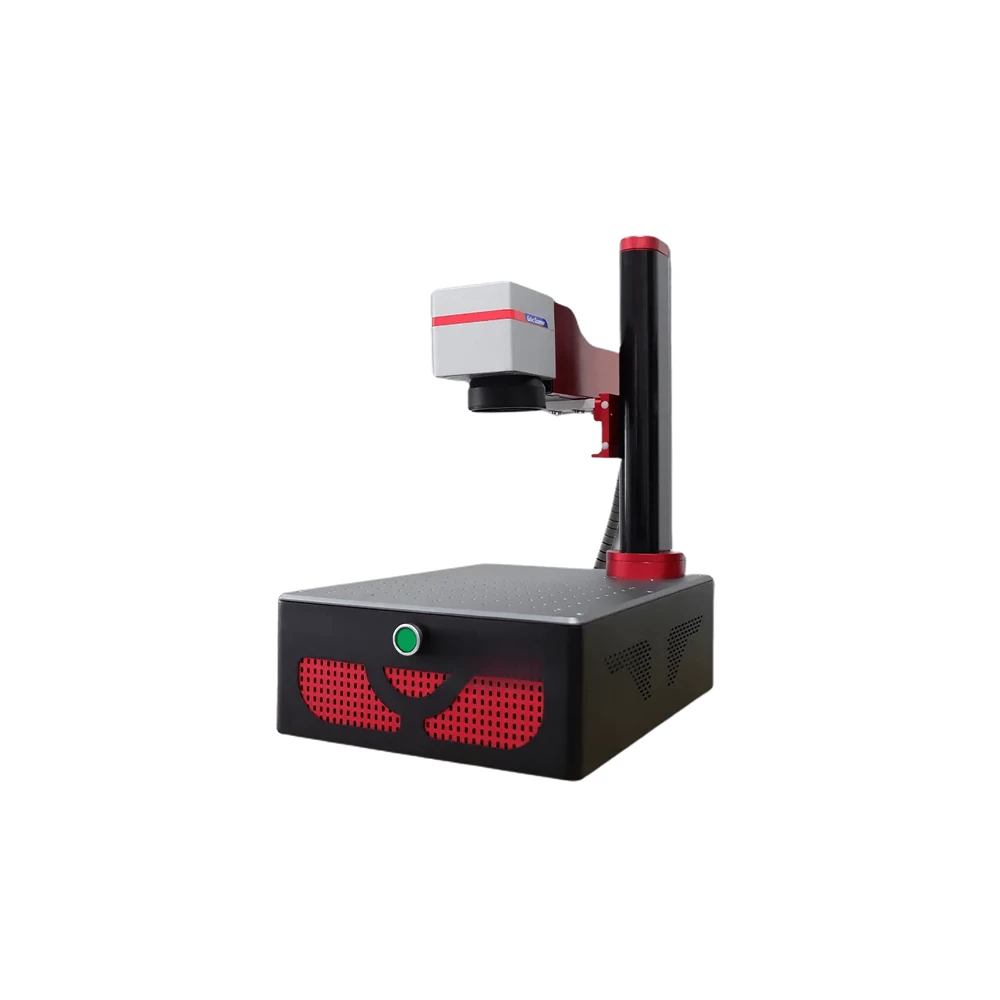
A 400 mm folding column collapses for transport and locks rigid for marking — built for field service work.
View details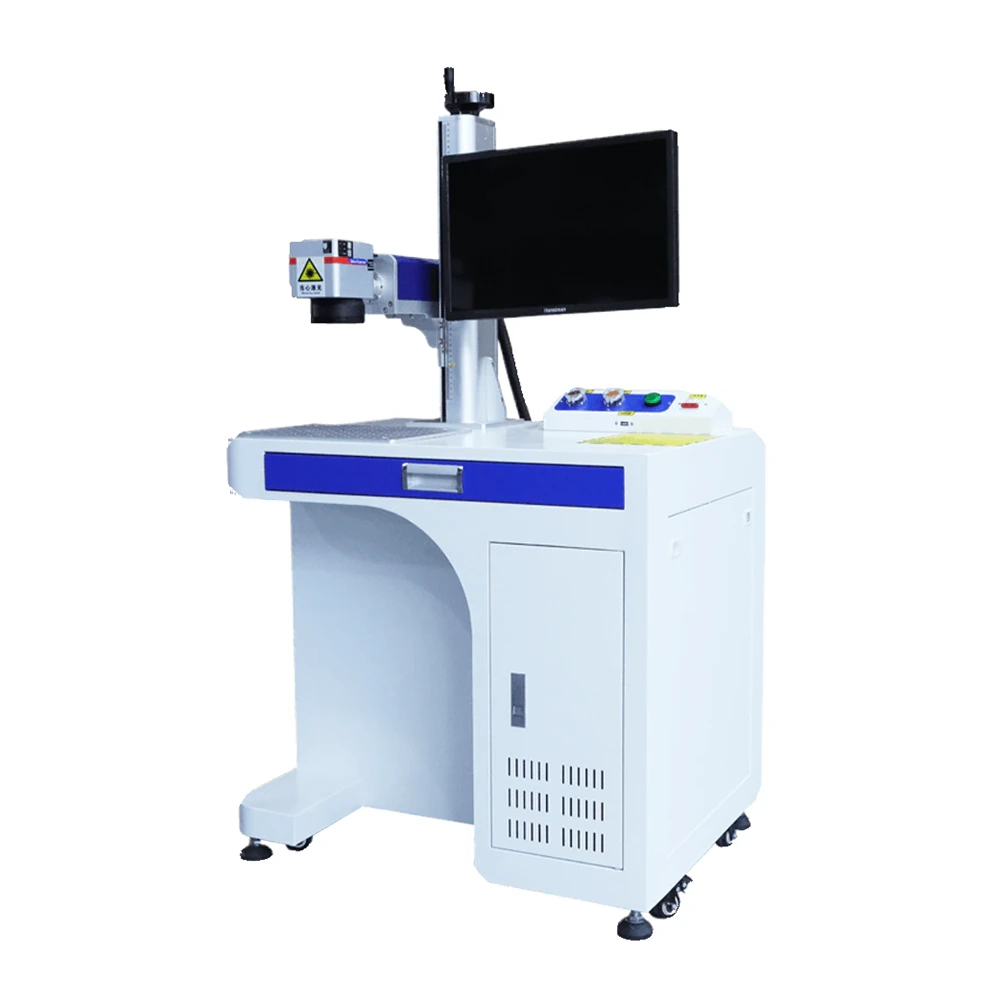
20W–100W enclosed fiber marker rated for 24/7 continuous duty on tools, jewellery and hardware.
View details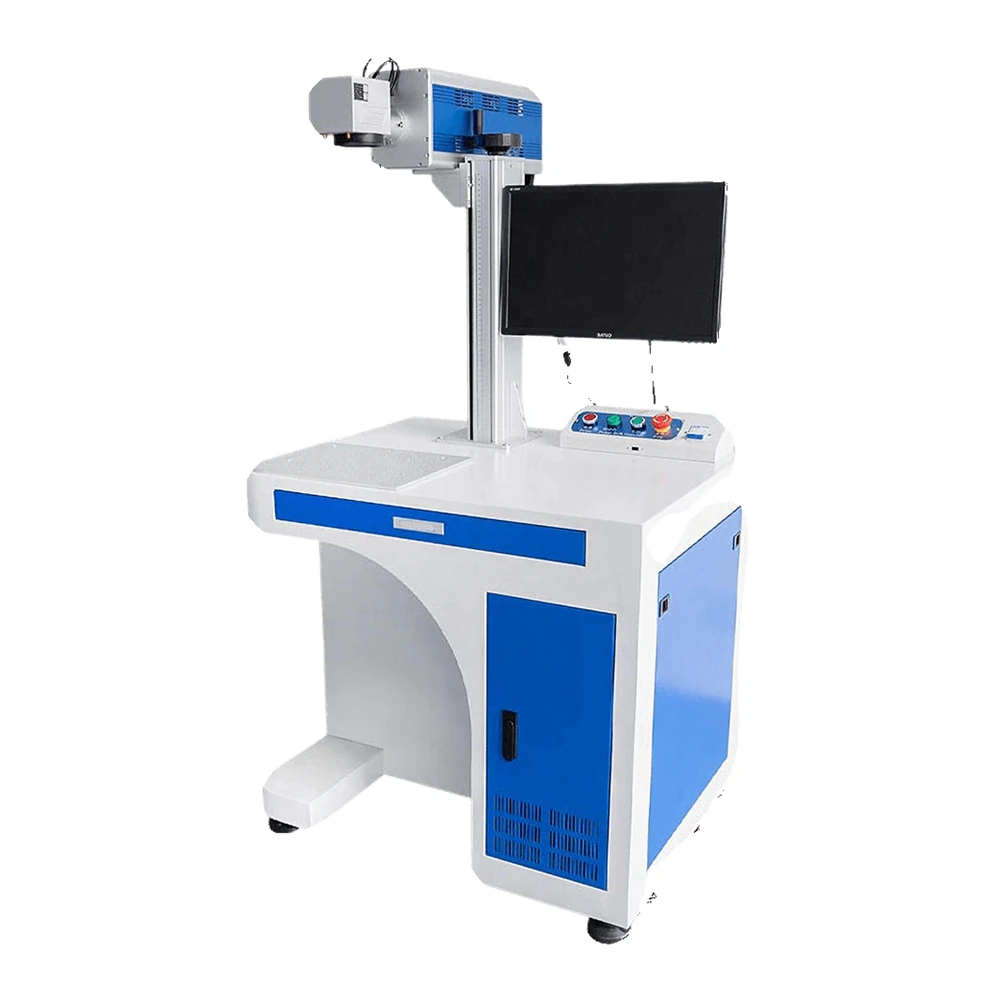
Enclosed 30W–60W CO2 unit with 110–300 mm marking fields for fine non-metal engraving.
View details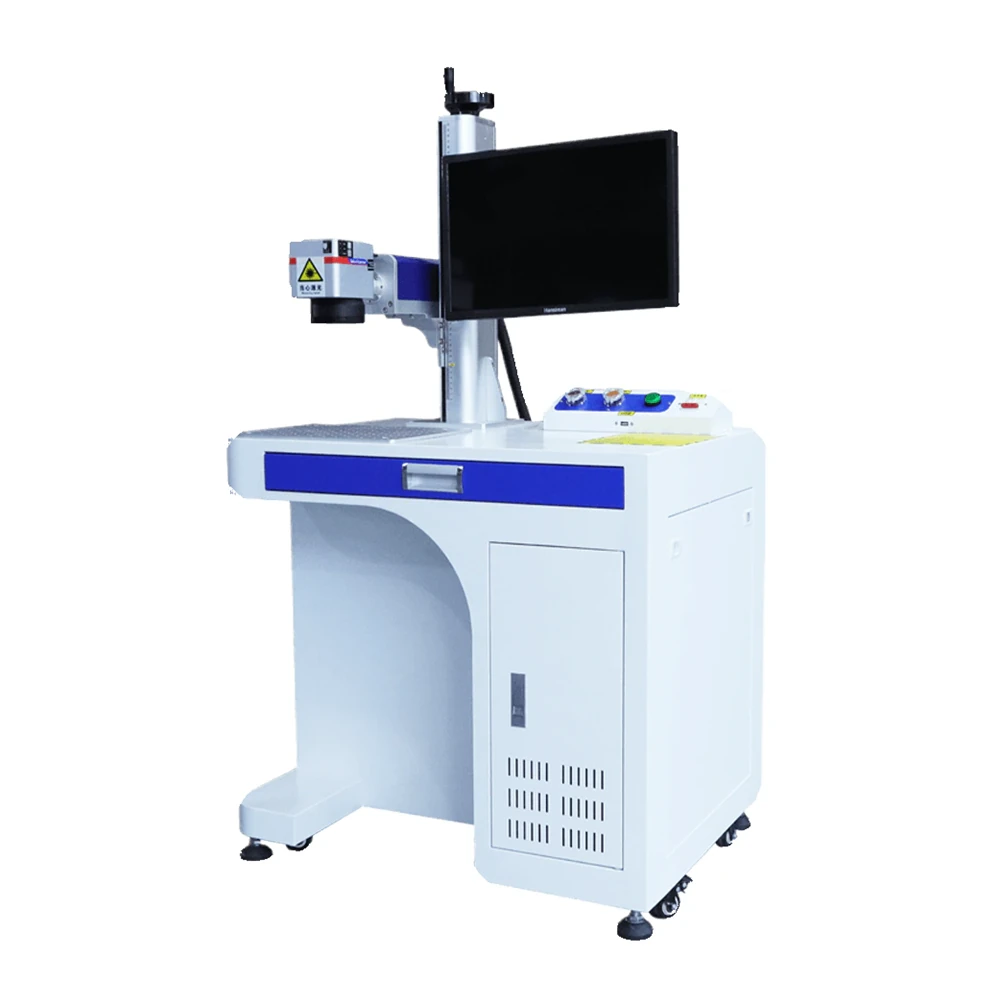
Enclosed Class 1 cabinet with an adjustable-pulse MOPA source for colour and black marking in batch production.
View details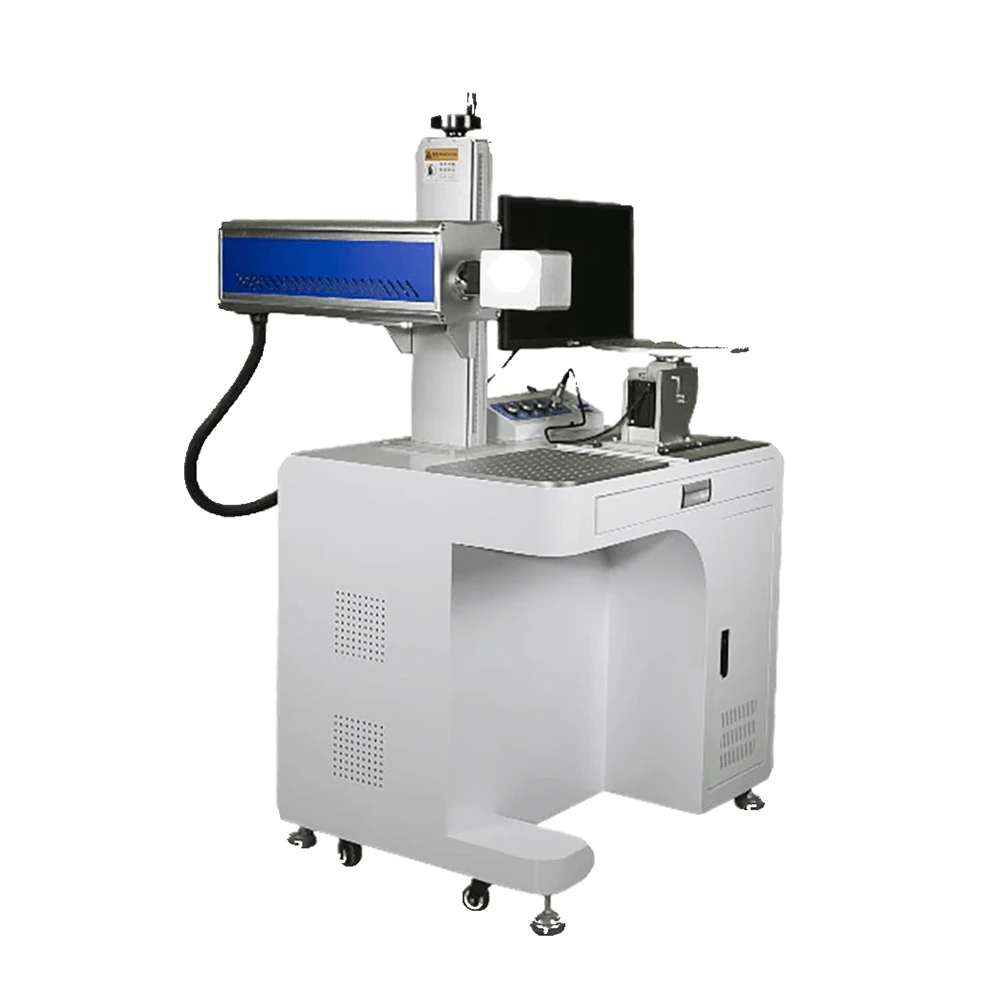
Enclosed 355 nm cold-marking system in 3W, 5W and 10W for plastics, glass and medical disposables.
View details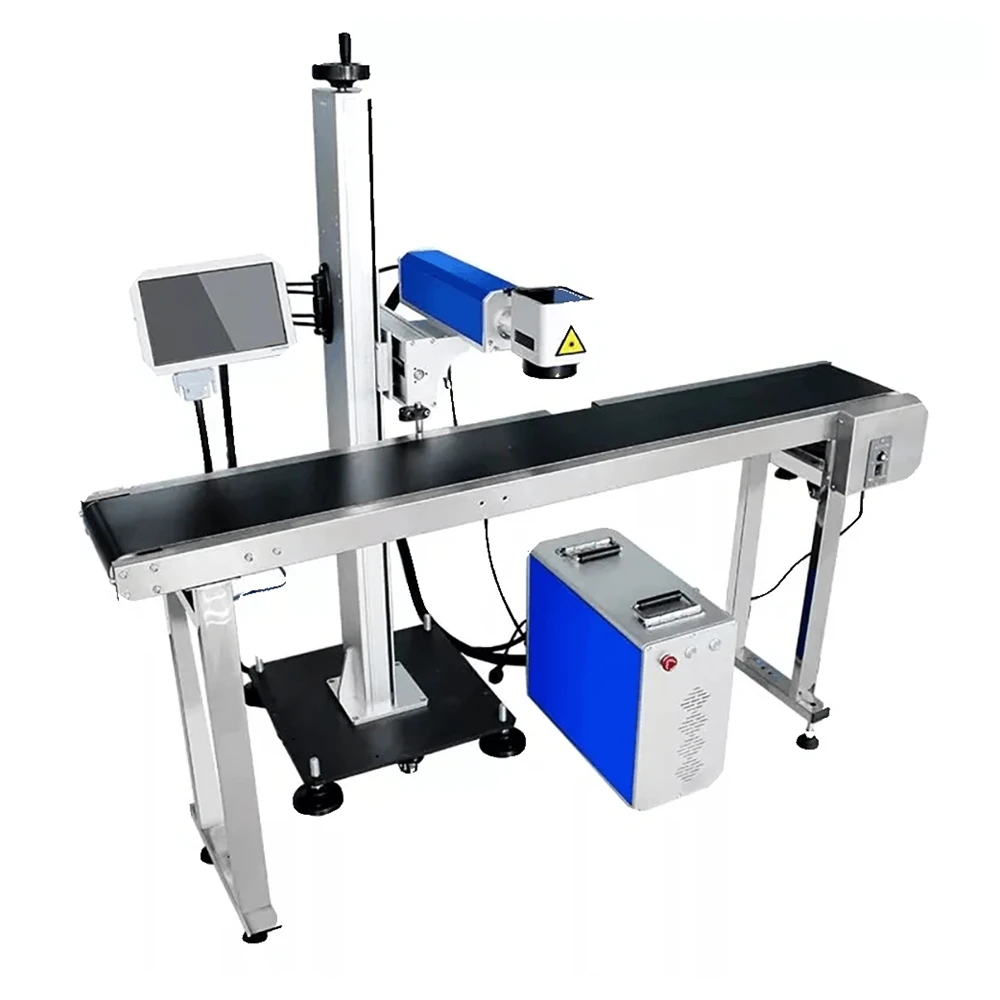
Conveyor-mounted fiber marker with CCD vision and encoder synchronisation for on-the-fly coding.
View details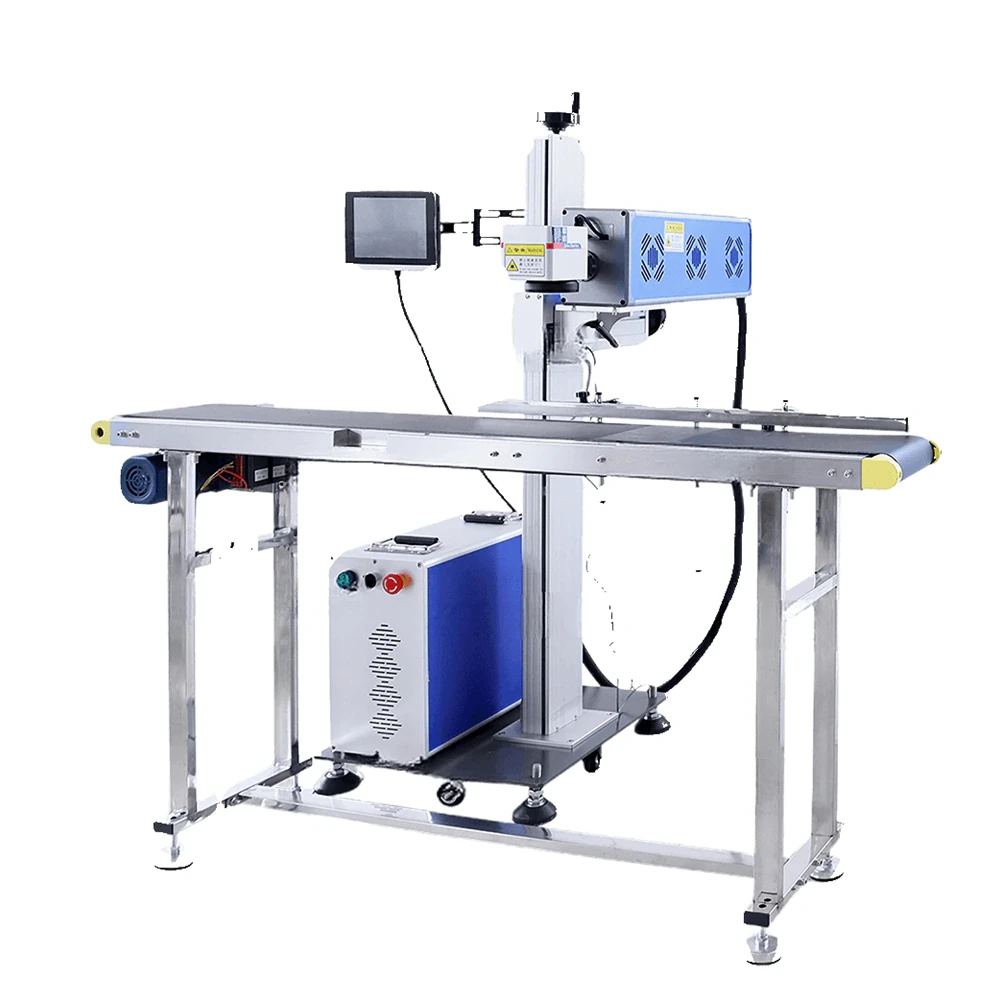
10.64 µm on-the-fly coder for cartons, film and packaging, with a 40,000–60,000 hour source.
View details50W and 100W with a column-mounted 3D head for large metal components and nameplates.
View details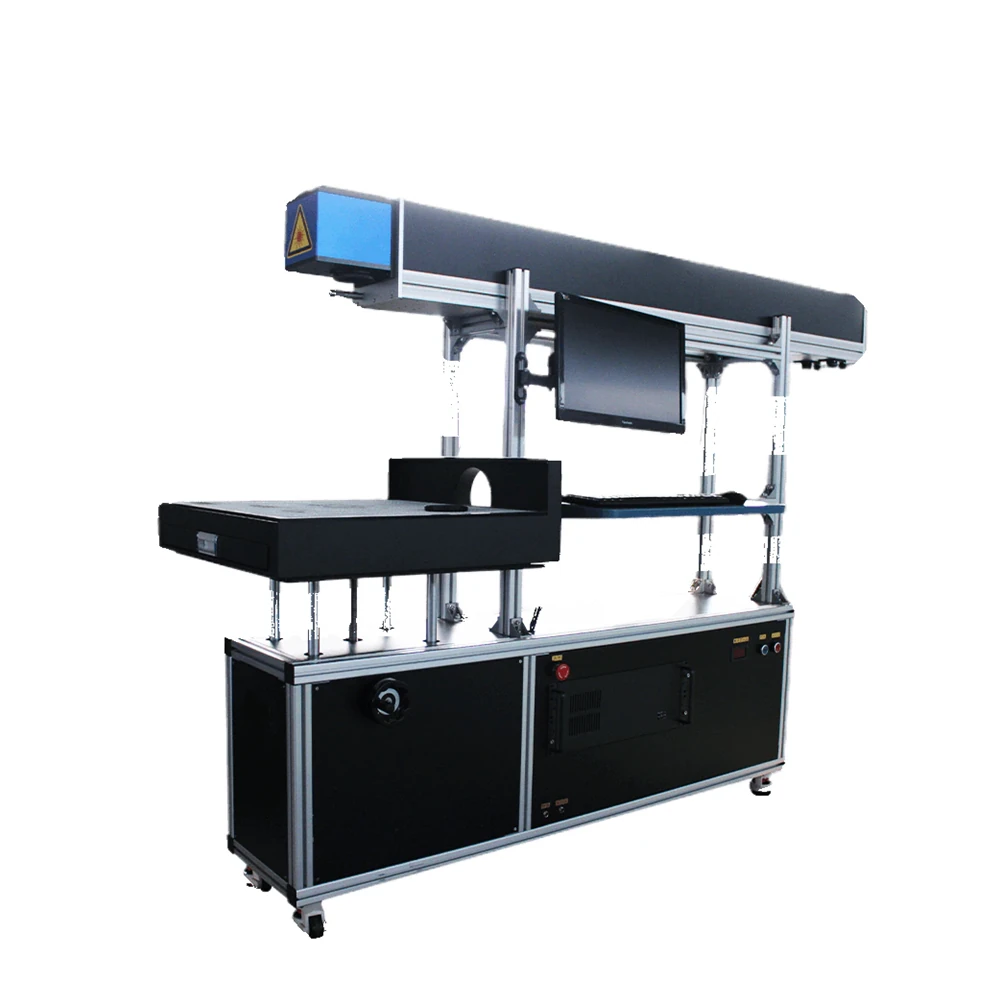
Air-cooled 30W–60W CO2 marker with a 400 × 400 mm galvo field for advertising and packaging.
View details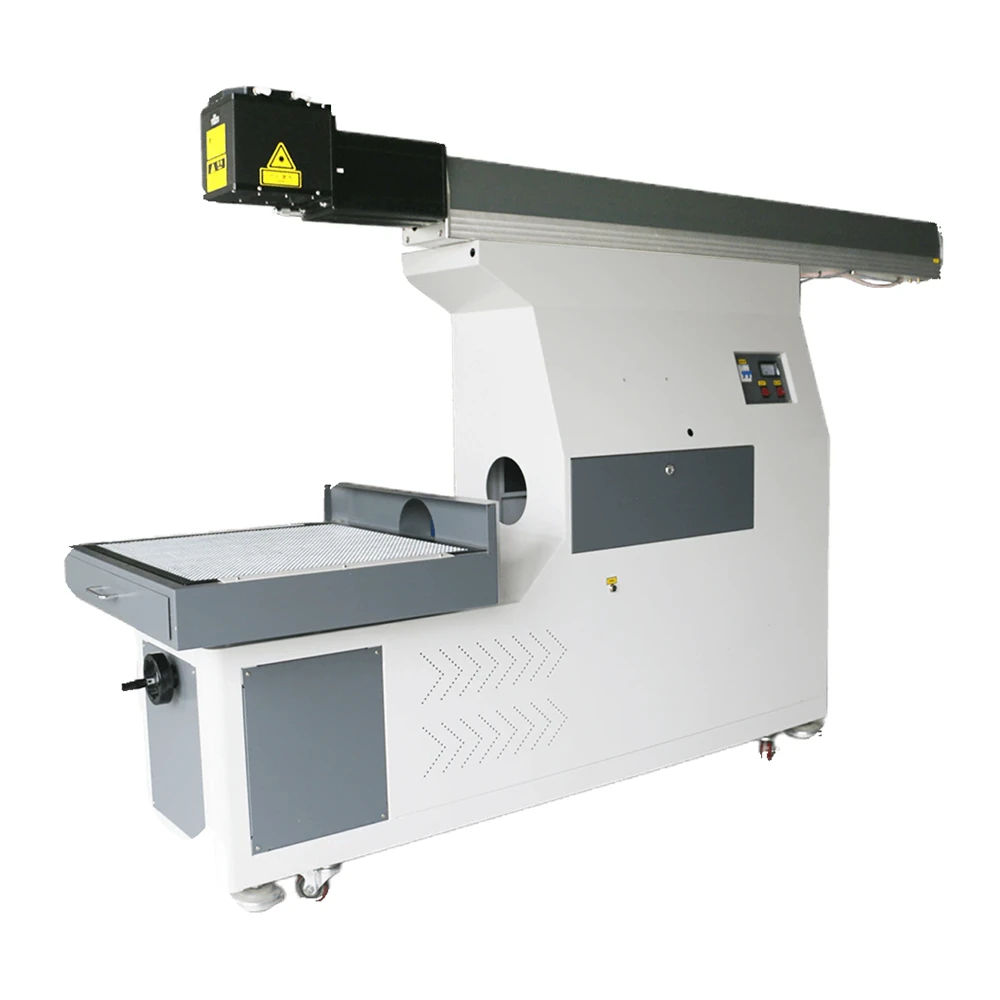
100W water-cooled CO2 source with a 3D dynamic-focus scan head spanning up to 1200 × 1200 mm.
View details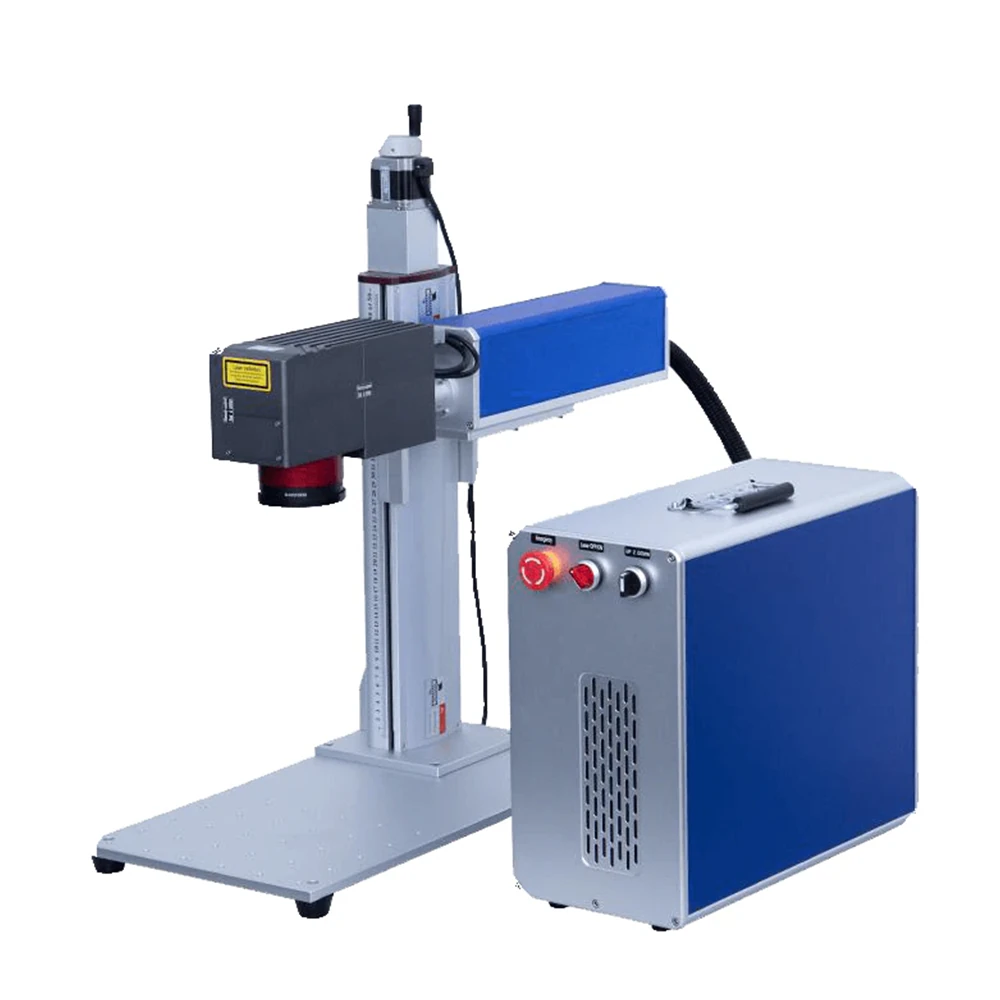
50W–100W dynamic-focus 3D marker that keeps the spot sharp on curved, stepped and conical parts.
View detailsBurr-free contours in carbon steel, stainless, aluminium and brass. Start with the format that matches your material and workflow — single table, exchange bed, tube and sheet, pipe or large format — then step up in power within that platform.
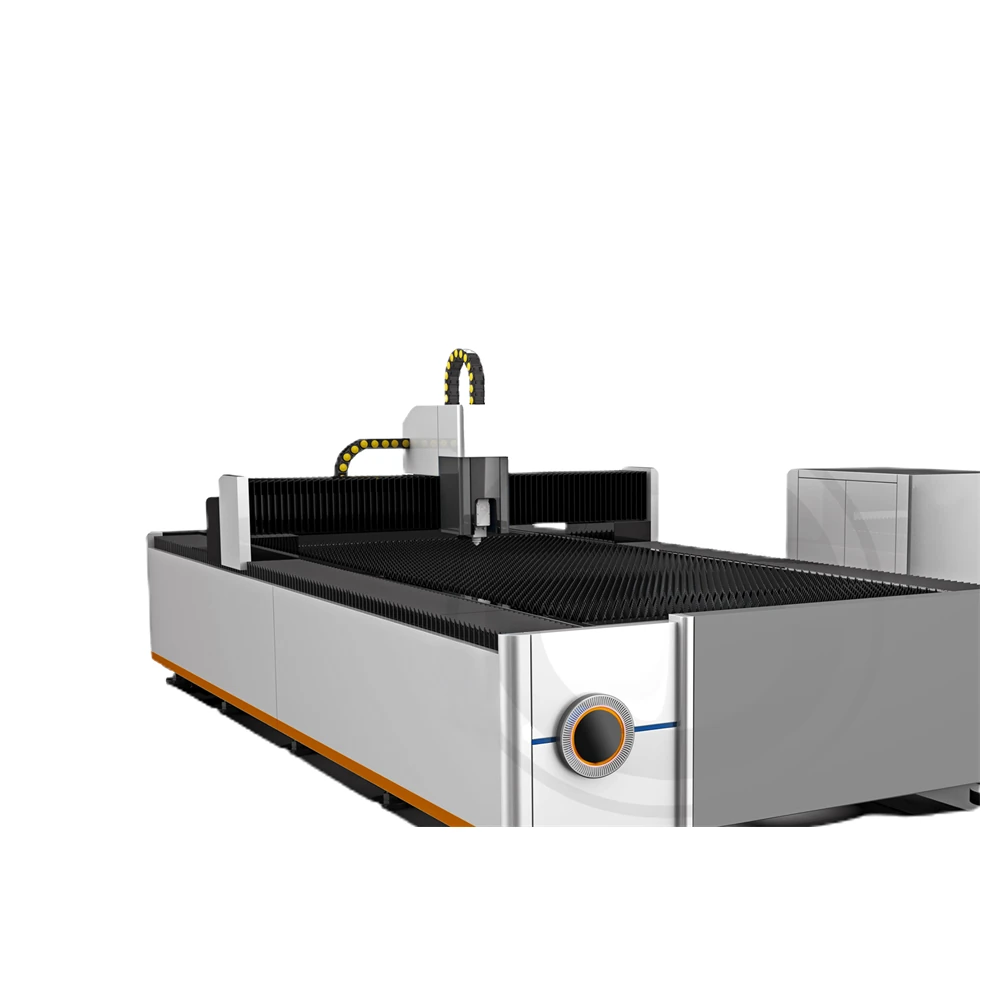
One fixed table for mixed, change-over-heavy work. The smallest footprint in the range and the simplest to run for job shops starting with sheet.
View details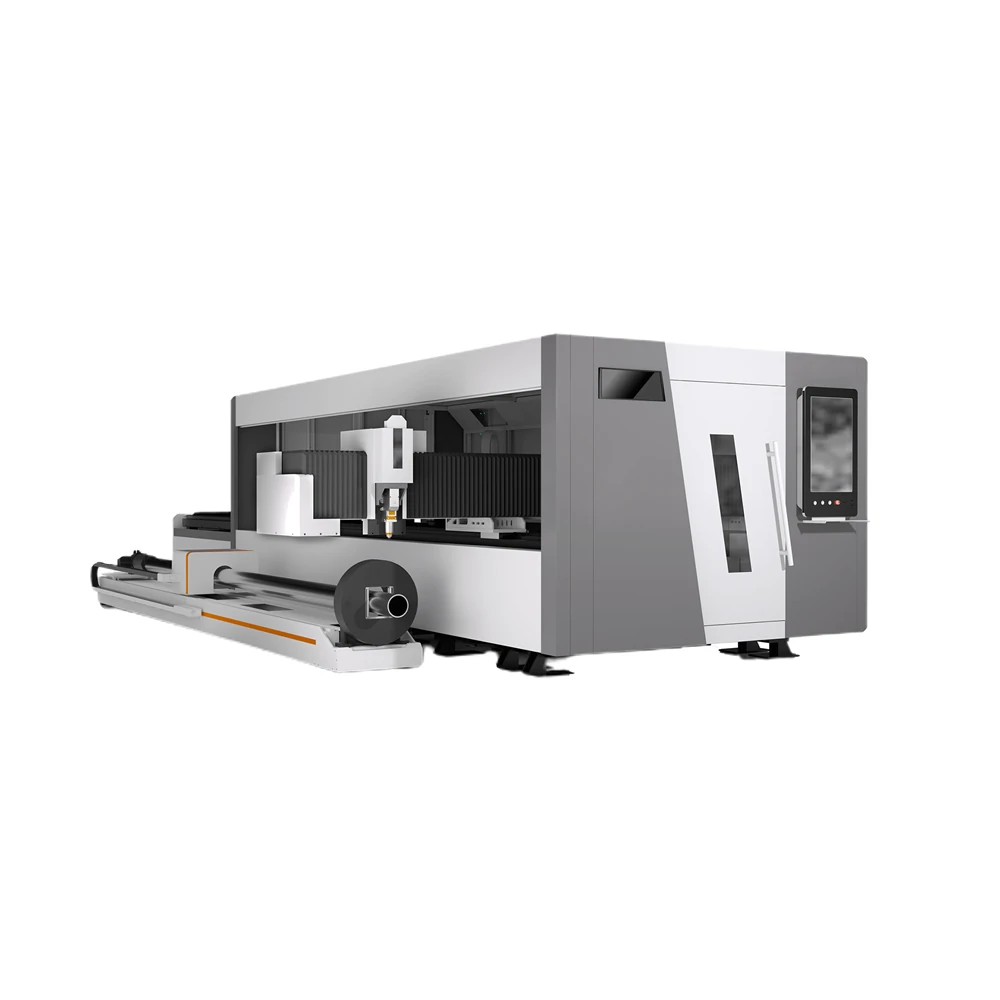
Flat sheet and round or square tube on one platform, with a rotary chuck and the FSCUT control system for small and mid-size workshops.
View details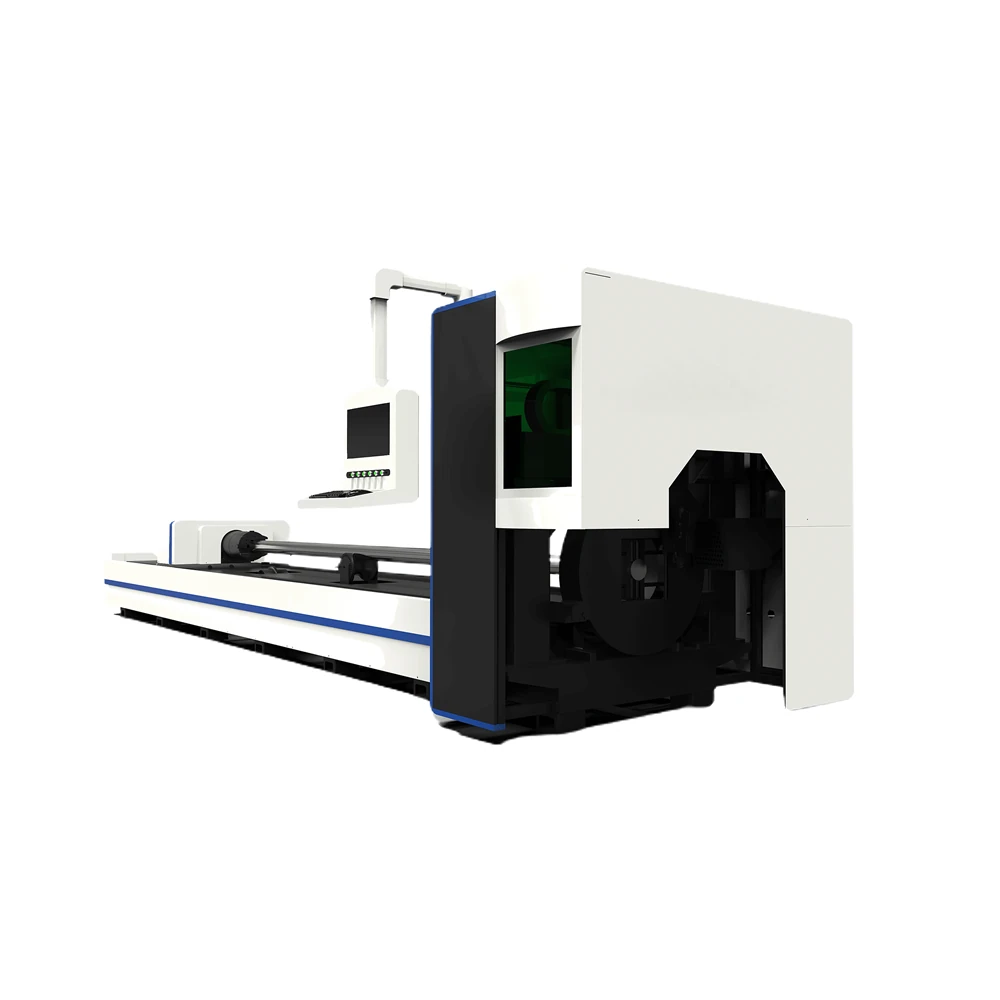
Chuck-fed tube and profile cutting up to Ø630 mm and 6.1 m, with bevel and hole work on round, square and shaped sections.
View details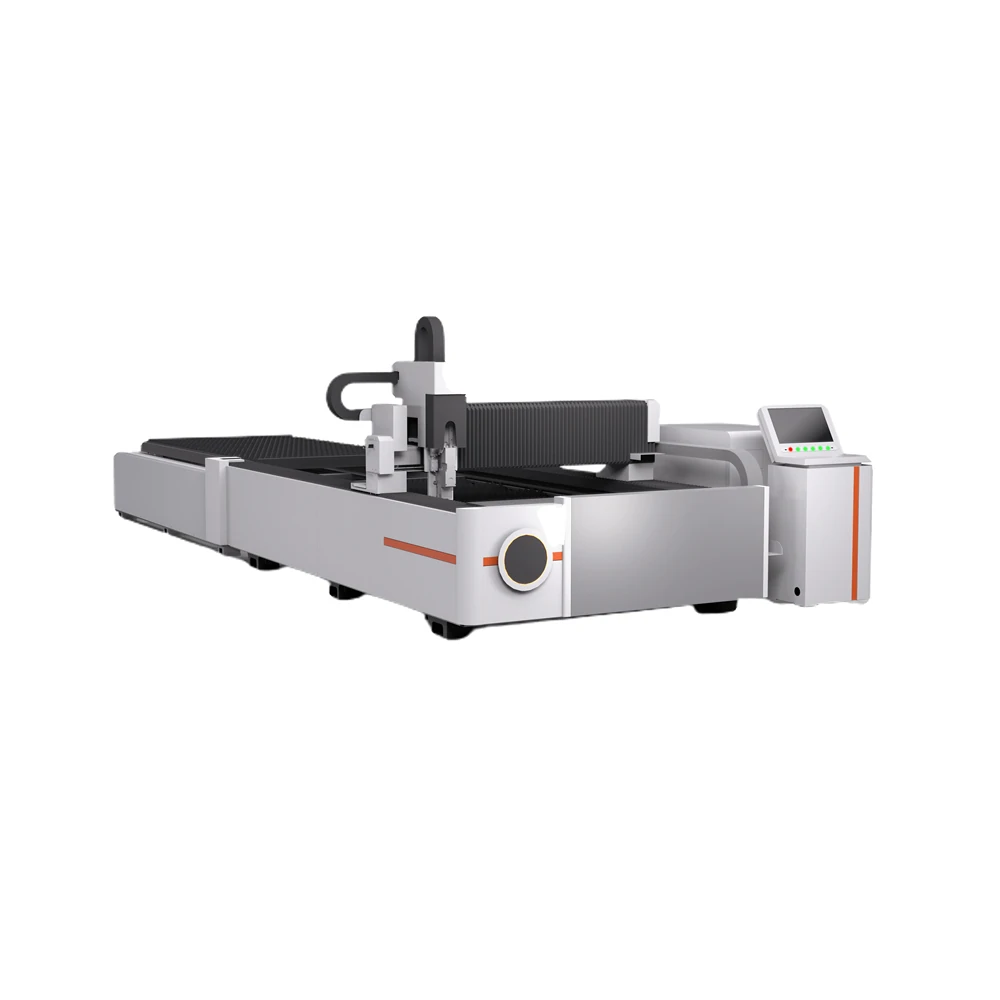
A dual-bed exchange platform from 3000W to 8000W. The pallets swap while the laser keeps cutting, so the machine rarely idles.
View details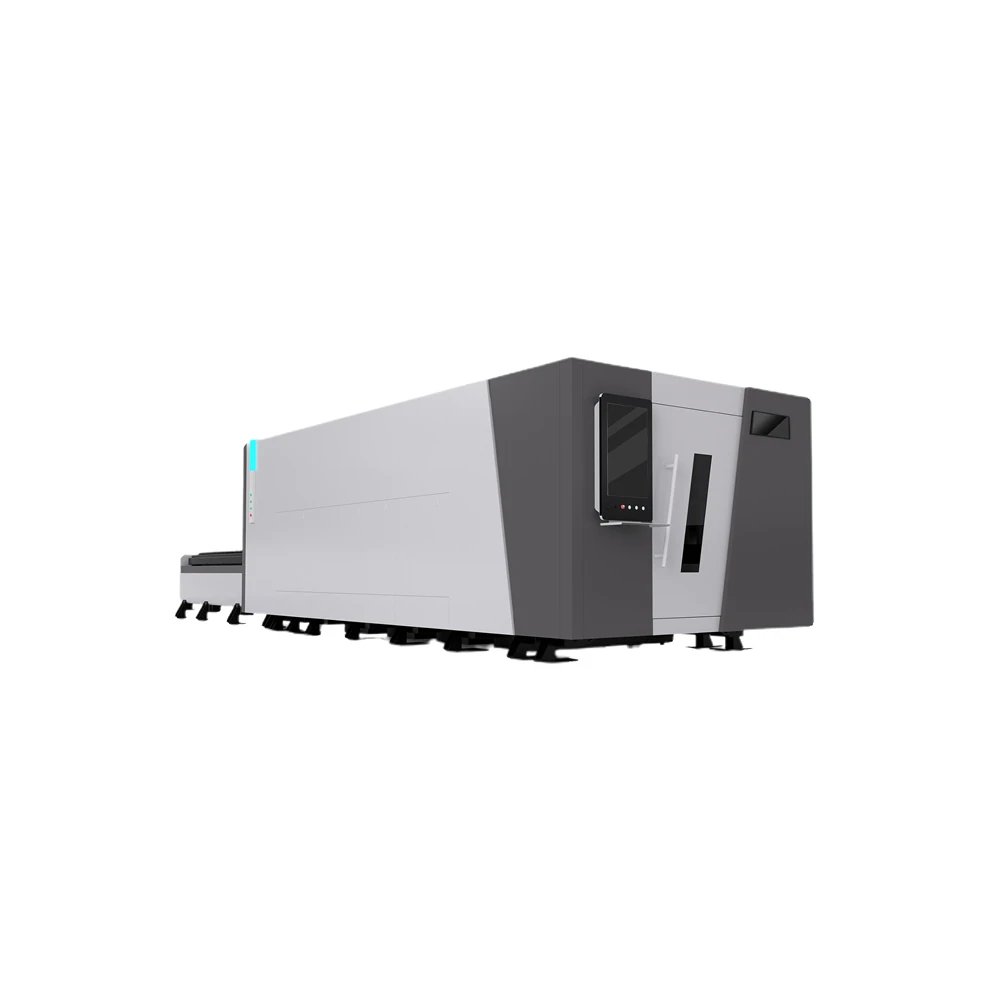
Built for thick plate. From 6000W to 30000W, with 2.0G acceleration and clean cutting of sections up to 80 mm.
View details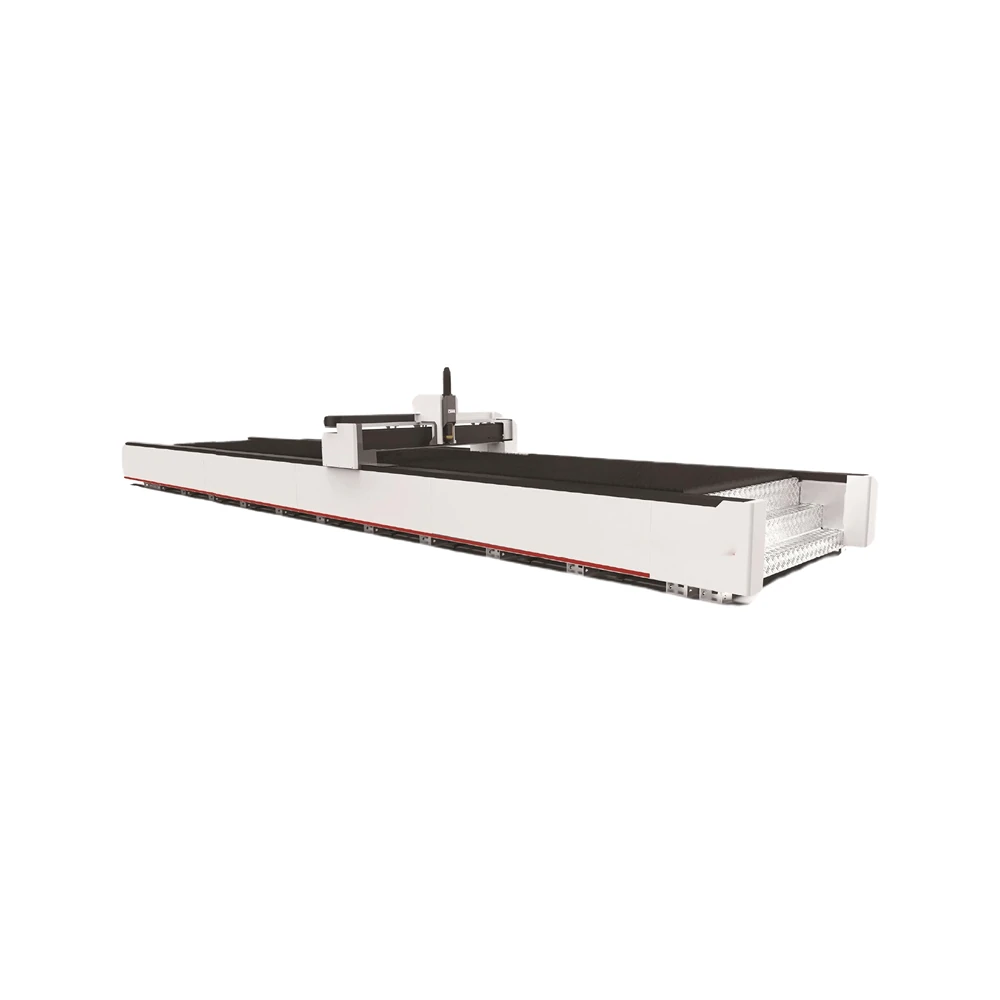
Tables up to 14000 × 3200 mm with separated load and cut zones, so long plate and oversized panels cut in one pass.
View detailsLow-distortion seams on stainless, carbon steel, aluminium and copper. Every build below shares the wobble head, wire feeder and four-function platform; they differ in cooling, cabinet layout, weight and the level of customisation.
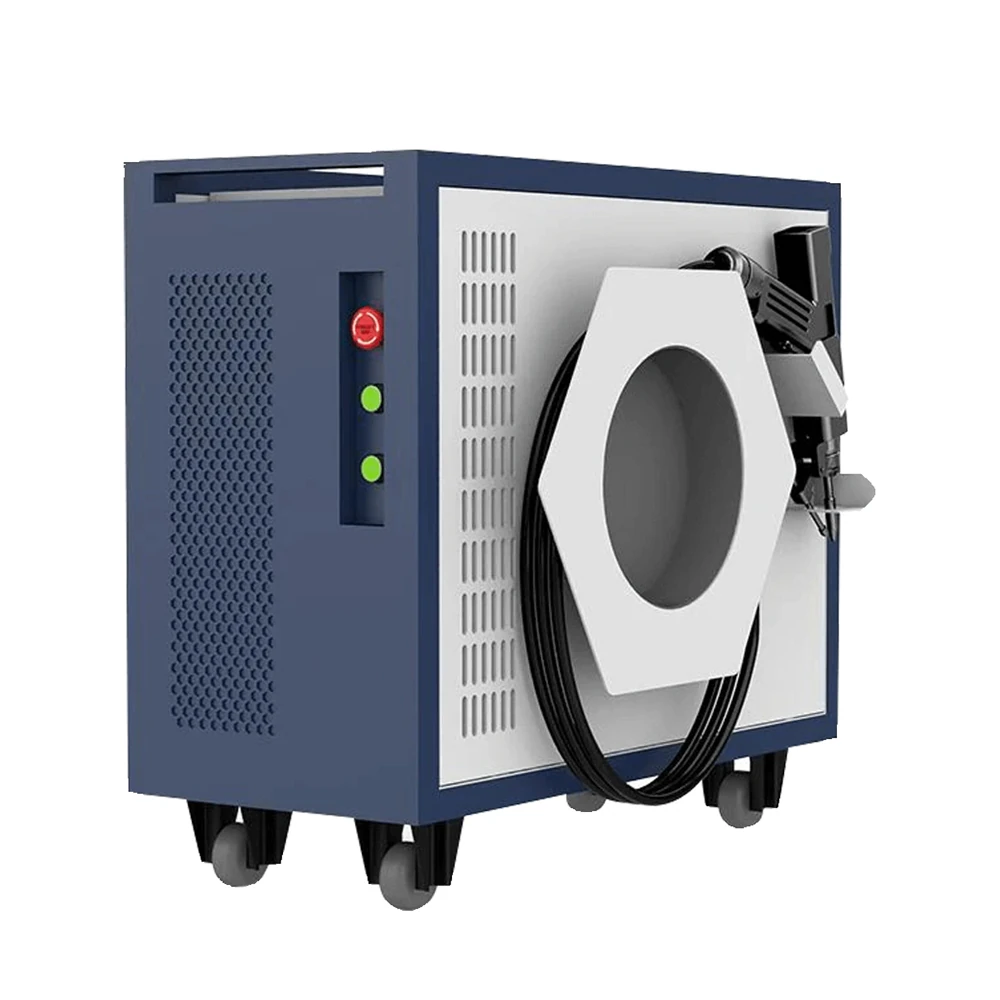
800W to 2000W with a fan-and-heatsink cooling loop instead of a chiller. The lightest four-in-one build at 55 kg, made for field welding and site repair.
View details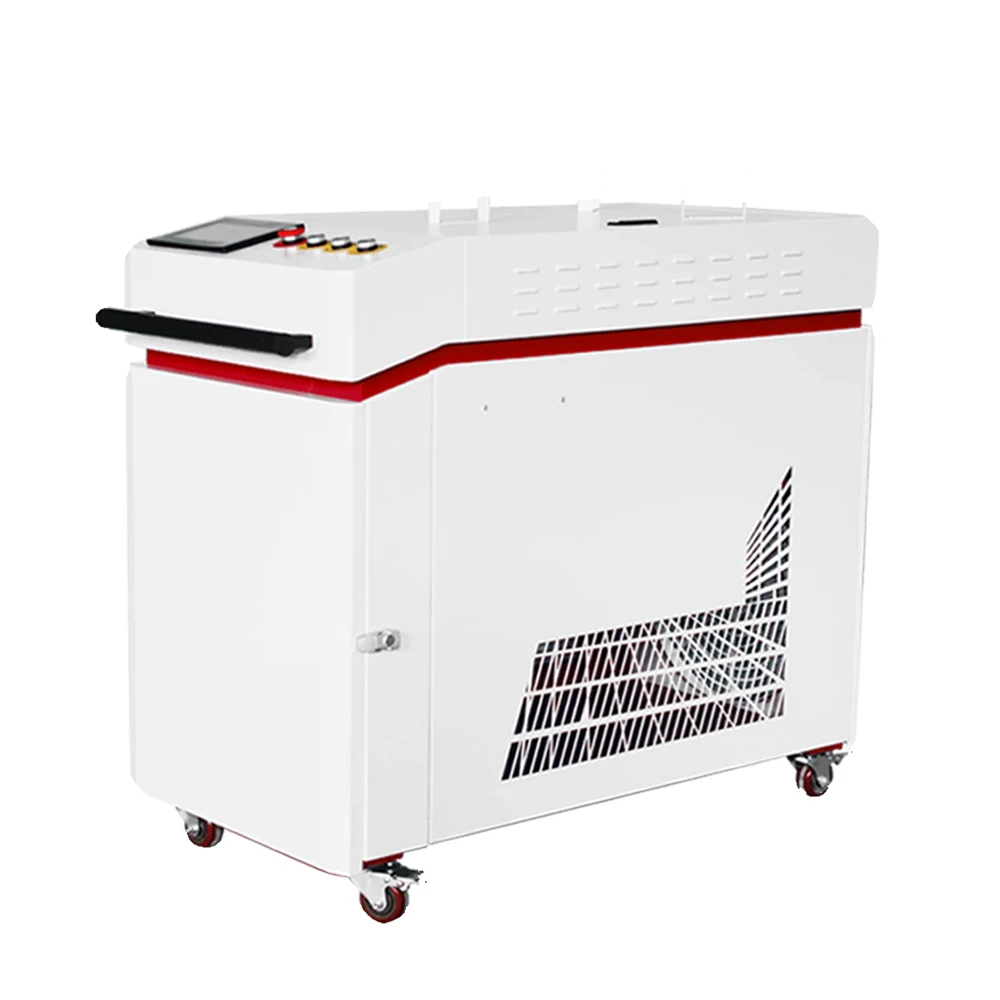
Source and water chiller sit in separate cabinets for cooler continuous duty and easier service access. 1 kW to 2 kW, 125–134 kg.
View details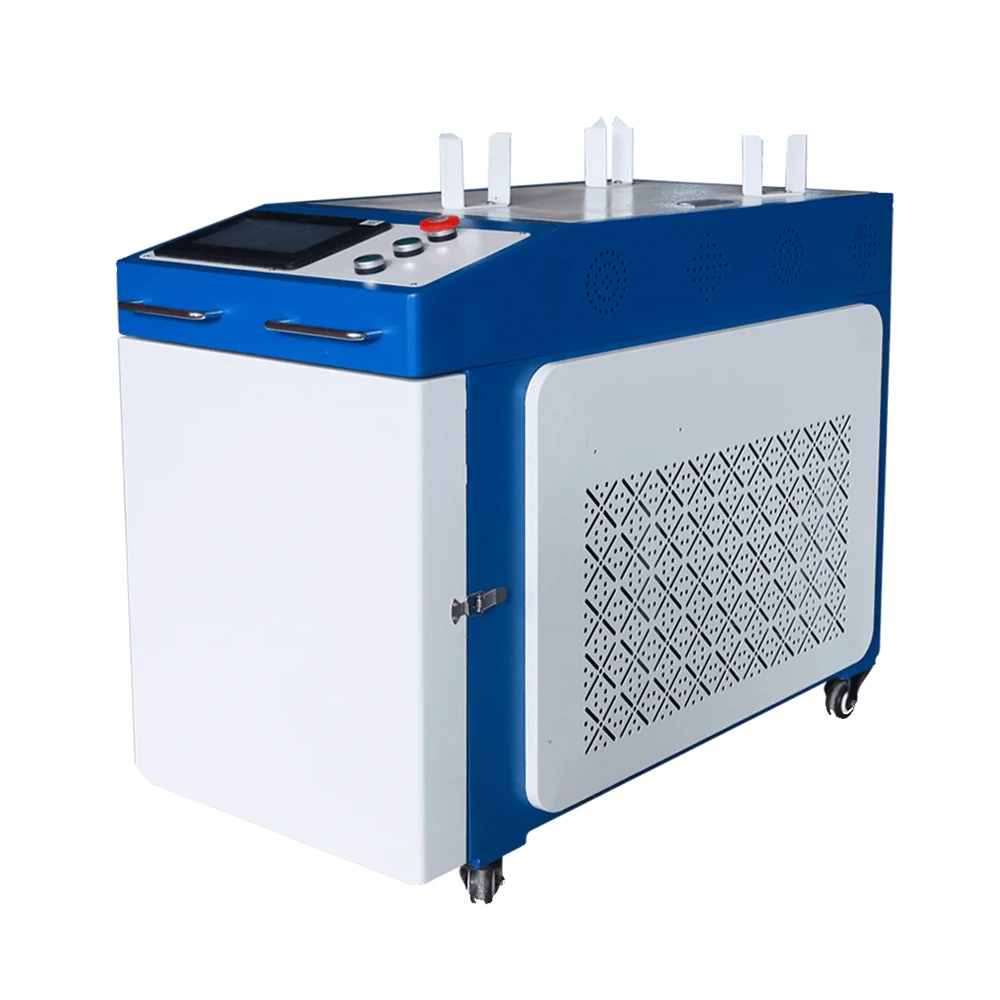
The value build: a water-cooled four-in-one from 1500W to 3000W with single or dual wire feed and a 19-language control system.
View details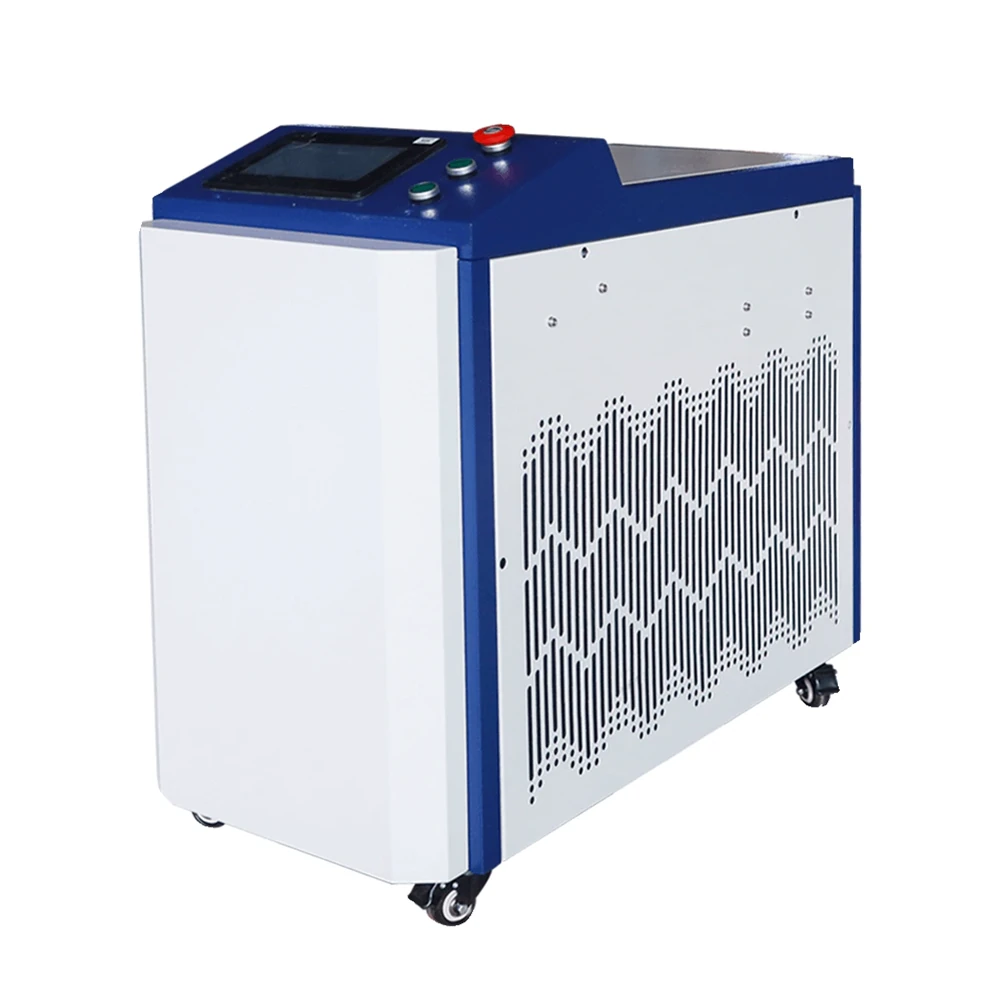
Hanli chiller integrated inside the cabinet, three wobble scan modes and a smart optical-path protection system. 65 kg.
View details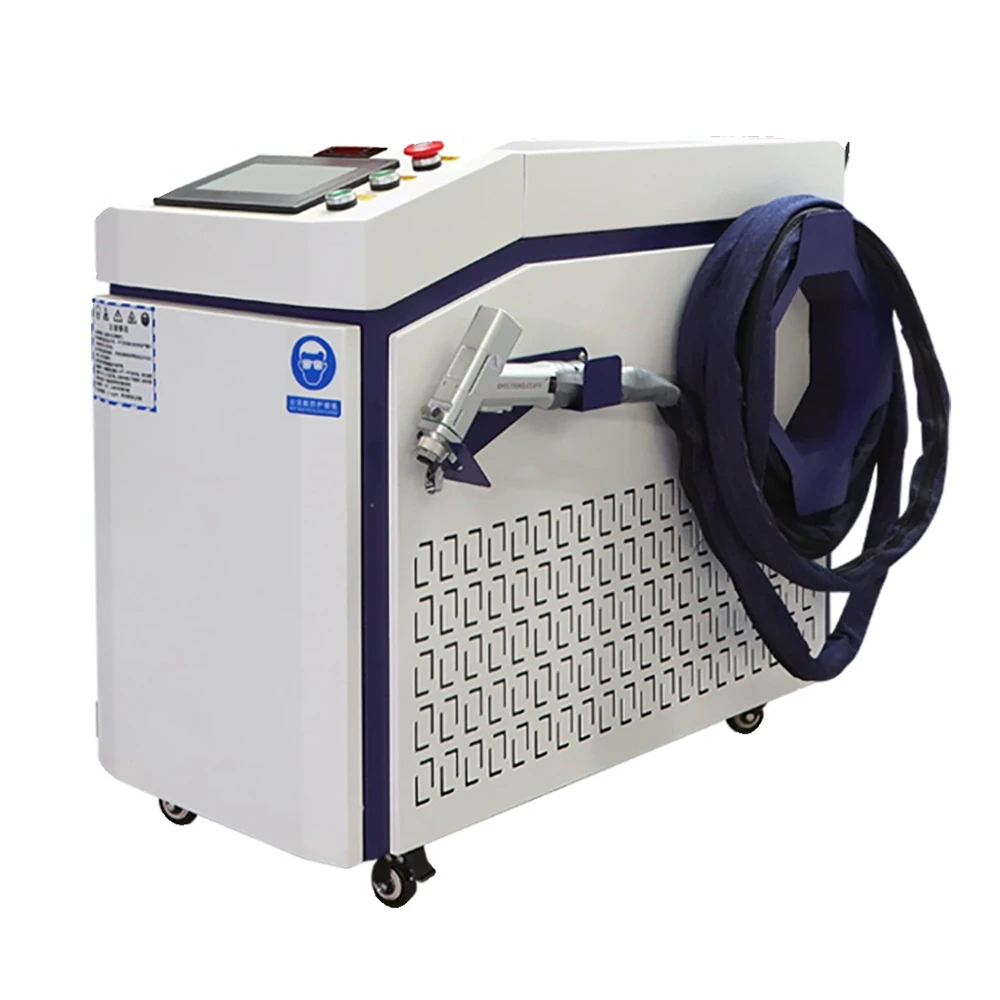
An S&A CWFL dual-circuit chiller holds the loop within about half a degree for stable, all-day welding. 77 kg cabinet.
View details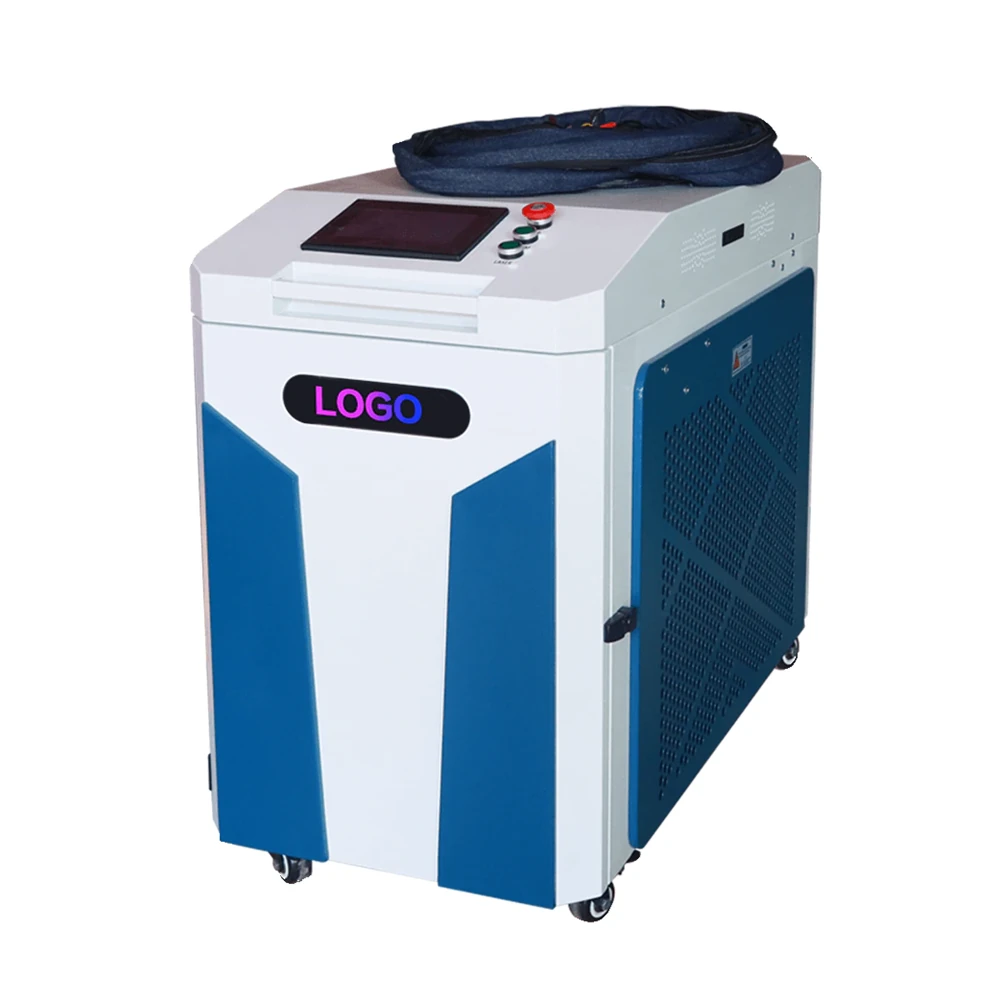
Built around your brand: an illuminated logo, custom nameplate, housing colour and interface language on a 1500W to 3000W platform.
View detailsNon-contact removal of rust, paint, oxide and coatings with no abrasives, chemicals or secondary waste. Listed from the lightest handheld unit to the largest continuous system; every machine uses the same cleaning principle.
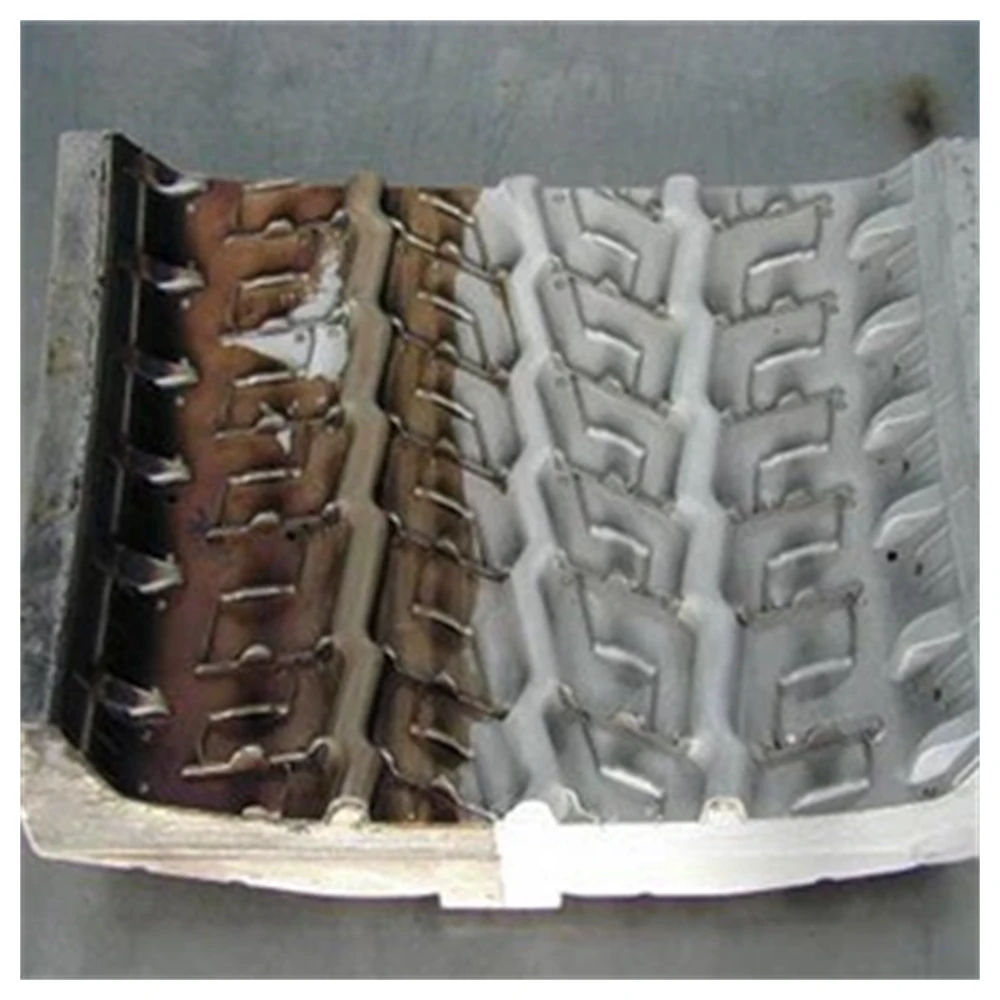
Clean a weld seam and mark the serial number with one air-cooled unit — switch between cleaning and marking mode on the touchscreen.
View details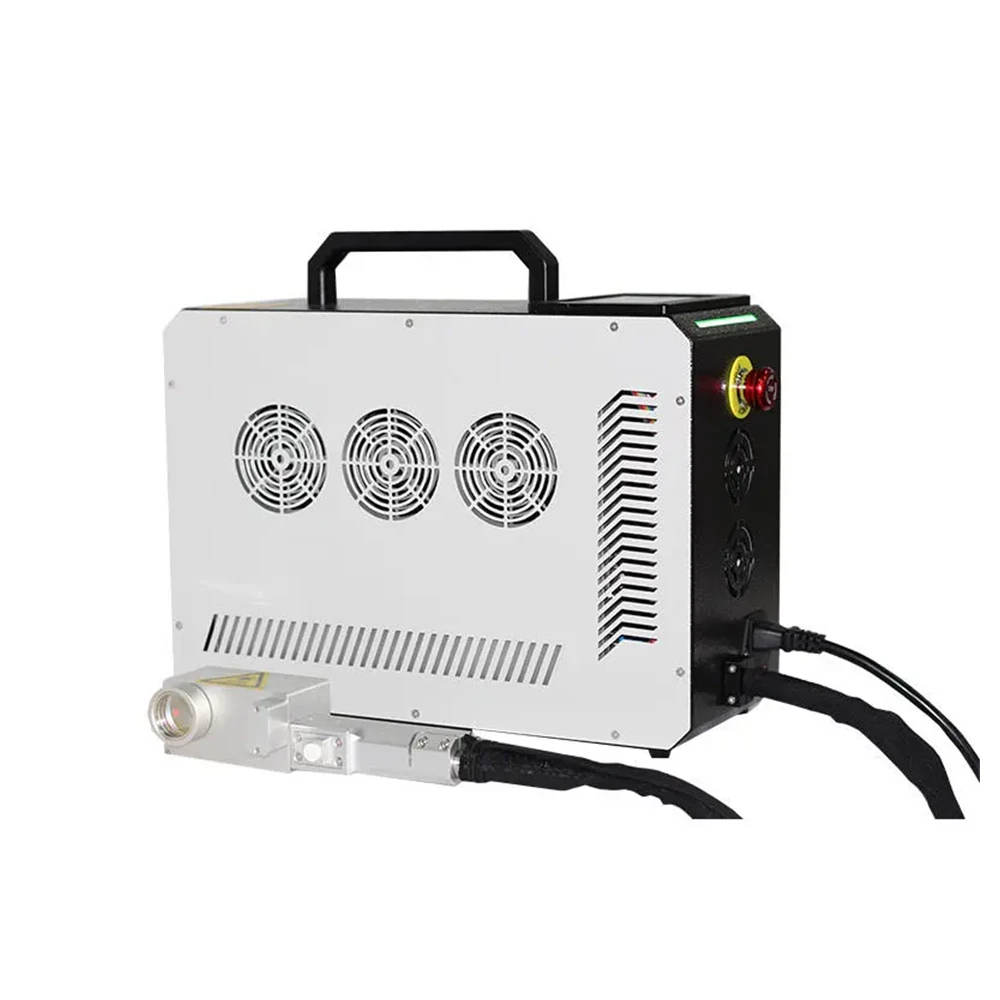
Wearable MOPA system for scaffolding, towers and confined spaces that no trolley can reach, with an optional battery for off-grid work.
View details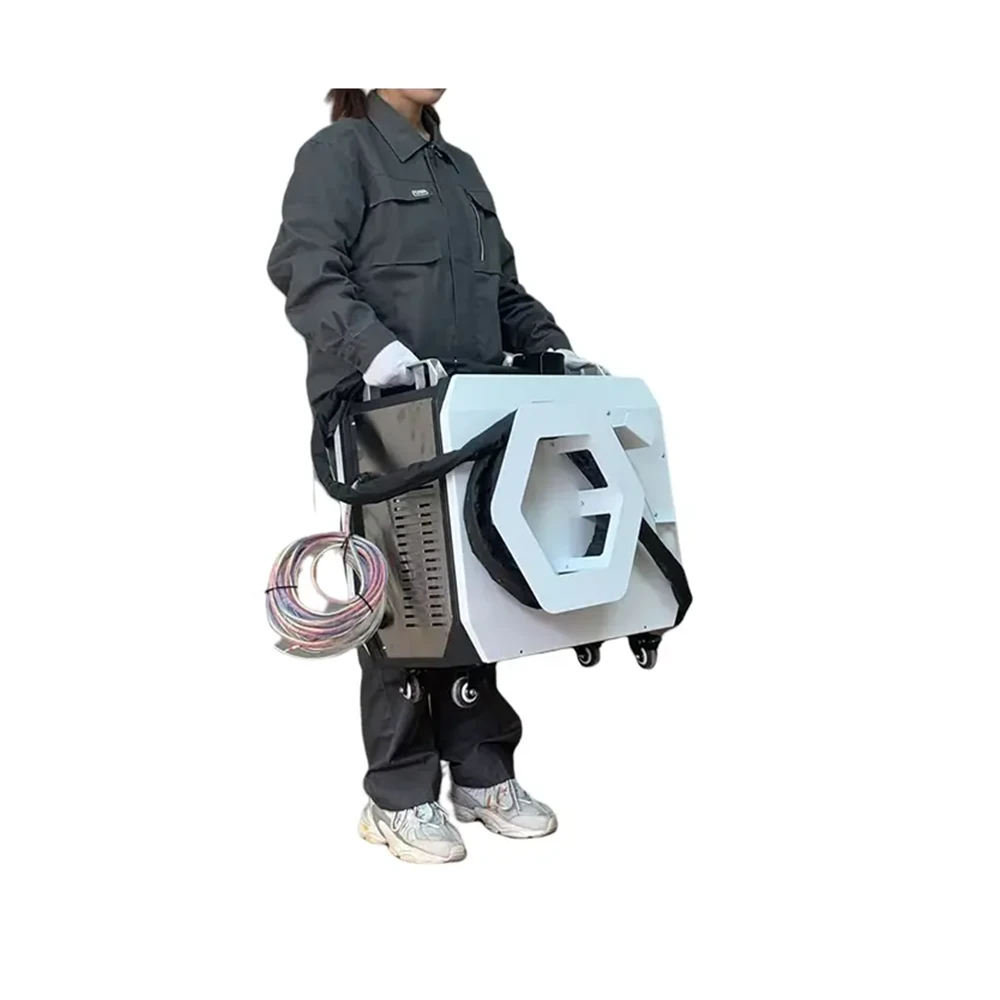
All-in-one unit in a rugged case: wheel it in, plug it in and start cleaning resin, oil, rust and coatings with no water or chemistry.
View details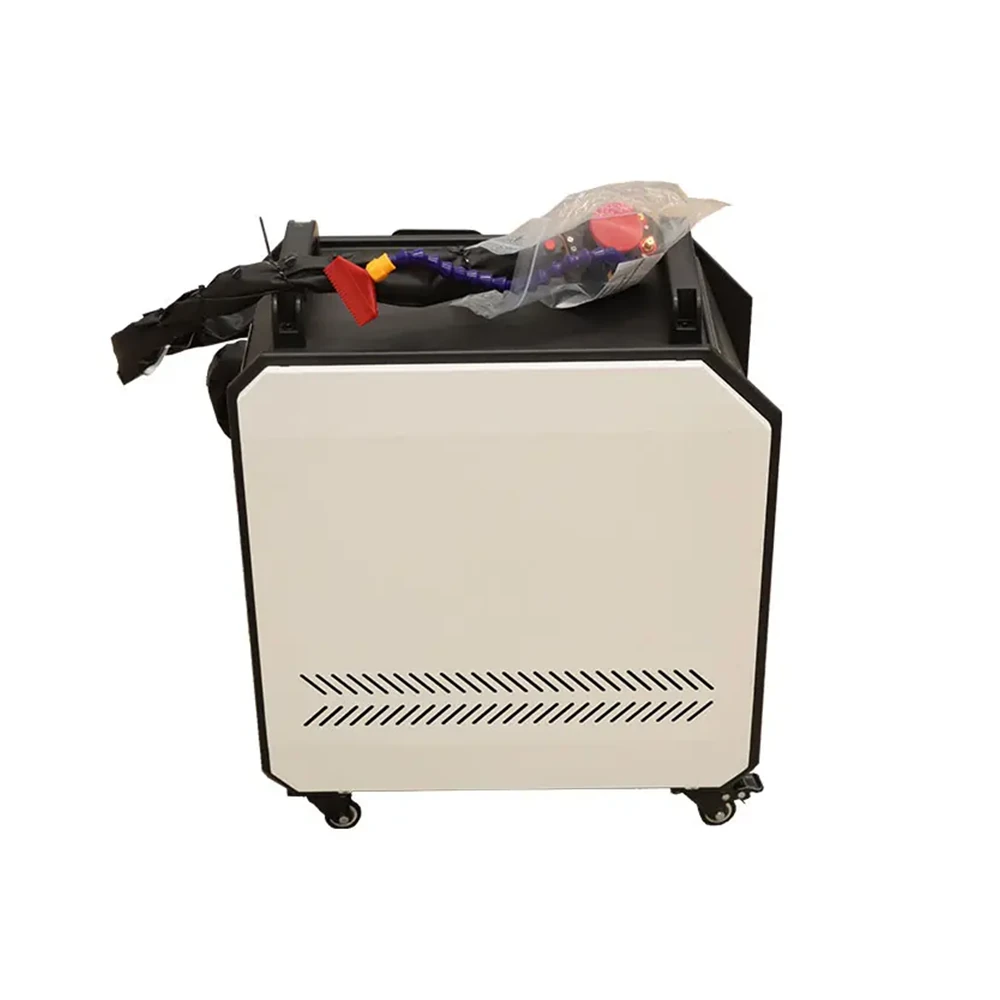
Retractable-handle case that a single technician carries and rolls, with MOPA precision and eight cleaning paths for field service.
View details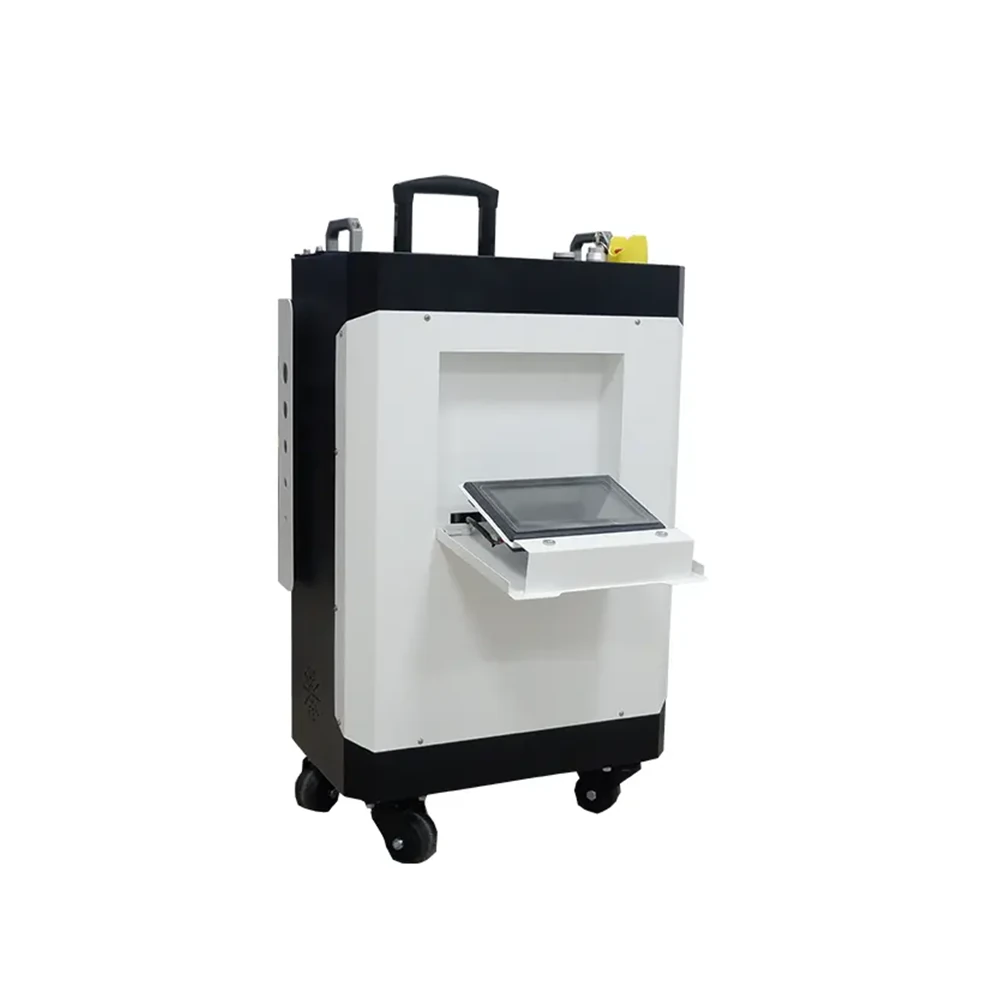
A 0.85 kg pull-rod gun reaches inside pipes, dies and flanges, with five scan patterns and integrated fume extraction.
View details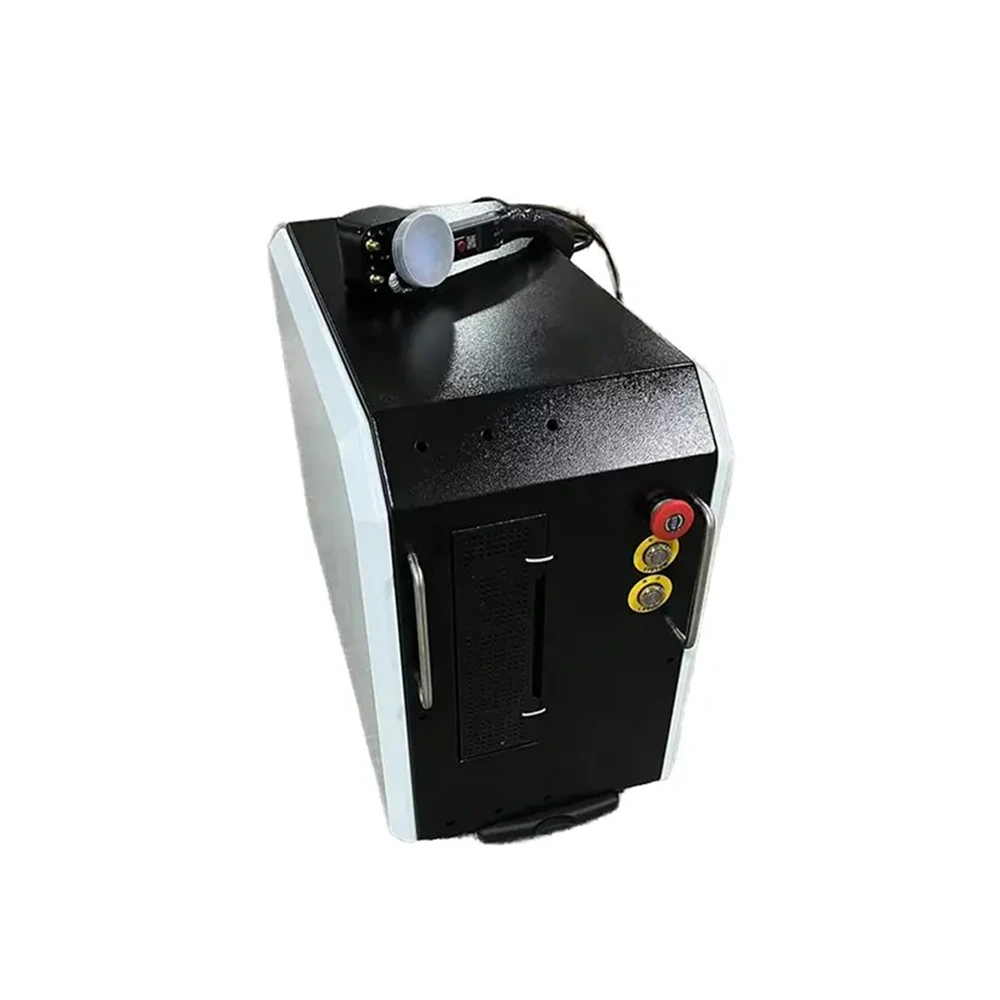
Motorized dual-axis head and eight scan modes for furniture, curved panels and mold cavities, with no zebra striping.
View details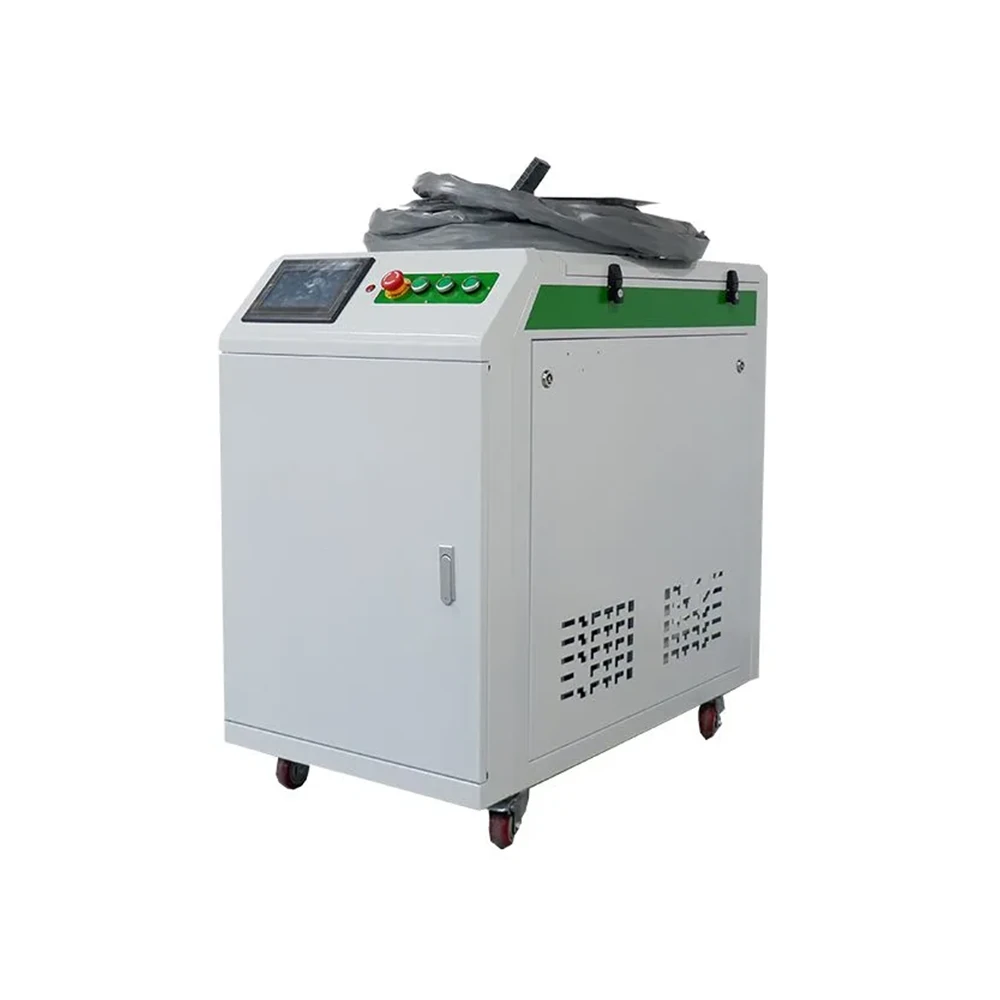
Integrated industrial chiller holds frequency stable all shift, cleaning to Sa3.0 with substrate loss below 0.0005 mm.
View details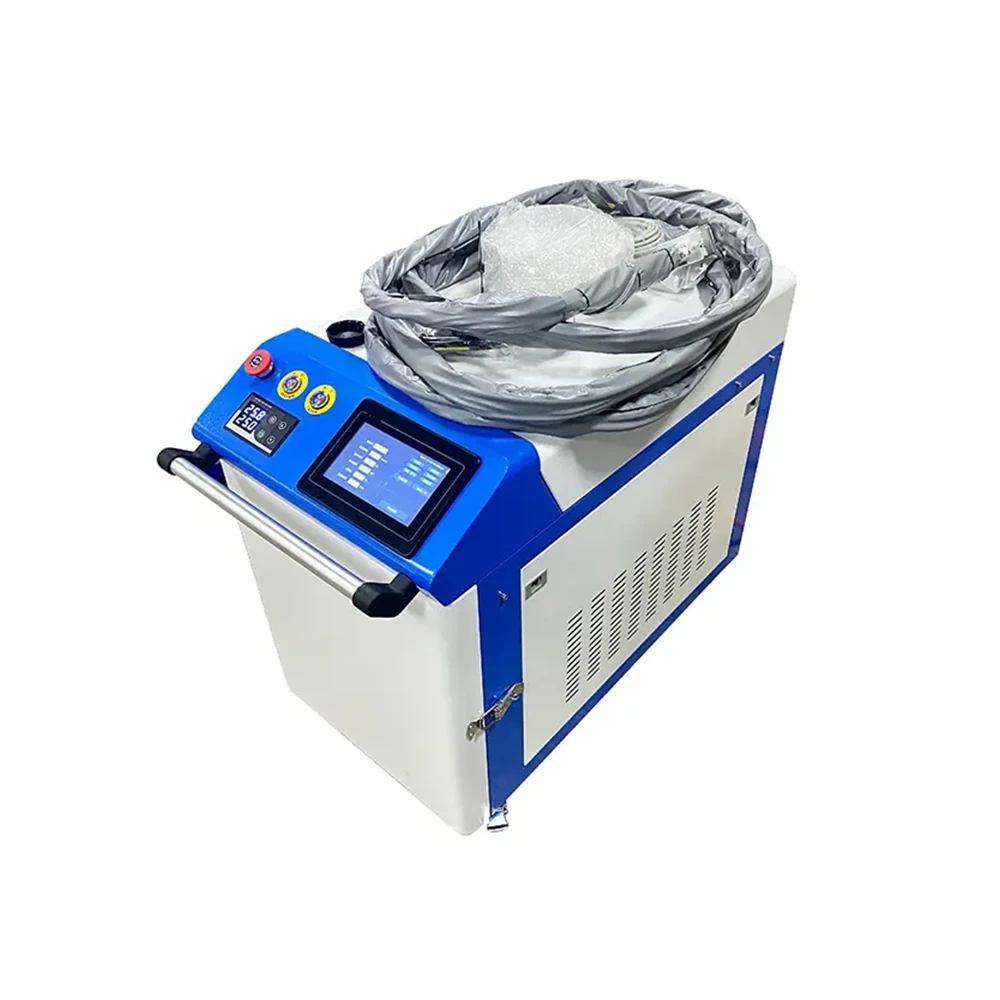
Water-cooled 1500W to 3000W platform with a 300 mm beam that strips heavy rust, paint and grease at up to 50 m²/h.
View details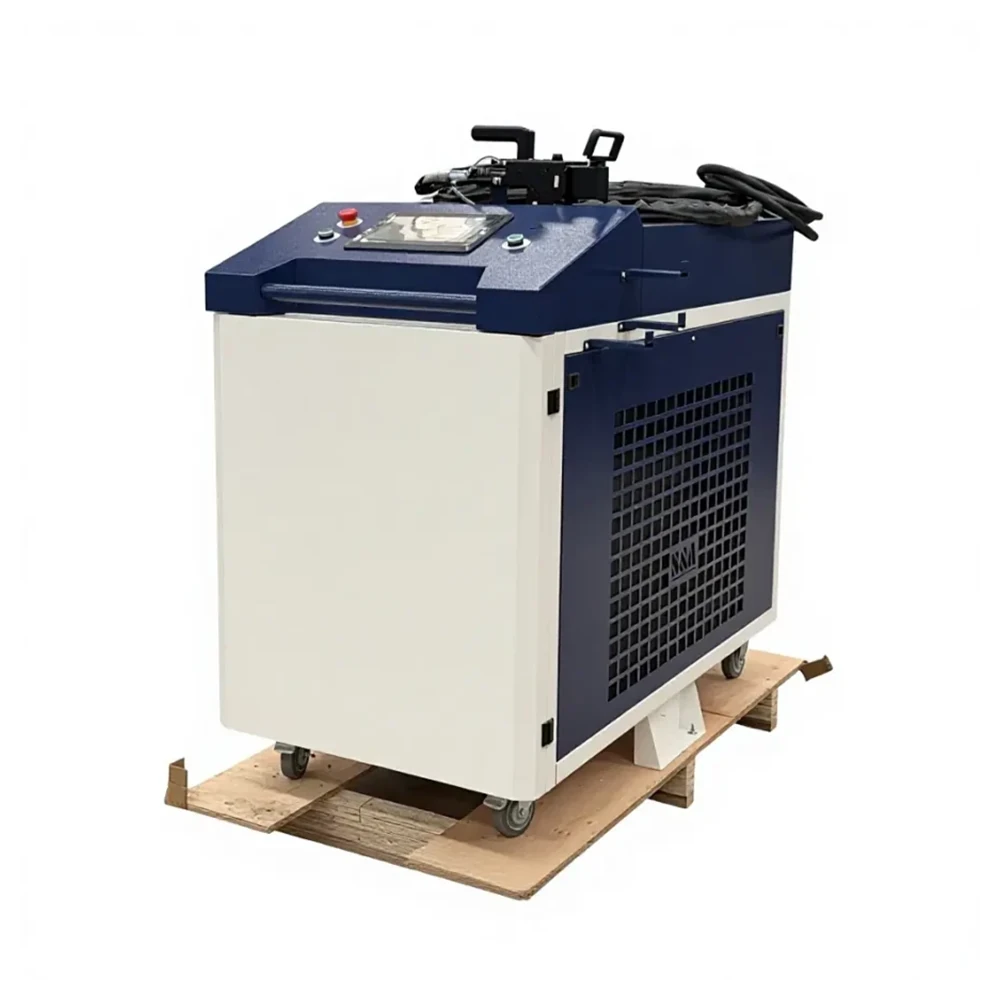
100% duty-cycle continuous-wave station for ship hulls, tanks and heavy steel, with HEPA and carbon fume filtration built in.
View detailsRows are the parameters that decide the line; columns are the four product lines. Where a value is set per configuration it is confirmed on request rather than assumed.
| Parameter | Marking | Cutting | Welding | Cleaning |
|---|---|---|---|---|
| Laser type | Fiber, CO2, MOPA and UV | Fiber, continuous wave | Fiber, 1080 nm | Pulsed fiber, MOPA and continuous wave |
| Power range | 20W – 100W (UV 3–10W) | 1000W – 40000W | 800W – 3000W | 100W – 6000W |
| Typical materials | Metals, engineering plastics, wood, acrylic, leather, glass | Carbon steel, stainless, aluminium and brass sheet and tube | Stainless, carbon steel, aluminium, copper and galvanised sheet | Rust, paint, oxide and coatings on steel, aluminium and stone |
| Working area or format | Marking field from 110 × 110 mm to 1200 × 1200 mm | Tables from 3000 × 1500 mm up to 14000 × 3200 mm | Handheld gun; envelope set by gun reach and cable length | Scan width 10–300 mm, plus backpack, trolley and cabinet formats |
| Typical industries | Automotive, electronics, hardware, tools, packaging | Sheet metal, furniture, construction, shipbuilding | Kitchen equipment, automotive, enclosures, repair | Marine, molds, structural steel, heritage |
| Lead time | About 5 working days | Confirmed per platform and configuration | About 5 working days | Confirmed per model and configuration |
Every line is quoted to your material, thickness or part size with a free sample test. The sample result, not the catalogue, is the basis of the final recommendation.
One 1064 nm platform appears in very different factories. What changes is the process, the format and the power — not the core technology.
Traceability codes, battery-tab welding and oxide-free preparation on brackets, panels and housings, where a clean joint and a permanent mark matter equally.
Deep-engraved logos, sizes and batch codes on wrenches, cutters and fasteners, marked on enclosed desktop and split machines for continuous production.
Sinks, hoods and tableware welded with a bright seam and finished without acid pickling, then laser-marked with the standard and rating.
Nested sheet cut burr-free, corners welded and seams cleaned on the same floor, so a bracket or enclosure moves from plate to finished part without leaving the shop.
Cavity residue, rust and coating stripped without touching parting lines or dimensions, then local areas welded and re-dressed in place.
Flying fiber and CO2 coders print dates, lots and barcodes on cartons, film and metal packaging on the moving line, with no ink or solvent to reorder.
Every line follows the same four steps, so a marking project and a cutting project are managed the same way.
Tell us the process, material, part geometry, thickness and required output so we can shortlist the right line and power.
Send a sample and we test it in our lab, returning process videos, measured results and the parameter file we used.
The machine is built to the approved specification and run continuously before it is packed and dispatched.
Door-to-door shipping to 80+ countries, remote commissioning, operator training and lifetime technical support.
Start with the process: marking, cutting, welding or cleaning. Then define the material (steel, aluminium, copper, brass, coated metal, plastic, wood or glass), the part size and geometry, the required speed and the target quality. Send us those details plus a sample and our application engineers will recommend the line, the model and the laser power. Test results from your own sample are the most reliable basis for selection.
Marking (21 models) uses fiber, CO2, MOPA and UV sources from 20W to 100W for permanent codes and logos. Cutting (6 platforms) uses continuous-wave fiber sources from 1000W to 40000W for sheet, tube and pipe. Welding (6 builds) uses 800W to 3000W four-in-one machines for low-distortion seams. Cleaning (9 models) uses pulsed and continuous sources from 100W to 6000W to remove rust, paint and coatings without abrasives or chemicals.
For marking, 20W to 30W handles fine work and general metal marking, 50W speeds up deep engraving, and 100W suits thick metal and large format. For cleaning, 100W to 300W removes light rust and oil, 500W to 1000W handles moderate rust and paint, and 1500W and above is specified for heavy corrosion and large steel structures. For welding, 800W to 2000W covers thin and medium sheet, and 3000W is used for thicker sections and dual wire feed. Tell us the material and target cycle time and we will confirm the level.
Yes. All four processes use the same 1064 nm beam delivered through a fiber and steered by software; what changes is the power, the pulse or continuous mode, the optics and the head. A four-in-one welding machine already switches between welding, cleaning, cutting and seam finishing in one work envelope, and many customers run several lines from the same supplier for exactly that reason.
Yes. Send your parts or sample coupons and we test them in our application lab, then return the marked, cut, welded or cleaned result with measured data and the parameter set we used, before you commit to an order.
Yes. We offer OEM and ODM engineering across the whole division: laser power, lens and working area, enclosure and safety class, rotary axis or XY table, conveyor and PLC/MES integration, fixture design, voltage and interface language, and your own branding. Share drawings or a video of your current process and we will propose a matched configuration.
Marking and welding machines are typically built in about five working days and cutting and large cleaning platforms are confirmed per configuration. Every unit carries a 24-month warranty on the laser source and core components, an English manual and parameter library, free remote commissioning and lifetime technical support. Shipping is door-to-door to more than 80 countries.