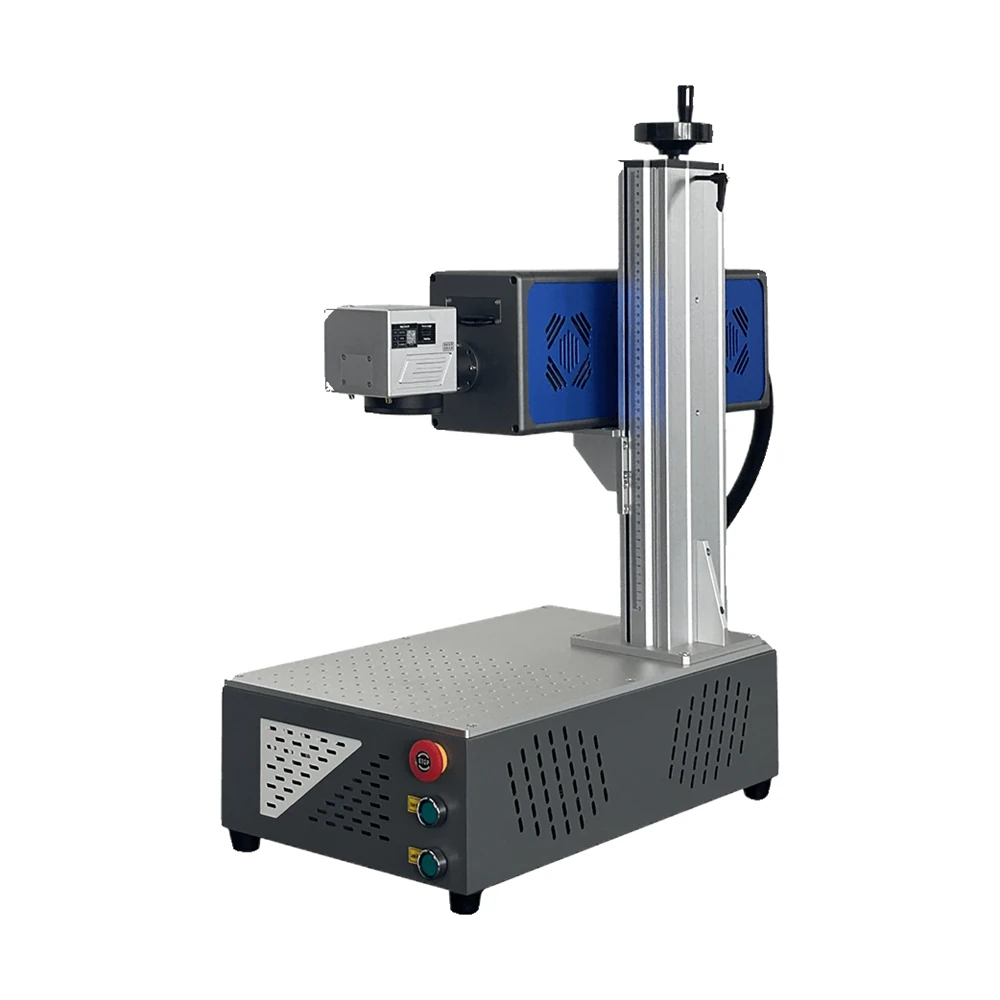
All-in-One CO2 Laser Marker
The same 10.6 micron source in a single enclosure, ready to place on a table and run.
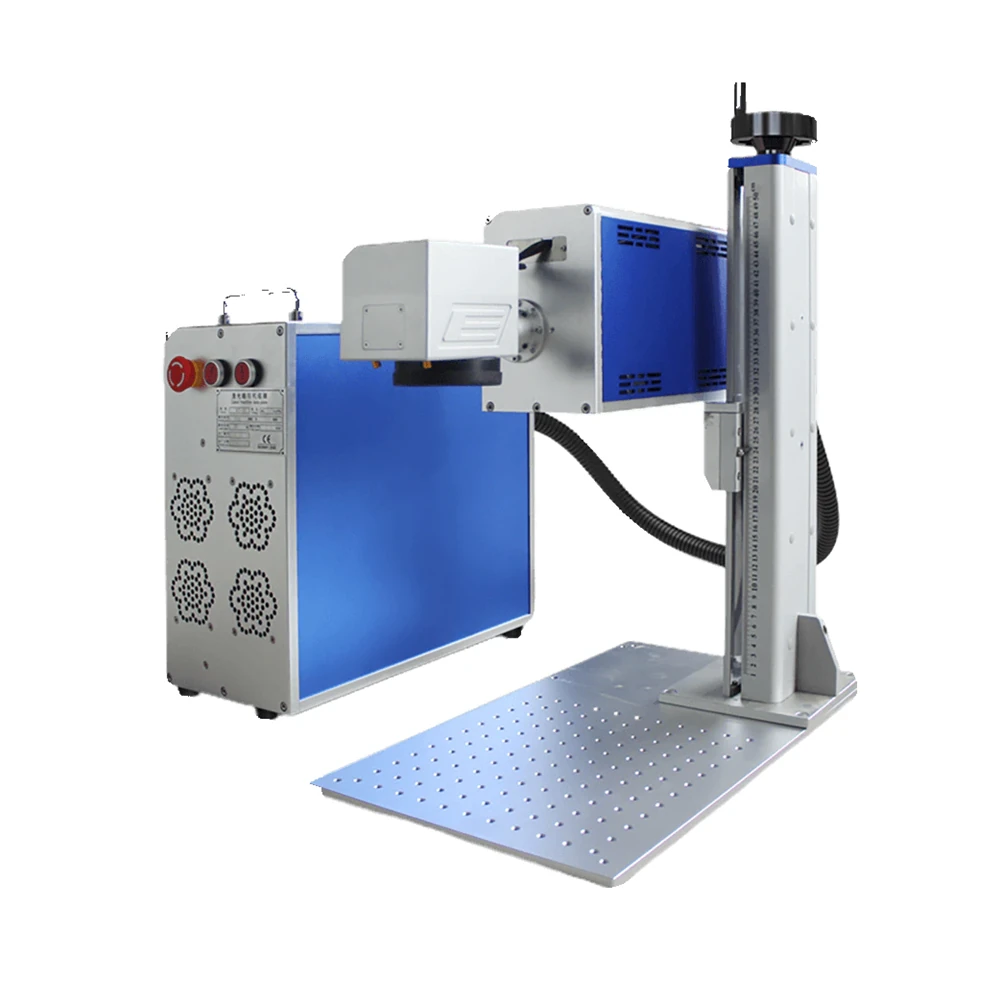
View modelWood, leather, acrylic, glass and packaging mark cleanly under a 10.6 micron CO2 beam. The split chassis keeps the RF source and chiller-free cooling in one cabinet while the marking head goes to work above your product line, your bench or your conveyor.
Organic materials absorb 10.6 micron light far more readily than they absorb a 1064 nm fiber beam. That single fact is why CO2 remains the reliable choice for wood, leather, glass and the whole family of packaging substrates.
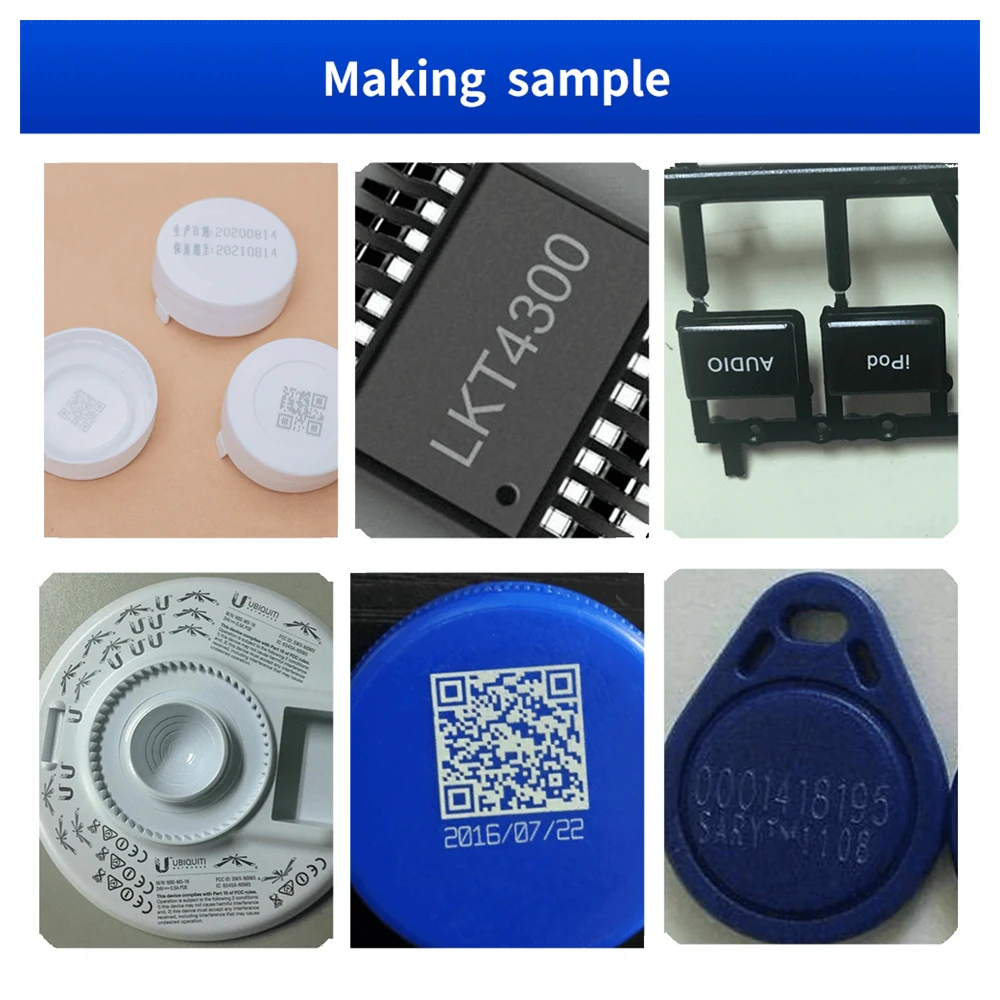
How common substrates respond to the 10.6 micron beam. Contrast and depth are set by the parameter recipe, so treat this as a starting map, not a limit.
| Material | Response at 10.6 µm | Typical result |
|---|---|---|
| Wood and Bamboo | Excellent | Deep, sharp engraving with strong contrast by carbonisation. |
| Leather | Excellent | Clean cut and embossed marks, no fabric fraying at the edge. |
| Acrylic | Excellent | Frosted or polished engraving with smooth internal edges. |
| Glass | Very good | Frosted, high-contrast marks that withstand cleaning. |
| Marble and Stone | Very good | Permanent pale-on-dark contrast for tiles and signs. |
| Cardboard and Paper | Excellent | Rapid coding of cartons, labels and packaging without ink. |
| Fabric and Textile | Very good | Discoloured or cut marks for labels and identification tags. |
| Epoxy and Coated Board | Good | Coating ablated to reveal the substrate underneath. |
| Painted or Powder-Coated Metal | Good | The coating is removed to expose a high-contrast metal face. |
| Bare Metal | Limited | Uncoated metals need a fiber source instead of CO2. |
Fit ratings reflect typical behaviour and will vary with grade, thickness and finish. Send a sample and we will define the exact recipe before you commit.
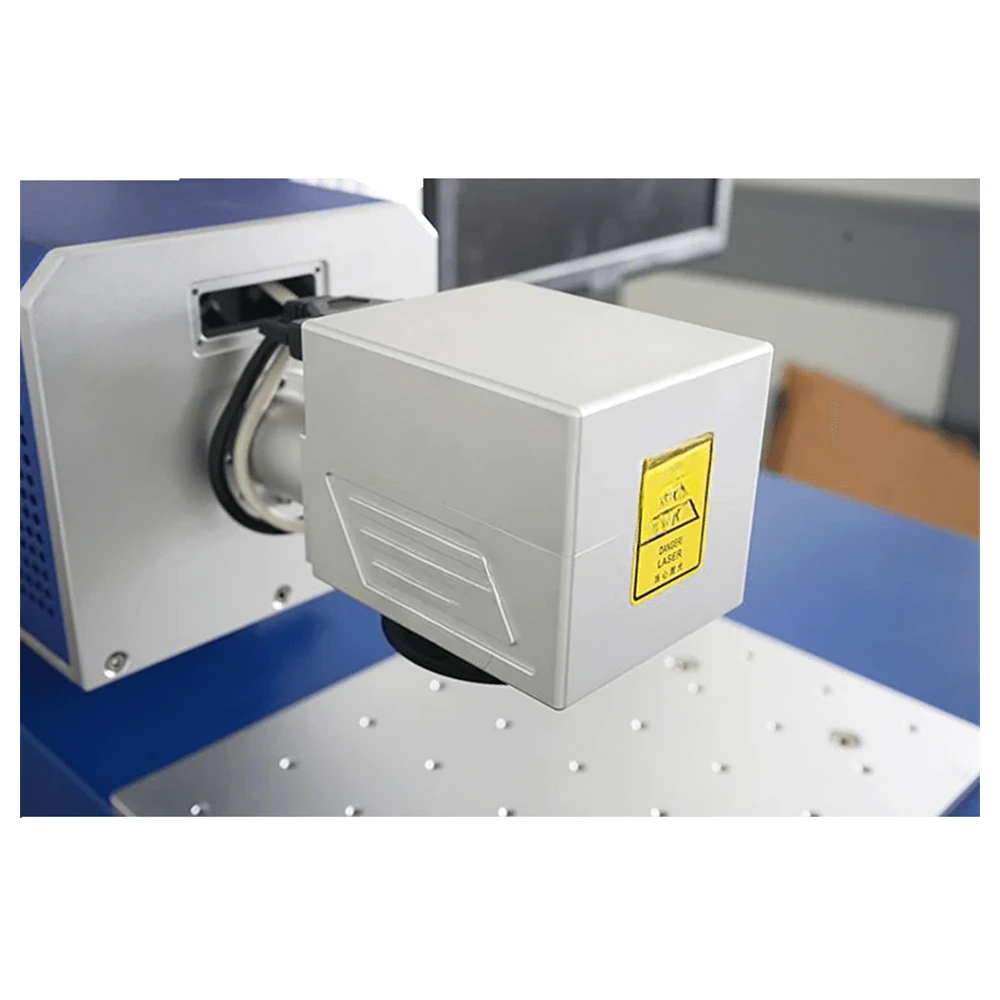
Because the source sits in its own cabinet, the marking head can be positioned away from it and aimed straight at the product. That is what lets a CO2 marker reach into a packaging cell, a leather finishing bench or a curved work surface that no fixed bench machine could serve.
Three power levels of the same air-cooled CO2 platform. Every figure below is taken from the machine datasheet.
| Parameter | KR-SC30 | KR-SC40 | KR-SC60 |
|---|---|---|---|
| Laser Power | 30W | 40W | 60W |
| Rated Output Power | ≥35W | ≥40W | ≥60W |
| Laser Source | Davi RF metal tube | ||
| Galvanometer | RC1001 | ||
| Wavelength | 10.6 µm | ||
| Marking Area | 100–300 mm (110 × 110 mm standard) | ||
| Power Stability | <±8% | <±6% | <±6% |
| Beam Quality (M²) | Not applicable | <1.3 | <1.2 |
| Beam Diameter | 1.8 ± 0.2 mm | ||
| Frequency | 0–25 kHz | ||
| Input Voltage | 48 VDC ± 2% | ||
| Maximum Average Current | 12.5 A | 12.5 A | 25 A |
| Thermal Load | <600W | <600W | <1200W |
| Cooling Method | Air-cooled, no water chiller | ||
The product introduction lists 30W, 40W and 50W, while the technical parameter table specifies 30W, 40W and 60W. The table is authoritative and is used above. Marking area, focal lens and smoke extraction are configured per order.
The parts of the design that matter most when the material is organic, coated or heat-sensitive.
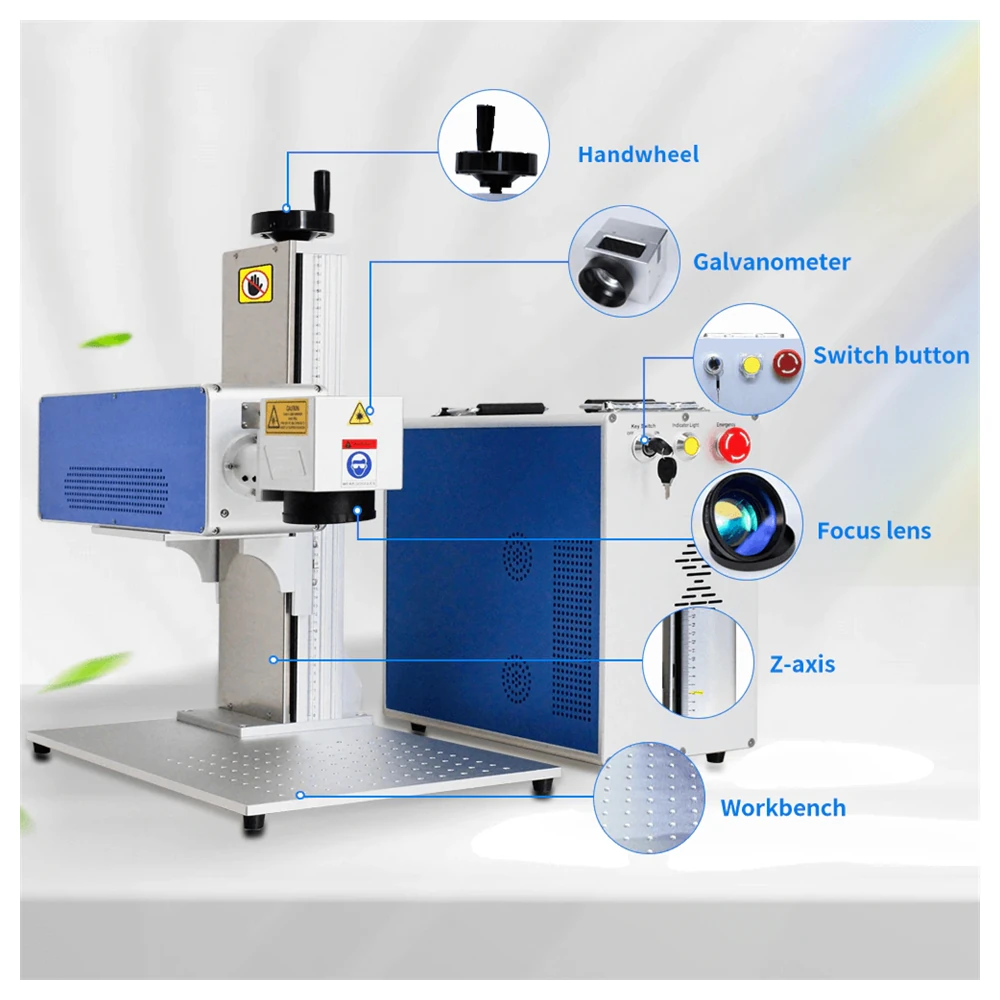
A high-performance scan motor and advanced photoelectric sensing give stable positioning and fast, accurate marking.
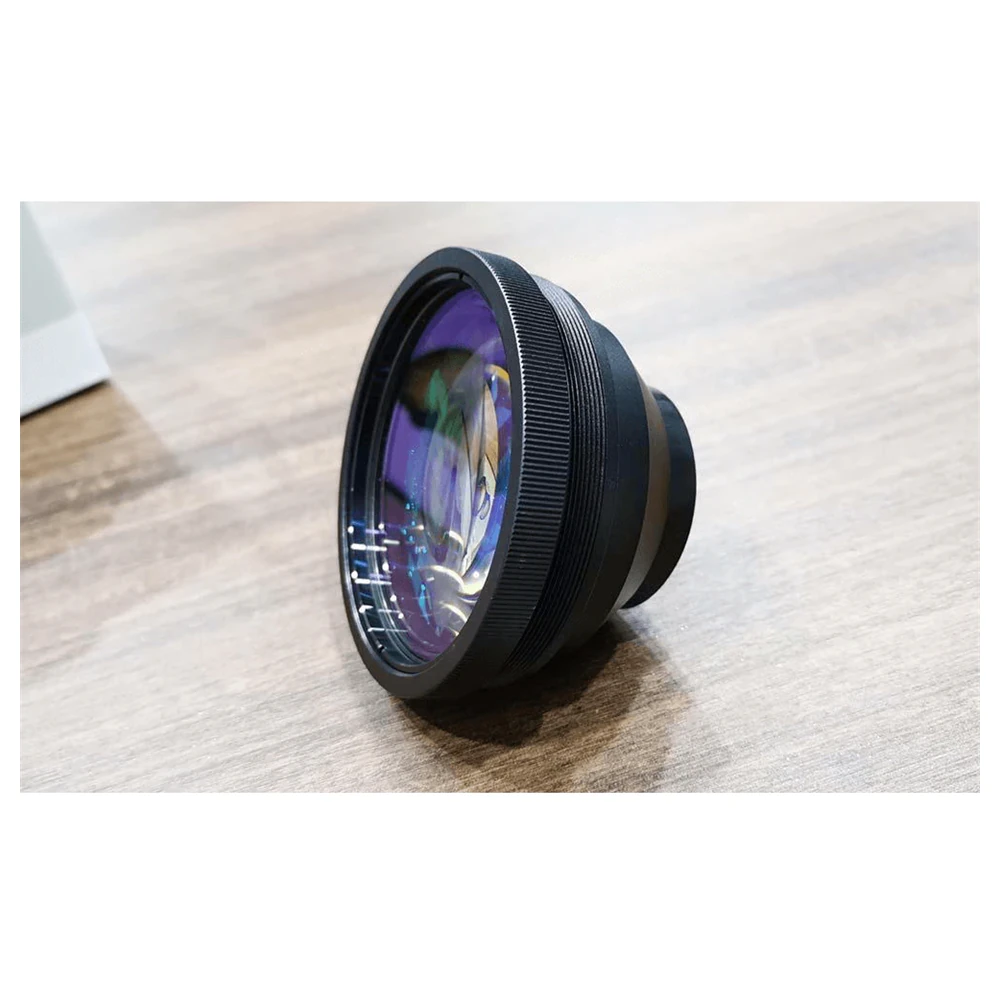
A Wuhan Hansel lens responds quickly for high-frequency scanning, reducing scatter and energy loss for a long service life.
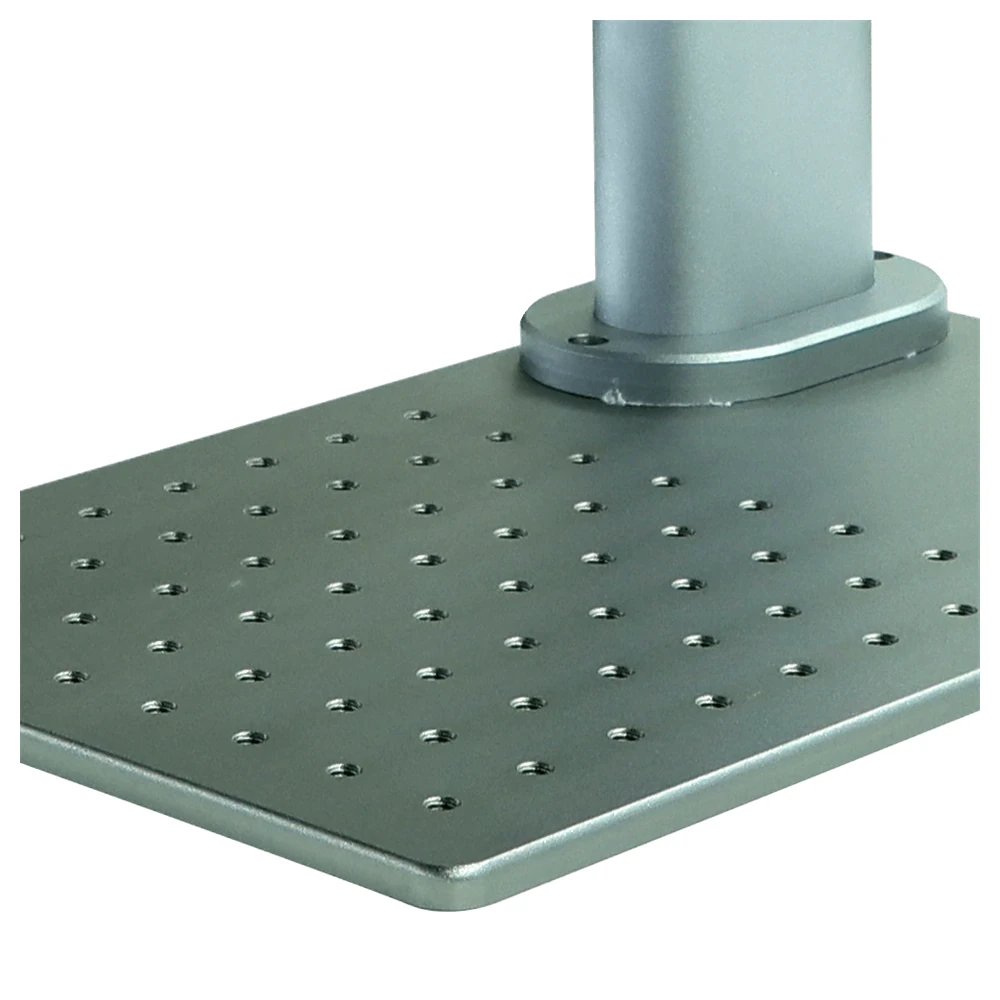
A light, corrosion-resistant aluminium bed that is easy to clean and efficient at dissipating heat.
A smoke purifier option keeps the working area cleaner and safer when marking organics that release fume or dust.
Four figures that describe what the air-cooled CO2 platform delivers across a production day.
The CO2 marker earns its place wherever the substrate is organic, coated or printed.
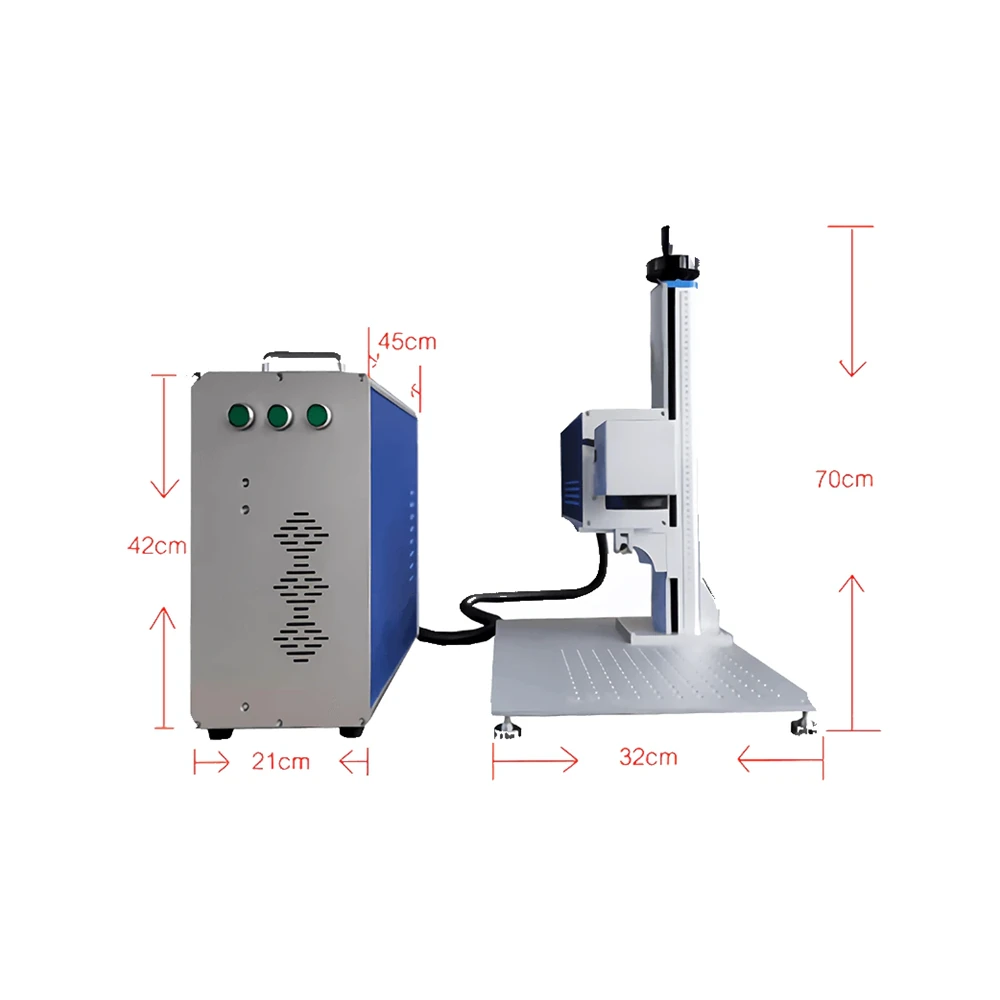
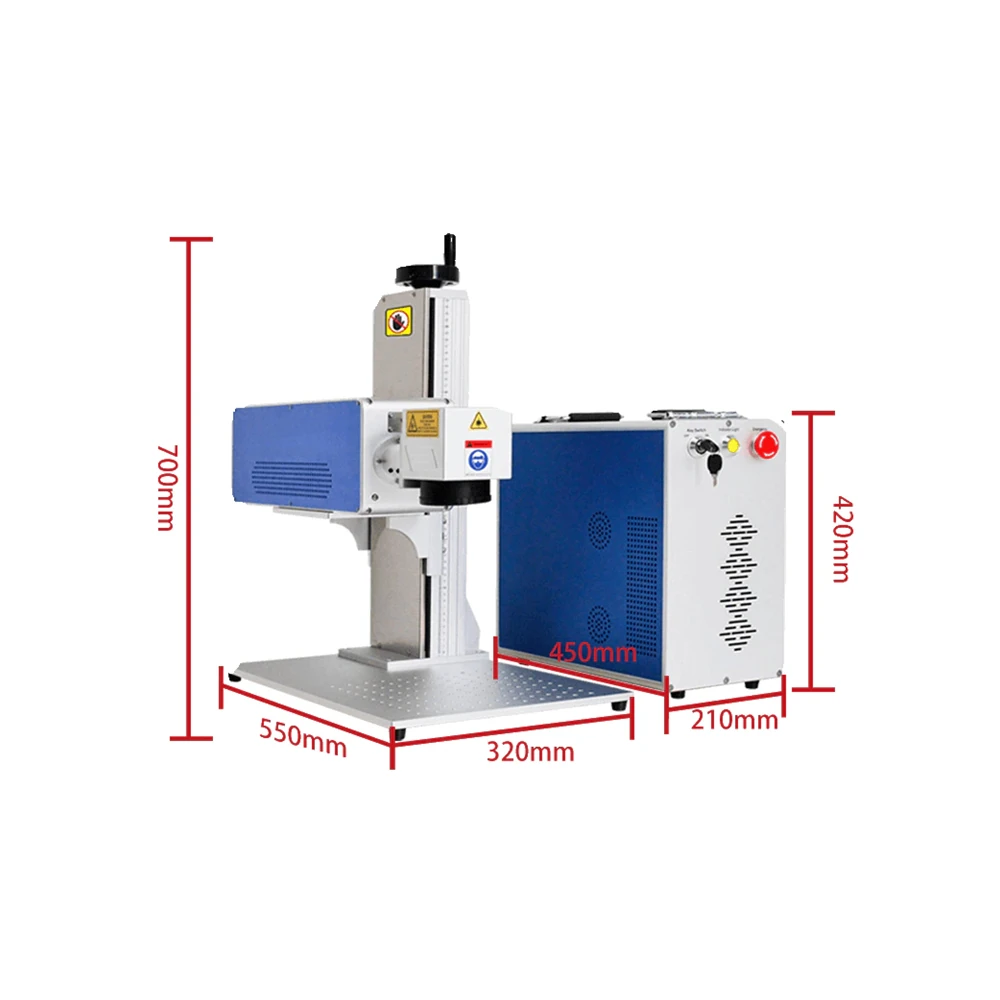
Batch codes, dates and QR codes on cartons, labels, film and printed board without a single drop of ink.
Logos, personalisation and size marks on hides, wallets and footwear with a clean, sealed edge.
Frosted glass, engraved acrylic, marble plaques and wooden trophies, all from one marking head.
Three layers protect the CO2 laser marker in transit. The outer layer is a solid plywood case, the middle is foam padding that absorbs impact and stops movement, and the inner layer is a thick plastic bag that keeps the machine dry. Contact us and we will send sample photos of the packing.
Production usually takes 5 working days. The machine then ships by air express such as FedEx or TNT, which normally adds 4 to 6 working days to reach you. Ask us for customer references if you would like to speak to an existing user first.
Our engineers assemble and test every machine before dispatch. For the few small parts fitted on arrival, plus operating guidance, we provide a detailed training video and a full user manual at no charge. Most customers find these enough to learn the machine themselves.
We give full after-sales support for both machine use and software. Our team provides English online support through Skype, WhatsApp, WeChat, email and video call, so help is never far away.
The 10.6 micron CO2 source is built for non-metals: plastic, leather, acrylic, epoxy, glass, marble, cardboard, bamboo, wood, fabric, organic materials and many other substrates. It also marks painted or coated metal where the coating is removed to expose a contrast.
No. Unlike many machines that use a water chiller, this CO2 marker uses an air-cooled RF metal tube with no water circuit and no consumables. That keeps routine maintenance low and running costs predictable over the life of the laser.
If your substrate is metal, or you need a self-contained bench unit, these alternatives from the same family are worth a look.
The same 10.6 micron source in a single enclosure, ready to place on a table and run.
View model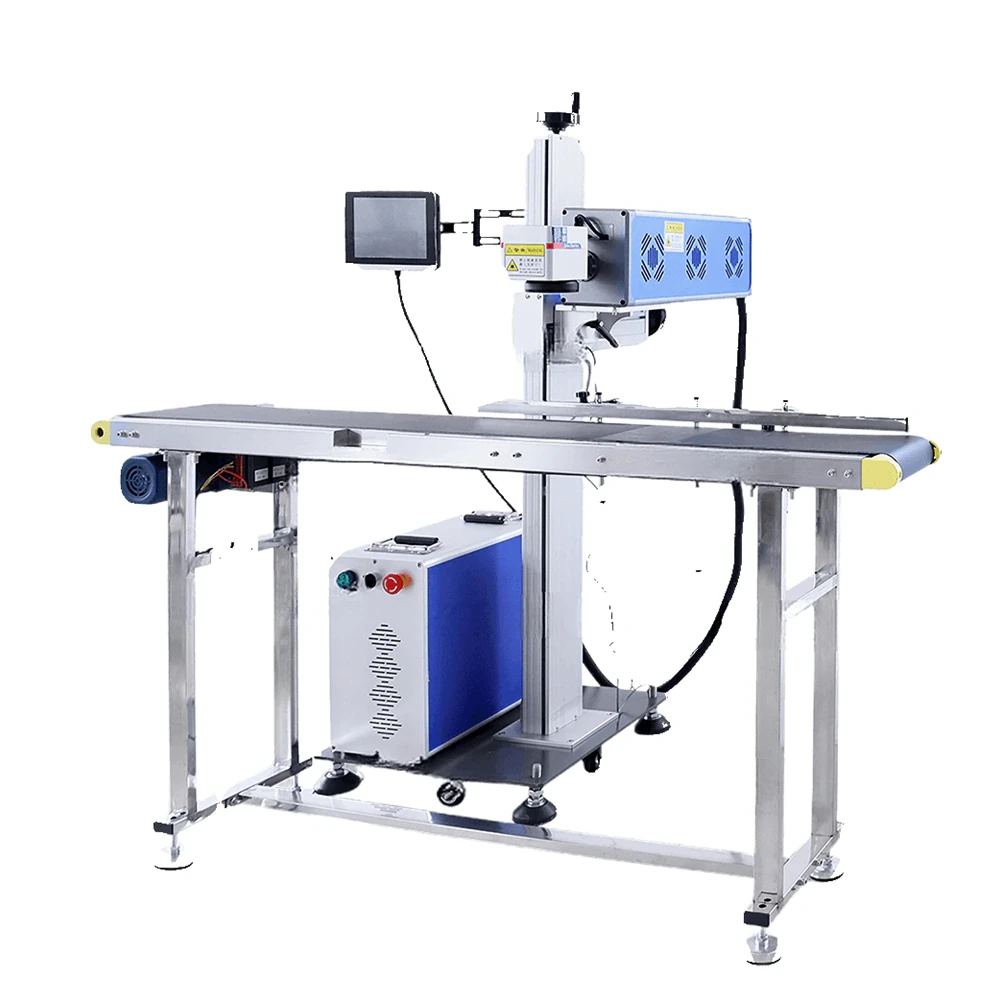
An on-the-fly version for coding products as they move along a packaging line.
View model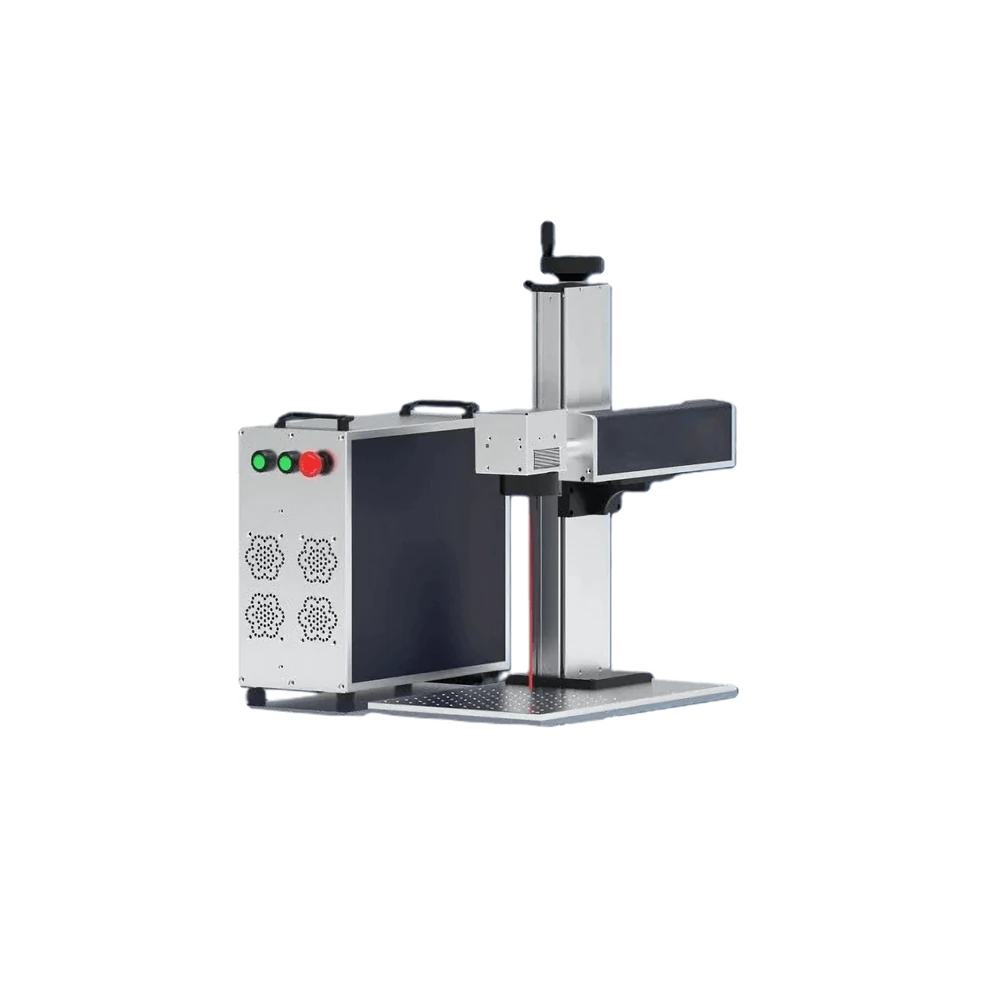
The metal counterpart, from 20W to 100W with a separate head for automated integration.
View model