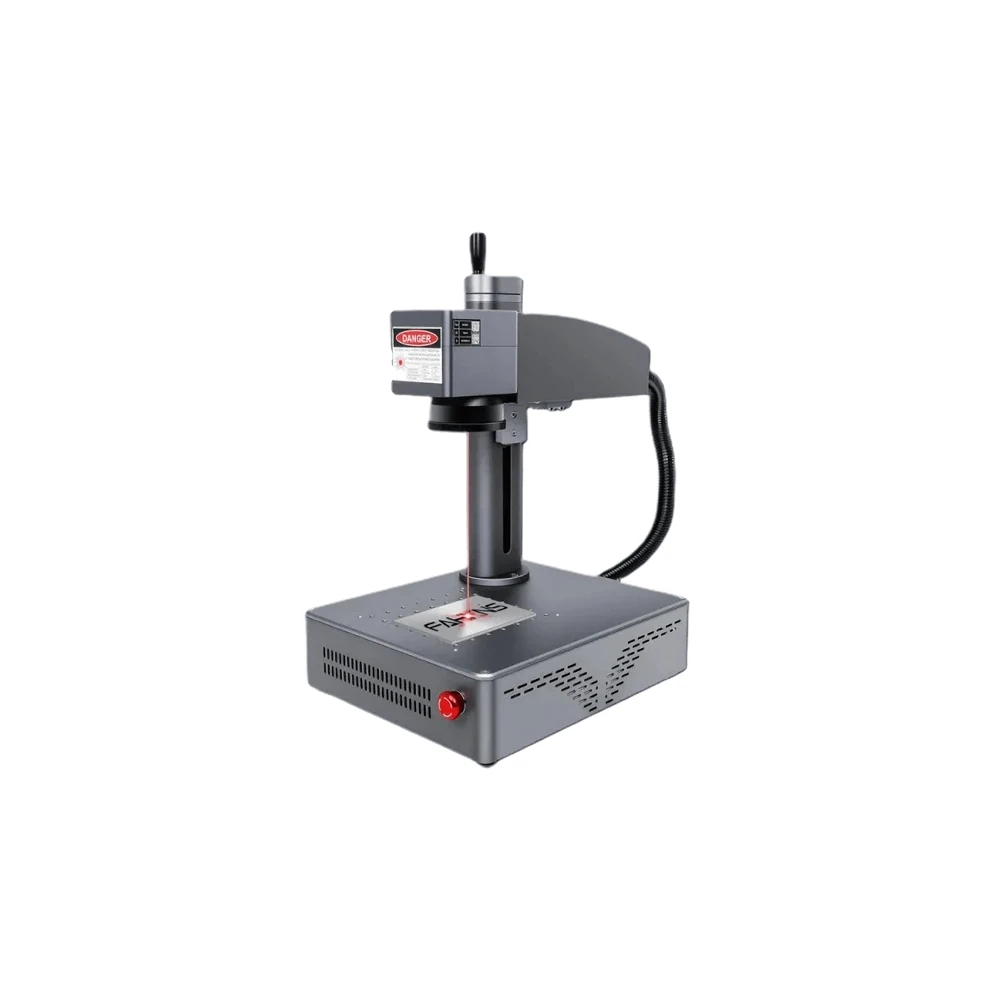
All-in-One Laser Marking Machine
Source, controller and display in one compact body for fast deployment on a bench or trolley.
View modelPut the marking head where the work is and keep the cabinet where the power is. Five power levels from 20W to 100W, a 3 m fiber cable and a wide working table turn the classic bench marker into a station you can bolt onto a gantry, a robot flange or a conveyor frame.
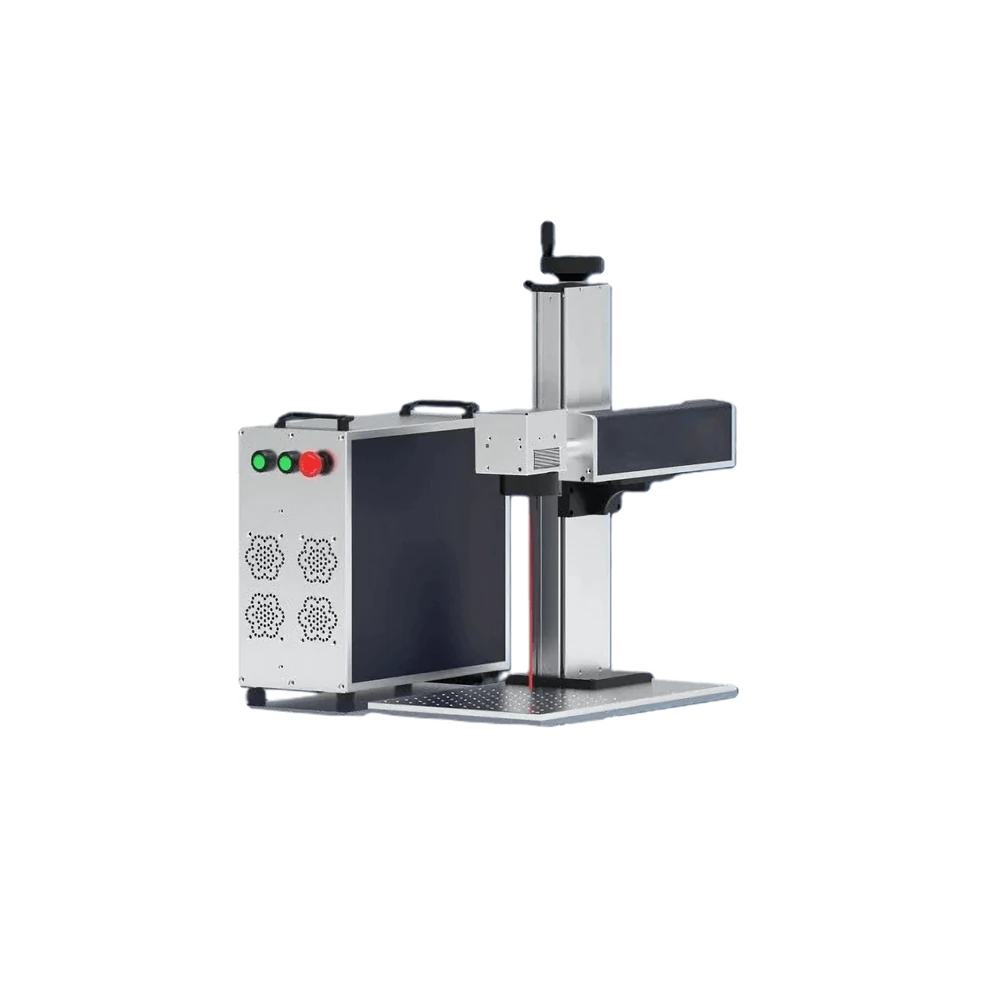
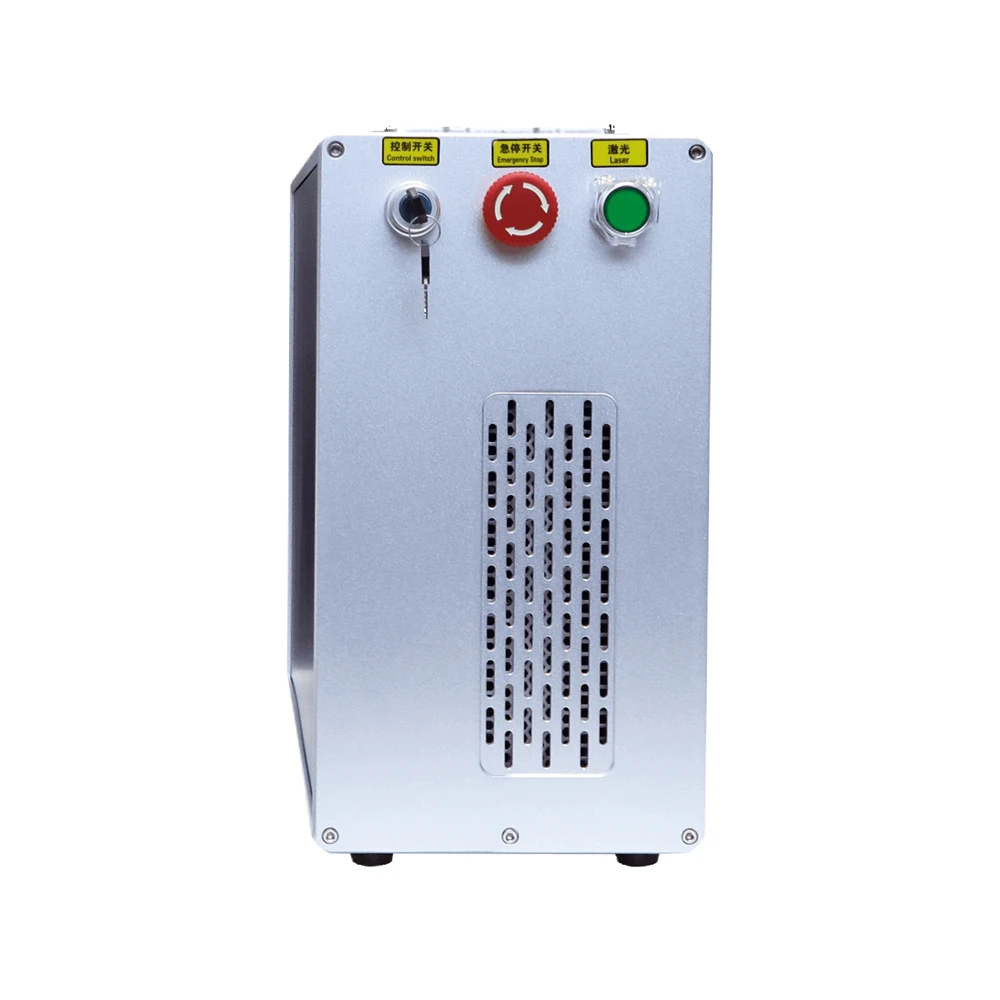
The split format puts the working table and the laser source in two places. The scanner head goes to the part; the cabinet stays where there is floor space, power and a clean environment. A 3 m fiber cable is the only link between them.
Four ways customers mount the split head. The right one depends on part size, cycle time and whether the part or the head does the moving.
For large, flat or heavy parts. The cabinet stands to one side, the head rides the gantry and covers a bed far bigger than 110 × 110 mm.
For multi-face or curved parts. The head is carried on the robot flange and the arm presents each surface in turn without re-clamping.
For serial numbers on moving parts. The head sits over the belt, the cabinet stays off the cell and marks fire on a line signal.
For flexible low-volume work. The head returns to the standard working table and the machine behaves like a normal bench marker.
Five power levels on a shared 700 × 500 × 550 mm chassis. Every figure below is taken directly from the machine datasheet.
| Parameter | KR-SF20 | KR-SF30 | KR-SF50 | KR-SF60 | KR-SF100 |
|---|---|---|---|---|---|
| Rated Output Power | 20W | 30W | 50W | 60W | 100W |
| Laser Source | JPT / RAYCUS / MAX | ||||
| Galvanometer | ZBTK / Sino-galvo | ||||
| Marking Area | 110 × 110 mm | ||||
| Marking Speed | 0–1000 mm/s | ||||
| Power Adjustment | 0–100% stepless | ||||
| Laser Wavelength | 1064 nm | ||||
| Fiber Cable Length | 3 m | ||||
| Supply Voltage | 110V / 220V, 50/60 Hz | ||||
| Control Software | EZCAD2 | ||||
| Cooling Method | Air-cooled | ||||
| Machine Dimensions | 700 × 500 × 550 mm | ||||
| Net Weight | Approx. 46 kg | Approx. 46 kg | Approx. 55 kg | Approx. 60 kg | Approx. 72 kg |
Marking area, focal lens, rotary axis and head mounting are specified per order — the 110 × 110 mm field is the standard supply. Note that the 1064 nm fiber source is intended for metals and selected plastics such as ABS and PVC; wood, paper, leather and fabric normally require a CO2 source instead.
Four figures that decide whether this platform fits your line.
Stepless power and a stable average output deliver uniform marks without melting the surface.
The Sino-galvo head uses a high-speed US motor for tight positioning accuracy and strong interference immunity.
A single-key power control with an emergency stop button and a live voltage indicator guards operator and machine.
The 1064 nm source is built for metal first, with selected engineering plastics a close second.
Deep, high-contrast marks by controlled surface oxidation. Serial numbers and logos that survive handling and finishing.
Clear marks on machined and cast parts, from small fittings to large fabricated assemblies.
Selected engineering plastics mark by controlled foaming or carbonisation once the parameter set is tuned to the grade.
Fine patterns, detailed lettering, logos, barcodes and QR codes, with .plt and .dxf import for fast job setup.
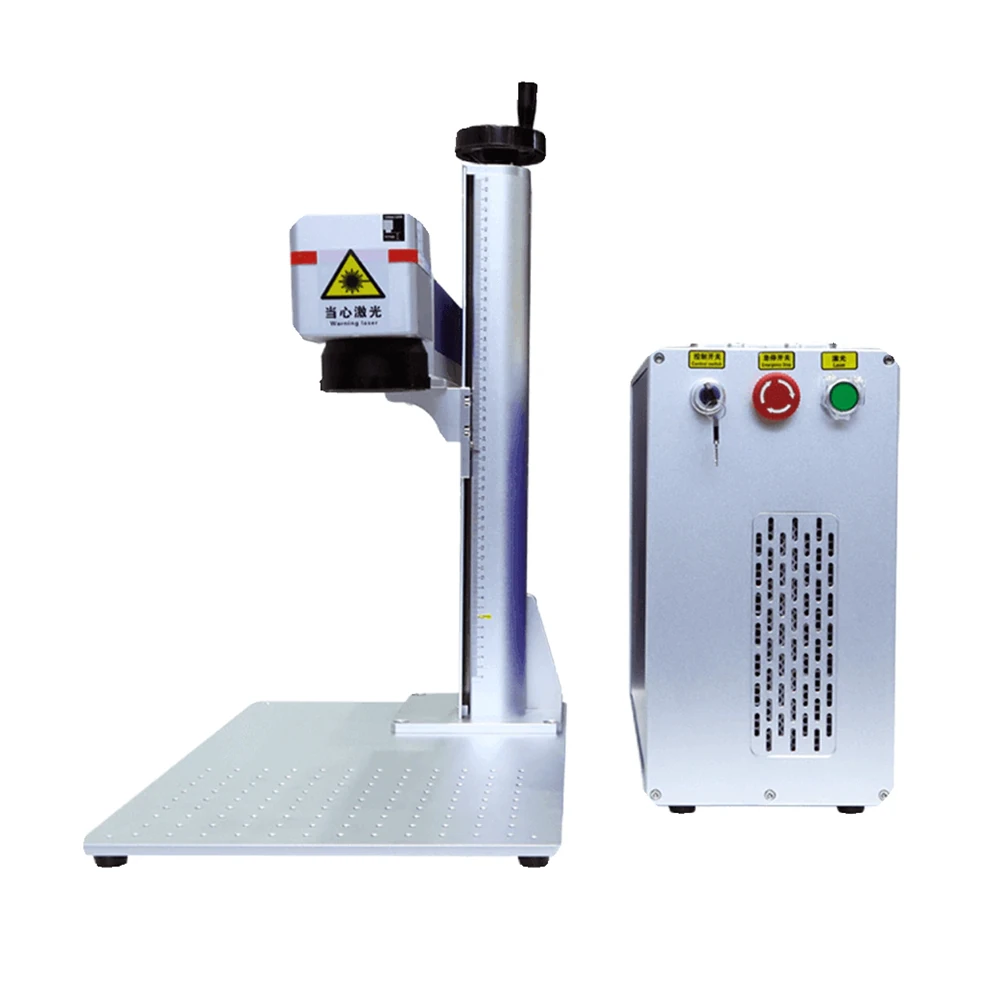
“We integrated the head onto a robot arm so the same machine marks three faces of a welded bracket in one cycle. The cabinet lives outside the cell, which keeps the optics clean and the footprint small. When the line changes, we move one pallet, not a whole station.”
Every machine is assembled, tested and packed before it leaves the factory, and support continues long after commissioning.
Air express by DHL, FedEx, TNT or UPS, plus air and sea freight for larger builds. Trackable from the factory door.
T/T bank transfer, PayPal and Western Union. Terms and Incoterms are confirmed on the proforma invoice.
Two-year free warranty covering parts, with free replacement components and lifetime technical support.
Engineers install and test every unit before dispatch; the remaining small parts are covered by a training video and manual.
A 30W fiber laser engraver is at its best on metals. With adjustable output it etches fine patterns and text into stainless steel and aluminium, and it also marks some plastics such as ABS. It is not suited to most non-metals such as wood, paper, leather and fabric, which normally need a different laser type.
Fiber sources are known for durability and long life. The machine can run for hours before a short cooling interval, then returns to full power within minutes. The theoretical service life of the fiber laser source reaches 100,000 hours.
A CO2 laser is a gas laser with a typical life of 2,000 to 20,000 hours and is mainly used for non-metals such as wood, leather, plastic and acrylic. A fiber laser uses fiber technology for a longer working life, wider versatility and is designed for marking metals.
If a separated head is not what your line needs, compare these builds from the same marking platform.
Source, controller and display in one compact body for fast deployment on a bench or trolley.
View model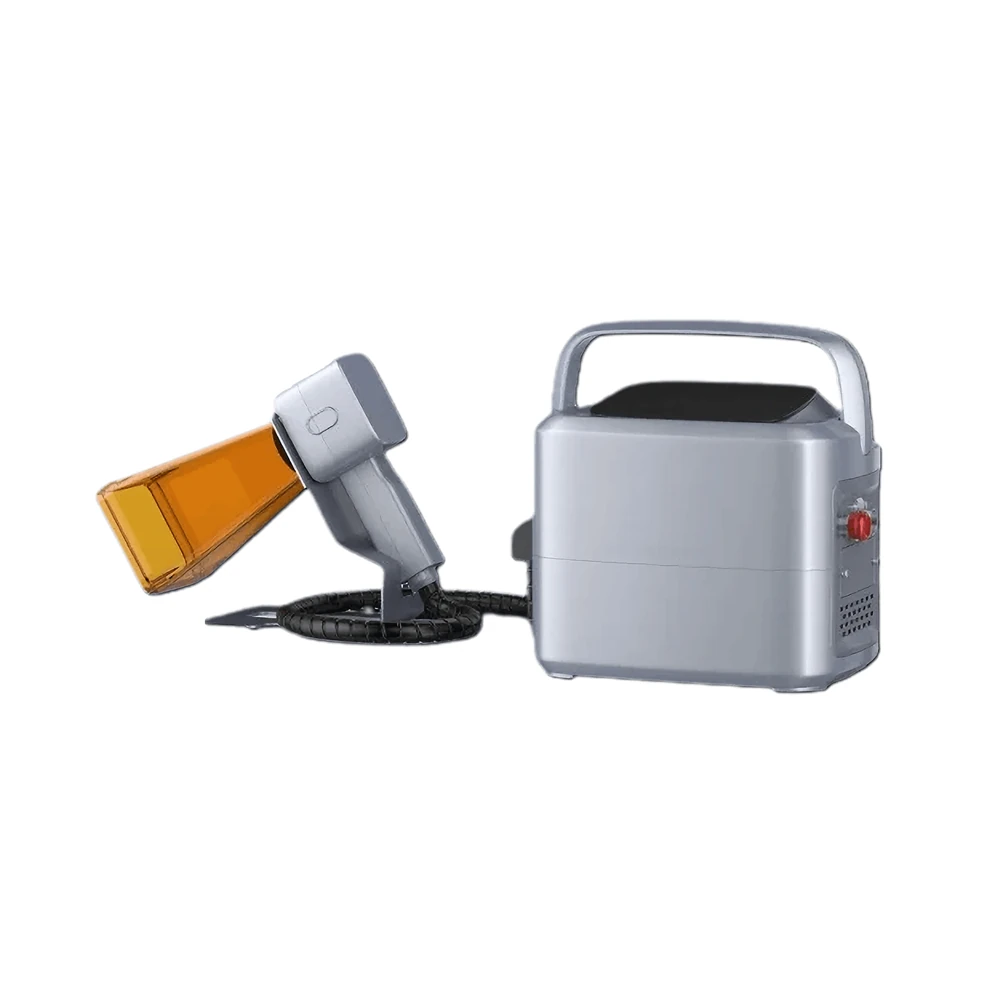
A 1.25 kg marking gun and battery option for parts that never leave the fixture or the site.
View model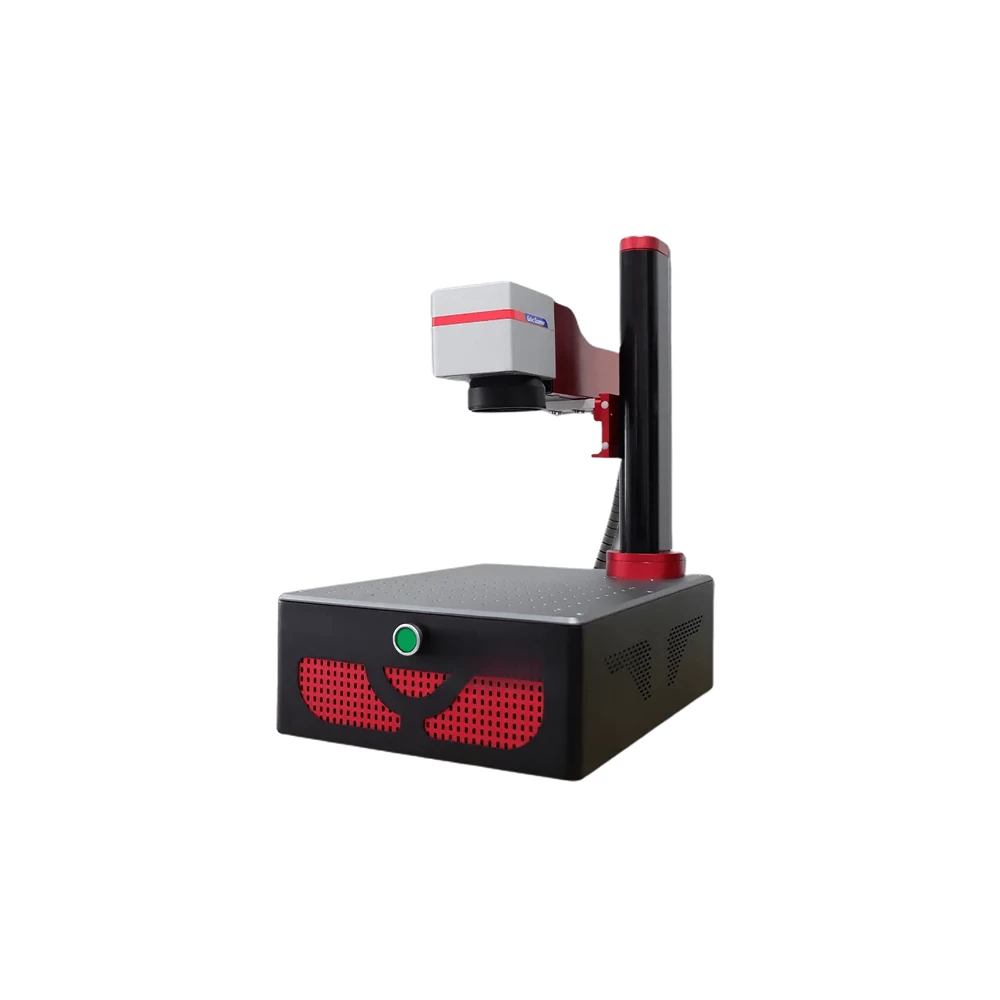
A folding column and rotating head that packs down for workshops with limited space.
View model