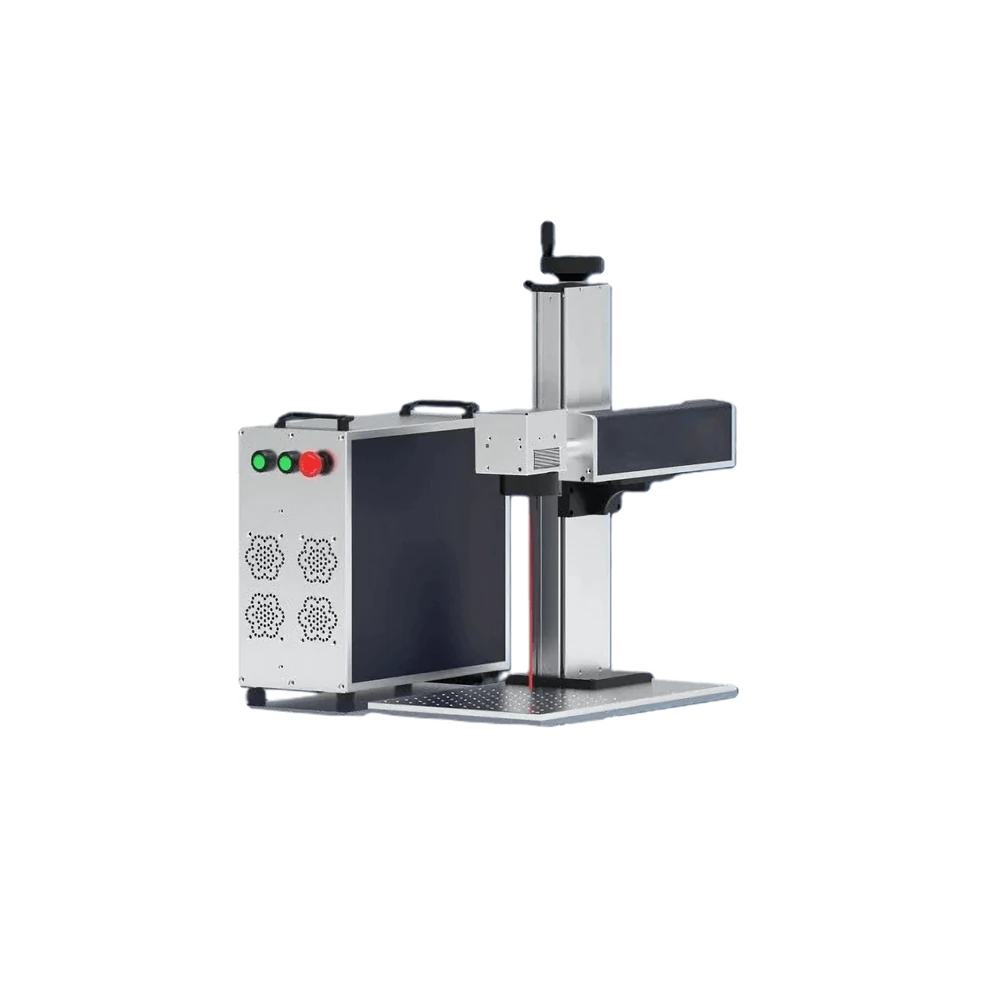
Split Fiber Laser Marker
A separate head and cabinet from 20W to 100W, for gantry, robot or conveyor integration.
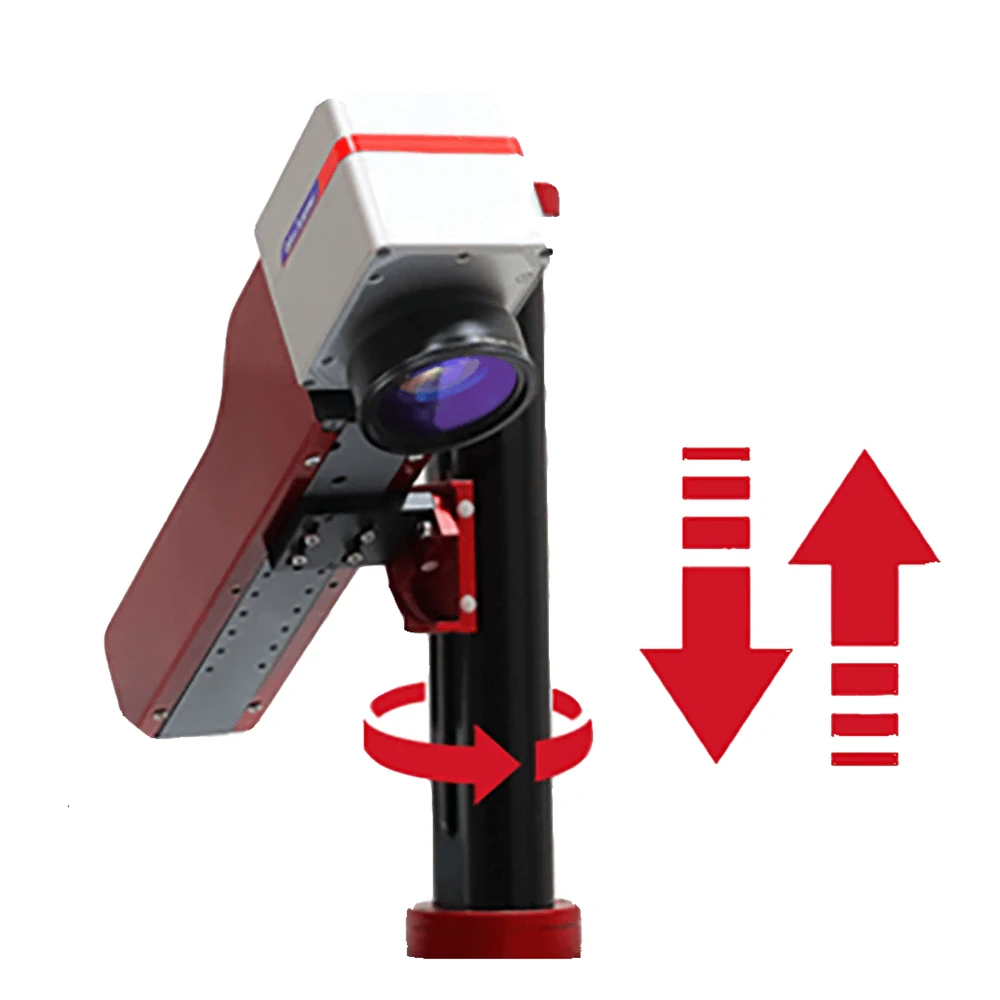
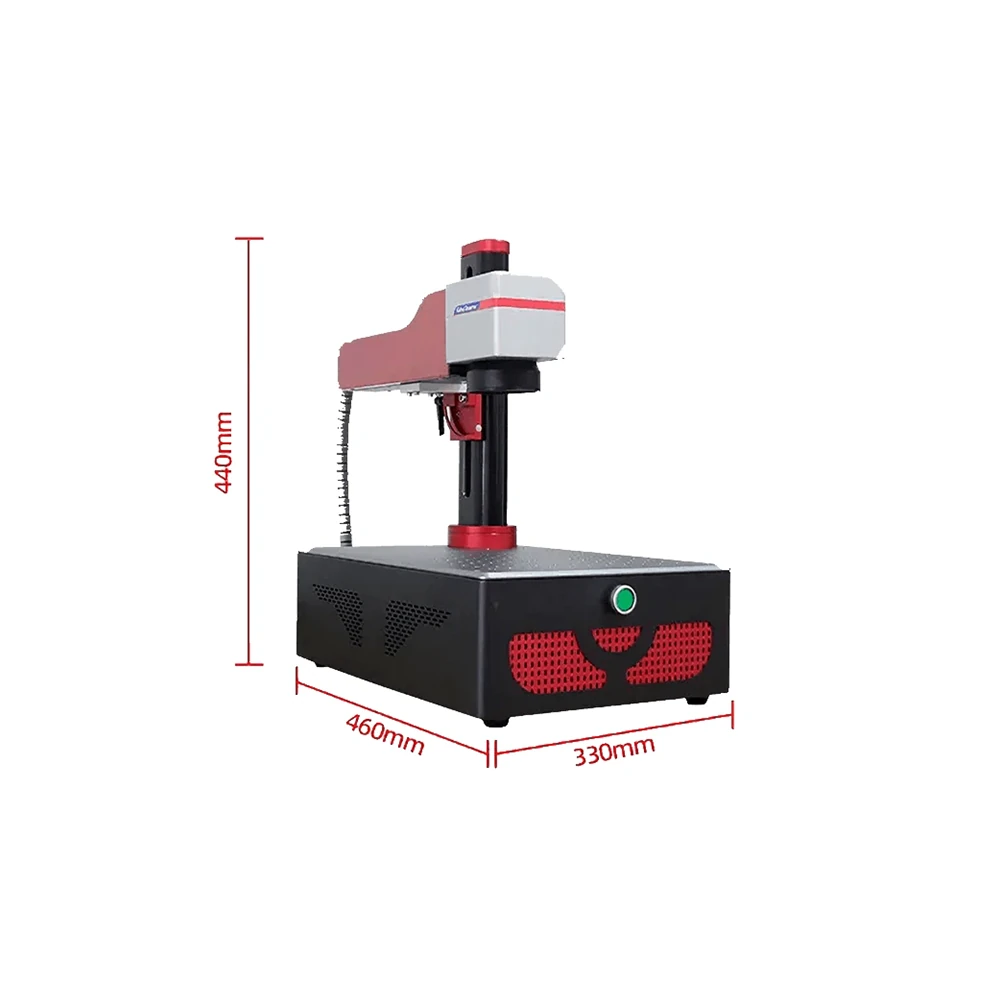
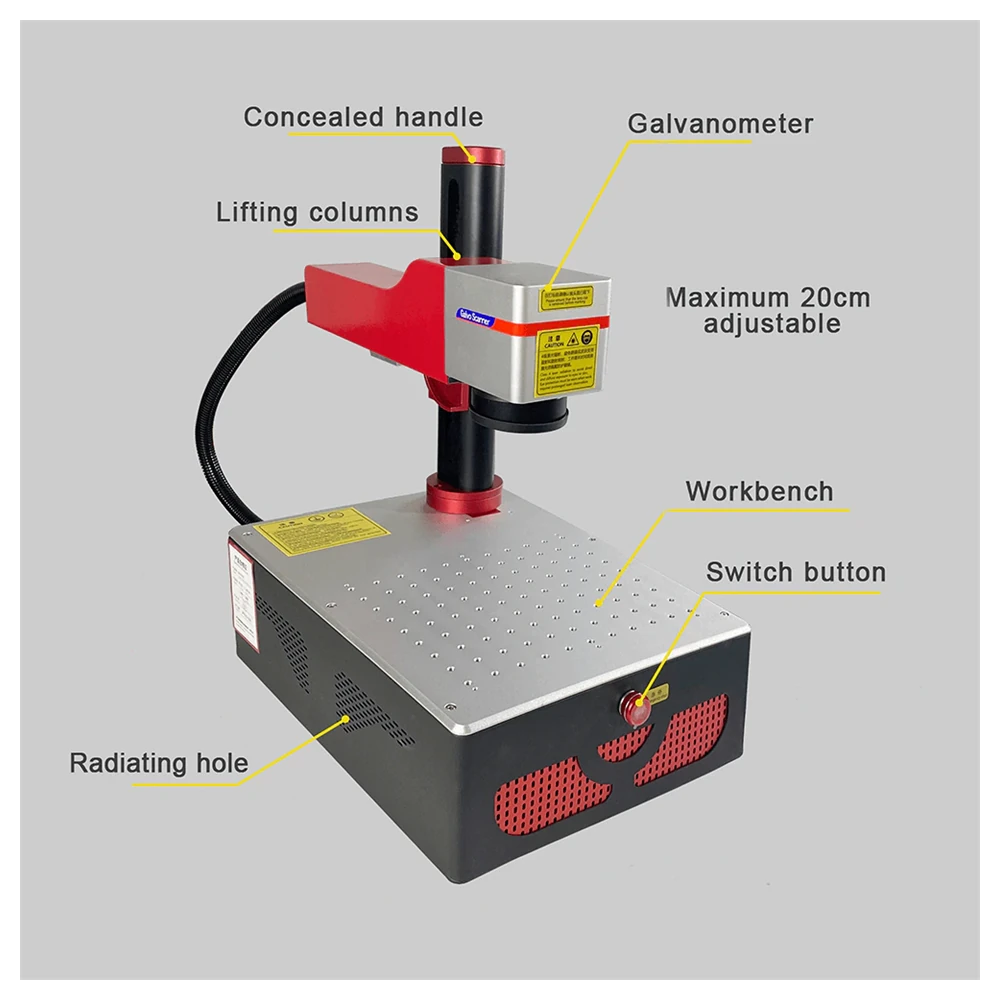
View modelA full fiber laser marking bench that folds into a 680 × 420 × 380 mm frame and travels at about 21 kg. Unfold the column, set the height on the 400 mm lift and the head swings through 360 degrees to reach every face of the part — then fold it back against the wall.
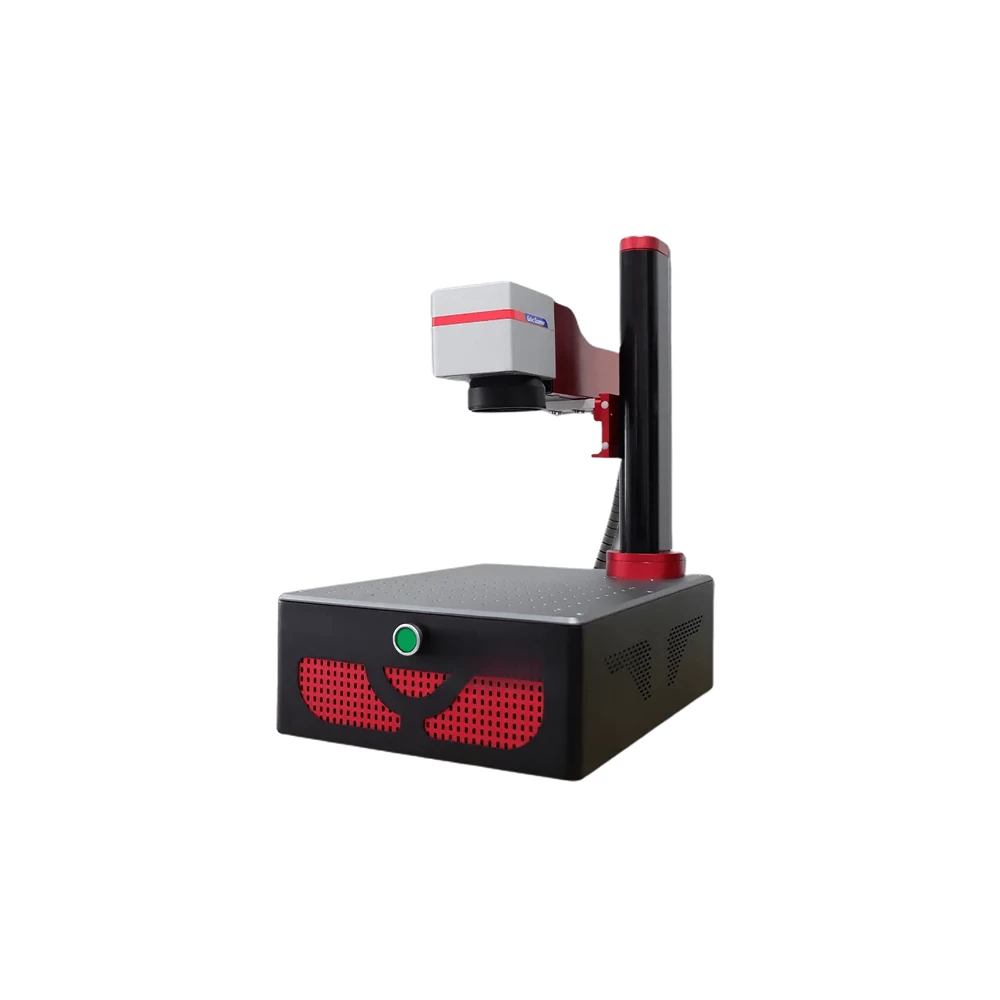
Most small workshops that want a fiber marker do not have a spare bench to give it. This design folds the column and swings the head out of the way, so the machine lives in the space of a tool chest and unfolds into a working marker when a job arrives.
The same frame in its two states. Folding removes the working envelope for shipping; unfolding restores the full marking reach.
| Measure | Folded for transport and storage | Unfolded for marking |
|---|---|---|
| Frame footprint | 680 × 420 mm base | 680 × 420 mm base |
| Overall height | 380 mm, head stowed | Column raised on the 400 mm lift |
| Marking field | Not in use | 100 × 100 mm up to 150 × 150 mm |
| Head reach | Folded back to the frame | 360° horizontal, 90° vertical swing |
| Part height range | — | Set by the 400 mm Z travel |
| Whole machine mass | About 21 kg, one-person movable | About 21 kg, no change when unfolded |
| Typical use | Van transport, storage, shows | Bench, field and flexible-line marking |
The product introduction refers to 28 kg, while the technical parameter table states about 21 kg. The parameter table is authoritative and is used above.
Unfolding is a routine, not a rigging job. Most users are marking parts within a few minutes of opening the case.
Lift the frame onto the bench or stand, then unfold the column and swing the head forward into its working position.
Use the lift column to bring the lens to the right working distance for the part, anywhere within the 400 mm travel.
Import a .plt or .dxf file, set power from 10 to 100 percent and focus with the red pointer before the first pass.
Run the job, check the mark, then fold the head down and roll the machine away when the batch is finished.
What the folding format actually buys you on the shop floor.
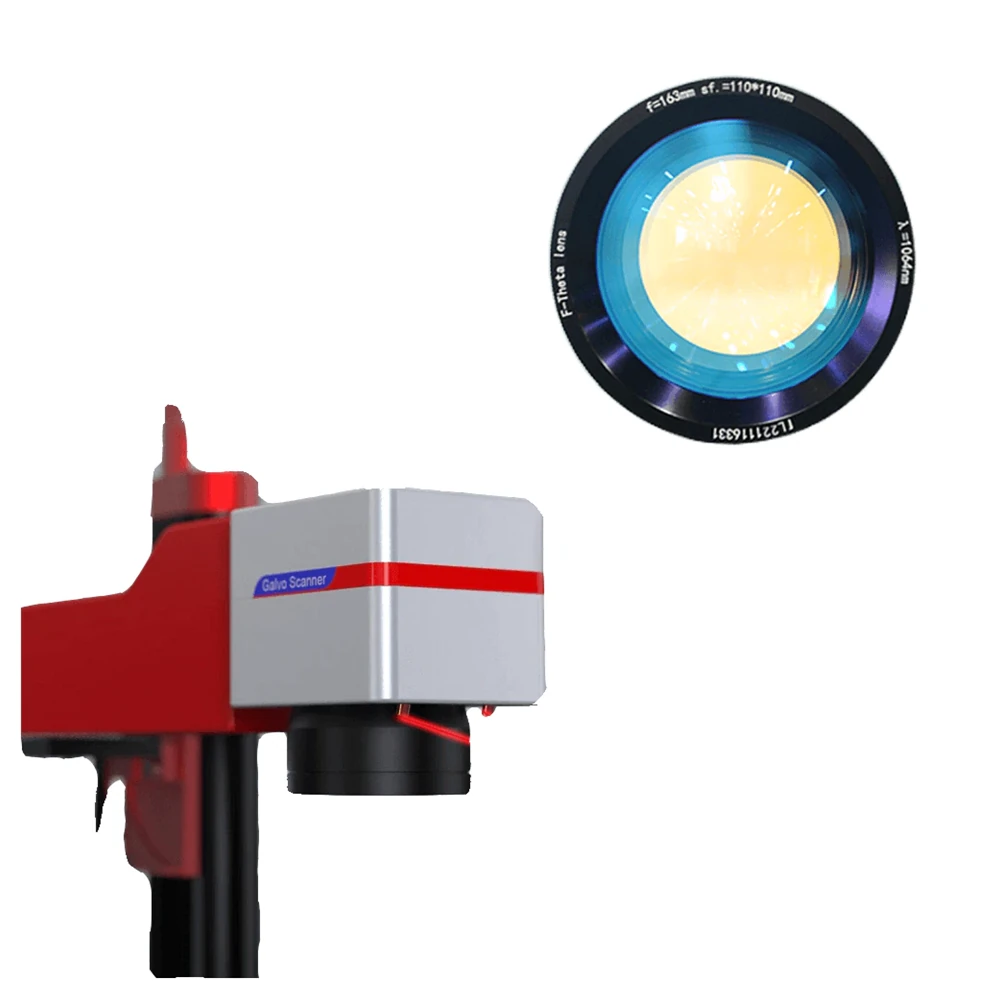
A proven scan head with fast response and small spot, giving high-precision marking and a spot diameter down to 0.02 mm.
The lift column adapts the machine to materials of different height, so taller parts never need a custom spacer.
Power is set from one control across a 10 to 100 percent range, keeping the interface simple for new operators.
A fiber source rated to 100,000 hours and an air-cooled design mean no ink, no consumables and very little upkeep.
Two power levels on one folding frame. Every figure below is taken directly from the machine datasheet.
| Parameter | KR-FF20 | KR-FF30 |
|---|---|---|
| Output Power | 20W | 30W |
| Laser Source | MAX / Raycus / JPT | |
| Galvanometer | SINO scan system | |
| Laser Wavelength | 1064 nm | |
| Marking Area | 100 × 100 mm to 150 × 150 mm | |
| Marking Speed | 0–1000 mm/s | |
| Power Adjustment | 10–100% | |
| Maximum Pulse Energy | 0.8 mJ | |
| Beam Diameter | 7 ± 0.5 mm | |
| Fiber Cable Length | 3 m | |
| Supply Voltage | 110V / 220V, 50/60 Hz | |
| Machine Power Draw | 460W | 490W |
| Cooling Method | Air-cooled | |
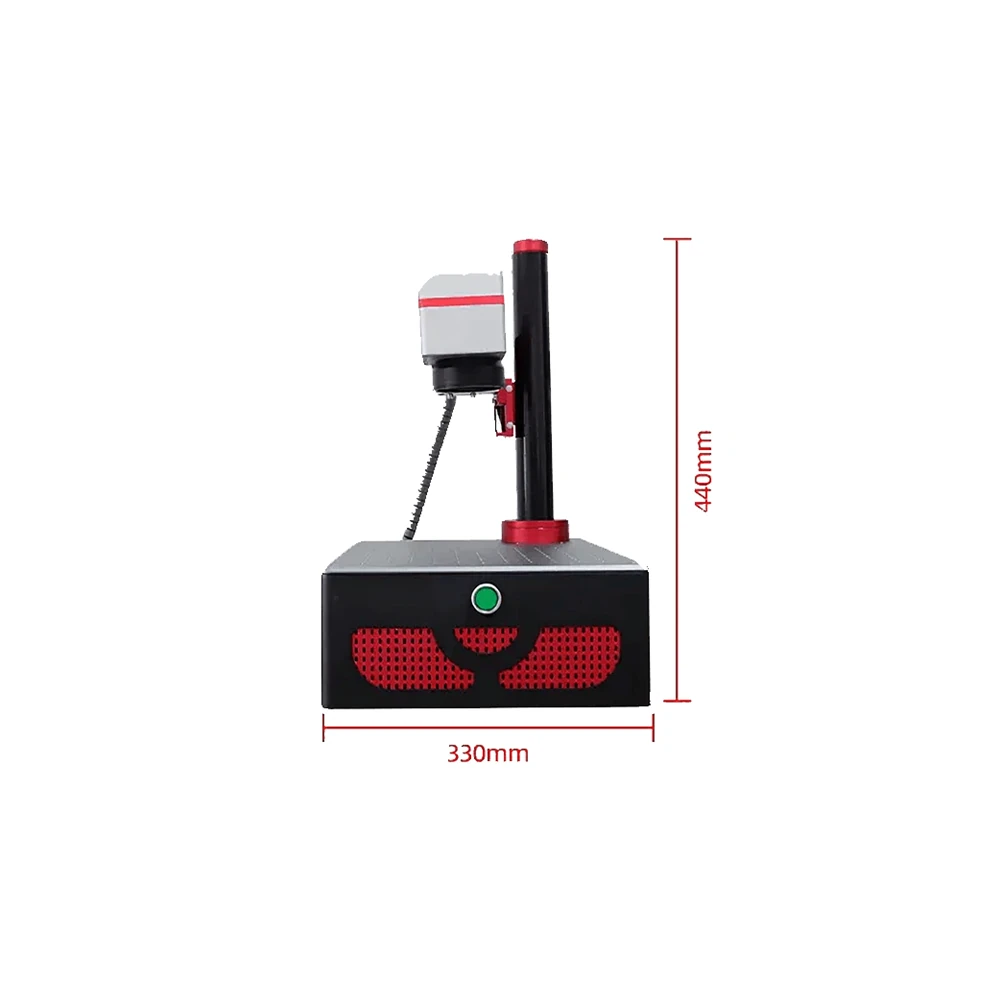
| Machine Dimensions | 680 × 420 × 380 mm | |
| Machine Weight | Approx. 21 kg | |
The 100 × 100 mm field is standard; the 150 × 150 mm field is an option. Power, working area and software configuration are confirmed per order.
Four figures that describe how the folding frame changes the way a small shop buys a laser.
One machine for the jewellery bench, the maintenance van and the line that keeps changing.
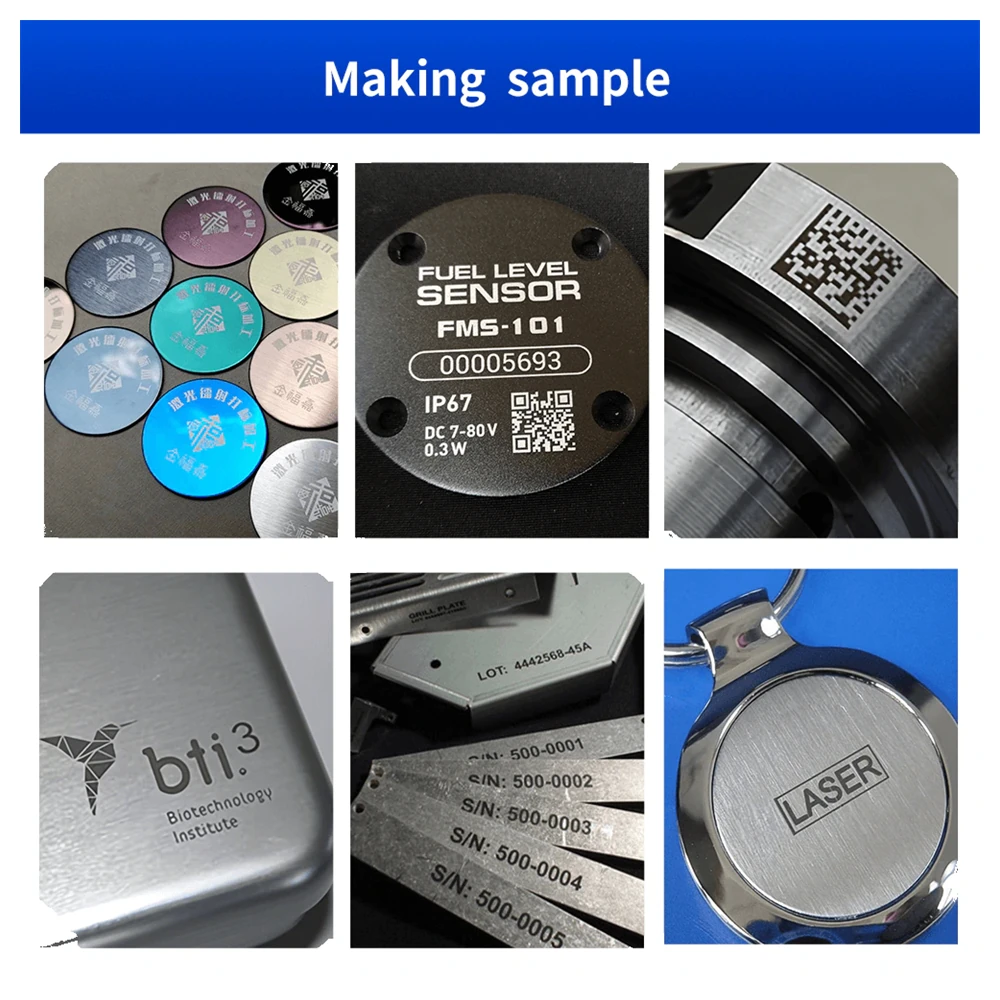
Fine logos, hallmarks and personalisation on rings, cases and watch components at a bench that folds away after use.
Serial numbers, logos and grade codes on hand tools, bearings, moulds and fasteners in mixed batches.
Ideal for exhibitions, on-site jobs and flexible lines where a fixed machine would never fit or justify the floor space.
The machine is versatile and marks metals such as steel, aluminium and copper, plus plastics, ceramics and some types of glass. The material choice affects the laser configuration and the power settings.
It uses a high-power fiber laser to etch or mark the surface of a material. The beam is focused and steered by the optical system to create precise marks such as serial numbers, logos or barcodes, and the high peak power of the fiber laser produces deep, lasting results.
The main advantages are portability, high marking speed, good accuracy and very low maintenance. The compact frame can be transported easily or integrated into an existing production line, which suits mobile marking work.
The service life of a fiber laser is typically around 100,000 hours, depending on use and maintenance. Such a long life means the laser can run for years without a noticeable drop in performance.
Common types include laser engraving, laser etching, laser annealing, laser carbon migration and laser foaming. Each type differs in depth, contrast and durability, which suits different applications.
Yes, when the correct safety rules are followed. Most machines include safety features, and operators should wear protective glasses and avoid direct contact with the laser beam to prevent injury.
If a folding frame is not quite the right fit, these nearby models share the same platform.
A separate head and cabinet from 20W to 100W, for gantry, robot or conveyor integration.
View model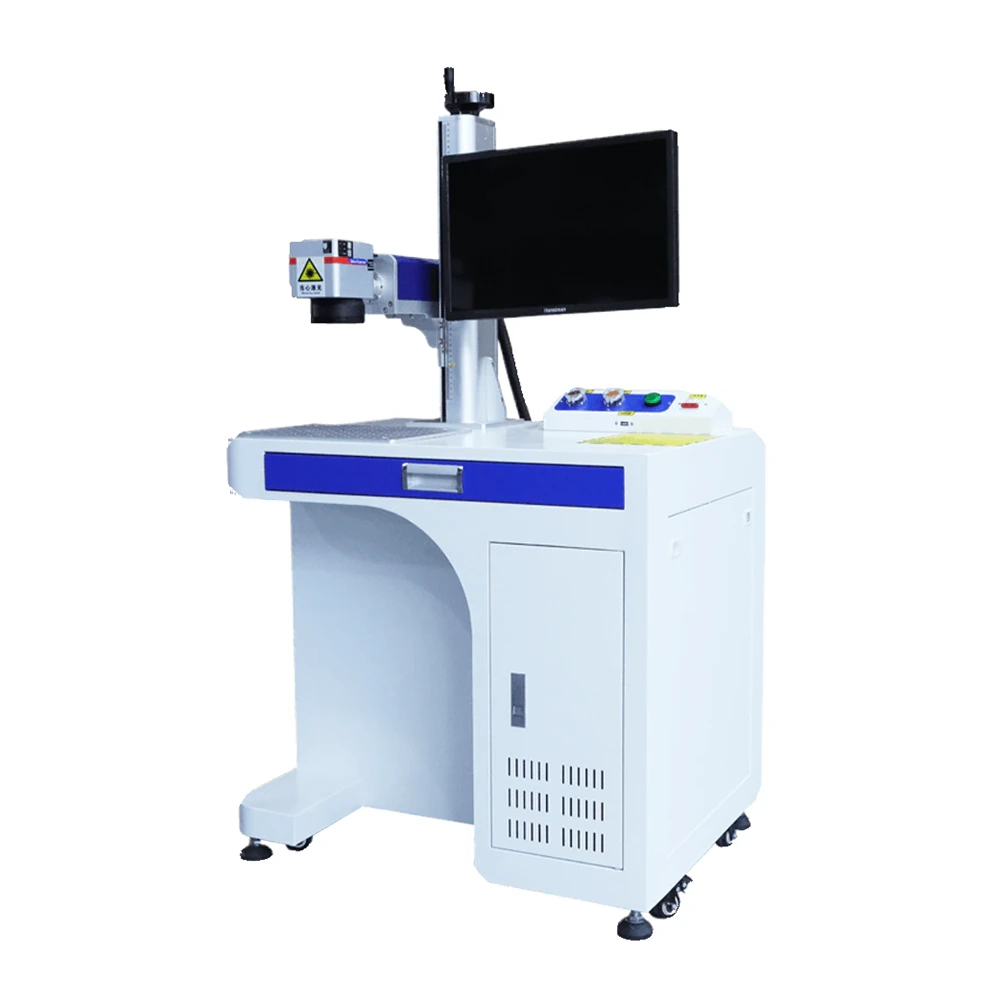
An enclosed Class 1 unit with a motorised column for batch marking of small parts.
View model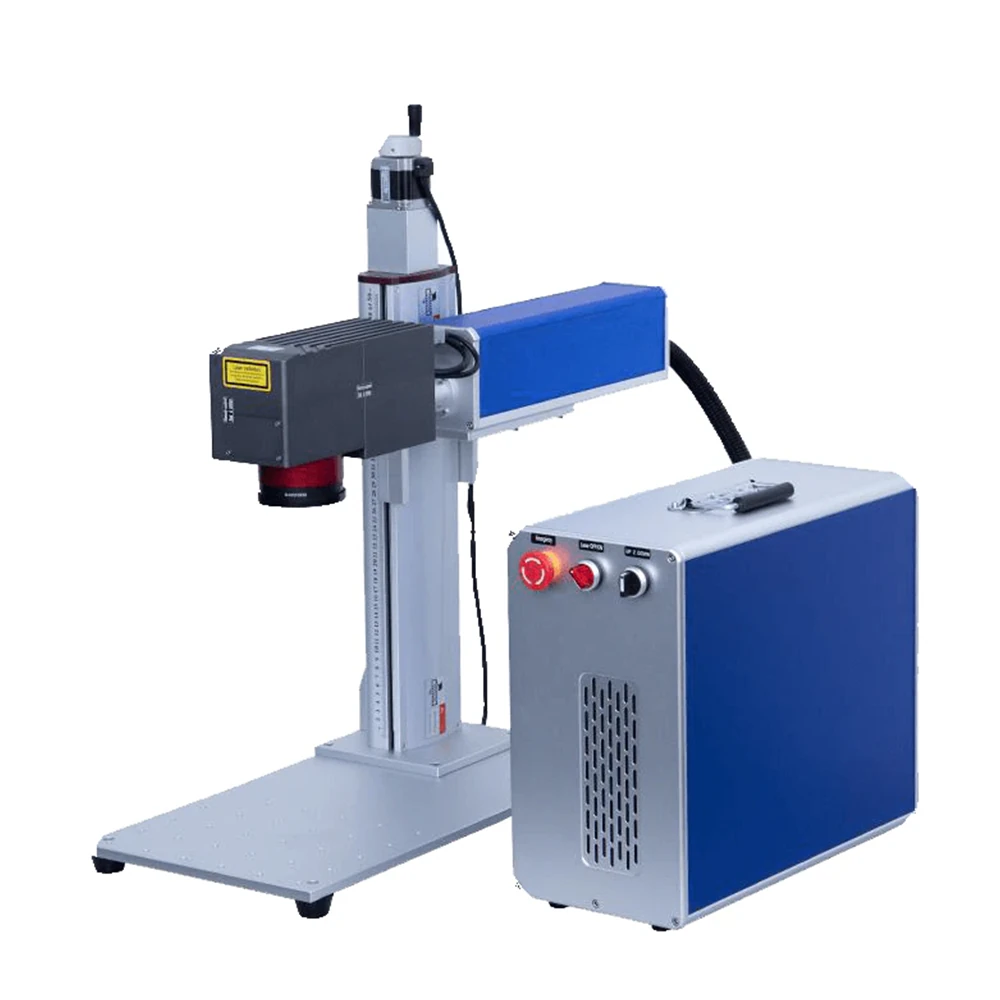
A compact 3D marker for curved and stepped surfaces that a flat field cannot cover.
View model