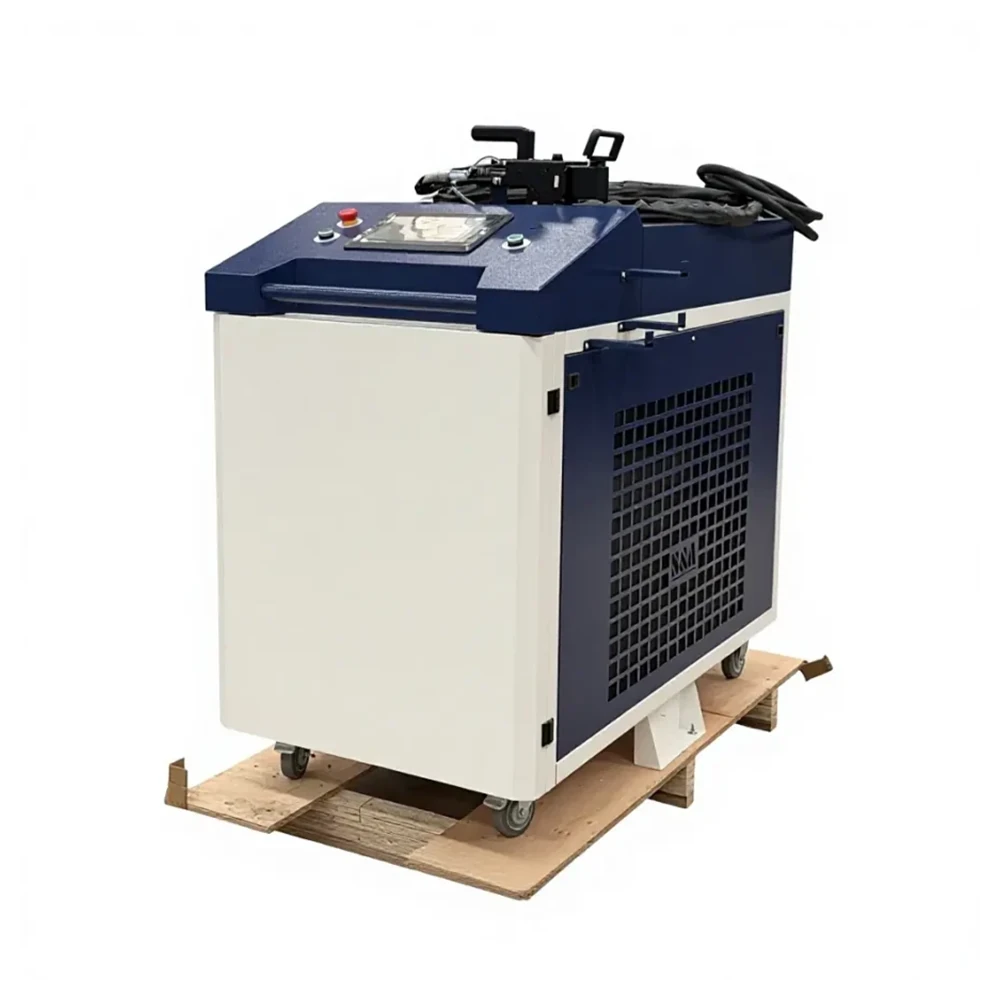
6000W Continuous Laser Cleaning System
Double the average power and a 100% duty cycle for ship hulls, tanks and the largest steel surfaces.
View modelWhen the contamination is measured in millimetres rather than microns, average power does the work. This continuous-wave platform is built from 1500W to 3000W to strip heavy rust, multi-layer paint and burnt grease from carbon steel, stainless and cast iron. A beam up to 300 mm wide covers large areas quickly, and the integrated water chiller holds output stable through a full shift of structural or marine cleaning.
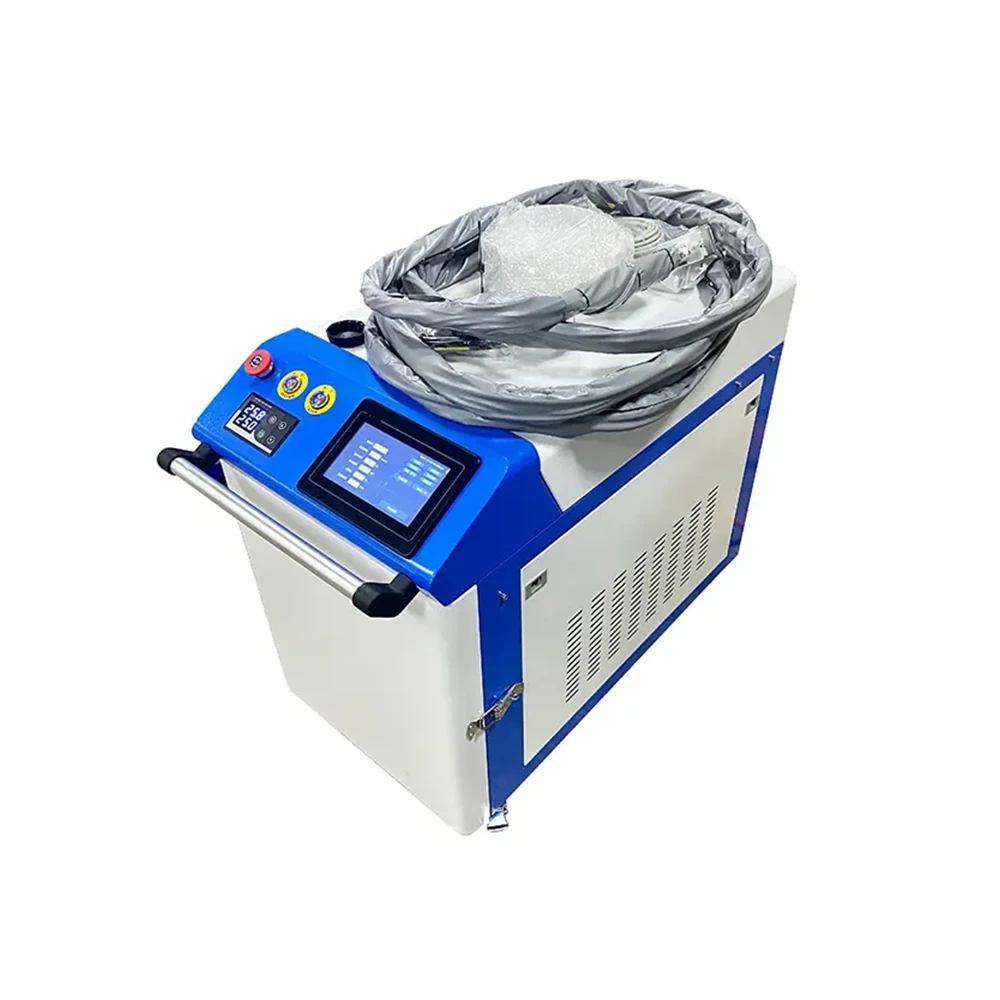
Low-power laser cleaners remove oil film, light oxide and mold release agent well. Removing rust measured in fractions of a millimetre over square metres is a different problem, and it is solved with a continuous beam and enough average power to keep the beam moving.
The chassis, head and control system are shared. Power, beam width, cable length and cooling capacity scale with the model.
| Parameter | 1500W Model | 2000W Model | 3000W Model (Pro) |
|---|---|---|---|
| Laser Source | MAX / Raycus / IPG | MAX / Raycus / IPG | MAX / Raycus / IPG |
| Cleaning Width | 0–150 mm | 0–250 mm | 0–300 mm |
| Fiber Cable Length | 10 m standard | 10 m standard | 10 m standard, 15–20 m optional |
| Cooling Method | Water-cooled, integrated chiller | Water-cooled | Heavy-duty water chiller |
| Machine Weight | Approx. 180 kg | Approx. 220 kg | Approx. 260 kg |
| Typical Cleaning Rate | Suited to medium rust and coatings | Higher throughput on the same work | 30–50 m²/h on heavy corrosion |
| Best Fit | Workshop and job-shop cleaning | Fabrication and repair yards | Shipbuilding, tanks and large structures |
Cleaning rate varies with contaminant thickness, material and the finish required. A free test on your own sample confirms the tier and settings before the order is confirmed.
The business case is rarely about speed alone. It is about handling, waste, operator safety and the repeatability of the surface.
No grit, no dry ice, no solvent. The system runs on mains electricity and eliminates the media supply and disposal chain.
Power, scan speed and beam width are set so the beam removes contamination rather than base metal, keeping part dimensions stable.
Assembled frames, installed pipework and welded structures are cleaned on site instead of being rigged to a blasting booth.
The water chiller keeps the source inside its thermal window, so the last square metre is cleaned like the first.
Four figures that describe how much work the machine gets through in a shift.
The machine ships assembled and chiller-charged. A trained operator cleans production parts on the first day.
Choose the working width from 0 to 300 mm for the area and access available, then set power and scan speed.
Sweep the handheld head across the surface at a steady distance, using the double-click trigger to fire.
Rust, paint and grease vaporize on contact; heavier areas are covered with a second overlapping pass.
Check the profile, then move straight to priming, welding or inspection while the surface is still clean.
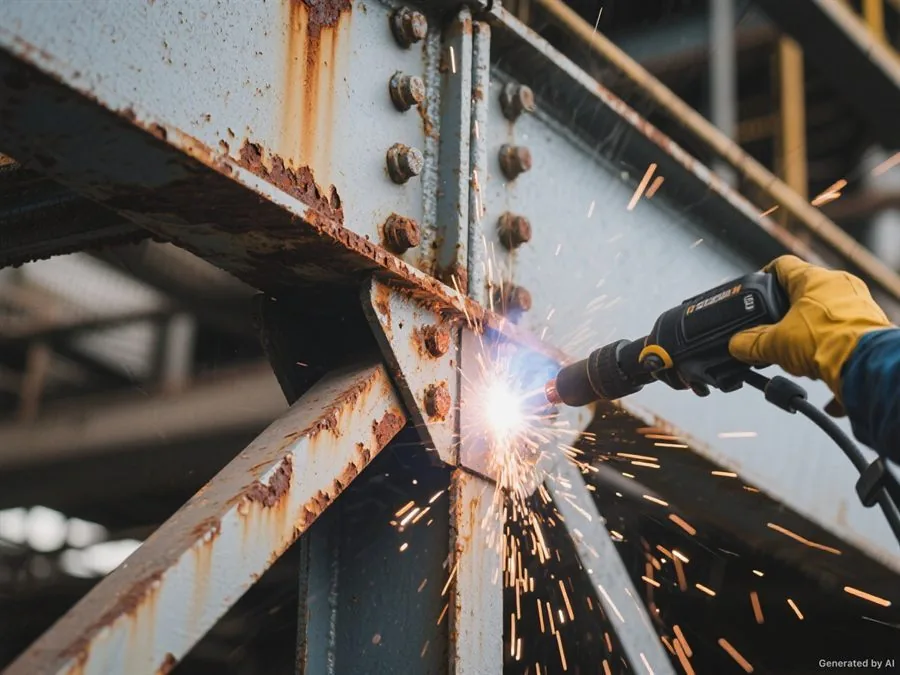
Large surfaces, thick layers and tight schedules are the three conditions that favour continuous-wave laser cleaning.
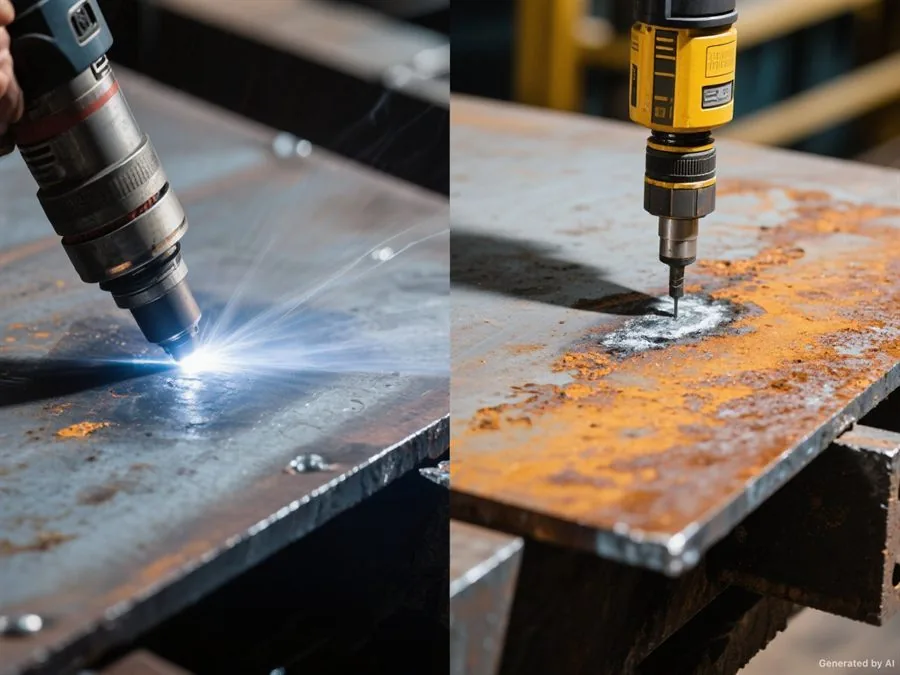
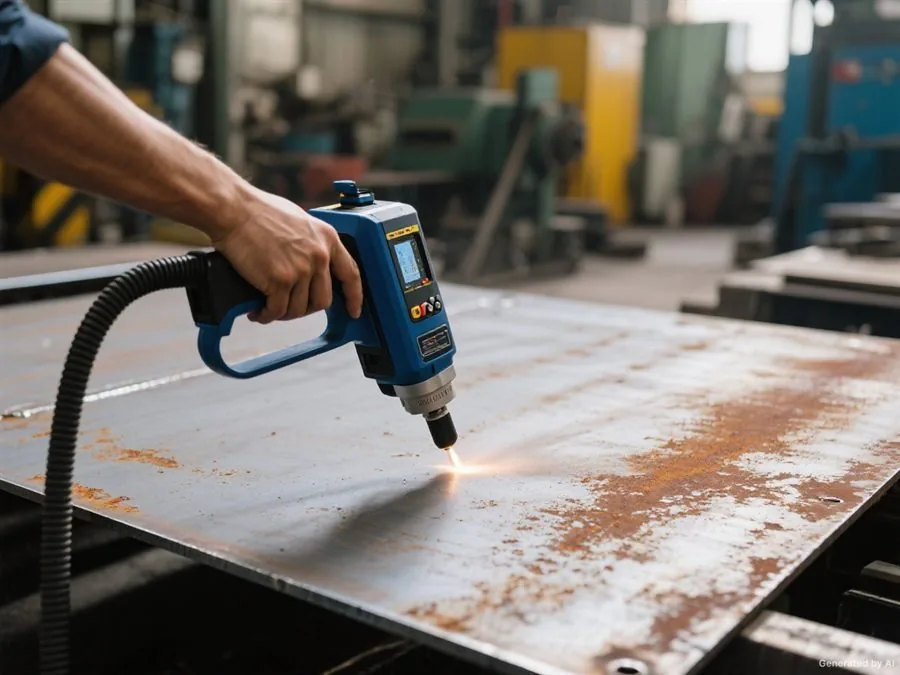
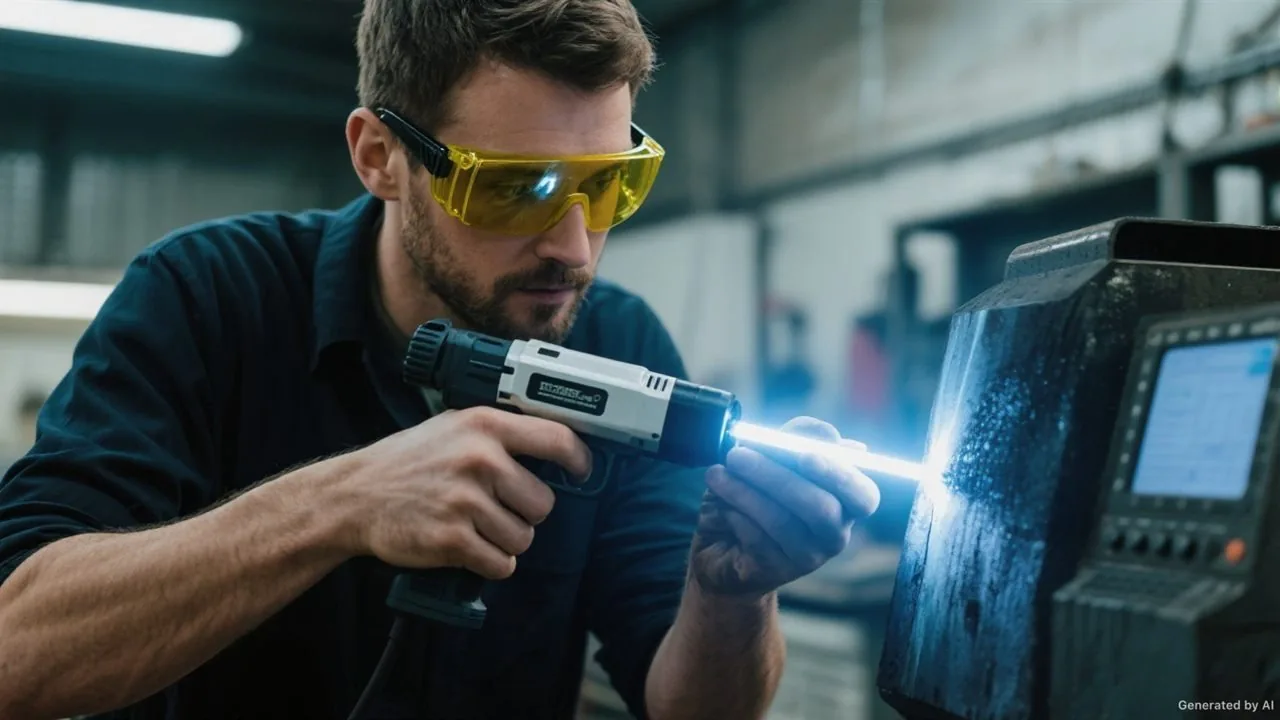
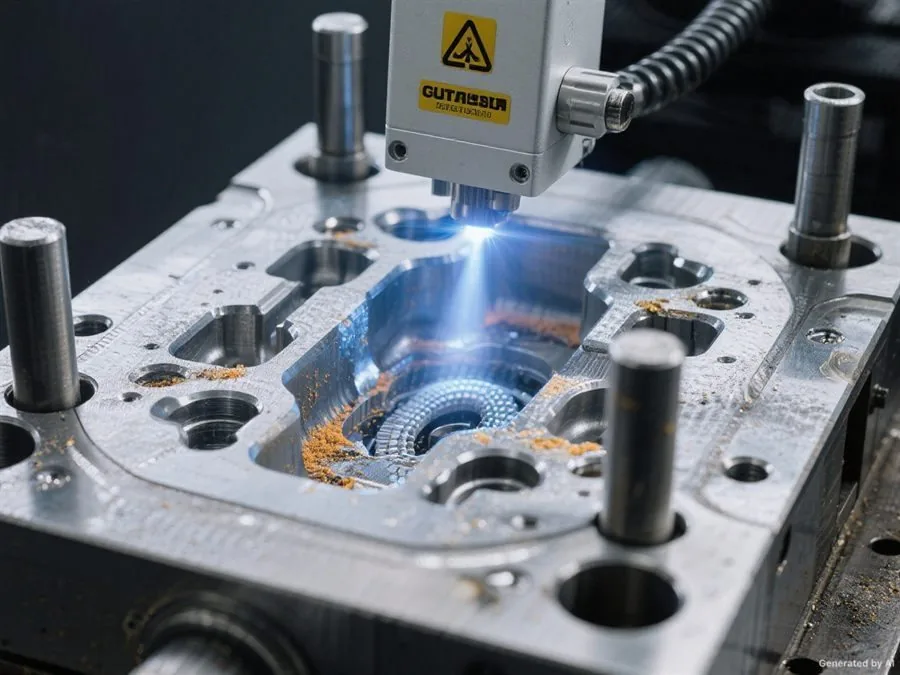
Rapid removal of heavy oxide from carbon steel plate, pipe and pressure equipment before coating or welding, with no media embedment in the surface.
Ideal for vehicle chassis, ship hulls and aviation parts, where chemical strippers would attack the substrate or create hazardous waste.
Deep cleaning of engine components and gears before assembly, vaporizing oil films that would otherwise contaminate a joint.
Pre-weld preparation and post-weld oxide removal, an effective companion to a handheld fiber laser welding machine.
The comparison below is about waste handling, substrate impact and repeatability rather than a single headline speed figure.
| Characteristic | Laser Cleaning (3 kW) | Sandblasting | Chemical Cleaning |
|---|---|---|---|
| Speed | Very high, up to 50 m²/h | High | Low |
| Consumables | None beyond electricity | Grit and media with disposal | Chemicals with disposal |
| Waste Stream | Small volume of filtered dust | Large media and dust volume | Hazardous liquid waste |
| Substrate Impact | Controllable by parameter | High, removes base material | Moderate, risk of attack |
| Works In Place | Yes, with a long fiber cable | Requires containment or a booth | Requires containment and rinse |
| Result Consistency | Repeatable with stored settings | Operator dependent | Batch dependent |
Terms are confirmed before production and support does not depend on shipping the machine back to the factory.
Export-grade crating for the power unit and chiller, with air and sea freight options and full tracking.
T/T bank transfer, PayPal and Western Union. Terms and Incoterms are confirmed on the proforma invoice.
Core components covered by a manufacturer warranty, with ready replacement parts and lifetime engineering support.
Remote commissioning, operator training and a documented safety brief for the whole team.
Removal rate depends on the thickness of the rust or coating. On heavy industrial corrosion and multi-layer paint the 3000W model cleans roughly 30 to 50 square metres per hour, well ahead of the 1500W model, and the finish approaches that of blasting without any media handling.
The continuous-wave source is chosen for removing thick rust, old coatings and stubborn grease from carbon steel and stainless parts. Surface temperature can rise during processing, so if a flawless finish with no thermal influence is the priority, a pulsed machine such as the precision water-cooled model avoids the temperature peak entirely.
Unlike blasting or chemical stripping there are no media or chemicals to buy and dispose of. Running the system needs only mains power, with the protective lens replaced every few months depending on use. Nothing has to be stored, mixed or neutralized.
The machine is built around several safety features: a double-click trigger to prevent accidental firing, an emergency stop that halts all functions, a key lock that limits access to authorised operators, and the requirement to wear OD6 or higher safety goggles while the unit is running, with the work zone screened.
Yes. The high-speed beam vaporizes oil, grease and oxide directly, so the weld zone is left free of the contamination that causes porosity. It pairs well with a handheld fiber laser welding machine for a clean, residue-free weld preparation step.
The standard fiber cable is 10 m, which covers most workshop tasks. For shipyards and outdoor installations a 15 m or 20 m cable is available so the operator can reach distant workpieces without moving the heavy power unit.
Heavy rust on carbon steel plate and pipework, paint stripping from vehicle chassis, ship hulls and aviation parts, deep cleaning of engine components and gears before assembly, and pre-weld or post-weld seam cleaning on large fabrications.
If your work needs finer control or even higher throughput, these models from the same range are worth a look.
Double the average power and a 100% duty cycle for ship hulls, tanks and the largest steel surfaces.
View model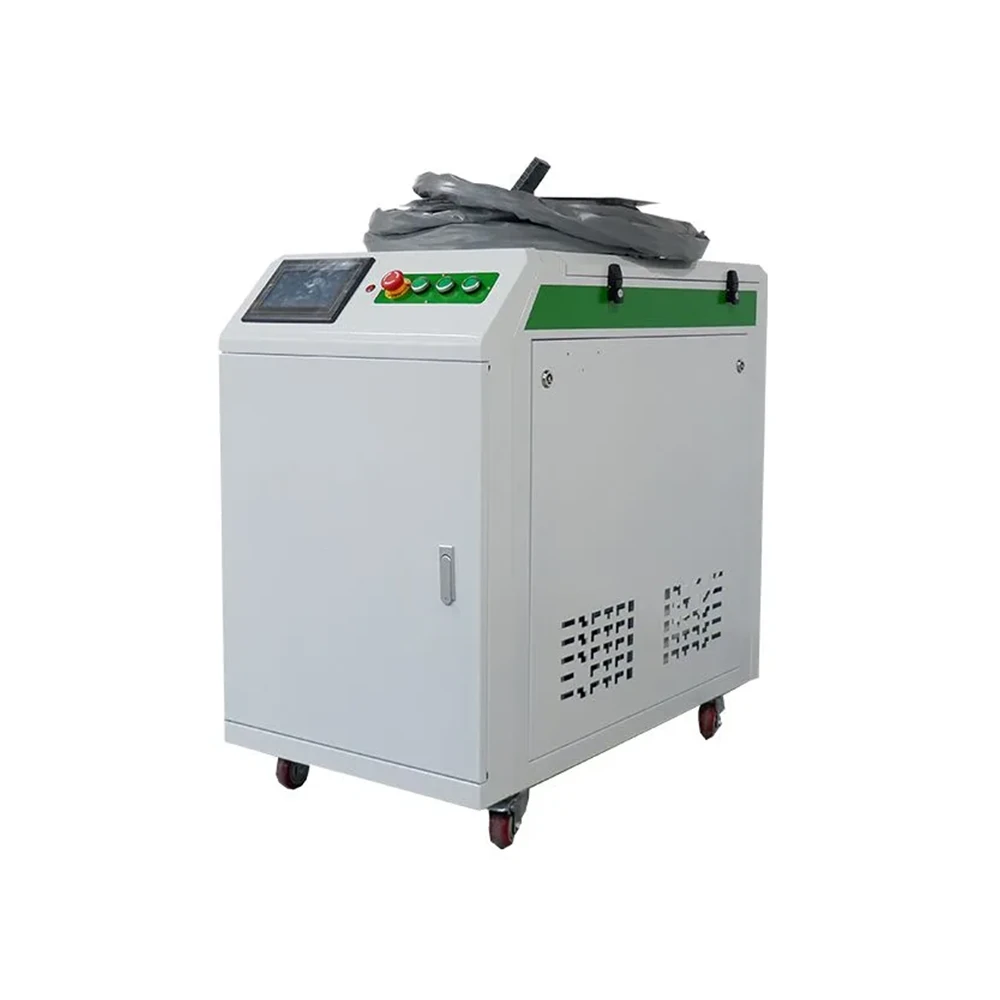
500W to 1000W pulsed output for delicate parts where heat must not reach the substrate at all.
View model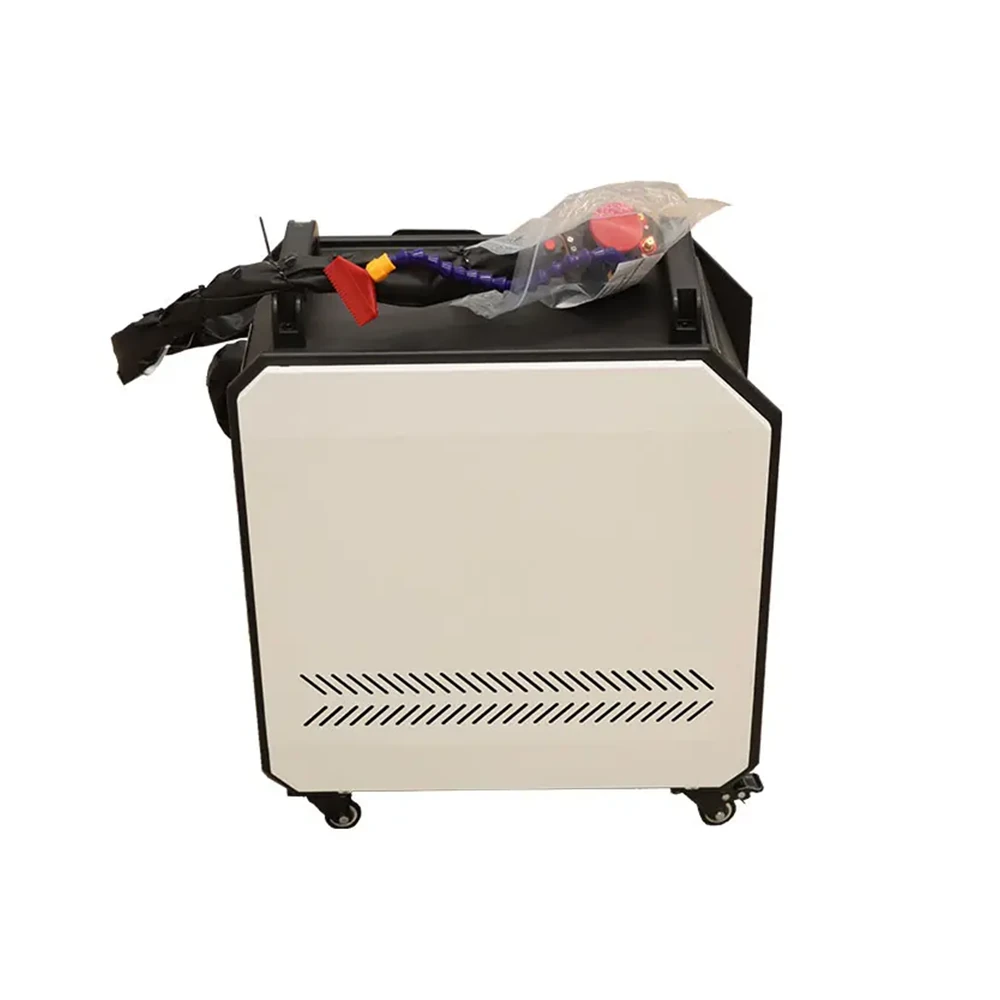
Portable MOPA unit for field service work where precision matters more than area coverage.
View model