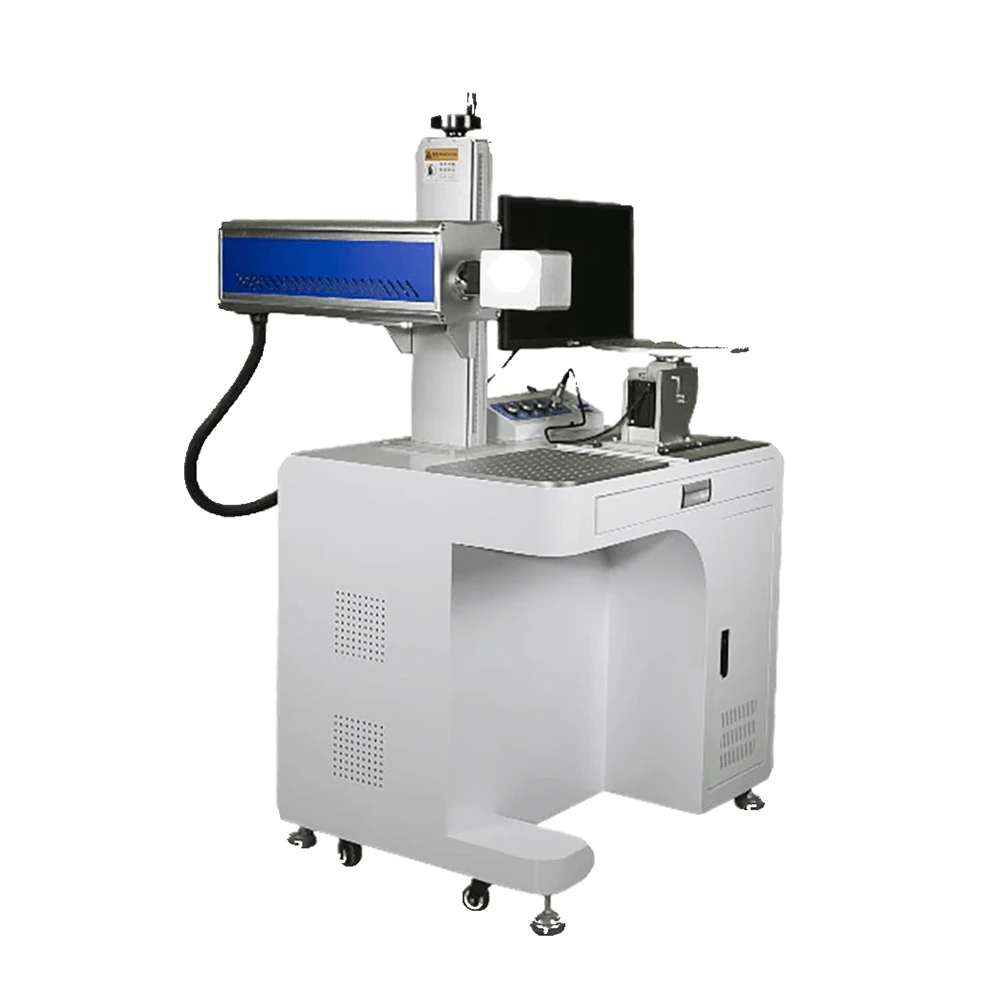
Desktop UV Laser Marker
An enclosed UV bench build with a motorised column for repeatable small-part marking.
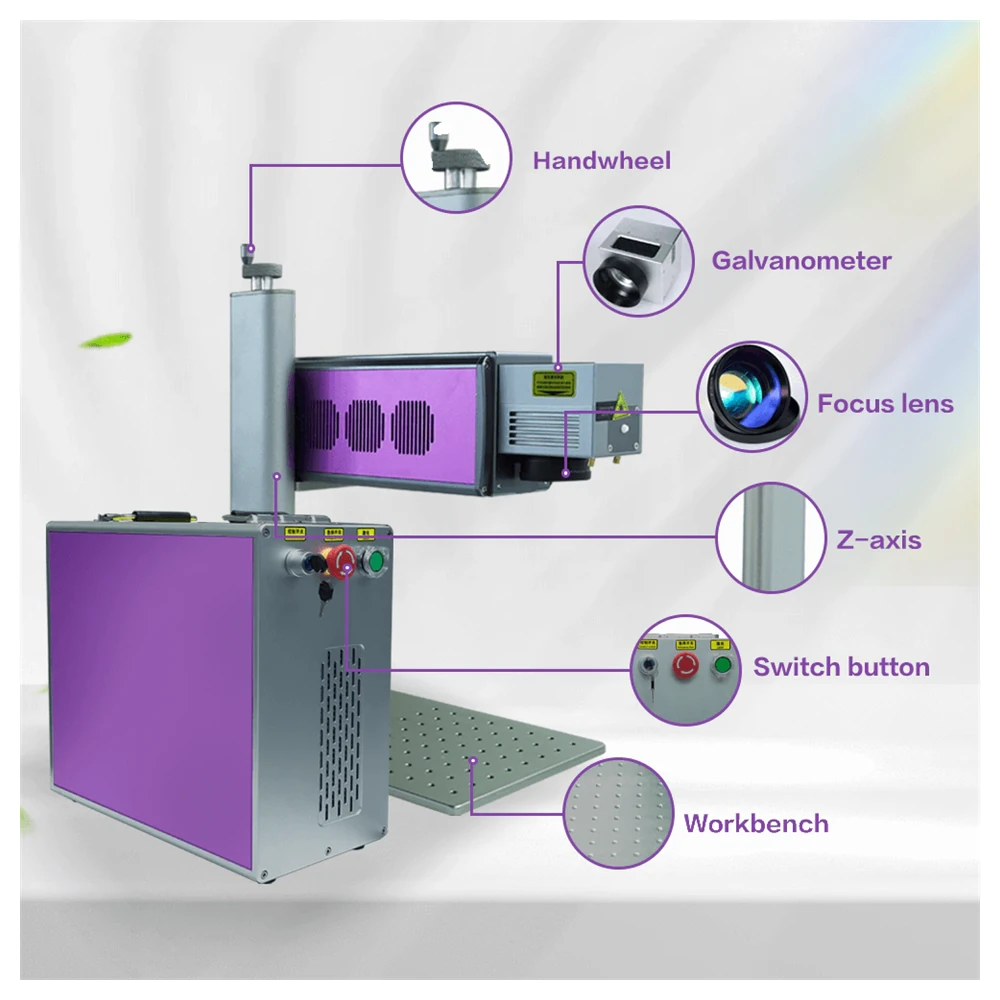
View modelAt 355 nm a UV beam breaks chemical bonds instead of boiling material away, so the mark arrives with almost no heat left behind. That cold process is what lets this marker work on thin plastics, glass, silicon and sterile medical parts — and the split head lets it reach into the tightest work envelope on your line.
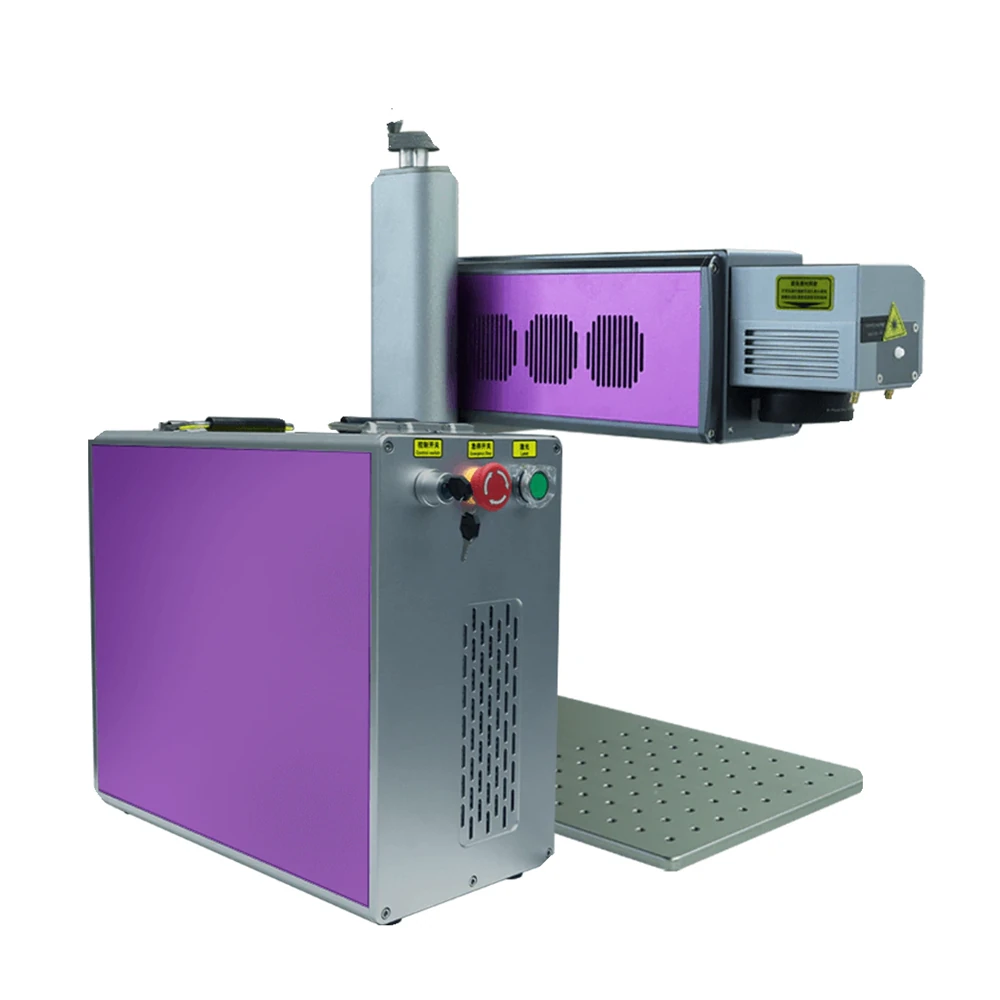
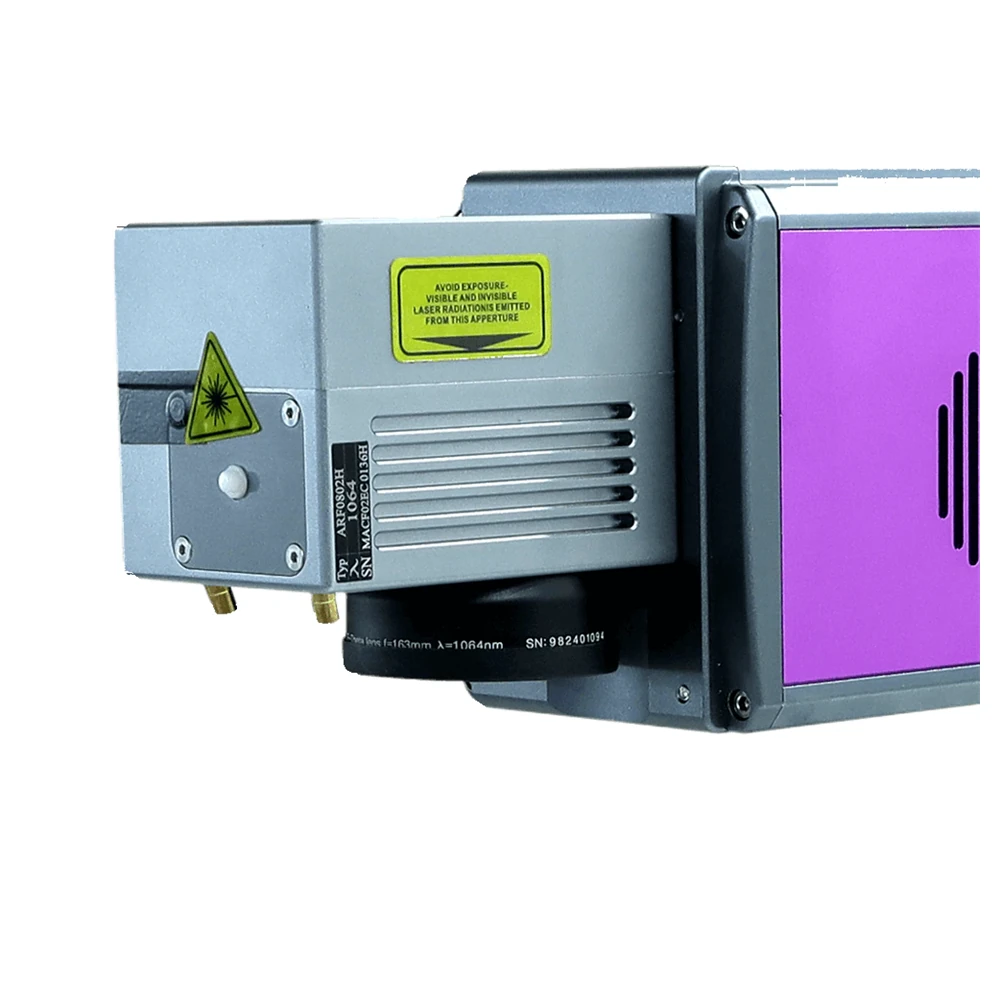
Shorter wavelength means a smaller focused spot and a photochemical reaction rather than a thermal one. The material is altered at the surface without a melt zone, which is why delicate substrates survive the process intact.
The same part marked by three wavelengths. The difference is how much heat the process leaves behind.
| Aspect | UV 355 nm (cold) | Fiber 1064 nm (thermal) | CO2 10.6 µm (thermal) |
|---|---|---|---|
| Interaction | Photochemical bond breaking | Surface heating and oxidation | Absorption and ablation |
| Heat-affected zone | Minimal | Localised melt zone | Wider heat zone |
| Thin plastics | Safe, no distortion | Risk of melting or charring | Risk of melting |
| Glass and silicon | Clean, crack-free | Poor absorption | Frosts the surface |
| Typical mark | Fine, high-contrast, shallow | Dark, deep, durable | Engraved, frosted |
| Best suited to | Heat-sensitive, small, regulated parts | Metals and hard plastics | Organics and coatings |
Comparison is a general guide. The right source depends on the exact substrate, and some parts need more than one wavelength across their process route.
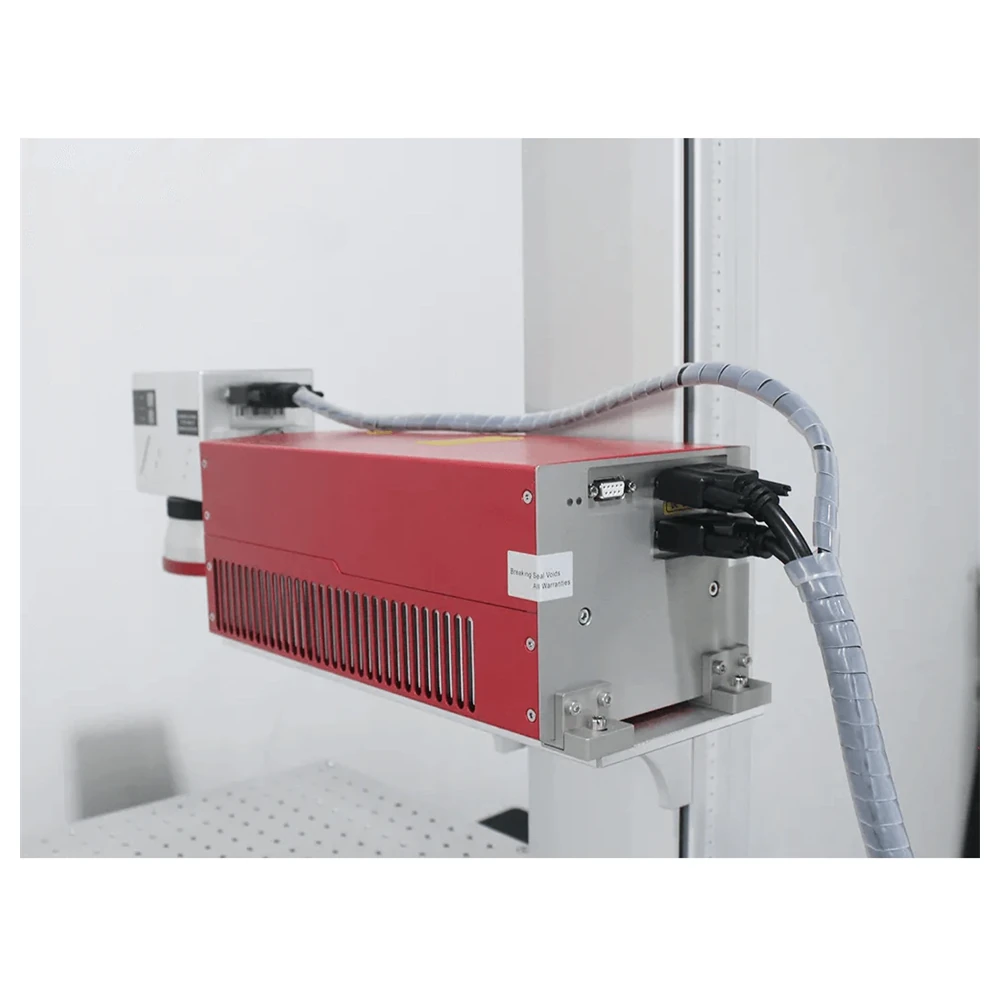
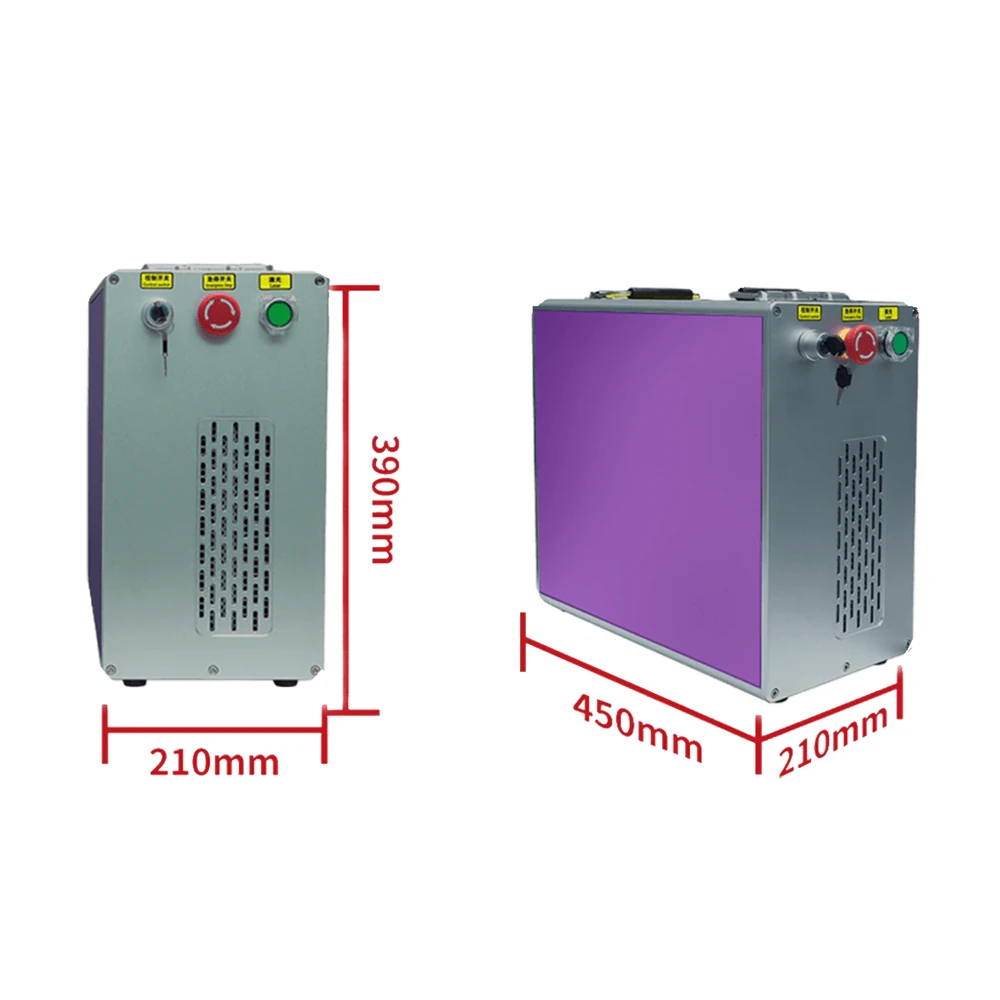
A UV marker is usually wanted in the places with the least room: inside a clean bench, beside a conveyor on a crowded line, or over a fixture that holds a part the size of a fingernail. Splitting the machine in two is how you win that space.
Where the cold process does what a thermal laser cannot.
Smooth, high-contrast frosted marks that stay elegant and durable without micro-cracking.
ABS and polycarbonate housings, plus circuit boards and fine electronic parts, marked precisely and cleanly.
Fine, durable patterns on anodized aluminium and other coated metals, with no damage to the substrate.
High-contrast wafer marking and permanent, crack-free marks on ceramic that preserve the material quality.
Three power levels at 355 nm on the same split chassis. Every figure below is taken from the machine datasheet.
| Parameter | KR-SU3 | KR-SU5 | KR-SU10 |
|---|---|---|---|
| Rated Output Power | 3W | 5W | 10W |
| Laser Source | JPT | ||
| Centre Wavelength | 355 nm | ||
| Frequency Range | 20–150 kHz | ||
| Marking Area | 110 × 110 mm | ||
| Beam Quality (M²) | ≤1.2 | ||
| Beam Diameter | 0.55 ± 0.15 mm | ||
| Supply Voltage | DC 12V | ||
| Galvanometer | RC7110 | ||
| Cooling Method | Air-cooled | ||
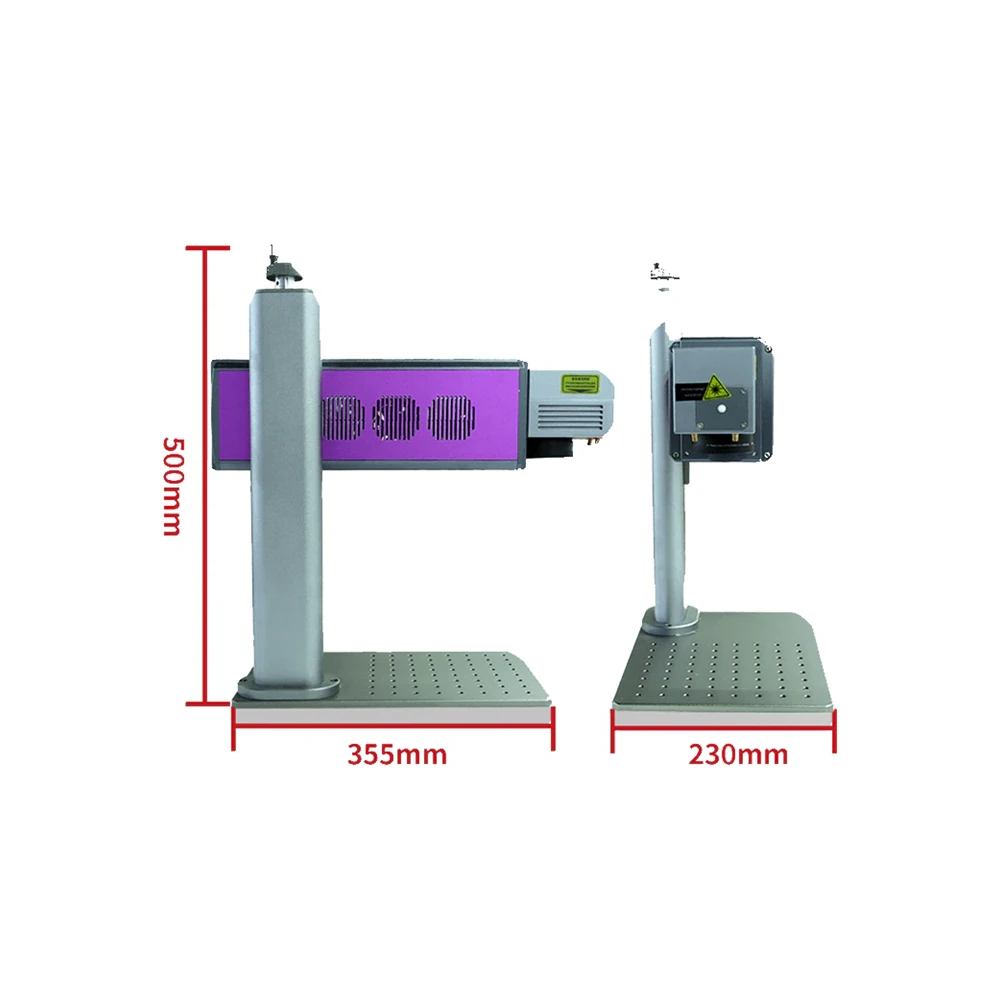
| Net Weight | 35 kg | ||
| Packing Dimensions | 780 × 690 × 490 mm | ||
The product introduction lists 3W and 5W options, while the technical parameter table also includes 10W, which is used above. One FAQ entry in the source refers to a water-cooled system; the parameter table specifies air cooling, which is used here. Confirm the final configuration on your order.
Four figures that shape what this UV platform can do.
Where traceability, cleanliness and a fine mark all have to hold at once.
Ideal for instruments and devices that need non-invasive, high-precision marking that stands up to sterilisation.
Small components, chips and packaging materials marked directly, improving appeal and meeting labelling rules.
Part tracking and aesthetic branding for automotive, and delicate patterns engraved on precious metals and gemstones.
Every unit is carefully wrapped in custom foam or padding, then fixed inside a solid wooden case or a high-strength corrugated carton with shock-absorbing material. This packing is built to survive rough handling and a long journey.
Yes. Our UV laser marking machines are covered by a warranty against quality problems and manufacturing defects, giving you confidence in the investment. The applicable term is confirmed in writing on your order.
Yes. We provide instructional videos, a detailed user manual and remote support to guide you and your team through setup and operation, so you can use every function of the machine.
Ordering is simple. You can order through our website or contact our customer service team. We hold a full inventory of parts and accessories and can help with installation or arrange a technician if needed.
Yes. Our technical team will discuss your requirements and configure the machine for a seamless fit into your production line, improving productivity and efficiency.
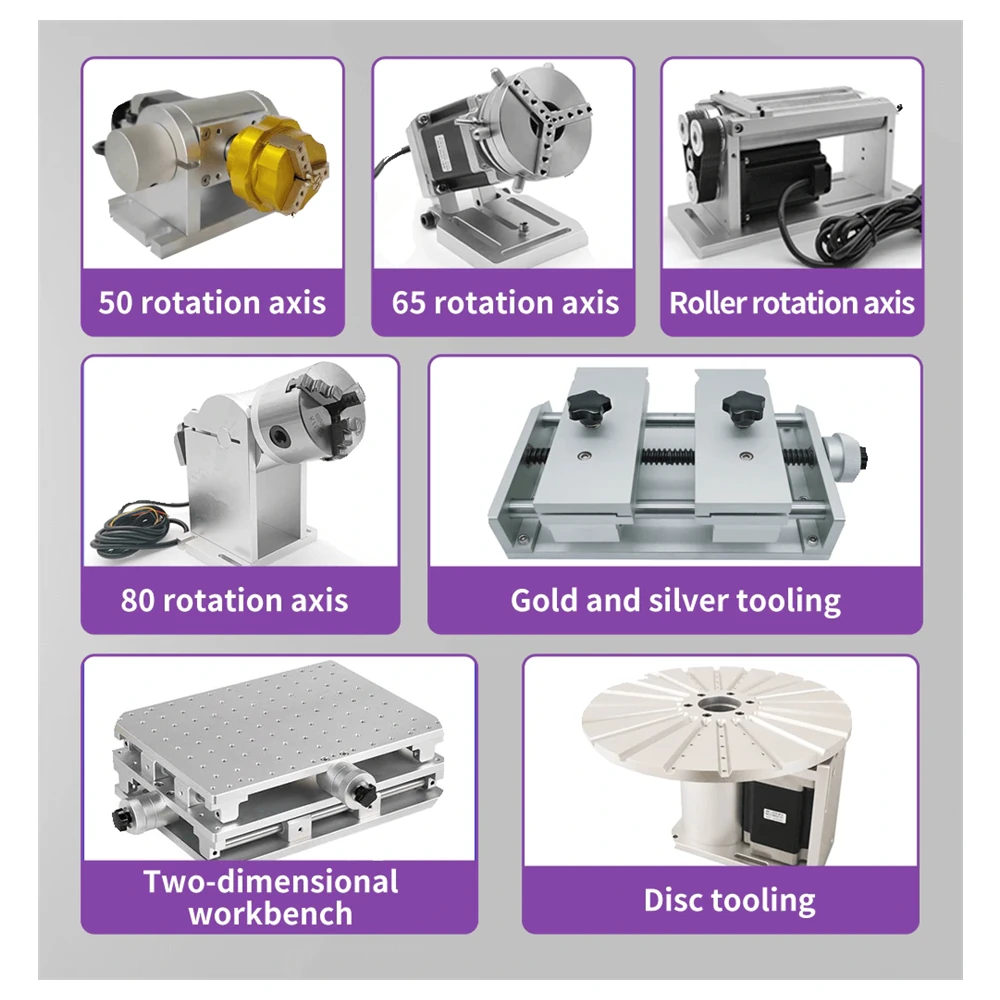
The machines are versatile and mark a wide range of materials including metals such as gold, silver and copper, plus plastics, glass, ceramics and silicon wafers.
If UV is more precision than your job needs, these neighbouring builds may suit better.
An enclosed UV bench build with a motorised column for repeatable small-part marking.
View model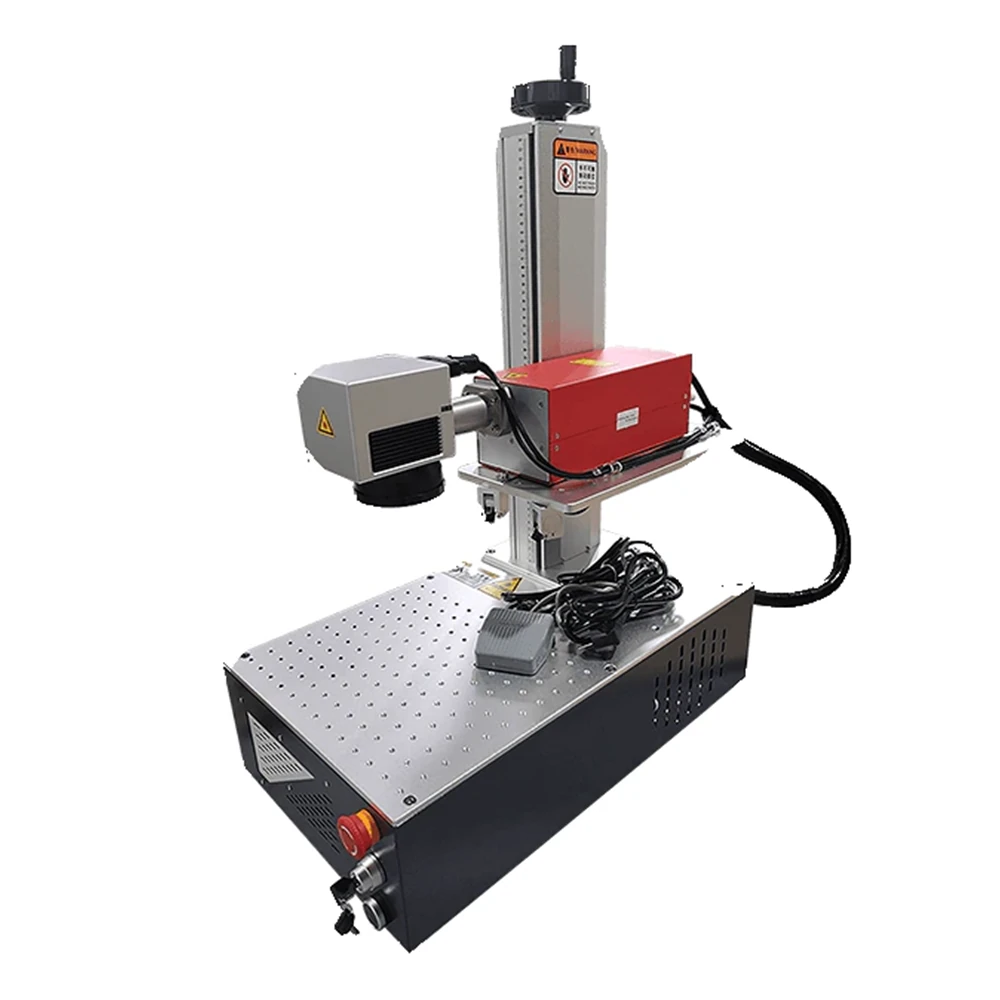
The same cold UV process in a single self-contained body for quick deployment.
View model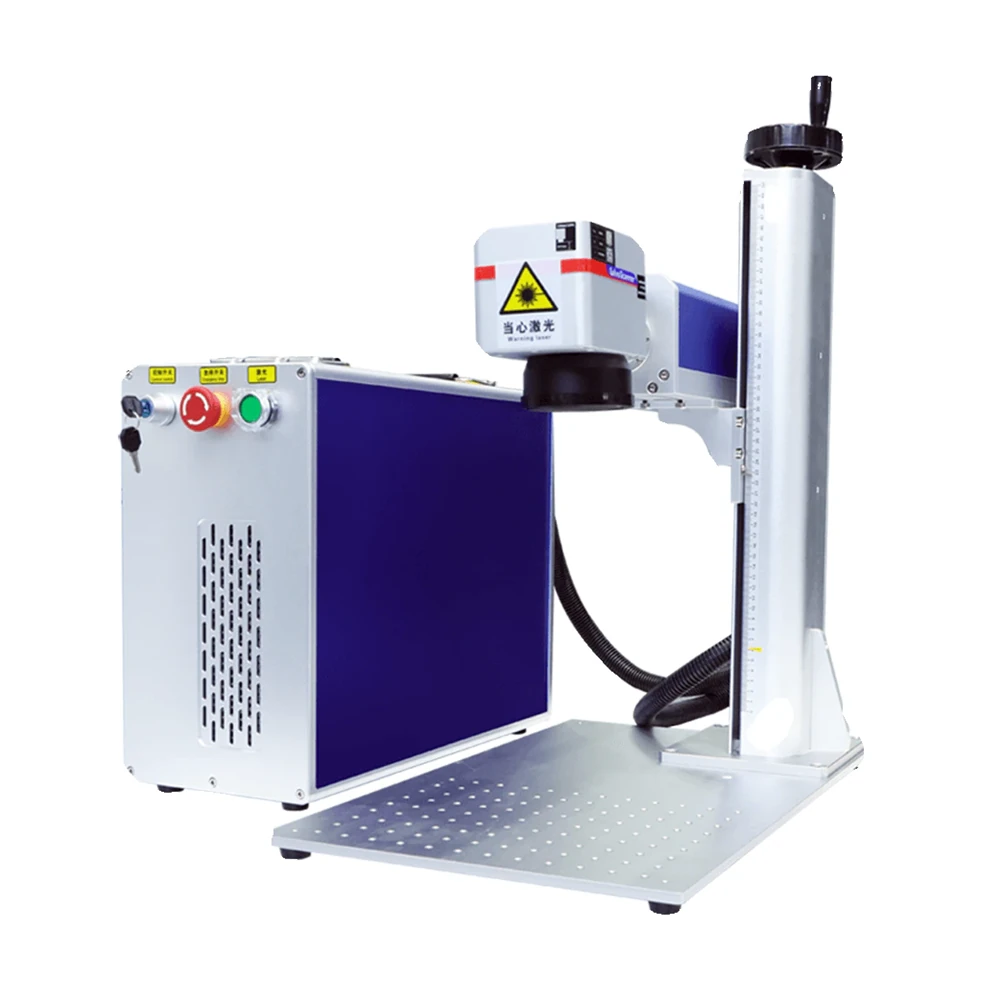
Tunable pulse width for colour and deep black on metals when heat is not the constraint.
View model