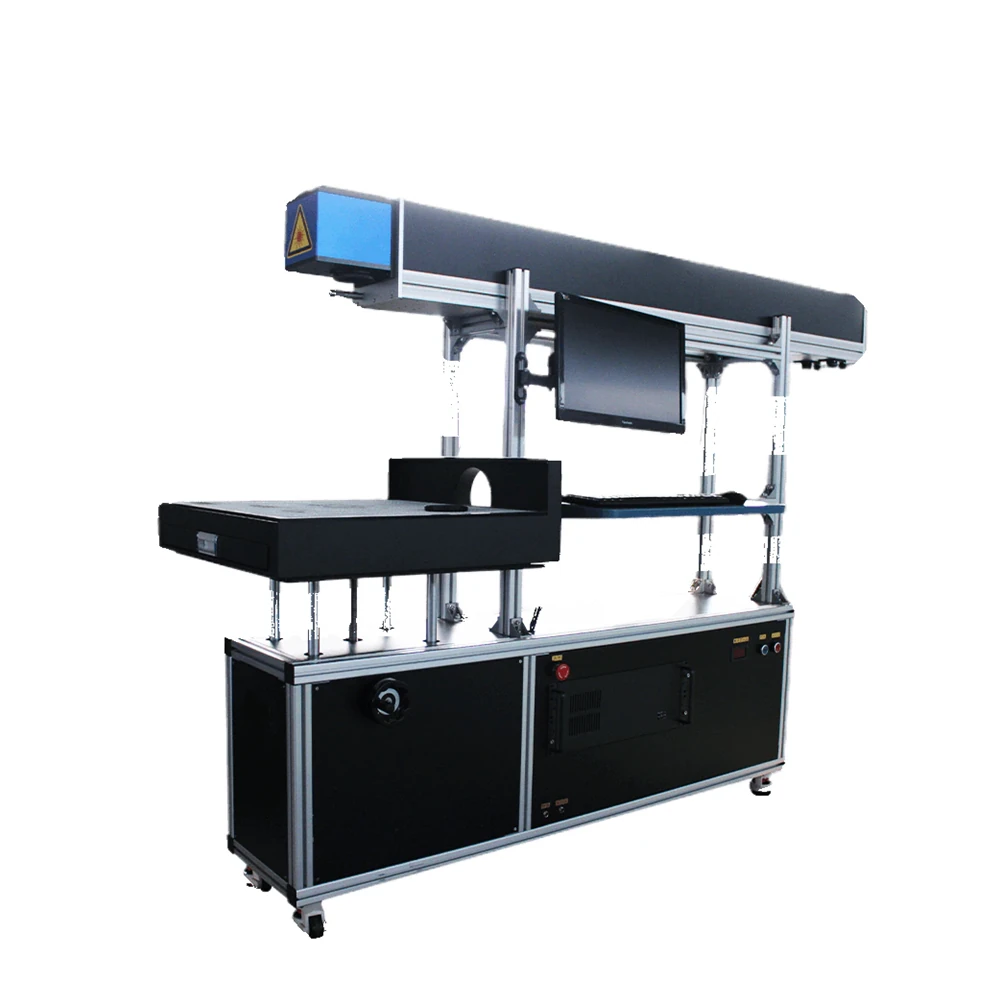
Large Format CO2 Laser Marking Machine
30W to 60W CO2 marking over a wide bed for signage, panels and packaging runs.
View modelA 100W CO2 glass-tube marker built around a 30-point 3D lens system and an interference-isolated head. With a working area from 600 x 600 mm up to 1200 x 1200 mm, the dynamic focus optics ride the height changes of the part instead of demanding a flat surface.
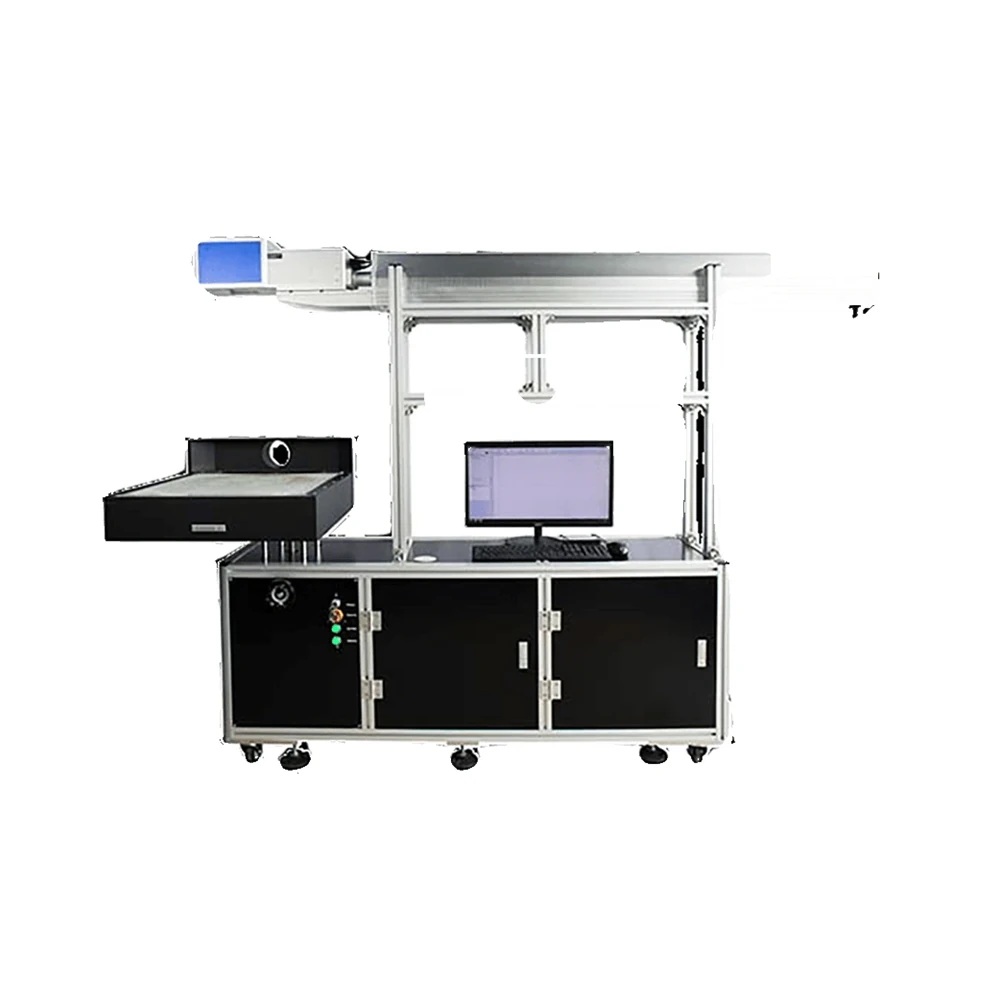
A conventional 2D lens holds one focal plane. Put a moulded panel, a tapered container or a conical fitting underneath it and the mark drifts out of focus the moment the surface rises or falls.
The 3D lens system is the reason this machine exists. Here is what changes at the workpiece when focus becomes a moving variable.
The 30-point lens corrects the focal position as the part rises or falls, so depth stays consistent across a dome, taper or cone.
Because focus is adjustable, a single file can engrave shallow text and deep relief without a second setup pass.
An interference-isolated design keeps the optical path stable, so the focus correction is not disturbed by electrical noise on the floor.
Matching the focal point to the surface keeps the glass tube in its most efficient working range, which reduces wear and wasted energy.
Four figures that tell you whether this machine matches the parts on your floor.
The focused spot stays under 0.01 mm, and the minimum line width reaches 0.012 mm for crisp, durable detail.
Working frequency is adjustable across the full 0–100% range, so the same head covers deep engraving and light marking.
A water circuit carries the 1400W peak thermal load away from the optics, which keeps focus stable through long shifts.
These are the geometries that send 2D markers back to the drawing board, and the ones the 3D head was built to take in its stride.
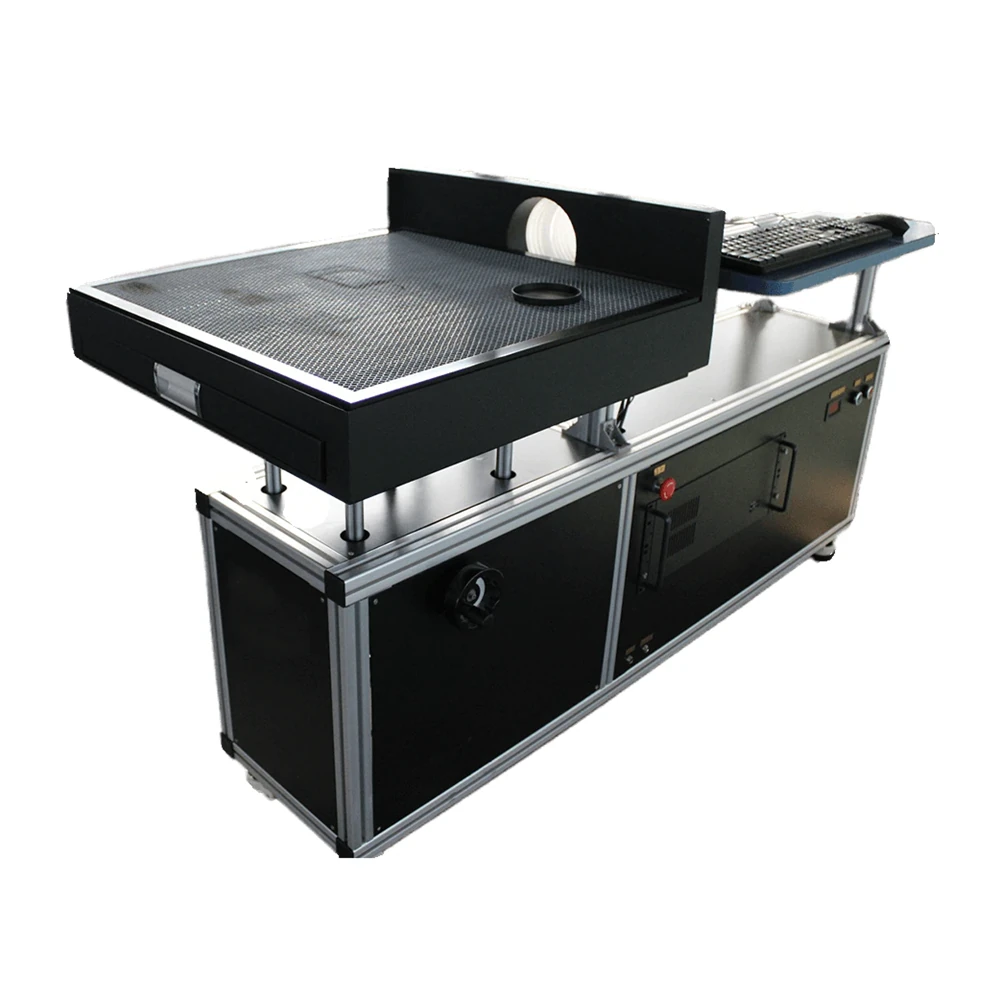
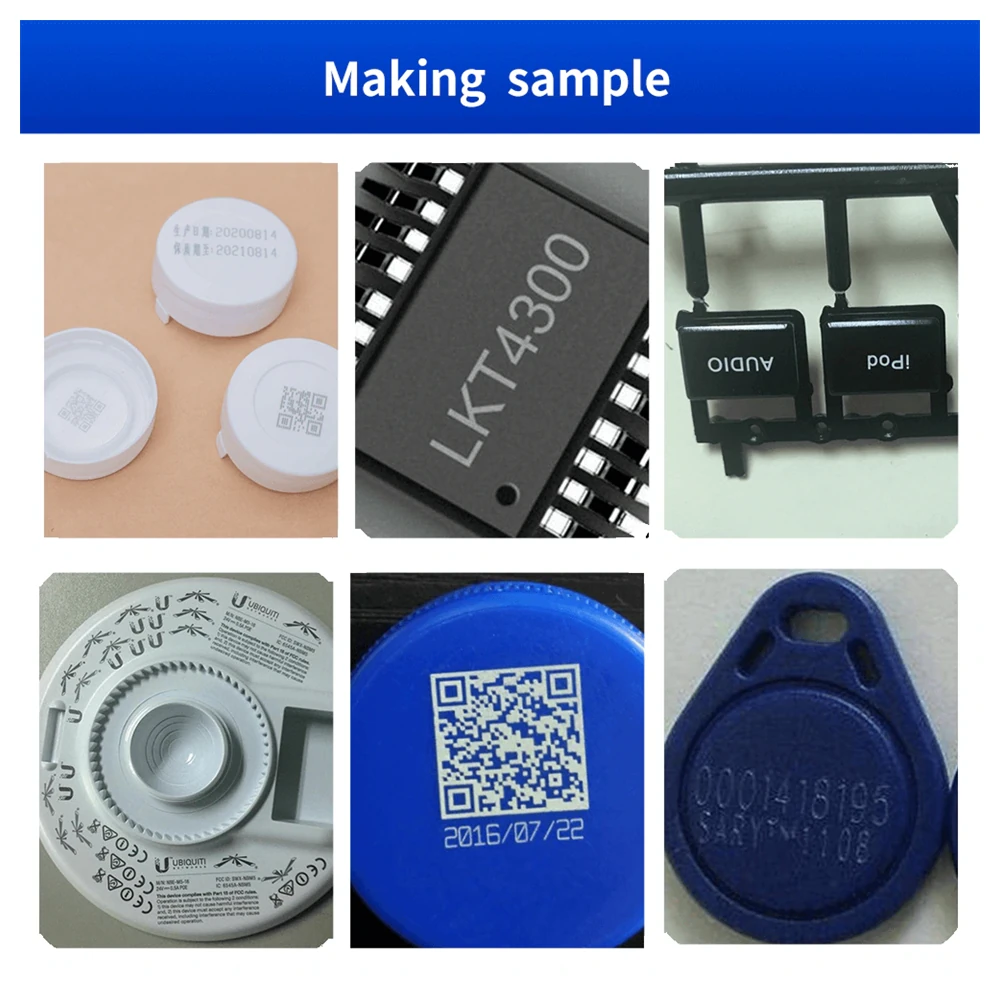
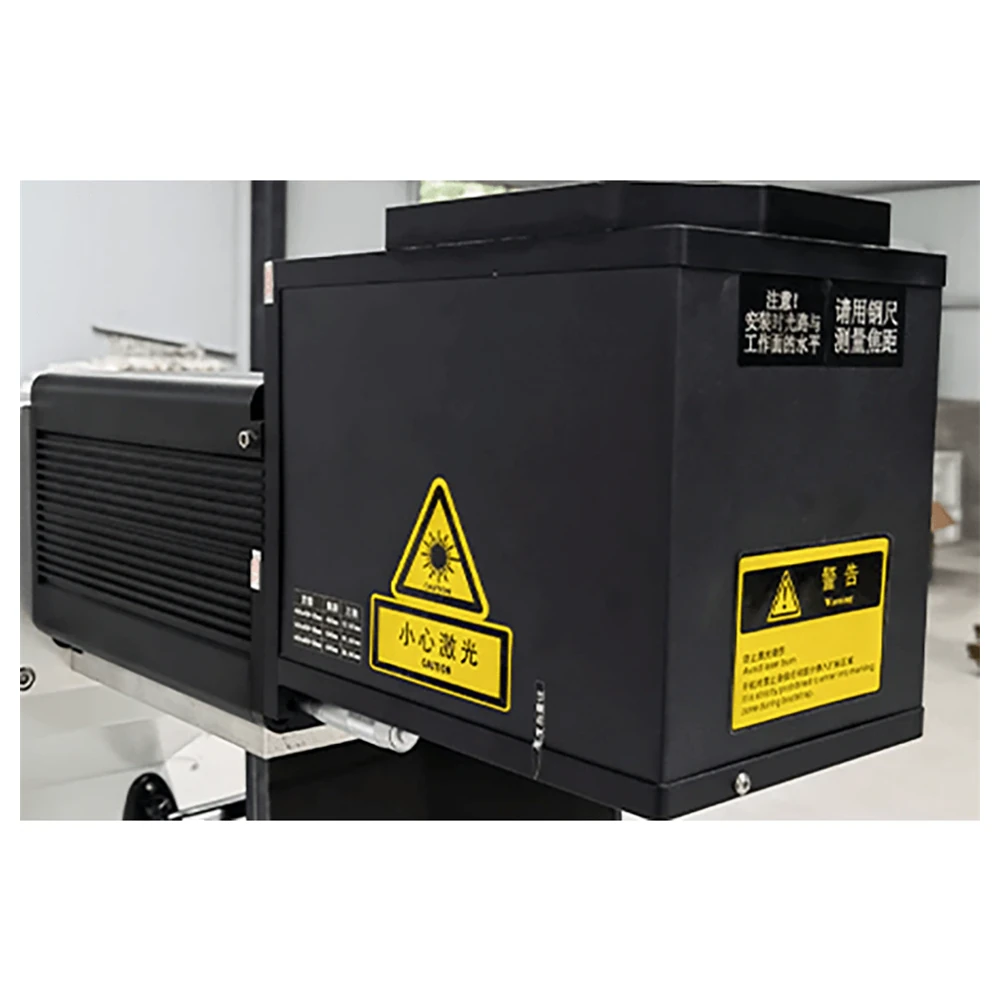
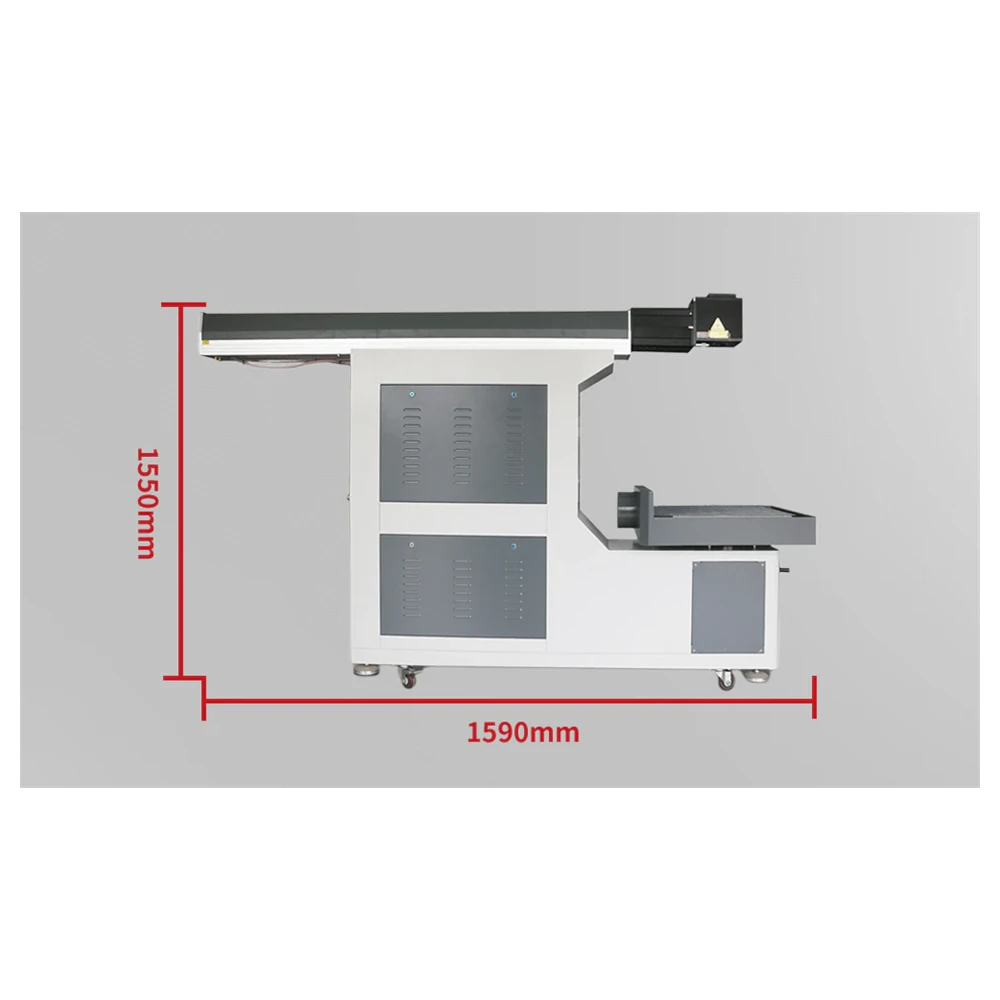
Samples are produced on paper, wood, leather and coated panels. Send us a part and we will return the marked result with the focus settings we used.
Every figure below is taken from the machine datasheet. Options are confirmed against your part before production.
| Parameter | KR-LC100-3D |
|---|---|
| Rated Output Power | 100W |
| Power Stability | ±4% |
| Laser Source | Davi |
| Galvanometer | 3D FWWLTEK |
| Wavelength | 10.6 μm |
| Marking Area | 600 × 600 mm / 800 × 800 mm / 1200 × 1200 mm |
| Beam Quality | M2 < 1.2 |
| Beam Diameter (1/e²) | 2.5 mm |
| Working Frequency | 0–100% |
| Focused Spot Diameter | < 0.01 mm |
| Minimum Line Width | 0.012 mm |
| Input Voltage / Current | 48V / 30A |
| Maximum Thermal Load | 1400W |
| Cooling Method | Water-cooled |
| Marking Speed | Up to 10,000 mm/s |
The datasheet lists the marking area as a range of three options. The standard frame is built to the area you specify, and the interchangeable field lens is confirmed at order stage.
The machine arrives assembled and tested. A 3D job normally adds one extra step compared with a flat mark: telling the head how the surface changes.
Import artwork and, for a true 3D job, the surface description, so the software knows where the part rises and falls.
Define the height range the head must cover. The 30-point lens then corrects focus continuously inside that band.
Mark at up to 10,000 mm/s. Depth, width and height change together to suit the contour of the part.
Compare the result against the approved sample, then confirm the mark depth is even at both the highest and lowest points.
The 10.6 μm wavelength is absorbed strongly by organic materials, which is exactly why it suits the applications below.
Engraved detail and cut shapes for woodworking, packaging and paper goods, with clean edges straight off the bed.
Fine patterns and lettering on fabric, leather and accessories, marked without contact so the material is never distorted.
Plastic, glass, stone and rubber all take a permanent CO2 mark, including transparent glass that some lasers struggle with.
“We mark moulded panels that used to need a jig for every variant. The 3D head reads the surface itself, so we load the part, run the file and the depth is even from the flat centre out to the curved edge.”
It generates the beam from a CO2 gas medium and can vary mark depth across a surface. Unlike a 2D marker it engraves on slopes, cylinders, cones and other complex shapes, so the same head handles flat and three dimensional work.
Paper, wood, fabric, plastic, glass, leather, stone and rubber are all suitable organic materials, and some metals can be marked as well. That range makes the machine useful across many production lines.
A 2D system keeps one consistent depth across the whole surface, while 3D marking varies depth, width and height to suit curved and irregular parts.
Automotive, electronics, aerospace, consumer goods, medical devices and mould making all rely on it for serial numbers, barcodes, QR codes and logos.
High precision, high speed and the ability to work across different shapes and materials, all with a non-contact beam that leaves the surface almost untouched.
Yes. The dynamic focus system follows the surface during the job, so no rotary axis is needed for curved or uneven parts.
CO2 lasers operate at roughly 10,600 nm, a wavelength that organic materials absorb well because of their heat absorption behaviour.
Yes. Because CO2 lasers absorb heat strongly, they mark transparent materials such as glass effectively, unlike some other laser types.
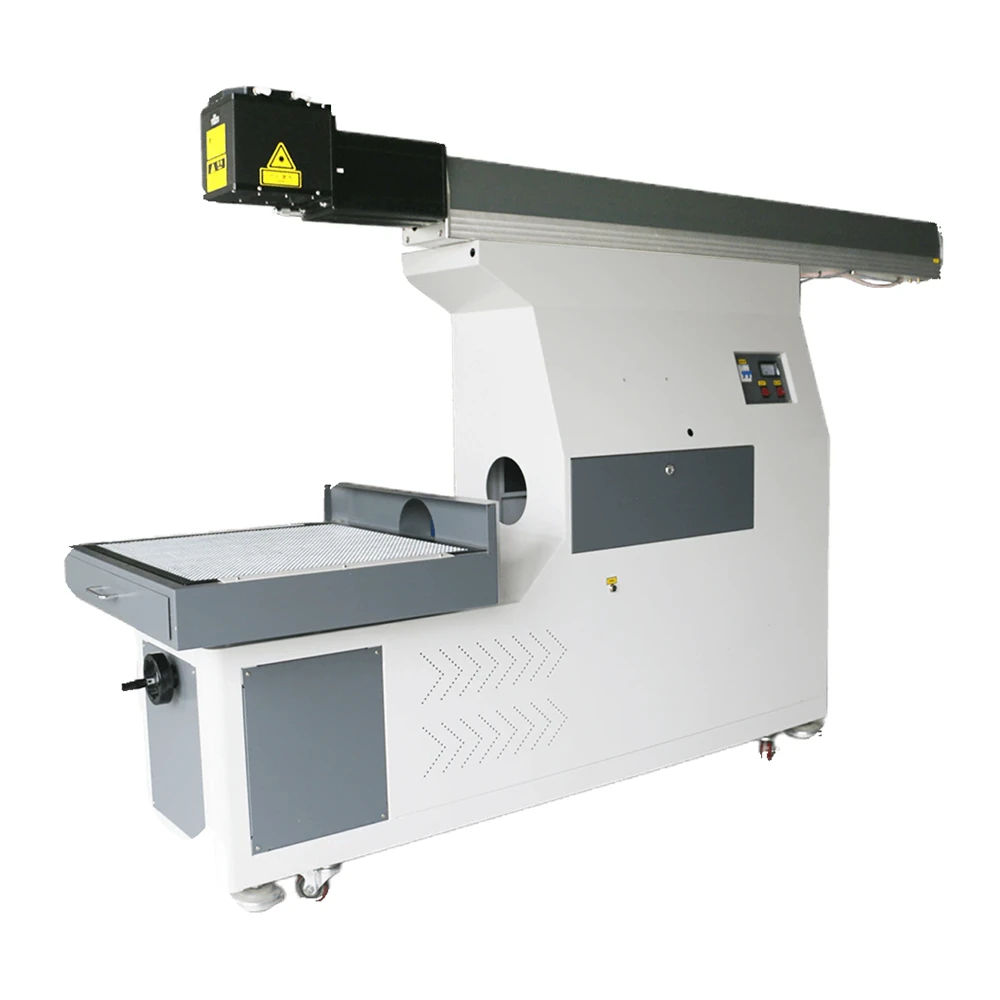
If the 3D head is not the priority, these builds from the same platform cover flat CO2 and fiber work.
30W to 60W CO2 marking over a wide bed for signage, panels and packaging runs.
View model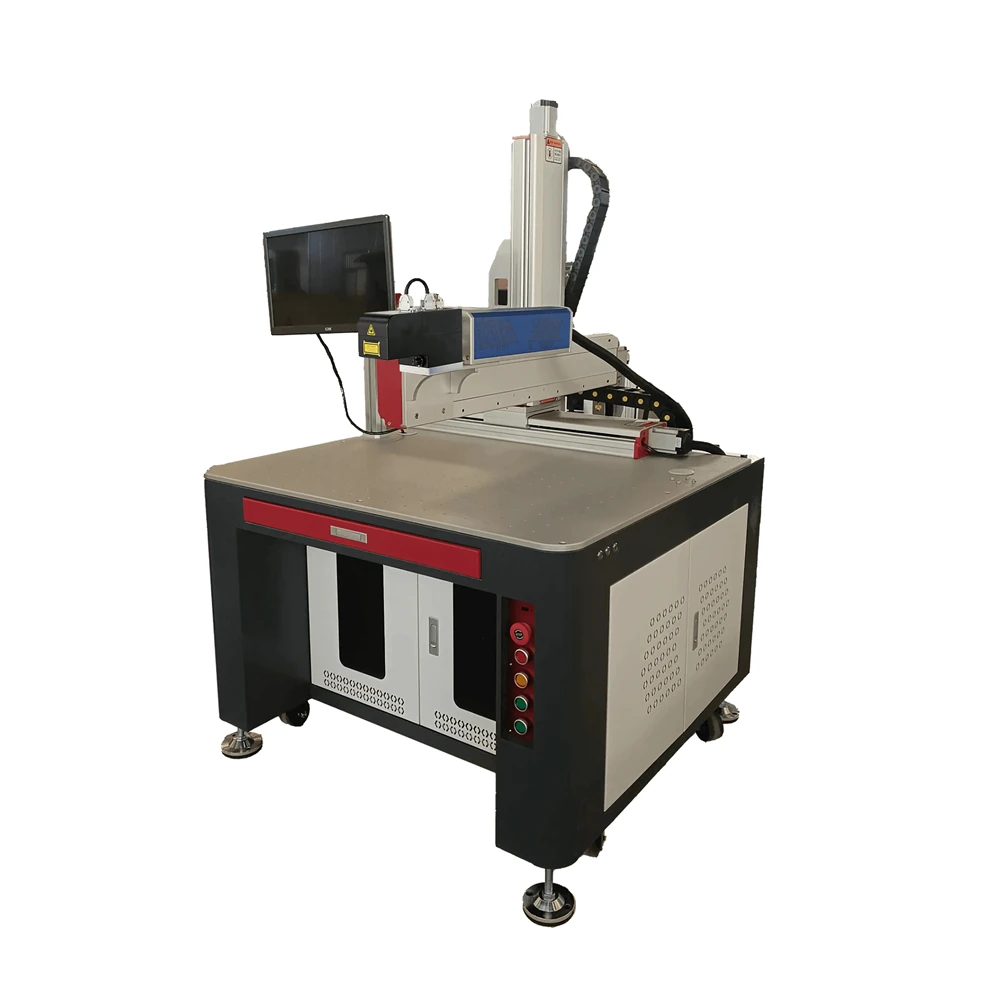
3D fiber head reaching 1050 x 800 mm for deep relief and texturing on large metal parts.
View model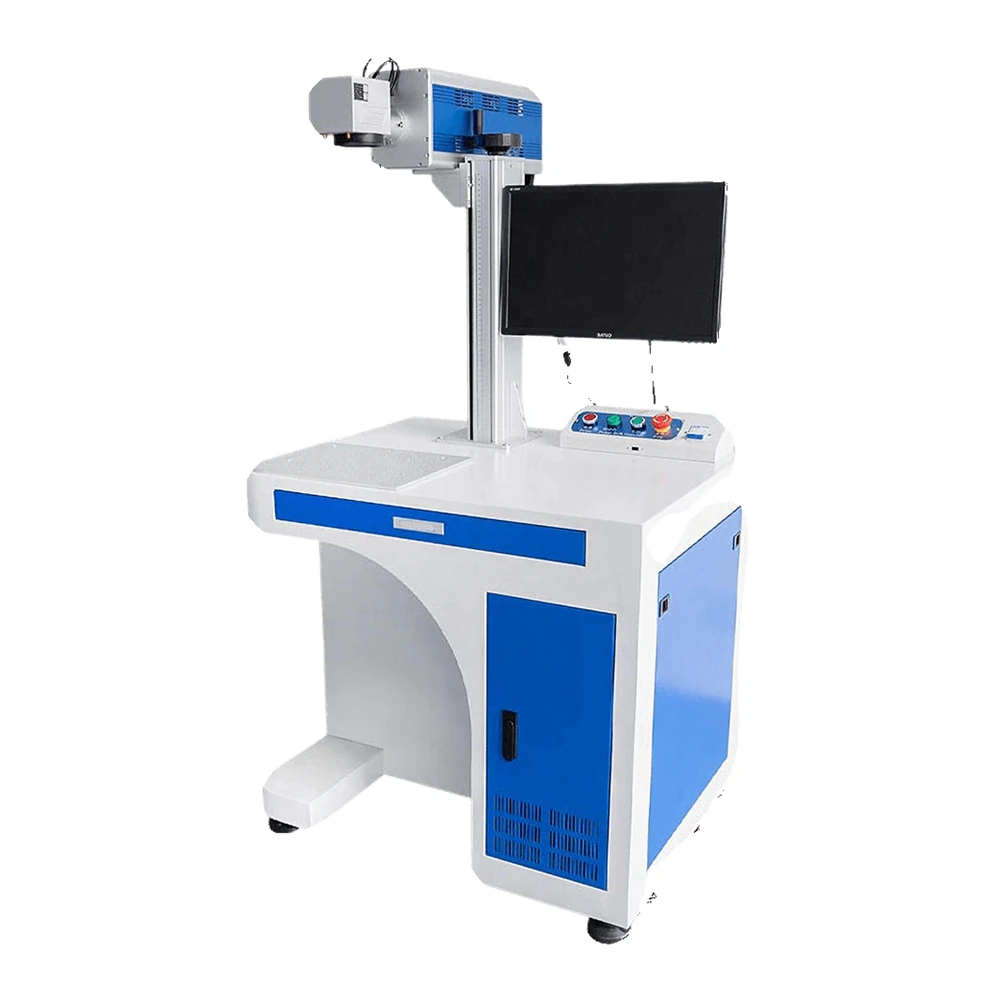
A Class 1 enclosed bench unit for small parts, with castors for moving between cells.
View model