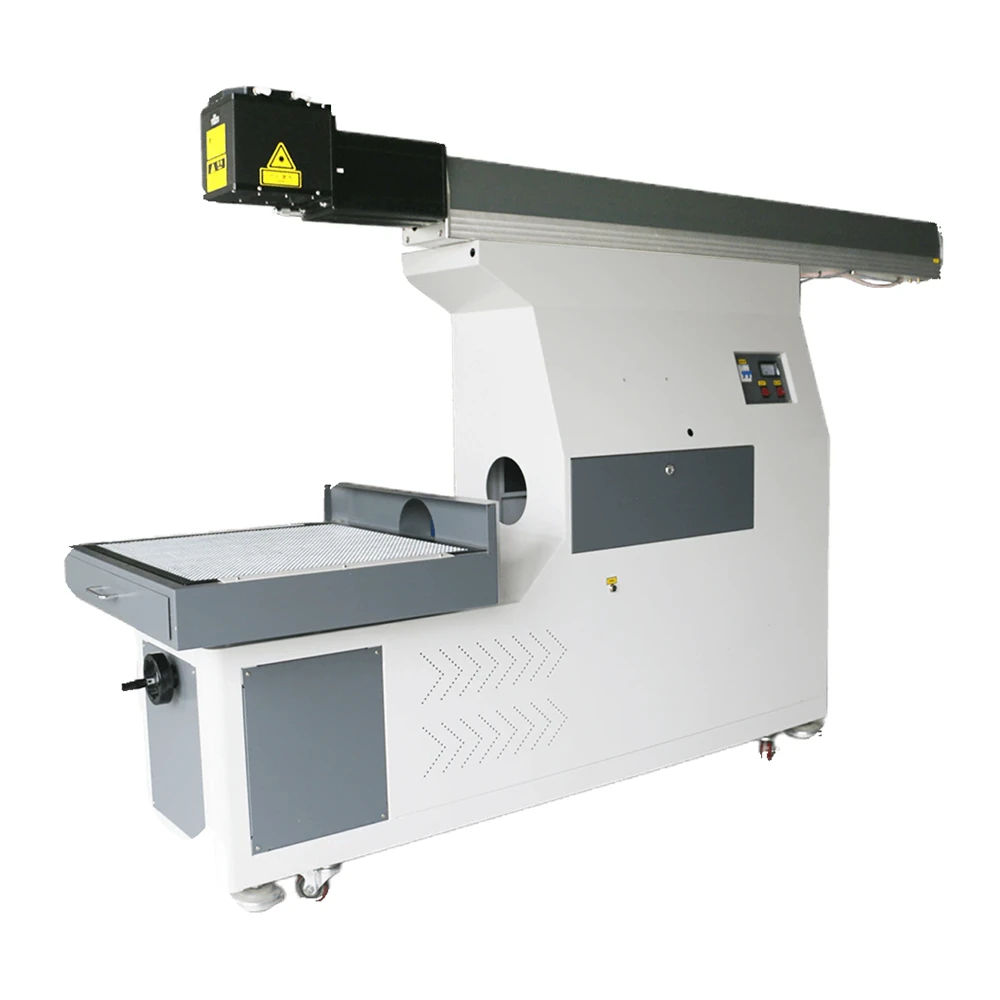
Large Format 3D CO2 Laser Marking Machine
A CO2 alternative with dynamic focus for wood, leather, glass and other organic materials.
View modelA 50W or 100W fiber marker built on a Sino-galvo 2206-3D head with a 200 mm Z range and XY travel of 1050 x 800 mm. It is made for the jobs a small bench cannot reach: deep relief, surface texturing, coating removal and marking across a large metal casting in one setup.
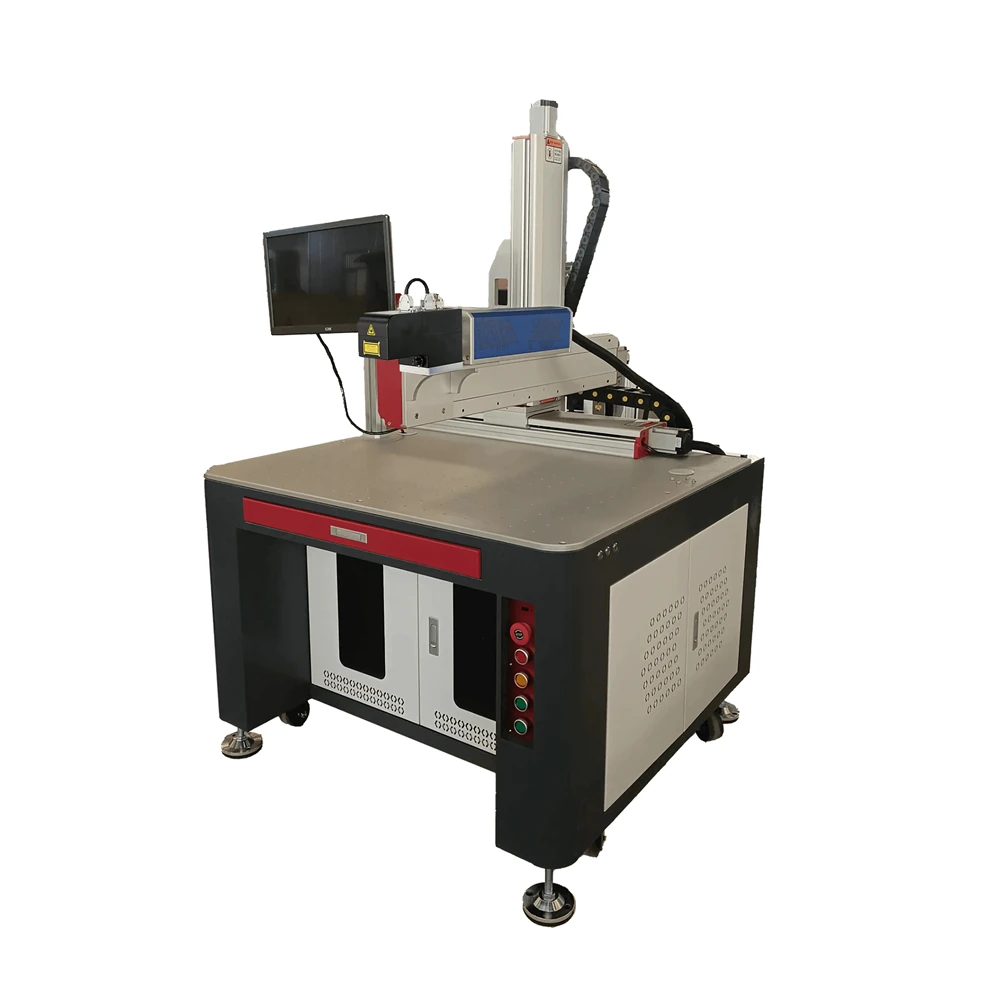
Casting, forging and welded assemblies are expensive to move and slow to re-datum. The four steps below keep the part fixed from load to release.
The part is placed on the aluminium work table and located against the travel range, with no need to break it down first.
The column sets focus at the press of a switch, so the operator does not measure or re-clamp to reach the surface.
XY travel of 1050 x 800 mm and a 3D head cover flat, tapered and contoured areas of the same part in one program.
One setup means no return trip for a second operation, which keeps large parts moving through the cell.
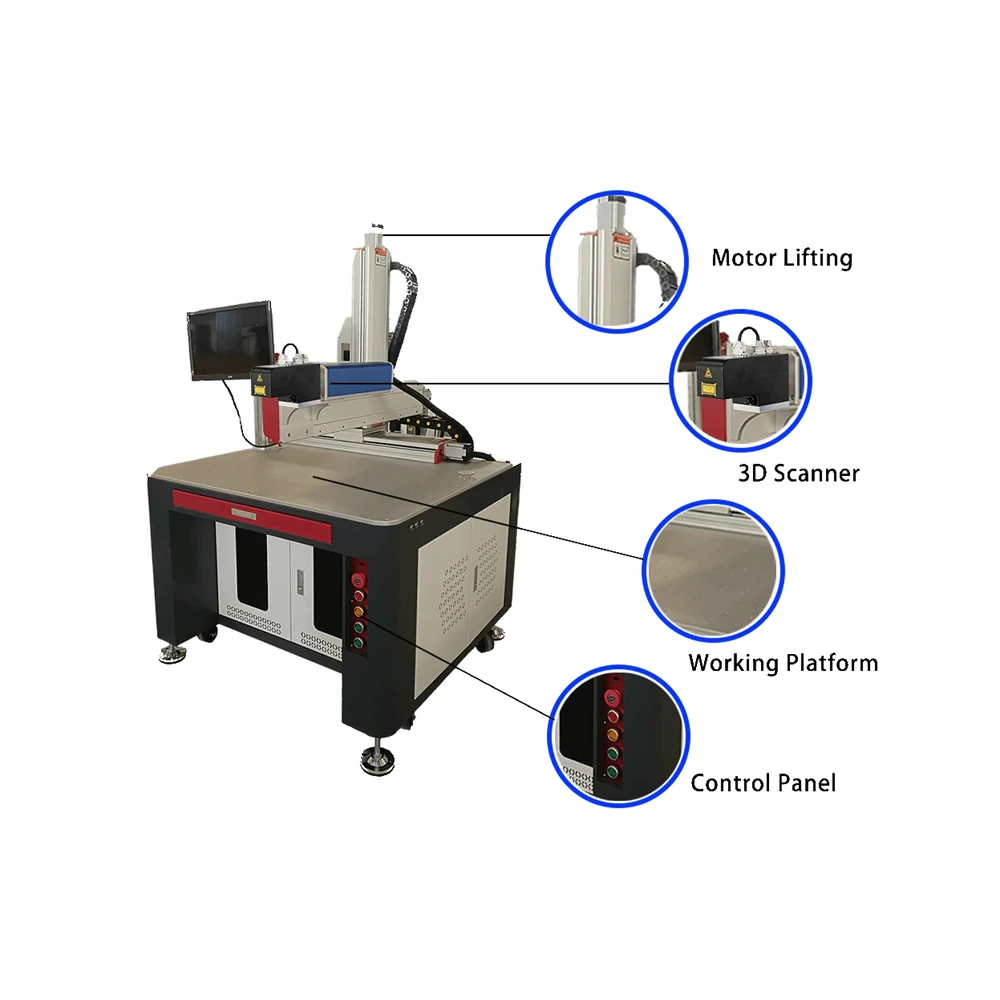
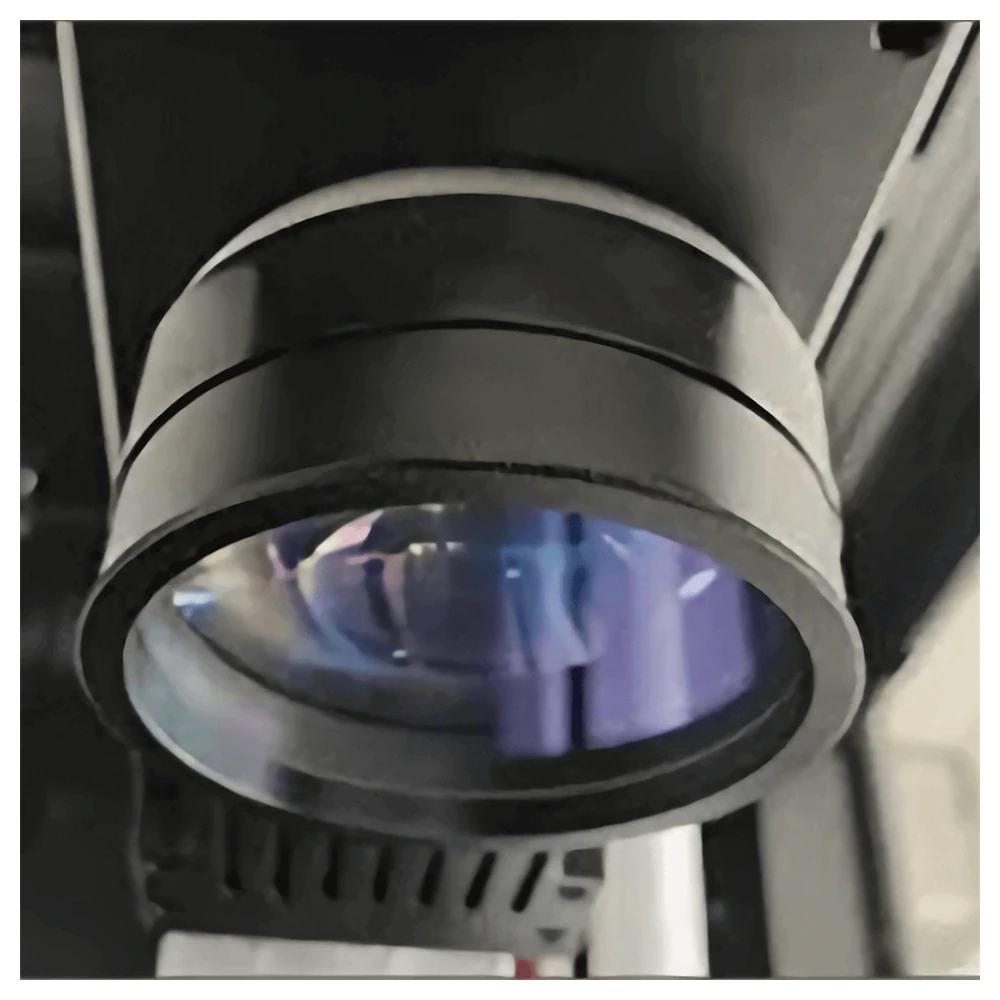
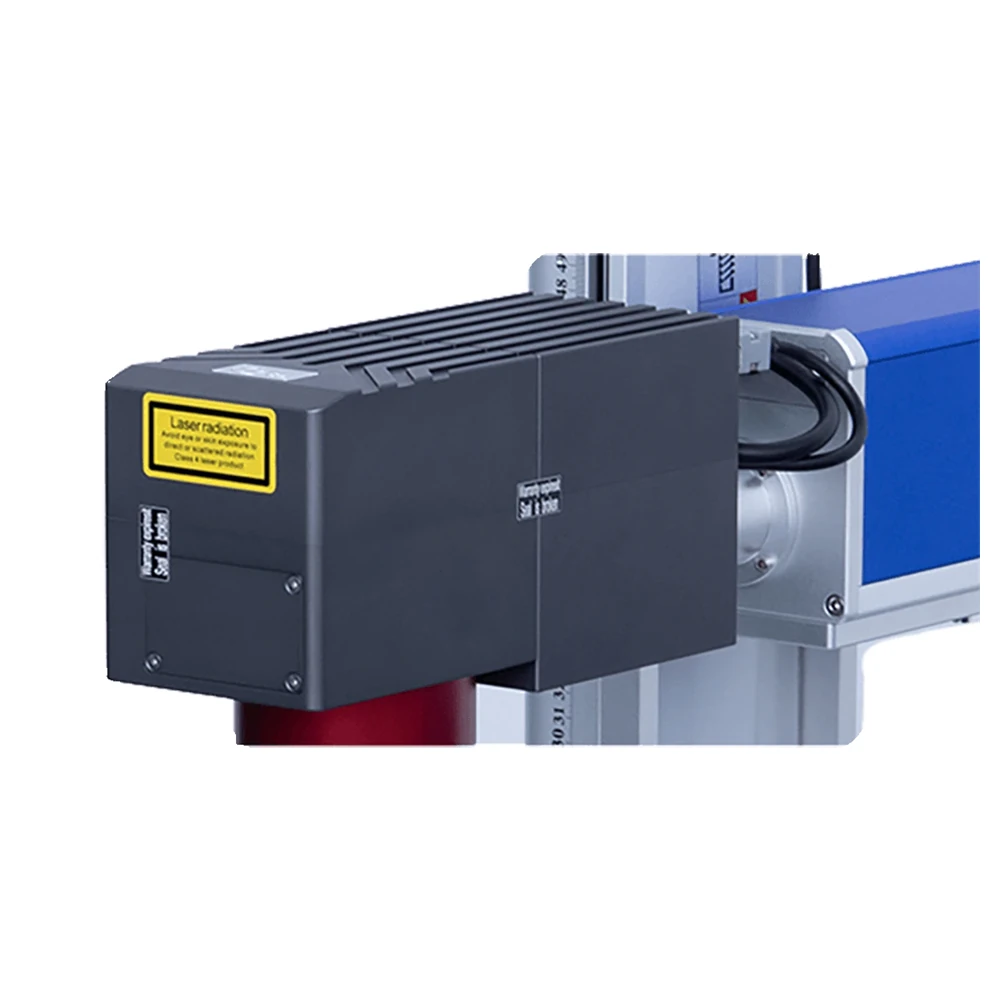
The Sino-galvo 2206-3D head combines a 3D dynamic focus system with an adjustable Z axis, so the focal point can follow a taper, a slope or a contoured casting without distortion.
The two models share the head and the controller. The difference is power, working area and machine size.
With the 3D head and a 200 mm Z range, the beam holds focus while the surface steps down, so relief stays sharp.
The same head marks, textures and removes coatings, which turns one machine into a surface preparation cell.
Routine cleaning of the field lens and the machine exterior is the bulk of the upkeep, with no ink or consumable to buy.
The marking area row is the first decision: 400 x 400 mm on the 50W model, 600 x 600 mm on the 100W model, both with the same large XY travel.
| Parameter | KR-AF50 | KR-AF100 |
|---|---|---|
| Marking Area | 400 × 400 mm | 600 × 600 mm |
| Rated Power | 50W | 100W |
| Galvanometer | ZBTK / Sino-galvo | ZBTK / Sino-galvo |
| Marking Line Width | 0.025 mm | 0.025 mm |
| Minimum Character Size | 0.15 mm | 0.15 mm |
| Power Adjustment | 0–100% | 0–100% |
| Marking Speed | 0–1500 mm/s | 0–1500 mm/s |
| Fiber Cable Length | 3 m | 3 m |
| Wavelength | 1064 nm | 1064 nm |
| System Software | EZCAD2 | EZCAD2 |
| Cooling Method | Air-cooled | Air-cooled |
| Laser Source | MAX / Raycus / JPT | MAX / Raycus / JPT |
| Supply Voltage | 110V / 220V, 50–60 Hz | |
| Machine Power Draw | 460W | 580W |
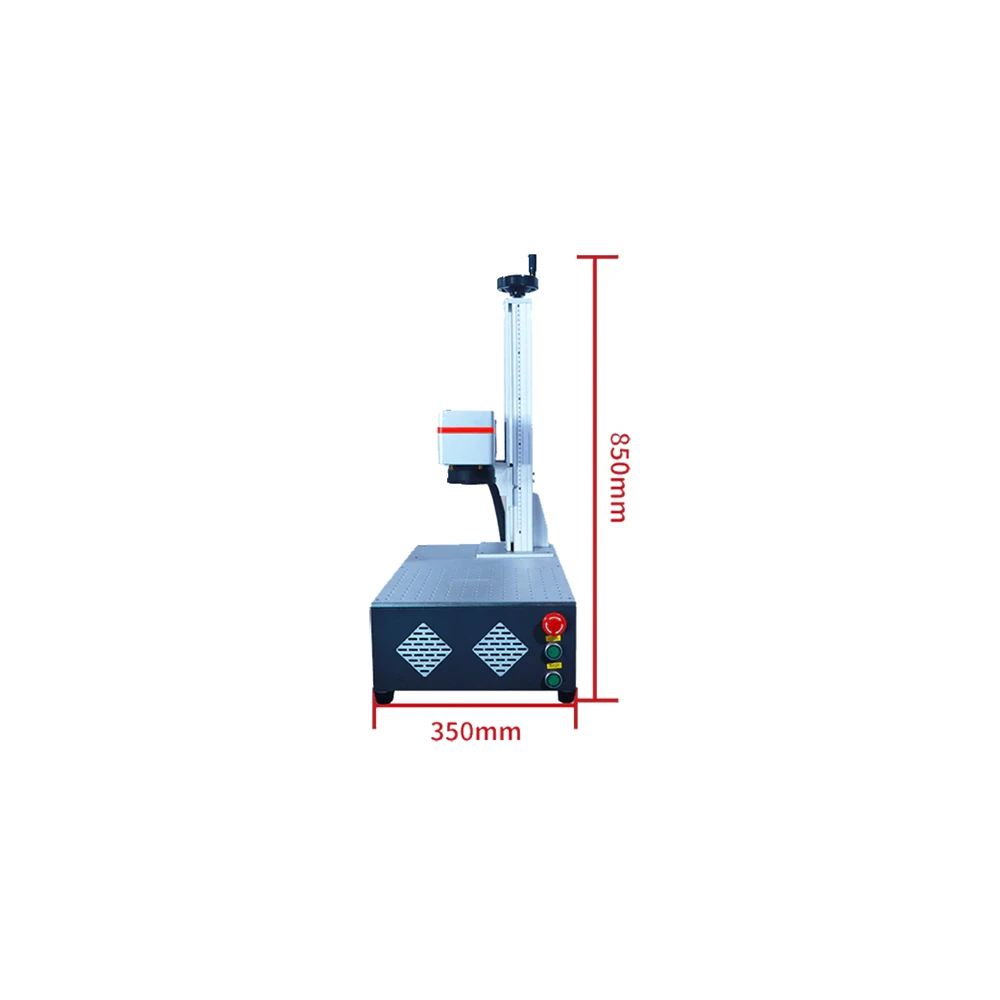
| Machine Size | 340 × 430 × 580 mm | 350 × 600 × 850 mm |
| Machine Weight | Approx. 15.5 kg | Approx. 30 kg |
The technical table gives the standard marking area as 400 × 400 mm and 600 × 600 mm, with XY travel of 1050 x 800 mm. The product description also refers to a largest working area of 1200 x 1200 mm and a dynamic focus Z range of 300 mm; where these differ, the technical table above is the binding figure.
Deep relief, texturing and traceability on parts that are too big, too heavy or too valuable to move between machines.
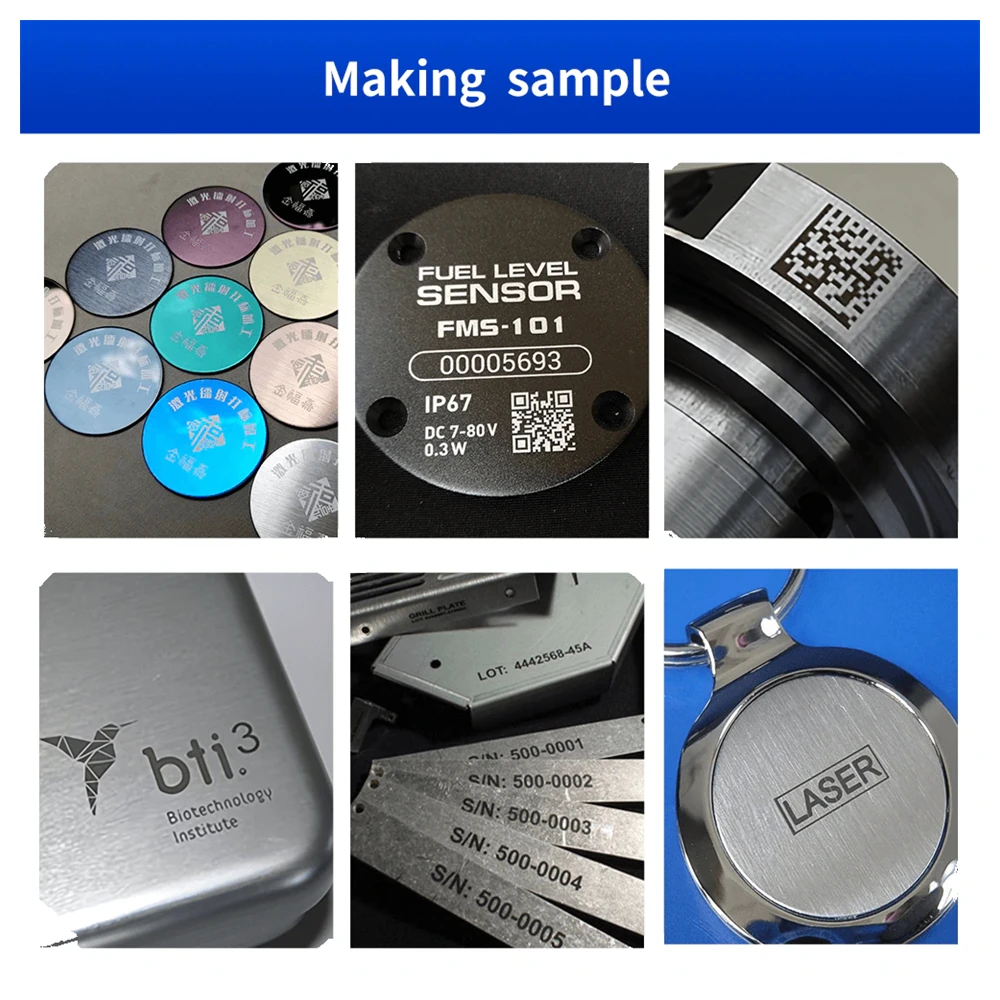
Serial numbers, relief detail and surface texturing on structural and powertrain components.
Texture, engraving and coating removal inside tooling and moulds where deep detail carries into the part.
Marking on housings and larger metal enclosures where a small field lens would leave seams.
Fine personalisation and permanent identification on parts where detail and traceability both matter.
The same beam that marks can also change the surface, which is why this machine is often specified for more than traceability.
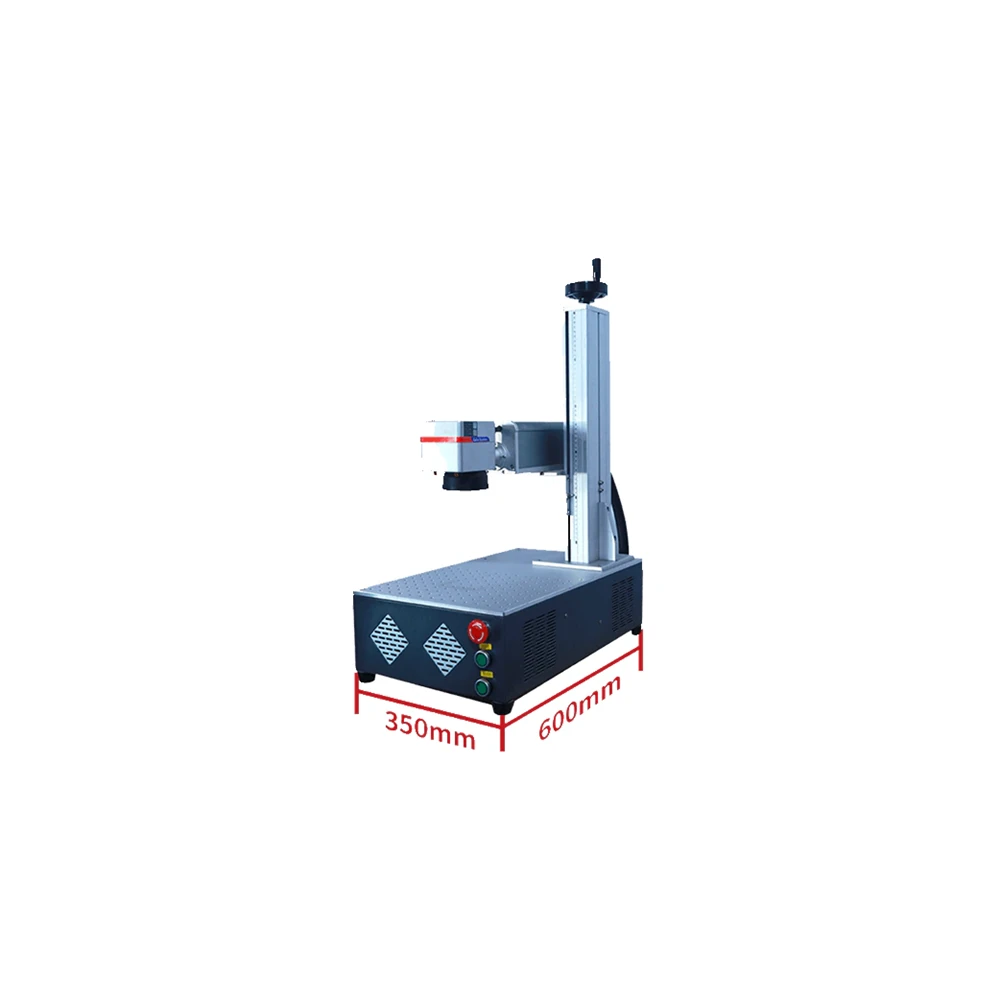
The machine is specified around your largest part, so a few choices are settled before the build begins.
“Our mould inserts are too heavy to keep re-clamping. The 3D head follows the contour of the insert in one program, so the texture and the identification mark come off the same setup with no seams.”
It handles metals such as stainless steel, aluminium, brass and titanium, as well as non-metals including plastic, ceramic, glass and some types of stone.
The working area depends on the model. The standard marking area is 400 x 400 mm on the 50W unit and 600 x 600 mm on the 100W unit, with XY travel of 1050 x 800 mm for positioning larger parts.
It adjusts the focal length of the beam in real time, which keeps accuracy on curved or uneven surfaces and is essential when the part has changing height or complex geometry.
Automotive, aerospace, electronics, medical devices, jewellery and manufacturing, where precise engraving on large and complex parts is required.
The core components, including the laser source, are covered by our 2-year warranty, which provides timely support and replacement parts if a problem occurs.
Fiber laser marking does not need ink or cartridges. Occasional cleaning and maintenance of the lenses and machine parts is all that is required for best performance.
Engraving depth depends on the material and the laser power, and can reach several millimetres on metal. Advanced models can go deeper with multiple passes.
The machine uses an efficient air-cooled system that keeps the laser source and other components at a stable temperature during operation.
Maintenance is minimal and usually covers cleaning the optics, checking alignment and confirming the cooling system is working. The fiber source itself is known for long life and low maintenance.
Yes. It can be integrated with automatic loading systems, robotic arms and conveyors to raise throughput in large scale manufacturing.
If a fiber source is not right for the material, these units cover CO2 and curved-surface work instead.
A CO2 alternative with dynamic focus for wood, leather, glass and other organic materials.
View model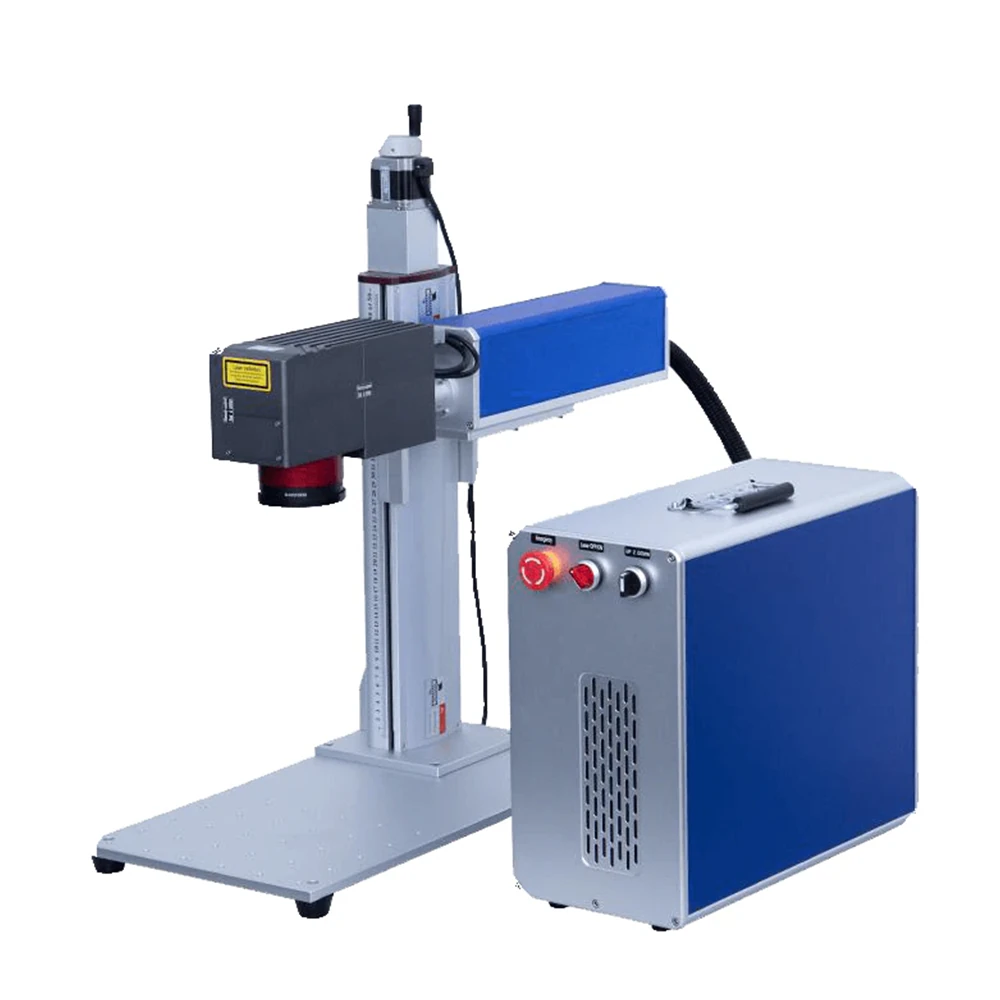
The same 3D approach in a compact body for smaller curved parts and tighter floor space.
View model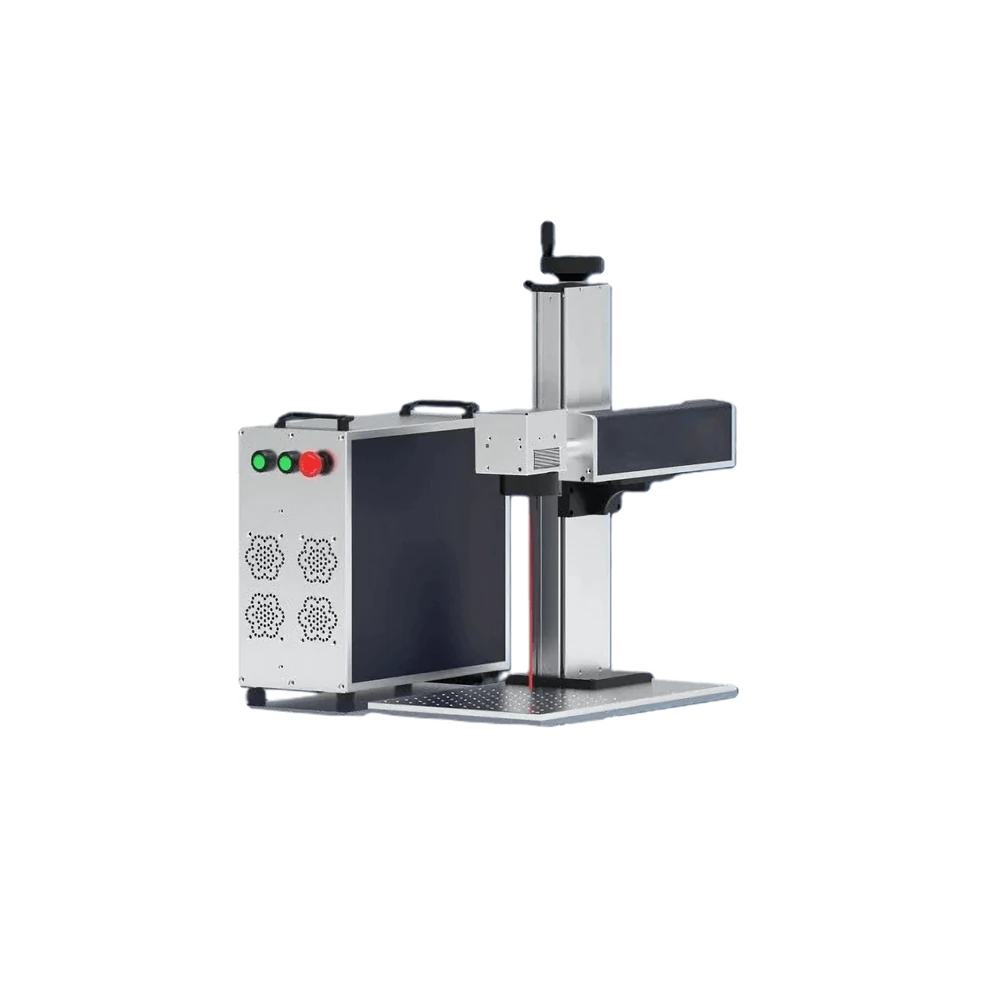
A separated head and cabinet for gantry, robot and conveyor integration on the line.
View model