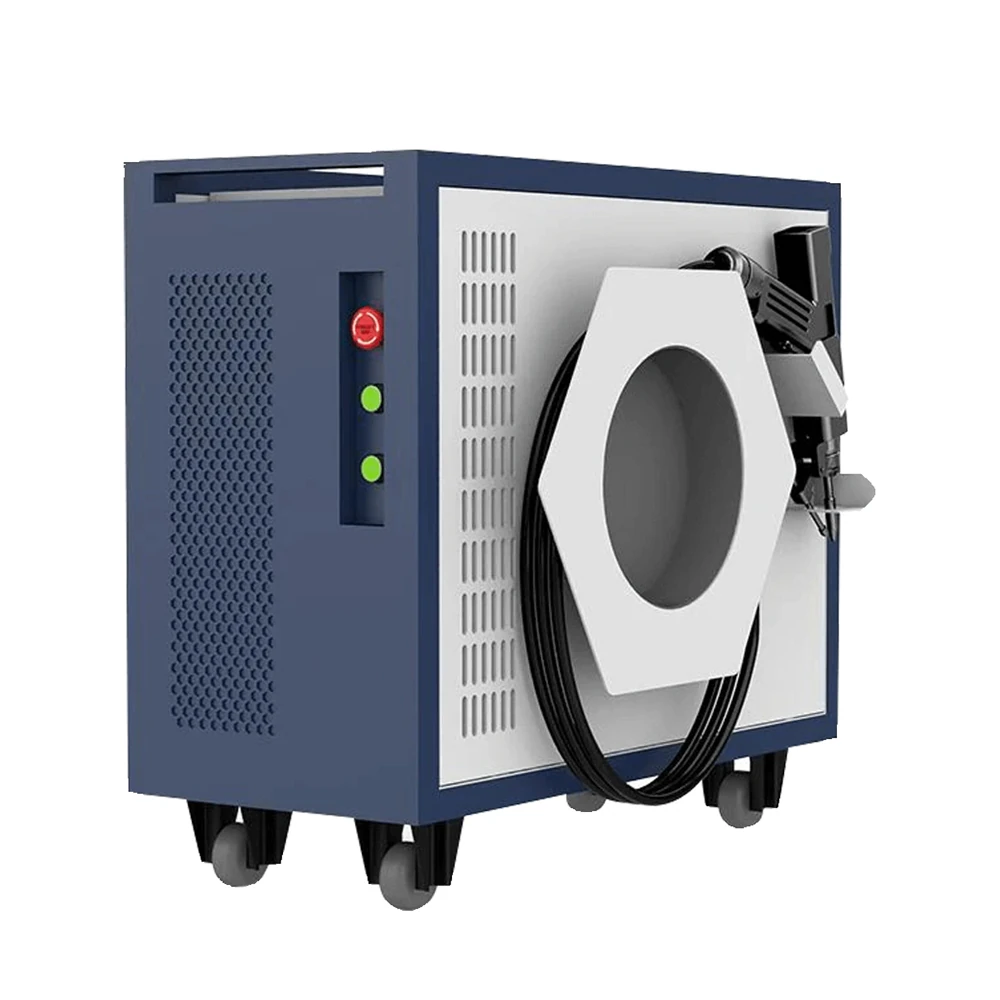
Air-Cooled Handheld Laser Welder
No chiller and 55 kg, for site work and maintenance where a water circuit is impractical.
View modelTwo cabinets, one beam. The laser source and the water chiller sit apart so heat never reaches the optics, and either unit can be serviced without disturbing the other. Welding, cleaning, cutting and seam finishing all run from the same 1080 nm platform, from 1000W to 2000W.
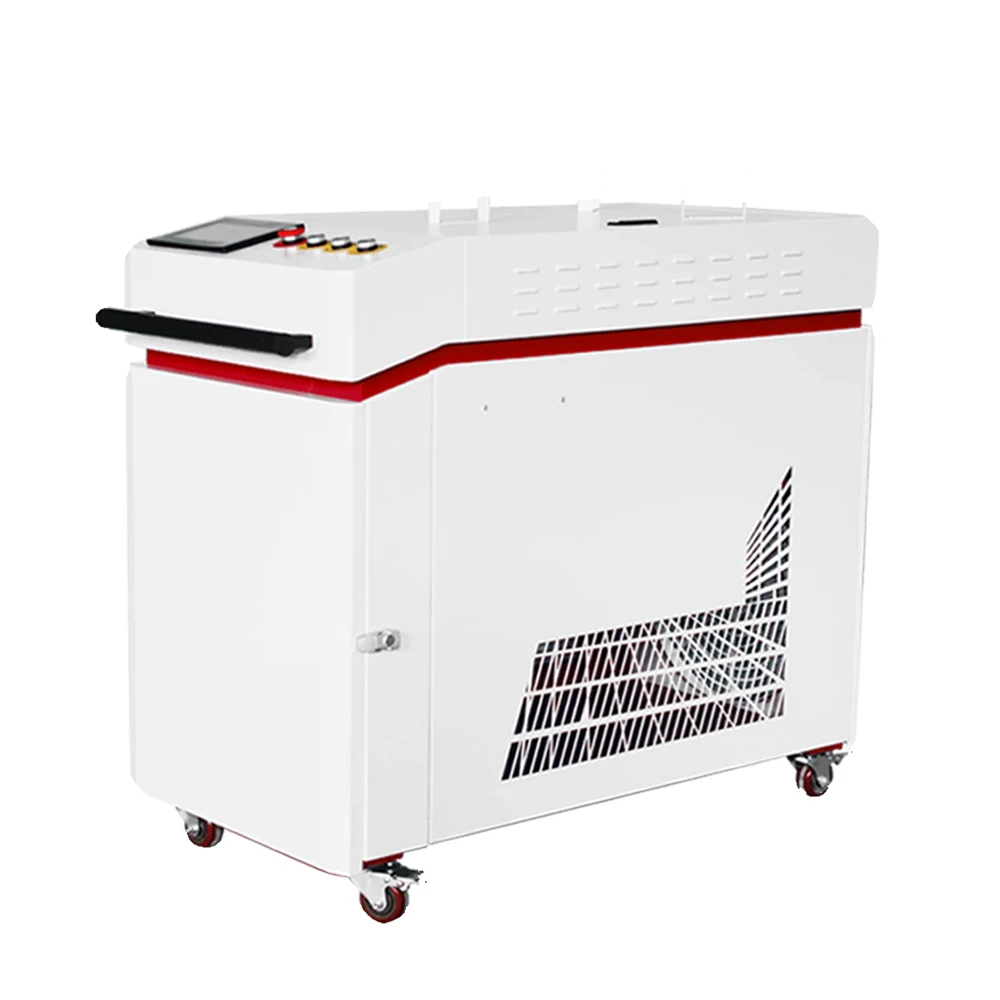
On a combined cabinet the chiller shares air and heat with the laser source. Separating them is the simplest way to keep the optics running cool and to reach either module for maintenance.
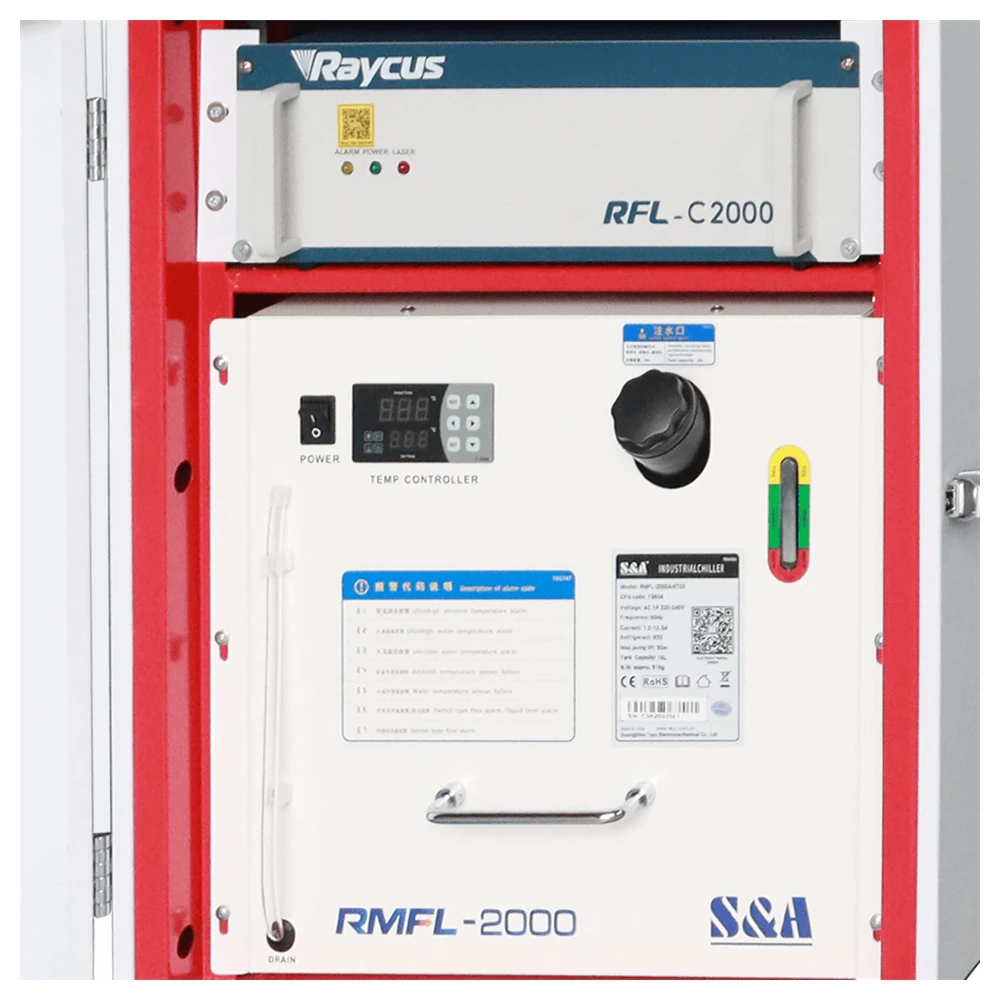
One platform, three builds. Figures below are transcribed from the machine datasheet.
| Parameter | KR-LW1500S | KR-LW2000S | KR-LW3000S |
|---|---|---|---|
| Laser Source | Raycus / MAX / BWT | ||
| Laser Power | 1000W | 1500W | 2000W |
| Power Adjustment Range | 0–1000W | 0–1500W | 0–2000W |
| Supply Voltage | 220V single phase | ||
| Laser Wavelength | 1080 nm | ||
| Fiber Length | 10 m / 12 m / 15 m, up to 20 m | ||
| Operation Mode | Continuous welding | ||
| Max Oscillation Speed | 20000 mm/s | ||
| Run System | Handheld welding system | ||
| Cooling System | Water-cooled, separate chiller cabinet | ||
| Ambient Temperature | 10–40 °C | ||
| Ambient Humidity | Below 70%, non-condensing | ||
| Weld Gap Requirement | 0.5 mm or less | ||
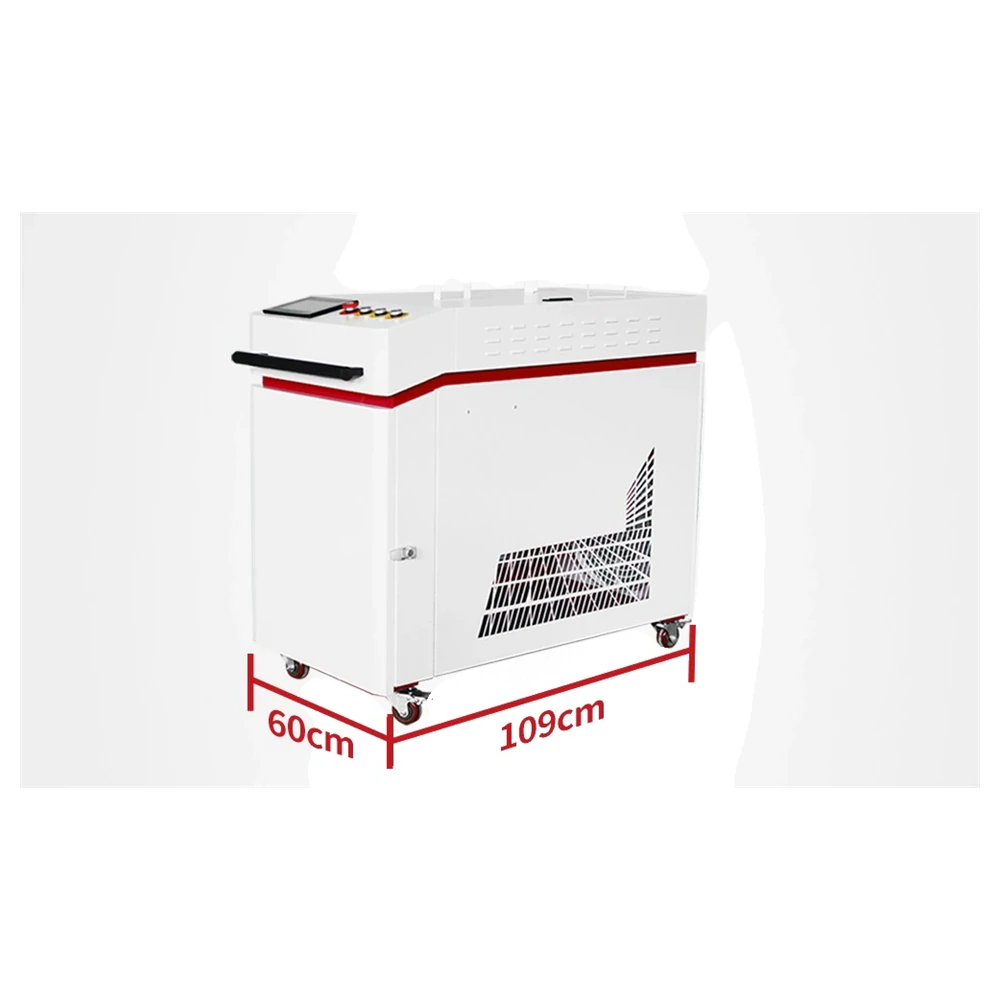
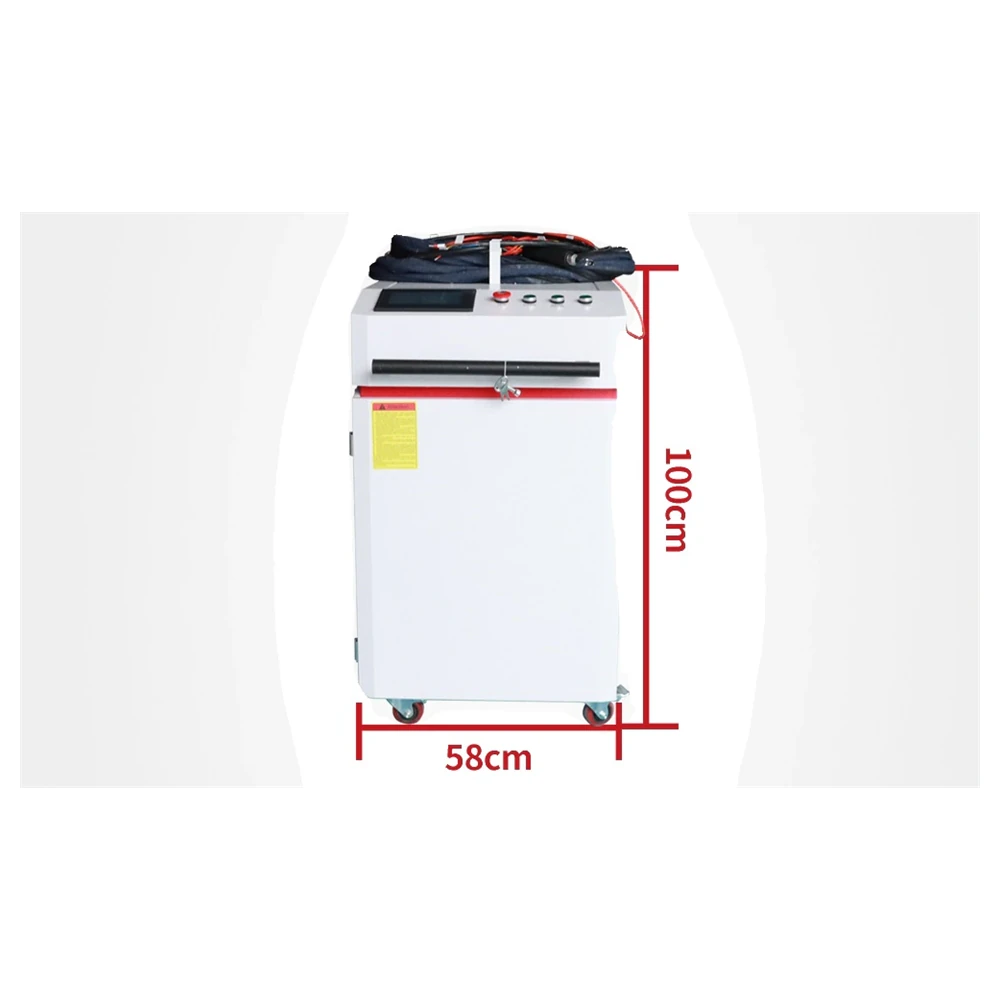
| Machine Dimensions | 970 × 595 × 825 mm | ||
| Machine Weight | 125 kg | 125 kg | 134 kg |
The datasheet names the three builds KR-LW1500S, KR-LW2000S and KR-LW3000S while listing output as 1000W, 1500W and 2000W respectively. We confirm the model code, laser source brand and fiber length against your order. Ask us for a datasheet matched to your material and thickness.
Four differences that show up in the first week on the floor.
Concentrated heat input limits the heat-affected zone, so thin panels stay flat and do not need straightening after welding.
The wobble pattern and steady cooling hold the bead width constant, so a run looks the same at the start and at the end of a shift.
Clean, weld, trim and finish inside one envelope, so the part does not travel to a grinder or a cleaning bay between operations.
This is the decision most buyers get wrong. The answer depends on joint gap, section thickness and how much filler the seam needs.
One wire, one drive roll and a compact feeder head. Wire lands ahead of the beam exactly where the joint opens. The natural choice for butt and lap joints on sheet up to a few millimetres, and for repair work where the seam is already tight.
Two wires delivered side by side at once, raising deposition without slowing travel. Used on thicker sections, wide fillets and where a bead has to be built up in fewer passes. The feeder is heavier, so it favours bench and cell work.
| Consideration | Single Wire | Dual Wire |
|---|---|---|
| Typical joints | Butt, lap, edge | Thick butt, wide fillet, build-up |
| Deposition rate | Standard | Higher, two wires at once |
| Best section range | Thin to medium sheet | Medium to thick plate |
| Wire positioning | Aligned ahead of the beam | Both wires centred on the pool |
| Setup | Fastest to thread and tune | Requires balanced feed on both wires |
Four steps cover a normal production run on the split-type platform.
Start the source and chiller, confirm coolant flow, then set the shielding gas flow for the material.
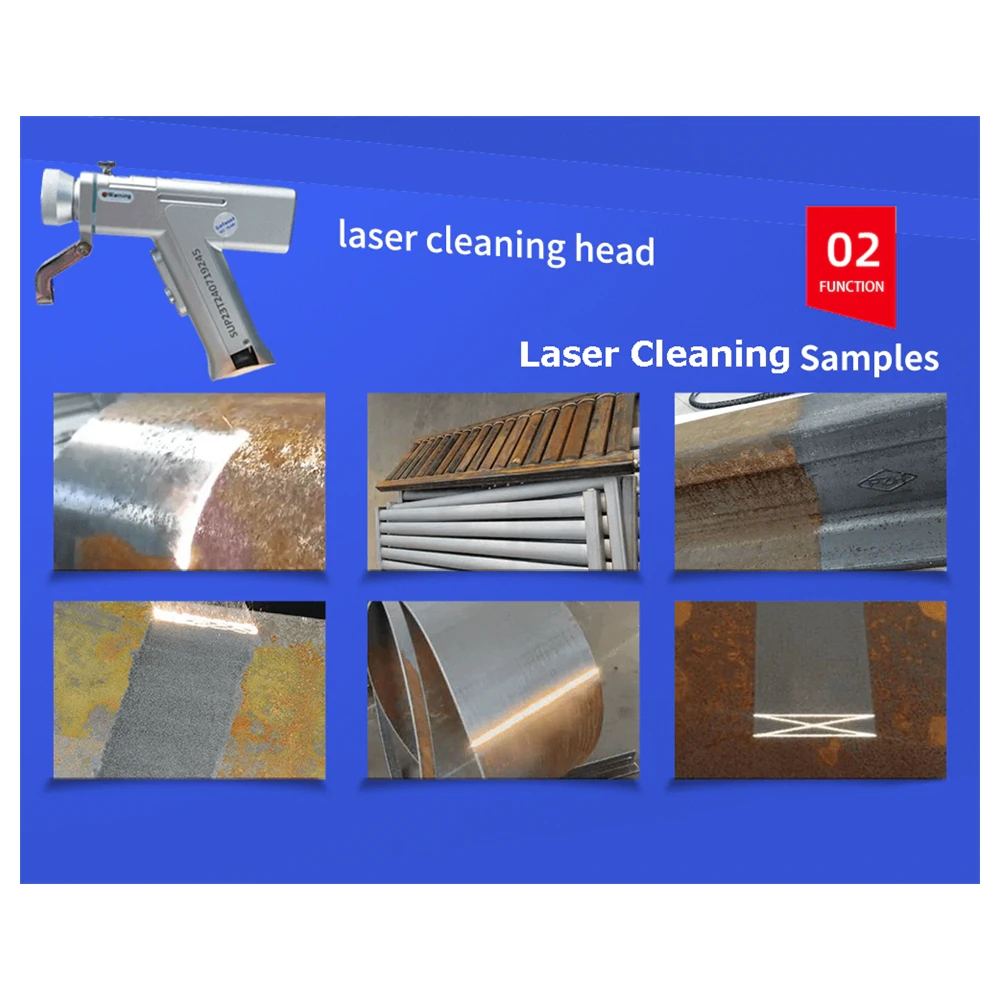
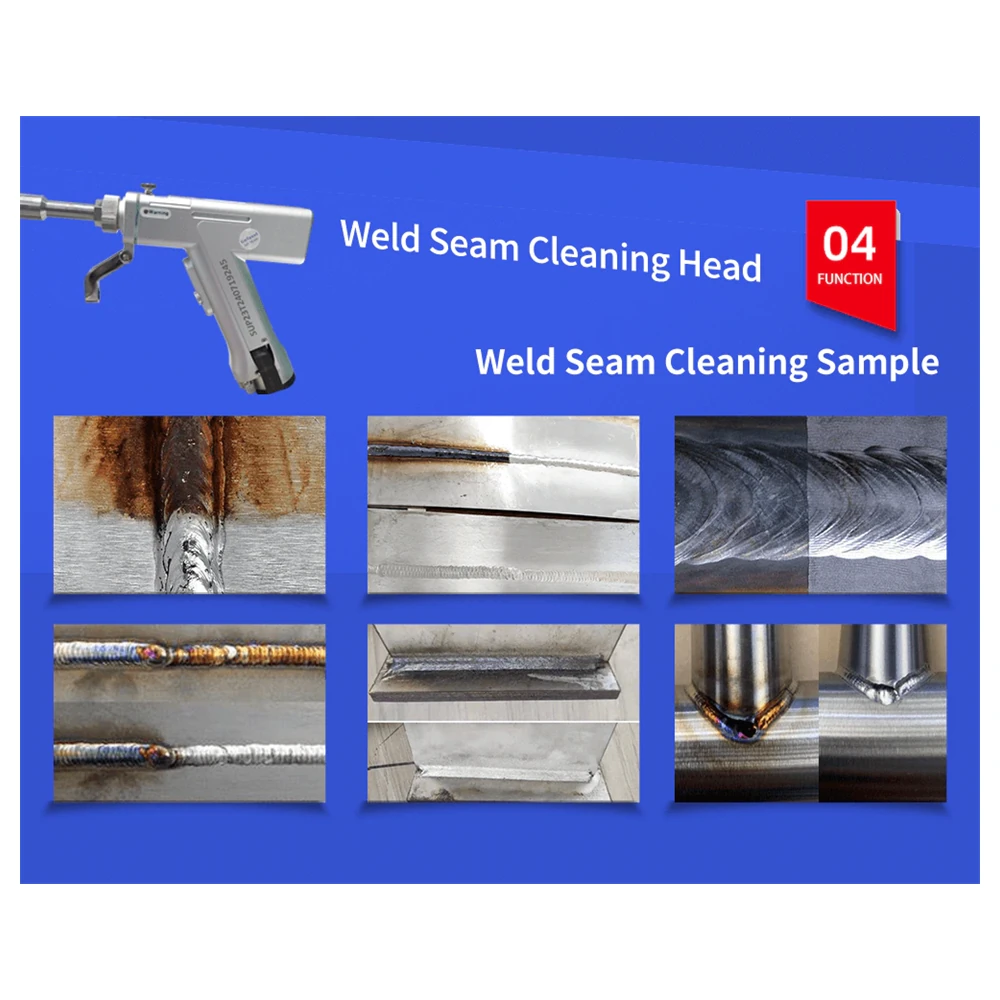
Run the cleaning head along the seam to strip rust, oil and coating before the weld starts.
Select the wobble pattern and wire feed, then run the joint in a single steady pass.
Dress the seam with the cleaning head, check width and penetration against the approved sample.
These are the limits that decide what the machine can be asked to do.
Separated cabinets suit cells and lines where the cabinet can sit out of the way while the gun reaches the work.
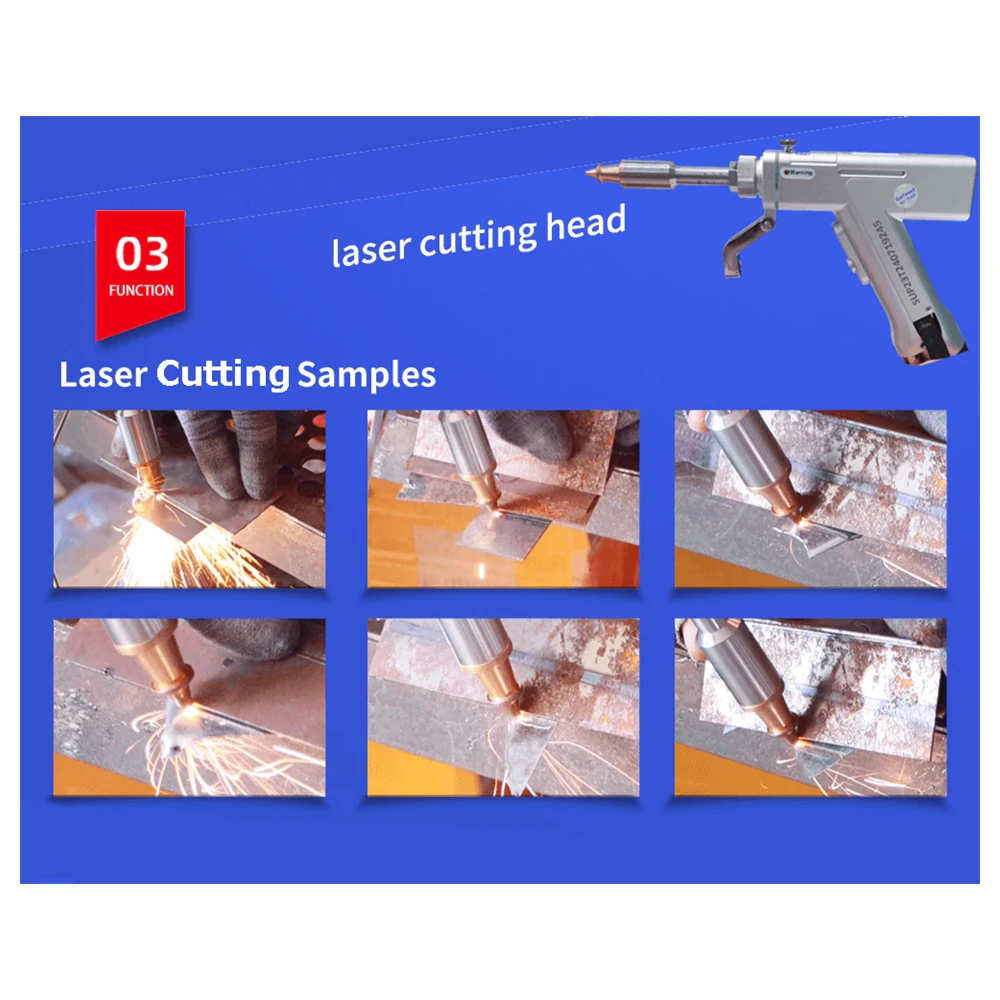
Terms are agreed before production, and support does not depend on returning the machine.
Air express by DHL, FedEx, TNT or UPS, plus air and sea freight. Trackable from the factory door.
T/T bank transfer, PayPal and Western Union. Terms and Incoterms are confirmed on the proforma invoice.
Parts covered, with free replacement components and lifetime engineering support.
Both cabinets are cushioned in foam inside reinforced cartons to prevent movement in transit.
Separating the laser source from the water chiller keeps heat away from the optics, gives each unit its own airflow and makes servicing easier. If a pump or filter needs attention, the source cabinet stays closed and aligned.
Stainless steel, carbon steel, aluminium, copper and galvanised sheet are all supported. Aluminium and copper are welded at the higher power levels with a slightly different focus and gas setting because they reflect more of the beam.
Single wire covers standard butt and lap joints and most repair work. Dual wire feeds two wires at once to raise deposition rate on thick sections or when a joint needs a built-up fillet, so it suits heavier fabrication.
The standard fiber lengths are 10 m, 12 m and 15 m, with up to 20 m available. Longer cables let the cabinet sit outside a cell or weld booth while the gun reaches the joint.
The wobble head bridges a joint gap of up to 0.5 mm in a single pass. A wider oscillation also stirs the melt pool, which reduces porosity and keeps the bead flat across the joint.
Check the water level, use distilled or deionised water, and inspect hoses for leaks. Replacing the coolant periodically keeps heat transfer stable, which protects the source and the optics over a long service life.
Standard production is about five working days, with express transit adding roughly four to six working days. The machine carries a 2-year warranty with free replacement parts and English online support for the life of the unit. Volume terms are agreed per order.
Compare the split-type build with the rest of the welding range.
No chiller and 55 kg, for site work and maintenance where a water circuit is impractical.
View model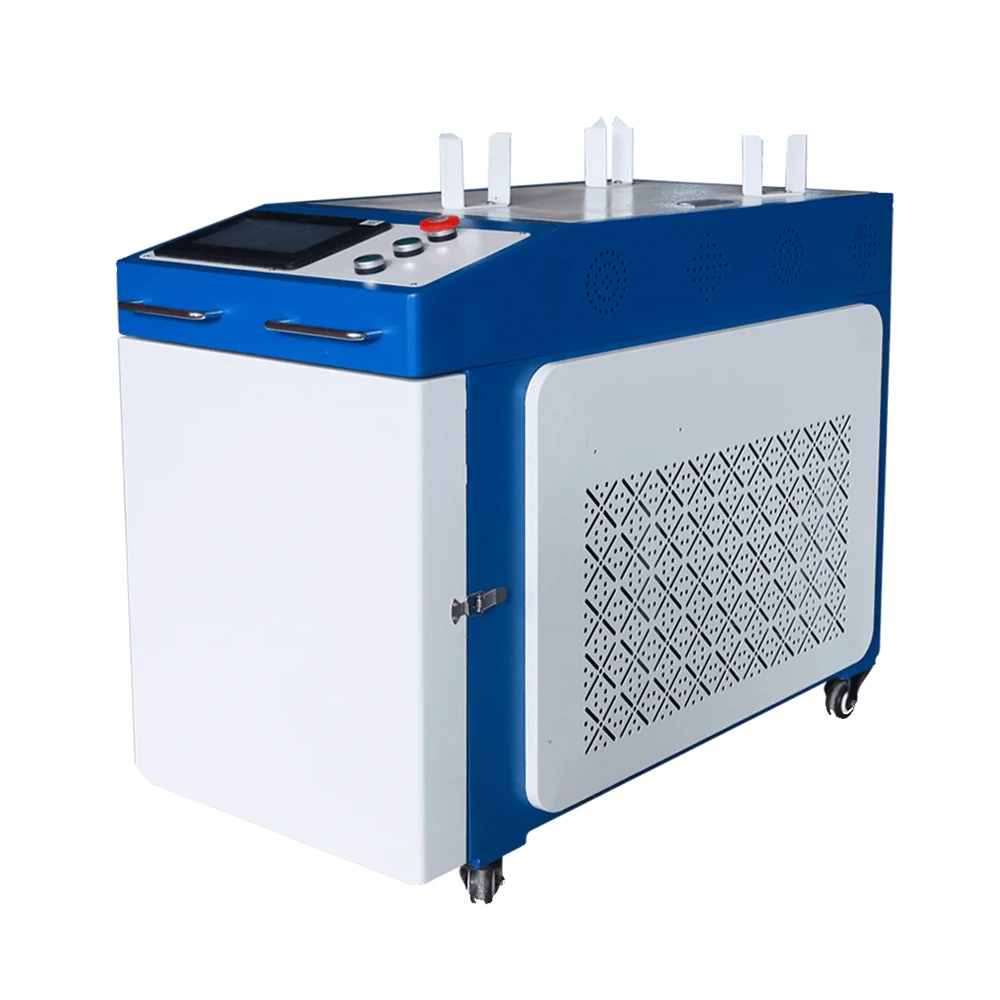
Water-cooled four-in-one from 1500W to 3000W with a 19-language control system.
View model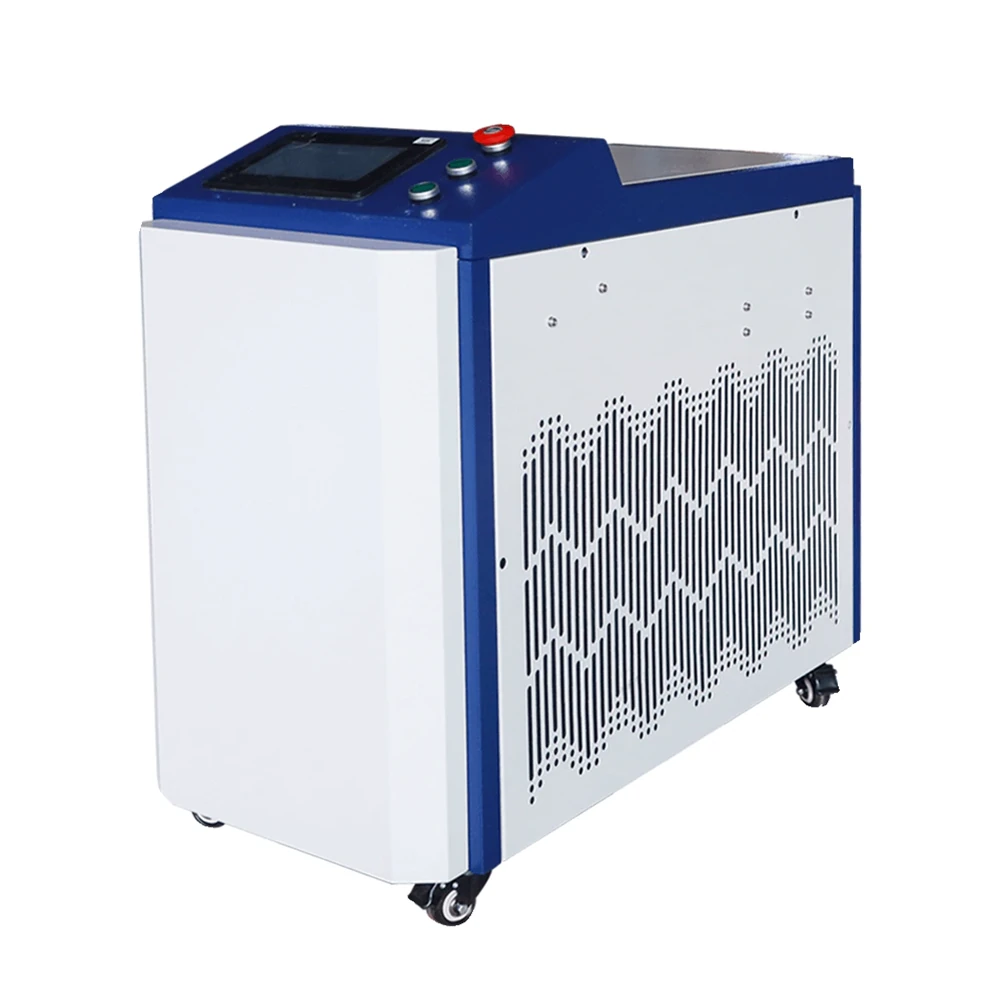
Integrated Hanli chiller, circular, rectangular and linear scan modes, and optical-path protection.
View model