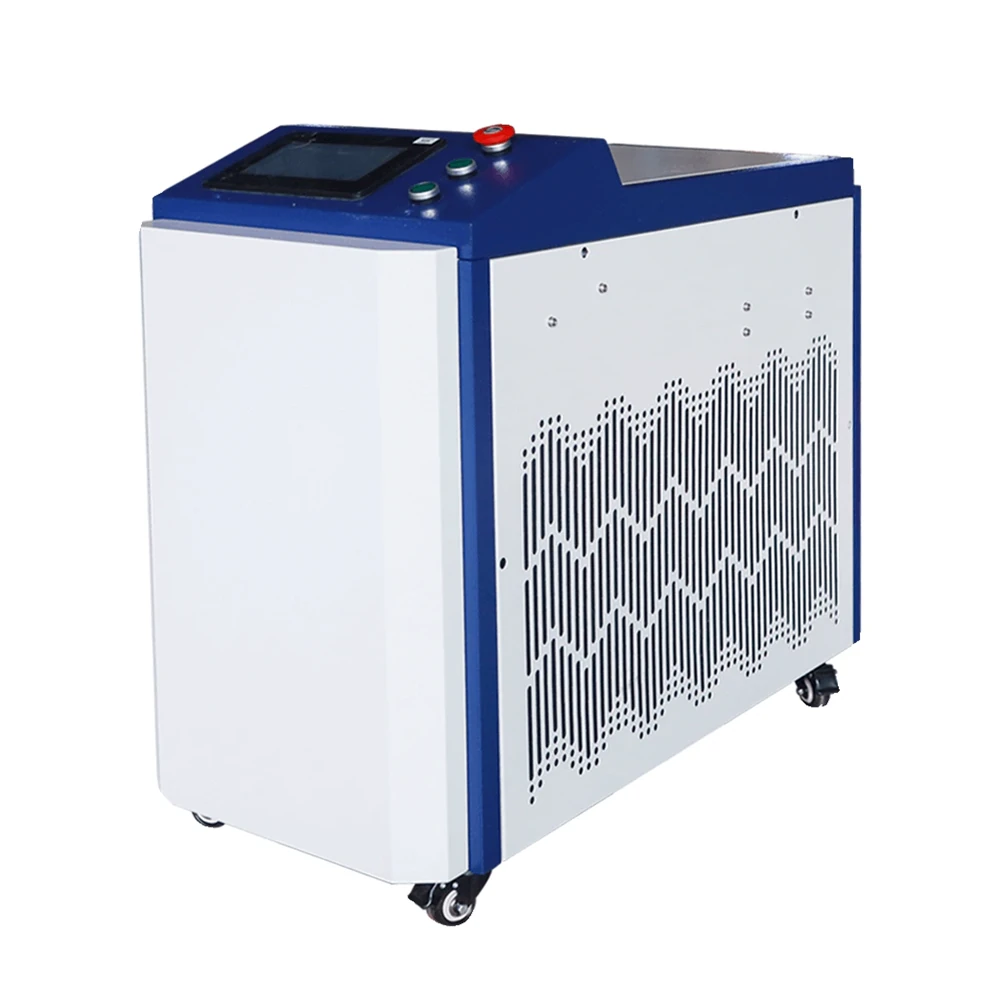
Hanli 4-in-1 Handheld Welder
An integrated Hanli chiller with three wobble scan modes and optical-path protection.
View model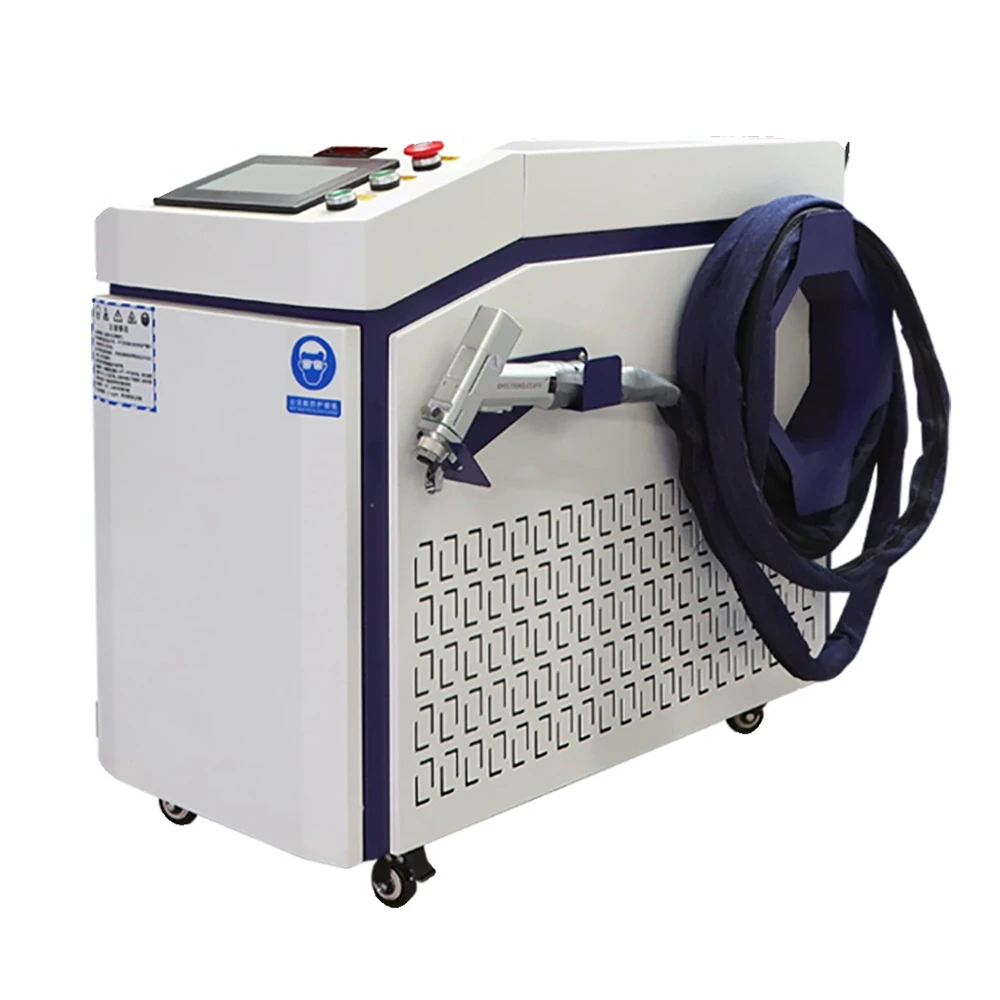
Cooling is what separates a welder that lasts a shift from one that lasts a year. This build houses an S&A CWFL dual-circuit chiller inside the cabinet, holding the loop within about half a degree while you weld, clean, cut and finish seams from one 1080 nm platform, 1500W to 3000W.
Thermal stability is the figure that separates a production welder from a handyman tool.
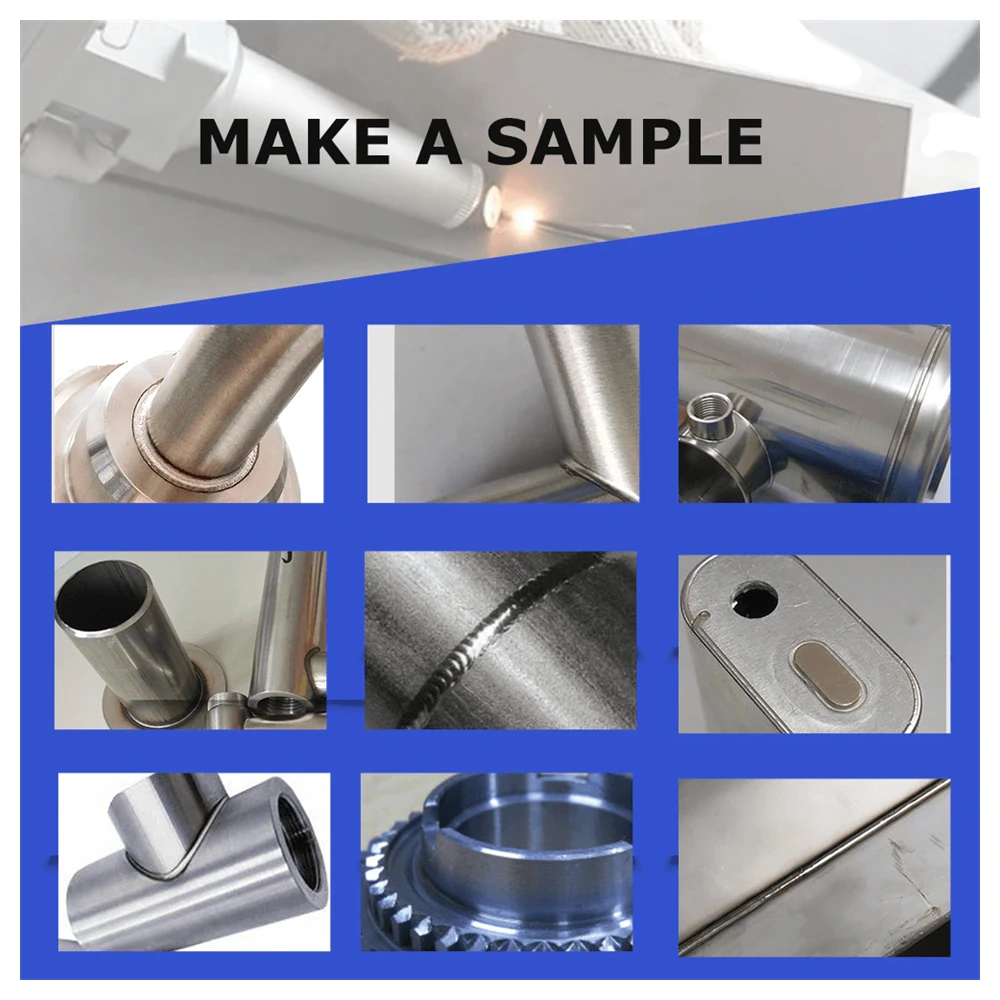
Heat is the enemy of a stable bead. As the source warms, focus drifts and penetration changes. Here the chiller is matched to the source and optics from the start, so the machine settles quickly and then holds its recipe for hours.
Two circuits, two temperature set points, one cabinet. The diagram below explains what each loop protects.
Pulls heat from the fiber source and holds it at its own set point, which keeps output power stable as duty cycles rise.
Cools the QBH connector and the optical path separately, because the optics prefer a different temperature to the source.
Dual temperature control holds about 0.5 degrees and raises a warning on abnormal flow or temperature.
| Cooling Parameter | Specification |
|---|---|
| Chiller family | S&A CWFL series, integrated in the cabinet |
| Circuit layout | Dual circuit, source and optics cooled separately |
| Temperature control | Dual control, within about ±0.5 °C |
| Reservoir | Enclosed tank with corrosion-resistant wetted parts |
| Recommended coolant | Deionised or distilled water, changed about every three months |
| Recommended water temperature | About 20 °C to 25 °C for most welding jobs |
| Alarms | Flow and temperature abnormality warnings |
One platform, three power levels. Every figure below is transcribed from the machine datasheet.
| Parameter | KR-LW1500S | KR-LW2000S | KR-LW3000S |
|---|---|---|---|
| Laser Source | Raycus / Reci / BWT / Max | ||
| Laser Power | 1500W | 2000W | 3000W |
| Power Adjustment Range | 0–1500W | 0–2000W | 0–3000W |
| Supply Voltage | 220V single phase | 220V single phase | 380V three phase |
| Laser Wavelength | 1080 nm | ||
| Fiber Length | 10 m / 12 m / 15 m, up to 20 m | ||
| Operation Mode | Continuous welding | ||
| Max Oscillation Speed | 20000 mm/s | ||
| Run System | Handheld welding system | ||
| Cooling System | S&A water-cooled, dual circuit | ||
| Ambient Temperature | 10–40 °C | ||
| Ambient Humidity | Below 70%, non-condensing | ||
| Weld Gap Requirement | 0.5 mm or less | ||
| Machine Dimensions | 860 × 410 × 700 mm | 1140 × 530 × 1040 mm | |
| Wire Feeder Dimensions | 570 × 250 × 400 mm | ||
| Machine Weight | 77 kg | ||
The datasheet lists the welding gun at 0.75 kg for the KR-LW1500S and KR-LW2000S but repeats the 109.2 kg figure for the KR-LW3000S, which matches the economy model machine weight rather than a gun. Treat the 0.75 kg figure as the gun weight and confirm the top model on your order. Water temperature, coolant and gun weight are confirmed before production.
Three practical gains that come from holding the loop at a fixed temperature.
The machine can weld through a full shift without the output falling away as the source heats up.
A stable temperature keeps bead width and penetration constant, so the hundredth part matches the first.
Cooler optics and a cooler source wear more slowly, which lowers maintenance and extends service intervals.
Four steps keep the thermal system and the weld process in step.
Confirm the water level and that the loop is clean before switching on the source.
Let the chiller settle to its set point so the optics reach a stable temperature.
Choose power, wobble pattern and gas flow for the material, then test on a coupon.
Run the seam, then dress it with the cleaning head and inspect against the approved sample.
Steady cooling matters most where the machine runs for hours without a break.
Repeatable seams on brackets and panels where output must not drift across a long shift.
Tanks, sinks and railings welded and finished bright, with heat tint removed by the seam head.
Low-distortion, code-controlled beads on thin-walled assemblies that tolerate no heat drift.
Terms are agreed before production, and the chiller is covered by the same warranty as the machine.
Air express by DHL, FedEx, TNT or UPS, plus air and sea freight. Trackable from the factory door.
T/T bank transfer, PayPal and Western Union. Terms and Incoterms are confirmed on the proforma invoice.
Parts covered, including chiller components, with free replacement parts and lifetime support.
Double-layer packing with a thick outer carton and foam cushions that stop movement in transit.
The S&A chiller removes heat from the laser source and the optics so the machine can run for long periods without drifting. It replaces a generic cooling unit with a proven industrial chiller designed for laser duty.
A dual circuit cools the laser source and the optical path separately, because they tolerate different temperatures. Splitting the loops keeps each at its own set point, which protects the optics and holds the beam stable during continuous welding.
The dual temperature control holds fluctuations within about 0.5 degrees Celsius. That consistency is what keeps bead width and penetration repeatable from the first part to the last part of a shift.
Use deionised or distilled water so minerals do not build up and block the lines. As a rule, change the water about every three months, and more often in dusty or hot environments.
The integrated alarm system watches flow rate and temperature. An abnormal flow or temperature condition raises an alarm before it can damage the source or the optics, which protects both the machine and the operator.
Stainless steel, carbon steel, aluminium, copper and galvanised sheet are all supported. Aluminium and copper reflect more of the beam, so they are welded at the higher power levels with a slightly different focus and gas setting.
Standard production is about five working days, with express transit adding roughly four to six working days. The machine carries a 2-year warranty with free replacement parts and English online support for the life of the unit. Volume terms are agreed per order.
The same four-in-one platform, built with different cooling and customisation priorities.
An integrated Hanli chiller with three wobble scan modes and optical-path protection.
View model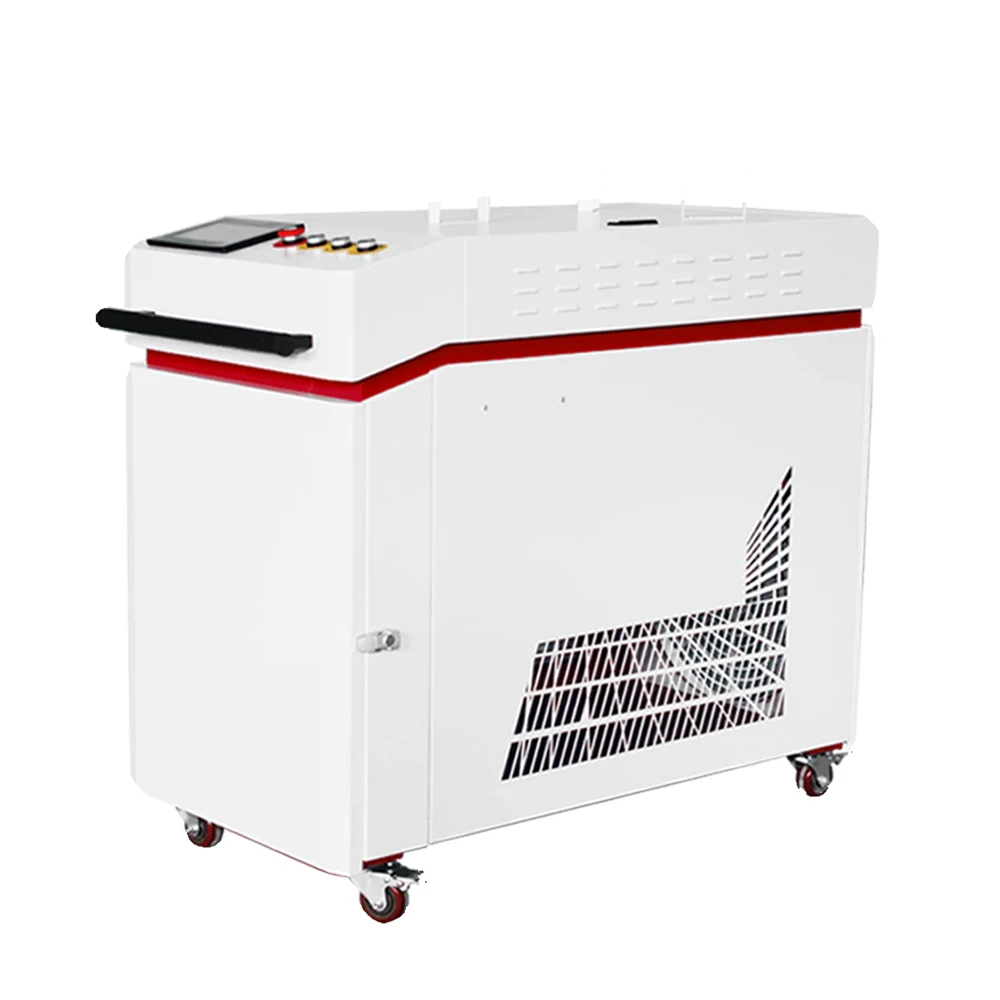
Source and chiller in separate cabinets for extra cooling headroom and easier service access.
View model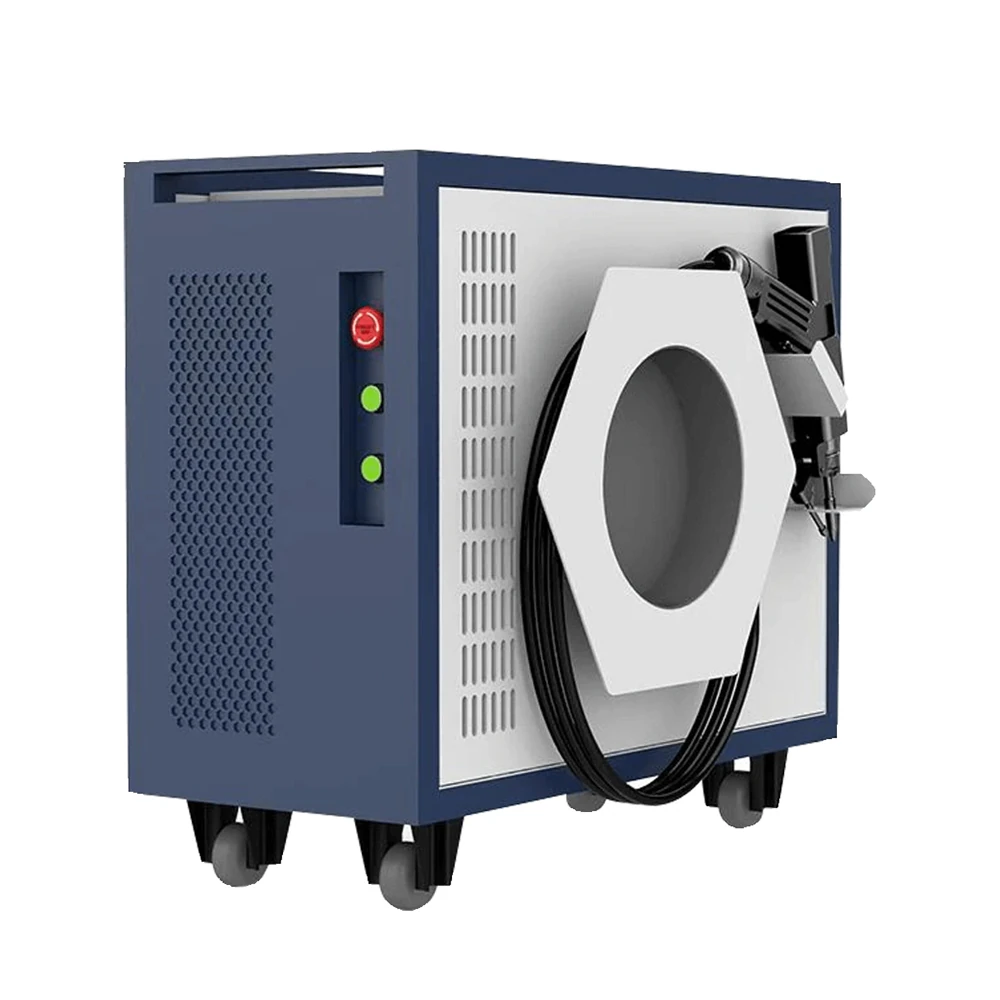
No chiller at all, 55 kg and ready for site work where water is impractical.
View model