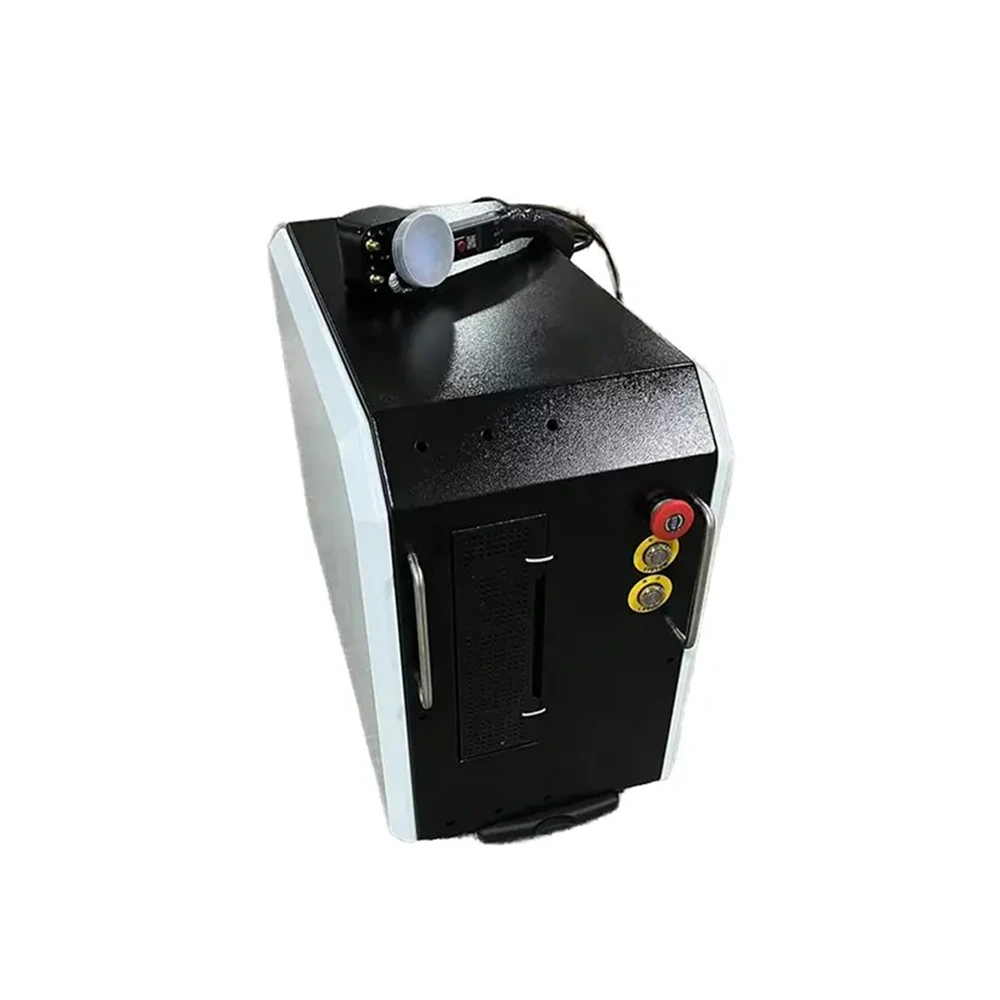
Dual-Axis Precision Laser Cleaner
A motorized dual-axis head with eight scan modes for furniture, curved panels and mold work.
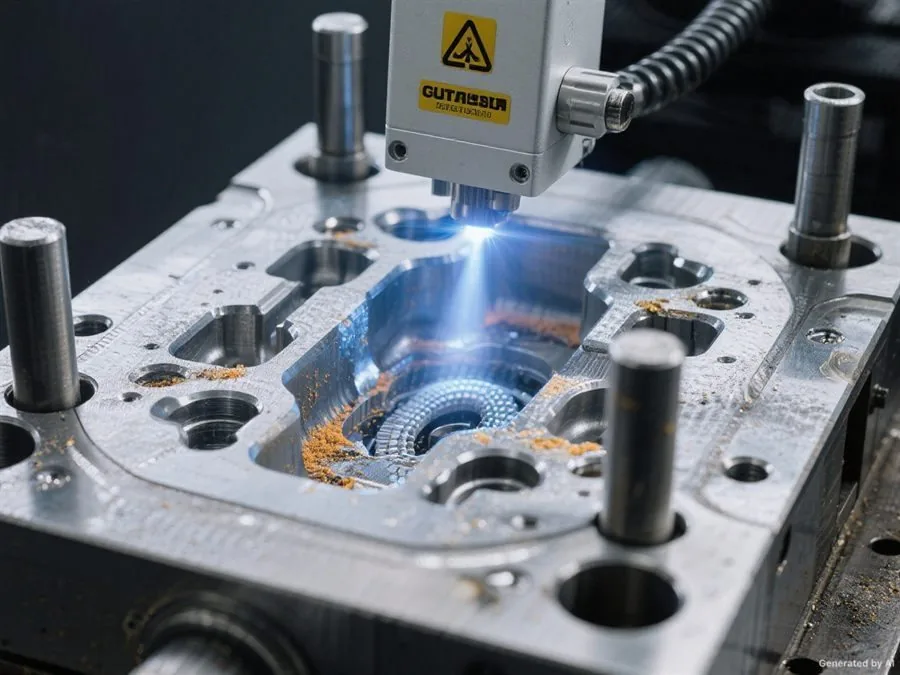
View modelNot every dirty surface is a flat plate. This machine pairs a 0.85 kg pull-rod gun with a multi-pulse laser source, so rust, paint, oxide and oil can be removed from inside pipework, from the bottom of a complex mold or from under a flange that no wide head can enter. The gun connects to the cabinet on a flexible cable and returns contamination to an integrated fume extractor, giving micron-level, non-contact cleaning with nothing to sweep up afterwards.
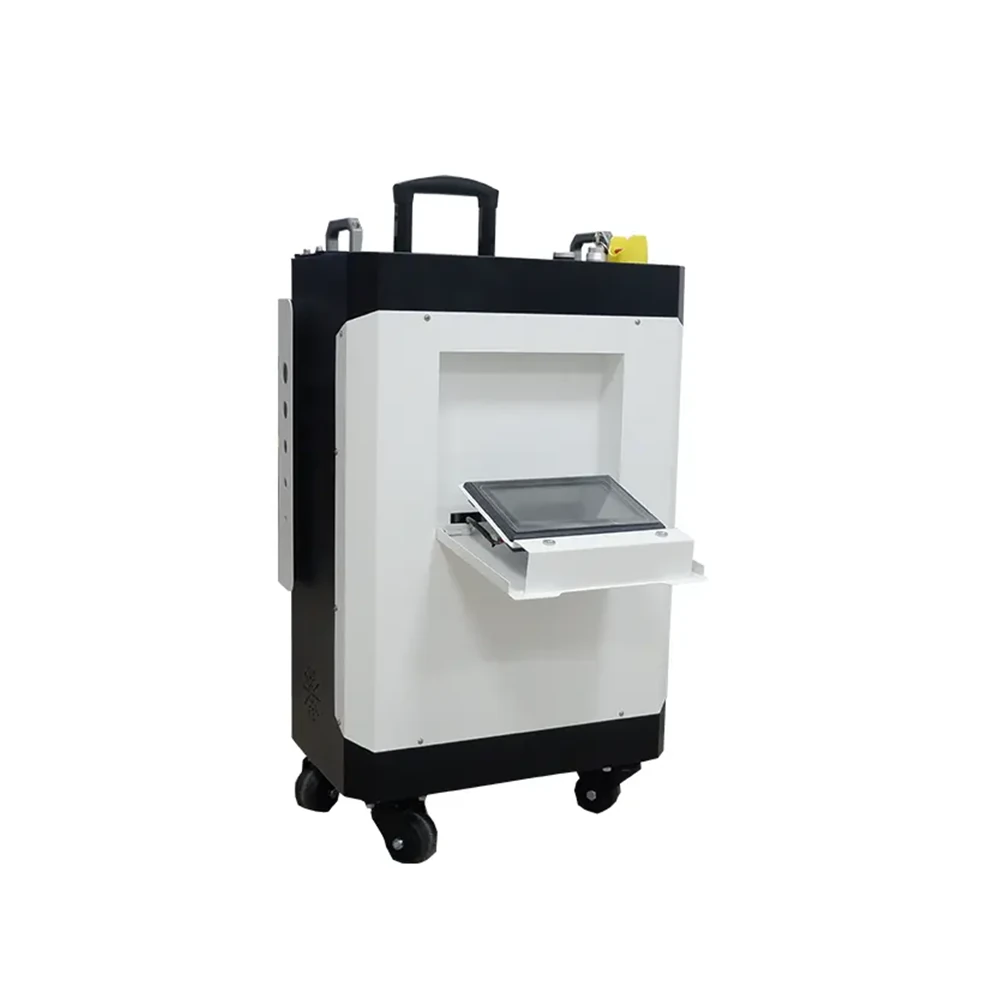
Four stages take the surface from contaminated to clean, with heat confined to the layer being removed.
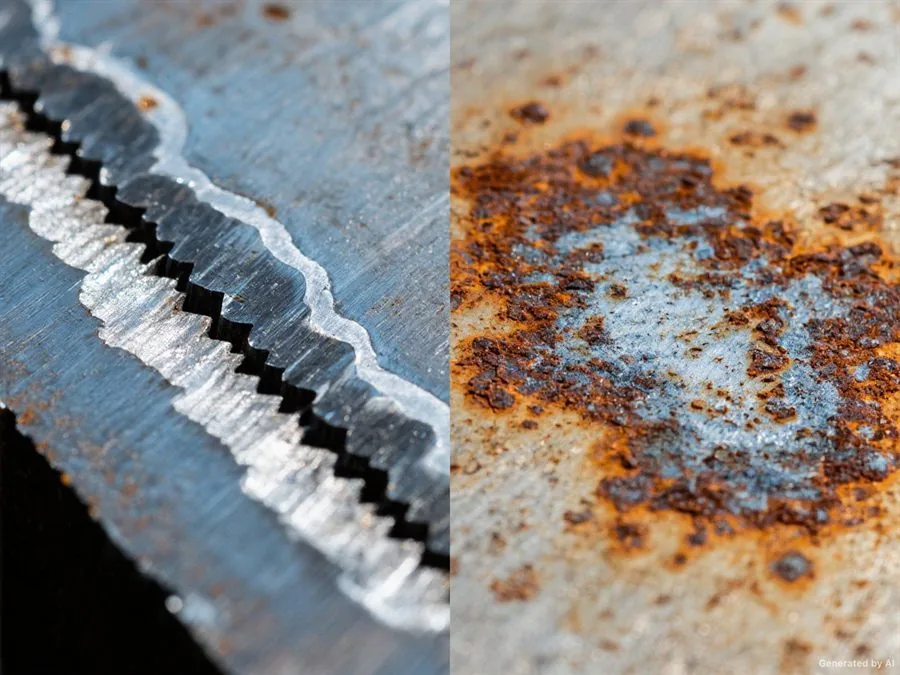
The operator aims the beam from the pull-rod gun at the contaminated area, such as thick rust on steel.
Ultra-short, high-intensity pulses strike the layer, and the contamination absorbs the energy selectively because its absorption differs from the clean metal below.
Rapid absorption makes the contaminant expand violently and vaporize instantly, breaking its bond with the substrate.
The integrated vacuum captures the vaporized and detached particles at once, leaving a clean surface with no media embedded and no chemical residue.
Because the pulse removes one thin layer at a time, the operator can stop at the primer, at bare metal or at any controlled depth without changing the machine setup.
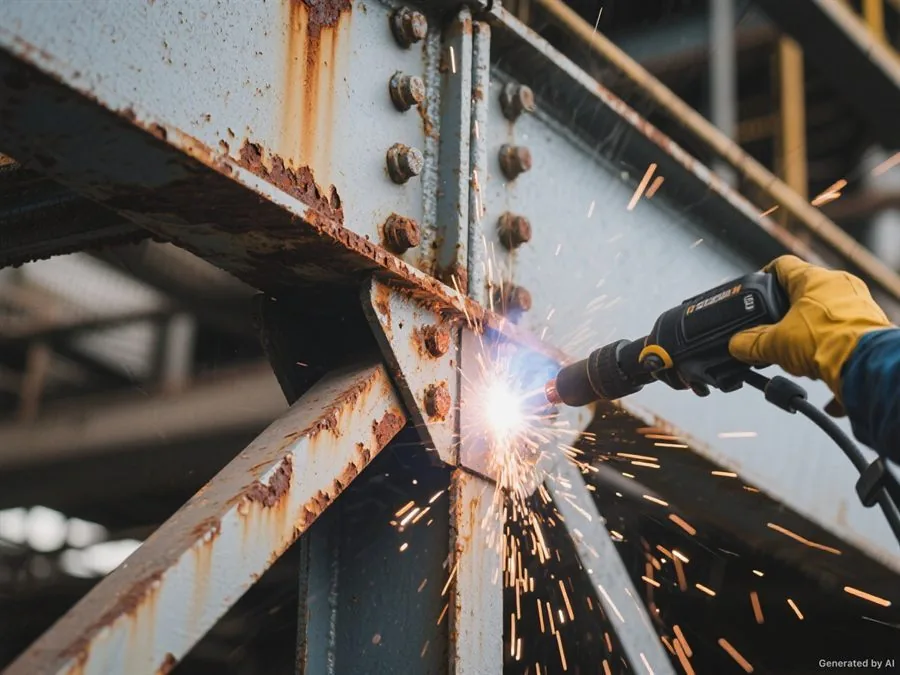
The pull-rod format separates the cleaning head from the cabinet. A flexible cable carries the beam and the extraction path, so the operator works with a small, balanced gun while the heavier power unit stays on the floor.
Choosing the right path keeps the finish even and avoids the striping that a single fixed pattern can leave on curved or irregular parts.
Concentric paths for round features, bolt circles and annular sealing faces.
A sweeping path that spreads the beam evenly and reduces visible overlap marks on flat work.
Two counter-rotating spirals for large circular areas and bores where consistent coverage matters.
A user-defined path that follows irregular geometry, so cleaning tracks the shape of the part rather than a fixed grid.
A single controlled ring, useful for cleaning a defined band such as a weld edge or a flange face.
Patterns can be combined and run in sequence, so a multi-layer coating is removed one film at a time.
Figures that describe how the pull-rod format performs in tight and delicate work.
All four power levels share the same gun and control system, so the choice is about contaminant and part size.
| Power Grade | Typical Applications | Best Suited To |
|---|---|---|
| 100W | Precision cleaning, light rust and oxide, oil film, thin paint | Small parts, delicate surfaces, heritage pieces |
| 200W | Heavy rust removal, thick paint and coatings, weld seams | Medium-sized components and molds |
| 300W | Industrial-scale rust, mill scale, thick epoxy coatings | Large surface areas and production cleaning |
| 500W | Maximum removal rate in the pull-rod format | High-throughput workshop cleaning |
| All Grades | Supplied with the 0.85 kg pull-rod gun, handheld control, five scan patterns and integrated fume extraction | |
For a job that mixes delicate and heavy cleaning, the higher grade can run at reduced power, so one machine covers both. Volume terms are agreed per order.
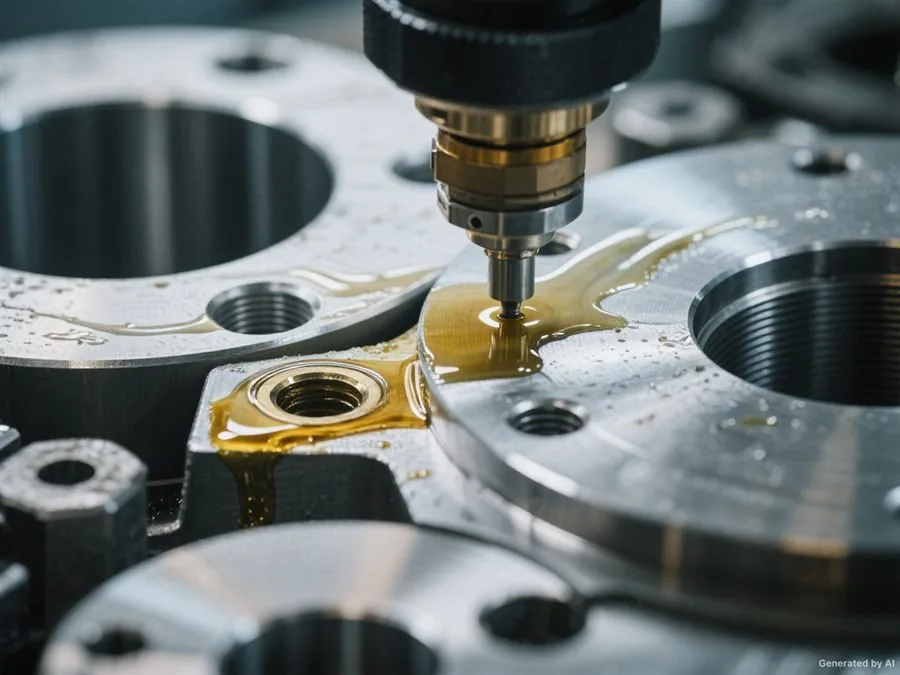
Five sectors use the pull-rod format because the contamination sits somewhere a larger head cannot reach.
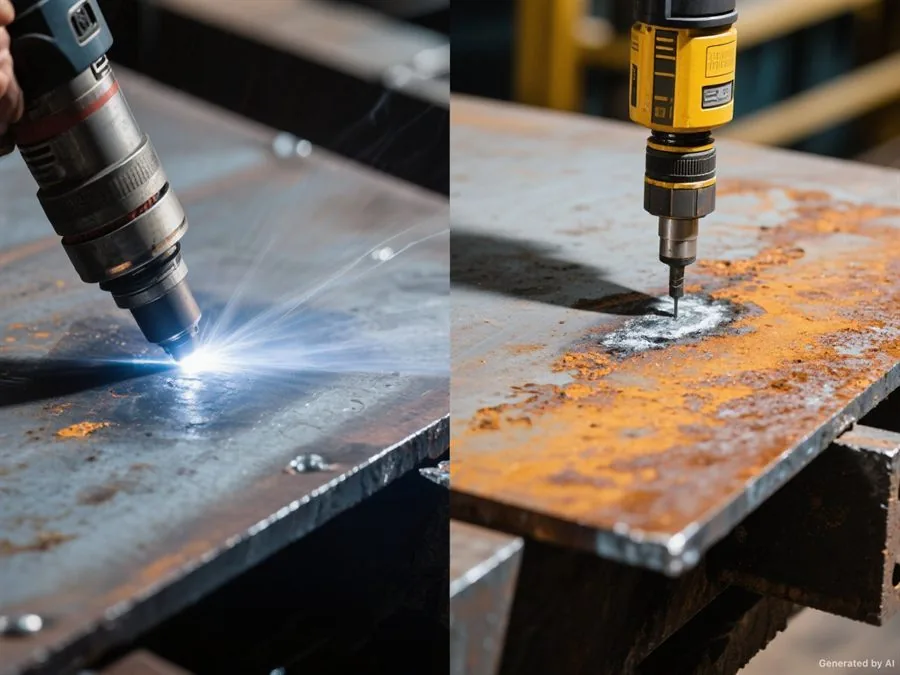
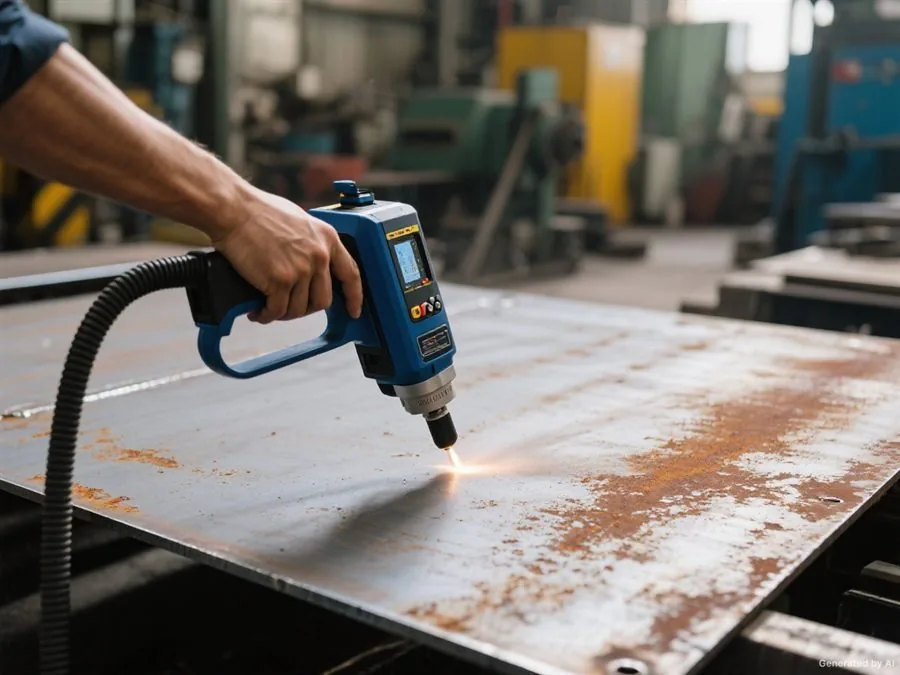
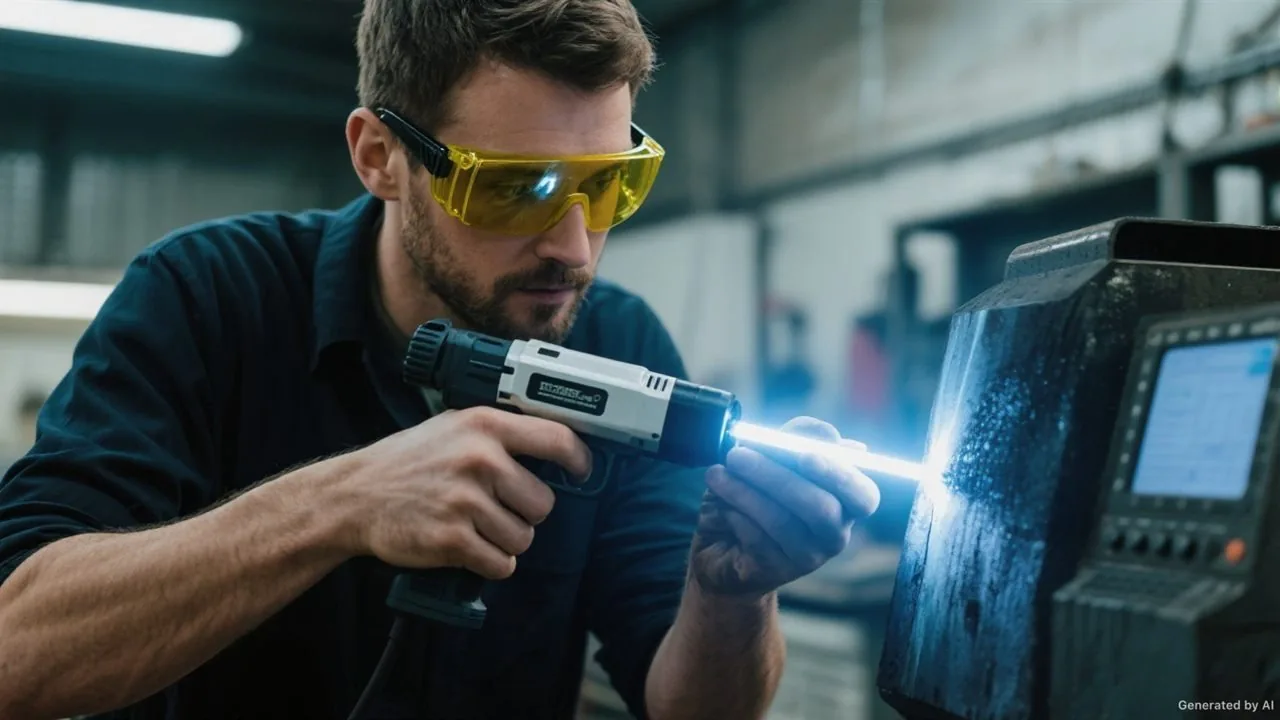
Thermal barrier coating is removed from turbine blades at 300W without damaging the superalloy substrate underneath.
Decades of paint are taken off a classic car body down to bare metal at 200W while preserving the original panel contours.
Release agent and carbon build-up are cleaned from complex injection molds at 100W to 200W, restoring the cavity surface.
A clean, oxide-free weld zone is created on critical pipework at 200W to 300W, protecting joint integrity.
Centuries of dirt and corrosion are removed gently from a bronze sculpture at 100W, leaving the patina intact.
The pull-rod gun enters pipe bores and cleans the area under a flange, where oxide otherwise breaks down weld quality.
The system is supported before, during and after installation, with the same team that specified it.
A heavy-duty wooden case built for each component, with high-density foam and waterproof wrapping, plus all cables, connectors, goggles and tools.
Certified engineers commission the system and train operators on safe operation, maintenance, troubleshooting and process optimization.
One year on the complete system and three years on the critical German laser source, valid through the global service network.
Genuine spare parts are stocked globally and typically dispatched within 48 hours, with remote technical support available any time.
Instead of a constant beam, the machine fires ultra-short, high-power pulses. Each pulse creates a micro-explosion in the contamination layer that vaporizes or spalls it away without passing harmful heat into the substrate. It behaves like micro sandblasting with no media and no clean-up, and removes coatings to micron-level accuracy.
Yes. The gun weighs only 0.85 kg and connects to the main unit by a flexible cable, so it follows complex geometry and enters spaces that a fixed head cannot reach, including the inside of pipework, complex molds and the area under a flange.
The machine cleans metals such as steel, aluminium, copper and titanium, plus stone, concrete and some composites, and it is especially effective on rust, paint, oxide, oil, grease, mold and rubber residue. Transparent materials such as glass over the target layer, some dark plastics that absorb the wavelength, and untreated wood are not suitable. Material testing is recommended.
Speed depends on the power level, the contaminant type and thickness, and the cleanliness required. In practice the process is far faster than hand scraping or wire brushing, and it is competitive with or quicker than blasting once the setup and clean-up time of blasting is included.
Yes, when it is used correctly with the supplied safety goggles matched to the laser wavelength and the operating procedure is followed. The integrated fume extractor removes airborne particles. It is substantially safer than blasting or chemical cleaning because there is no dust cloud, no acid and no solvent exposure.
The ergonomic cleaning head, the handheld control unit, the JPT pulsed laser source and the fume extractor are supplied as a matched system, together with cables, connectors, safety goggles, basic tools and documentation in a heavy-duty wooden case.
The complete system carries a one-year standard warranty, and the critical laser source is covered for three years. Warranty service is provided through our global service network, with genuine spare parts typically dispatched within 48 hours.
If the work needs a different head format, cooling method or power level, these models are the closest alternatives.
A motorized dual-axis head with eight scan modes for furniture, curved panels and mold work.
View model
500W to 1000W water-cooled output for long shifts and Sa3.0 cleanliness on precision parts.
View model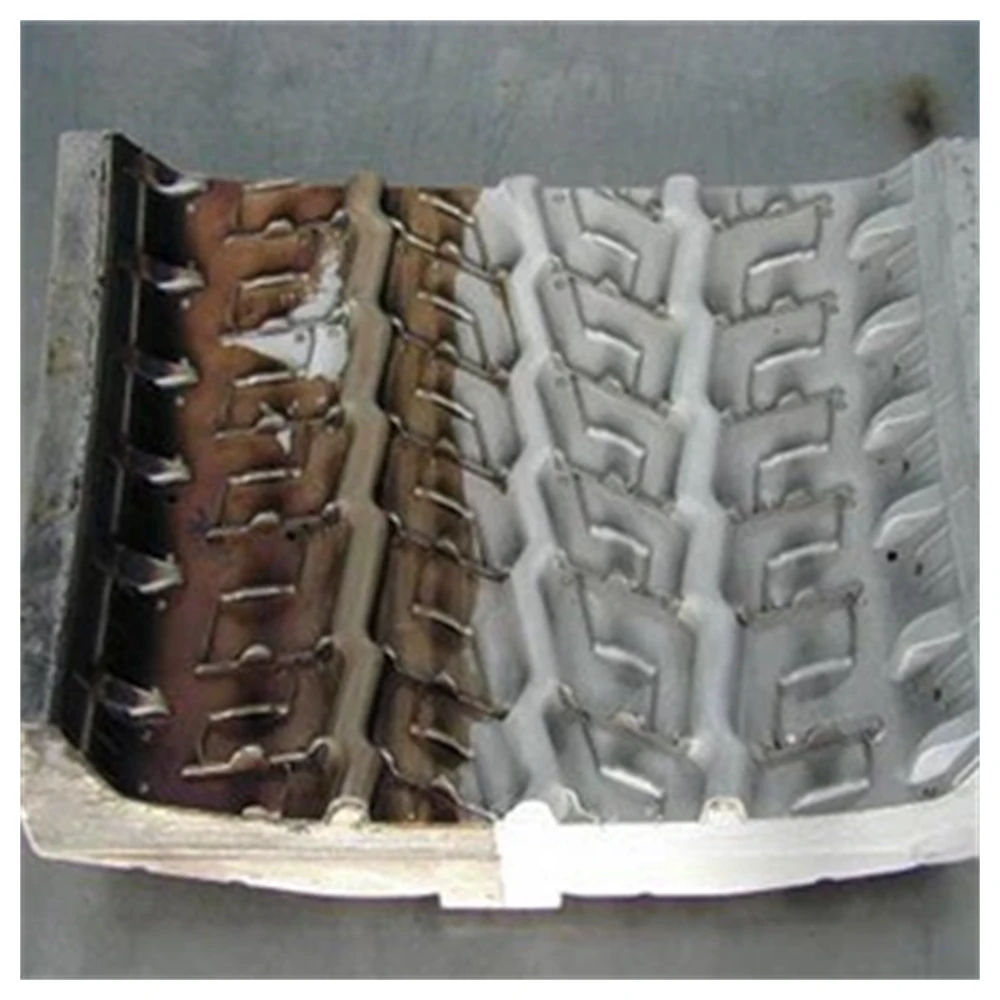
Clean and mark with one air-cooled unit, switching mode on the touchscreen.
View model