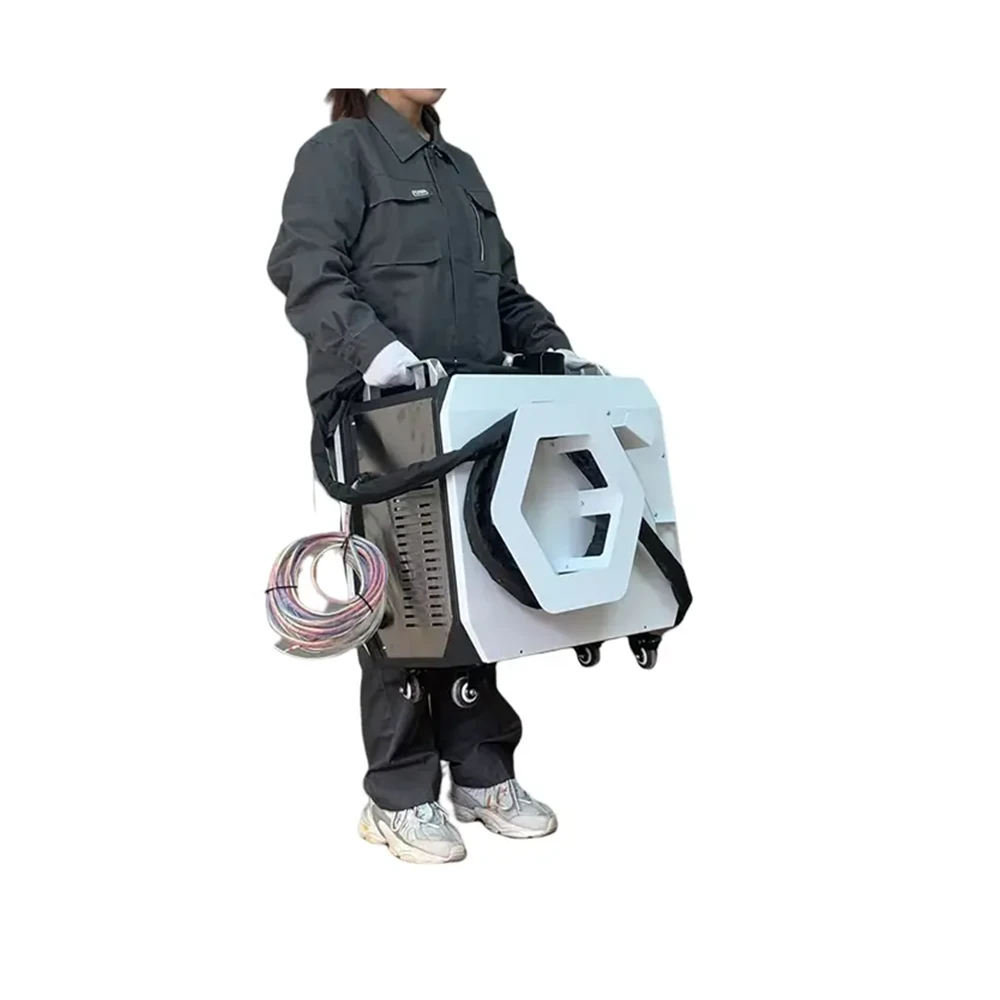
300W Portable Suitcase Laser Cleaner
Higher power in an all-in-one wheeled case for faster removal of resin, oil, rust and coatings.
View modelOne compact, air-cooled laser does two jobs that normally need two machines. Switch to cleaning mode and nine scan patterns lift rust, paint and oxide off the surface; switch to marking mode and the same beam engraves serial numbers, logos, barcodes and QR codes to a controlled depth. Operators switch modes from the touchscreen in seconds, and the detachable scan head works handheld or bolted to a bracket for automated production.
Cleaning and marking are both laser surface processes, so putting them in one cabinet removes the duplicated floor space, handling and maintenance that come with running two machines. The 100W source has the pulse energy for ablating contamination and the beam quality for fine, permanent marking.
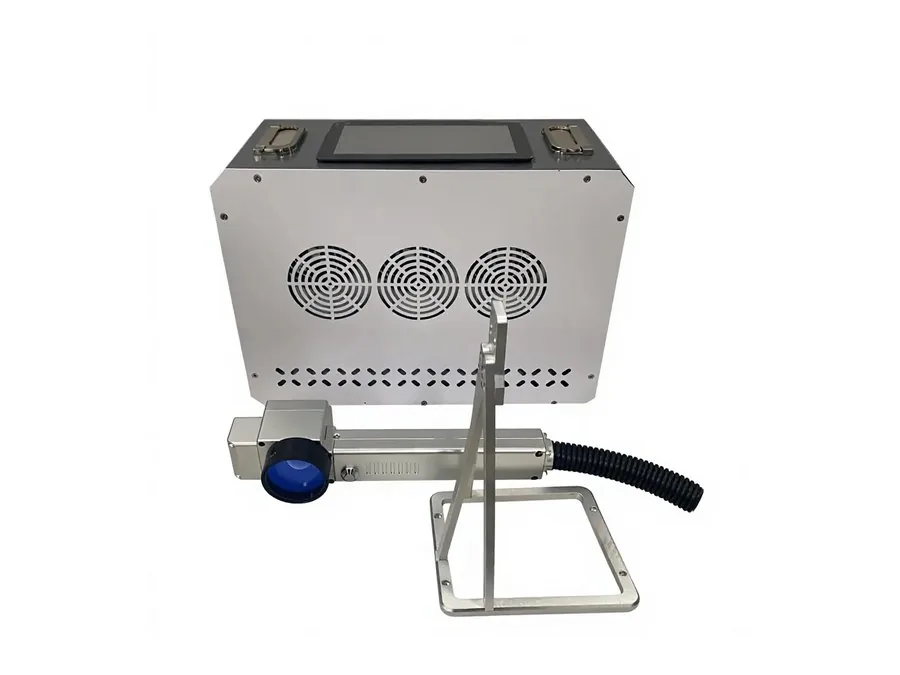
The two modes share the same laser source but differ in how the beam is delivered and what the controller does with it.
| Function | Cleaning Mode | Marking Mode |
|---|---|---|
| Purpose | Remove rust, paint, oxide, oil and coating | Apply permanent identification and graphics |
| Beam Delivery | Wide, overlapping scan paths | Fine focused spot, vector or raster path |
| Scan Patterns | Nine selectable paths | Text, barcode, QR and vector fill |
| File Formats | Internal pattern library | PLT, DXF, AI, BMP, JPG, PNG |
| Typical Depth | Up to 0.5 mm of rust removed in one pass | 0.02 mm anneal to 0.5 mm engraving |
| Standard Working Area | 100 × 100 mm | 100 × 100 mm |
| Adjustable Parameters | Frequency 20–200 kHz, pulse width 150–190 ns, power 1–100 percent stepless | |
| Best Suited To | Weld prep, rust and paint stripping in place | Traceability codes, logos, tool and asset marking |
Moving between modes does not change the machine configuration. Lens, working distance and parameter preset are the only variables, and a preset library is supplied with the unit.
Scan width, speed and overlap are adjustable, so the same head moves from a gentle surface wipe to full paint stripping.
A single direction pass for flat, uniform surfaces where a consistent finish matters more than speed.
Alternating passes cover large flat areas faster without leaving a visible directional texture.
A radial path designed for circular or irregular parts, keeping energy even around curves and corners.
Line, spiral and rotary fill variants cover ring-shaped areas, recesses and rotationally symmetric parts.
Traces a clean rectangle without fill, useful for masking a defined zone before coating or bonding.
A wave path spreads the beam across a rectangle and reduces the striping that parallel lines can leave behind.
Four numbers that decide what the machine can and cannot do for your parts.
Measured at full power and 65 kHz, giving a tight focus for fine marking and a clean edge on stripped metal.
Around eight continuous hours in a 25 degrees Celsius environment, with no chiller and no water to change.
Class 4 safety interlocks, emergency stop, key switch, audible alarm and 1064 nm goggles supplied with the unit.
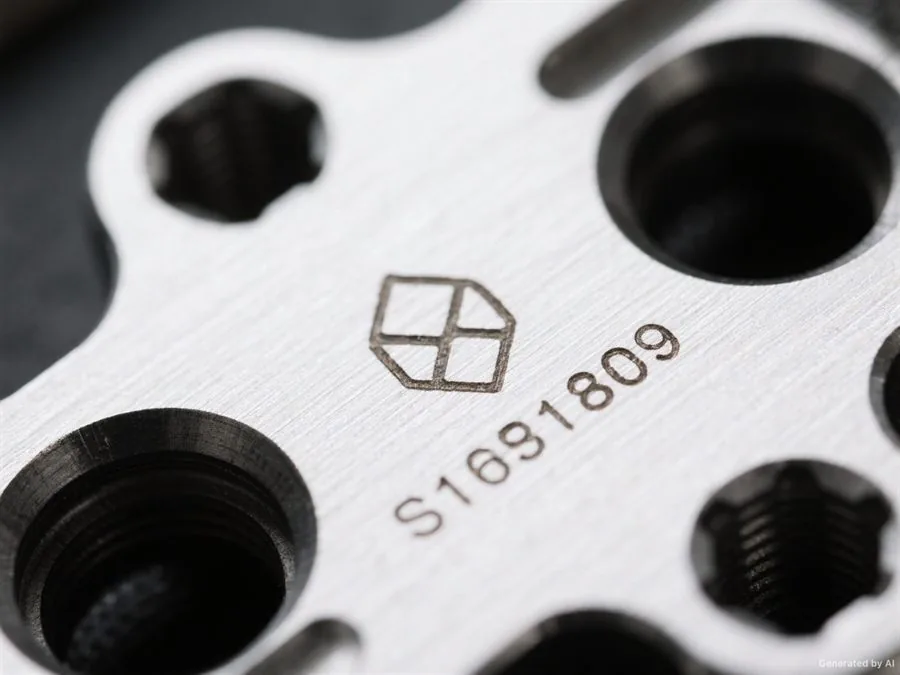
Marking depth is set by power, frequency and scan speed rather than by changing hardware, so one machine covers everything from a light contrast mark to an engraving that stands up to wear.
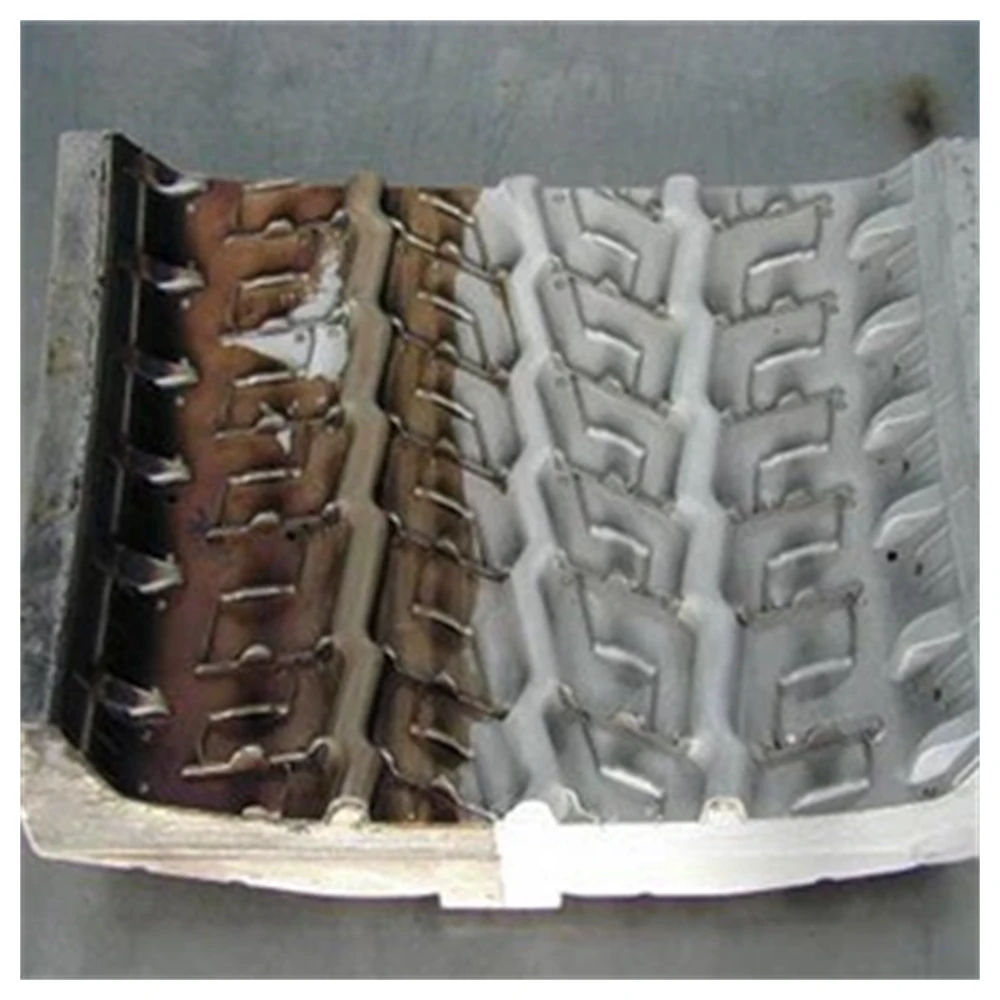
Reference results from the cleaning mode. Your own part can be tested free of charge before you decide on a configuration.
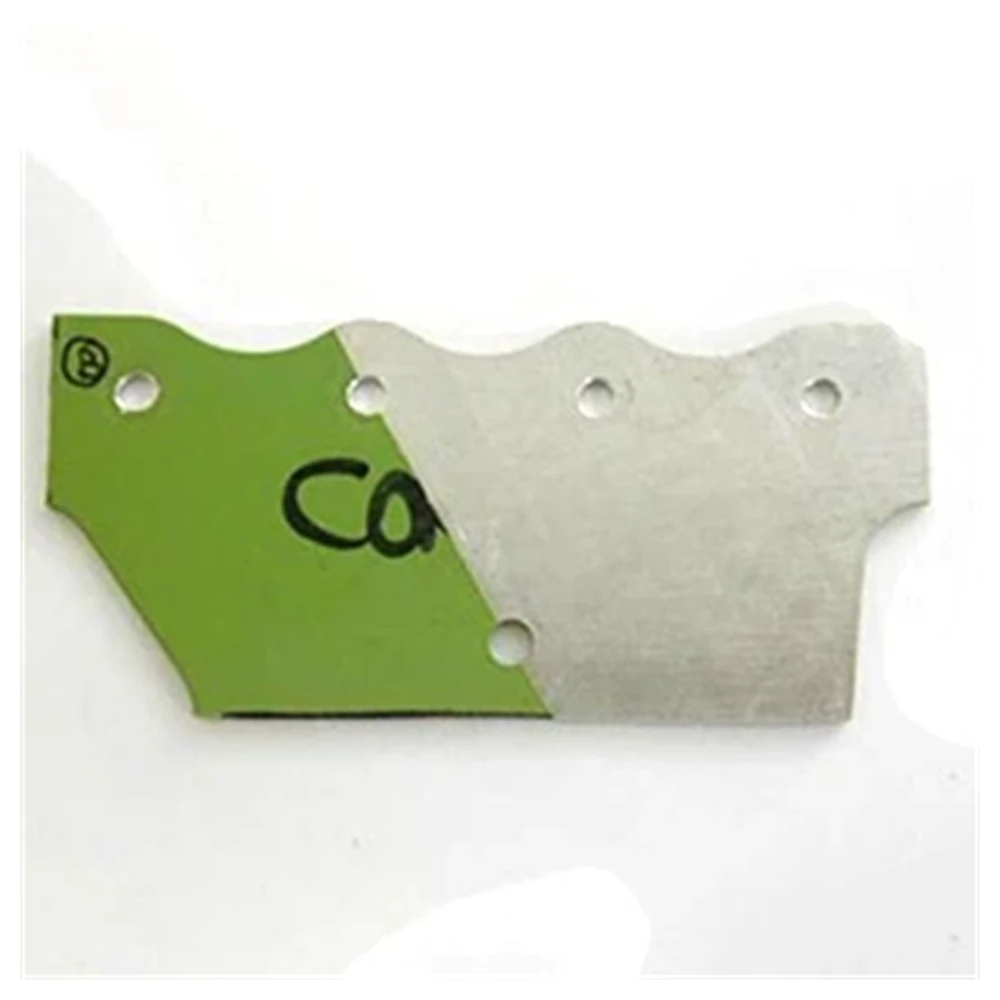
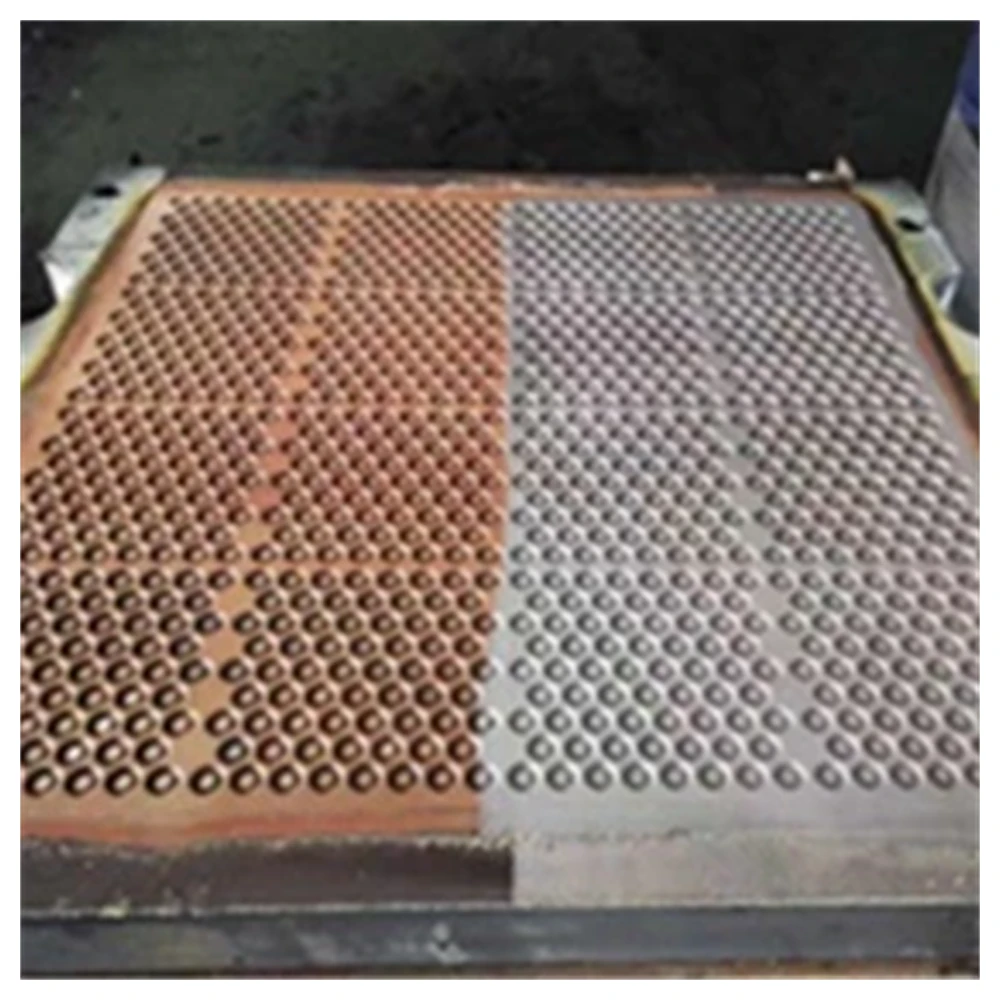
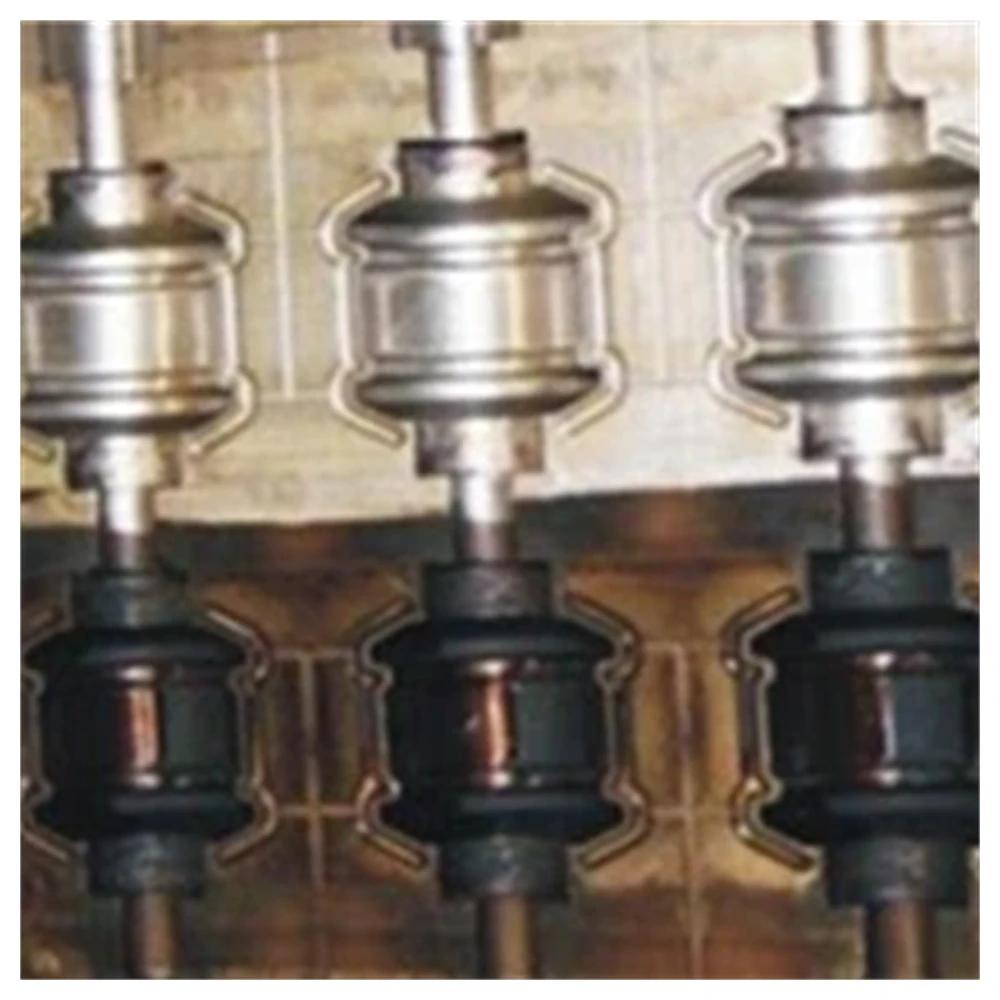
Every case below involves a part that must be cleaned and then identified, often in the same visit to the bench.
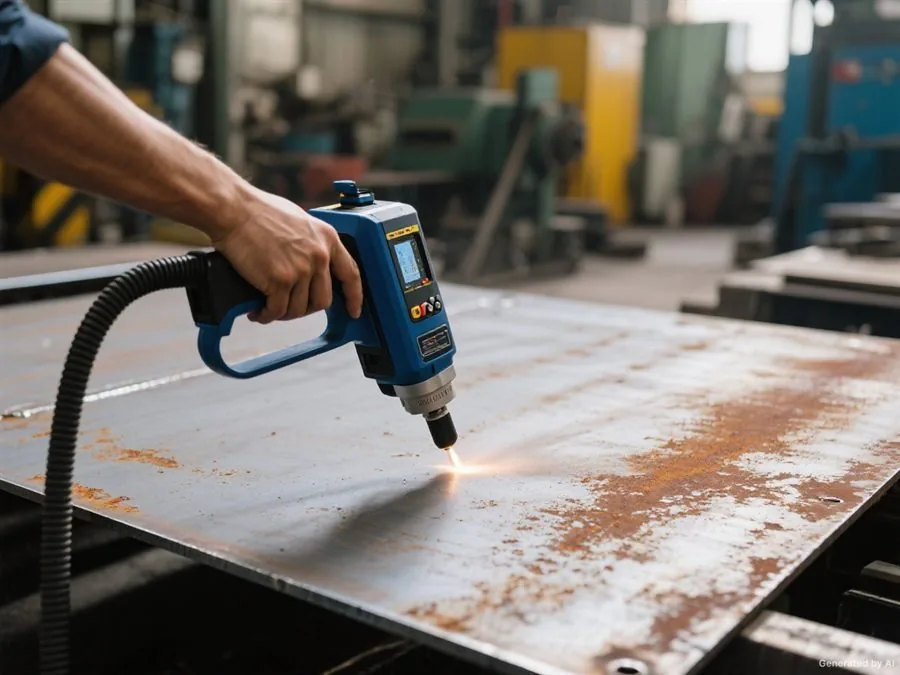
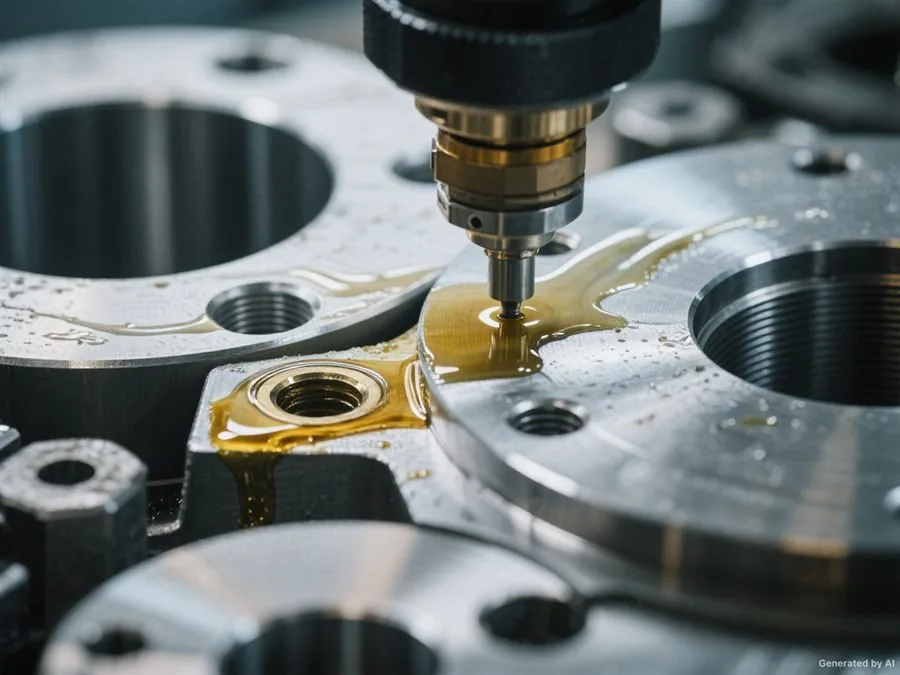
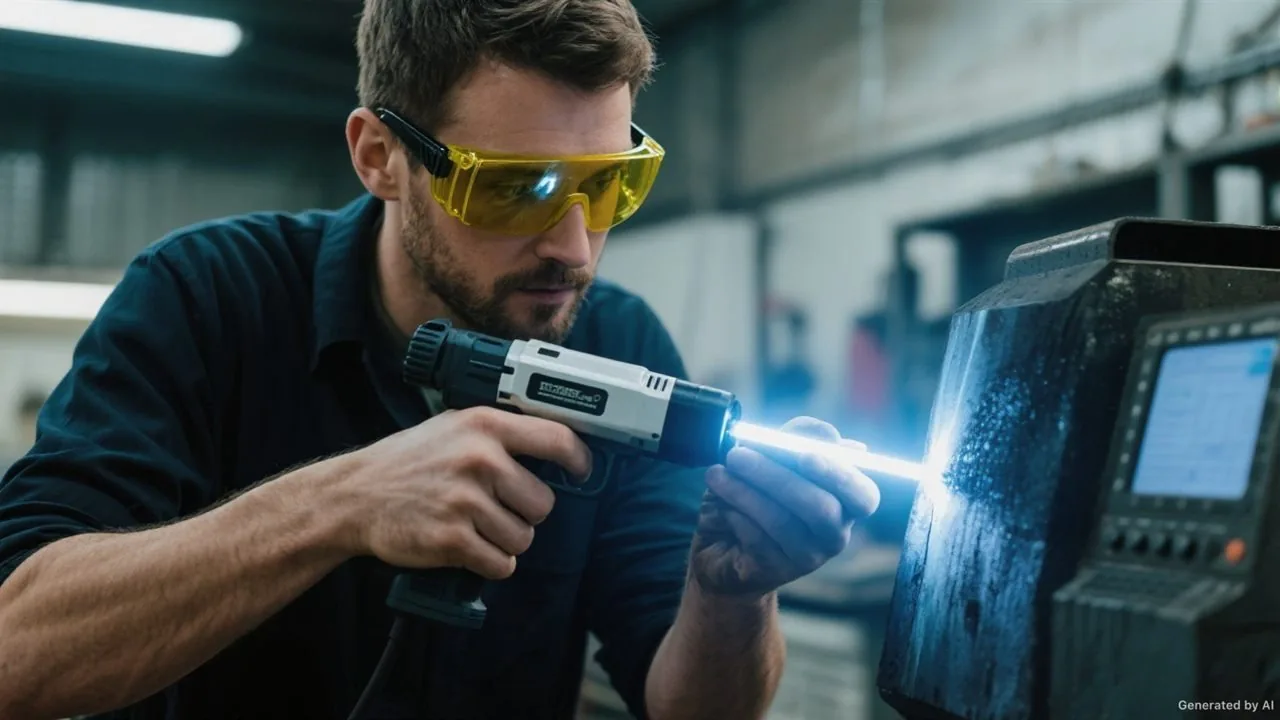
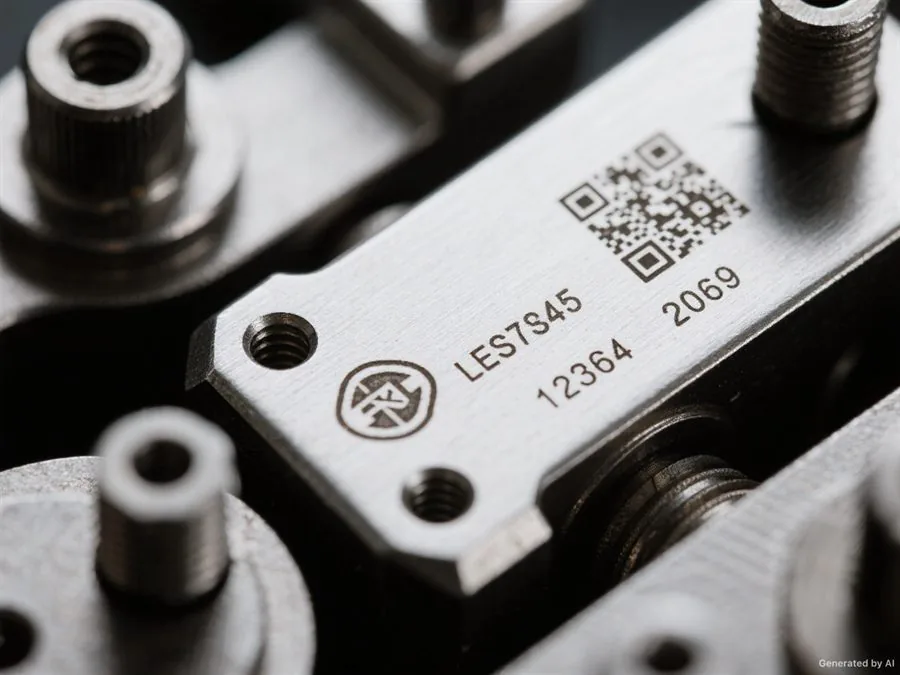
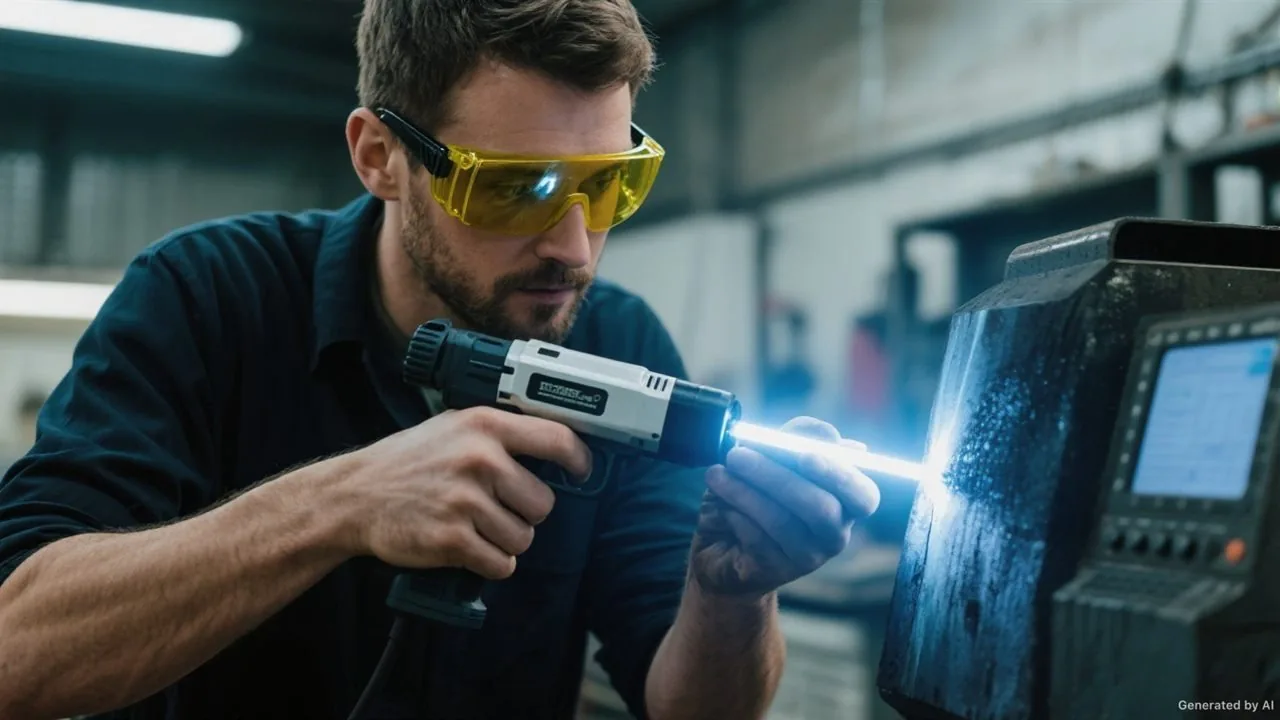
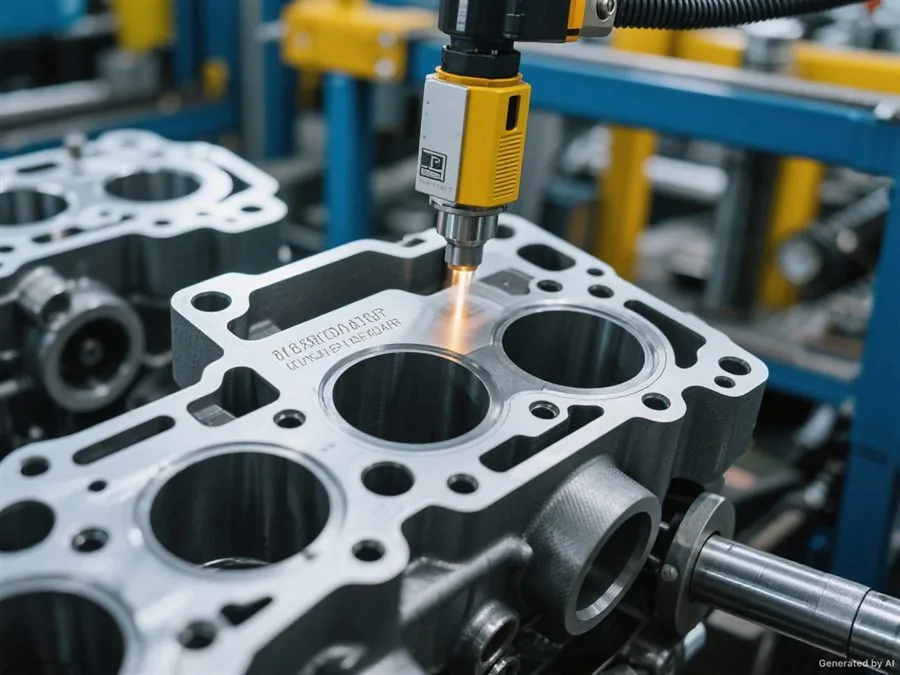
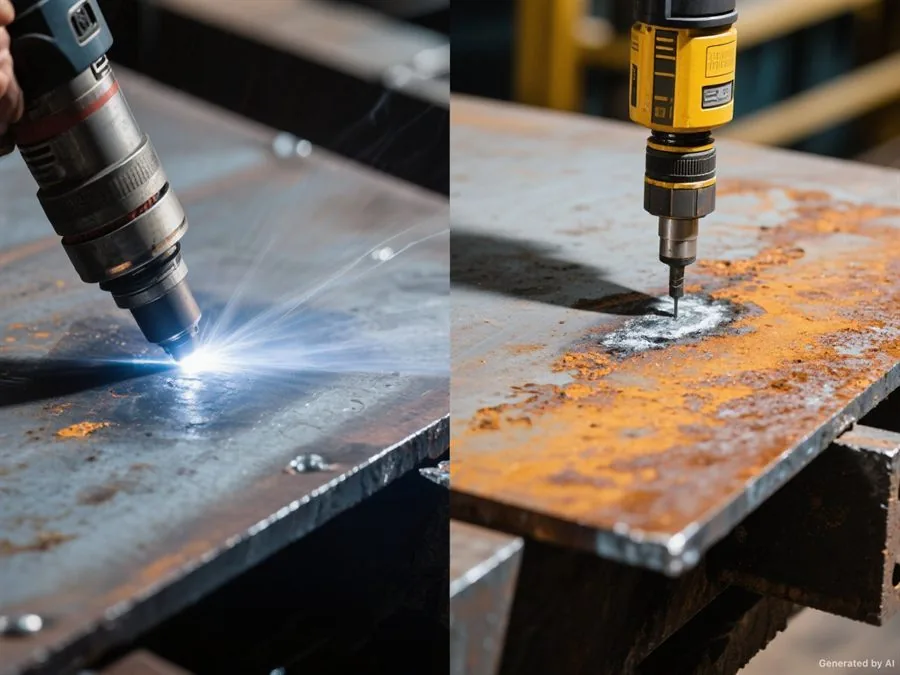
Clean rust from chassis, brake discs and suspension parts, then engrave VIN, part codes and logos directly onto steel and aluminium.
Remove oxide from aluminium and clean turbine housing welds before NDT, then mark turbine blades, fasteners and landing gear parts.
Strip old paint and salt residue from decks and flanges before repainting, then mark valves, pumps and fittings for maintenance tracking.
Clean oil and oxide before and after welding, prepare surfaces for bonding or powder coating, then add labels, barcodes and QR codes.
Every value below is taken from the machine datasheet and applies to the standard configuration.
| Parameter | Specification |
|---|---|
| Operating Mode | Pulsed, with cleaning and marking modes |
| Center Wavelength | 1064 ± 3 nm |
| Average Output Power | 100–110 W at 25 °C |
| Repetition Frequency | 20–200 kHz, adjustable per task |
| Pulse Width | 150–190 ns |
| Beam Quality (M²) | ≤ 1.6 at full power and 65 kHz |
| Maximum Pulse Energy | 1.6 mJ |
| Output Type | Quartz block (QCS) for stable beam delivery |
| Spot Diameter (1/e²) | 4–6 mm |
| Fiber Cable Length | 3 m |
| Standard Cleaning Area | 100 × 100 mm, adjustable by scan width |
| Cooling Method | Air-cooled, no external chiller |
| Working Temperature | 10–40 °C |
| Working Humidity | 10–95 percent, non-condensing |
| Power Adjustment | 1–100 percent stepless |
| Power Supply | AC 220 V / 50–60 Hz, 110 V optional |
| Dimensions | 35 × 15 × 25 cm |
| Weight | 21 kg total, 11 kg laser unit |
| Compliance | Designed to IEC 60825-1, CE and RoHS available on request |
| Warranty | 12 months on laser module and electronics, 3 months on scan head optics |
Voltage, interface language and mounting bracket are confirmed before production. Ask us for a parameter sheet matched to your material and coating thickness.
Support does not depend on returning the machine to the factory.
Air express by DHL, FedEx, TNT or UPS, plus air and sea freight. Trackable from the factory door.
T/T bank transfer, PayPal and Western Union. Terms and Incoterms are confirmed on the proforma invoice.
12 months on the laser module and electronics, three months on scan head optics, plus lifetime technical support.
Double-layer packing: a thick outer carton plus foam cushions that stop movement and abrasion in transit.
Yes. The same 100W pulsed source runs in cleaning mode with nine scan patterns and in marking mode for deep engraving and vector graphics. You switch modes from the touchscreen, so a weld seam can be cleaned and a serial number engraved on the same part without moving the workpiece between two machines.
Yes. The detachable scan head follows the contour of the part and the focus is adjustable within a working distance tolerance of about 5 mm. For complex geometry the petal, circular and sinusoidal patterns keep the cleaning even.
At 100W the system removes a rust layer of roughly 0.5 mm in a single pass at normal scan speed. Thicker layers are cleaned with a second pass or a slower traverse, using the 1.6 mJ pulse energy for the ablation.
Yes. By adjusting power, frequency and scan speed you can set anything from a 0.02 mm surface anneal to a 0.5 mm deep engraving on steel, which covers traceability codes as well as tool and asset marking.
No. The laser source is air-cooled and the internal fan holds the working temperature, so the unit runs continuously for around eight hours in a 25 degrees Celsius room without an external chiller or water circuit.
Only the protective window on the scan head needs routine cleaning and replacement once it is scratched. The focus lens lasts a long time under normal use, and there is no abrasive media, solvent or paste to reorder.
Yes. The supplied bracket bolts onto a robot end effector, and we provide the electrical interface drawing for external trigger and interlock signals so the head can be integrated into an automated cell.
The laser module and electronic components carry a 12-month warranty, and the scan head optics such as the protective window and lens are covered for three months as wear parts. Technical support is provided free for the life of the machine.
If a dedicated cleaning machine or a different power level fits better, compare these models from the same range.
Higher power in an all-in-one wheeled case for faster removal of resin, oil, rust and coatings.
View model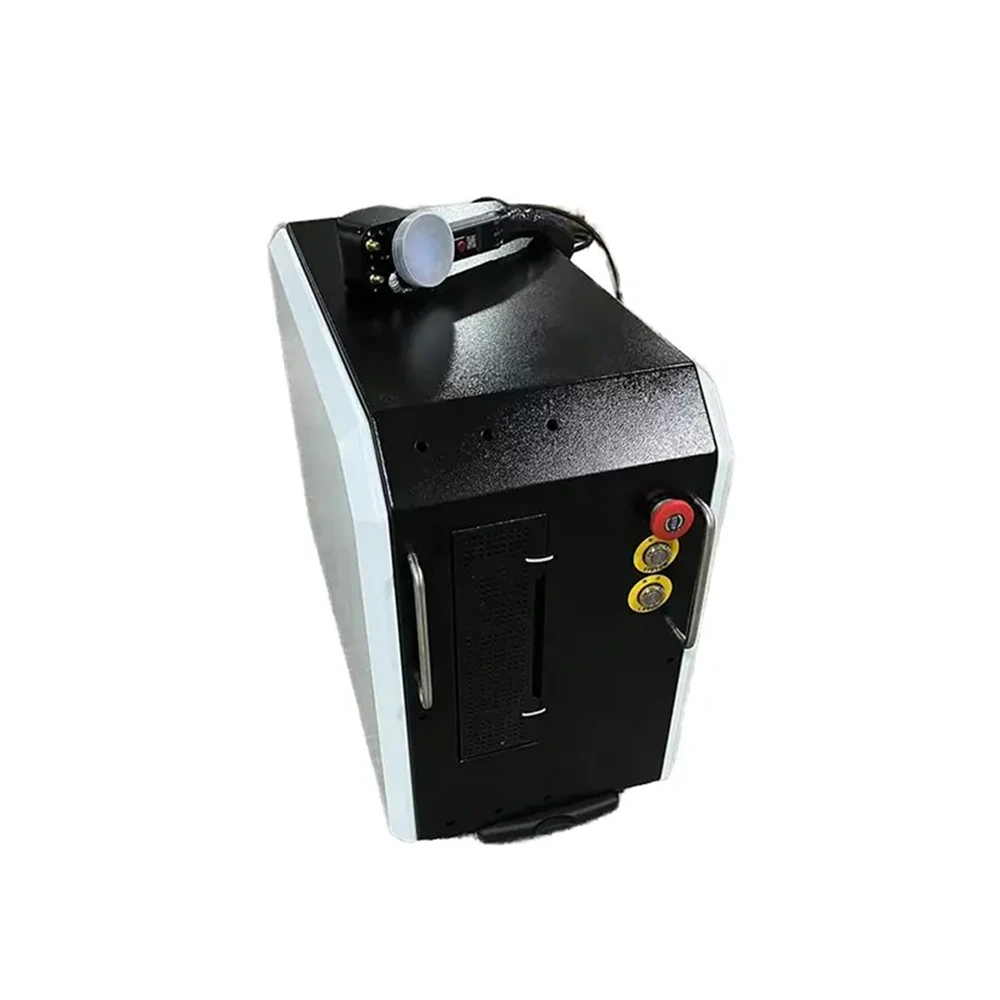
Eight scan modes and a motorized dual-axis head for furniture, curved panels and mold cavities.
View model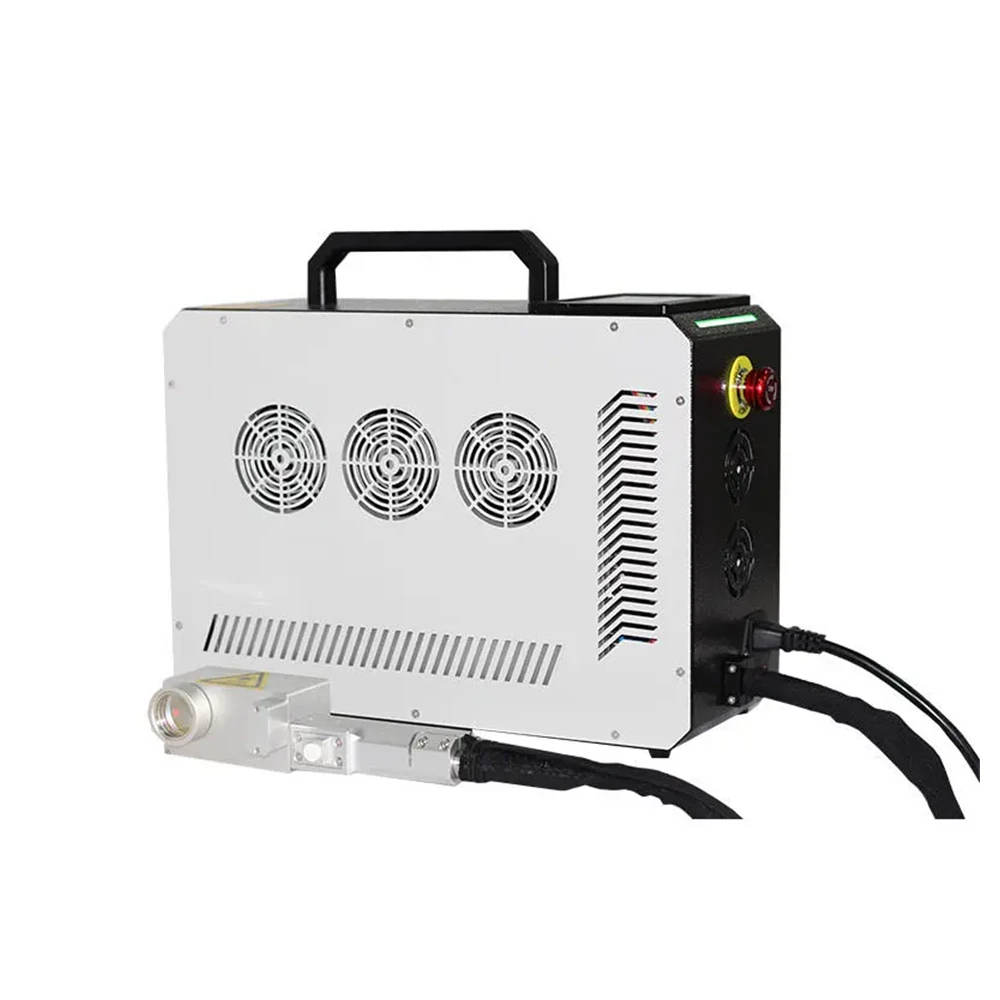
Wearable MOPA unit for scaffolding, towers and confined spaces where a bench machine cannot go.
View model