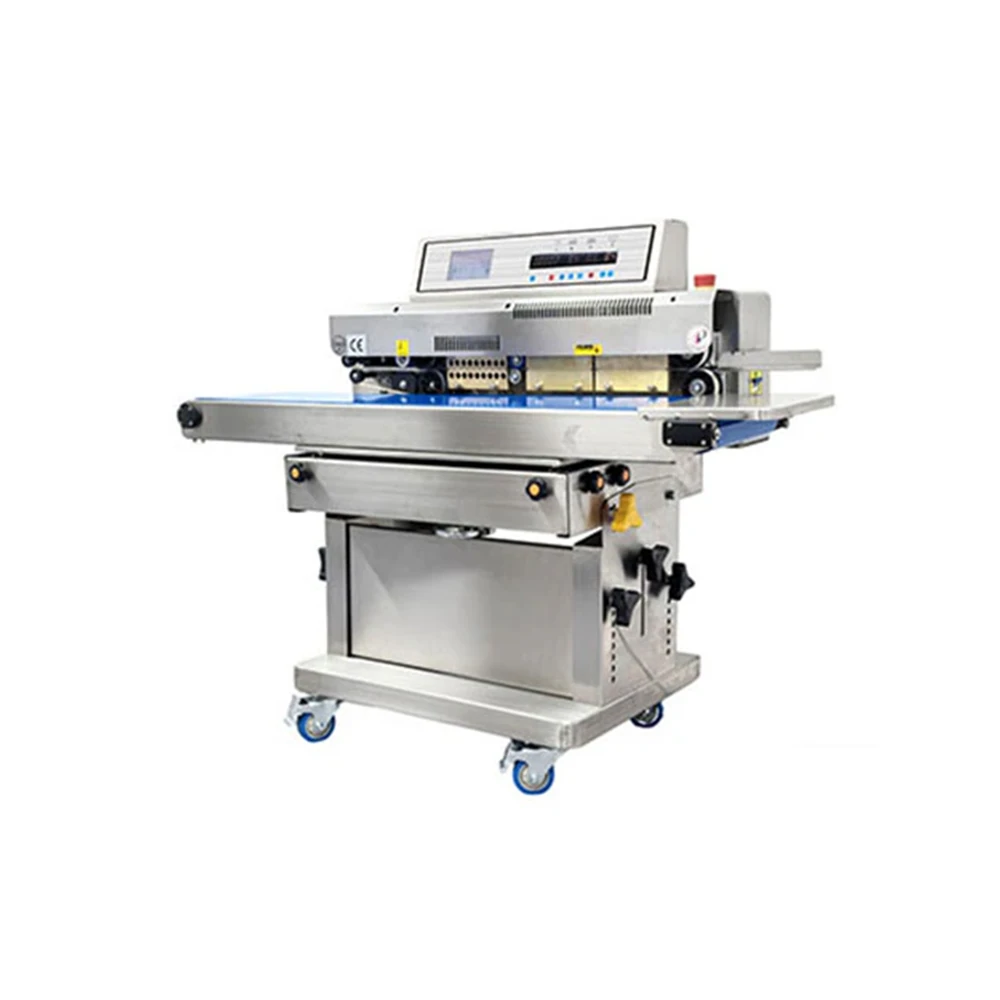
SMT-280 Inkjet Coder
A quad-core touchscreen platform with inkjet, steel stamp or ink printing heads.
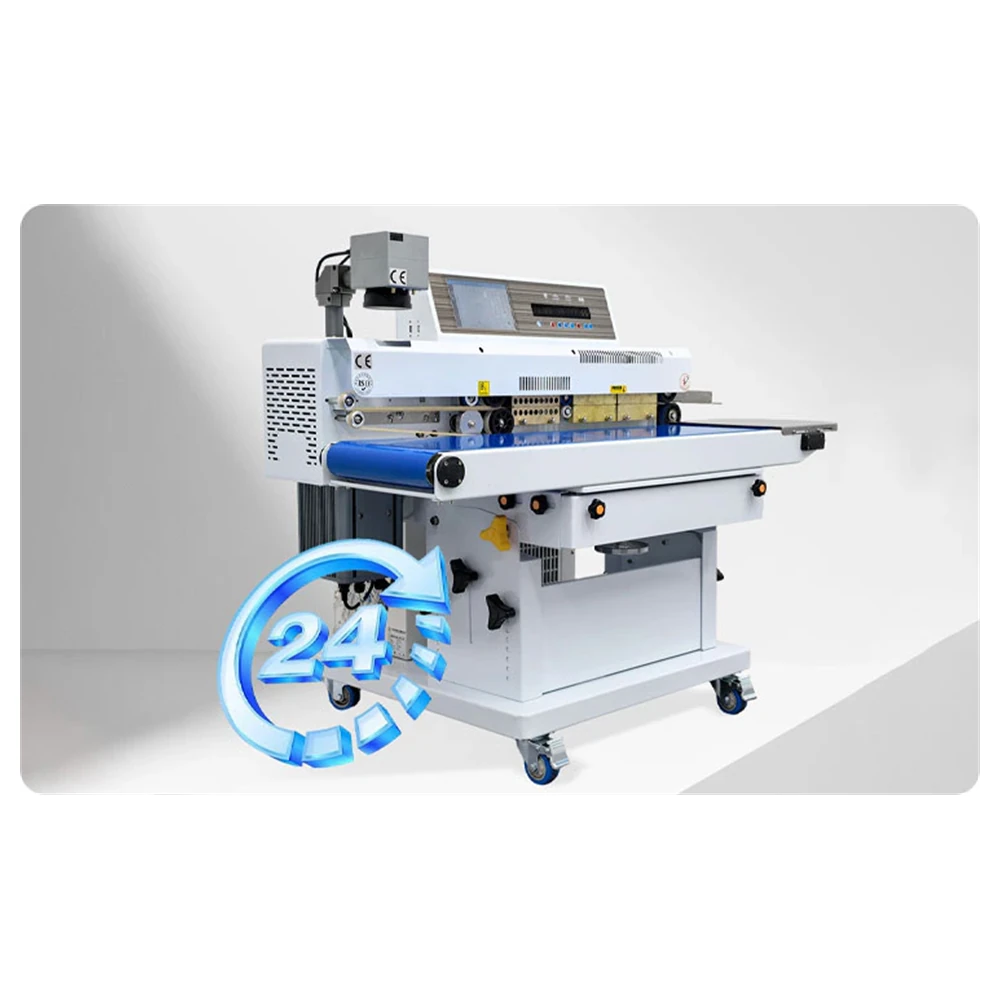
View modelA code that becomes part of the film, made in the same pass as the seal. This machine integrates a UV or CO2 laser coder with four extended H58 copper heating blocks and two independent temperature channels, so thin and thick bags both seal tightly while the laser prints at 3000 mm/s. Because thermal laser coding needs only electricity, the running cost is the motor and the mains supply.
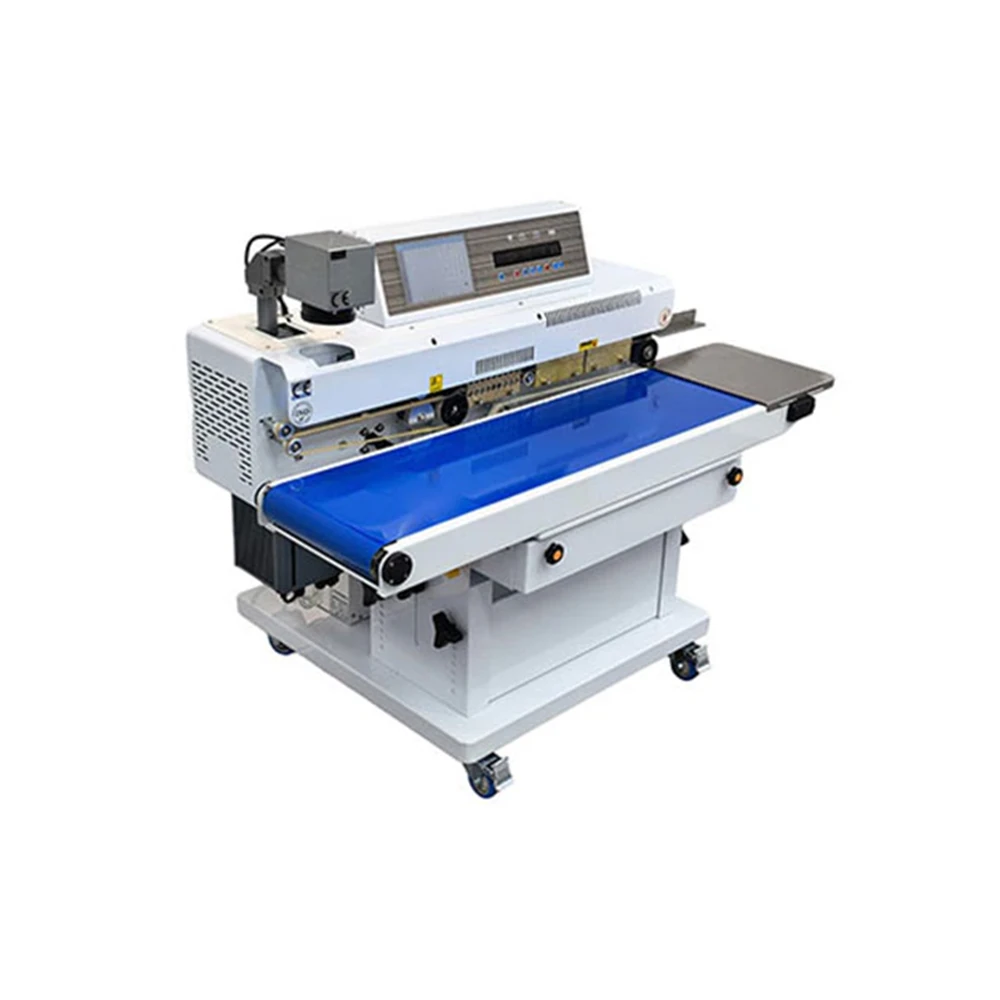
Every ink system brings a consumable cost and a consumable fault: blocked nozzles, dried cartridges, smudged codes. Laser marking removes that whole category of problem, and doing it inside the sealing machine means the pack is finished in one operation with one operator.
The seal must be formed and set before the laser marks, so the head can write on a flat, stable surface.
The bag enters the conveyor at up to 25 m/min, with the height set between 700 and 900 mm for the line.
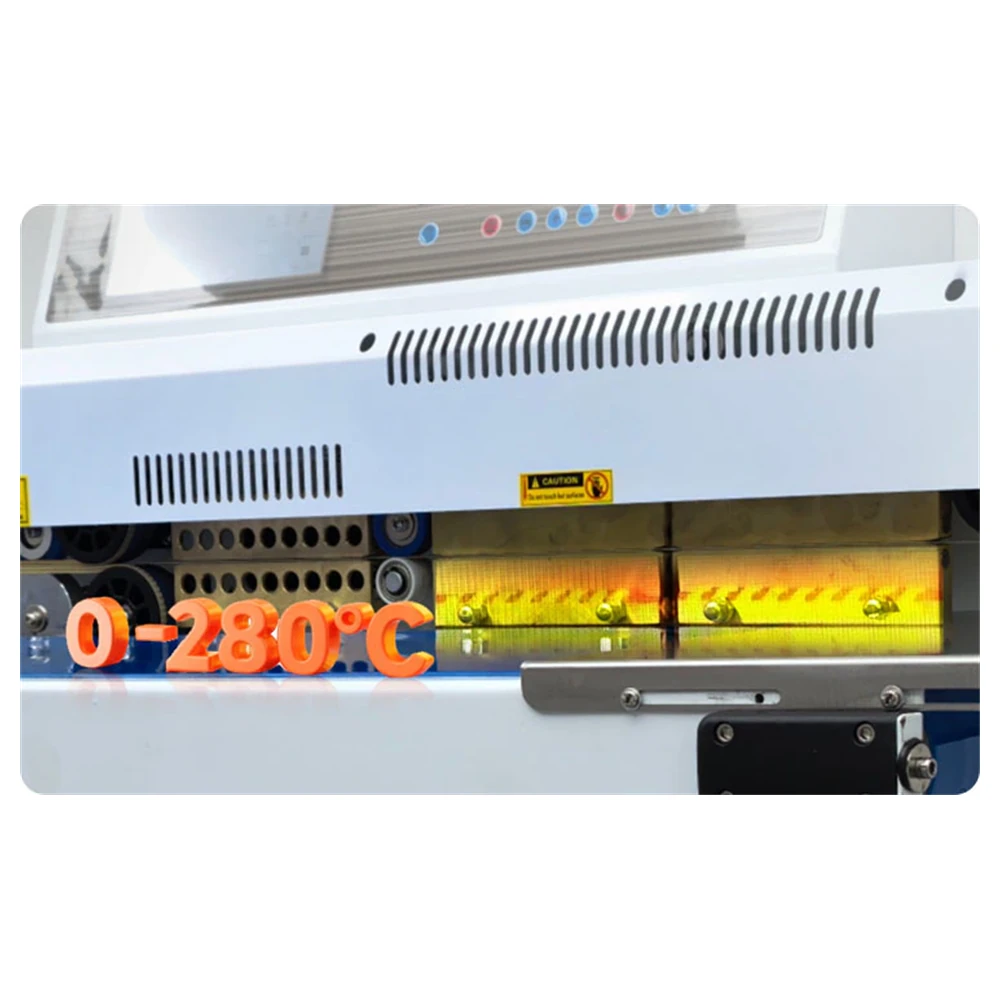
Two independent channels drive four H58 copper blocks, each side of the mouth sealed at its own temperature.
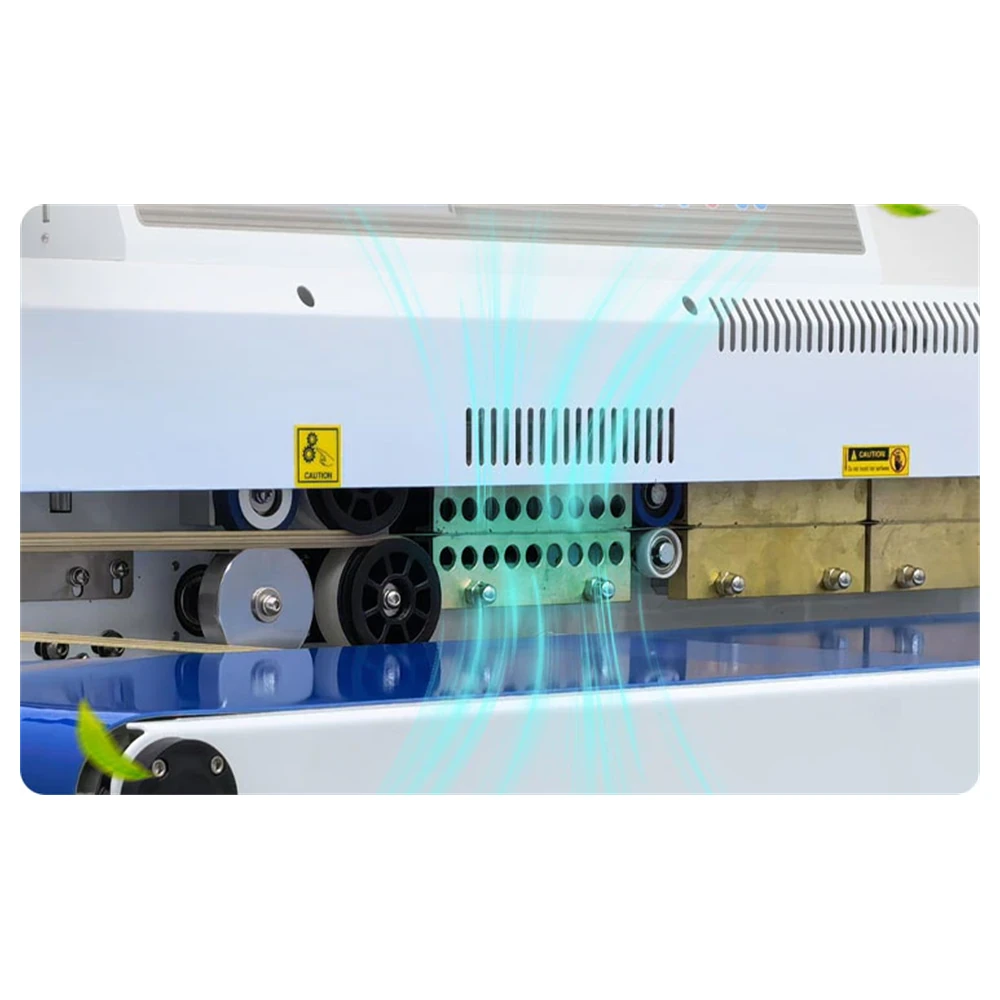
A self-lubricating copper heat sink pulls the temperature down so the seal texture sets before marking.
The laser head writes the code into the film at up to 3000 mm/s, with characters down to 0.7 mm.
One machine, one pass, one operator — and no consumables to reorder or replace.
Thermal coding needs only power, so there is no ink to buy, store or dispose of and no print head to unblock.
Extended H58 copper blocks hold more heat against the film for a thorough melt and a tighter seal.
Two independent chips let one machine seal a bag whose two film faces need different sealing temperatures.
The extra heat reserve means sealing quality hardly changes when the ambient temperature of the workshop shifts.
The conveyor height spans 700 to 900 mm and the head adjusts, so different bag sizes run on the same machine.
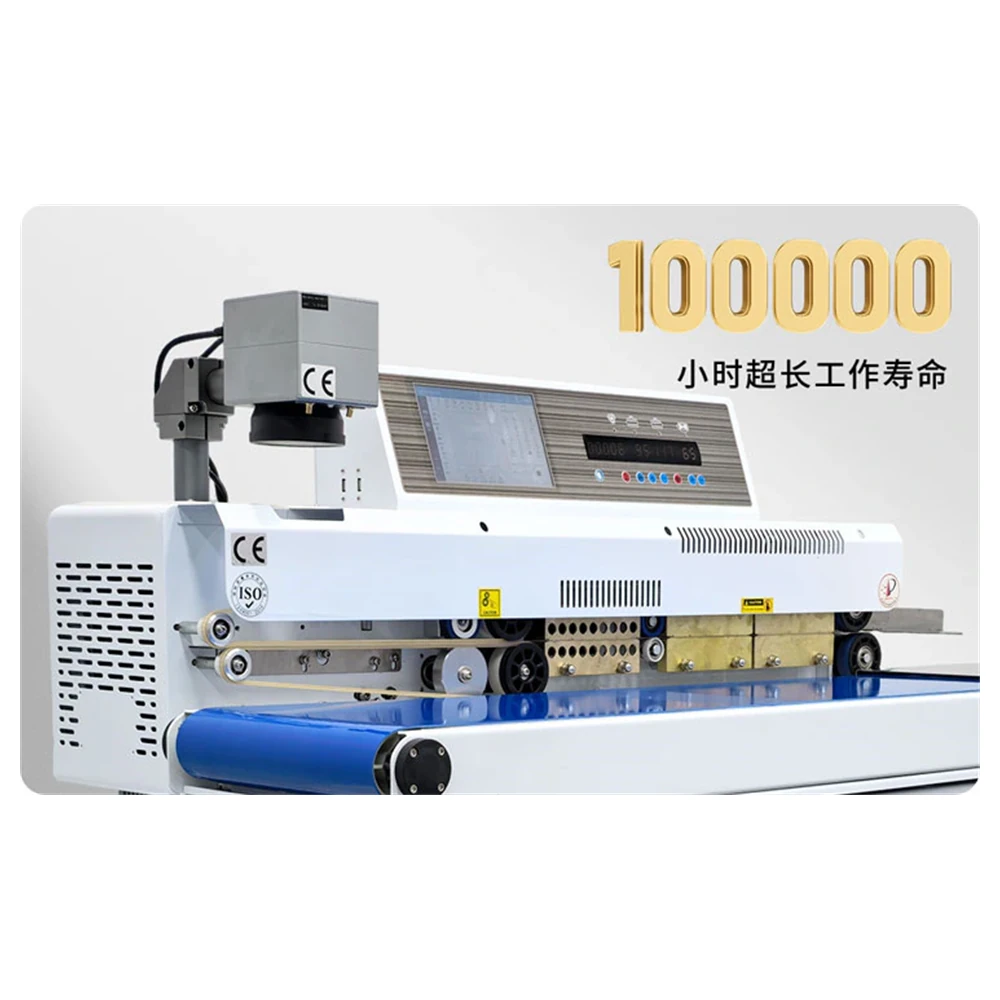
The laser generator is rated for a very long service life, so the marking quality holds across years of production.
All figures are taken from the model datasheet and shown for both laser options.
| Parameter | UV Build | CO2 Build |
|---|---|---|
| Power | 2700 W | 2200 W |
| Laser Source | UV | CO2 |
| Cooling | Water-cooled | Air-cooled |
| Net Weight | 147 kg | 126 kg |
| Machine Dimensions | 1290 × 875 × 1065 mm | 1290 × 620 × 1026 mm |
| Power Supply | 220V / 50 Hz, 110V / 60 Hz | |
| Sealing Speed | 0–25 m/min | |
| Sealing Width | 10 mm | |
| Temperature Range | 0–300 °C, dual independent channels | |
| Heating Tube | 380 W × 4 | |
| Conveyor Belt | 2447 × 280 × 2 mm | |
| Sealing Belt | 1440 × 18 × 0.3 mm | |
| Motor | 24V / 120W / 15K, copper core | |
| Conveyor Height | 700–900 mm | |
| Conveyor Load | Up to 15 kg | |
| Printing Area | 110 × 110 mm | |
| Marking Speed | 3000 mm/s | |
| Minimum Character | 0.7 mm | |
| Display | LC5000 smart touchscreen, 7 inch | |
| Ambient Temperature | 0–45 °C | |
Choose the laser source against your film and required contrast; we confirm it from a sample. Water cooling is required for the UV build, while the CO2 build is air-cooled.
Laser coding is not simply a different print head. It changes the consumables, the maintenance routine and the durability of the mark.
| Aspect | Ink / Inkjet Coding | This Laser Build |
|---|---|---|
| Consumables | Ink or cartridges, changed regularly | None; electricity only |
| Mark durability | On the surface, can smear or rub off | Marked into the film, permanent |
| Maintenance | Nozzles and print heads to clean | Sealed optical path, minimal care |
| Character size | Limited by nozzle and ink spread | Down to 0.7 mm |
| Coding speed | Dependent on ink and dry time | Up to 3000 mm/s |
| Running cost | Per pack, driven by consumables | Driven by power and motor only |
The right choice depends on the film and the code. Send a bag and we will mark it with both methods and return the samples for comparison.
Laser coding is chosen where the code must survive handling, storage and the customer's inspection.
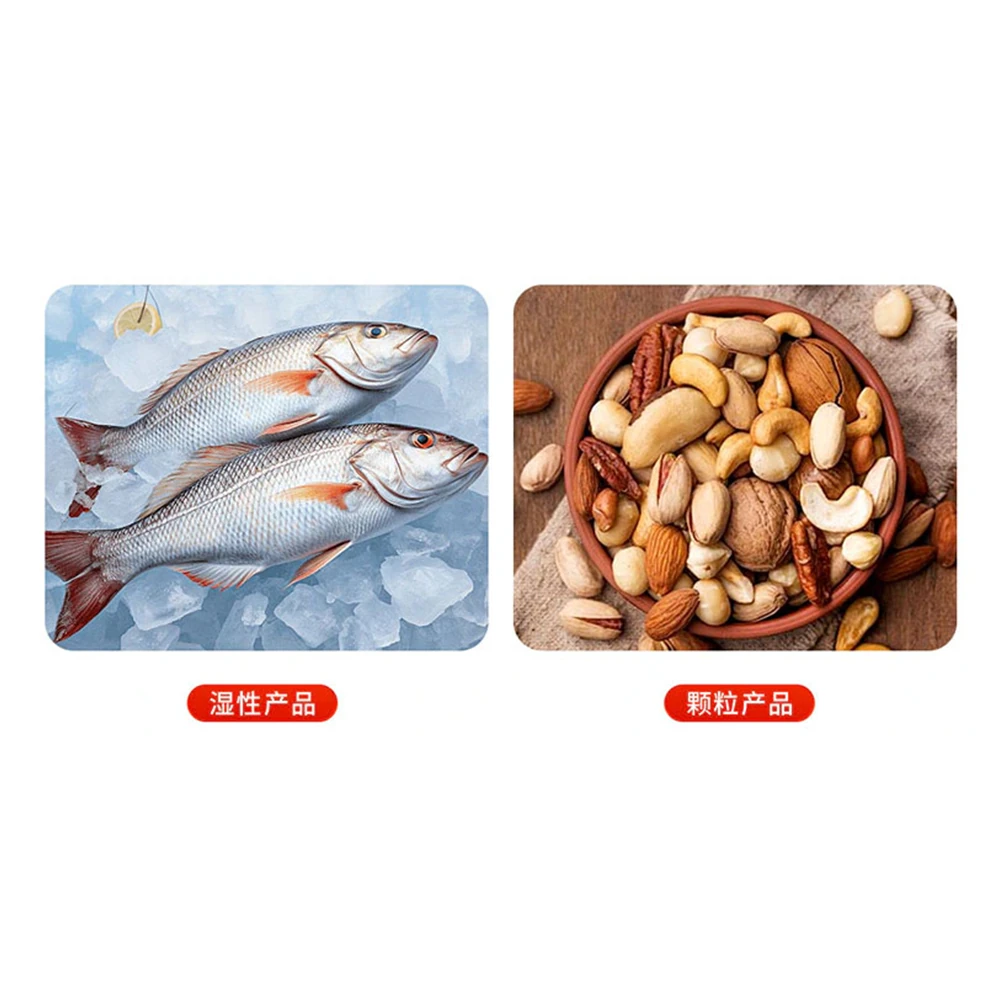
Film, composite and foil bags coded with dates and lot numbers that stay legible through the cold chain.
Batch and expiry codes marked without ink contact, which suits hygienic and controlled packing rooms.
High-volume packs where the absence of consumables keeps the line running without stopping for ink.
Heavy double-layer packing at 147 kg or 126 kg, shipped by express, air or sea.
T/T bank transfer and other agreed methods, with terms confirmed on the proforma invoice.
A 2-year warranty covers parts and labour, with heating tubes and belts supplied quickly.
Help setting the dual temperatures, laser power and coding layout for your film.
An ink coder places a liquid mark on the film; a laser coder changes the film itself, so the code becomes part of the surface and cannot be rubbed off. Thermal laser coding needs only electricity, which removes ink, solvent and print consumables from the running cost and from the packing room.
Two independent temperature chips drive two sets of heating blocks, so the two sides of the bag mouth can be sealed at different temperatures. That is what allows a bag with different inner and outer films, often called a yin-yang bag, to be sealed correctly on both sides in one pass.
Four extended heating blocks hold more heat in contact with the film, so the melt is thorough across the whole seal. Thin and thick bags both seal tightly, and the result is much less sensitive to the ambient temperature of the room or the season.
The UV build is water-cooled and draws 2700 W, while the CO2 build is air-cooled and draws 2200 W. Both print a 110 x 110 mm area at up to 3000 mm/s with a minimum character height of 0.7 mm. The choice depends on the film and the contrast you need; we confirm it from a sample.
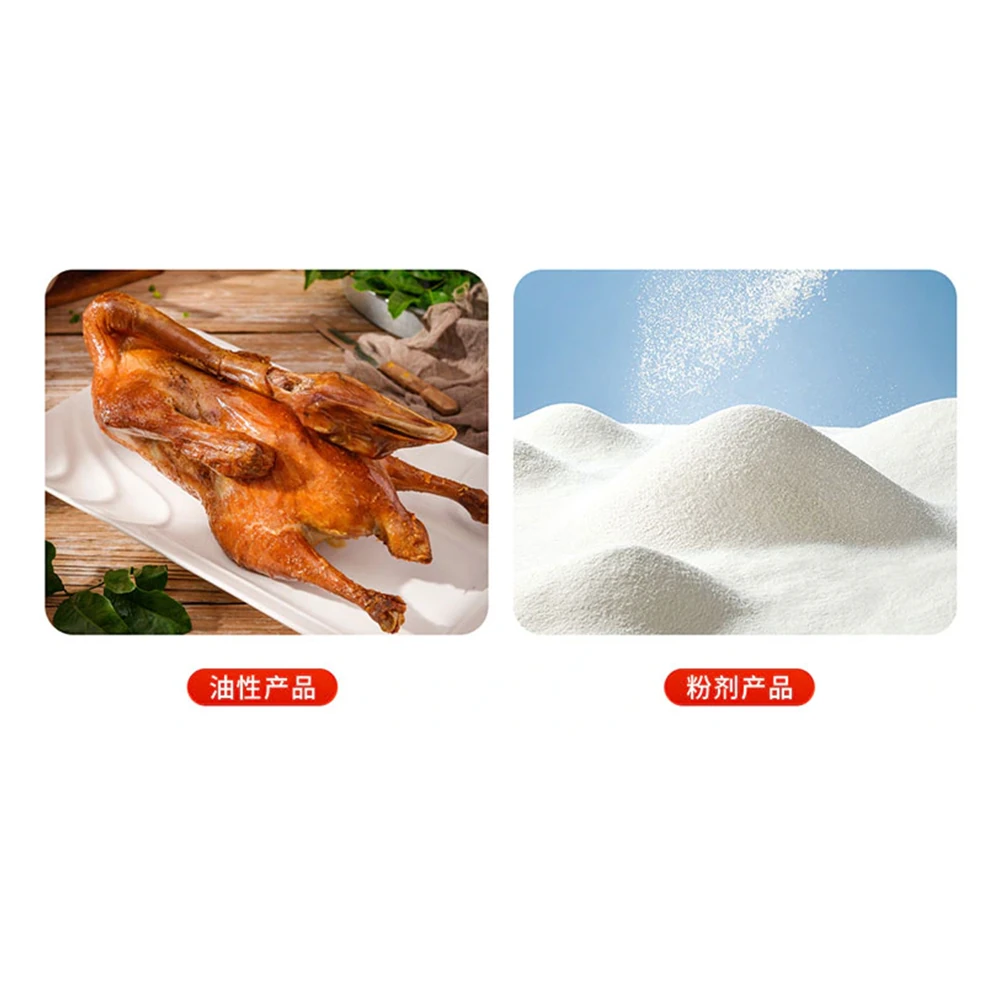
It seals and codes plastic film bags, composite bags and aluminium foil bags used in food, pharmaceutical, chemical, agricultural and lubricant packing. The conveyor carries up to 15 kg, the seal width is 10 mm, and the conveyor height adjusts from 700 to 900 mm to suit the line.
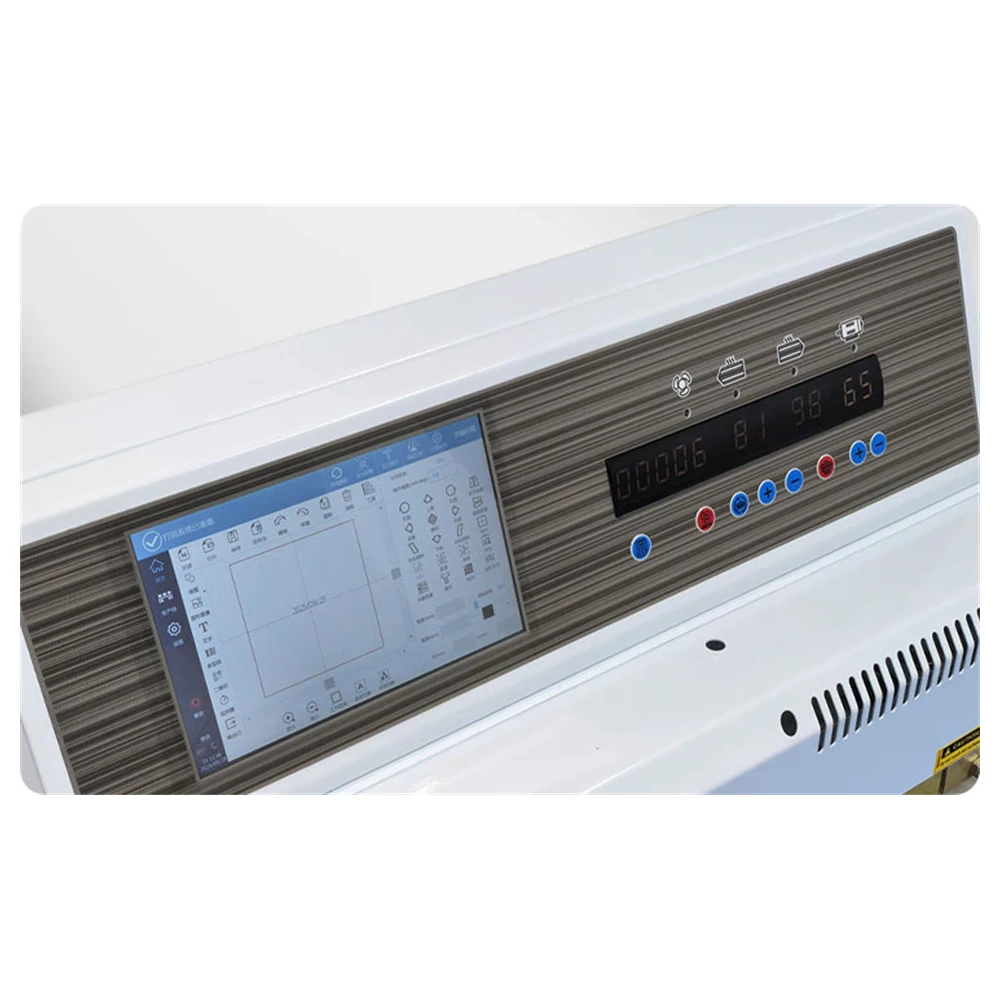
A 7-inch smart touchscreen runs the coding system, with automatic counting and pattern editing on screen. The laser source is rated for a long service life, and the conveyor is driven by a copper-core high-speed motor designed to keep running without overheating.
It is assembled and tested before dispatch and ships in heavy packing, weighing 147 kg in the UV build and 126 kg in the CO2 build. Standard production is about 5 working days with express transit of roughly 4 to 6 working days, and a 2-year warranty applies.
Compare an inkjet platform and an ink-wheel sealer with laser coding.
A quad-core touchscreen platform with inkjet, steel stamp or ink printing heads.
View model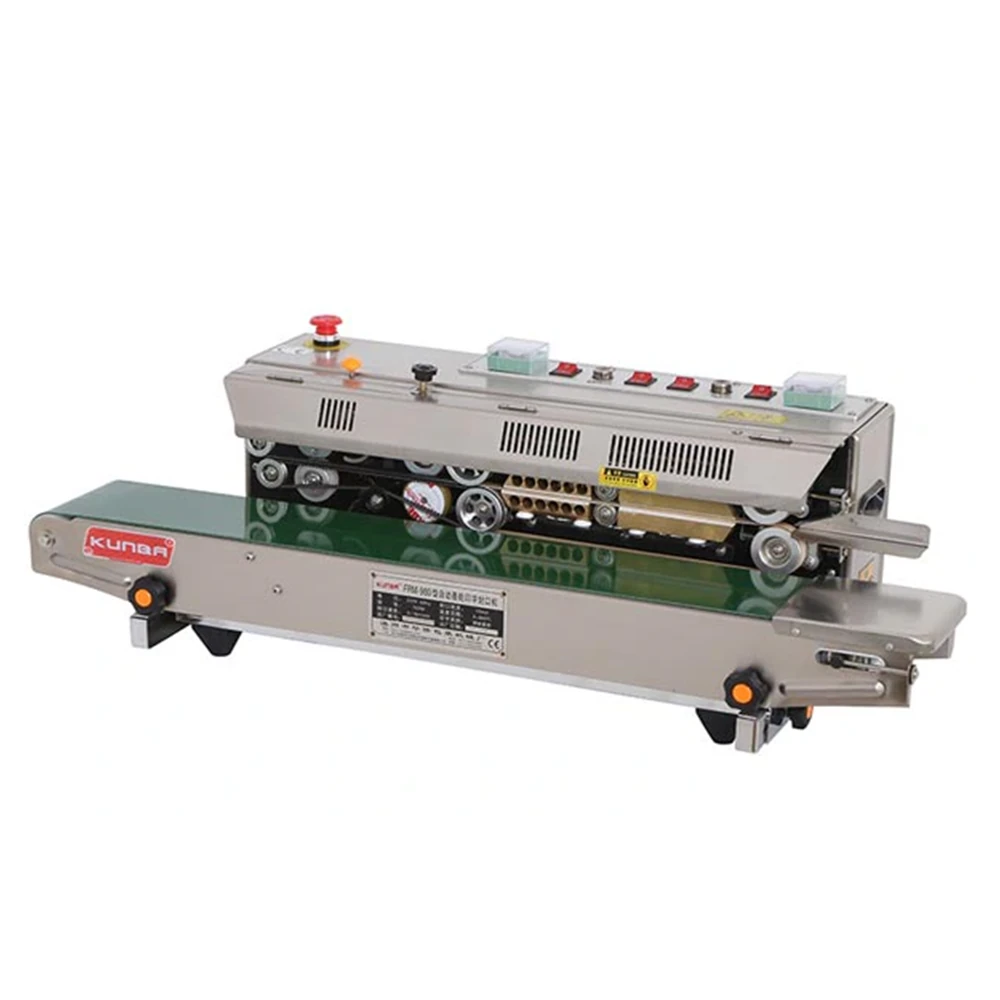
A bench sealer with steel embossing and 15-character ink printing in one pass.
View model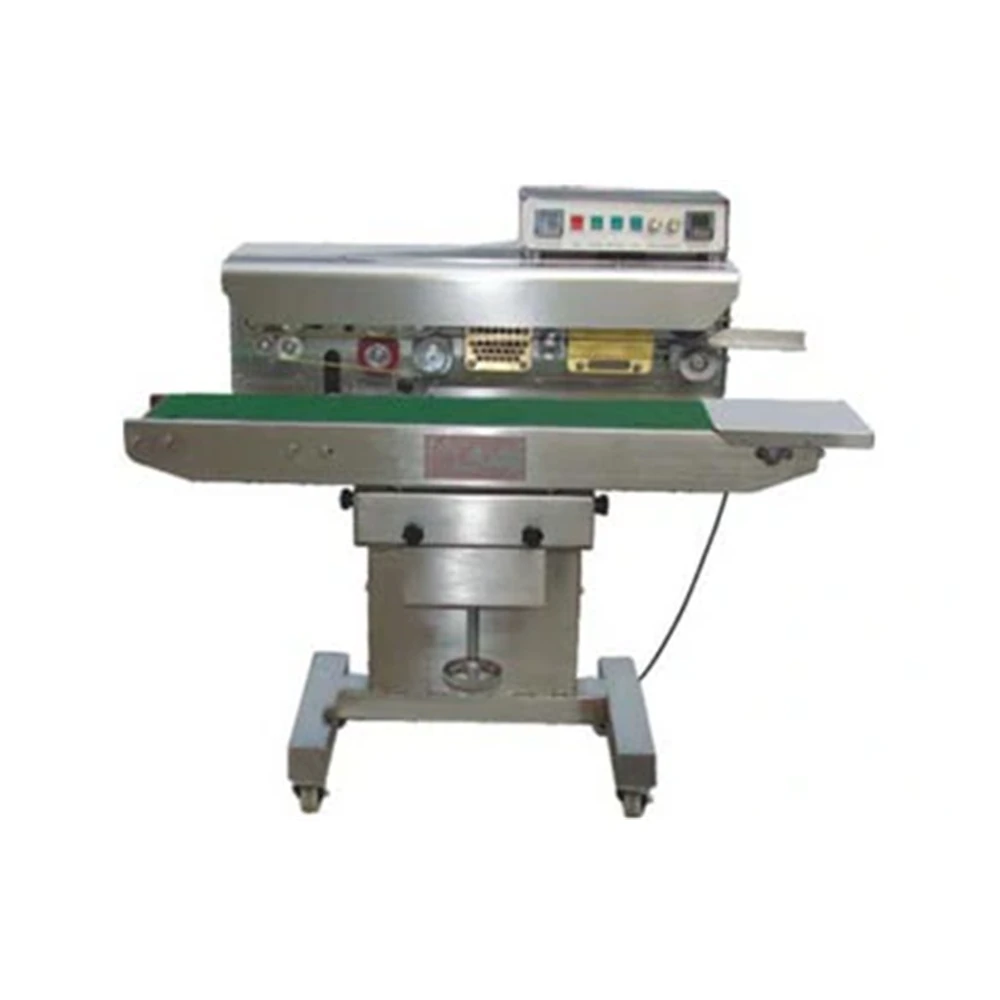
A high-power continuous sealer for heavy duty cycles with overheat protection.
View model