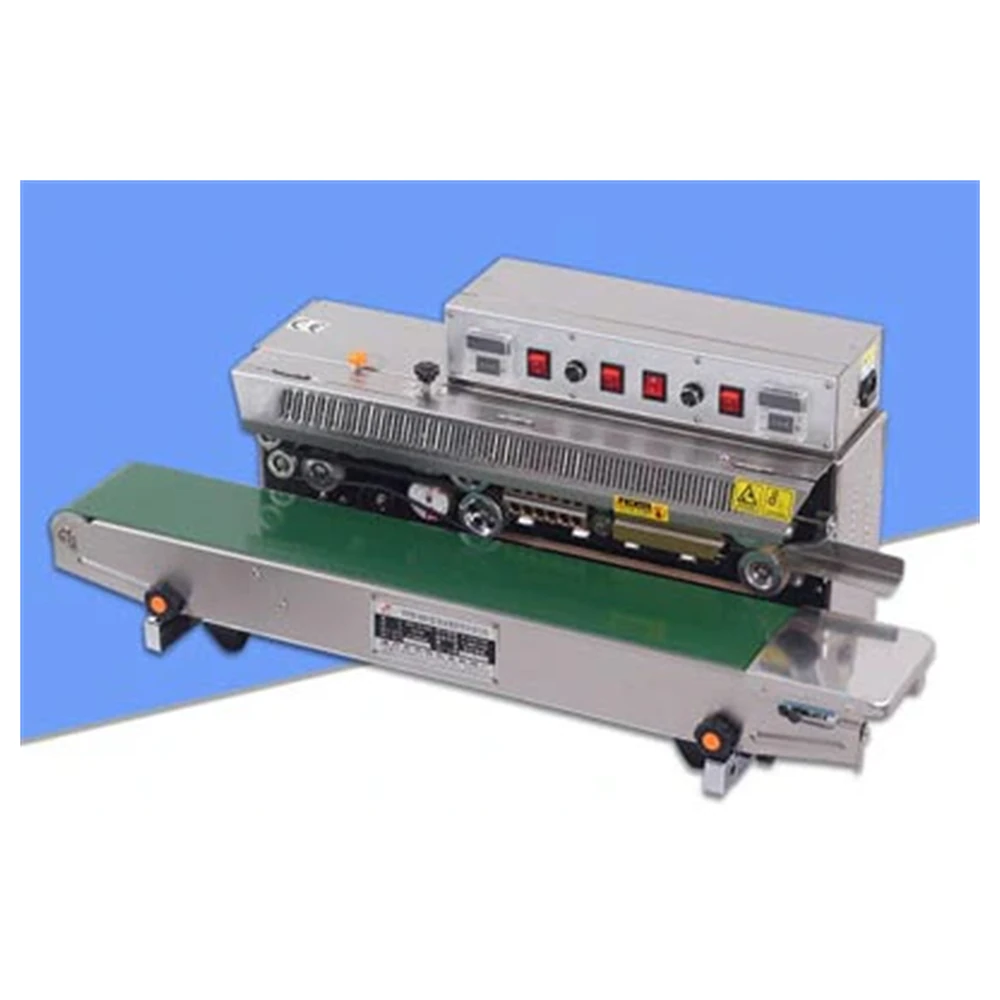
Deluxe Horizontal Ink Wheel Sealing Machine FRD-980AI
The horizontal deluxe build, with a cooling fan for thin film and wrinkle-free seams.
View modelOne machine, one pass, one finished bag. The FRD-980AIII carries the bag through heating, cooling and embossing in a single movement, then discharges it sealed and coded — a floor-standing build for the medicine, agrochemical, food and daily chemical bags that keep a packing room busy.
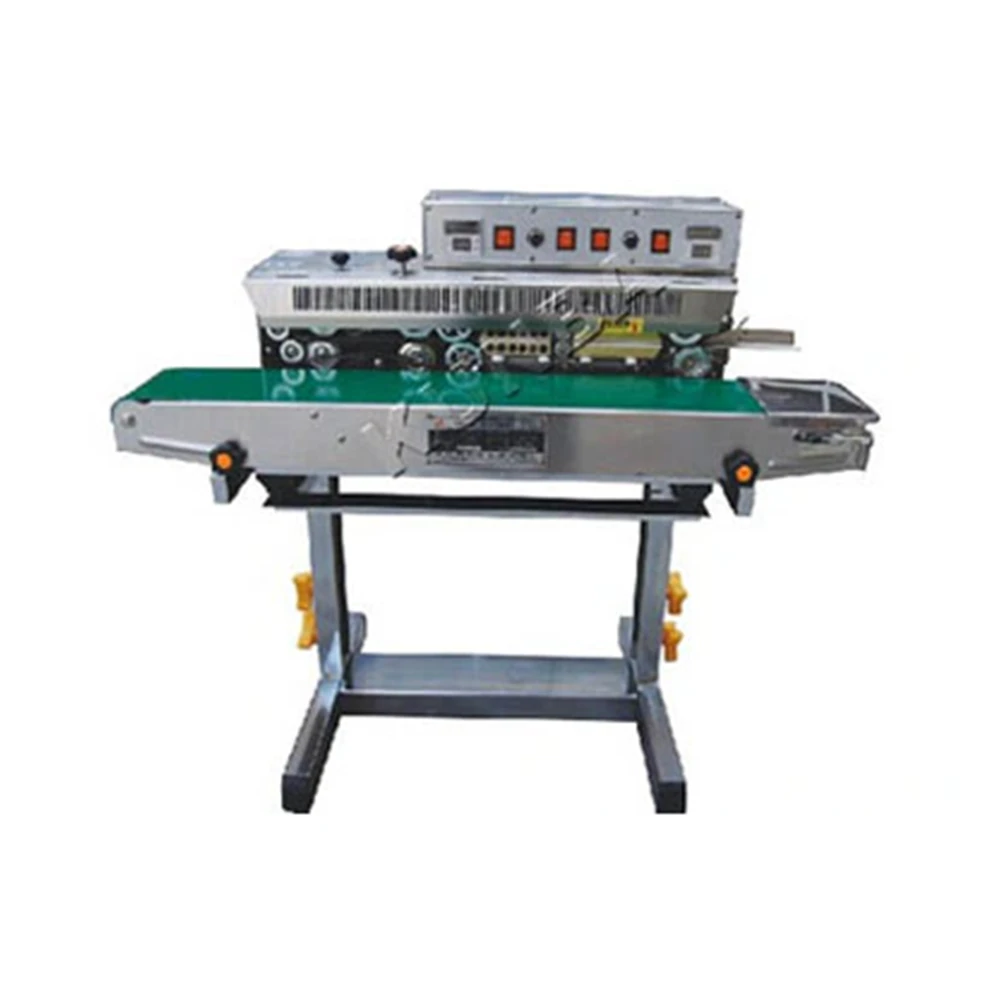
Containers and packs come in every material and shape, and each one needs a different closing method. The FRD-980AIII is built around the common case: a bag that must be sealed firmly and carry a readable code, without a second coding machine and without slowing the operator down.
The machine is assembled from five clear subsystems. Understanding them makes setup and maintenance straightforward.
The rigid floor-standing chassis carries every other module and keeps the sealing path straight.
Reduces motor speed to a controlled take-off rate that can be adjusted to suit the bag.
The heated block and the printing wheel: one softens the seam, the other embosses the code.
Carries the bag through heat, cooling and printing without stopping, then discharges it.
The control system ties the heater, cooling and drive together and holds each setting steady across the run.
Power on, the heater rises to temperature, the drive sets the speed and the cooling starts, all coordinated by the control system.
Because each module is discrete, a change of bag usually means adjusting one setting rather than re-engineering the machine.
Four stages, run in sequence on a moving bag, complete the whole sealing and printing job.
The bag mouth enters between two sealing bands and the heated block transfers warmth through the band to soften the film.
In the cooling zone the surface temperature drops a little, so the film is set without becoming brittle.
The knurling or printing wheel rolls the two layers together, pressing in the mesh pattern or the code.
Guiding belts carry the finished bag clear, sealed and printed, ready for the next station.
Four structural facts that describe how this machine is put together.
An ink wheel sealer rewards a short, regular routine. These are the tasks that keep the seal consistent and the machine available.
The sealing area is the only hot part of the machine, and it stays hot whenever the machine is running.
Never put hands on the high-temperature cloth while the machine is running; use the guides to feed the bag.
Lay the bag mouth flat and keep foreign objects out of the seam so nothing blocks the heated block.
After each session tidy the machine, let it cool and store it away from the work area.
The FRD-980AIII fits any packing room that seals barrier bags and needs a code on the seam.
Foil-lined medical and pharmaceutical bags sealed and printed with lot and expiry data.
Pesticide and fertiliser pouches sealed for dust containment and moisture protection.
Coffee, tea, spices and dried goods sealed in laminates that hold their aroma and freshness.
Refill pouches and sachets closed and dated without a separate coding step.
Oil and grease pouches sealed on a stable floor-standing frame that handles the heavier pack.
One machine that switches between foil, plastic and composite bags as the schedule changes.
The machine ships assembled and tested, and the consumable parts are stocked so a swap does not stop the line.
Parts covered, with free replacement components and lifetime engineering support.
High-temperature cloth, sealing bands and printing wheels are supplied to keep the machine sealing.
About 5 working days to build plus 4-6 working days in transit by express, trackable throughout.
A protective crate holds the printing head and frame rigidly through shipping.
The bag mouth is carried between two sealing bands into the heating zone, where the film softens. It then passes a cooling zone to set the surface, and finally a knurling or printing wheel presses the layers together and embosses the code, all before the bag leaves the machine.
The machine is built for aluminium foil bags, plastic bags and composite bags, which makes it suitable for medicine, agrochemical, food, daily chemical and lubricant packing.
The machine is made up of five modules: the frame, the speed-reduction drive, the sealing and printing mechanism, the conveyor, and the electrical control system.
Clean the machine, check the plug and wiring, check the screws and inspect the high-temperature belt or cloth for wear. Replace any damaged sealing cloth before starting work.
Wipe the surface daily so it stays free of dust, and check the machine regularly. The high-temperature cloth is a wear part and is replaced when it shows signs of damage.
Keep hands away from the high-temperature cloth during operation, and after each session let the machine cool and put it away tidily. The sealing area stays hot while the machine is running.
Standard production takes about 5 working days. Air express adds roughly 4-6 working days, and every shipment is trackable from the factory.
Three machines that apply the same seal-and-print idea in a different frame.
The horizontal deluxe build, with a cooling fan for thin film and wrinkle-free seams.
View model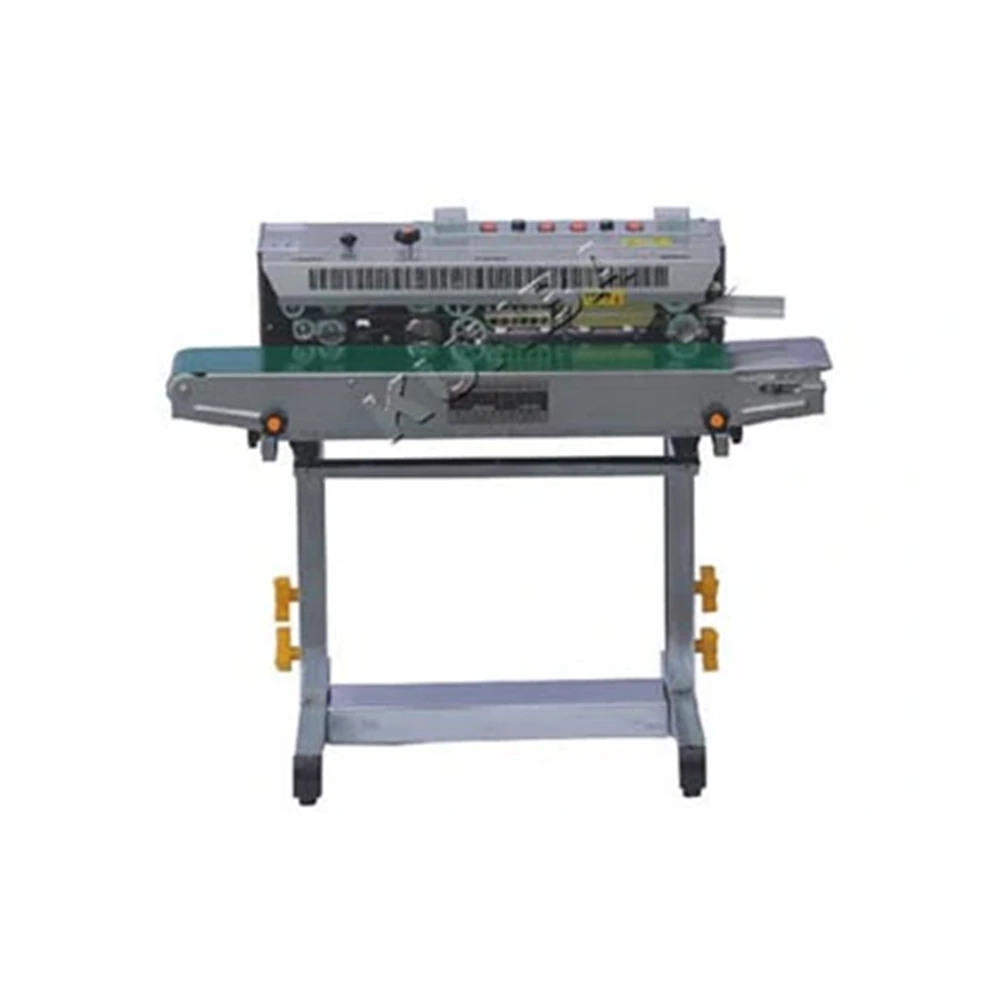
A coding-first ink wheel sealer where character sharpness is the priority.
View model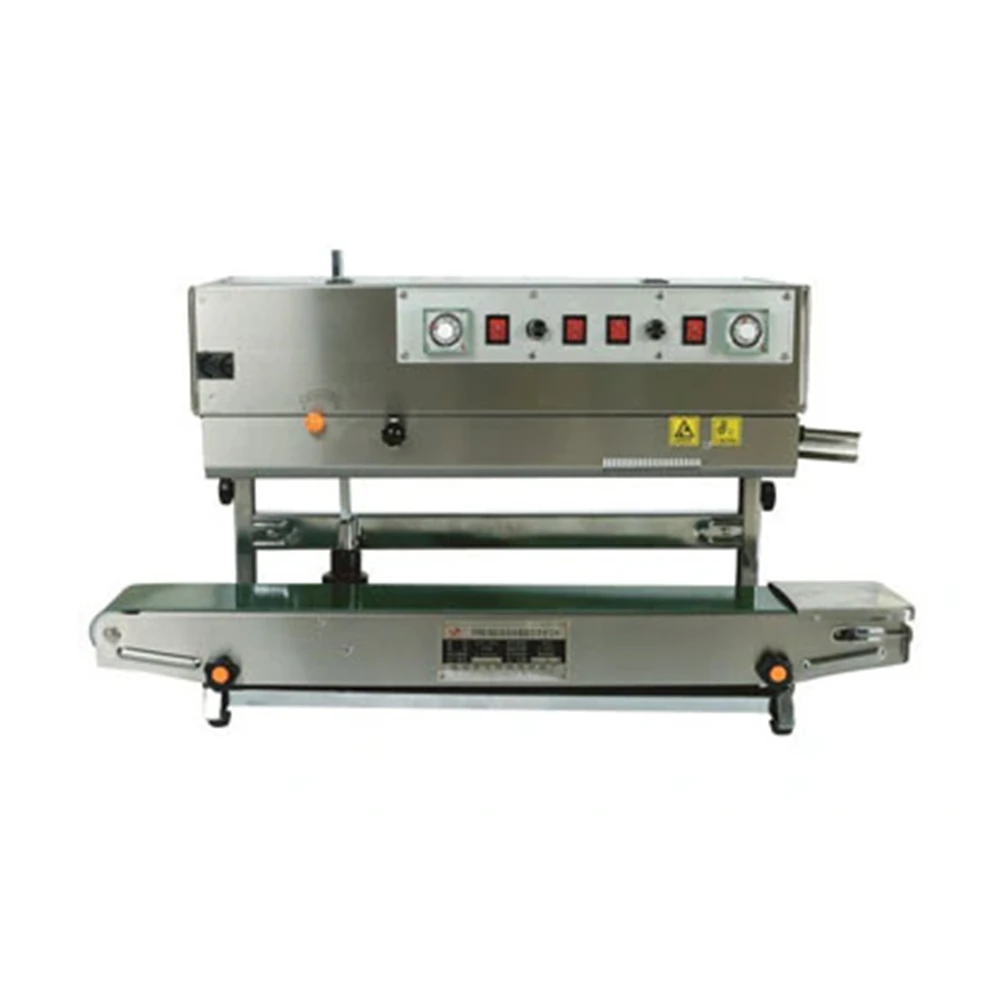
Vertical and horizontal dual-use version for smaller bags on a bench or trolley.
View model