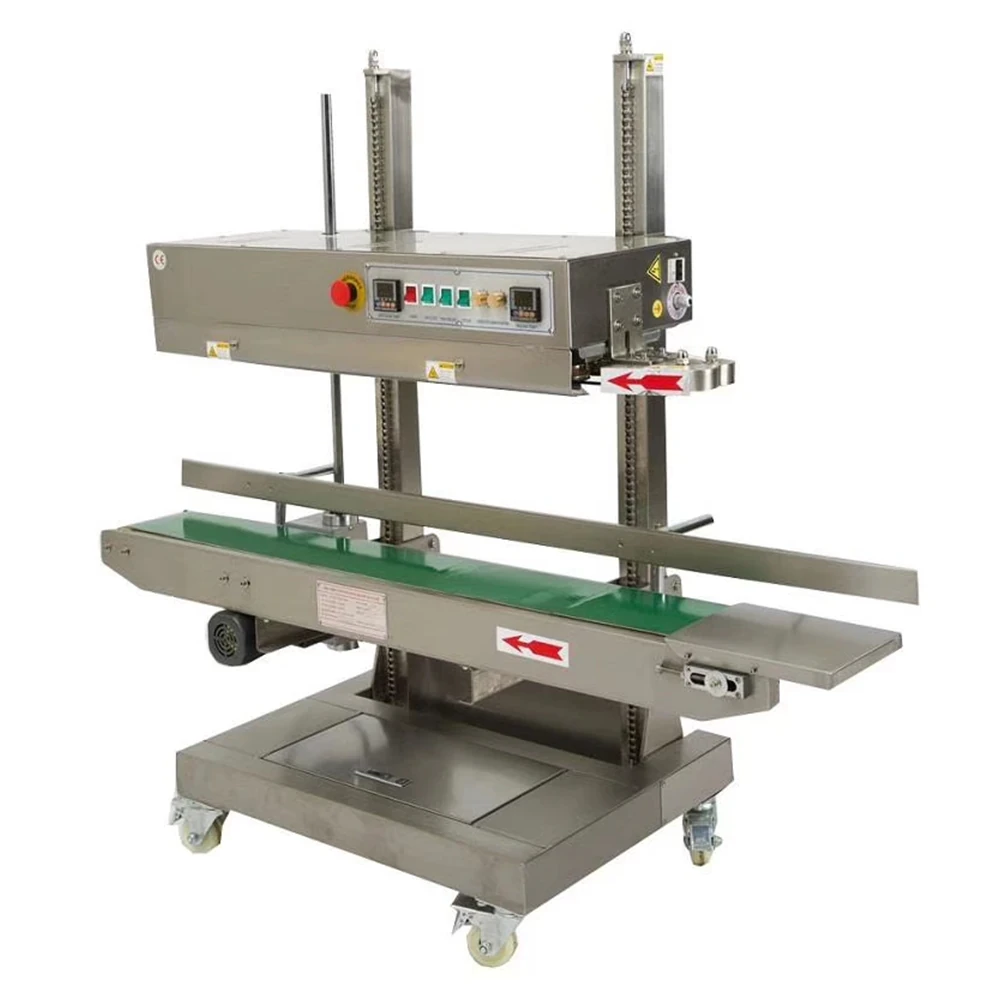
JS-1100V Heat Sealer
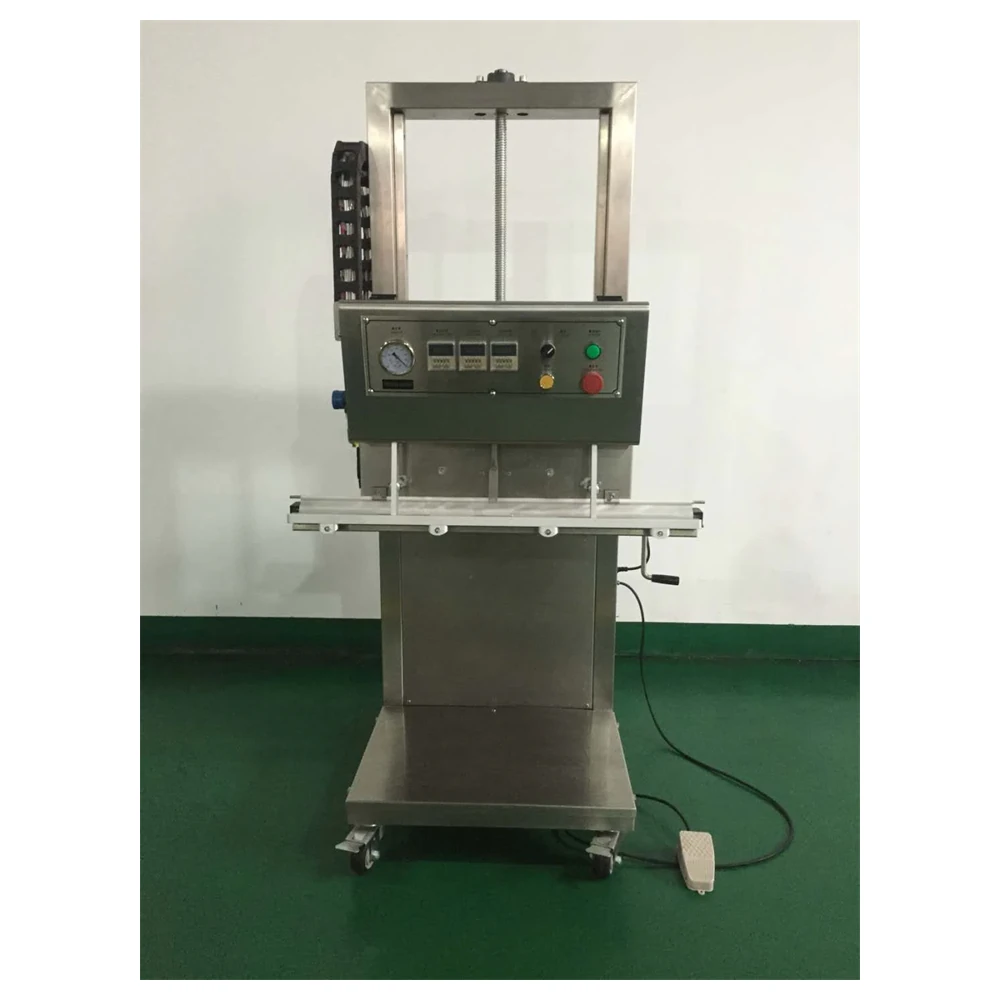
A 304 stainless console with a 20 kg conveyor load and an optional air extraction unit.
View modelAir is what makes a sealed bag swell, oxidise and take up space. This machine draws a vacuum first, then optionally backfills nitrogen or another gas, and finally clamps a 600 mm seal shut with air pressure rather than a linkage. A 750 W vacuum pump, PLC control and a 304 stainless frame make it a production machine rather than a bench accessory.
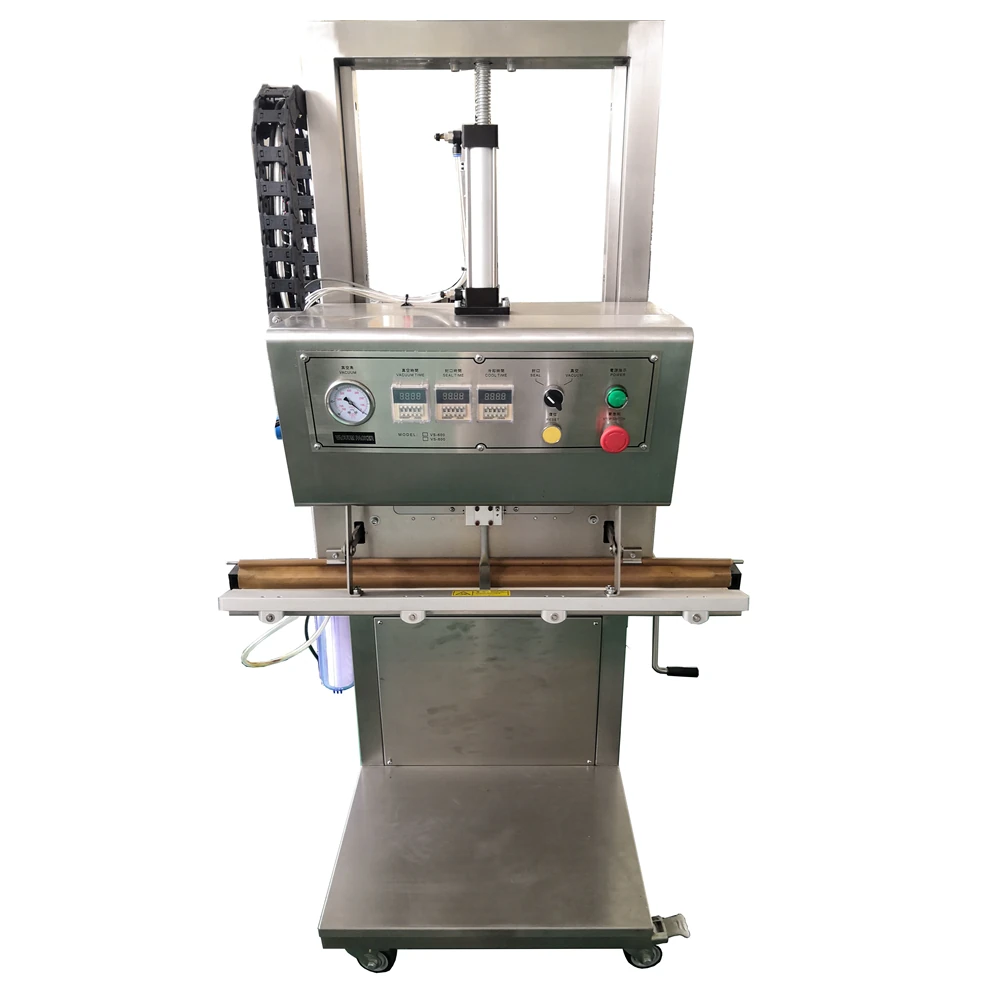
Most sealing faults on a vacuum pack come from the seal itself, not the vacuum. A 600 mm seal is long enough that a mechanical clamp struggles to press evenly at both ends. This machine uses compressed air to close the bar, which is why it can hold a reliable seal across the whole width and change the traditional problem of weak seals.
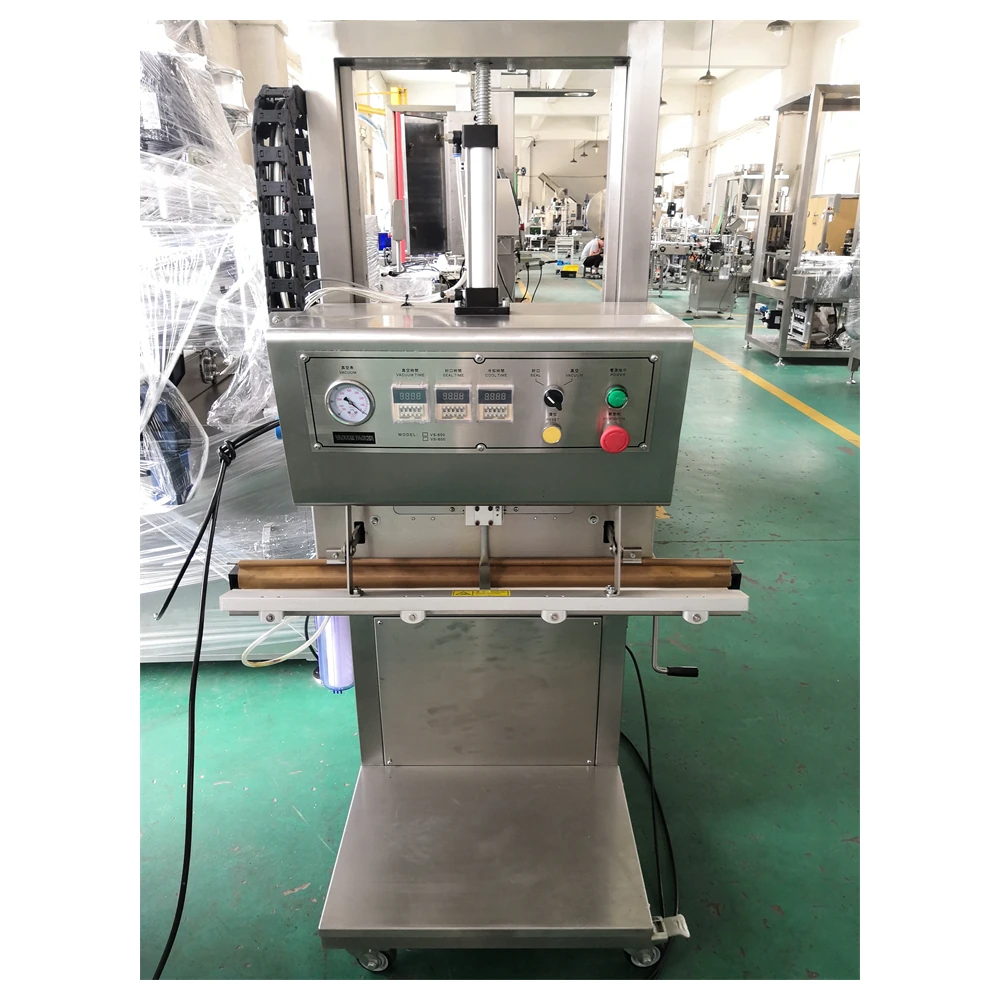
Every pack follows the same four stages. Understanding them is what lets an operator tune the vacuum, the gas flush and the seal for a new product.
The filled bag is positioned in the chamber with its mouth across the 600 mm sealing bar at the set height.
The 750 W pump draws air out of the bag at 10–20 m³/h, collapsing the pack and removing the oxygen.
Optionally, nitrogen or another gas is admitted to replace the air, protecting delicate or crush-sensitive products.
The air-powered bar clamps and heat-seals the mouth in one stroke, closing the pack without trapped air.
Removing the air stops the pack ballooning in transit and keeps the pallet stable.
With the oxygen drawn out, oxidation of oils and powders slows and shelf life improves.
Flatter packs stack and transport more efficiently, which lowers the space a shipment occupies.
All figures are taken from the machine datasheet and listed as supplied.
| Parameter | Vacuum Heat Sealer |
|---|---|
| Sealing Length | 600 mm |
| Sealing Width | 8 mm |
| Bag Size | 550 × 900 mm |
| Vacuum Pump Power | 750 W |
| Pump Displacement | 10–20 m³/h |
| Heat Sealing Power | 1 kW |
| Power Supply | Single phase 220V 50 Hz |
| Frame Material | 304 stainless steel |
| Control | PLC with liquid crystal display panel |
| Sealing Action | Air-powered clamp |
| Seal Height | Freely adjustable |
| Mobility | Castors with braking system |
| Net Weight | 120 kg |
Bag size, gas type and vacuum level are confirmed against your product before production. Compressed air is required on site for the sealing clamp.
Not every product wants a hard vacuum. This table maps the common pack types to the cycle that protects them best.
| Bag Type | Typical Product | Cycle | Notes |
|---|---|---|---|
| Plastic bag | Dried food, hardware, sundries | Vacuum | Standard film, 600 mm seal |
| Composite bag | Meat, seafood, powders | Vacuum and optional gas | Barrier film holds the vacuum without stretching |
| Aluminium foil bag | Chemicals, electronic components | Vacuum and gas flush | High barrier and moisture protection |
| Heavy gauge bag | Grain, feed, bulk goods | Gas flush | Avoids crushing the contents under full vacuum |
| 550 × 900 mm bag | General packing | Vacuum | Reference bag size for this build |
Bag size, gas type and vacuum level are confirmed against your product before production. The sealing clamp requires compressed air on site.
Stainless steel where it is washed, castors where it is moved, and a PLC where settings must repeat.
A 304 stainless steel structure is durable and easy to clean, which suits food, pharma and chemical rooms.
A PLC with an LCD panel stores and repeats the vacuum, gas and seal settings for each product.
The machine moves on castors but locks in place, so it stays stable under the load of a full bag and a heavy seal.
Reliable imported parts keep performance stable across long production runs.
Any product that is affected by air, moisture or volume in transit benefits from this cycle.
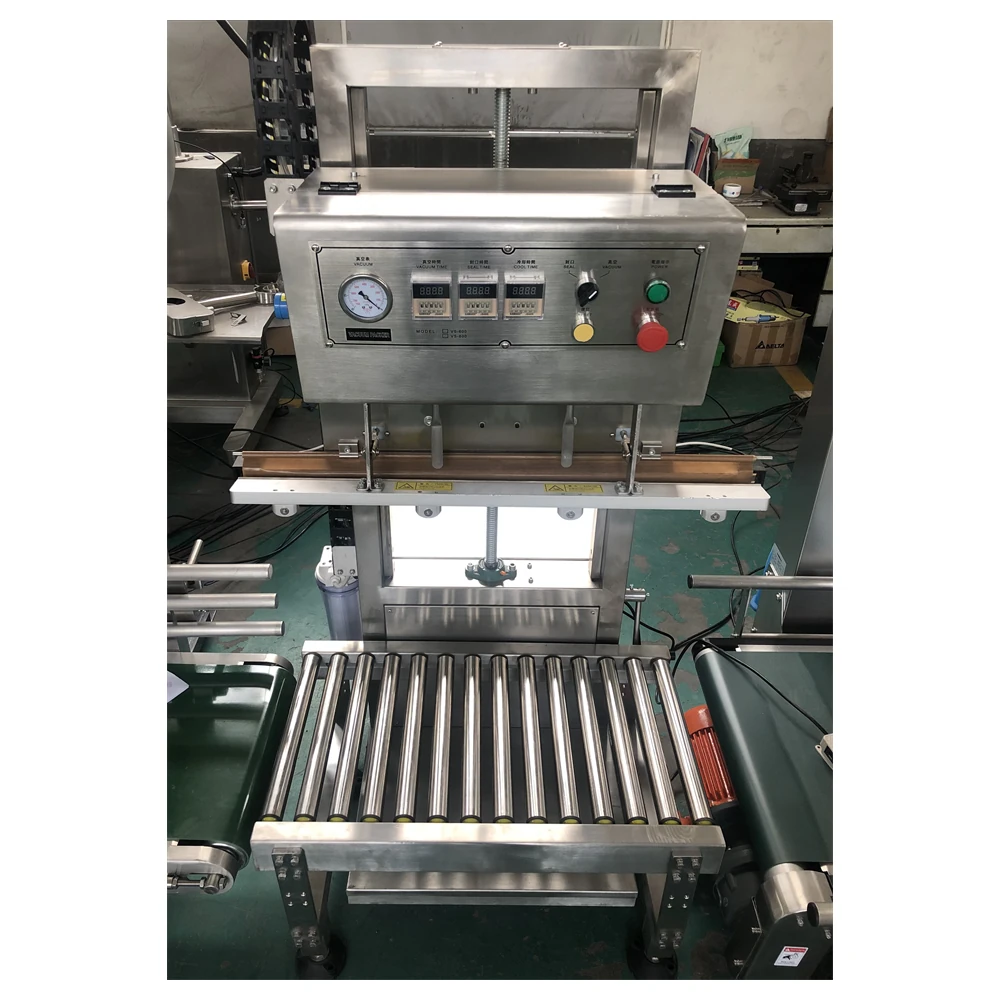
Grains, dried goods, meat, seafood and prepared foods packed without air to extend storage.
Powders, granules and hygroscopic materials that must stay dry and free of oxygen.
Static-sensitive and moisture-sensitive components packed in a controlled atmosphere.
Heavy double-layer packing, shipped by express, air or sea and trackable from the factory door.
T/T bank transfer and other agreed methods, with terms confirmed on the proforma invoice.
A 2-year warranty covers parts and labour, with pump service parts and sealing elements available.
Help setting the vacuum, gas flush and seal time for your product before first production.
A plain sealer closes the bag with the air still inside. This machine draws a vacuum first, so most of the air is removed before sealing, then optionally backfills the bag with nitrogen or another gas. That stops the pack ballooning, reduces oxidation of the contents and cuts the transport volume.
Pneumatic sealing applies a firm, even clamp across the whole 600 mm seal, which is harder to achieve with a mechanical linkage at that length. The result is a seal that does not leak at the ends, which is the usual failure point on a wide bag and the reason many traditional sealers give a weak seal.
The standard seal length is 600 mm with an 8 mm seal width, sized for bags around 550 x 900 mm. It seals plastic and composite bags used for vacuum and gas-flushed packing in food, pharmaceutical, chemical and electronic products, where the film has to hold a vacuum without stretching.
Yes. The machine can draw a vacuum and then admit nitrogen or another gas before sealing, which is the usual route for products that would be crushed by a hard vacuum or that need a controlled atmosphere to stay fresh.
The sealing height adjusts freely, so the same machine can seal short pouches and tall bags without a table change. The frame sits on castors with a braking system, so once the height and position are set the machine stays where it is put.
Control is through a PLC with a liquid crystal display panel. The machine is assembled and tested before dispatch and ships in heavy double-layer packing. Standard production is about 5 working days with express transit of roughly 4 to 6 working days, and a 2-year warranty applies.
When vacuum is not required, these continuous and pedal machines cover everyday bag sealing.
A 304 stainless console with a 20 kg conveyor load and an optional air extraction unit.
View model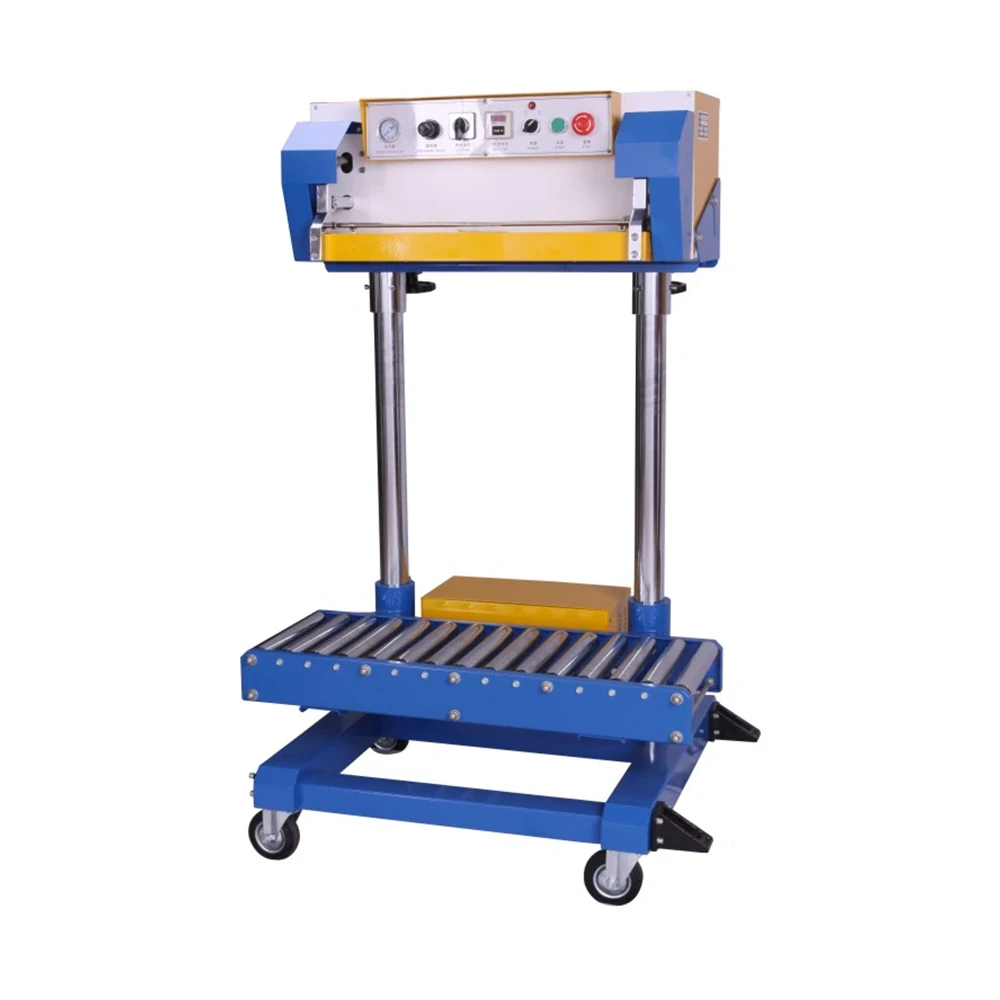
A pneumatic vertical sealer for bags up to 600 mm long and 50 kg, with adjustable jaw pressure.
View model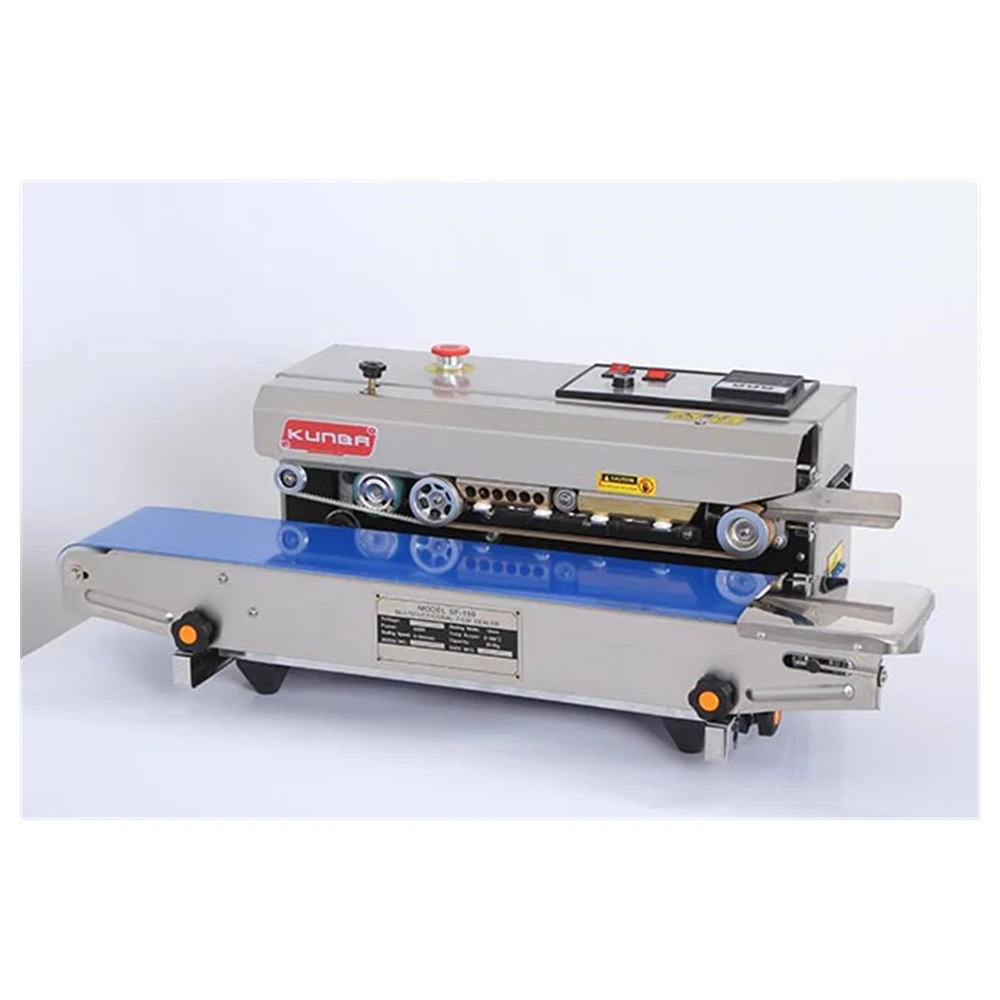
A 500 W bench sealer with 0–14 mm adjustable width for everyday film bag sealing.
View model