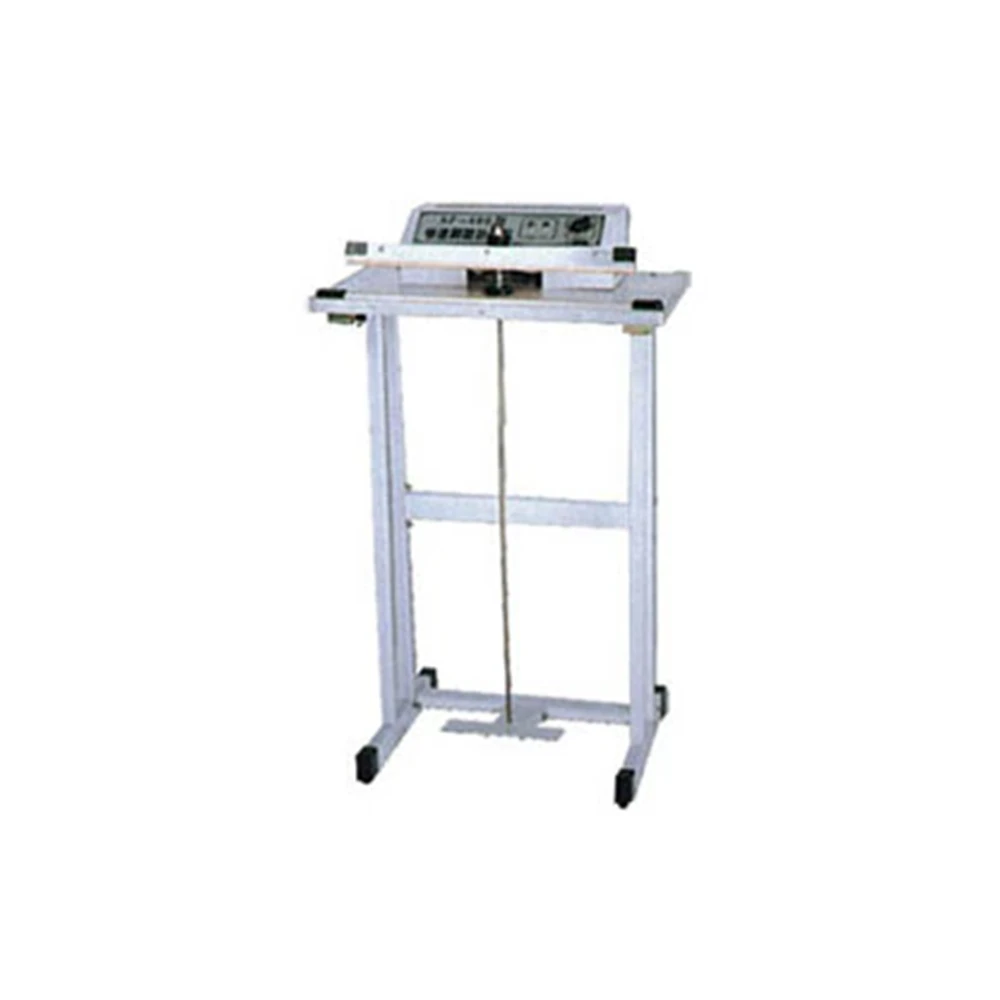
Foot-Operated Sealing Machine FRS-400JT
The press-down version of the same platform, for shorter bags sealed under the head.
View modelFeed the bag through, press the pedal, done. The FRS series uses electric impulse heating to cut the sealing cycle to about 0.2 seconds, so a single operator can seal long bags and make them from film without waiting on a hot bar.
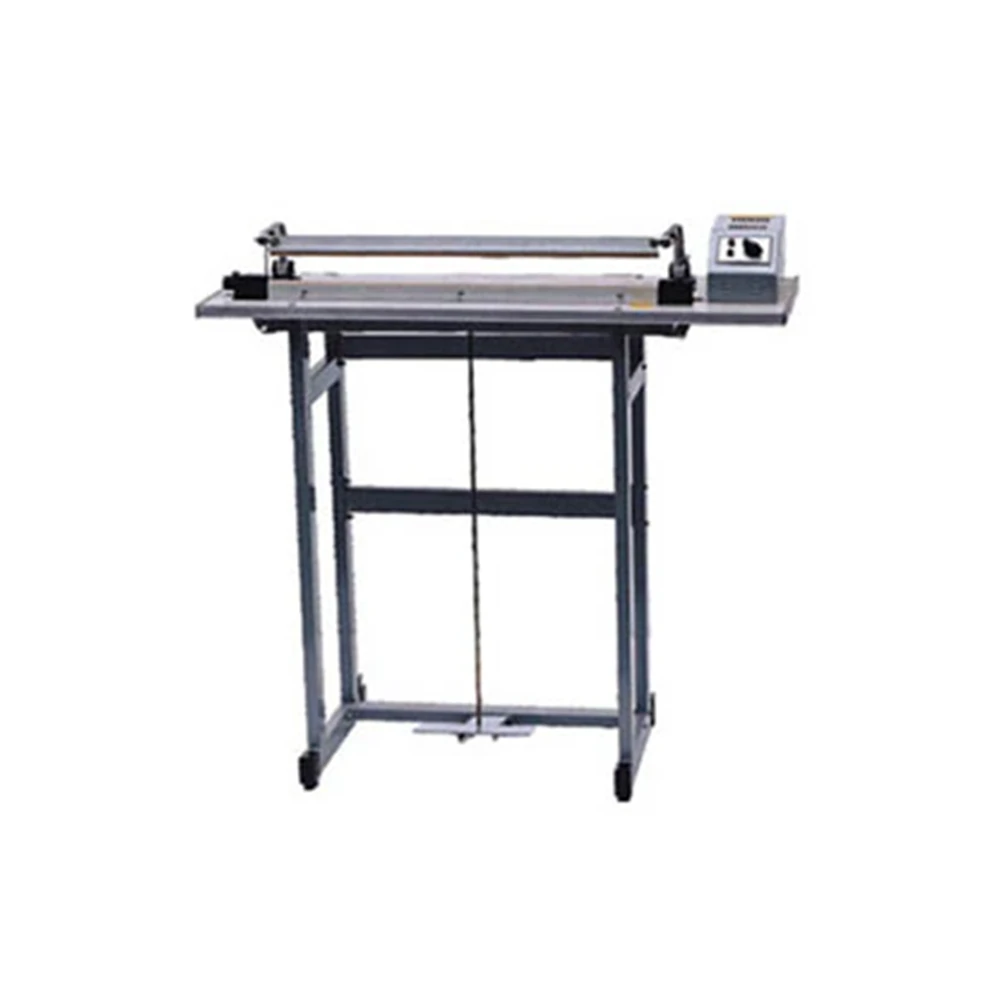
Most foot sealers press down on the bag. A pass-through sealer works differently: the bag is fed between the bars and the pedal closes them, so long bags and long runs of film are handled without repositioning the pack. The whole seal takes a fraction of a second, which is why one operator can keep up.
Pick the head length that covers the widest bag you seal. Everything else stays the same across the series.
| Model | Seal length | Typical bag |
|---|---|---|
| FRS-400TG | 400 mm | Small and medium film bags |
| FRS-500TG | 500 mm | Standard retail bags |
| FRS-600TG | 600 mm | Larger retail and storage bags |
| FRS-700TG | 700 mm | Wide bags and food packs |
| FRS-1000TG | 1000 mm | Very wide film and bag making |
The thicker the film, the more heat the seam needs. These are the starting points recommended for the machine.
| Film gauge setting | Sealing temperature | Note |
|---|---|---|
| 8 c | 180 C | Thin film, the standard starting point |
| 10 c | 190 C | Medium film, a little more heat for a solid bond |
| 12 c | 200 C | Thicker film, highest of the three starting settings |
The gauge is set on the machine in c units, and the table lists the recommended sealing temperature for each setting. Always run a waste bag first and tune the heat and the heating time against the actual film.
These are the recommended initial values. Adjust them against the test bag before running production.
| Setting | Starting value | Adjustment |
|---|---|---|
| Sealing temperature | 180 C | Turn clockwise to increase, anticlockwise to decrease |
| Printing temperature | 140 C (range 120-160 C) | Raise for clearer print, lower if the code smears |
| Motor speed | Medium, setting 3 | Match to the film so the seam is not stretched |
| Print position | Far left | Move along the head to place the code on the seam |
| Ink wheel | Replace when print stays faint | Several adjustments without improvement means a worn wheel |
Four steps, and the whole cycle takes less time than reading them.
Inspect the power cable, the high-temperature tape and the heating wire, and clean the machine before use.
Dial in the sealing temperature, printing temperature, motor speed and print position for the bag.
Seal a scrap bag and check the seam strength, date position and print clarity before production.
Seal production bags, then turn the heat to minimum, switch off and unplug when the shift ends.
Four reasons a pass-through impulse sealer is so often the first machine a packing room buys.
The 0.2 second working cycle replaces the 2-4 seconds of older machines, so output rises without extra staff.
Heads up to 1000 mm close wide bags in a single pass, which keeps long seams straight.
Heat, heating time and print position are all tunable, so the machine adapts to each film.
Plug in, switch on and work. No warm-up cycle and no complex setup are needed before the first bag.
What sets this pass-through sealer apart from a standard pedal machine.
Any room that fills bags by hand and closes them at a steady pace can use this sealer.
Snacks, dried goods and local specialities sealed in film, foil and composite bags.
Film and foil bags for medical supplies, sealed quickly with a clear printed date.
Tea, spices and regional goods closed in decorative film for retail and export.
Component and accessory bags sealed with a batch code in small or mixed runs.
Detergent and personal care bags closed quickly on a machine that needs no warm-up.
Film converting where the head both seals and separates the finished bag.
The bag is fed through the sealing head rather than pressed under a lid, which suits long bags and continuous hand-fed work. The machine connects to the power supply and is ready to seal.
Electric impulse technology cuts the working cycle from the 2-4 seconds of older machines down to about 0.2 seconds, which lets one operator keep a steady rhythm through a shift.
Five lengths are offered: 400, 500, 600, 700 and 1000 mm. Choose the length that covers the widest bag you seal, so the seal runs in one pass.
Start at about 180 C for the seal and 140 C for the print. For thicker film the seal temperature rises: roughly 190 C at 10 c gauge and 200 C at 12 c gauge.
Set the print temperature between 120 C and 160 C, starting at 140 C, then adjust it against the print clarity. If several adjustments do not sharpen the print, the ink wheel is due for replacement.
Check the power cable for damage, check the high-temperature tape and replace it if worn, and inspect the heating wire for breaks or deformation. Test on a waste bag before running production.
Standard production takes about 5 working days. Air express adds roughly 4-6 working days, and the shipment is trackable from the factory.
Three machines with the same pedal idea, built for different formats.
The press-down version of the same platform, for shorter bags sealed under the head.
View model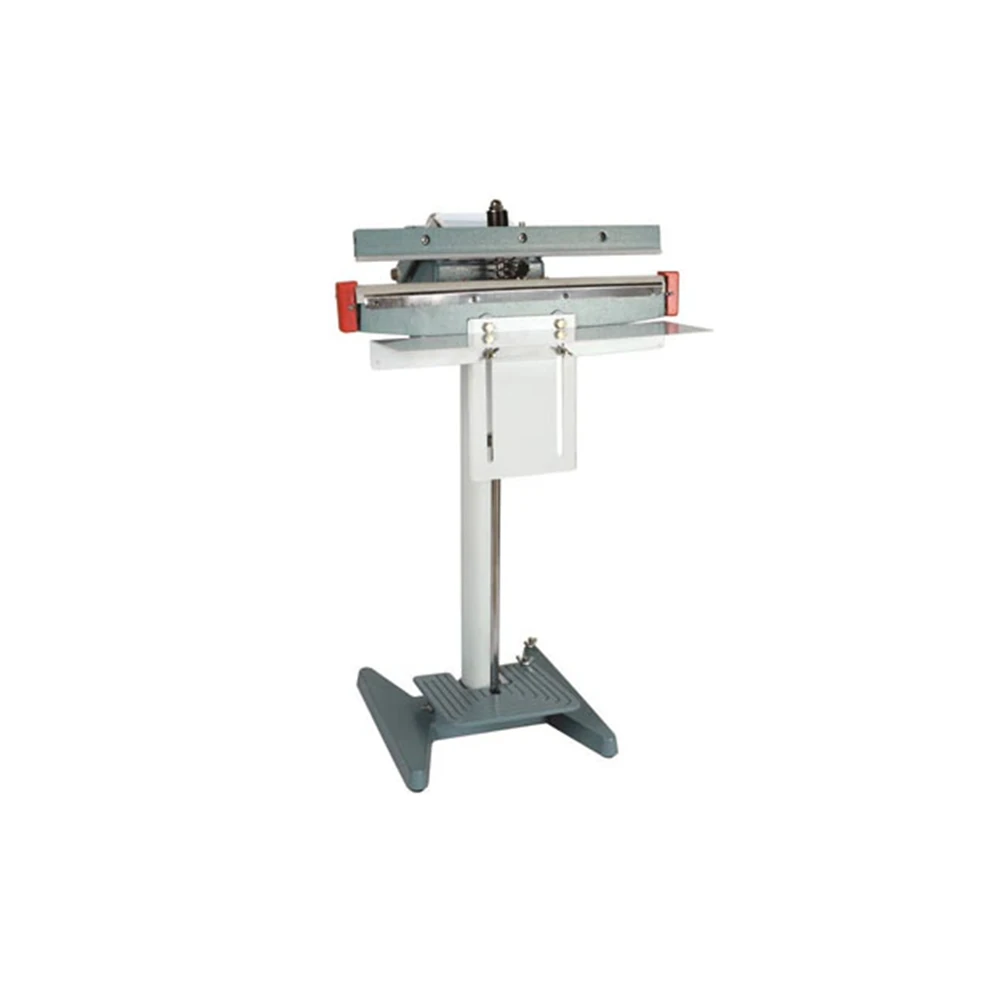
Floor-standing pedal sealer in four lengths with CE marking, for bag sealing and bag making.
View model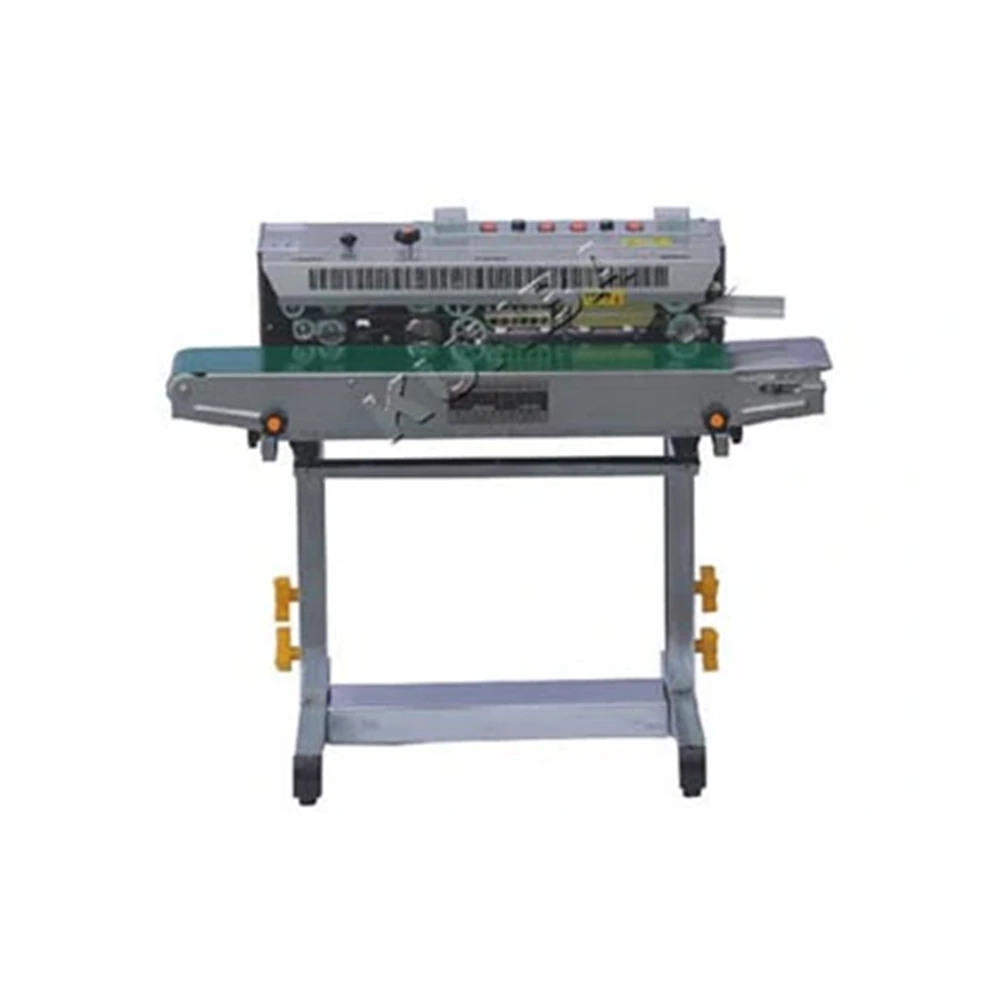
A continuous sealer with ink wheel coding when a pedal machine is too slow for the line.
View model