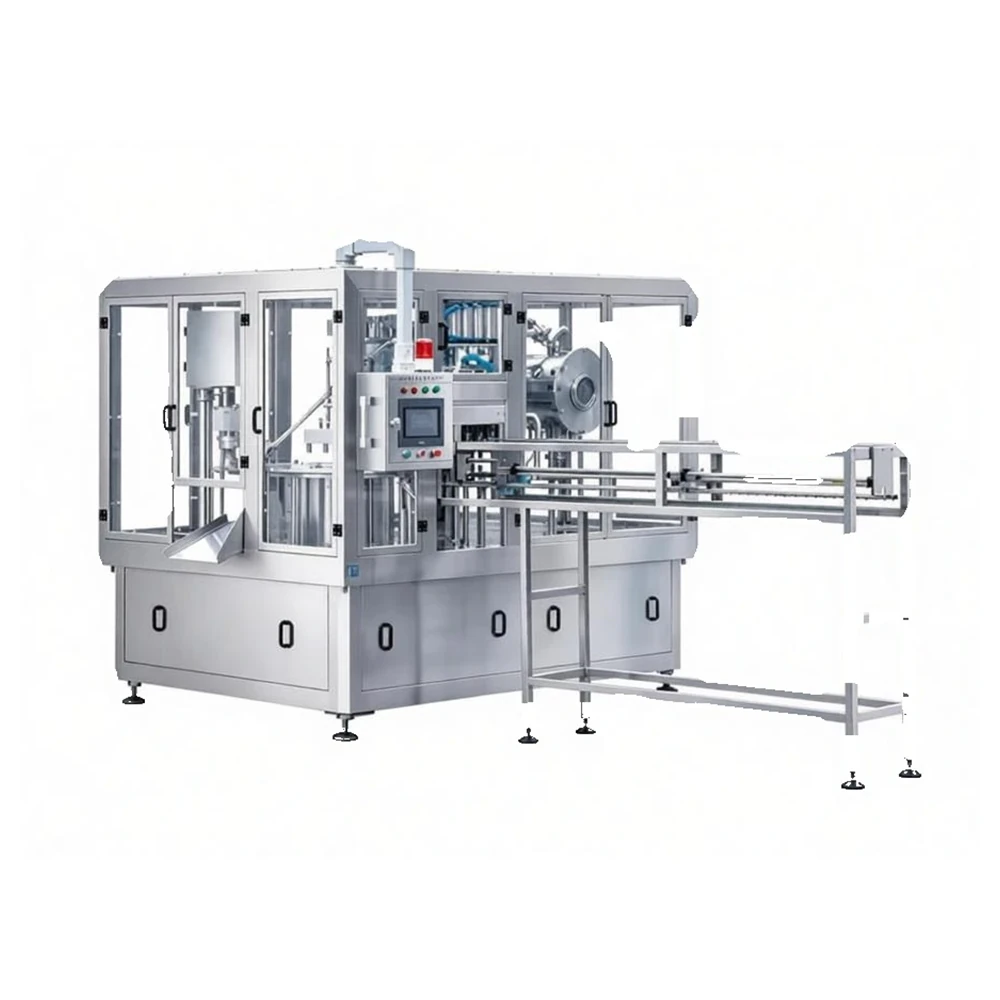
ZLD-4 Stand-Up Pouch Filling & Capping Machine
Four filling heads, 3,600 to 6,000 pouches per hour and a wider 60 to 390 ml fill range on the same rotary principle.
View modelNot every pouch line needs to run flat out. Small batches, frequent product changes and a tight floor plan are a different problem, and the ZLD-2 answers it with a two-head rotary platform that fills and seals spouted stand-up pouches from 30 to 100 ml at up to 3,000 per hour, in a body small enough to sit in a laboratory or a compact workshop.
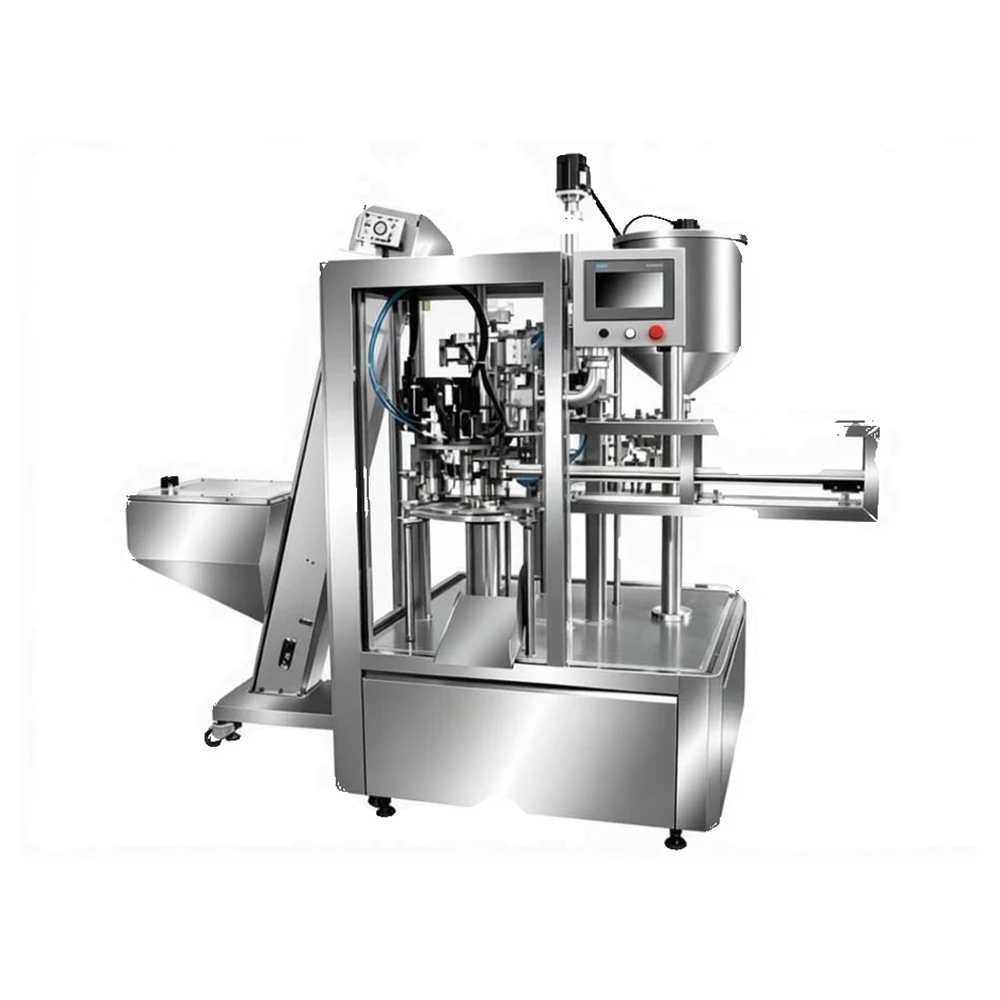
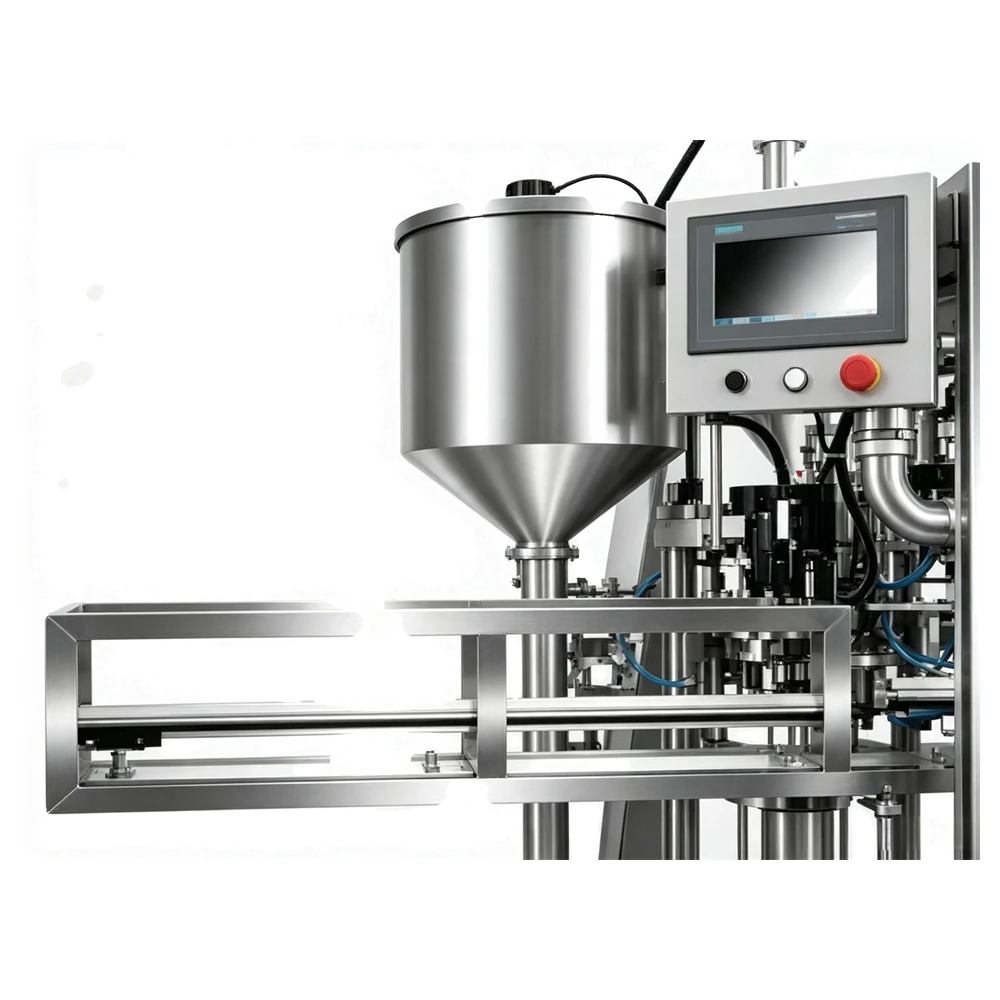
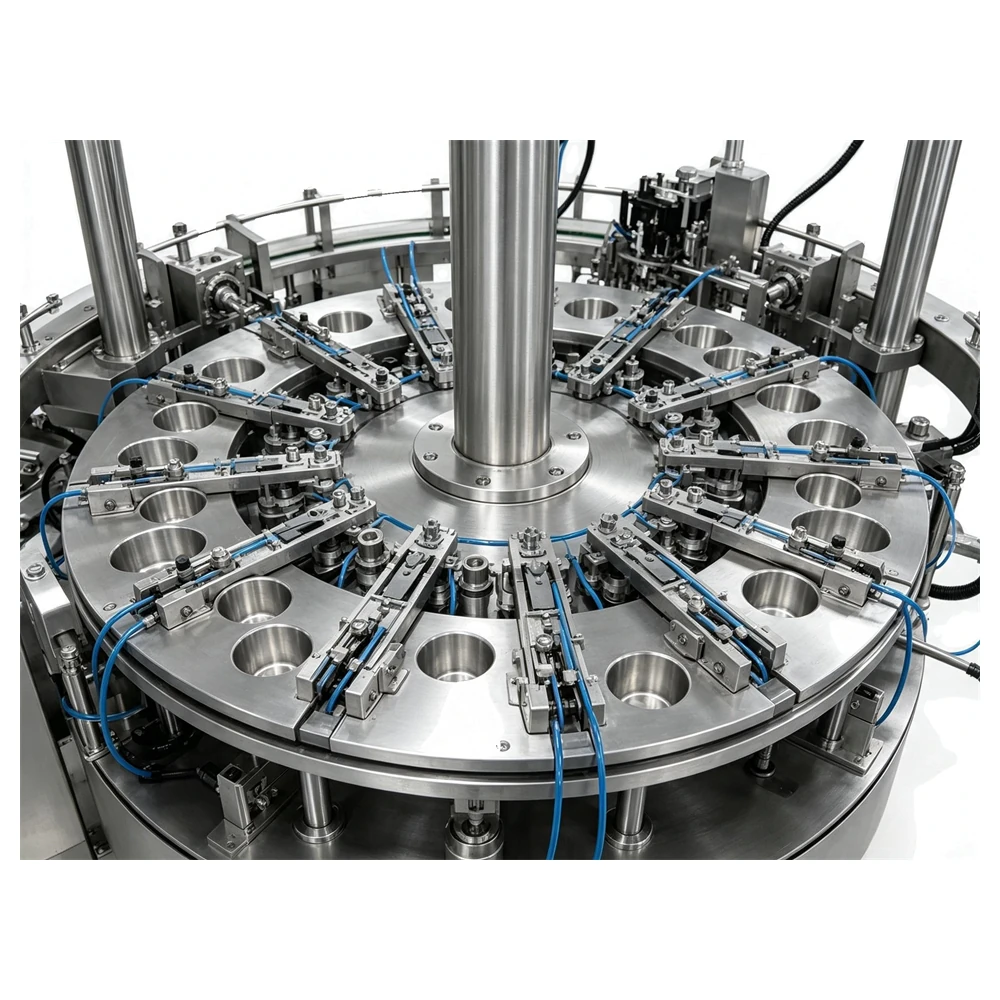
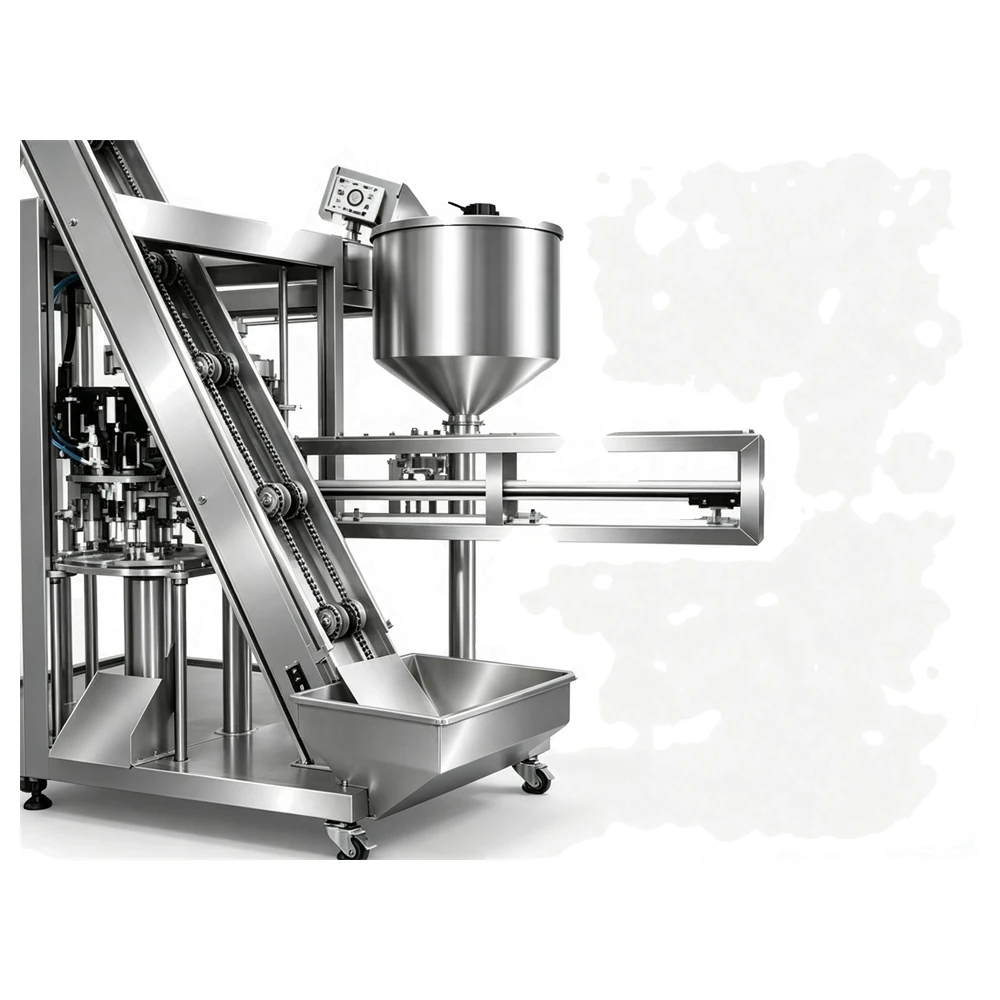
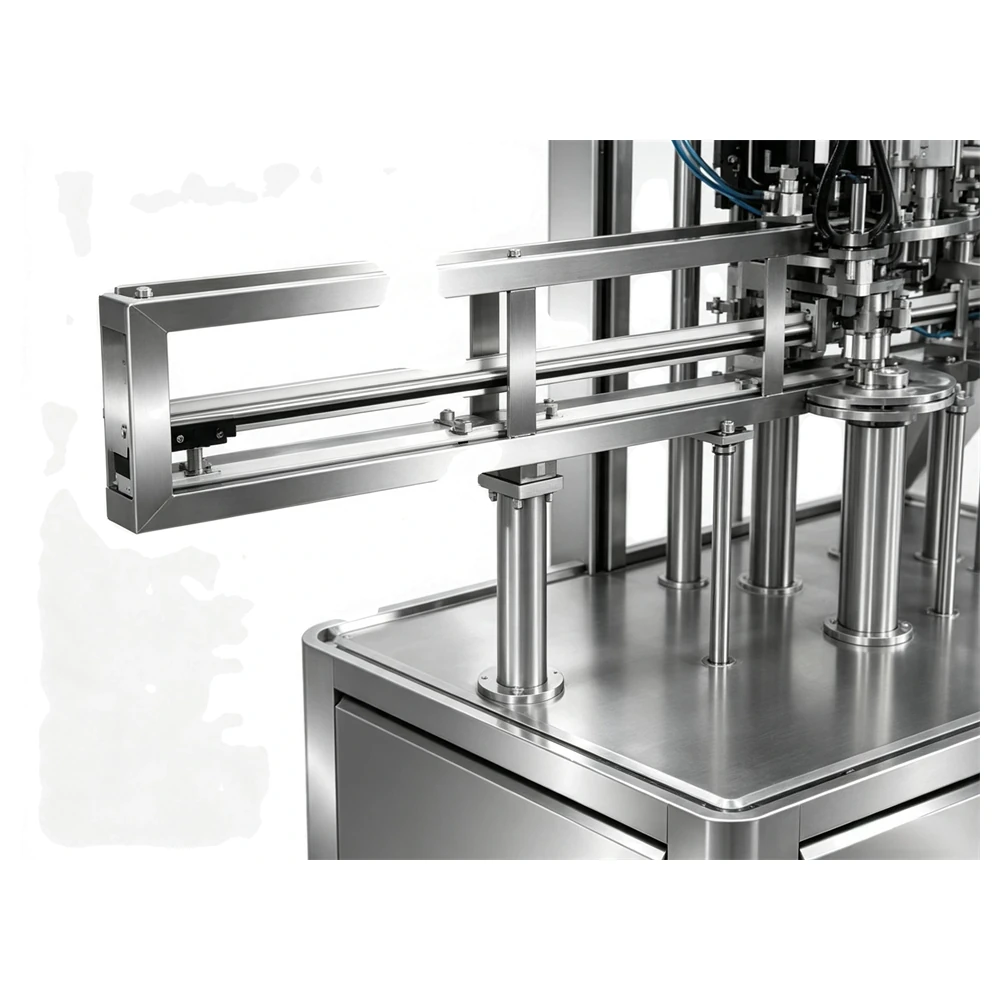
The ZLD-2 keeps the architecture of the larger ZLD machines — a rotating table on a cam indexer, piston dosing and an integrated sealing head — but in a compact frame that occupies about 1.4 by 1 metre of floor. It fills and seals in one pass, so a spouted pouch is dosed and closed without a transfer conveyor between the two operations.
The ZLD-2 is the entry point of a single platform. The carousel, dosing principle, controls and hygiene standard are shared; what changes between models is how many heads fill at once, and therefore how many pouches leave the machine each hour.
| Parameter | ZLD-2 | ZLD-4 | ZLD-6 | ZLD-8 |
|---|---|---|---|---|
| Filling heads | 2 | 4 | 6 | 8 |
| Pouches per hour | 800–3,000 | 3,600–6,000 | 5,400–9,000 | 7,200–12,000 |
| Fill volume | 30–100 ml | 60–390 ml | 60–390 ml | 60–390 ml |
| Dosing accuracy | ±0.5% | ±0.5% | ±0.5% | ±0.5% |
| Supply | 220V single phase | 380V, 50 Hz | 380V, 50 Hz | 380V, 50 Hz |
| Total power | About 2.2 kW | 8.05–8.55 kW | 8.05–8.55 kW | 8.05–8.55 kW |
| Air consumption | 0.35 m³/min | 0.65 m³/min | 0.65 m³/min | 0.65 m³/min |
| Machine weight | About 280 kg | About 2,900 kg | About 2,900 kg | About 2,900 kg |
| Typical role | Pilot and small batch | Medium-volume filling | Continuous production | High-volume single product |
A machine is usually chosen by the pouch volume and shift pattern rather than by the raw maximum rate. Moving up the range keeps the same pouch format and utilities but requires three-phase supply from the ZLD-4 upward. Dosing drive, moulds and pouch clamps are specified per order.
Every one of them serves the same goal: consistent fills on a small footprint, with tooling that changes without a technician.
Filling and sealing happen on the same rotating table. There is no transfer between stations, so the footprint shrinks and partial pouches cannot leave the machine.
Volumetric dosing can be driven by pneumatic cylinders or by servo motors. Air is simple and maintenance-light; servo gives finer control on thinner products.
The sealing head runs on an intelligent temperature system, so the seal stays strong across a shift and the joint quality is repeatable pouch after pouch.
The rotary design and quick-change moulds let one machine run several pouch formats and several products in the same day.
Every figure below is taken from the manufacturer datasheet for the two-head model.
| Parameter | ZLD-2 — Two-Head Model |
|---|---|
| Model | ZLD-2 |
| Filling heads | 2 |
| Packaging speed | 800–3,000 pouches/hour |
| Fill volume | 30–100 ml |
| Maximum pouch format | 120 mm × 260 mm × 60 mm (W × H × L) |
| Packaging type | Stand-up pouch |
| Filling accuracy | ±0.5% |
| Filling method | Volumetric dosing, pneumatic cylinder or servo motor drive |
| Applicable product | Liquid, paste, sauce and fluids with particles up to 3 mm |
| Speed control | Variable frequency drive |
| Supply voltage | 220V single phase, with safety earth required |
| Total power | About 2.2 kW |
| Air consumption | 0.35 m³/min |
| Compressed air pressure | 7 kg/cm² |
| Machine dimensions | About 1,380 × 1,020 × 2,000 mm |
| Machine weight | About 280 kg |
| Product-contact material | SUS304 frame with 316L on wetted parts |
The datasheet lists the maximum pouch format as 1200 for the width field and 260 for the height field. The four and six and eight-head machines on the same platform are each published at 120 mm wide, so this page reads 120 mm as the working width, consistent with the range, and confirms the exact pouch against your sample before production. Mould sets, nozzle diameters and dosing drive are specified per order.
Read these before anything else in the datasheet.
A single-phase machine that runs from a standard 220V supply, which keeps installation simple in leased workshops and laboratory spaces.
A moderate compressed-air demand, well within the output of a small workshop compressor, at 7 kg/cm² working pressure.
Nozzle and pump sizing accept particles up to 3 mm, which opens the machine to pulp juices, cleansers and pearl drinks.
Set the recipe once, then the sequence repeats with the table turning continuously.
Operators place spouted pouches into the clamps around the rotating table; the cam indexer carries each one to the filling station.
The piston pump draws the set volume and delivers it through the nozzle, with the fill held to about plus or minus 0.5 percent.
The sealing head closes the pouch under temperature control, giving a consistent joint that survives handling and transport.
Finished pouches leave the table. Fill weight and seal quality are sampled against the approved standard at set intervals.
Three fluid families, one piston pump. What changes between them is the nozzle size and the fill volume in the recipe.
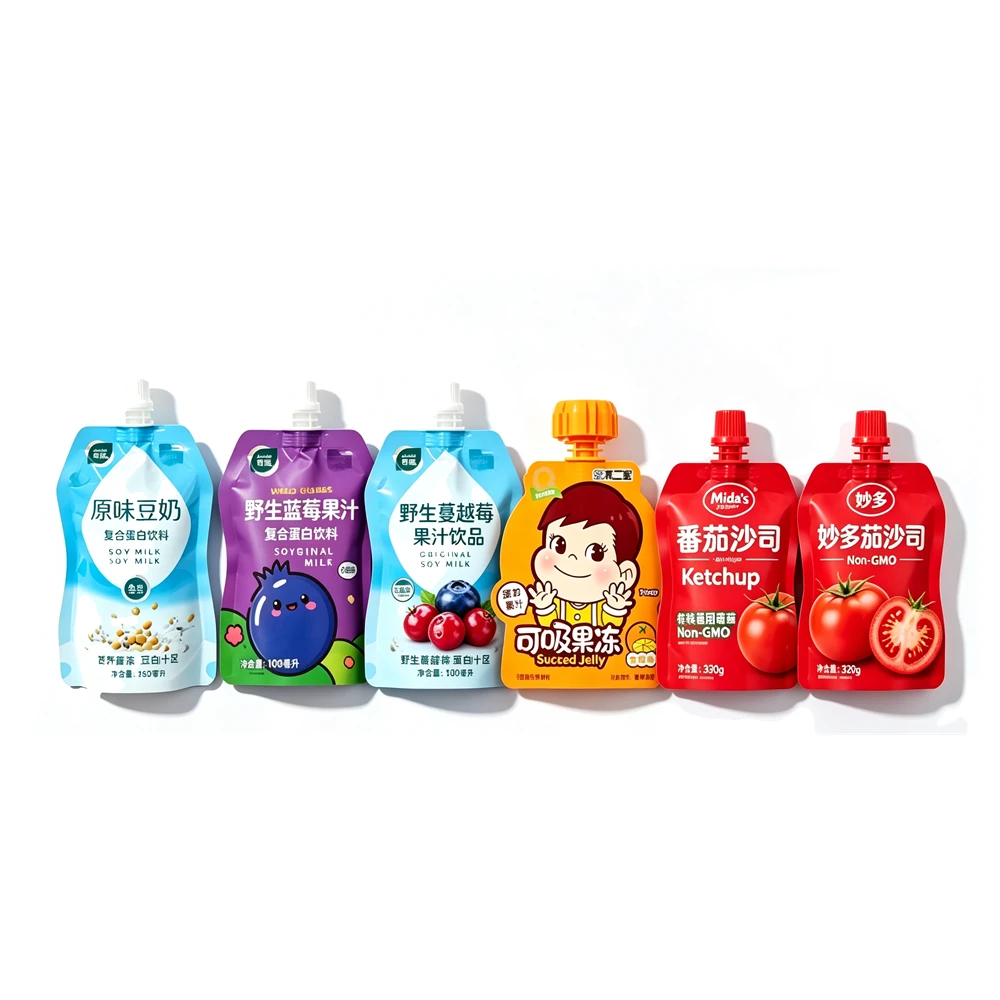
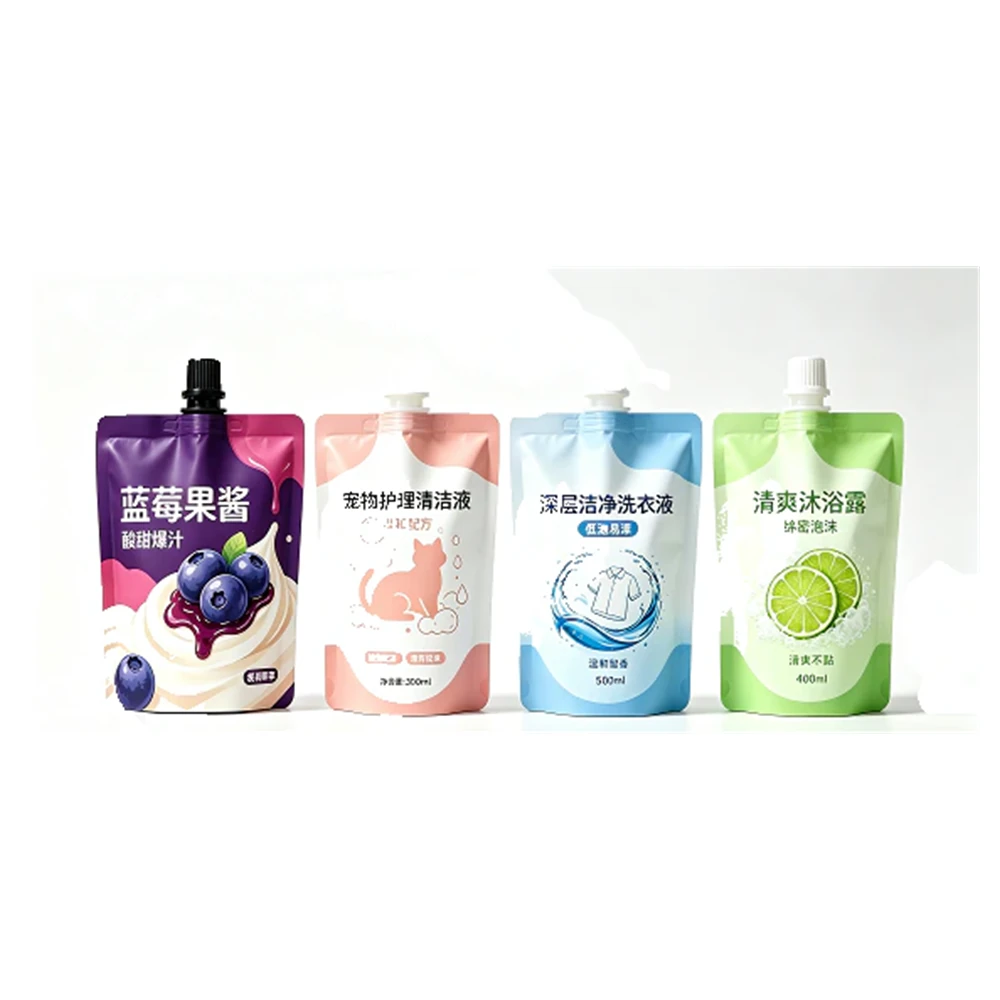
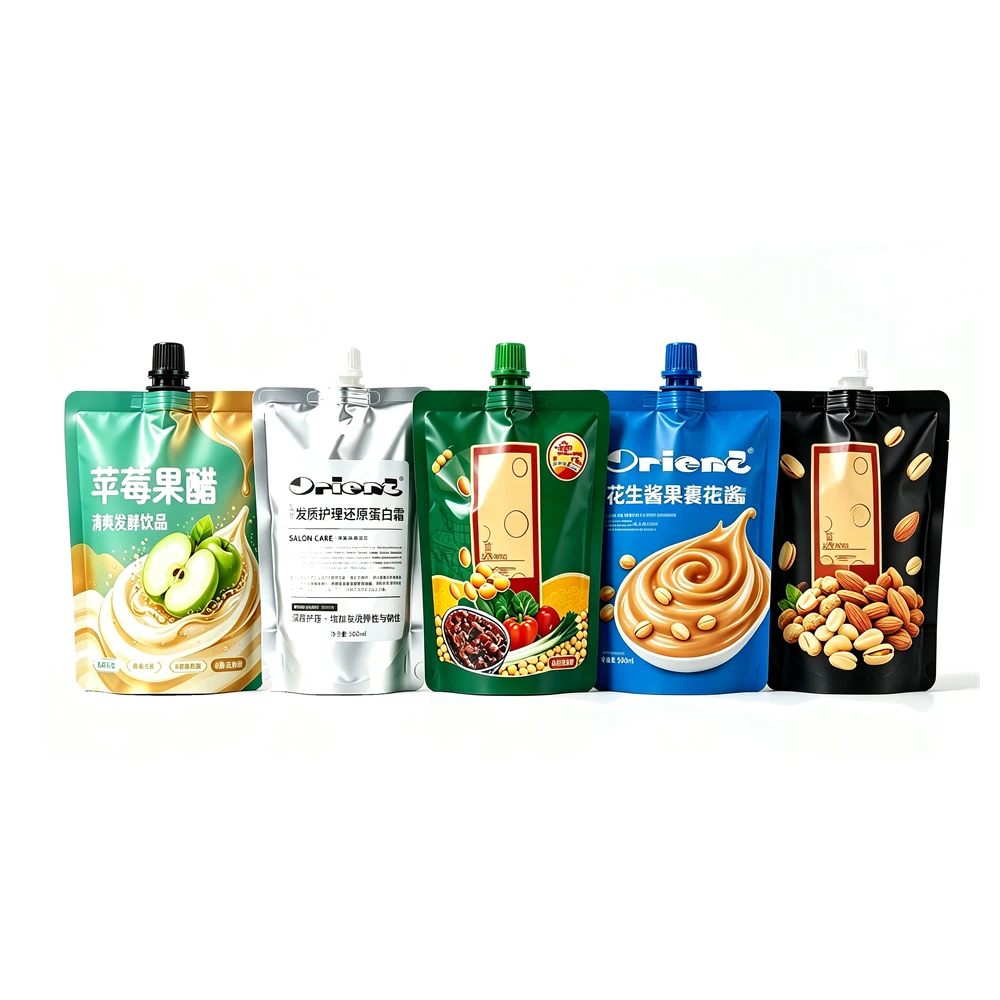
Purified water, juice, toner, soy sauce and similar thin products, filled cleanly at the low end of the 30 to 100 ml range.
Yogurt, shampoo, salad dressing and hand cream, where the piston pump holds the dose without stringing or dripping at the nozzle.
Pulp juice, exfoliating cleanser and mini pearl milk tea, dosed through enlarged nozzles that pass particles up to 3 mm.
The ZLD-2 works within a defined envelope of pouch size and fill volume. Checking your format against it before ordering avoids a mould change later.
| Format element | Published envelope |
|---|---|
| Pouch width | Up to 120 mm |
| Pouch height | Up to 260 mm |
| Base depth | Up to 60 mm |
| Fill volume | 30–100 ml |
| Spout type | Standard spouted stand-up pouch |
| Particle clearance | Up to 3 mm |
The machine is assembled, wired and trial-run before dispatch, and support continues after it lands.
Standard builds are quoted at 15 to 25 working days depending on configuration, with sea or air freight arranged to your port.
12 months of parts warranty as standard, with free replacement components and a technical helpline for the life of the machine.
English manuals, a commissioning video and remote operator training cover recipe setup, daily cleaning and pouch changeover.
Frame colour, nameplate and the HMI start screen can carry your brand. Volume terms are agreed per order.
The machine is built for low-viscosity liquids, pastes and fluids carrying fine particles up to 3 mm, with a 30 to 100 ml fill. That covers water, juice, toner, soy sauce and vinegar at the thin end, yogurt, shampoo, salad dressing and hand cream in the middle, and pulp juice, exfoliating cleanser or mini pearl milk tea at the particle end.
On a rotary pouch platform the head count sets the rate. Two heads run 800 to 3,000 pouches per hour, four heads run 3,600 to 6,000, six heads run 5,400 to 9,000 and eight heads run 7,200 to 12,000. The fill range also widens above two heads, from 30 to 100 ml on the ZLD-2 to 60 to 390 ml on the ZLD-4, ZLD-6 and ZLD-8.
The platform is designed around a pouch format up to 120 mm wide, 260 mm high and 60 mm across the base. The datasheet for the ZLD-2 prints 1200 in the width field, which is inconsistent with the 120 mm shared by the four and six and eight-head machines on the same platform, so we treat 120 mm as the working width and confirm the exact pouch against your sample before production.
Both drives are available. Volumetric dosing can be driven by pneumatic cylinders for simple, low-maintenance operation, or by servo motors for finer control and faster response. Piston pumps are used for the dosing itself, which is why the machine holds about plus or minus 0.5 percent on liquids and pastes. Drive choice is confirmed against your product and output target.
The carousel is driven through a high-precision cam indexer, so each pouch station is located mechanically rather than by sensor. That keeps the nozzle centred over the pouch spout, holds position on the rotating table and gives a smooth, repeatable motion at speed without spillage.
The frame and the parts that touch product are made from SUS304 and 316L stainless steel, and the design follows food hygiene and GMP requirements. Pneumatic and main electrical components are sourced from established international brands, and the modular layout lets the filling and sealing assemblies be cleaned quickly between products.
Yes. The machine runs both as a stand-alone unit and as part of a linked line with a capping machine, a labelling machine and a coding machine. Because the platform is shared across the ZLD range, a ZLD-2 can later be replaced by a higher-head-count machine with the same footprint and utilities when volume grows.
If volume is the constraint rather than floor space, these machines share the ZLD architecture and scale the output.
Four filling heads, 3,600 to 6,000 pouches per hour and a wider 60 to 390 ml fill range on the same rotary principle.
View model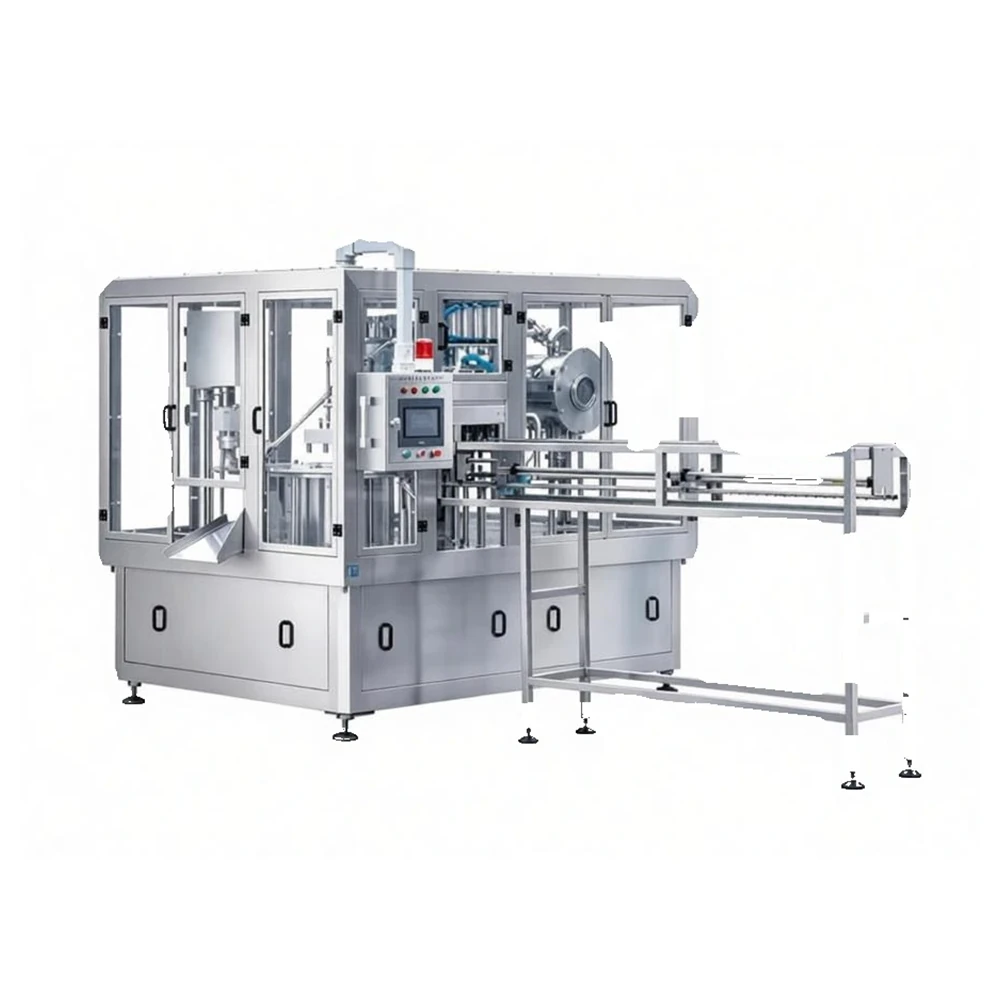
Six heads for continuous production between 5,400 and 9,000 pouches per hour, with the same pouch clamps and controls.
View model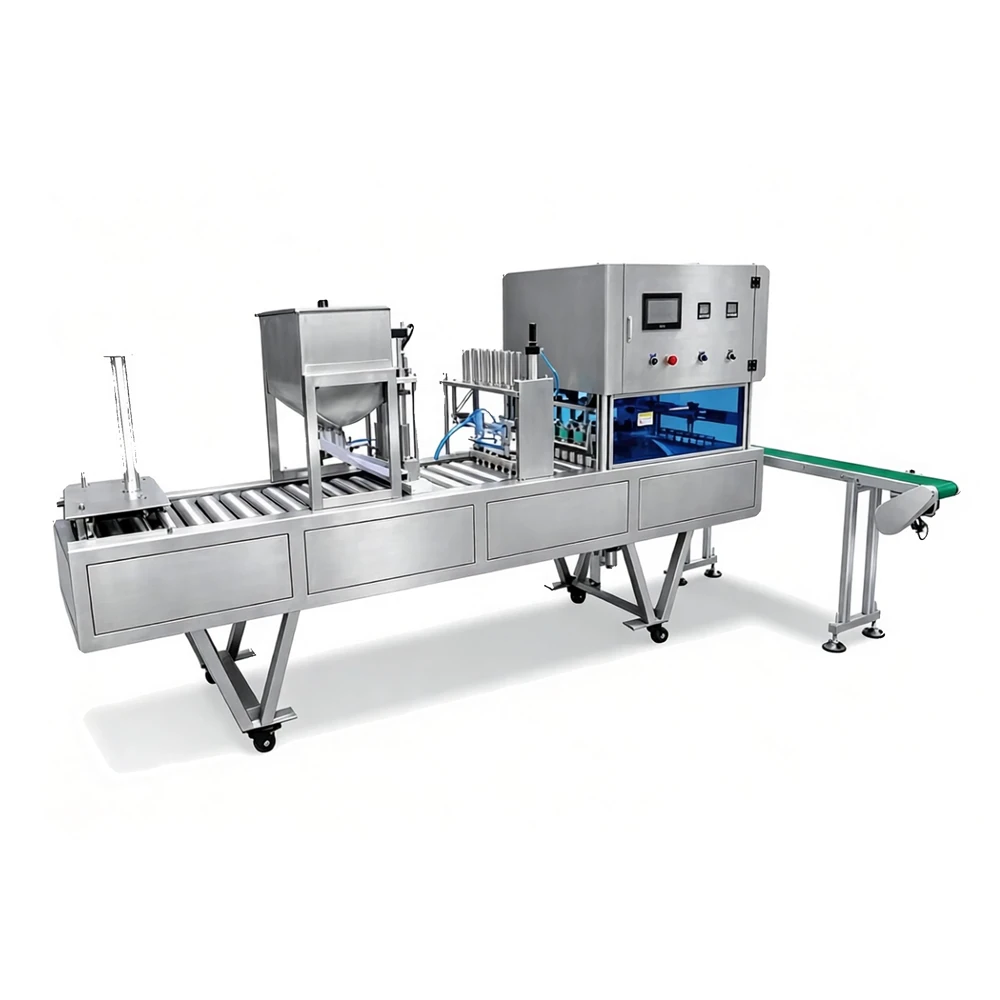
An inline alternative for cups and pouches, with six heads, a film heat seal and an optional date-coding wheel.
View model