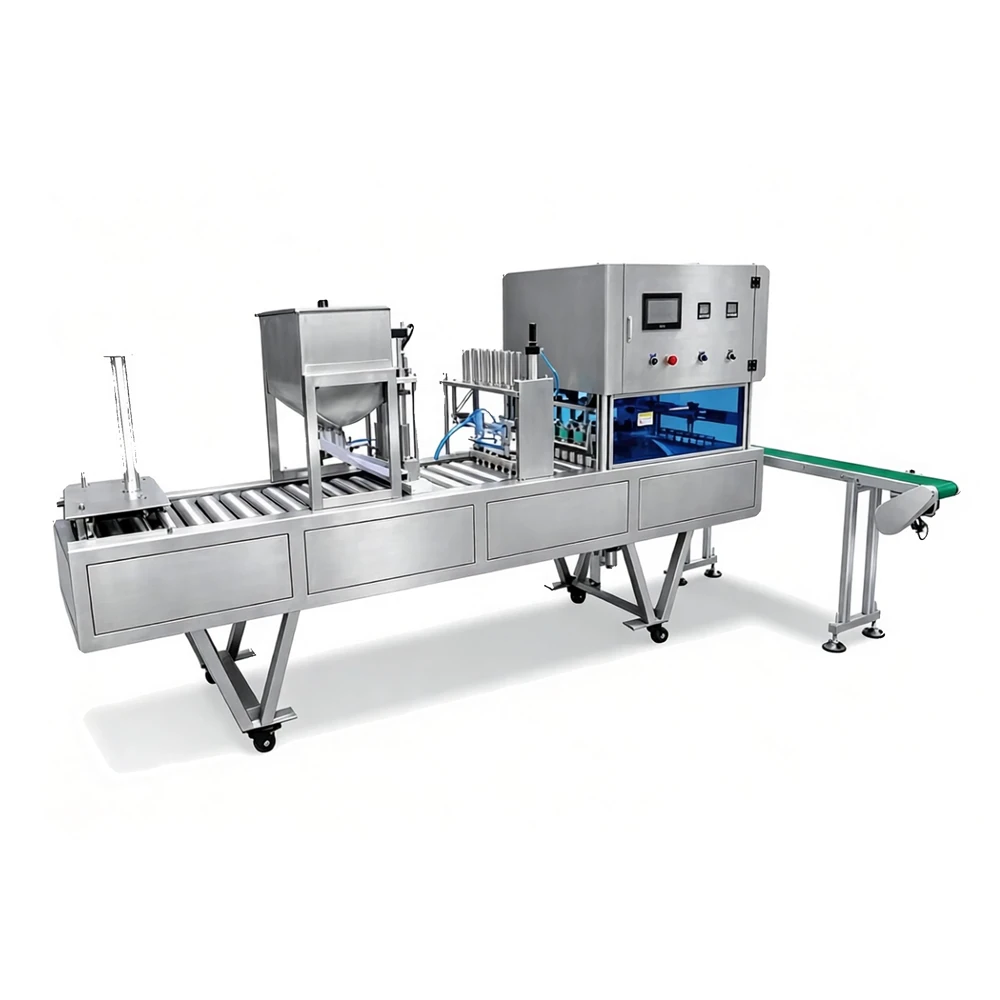
Automatic Filling & Sealing Machine
An inline alternative with six heads and a wider 10 to 300 ml fill range for cups and pouches.
View modelA rotary machine spreads the work around a circle instead of queuing it along a line. Cups drop into their moulds, are filled, filmed, heat-sealed and cut, then discharged, all on one rotating table that never stops. Two filling heads, a 1 to 30 ml dose, 30 to 40 cups a minute, and a mould change that takes minutes rather than a rebuild.
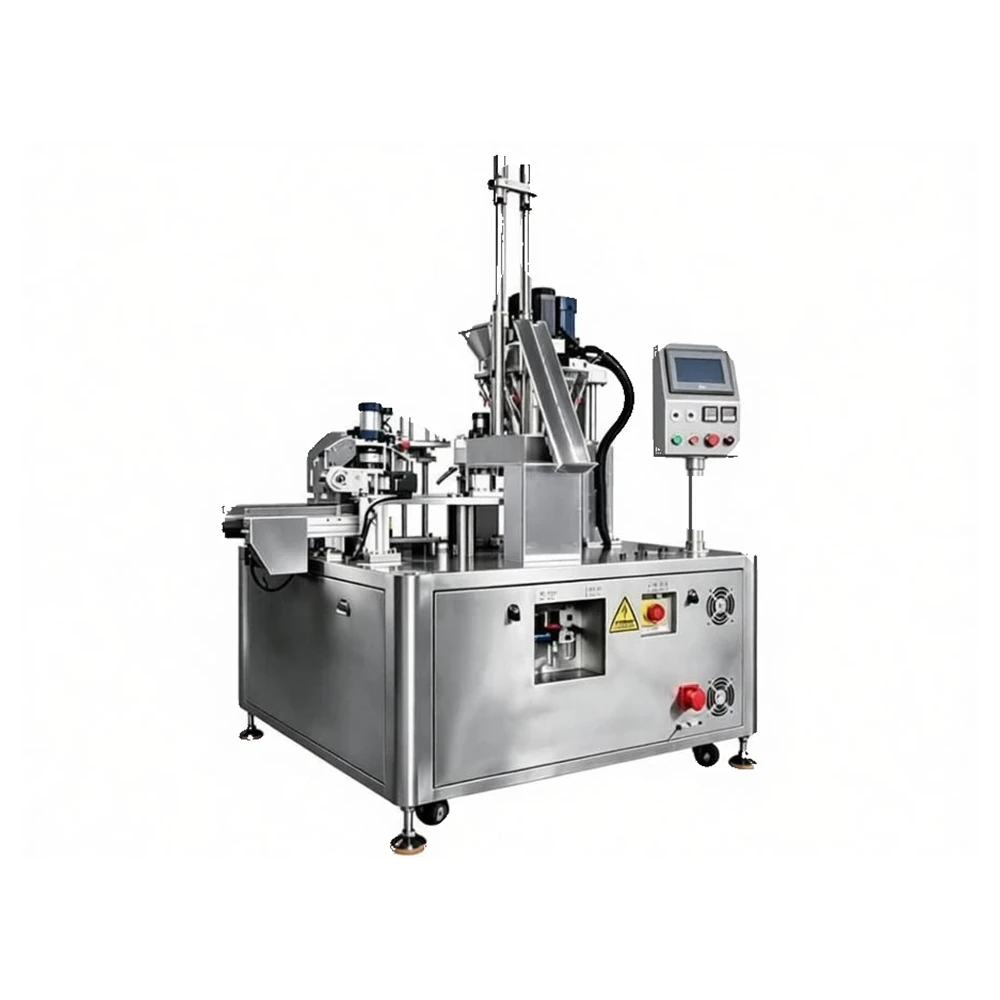
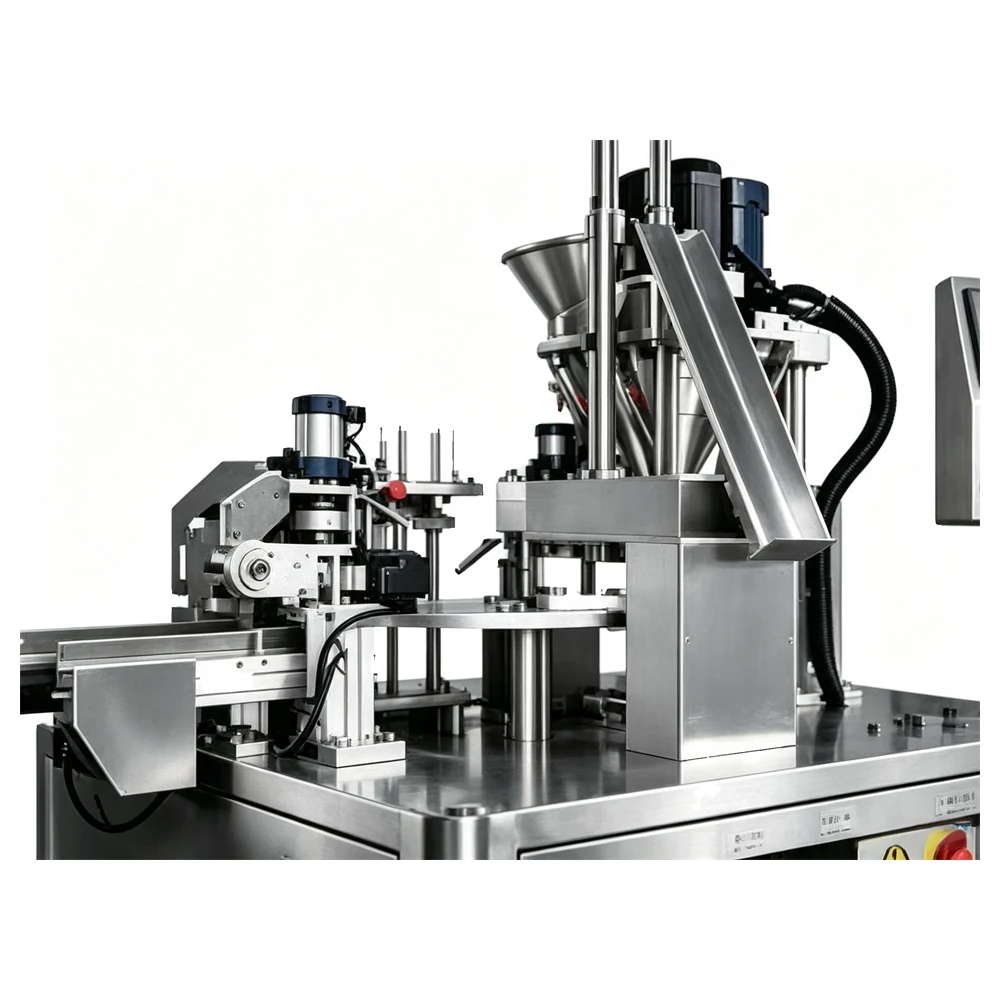
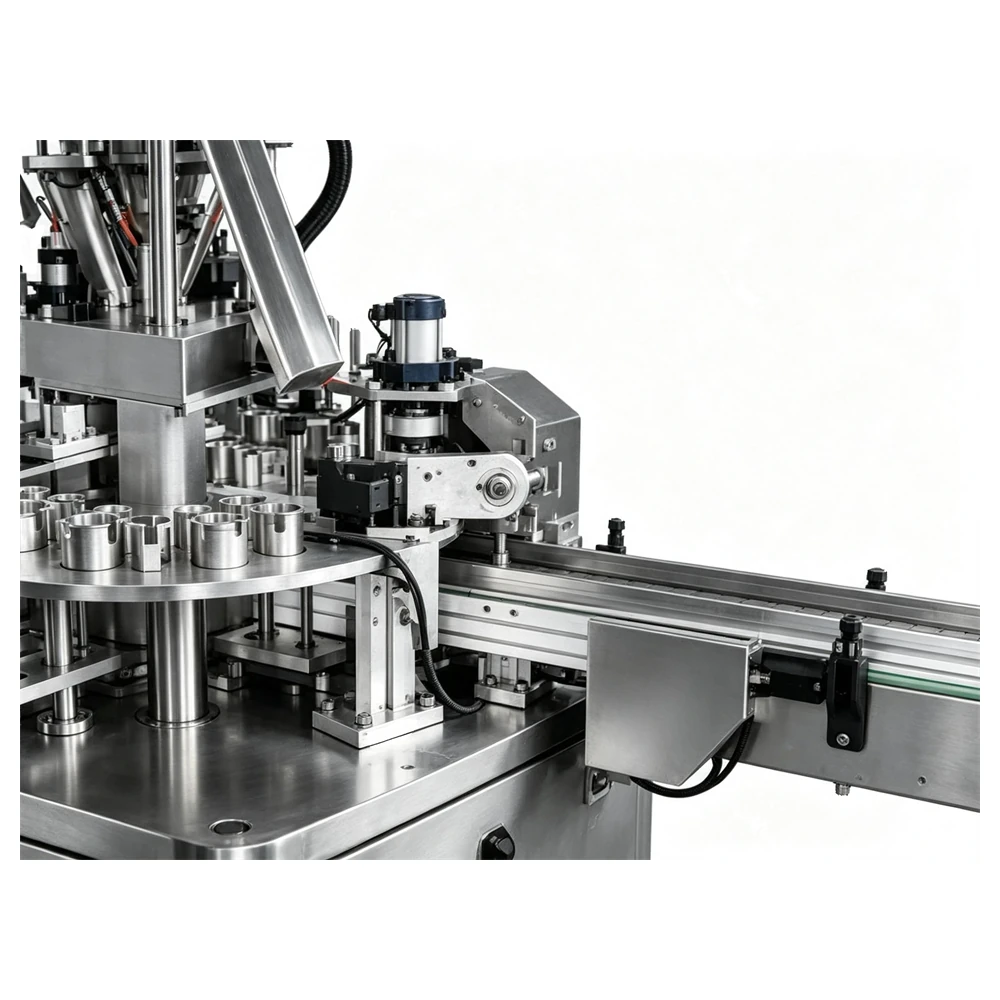
On a linear machine each cup stops at every station in turn. On a rotary machine the stations are arranged around a table, so while one cup is being filled, another is being filmed, a third is being sealed and a fourth is being discharged. The table turns continuously, and that is where the throughput comes from.
Four advantages that come directly from the geometry of the machine rather than from any added feature.
Filling, filming, sealing and cutting take place at the same time on different cups, so the machine is never idle between operations.
A circular arrangement packs the same stations into a table roughly 1.5 by 1.2 metres, which suits a crowded production floor.
The divider locates each station mechanically, so the fill does not splash and the printed film registers squarely on every cup.
No transfer conveyor between stations and fewer actuators than an equivalent linear line, which means a lower failure rate and less maintenance.
The carousel can be built with four, six or eight stations. The operations are the same in each case; what changes is how the work is divided around the table and how the cycle behaves at the cup level.
| Stations | Typical division of work | Dwell per operation | Suited to |
|---|---|---|---|
| 4 stations | Cup drop, fill, seal, discharge | Longest dwell, fewest positions | Simple packs and modest output |
| 6 stations | Cup drop, fill, film lay, seal, cut, discharge | Balanced dwell | Sealed cups with printed film |
| 8 stations | As six stations, plus extra fill or an added function such as topping or dosing | Shortest dwell, most positions | Multi-component cups and higher rates |
An additional position can carry a second dosing head, a topping or fruit drop mechanism, or an ultraviolet sterilising lamp, which is how a liquid and a solid can be filled into the same cup.
Spreading the work over more positions reduces the time each cup spends at any one station, which is what allows slower products and thicker films to be handled without slowing the table.
Because the station count is a configuration rather than a different machine, the same platform can be specified to suit a simple pack or a multi-component one.
The manufacturer states that the rotary divider can be set to four, six or eight stations. The division of work shown for each count is the standard arrangement; additional or different functions can be specified, and non-standard moulds are available.
One operator keeps cups supplied and clears the finished product; everything between is automatic.
A cup is placed in its mould on the turntable, and the divider carries it to the filling position.
The filling head delivers the set volume from 1 to 30 ml, with an anti-drip nozzle that keeps the cup rim clean for sealing.
Film is drawn, registered to the print mark and pressed onto the rim under controlled temperature, then cut to the cup shape.
The sealed cup is ejected onto the outfeed. Missing cups and missing film are detected and alarmed rather than filled.
Values are reproduced from the manufacturer parameter table for this model.
| Parameter | Specification |
|---|---|
| Customisation | Available |
| Power | 1.2 kW |
| Overall dimensions | (L) 150 × (W) 120 × (H) 170 cm |
| Filling heads | 2 |
| Fill volume | 1–30 ml |
| Cap height and diameter | Customisable |
| Production capacity | 30–40 cups/minute |
| Filling accuracy | ±0.5% |
| Packaging type | Cup |
| Working principle | Atmospheric filling |
| Applicable industries | Food, catering, daily chemical, pharmaceutical |
| Material type | Powder as listed in the parameter table |
| Automation level | Fully automatic |
| After-sales service | One-year warranty with lifetime service |
The parameter table lists the material type as powder. The accompanying application notes for the same model describe liquid, sauce and paste filling, with a servo piston pump quoted at about plus or minus 1 percent for thick products and a magnetic pump covering 5 to 1000 ml for thin ones, and they also quote higher output figures than the parameter table. Because the two sets of figures conflict, this page records the parameter table as the machine datasheet and shows the application-note values separately. The correct configuration is confirmed against your product at order.
Rate, fill range, station count and power describe the machine as published.
A compact footprint for a machine that fills, films, seals and ejects, which is why it fits into existing packing rooms.
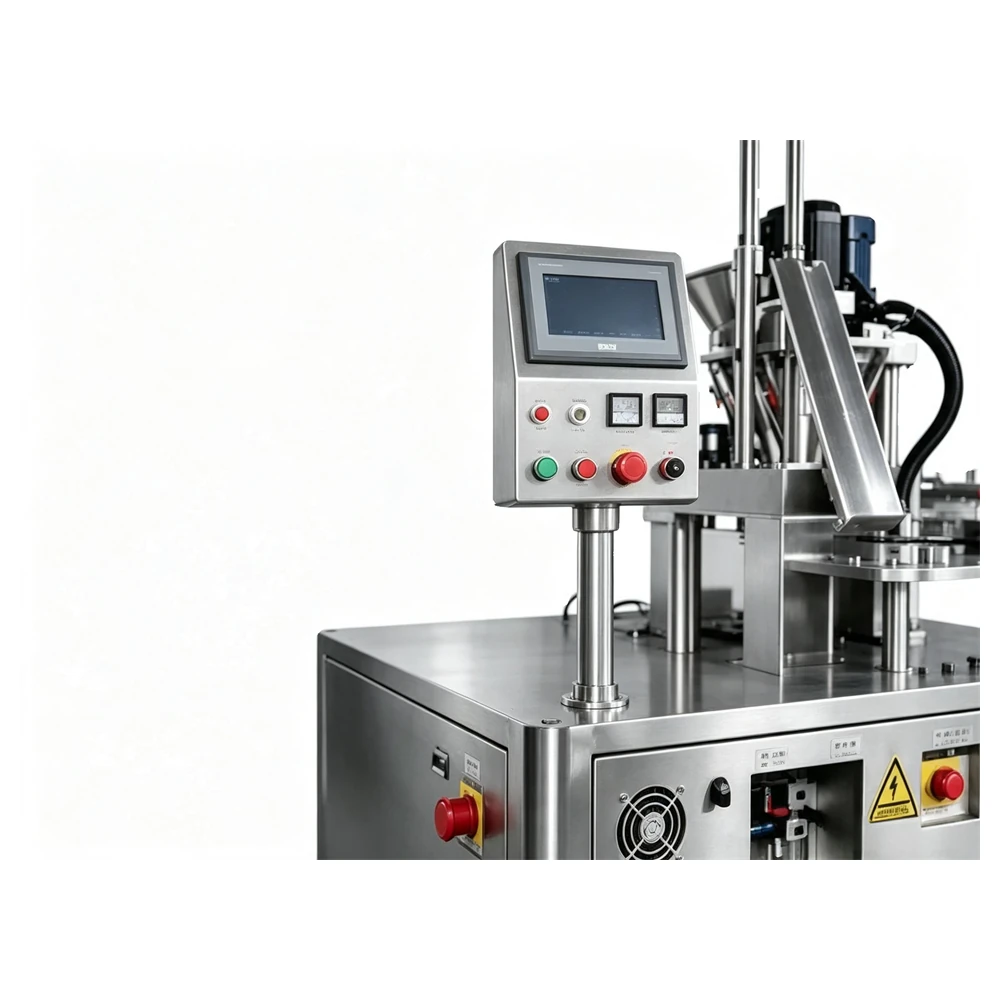
The table runs without stopping, and the variable frequency drive lets the speed be turned down for trials and up for production.
The PLC stores multiple product recipes for speed, fill volume, seal dwell and temperature, so a product change is a recall on the touchscreen.
The published application notes describe a broad range of cup products across food, daily chemical and medical packaging.
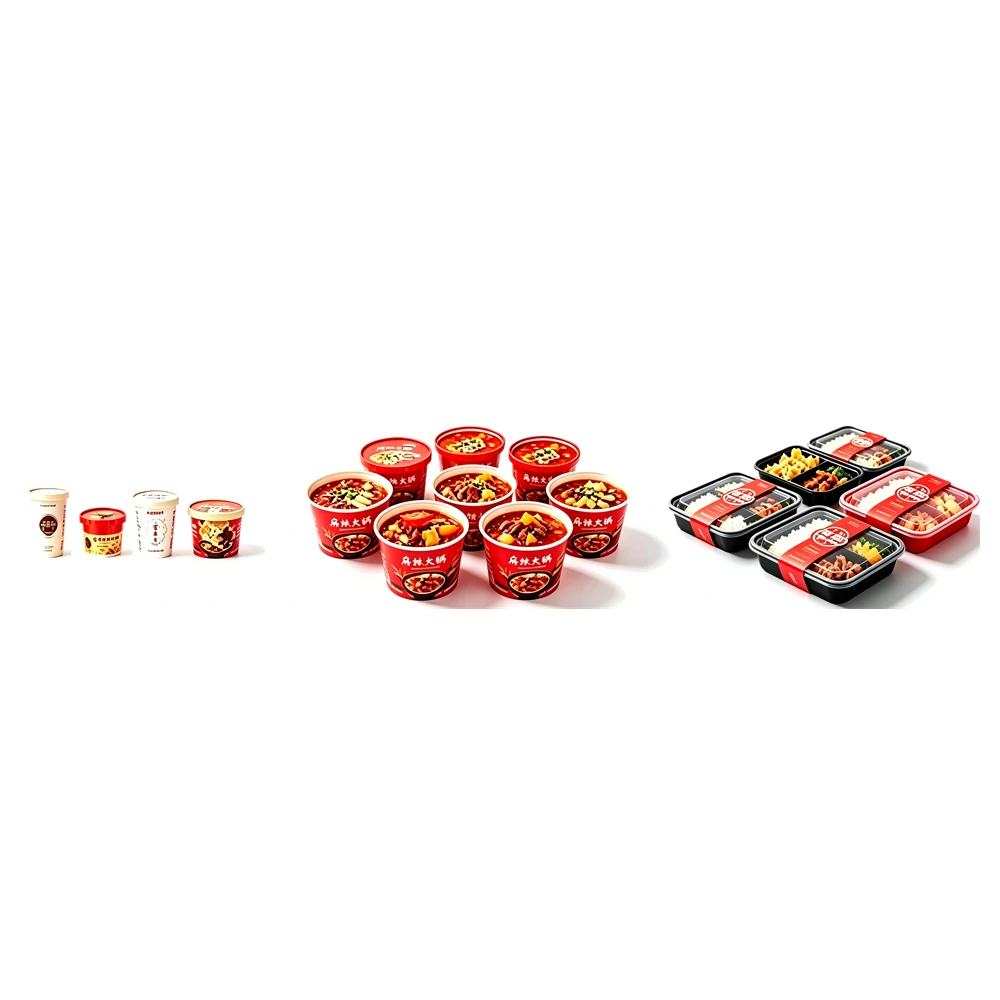
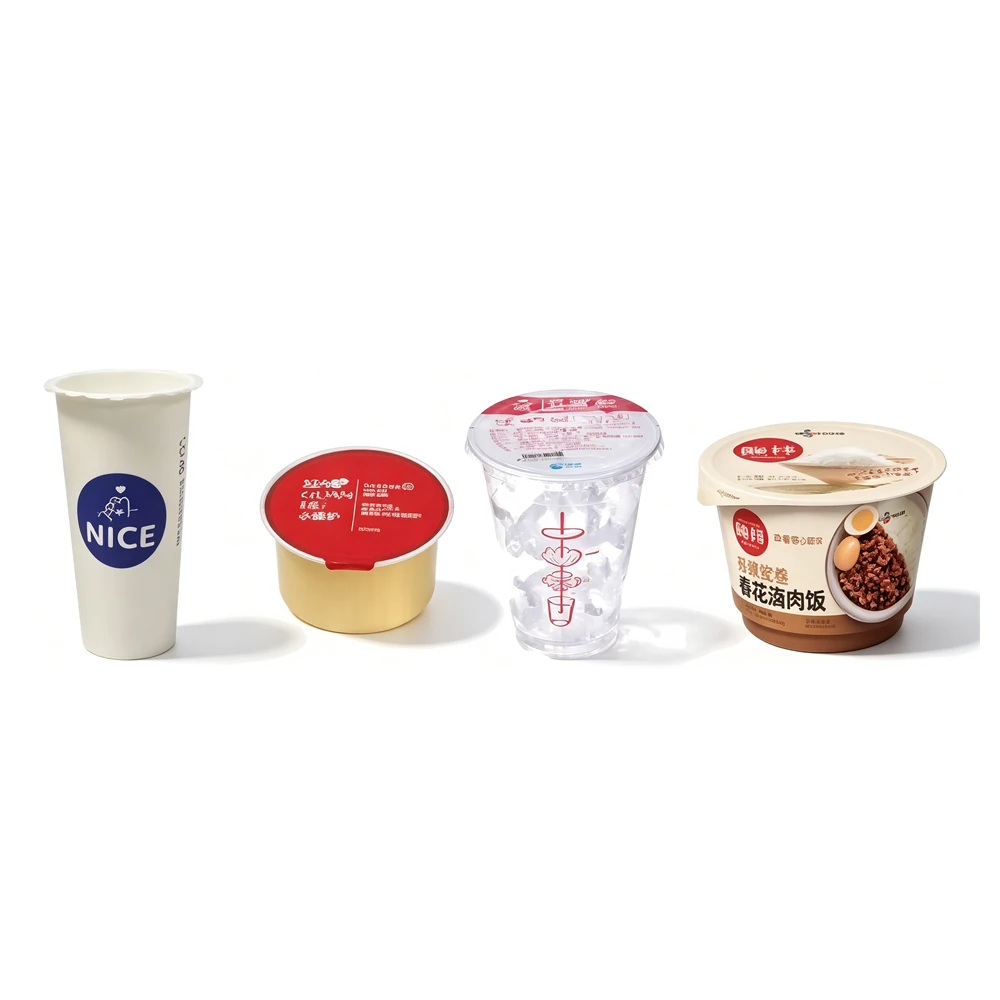
Yogurt, jelly, pudding, dessert and sauce cups, produced in continuous runs with a sealed film lid.
Skincare and personal-care sample cups, gels and creams, where a small dose and a clean seal are the whole requirement.
Reagent and sampling cups, soaps and gels for clinical use, where a sterile, well-sealed small pack matters more than volume.
Two sets of figures are published for this model. This table places them side by side so the difference is visible before the order is placed.
| Item | Parameter table | Application notes | Status |
|---|---|---|---|
| Filling heads | 2 | Not stated | Datasheet value |
| Fill volume | 1–30 ml | Magnetic pump option quoted at 5–1000 ml | Confirm at order |
| Filling accuracy | ±0.5% | Servo piston quoted at about ±1% | Depends on pump fitted |
| Production capacity | 30–40 cups/min | Higher hourly figures quoted in the notes | Confirm at order |
| Material type | Powder | Liquid, sauce and paste | Confirm at order |
| Pump options | Not stated | Servo piston for thick product, magnetic pump for thin | Specified per product |
The two columns above reproduce the manufacturer parameter table and the accompanying application notes without adjustment. They are not reconciled here because the source documents differ; the machine is configured to the product at the point of order.
Moulds and pump options are agreed before production, and the seal settings are proven on your own film.
Standard builds are quoted at roughly 20 to 30 working days, with export packing and sea or air freight to your port.
A one-year whole-machine warranty with lifetime service, and free replacement of standard wear items such as sealing strips and seals.
English manuals and remote support for mould fitting, sealing temperature, cut registration and the fill calibration routine.
Round, square and divided trays are supported with matching mould sets, and extra stations can be specified. Volume terms are agreed per order.
The carousel can be configured with four, six or eight stations. Across them the machine performs the complete cup cycle: dropping the cup into its mould, filling it, laying the sealing film, heat sealing the film to the rim, cutting the film and discharging the finished cup. Because the operations are spread around a rotating table, they happen simultaneously on different cups rather than one after another on the same cup.
The published fill range is 1 to 30 ml with a packaging type of cup and a filling accuracy of plus or minus 0.5 percent. Moulds are quick-change parts, so round cups, square trays and divided meal trays can all be run on the same machine by fitting the matching mould set, and non-standard moulds can be specified.
The parameter table for this model lists the material type as powder, while the accompanying application notes describe liquid, sauce and paste filling with a servo piston pump for thick products and a magnetic pump for thin ones. The two are not consistent, so both are recorded here and the correct configuration is confirmed against your product at the point of order.
The machine draws film automatically, registers the printed pattern with a photoelectric sensor, and seals it to the cup rim with a pneumatic heat press under independent PID temperature control. The film is cut to the cup shape after sealing, so the seal is flat and free of bubbles and the pack does not leak or weep in chilled storage.
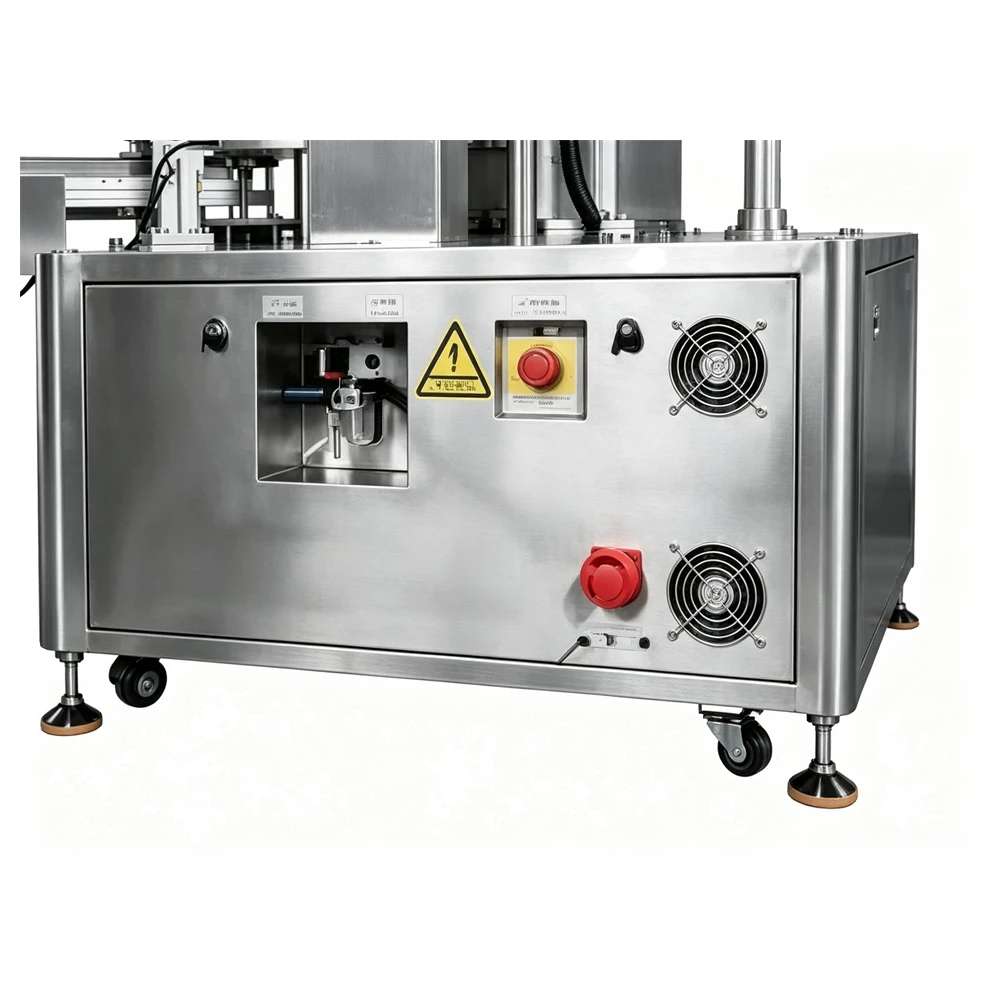
The machine detects a missing cup and skips both the fill and the seal for that station, and raises a visual and audible alarm if the film runs out. There is also low-air-pressure protection and an emergency stop for a jam. Together they stop the machine from making a mess or a defective pack when something upstream goes wrong.
The body, product-contact cavity, turntable and working surfaces are all food-grade stainless steel with smooth surfaces and no dirt traps, so a wash-down with water is normally enough. Moulds, hoppers, filling pipes and nozzles are quick-release parts that come off without special tools, and the heating elements, insulation cloth, silicone strips and seals are standard replaceable items. One machine can therefore switch between several products.
The machine carries a one-year whole-machine warranty with lifetime service support. English manuals and remote support cover installation, mould changeover, sealing-temperature setup and the fill calibration routine.
If the pack is not a cup, or the volume is larger than 30 ml, these machines cover the alternative formats.
An inline alternative with six heads and a wider 10 to 300 ml fill range for cups and pouches.
View model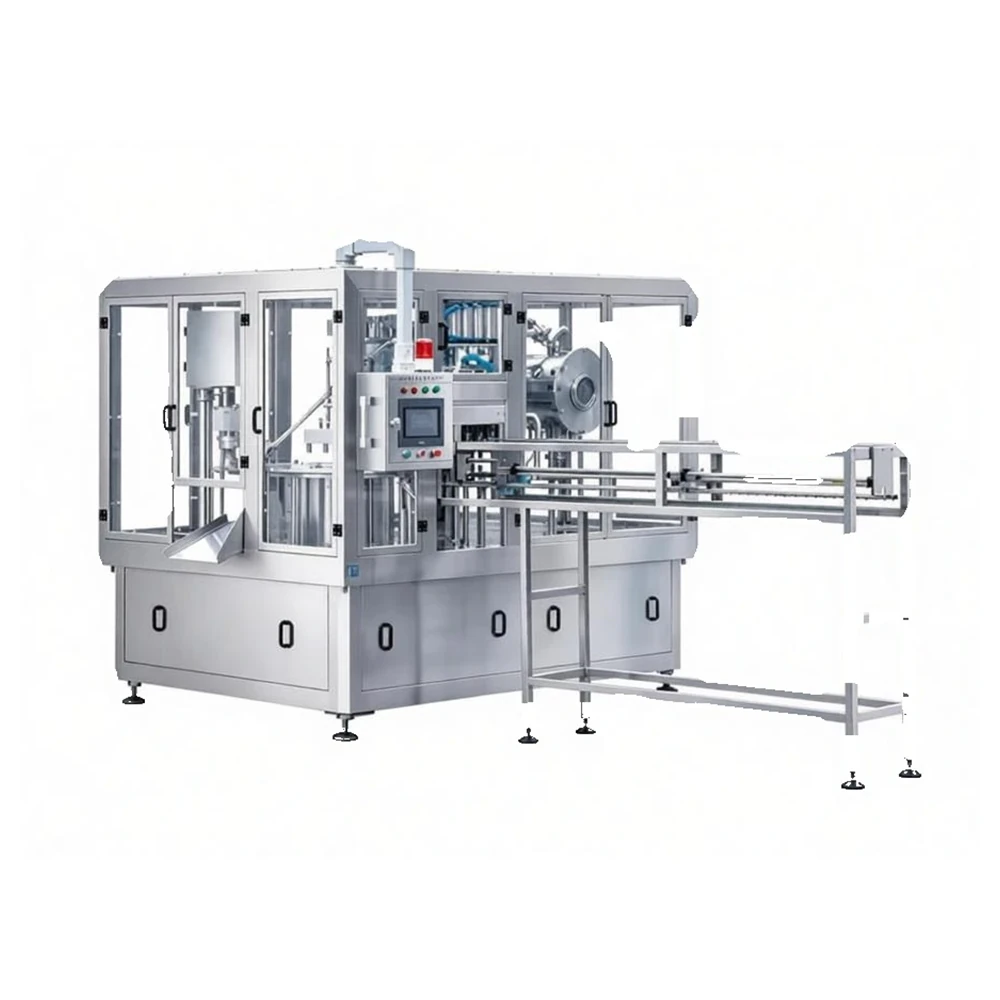
Rotary filling for spouted stand-up pouches from 60 to 390 ml, for pastes, sauces and particle products.
View model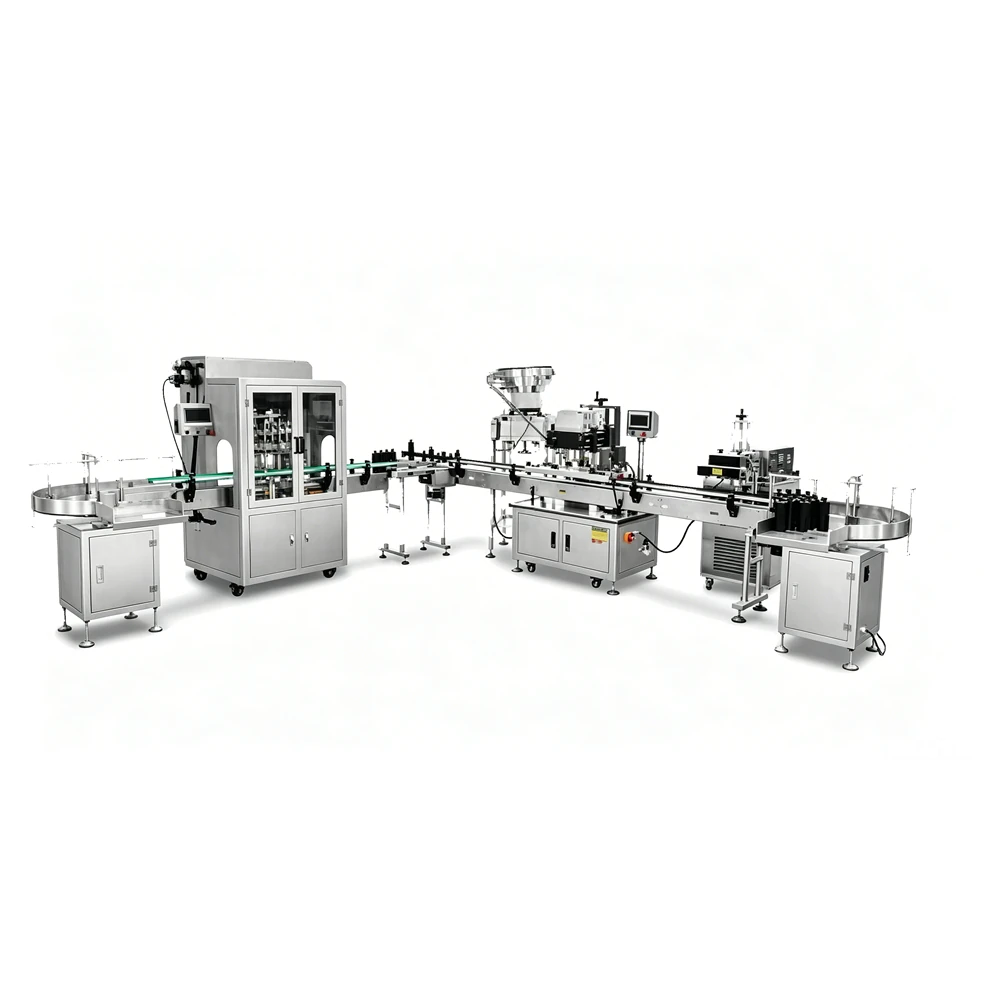
Liquid filling into bottles and jars from 100 to 1,000 ml, with three-stage anti-foam control.
View model