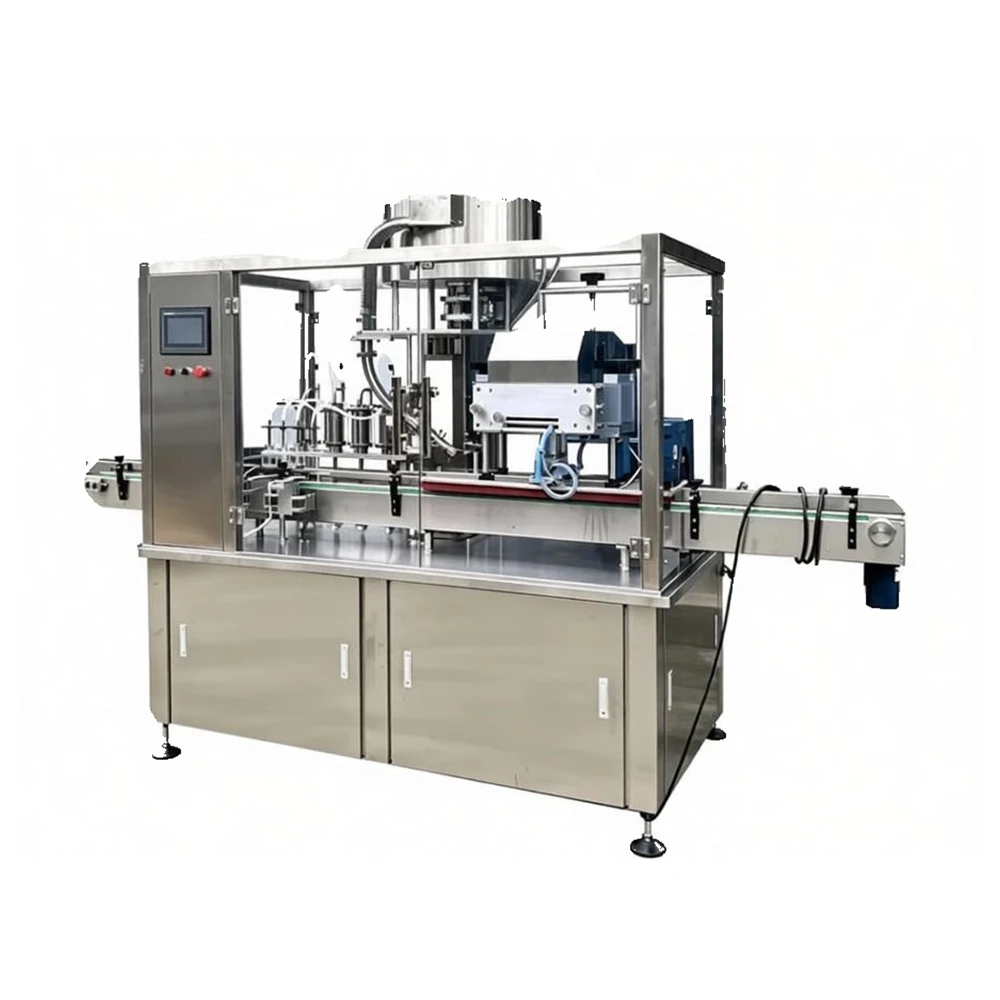
Inline Automatic Filling & Capping Machine
Twelve heads for larger bottles and jars, filling 500 to 5,000 ml at 40 to 70 bottles per minute.
View modelFilling a bottle is easy until the product foams. This machine fills free-flowing liquids from 100 to 1,000 ml at 30 to 60 bottles a minute, using a three-stage profile that lets the level settle before the final trim, so juice, milk tea, soy sauce and rice wine finish at the target volume without frothing over the neck. Format changes take minutes rather than hours.
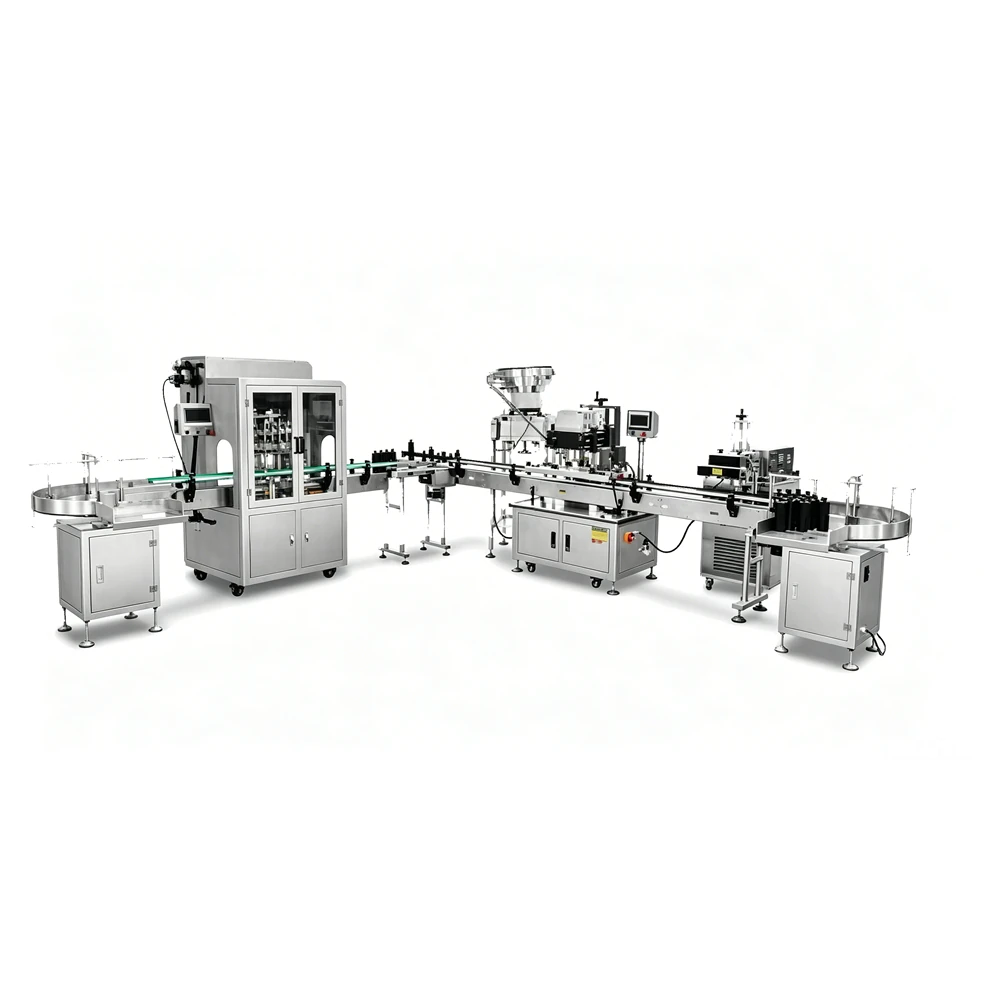
Bottles come in every shape and material, and this machine is designed to cope with that variety rather than force you into one pack. It meters by volume into glass, PET, HDPE or aluminium containers, from small bottles measured in millilitres up to several litres, and the filling-specification change takes minutes because the guides and nozzles are adjustable rather than fixed.
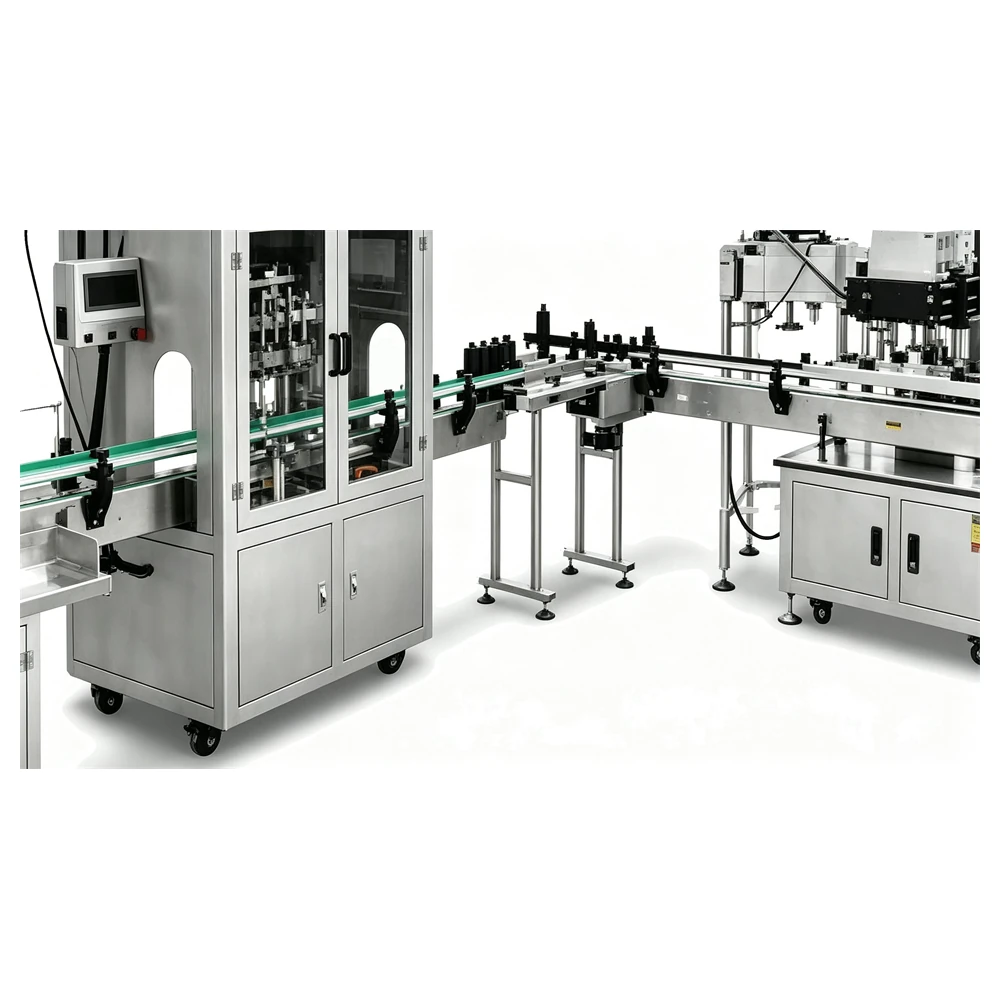
None of them are about raw speed. They are about how long the machine keeps running between interruptions.
Three-stage filling keeps the product from whipping up, which means fewer rejects from overfilled and underfilled bottles.
The filling specification can be switched in minutes for a different bottle size, so a product change does not become a shift-long stop.
A short filling cycle with accurate metering means more bottles per hour from the same floor space and the same operator.
Touchscreen diagnostics, a straightforward product path and 304 stainless parts keep routine maintenance to a minimum.
Output, fill range, accuracy and utilities are all the machine publishes, and all a line planner needs to start with.
From water-like products such as beverages and vinegar through to more viscous liquids including edible oil and honey.
Glass, PET, HDPE and aluminium in round, square, flat or irregular shapes, from a few millilitres to several litres.
1.2 kW from a single-phase 220V supply, which keeps the machine within the reach of a small production unit.
Foam is not a property of the product; it is a consequence of how the product is poured. The staged profile is how the machine avoids creating it.
The nozzle delivers at full rate until the bottle is most of the way to its target. This is where the cycle time is won, and where a single-stage filler would start to foam.
Flow is reduced as the level approaches the target. The slower stream disturbs the surface far less, so any foam already formed has time to break down.
The last part of the fill is placed precisely, finishing on the target volume with the neck clear so the capping station downstream works on a clean bottle.
| Fill approach | Cycle time | Foam behaviour | Effect on the line |
|---|---|---|---|
| Single-stage fast fill | Short | Product whips up and can overflow | Rejects, sticky bottles, capping faults |
| Single-stage slow fill | Long | Little foam | Output sacrificed to protect the fill |
| Three-stage fill | Short, with a controlled finish | Foam has time to collapse before the trim | Speed and fill quality together |
The three-stage technique is also described as three-level filling in the manufacturer literature. The published metering accuracy of 0.5 percent is achieved with this staged profile in use, not with a single-speed fill.
Values are reproduced from the manufacturer specification for the bottle filling machine.
| Parameter | Specification |
|---|---|
| Equipment name | Automatic bottle filling machine |
| Output | 30–60 bottles/minute |
| Fill range | 100–1,000 ml |
| Supply voltage and rated power | AC 220V, 50/60 Hz, 1.2 kW |
| Metering accuracy | 0.5% |
| Air pressure | 0.5–0.7 MPa |
| Filling technique | Three-stage filling to control foaming |
| Control | Touchscreen interface for parameters, production status, operating program and filling mode |
| Product-contact material | 304 stainless steel, built to GMP practice |
| Suitable bottles | Glass, PET, HDPE, aluminium and tubes in round, square, flat or irregular shapes |
| Closure options | Screw cap, press cap, plug cap, aluminium foil seal, heat-shrink film |
Machine dimensions and weight are not published for this model and are confirmed with the order once the bottle format, the number of filling positions and the closure station are fixed.
Bottles move through the machine without being handled between metering and capping.
Empty bottles arrive on the conveyor and are spaced by the guide rails to suit the format in the recipe.
Nozzles dose fast, then slow, then trim, finishing each bottle on volume with the neck left clean.
The bottle moves to the closure station, where a screw, press or plug cap is fitted, or a foil or shrink seal is applied.
Filled and closed bottles leave the machine. Fill volume and closure quality are sampled against the standard at set intervals.
The machine turns up wherever a free-flowing liquid is packed into a bottle, a jar or a tube.
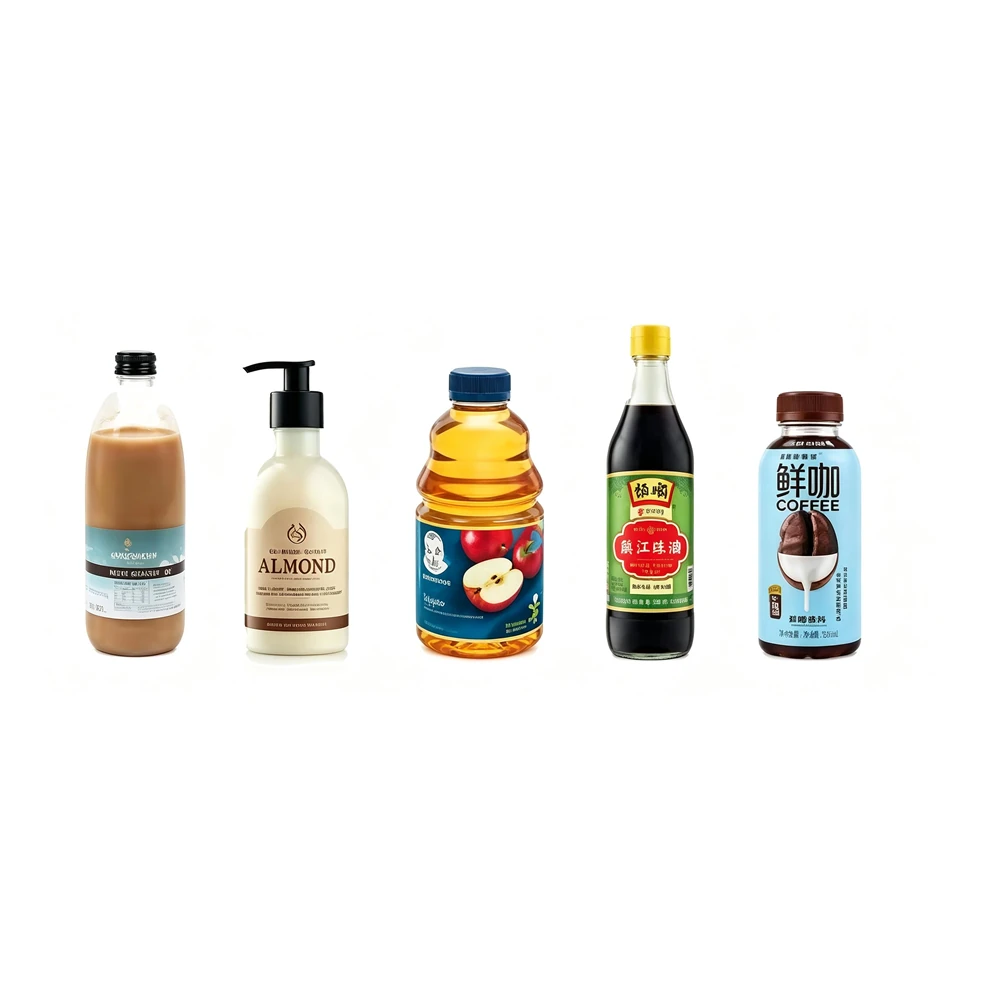
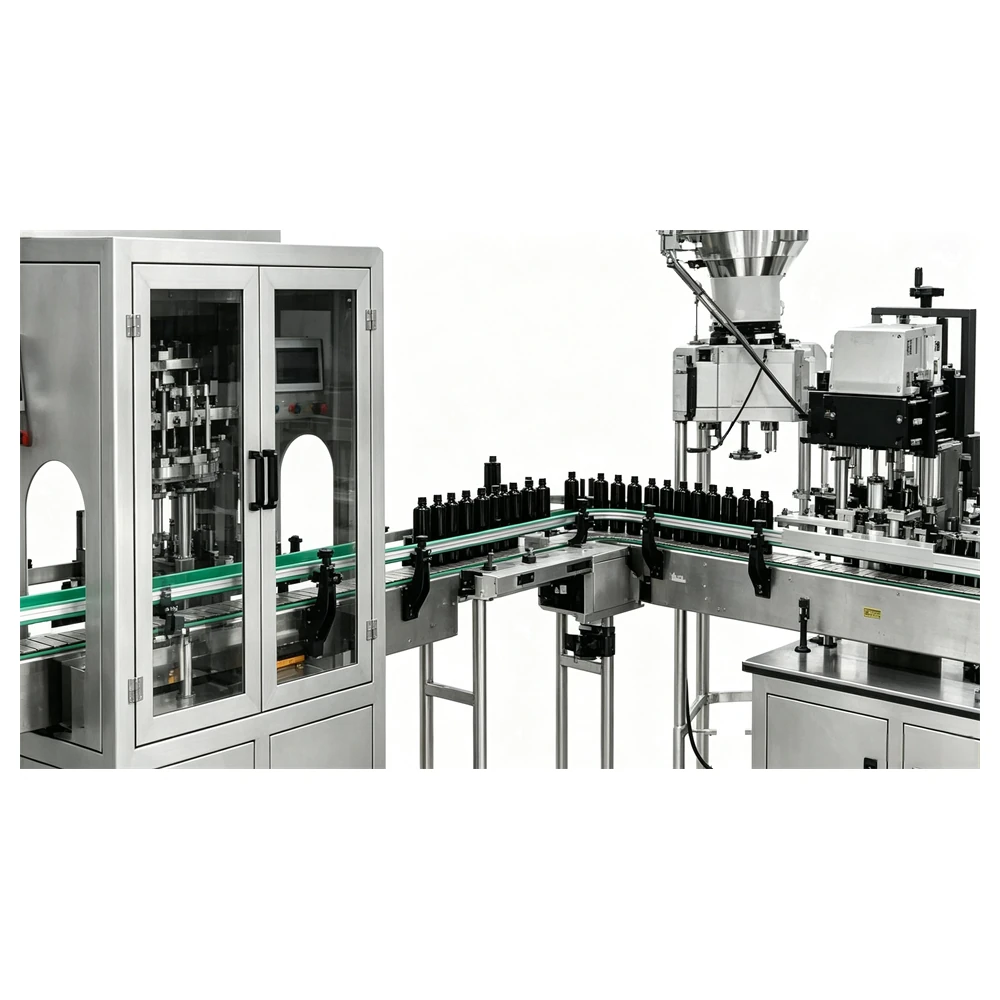
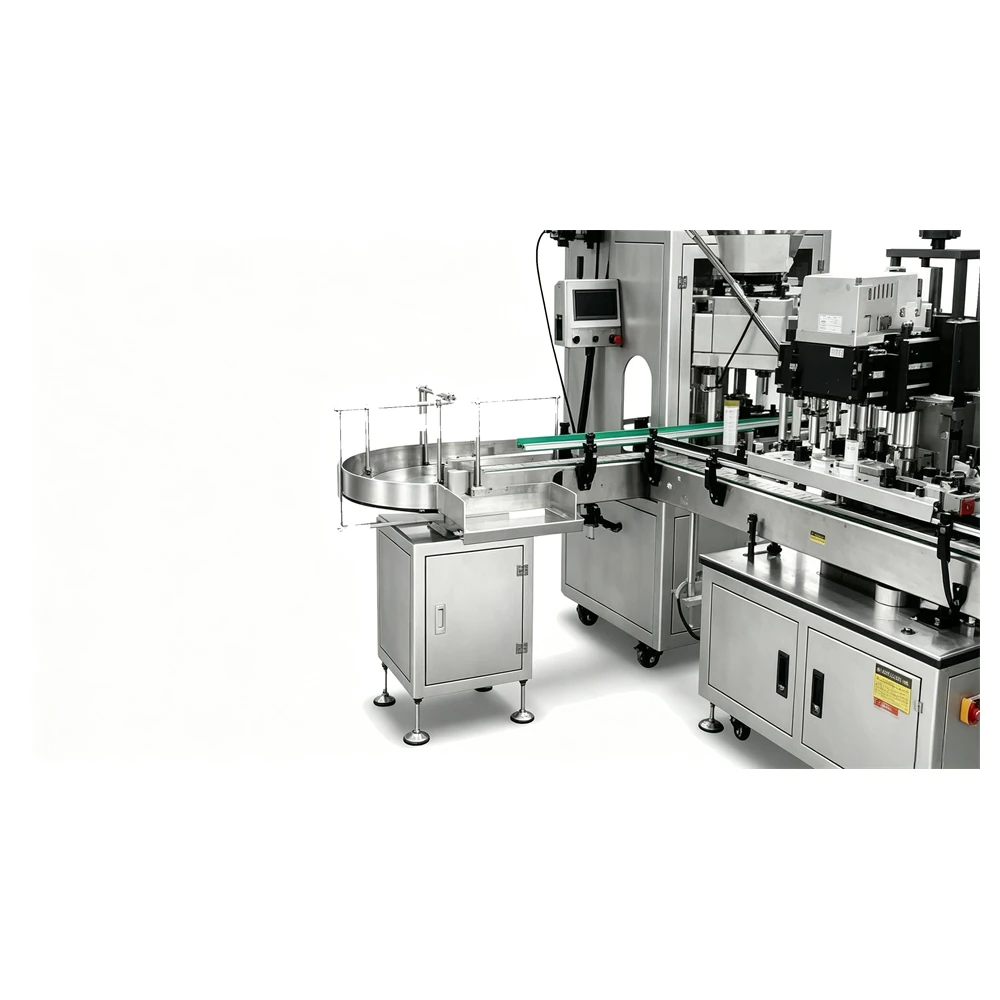
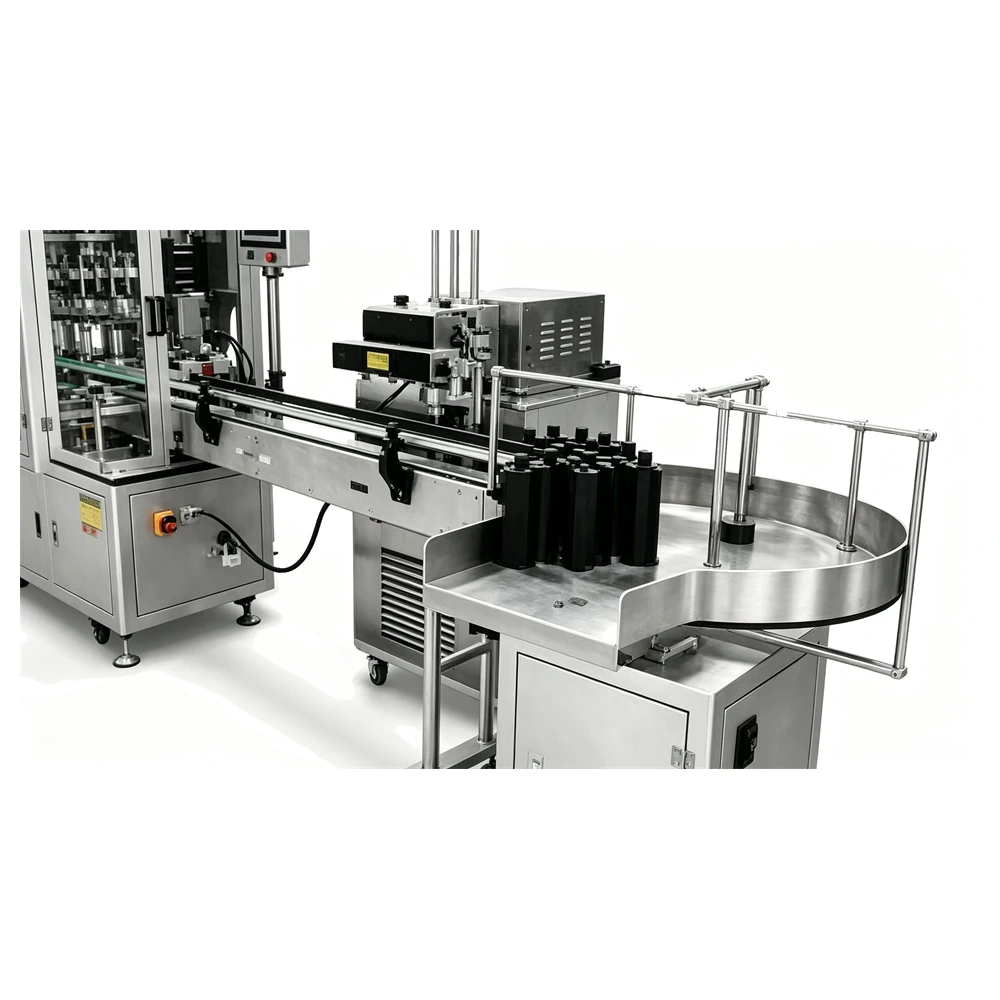
Mineral water, juice, tea drinks, functional drinks, milk, yogurt drinks and milk tea, filled and closed in one pass.
Soy sauce, vinegar, cooking wine, edible oil, honey and sauces, where a clean neck matters for the closure that follows.
Washing and care products, sanitisers and oral liquids, filled from small sample bottles up to larger retail sizes.
Matching the bottle material and the closure to the product is what decides whether the pack holds its quality on the shelf.
| Bottle material | Typical product | Suggested closure | Note |
|---|---|---|---|
| Glass | Spirits, sauces, juices | Screw cap or foil plus cap | Heavier, but inert and premium in the hand |
| PET | Water, juice, milk tea, oil | Screw cap, foil or shrink band | Lightweight, and works with every closure option |
| HDPE | Detergents, sanitisers, chemicals | Press or plug cap, child-resistant option | Good chemical resistance for non-food products |
| Aluminium | Beverages, oils, cosmetics | Screw cap or foil seal | Fast to chill and fully recyclable |
| Tube | Pastes, gels, creams | Plug cap or crimp | Filled open-ended, then closed by the capper |
Closure and bottle combinations listed above are drawn from the published application notes for this machine and are intended as a starting point. Final specification is confirmed against your product, your shelf-life requirement and your filling trial.
It is built for free-flowing liquids: juice, milk tea, beverages, soy sauce, vinegar, cooking wine, edible oil, honey, syrups and rice wine. Thick pastes and products carrying large solids are outside its design; those are handled by a piston filler such as the stand-up pouch machines, where the dose is pushed rather than poured.
Foam forms when a fast stream of liquid hits the surface of the product already in the bottle. Three-stage filling splits the dose: a fast fill to establish the level, a slower ramp as the bottle approaches the target, and a final trim to finish at the exact volume. Because the last part of the fill is delivered slowly against an already-settled surface, the product does not whip up and overflow the neck.
Glass, PET, HDPE and aluminium bottles and tubes are all handled, in round, square, flat or irregular shapes, from small bottles of a few millilitres to large bottles of several litres. Changeover between specifications takes a few minutes of adjustment rather than a rebuild, which is what allows one machine to cover a product family.
The filler is normally paired with a capping or sealing station. The closure options specified for this platform include screw caps, press caps, plug caps, aluminium foil sealing and heat-shrink banding. The closure is chosen with the product and the shelf-life requirement in mind, since a foil seal and a screw cap do different jobs.
The published metering accuracy is 0.5 percent on a fill range of 100 to 1,000 ml, which is achieved by the volumetric metering system combined with the staged fill profile. Accuracy is verified on your own product during the sample test, because viscosity and surface tension both affect how a liquid settles in the bottle.
A single-phase AC 220V 50 or 60 Hz supply at 1.2 kW and compressed air at 0.5 to 0.7 MPa. The air supply drives the pneumatic actuators and any air-assisted functions; the fill itself is metered mechanically, so there is no dependence on air pressure for the dose.
Parameters are set on a touchscreen that also shows production status, the running program and the filling mode. Product-contact parts are made from 304 stainless steel, which resists corrosion and cleans easily, and the machine follows GMP practice. Routine work is limited to filling-nozzle cleaning and checking the metering system against a sample weight.
The machine is configured to your bottle and closure, then tested on your product before shipment.
Around 20 to 30 working days for a standard configuration, with export packing and sea or air freight to your port.
12-month parts warranty with free replacement components, plus lifetime technical support.
English manuals and remote guidance for fill profile setup, bottle changeover and closure station adjustment.
Nozzle sets, guide rails and closure station tooling are chosen with the order. Volume terms are agreed per order.
If the bottle is large, or the product is a paste rather than a liquid, these machines cover the alternative duties.
Twelve heads for larger bottles and jars, filling 500 to 5,000 ml at 40 to 70 bottles per minute.
View model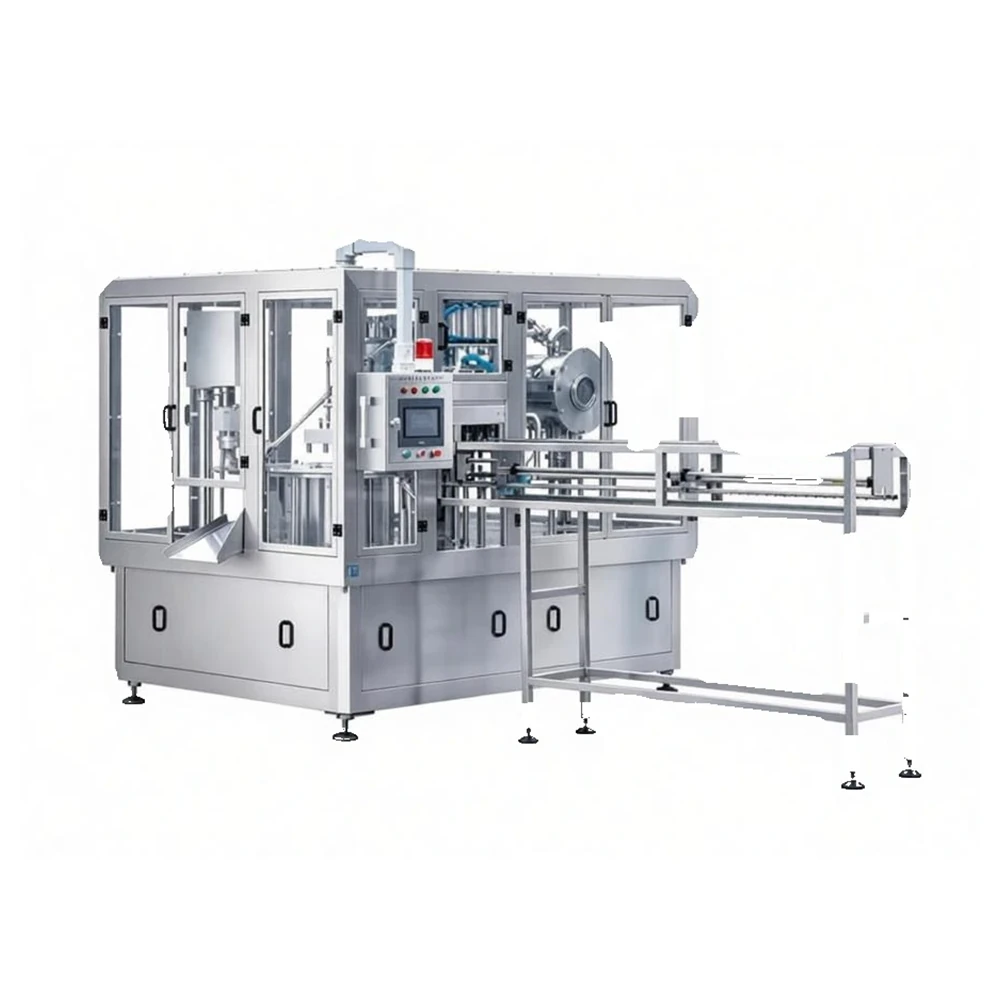
Six-head rotary filling for pastes, sauces and particle products in spouted stand-up pouches, 60 to 390 ml.
View model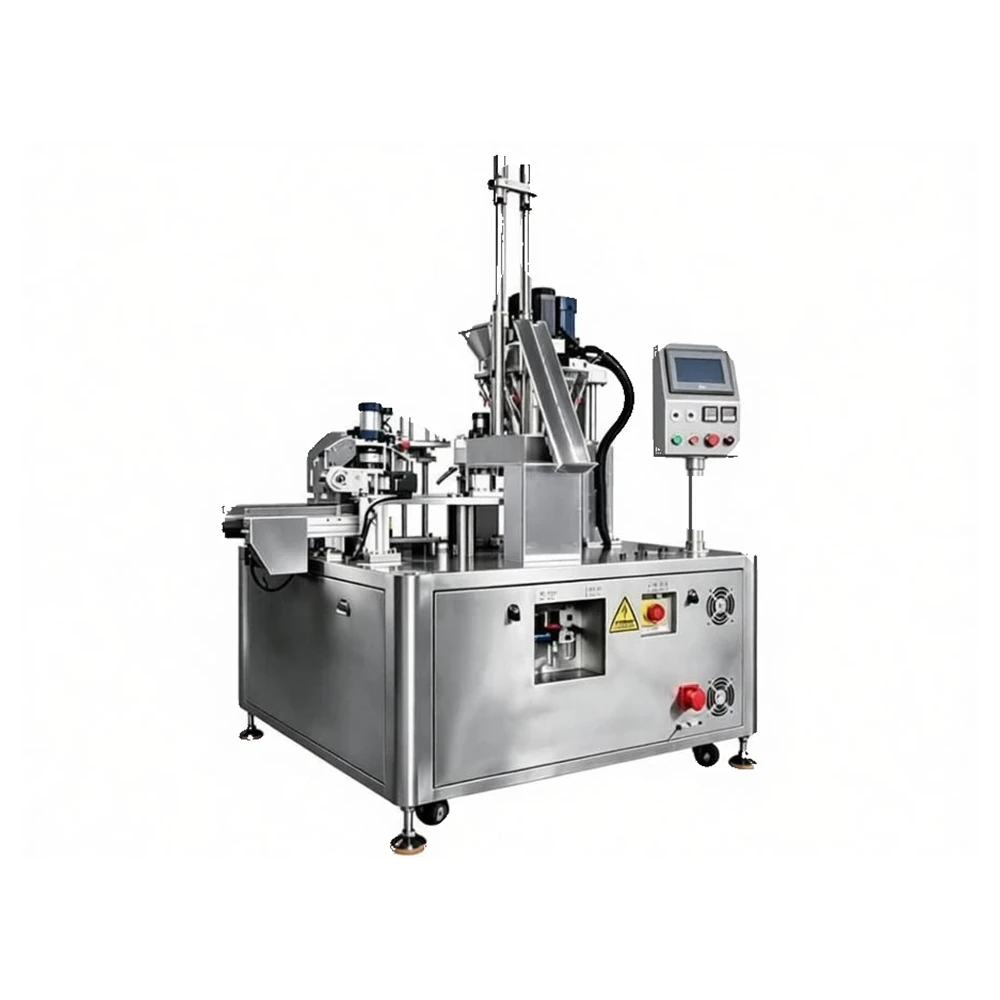
Multi-station cup and tray filling with film heat sealing, configurable with four, six or eight stations.
View model