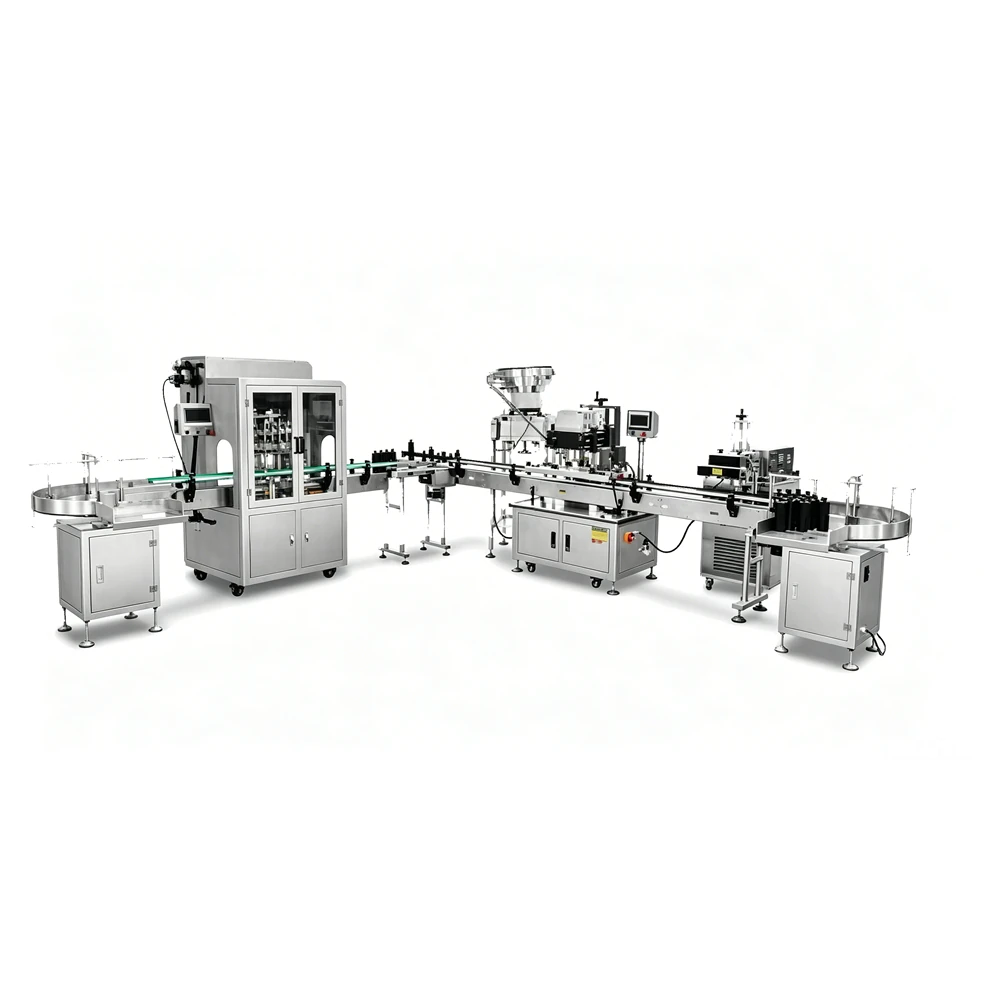
Automatic Bottle Filling Machine
Three-stage anti-foam filling for smaller bottles from 100 to 1,000 ml at 30 to 60 bottles per minute.
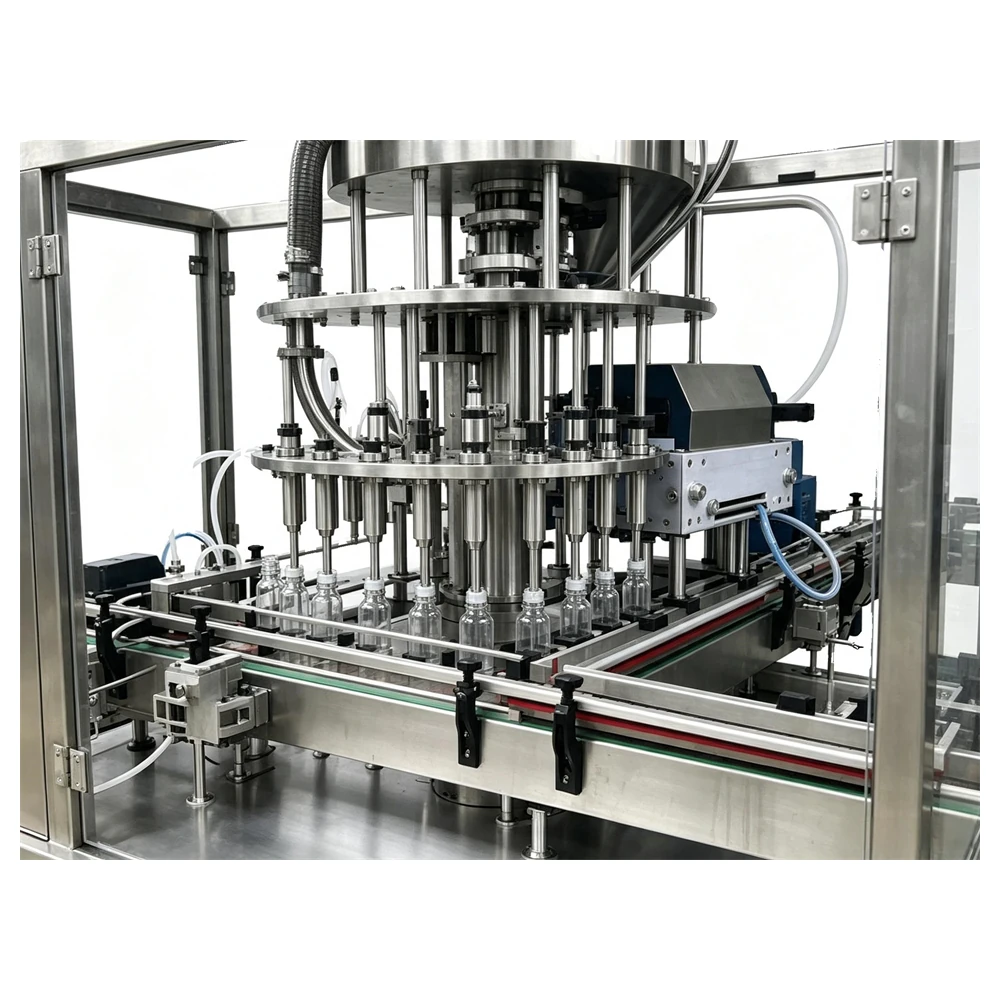
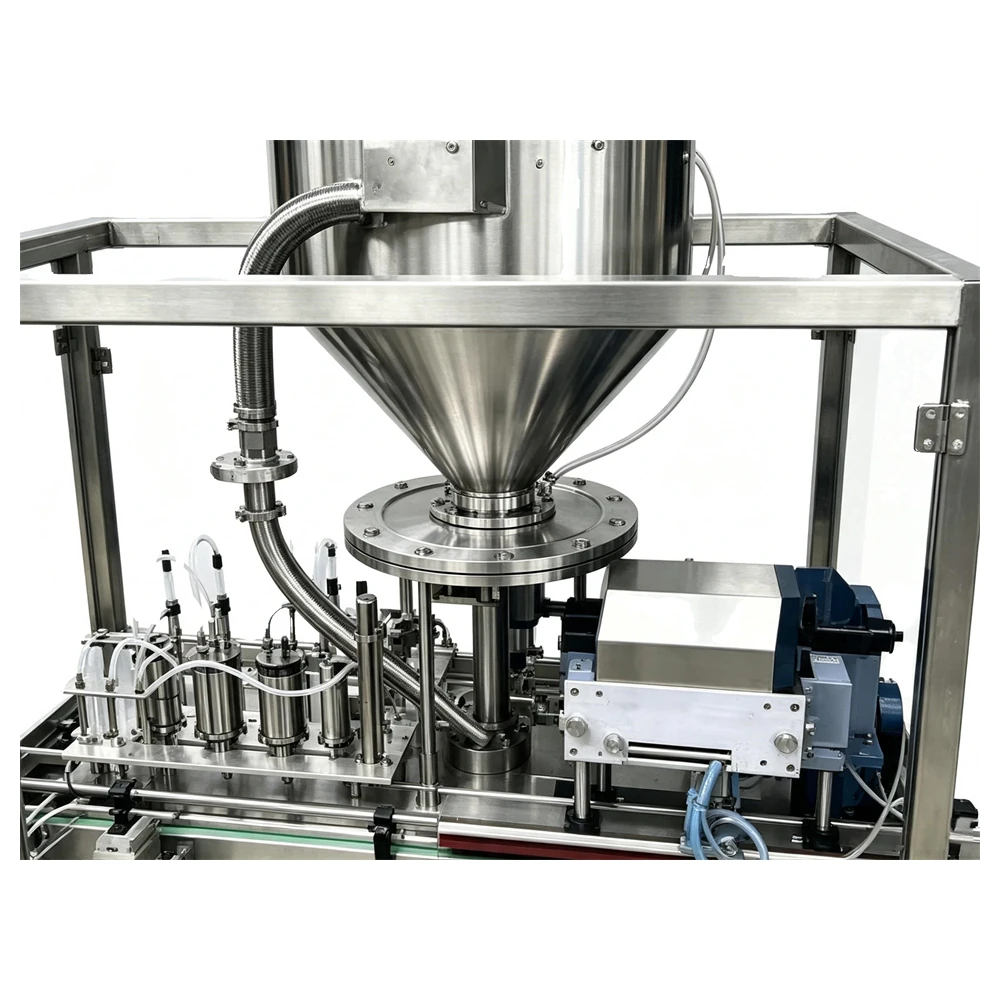
View modelWhen the bottle gets large, the fill takes time and a single nozzle cannot keep up. This machine answers that with twelve filling heads on a linear frame and a capping station in the same run, filling 500 to 5,000 ml at 40 to 70 bottles a minute, on bottles from 30 to 350 mm high, for oils, beverages, oral liquids, alcohol and cleaning products.
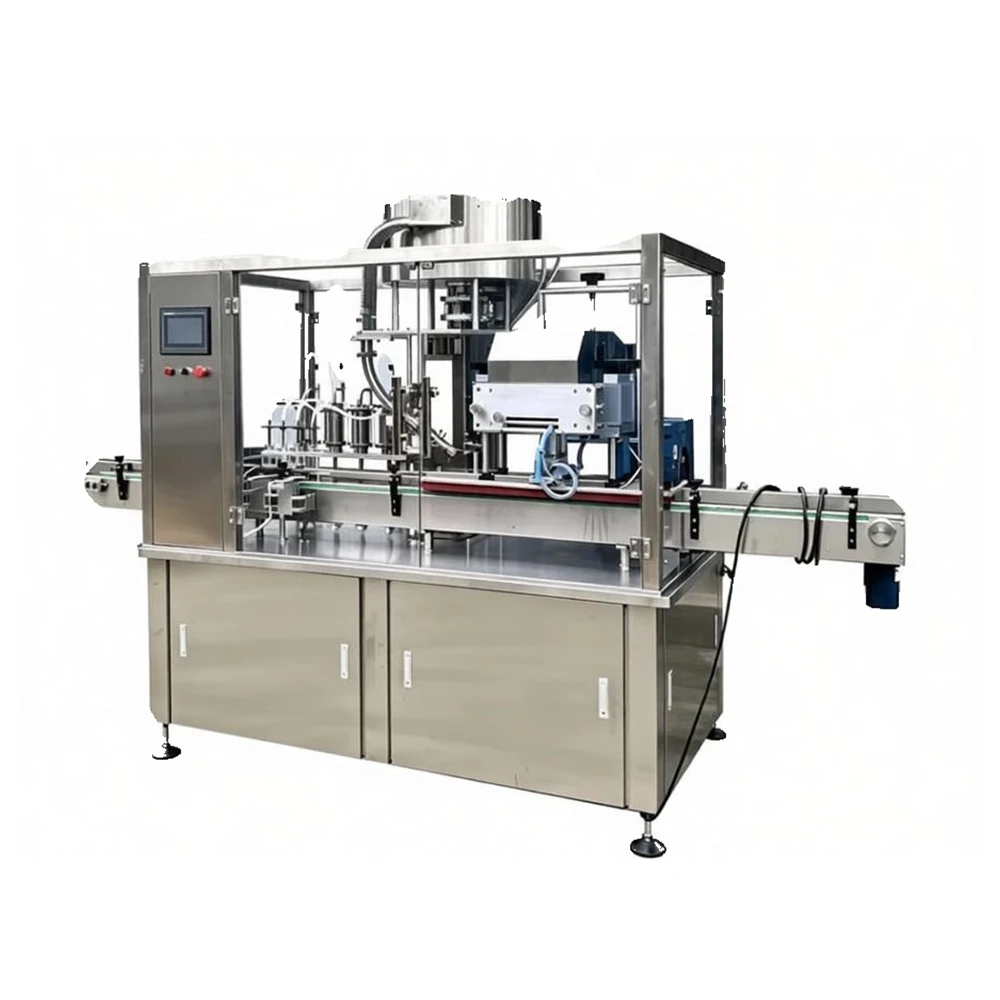
Every figure below is reproduced from the manufacturer specification for this model.
| Parameter | Specification |
|---|---|
| Equipment name | Inline automatic filling and capping machine |
| Power | 1.5 kW |
| Overall dimensions | 3,080 × 1,500 × 1,200 mm |
| Filling heads | 12 |
| Fill volume | 500–5,000 ml |
| Suitable bottle height | 30–350 mm |
| Suitable bottle diameter | 30–110 mm |
| Production capacity | 40–70 bottles/minute |
| Filling accuracy | ±0.5% |
| Packaging type | Bottle |
| Working principle | Atmospheric filling |
| Material type | Liquid |
| Automation level | Fully automatic |
| Customisation | Available to order |
| After-sales service | One-year warranty |
The published capacity is listed as 40 to 70 units per minute and the packaging type as bottle, so the rate refers to filled and capped bottles. Non-standard configurations, including a different head count or an adapted frame length, are quoted on request.
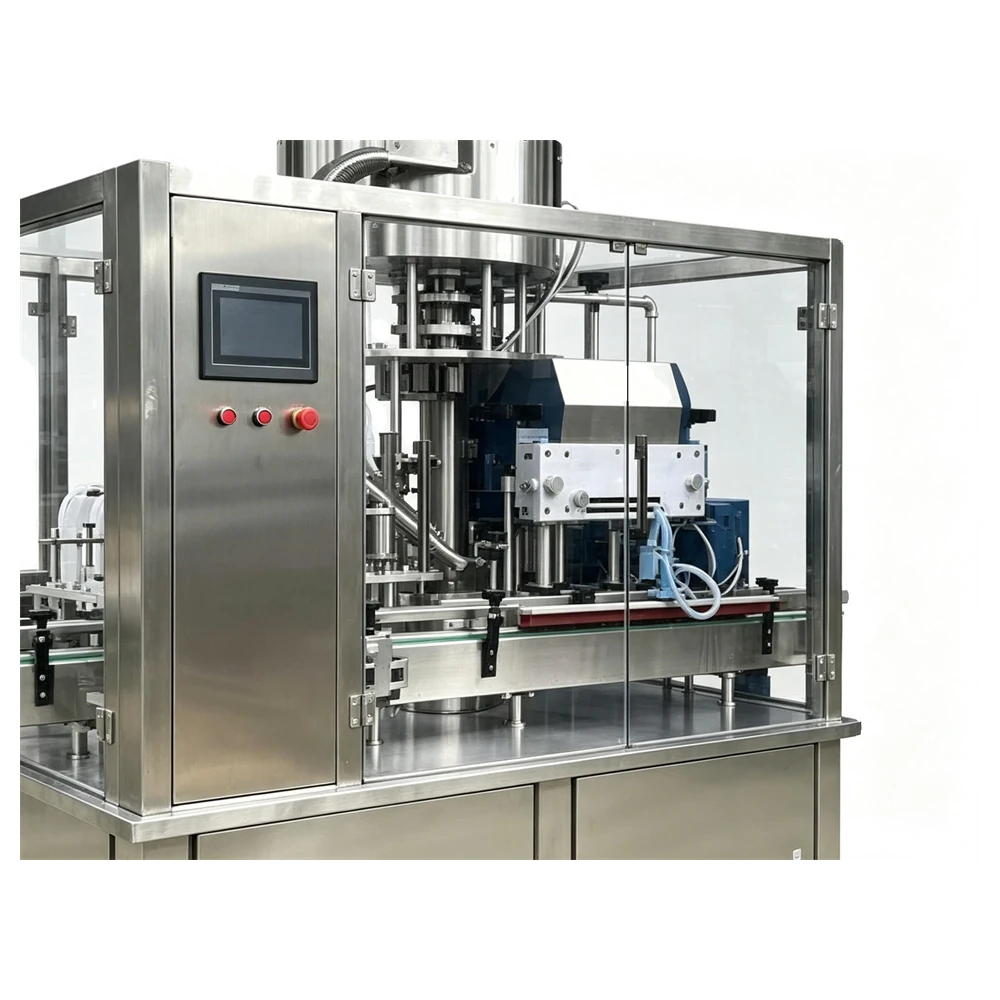
A linear machine is easier to fit into an existing line than a rotary one, because bottles arrive at one end and leave at the other with no change of direction. Twelve filling heads then work in parallel, so the frame length absorbs the fill time rather than the machine's speed having to.
A large fill takes longer than a small one, so a machine with a single nozzle would be limited by fill duration. Working in parallel across twelve heads removes that limit.
| Fill volume | Fill duration per bottle | Heads working in parallel | Effect on output |
|---|---|---|---|
| 500 ml | Shortest | 12 | Towards the upper published rate |
| 1,000–2,000 ml | Moderate | 12 | Mid published rate |
| 3,000–5,000 ml | Longest | 12 | Towards the lower published rate |
Twelve bottles fill at once. The cycle time is divided across the bank of heads rather than multiplied along a single filling path.
Bottles advance one position at a time. While a bank is filling, the other positions are being loaded or discharged, keeping the line moving.
Atmospheric filling needs no pump pressure to move the product, which keeps the machine mechanically simple and the product path easy to clean.
Fill durations are not published individually; the positions shown are a planning guide based on the published 500 to 5,000 ml fill range and the published 40 to 70 bottles per minute capacity. Confirm the practical rate for your largest fill during the sample trial.
The head count is a response to three practical problems on a large-bottle line.
Because twelve heads fill at once, a five-litre fill does not force the line to crawl. The output band stays at 40 to 70 bottles per minute across the range.
Height from 30 to 350 mm and diameter from 30 to 110 mm means a product family can move between a small bottle and a large one on the same frame.
The capping station travels with the filler, so a filled bottle is closed before it can be disturbed on the way to a separate machine.
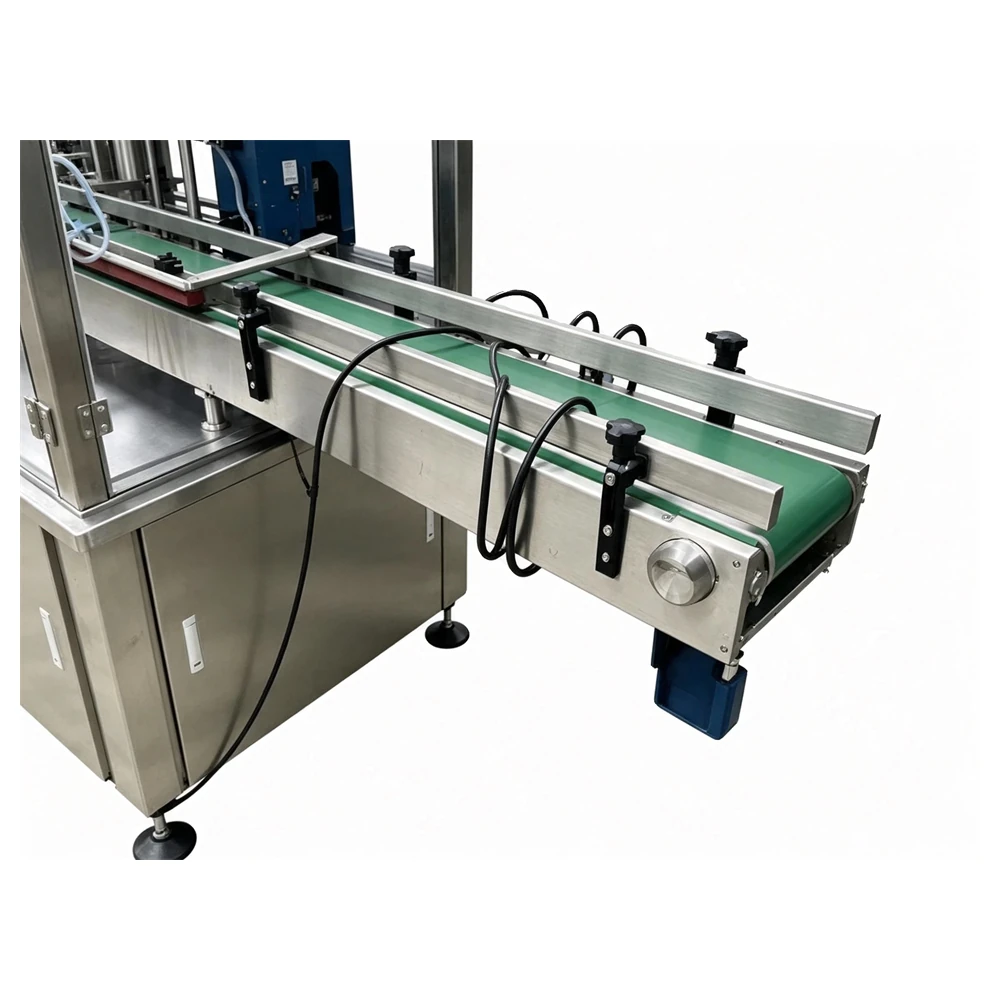
A straight frame accepts an infeed conveyor and an outfeed conveyor without changing the direction of travel, which simplifies the layout.
At 1.5 kW the machine draws very little for its output, which keeps the electrical load of the line modest.
The platform is offered as a customisable machine, so the head count, the frame length and the capping arrangement can be adapted.
Heads, fill range, output and power describe the machine completely.
A tall envelope, so the machine accepts tall oil bottles and large containers as well as short ones.
Narrow and wide containers both fit the guide rails, which is what makes one recipe per format practical.
Once the recipe is loaded the machine runs the fill and cap cycle without operator intervention beyond loading and inspection.
The atmospheric principle limits the machine to free-flowing liquids, but within that limit the reach is wide.
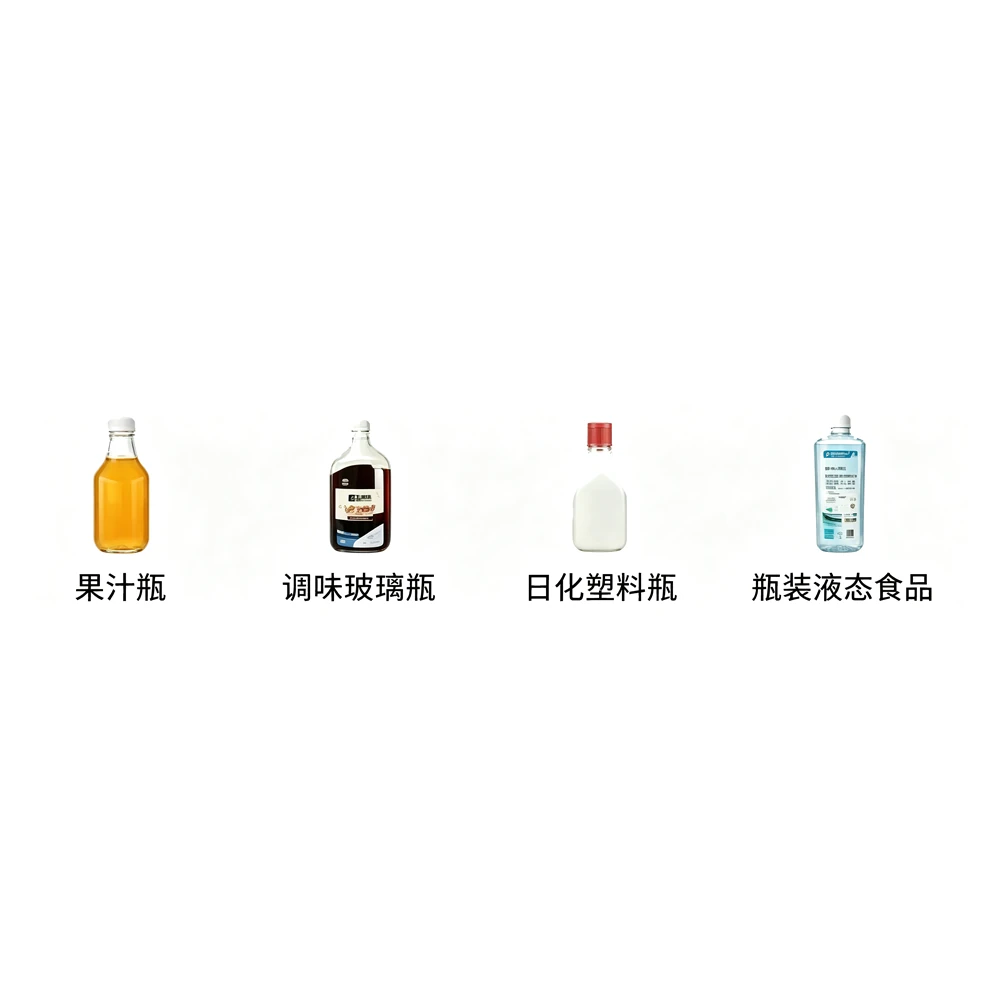
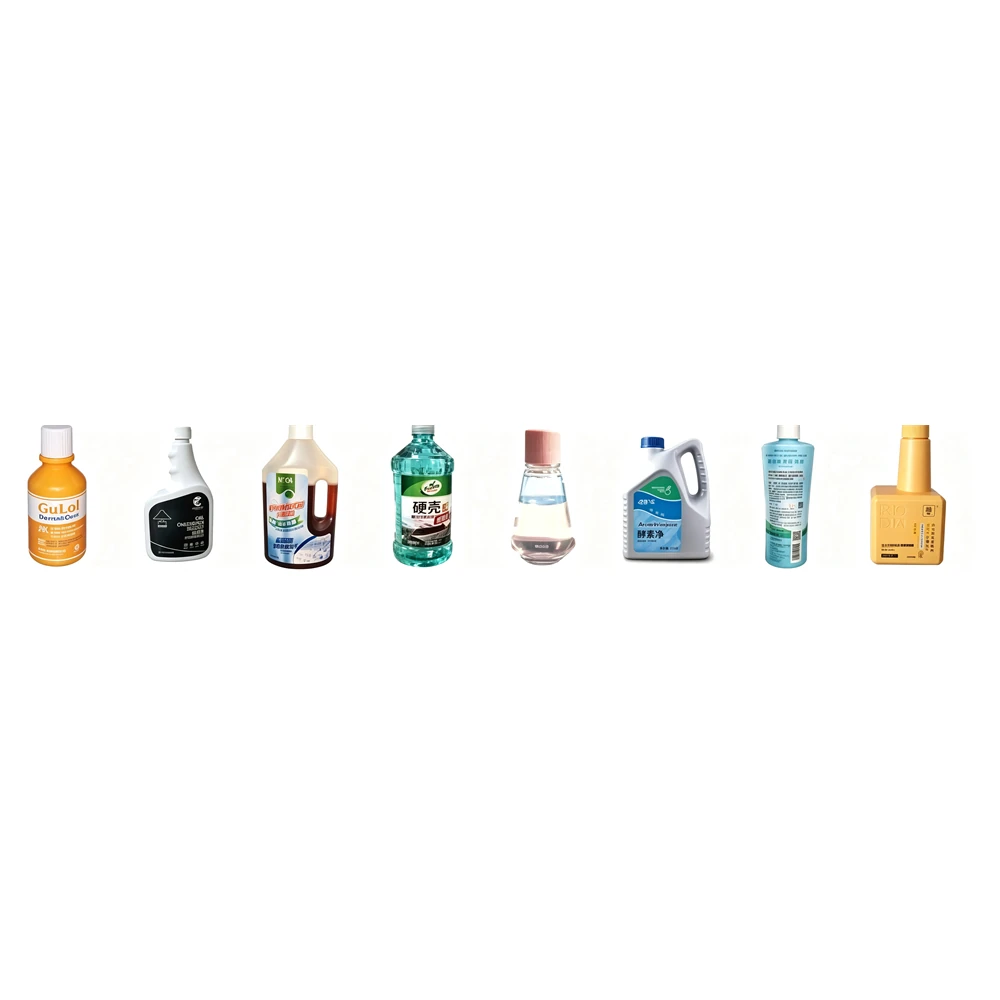
Edible oils, sauces and liquid food products in large bottles and jars, filled and capped on one frame.
Medicinal liquids, oral liquids, hair care and skincare products, where a clean fill and a secure cap are both essential.
Juice and carbonated drinks as well as liquid alcohol and spirit drinks, filled into large and small bottles alike.
Bottles enter at one end and leave closed at the other, with no change of direction.
Empty bottles are spaced by the infeed guides and indexed forward into the filling positions under the twelve heads.
All heads deliver product at once, filling from 500 to 5,000 ml per bottle with the level controlled at the nozzle.
Filled bottles index to the capping station, where caps are placed and tightened before the bottle leaves the frame.
Capped bottles leave on the outfeed conveyor. Fill volume and cap torque are sampled on a set schedule during the run.
The machine publishes a bottle envelope and a fill range. Both have to accommodate the pack before the guides and the recipe are finalised.
| Format element | Published envelope |
|---|---|
| Bottle height | 30–350 mm |
| Bottle diameter | 30–110 mm |
| Fill volume | 500–5,000 ml |
| Filling principle | Atmospheric, for low-viscosity liquids |
| Packaging type | Bottle |
| Automation | Fully automatic fill and cap |
The configuration is agreed against your bottle, your cap and your product before production.
Standard builds run about 20 to 30 working days, with sea or air freight and export packing arranged to your port.
A one-year warranty applies to this model, with free replacement components and lifetime technical support afterwards.
English manuals and remote support for guide rail setting, recipe setup, fill calibration and cap torque adjustment.
The machine is offered as a customisable platform, so head count, frame length and capping arrangement can be adapted. Volume terms are agreed per order.
Large fills take time. Pouring 5,000 ml through a single nozzle is slow, so the machine uses twelve heads working in parallel on a linear frame: while one set of bottles is filling, the next set is indexed into position. That is how a machine with a long fill cycle still reaches 40 to 70 bottles per minute.
Atmospheric filling lets the product flow into the bottle under gravity at ambient pressure, with the fill controlled by the nozzle rather than by a pump pushing a measured volume. It suits free-flowing, low-viscosity liquids where the product levels itself: edible oil, beverages, oral liquids, alcohol and cleaning products. Thick pastes and products with solids are not suitable for this principle.
Bottles from 30 to 350 mm high and 30 to 110 mm in diameter, which is a wide band covering small bottles through to large retail containers. Combined with the 500 to 5,000 ml fill range, that lets one machine cover a product family that spans a small and a large pack. The change between formats is a matter of adjusting guides and switching the recipe.
The machine is built as a line unit with filling and capping in one frame, but it is also offered as a customisable configuration. Where the cap type or the line layout requires it, the capping station can be specified separately or the frame length can be adapted, since the machine is described as customizable for non-standard requirements.
The published filling accuracy is plus or minus 0.5 percent across the 500 to 5,000 ml range. The absolute error therefore scales with the fill: at 500 ml it is about plus or minus 2.5 ml, and at 5,000 ml about plus or minus 25 ml. For products where the absolute tolerance is tighter than that, a piston or servo filler is the better choice.
A 380V supply at 1.5 kW, and compressed air for the pneumatic actuators and the capping head. The machine is 3,080 mm long, 1,500 mm wide and 1,200 mm high, so the layout should allow infeed and outfeed conveyors as well as operator access along the filling and capping stations.
The machine carries a one-year warranty, with free replacement components for parts that fail within the period and lifetime technical support afterwards. English manuals and remote support are provided for installation, first-product setup and operator training.
If the bottle is small, or the pack is a cup or a can, these machines cover the alternative duties.
Three-stage anti-foam filling for smaller bottles from 100 to 1,000 ml at 30 to 60 bottles per minute.
View model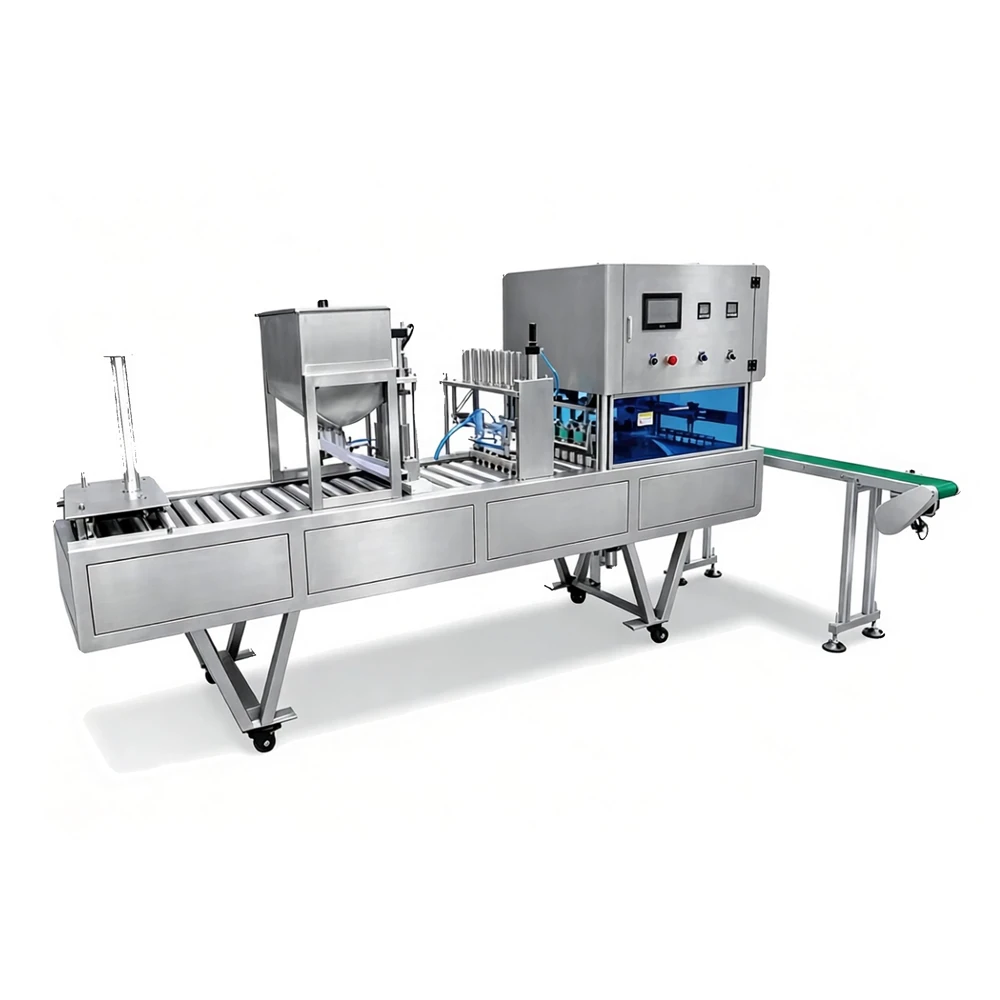
Six heads filling cups and pouches from 10 to 300 ml with PID-controlled film heat sealing.
View model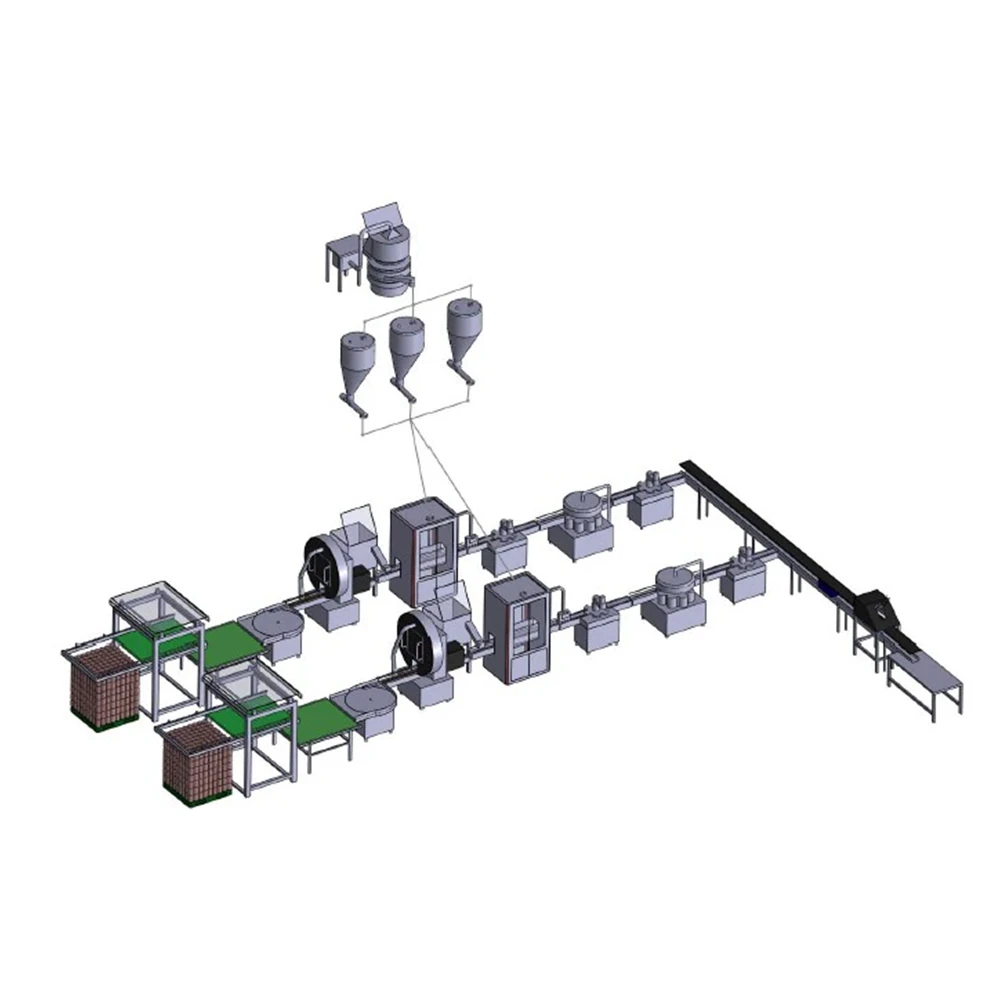
A complete GMP can line with depalletising, sterilising, dual-head filling, seaming and lid pressing.
View model