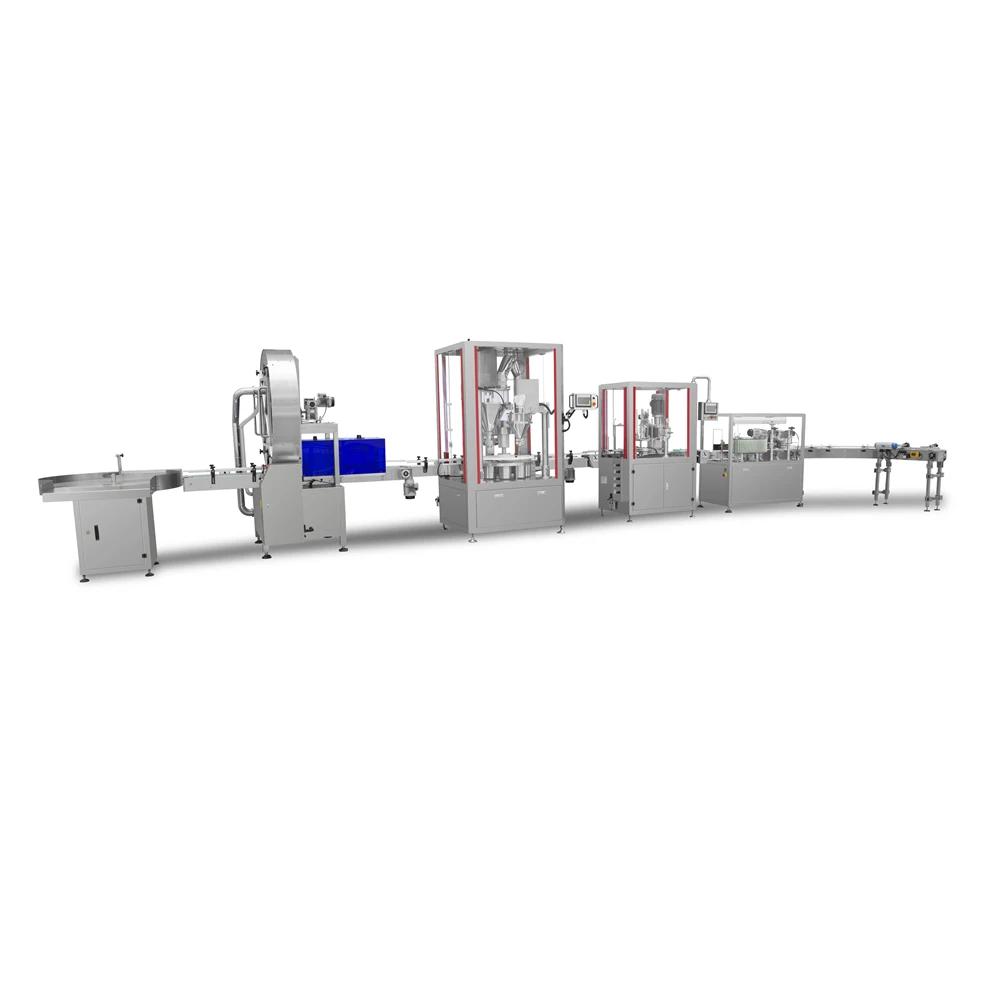
Tin Can Milk Powder Filling Line
Adds vacuum nitrogen seaming and residual oxygen control, with a wider published line rate up to 48 cans per minute.
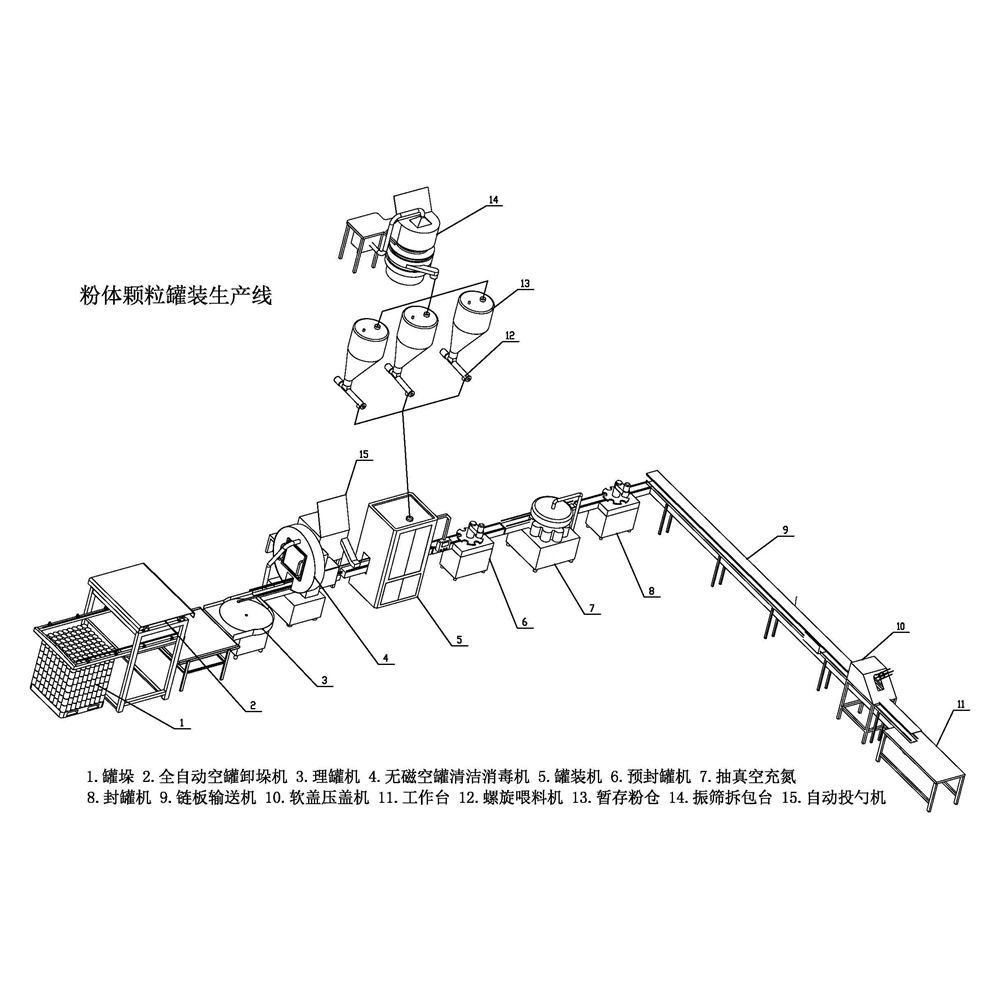
View modelA canning line is a rhythm, not a machine. Cans are de-palletised, unscrambled and sterilised, a spoon is dropped in, powder is vacuum-fed and metered by a dual-head filler, the lid is seamed, the can is cleaned in an ion-air ring, coded on the base, turned and pressed with its soft lid before packing. Twenty to forty-five cans a minute, built to GMP practice.
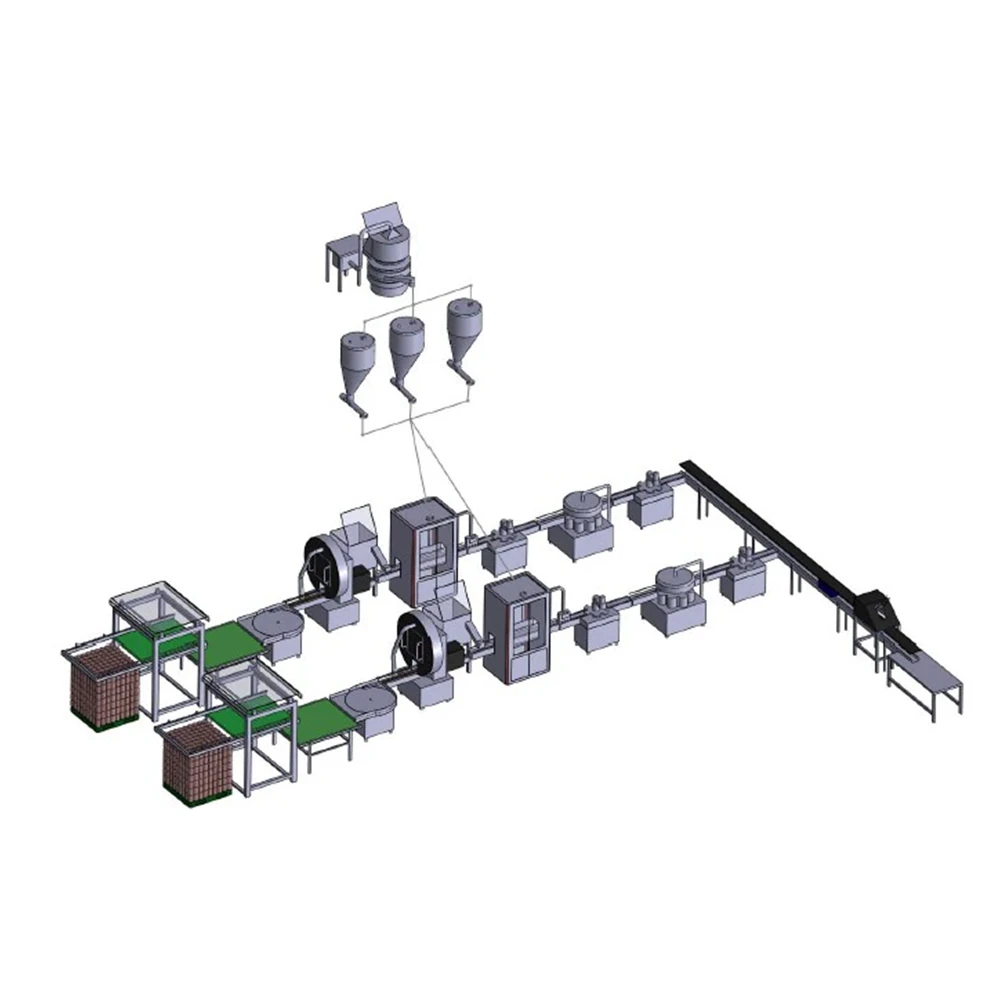
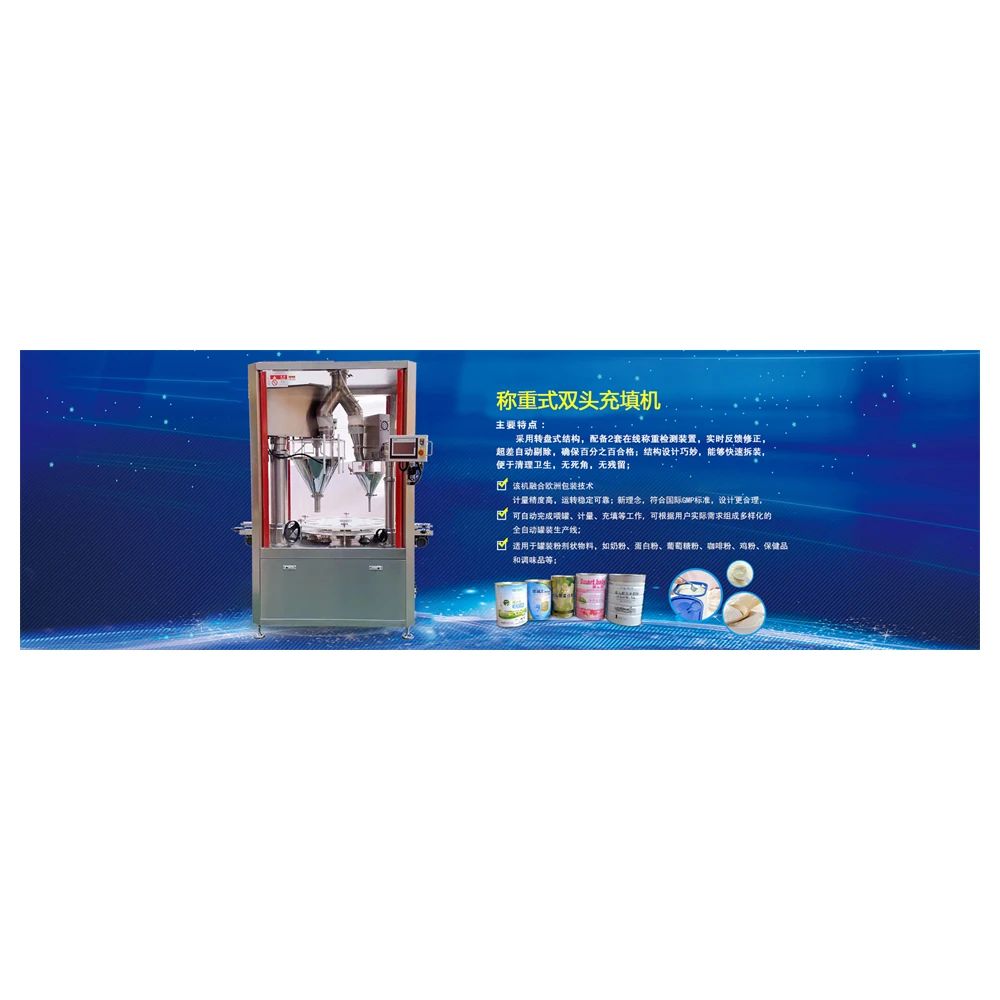
Every station on this line exists because the one before it would otherwise leave a problem behind. Depalletising frees the cans, sterilising readies them, the spoon station packs before closing, the filler meters by weight, the seamer closes the lid, the ion-air ring removes powder, the printer marks the base, and the soft lid press finishes the pack.
A production line has one rhythm, and it is not an average of its machines. This table sets out the stations and what each one contributes to the pace.
| Station | Function | Effect on the line rhythm |
|---|---|---|
| Depalletising | Breaks down can stacks onto the conveyor | Must exceed the line rate or starve it |
| Unscrambling | Singulates cans and sets spacing | Sets the pitch that every later station sees |
| Empty can sterilising | Prepares the can before product enters | Adds dwell time; must be parallel, not serial |
| Spoon feeding | Drops the measuring spoon into the empty can | Short cycle, runs ahead of the filler |
| Vacuum feeding | Delivers powder to the filler hopper | Must keep the filler supplied at peak fill weight |
| Dual-head metering | Fills both lanes to the target weight | Fill duration scales with the fill weight |
| Seaming | Forms the lid onto the can | Usually the constraint on line rate |
| Ion-air cleaning | Removes powder and static from the can | Short cycle, but essential before printing |
| Base coding | Prints the date or batch on the can base | Cycle time depends on the printer supplied |
| Can turning and lid pressing | Uprights the can and presses the soft lid | Completes the pack at line rate |
| Cartoning | Manual packing, or linked to automatic palletising | Decides how many operators the line needs |
The line rate is published as 20 to 45 cans per minute. Where a station in the table is marked as the constraint, its rate is matched to the line rate at the design stage rather than left to chance. Coding equipment is supplied by the customer in the published configuration.
Follow the can and the whole line is explained.
Depalletising, unscrambling and empty can sterilising bring clean, oriented cans to the filling station.
A measuring spoon is dropped in, then the dual-head filler meters powder to the target weight.
The lid is seamed onto the can, and the ion-air ring clears powder and static from the outside.
The base is coded, the can is turned upright, the soft lid is pressed on and the can is packed or palletised.
Values are reproduced from the manufacturer specification for the complete line.
| Parameter | Specification |
|---|---|
| Can specification | 502#, 401#, 300# type metal cans, under 1,500 g, conventional seaming |
| Production capacity | 20–45 cans/minute |
| Metering accuracy | Within ±1 g for 100–500 g, within ±2 g for 500 g and above |
| Line compressed air consumption | About 1,100 L/min at 0.6–0.7 MPa |
| Total power | 18 kW, excluding self-supplied equipment and other factory auxiliary equipment |
| Process sequence | Can depalletising, unscrambling, empty can sterilising, spoon feeding, vacuum feeding, dual-head metering, seaming, ion-air circumferential cleaning, base coding, can turning, soft lid pressing, cartoning |
| Construction | Stainless steel machines with polished product-contact interiors, quick-release parts for cleaning |
| Standard | GMP canning practice |
Can moulds on the filling and seaming machines are changed together when the can specification changes, which is what allows the line to run more than one can size. The coding printer is listed as self-supplied in the published configuration; nitrogen supply is added where a vacuum nitrogen seaming arrangement is specified.
Rate, tolerance, air and power are the figures that size the plant around the line.
502, 401 and 300 cans, covering the common retail and bulk powder formats with one set of change parts.
One gram of tolerance up to 500 g and two grams above it, quoted by weight so the pack declaration can be checked directly.
From the can stack to the closed can the process runs automatically, leaving operators on supervision and packing.
They are all about keeping powder out of places it should not be, and keeping the line running through a shift change.
The ion-air ring neutralises static and blows the can clean after seaming, which is what allows a clean print on the base and a clean surface under the soft lid.
Product and filling machine sit on the same level and powder is drawn to the hopper by vacuum, which avoids product drop heights and the dust they create.
Stainless construction with polished contact surfaces and quick-release fittings means the product change is a wash-down that fits inside the shift window.
The line is aimed at free-flowing powders that benefit from a sealed metal can.
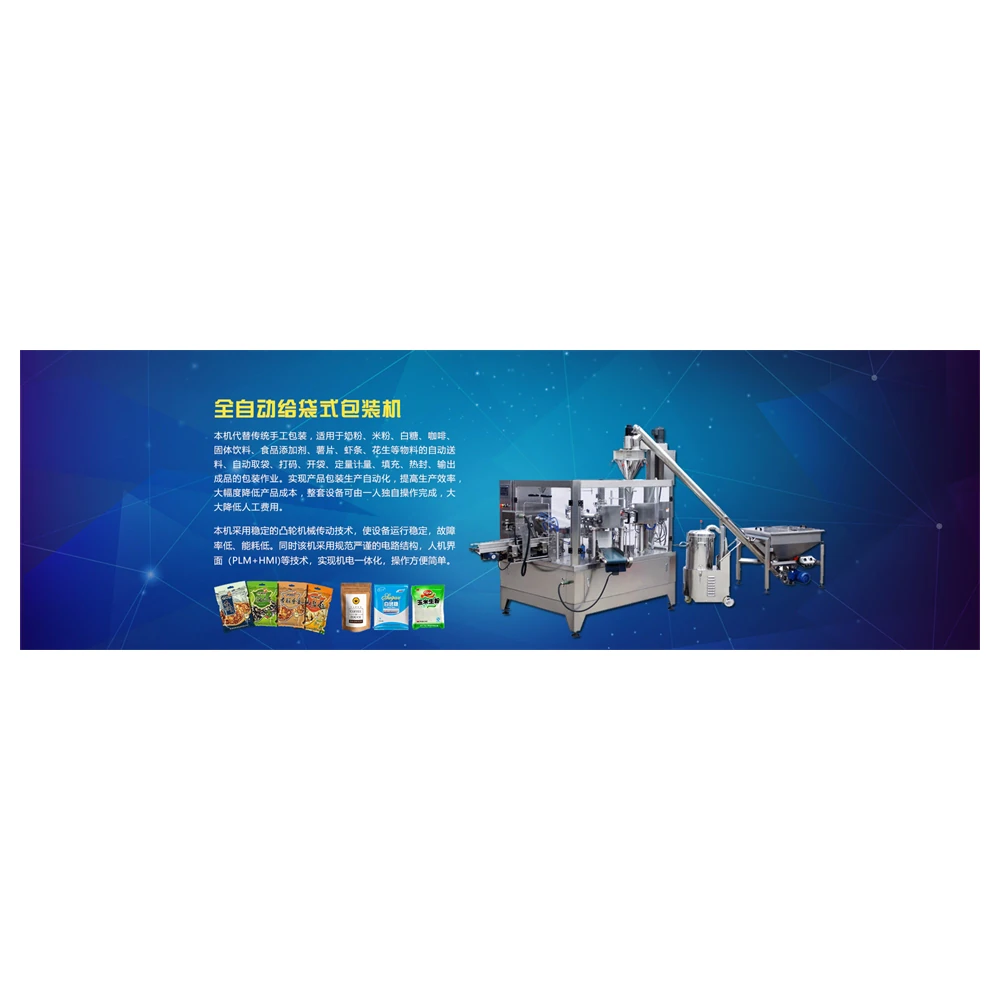
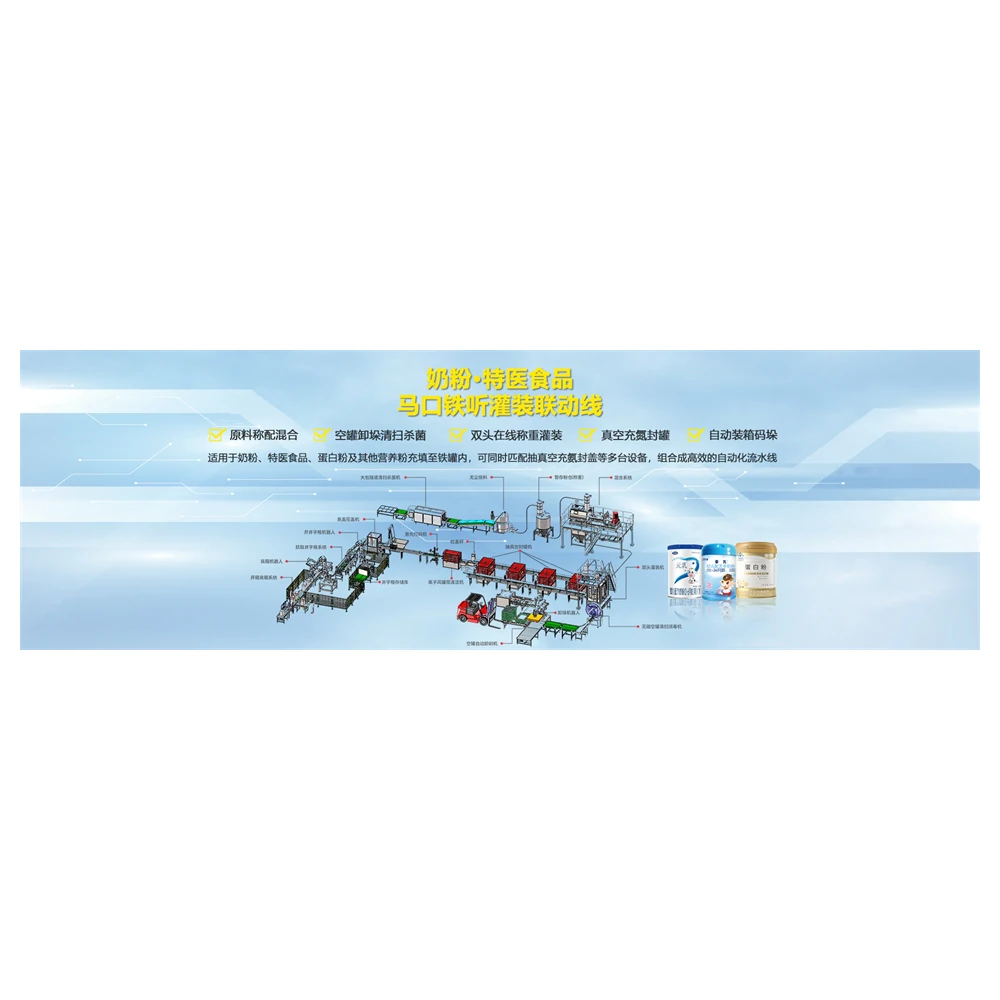
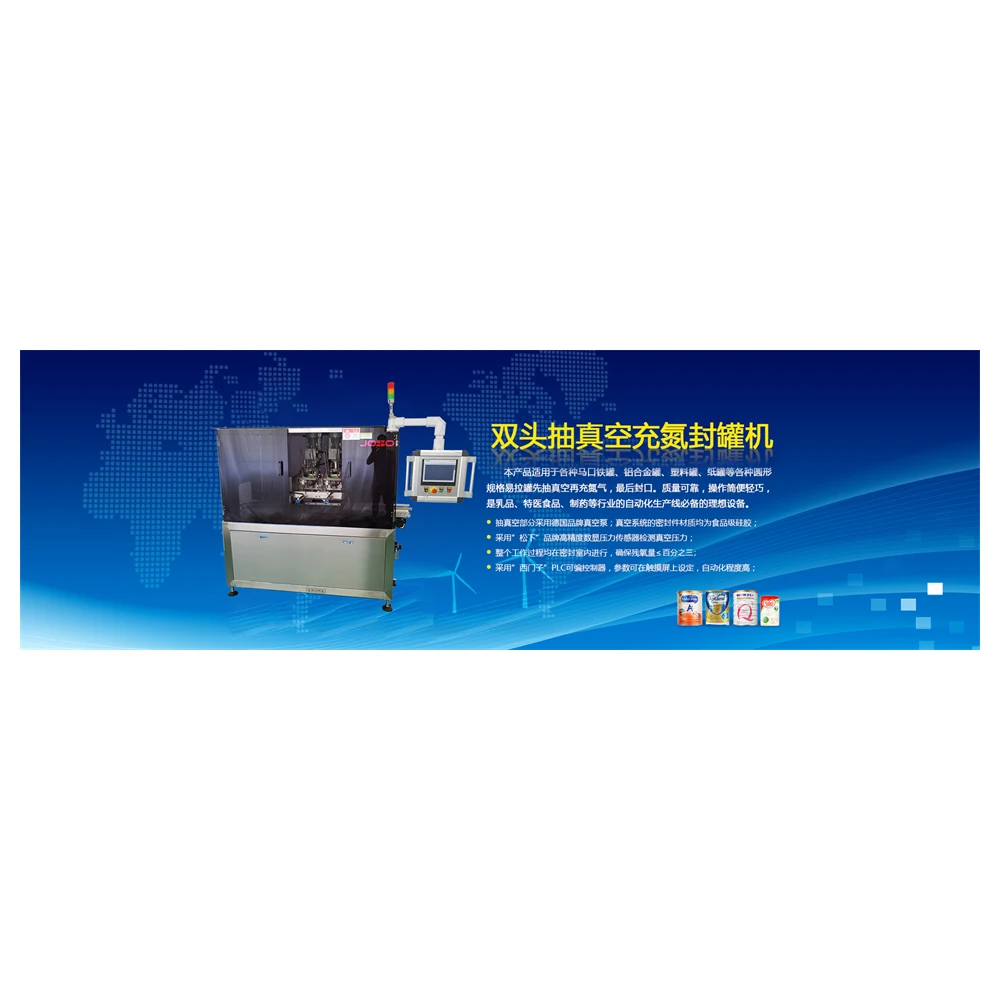
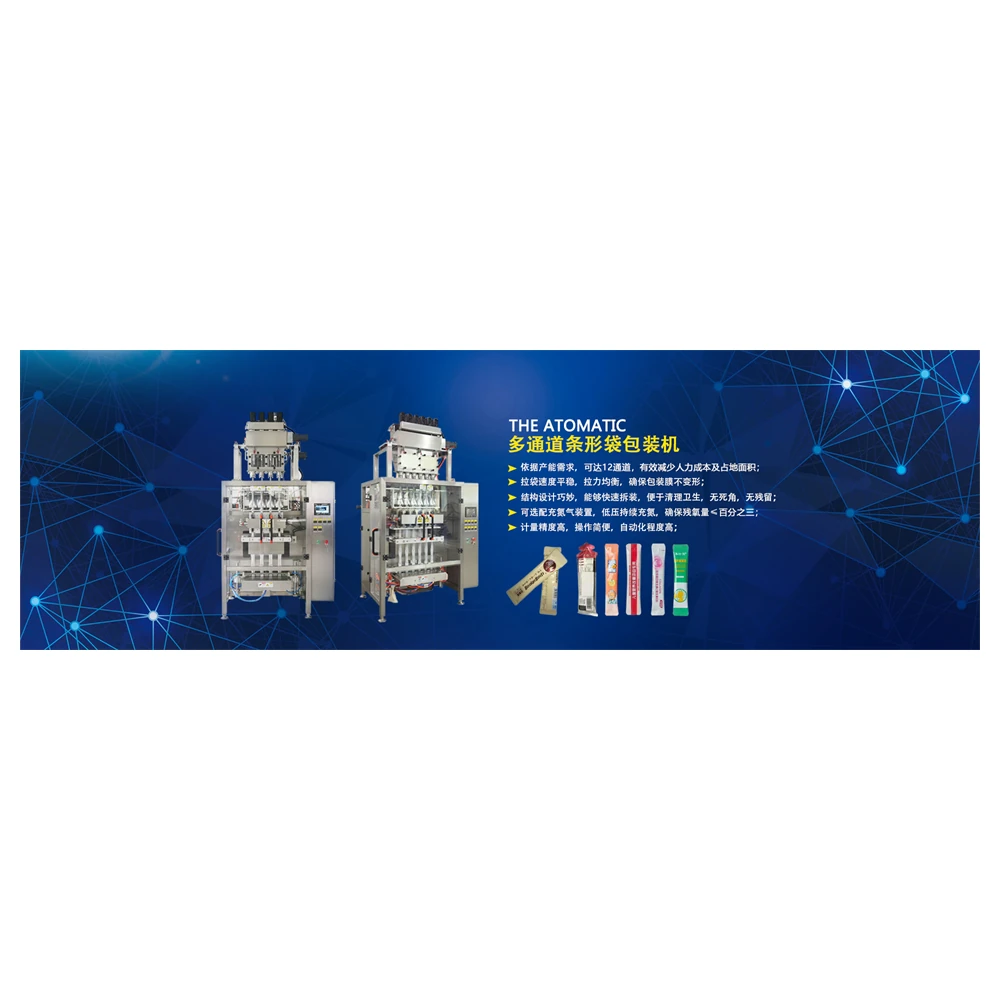
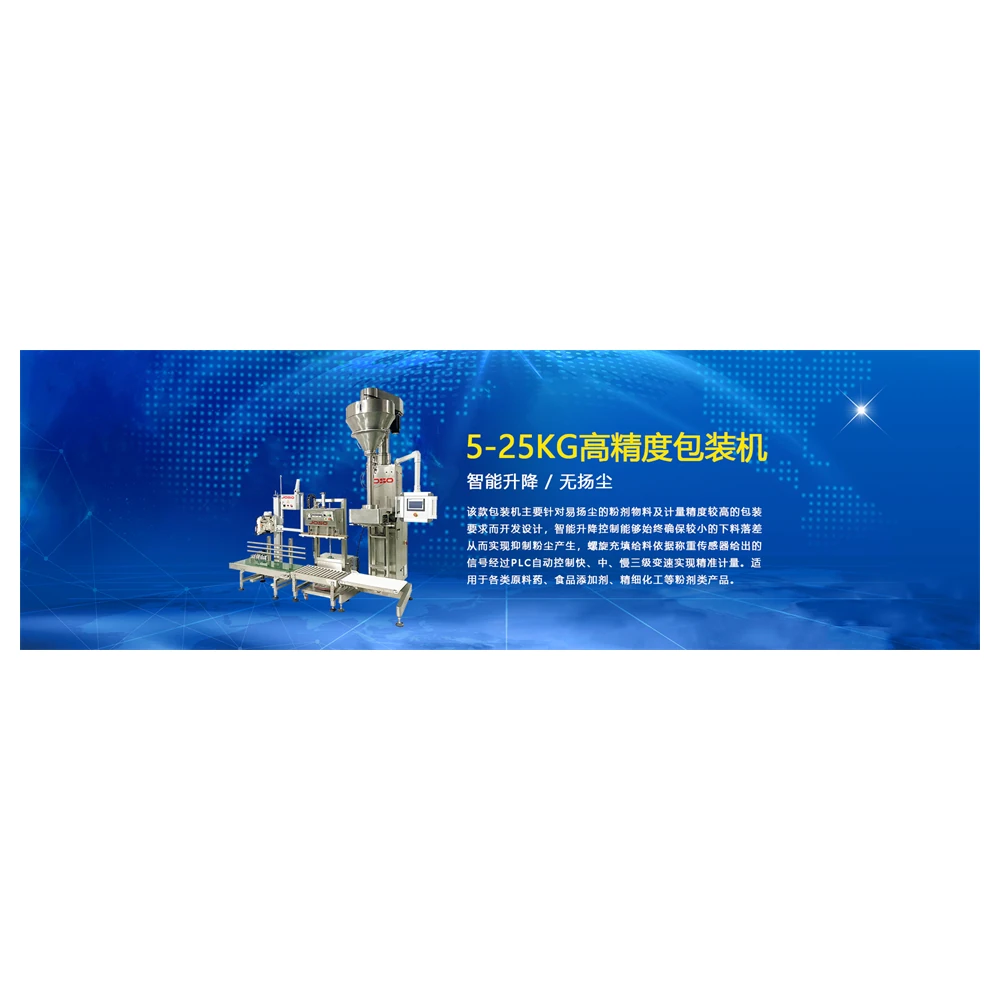
Infant and adult milk powders in retail cans, with the spoon packed in before filling and the lid seamed after.
Protein and nutritional powders filled to within 1 to 2 g, where the declared weight on the pack has to be dependable.
Clinical nutrition powders requiring a sterile empty can, a controlled fill and a sealed, coded pack.
The published band is 20 to 45 cans per minute. Which end of it a plant reaches depends on the fill weight, the can size and how the stations are balanced.
| Factor | Moves the rate up | Moves the rate down |
|---|---|---|
| Fill weight | Light fills, 100–500 g | Heavy fills approaching 1,500 g |
| Can size | Small cans, 300 and 401 | Large 502 cans |
| Seaming capacity | Adequate forming capacity for the rate | Seamer sized below the filler rate |
| Can supply | Depalletiser and unscrambler running ahead | Manual can loading |
| Packing | Automatic cartoning and palletising | Manual cartoning with too few operators |
Balance factors and directional effects are planning guidance derived from the published can sizes, fill tolerance and line capacity; they are not separate performance guarantees.
The line is a project, so the layout, the utility schedule and the scope are fixed before production.
Complete lines are quoted at roughly 45 to 75 working days, shipped in sections with site assembly drawings.
12 months of parts warranty across the line, with free replacement components and lifetime technical support.
English manuals, layout drawings and remote support for assembly, seamer setup, weight calibration and first production.
Filler and seamer moulds for additional can sizes are quoted with the project. Volume terms are agreed per order.
It fills and closes powdered products into metal cans: milk powder, protein powder, nutritional blends and similar free-flowing powders. The line is configured for 502, 401 and 300 type cans carrying under 1,500 g, closing them by conventional seaming. Changing the moulds on the filling and seaming machines allows a different can specification to run.
The published capacity is 20 to 45 cans per minute, and the pace is set by the slowest station rather than by the fastest. Seaming, being a mechanical forming operation, is normally the constraint; the can depalletiser, the steriliser and the filler all have to be able to run at or above the seamer rate. With a can and a fill weight in hand, we confirm where the line will actually sit inside that band.
The published tolerance is within plus or minus 1 g for fills between 100 and 500 g, and within plus or minus 2 g for fills of 500 g and above. Filling is carried out by a dual-head machine working with a metering system matched to the powder, so the dose is repeatable across a shift even as the product density changes with the ambient humidity.
A measuring spoon is part of the consumer pack for many powdered products, and dropping it into an empty can is far easier than adding it after filling. The line therefore places the spoon at a dedicated station after the empty can has been sterilised and before the powder goes in, so the spoon sits at the bottom of the can and is sealed in with the product.
After seaming, the can passes through an ion-air circumferential cleaning station that neutralises static and blows residual powder from the sidewall and the seam area. Static is the reason this matters: without it, fine powder clings to the can and then to the printing head. Cleaning before coding is what allows a clean mark on the base.
Compressed air at about 1,100 litres per minute and 0.6 to 0.7 MPa, and a total connected power of 18 kW excluding equipment supplied by the customer, such as the coding printer. The exact utility schedule is issued with the line layout, and nitrogen is added where a vacuum nitrogen seaming configuration is specified.
Machines are built in stainless steel in accordance with food hygiene design, the interior of product-contact vessels is polished, and structures that are cleaned regularly use quick-release parts so that a shift change or product change is a wash-down rather than a long shutdown. The whole process follows GMP canning practice with a high degree of automation.
This line seals conventionally. If the product needs a controlled headspace, the vacuum nitrogen version is the alternative.
Adds vacuum nitrogen seaming and residual oxygen control, with a wider published line rate up to 48 cans per minute.
View model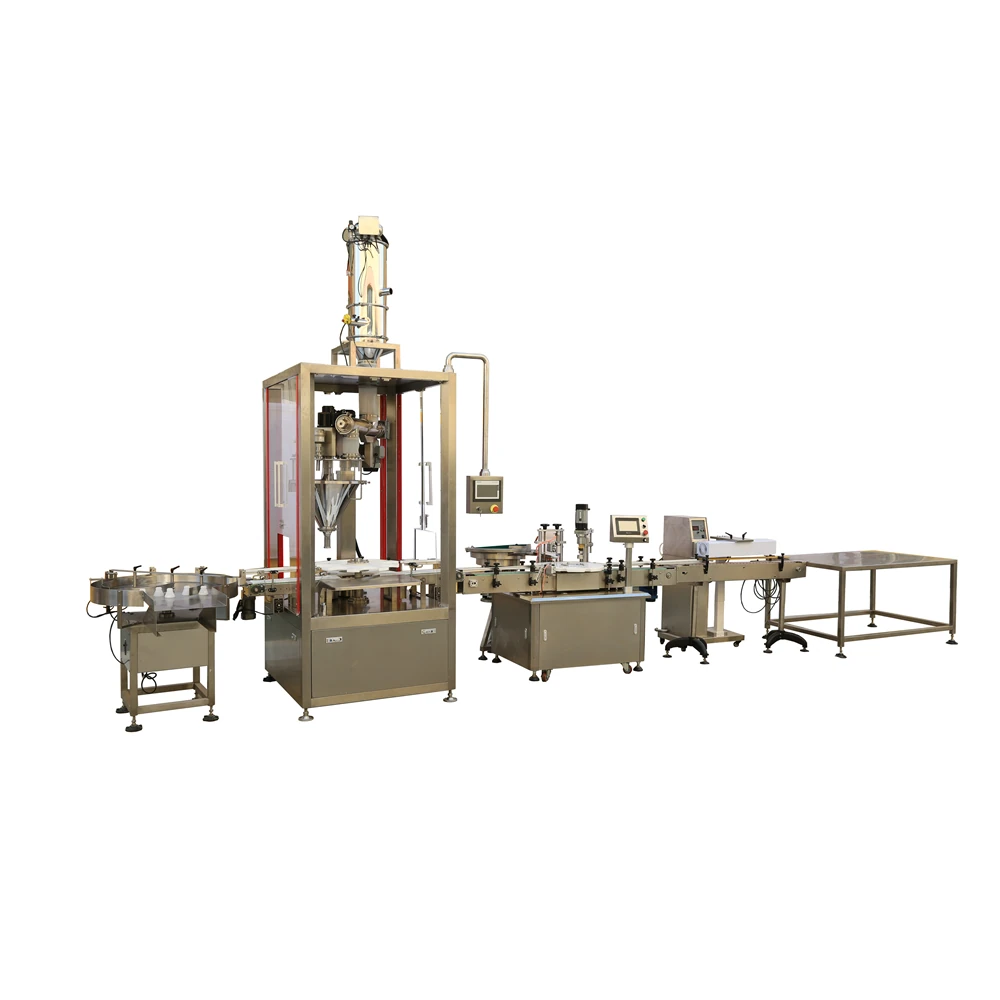
The same powder duty in PET and plastic cans, with inline weigh filling and foil sealing rather than seaming.
View model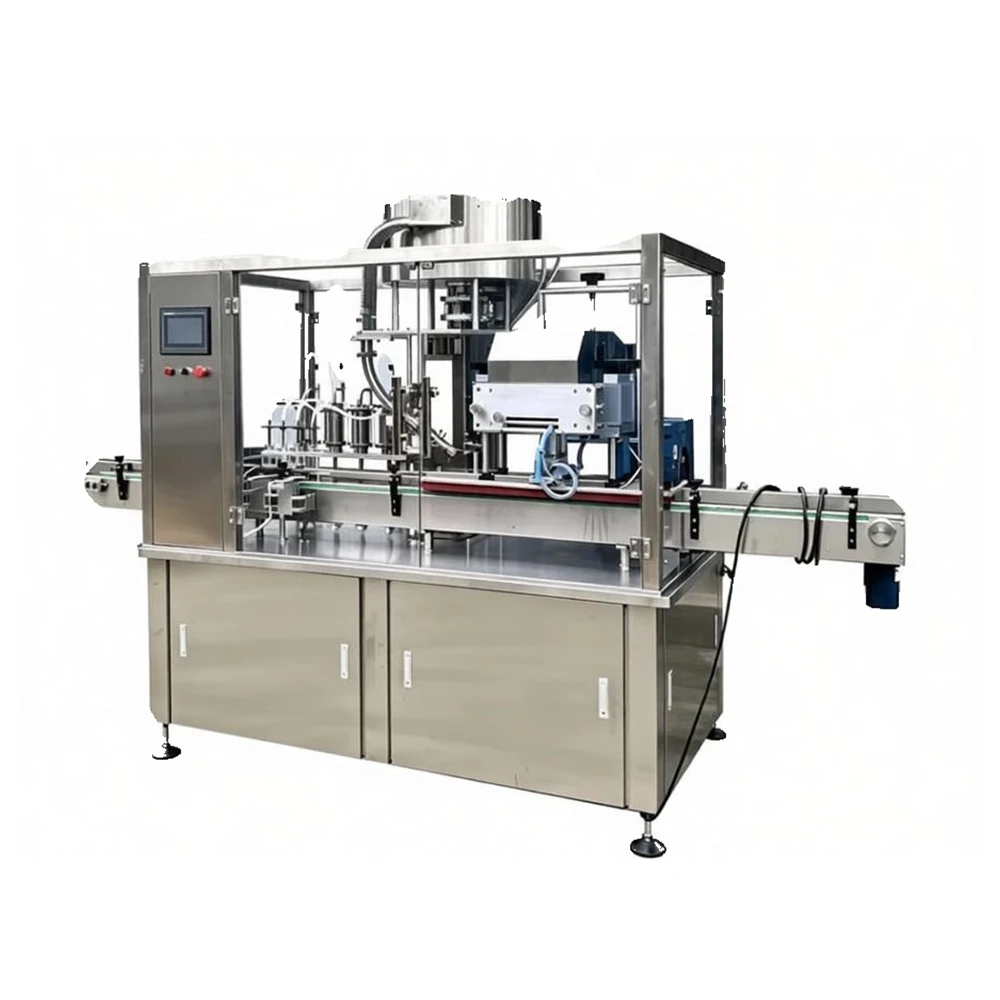
For liquids rather than powders, filling large bottles from 500 to 5,000 ml with twelve filling heads.
View model