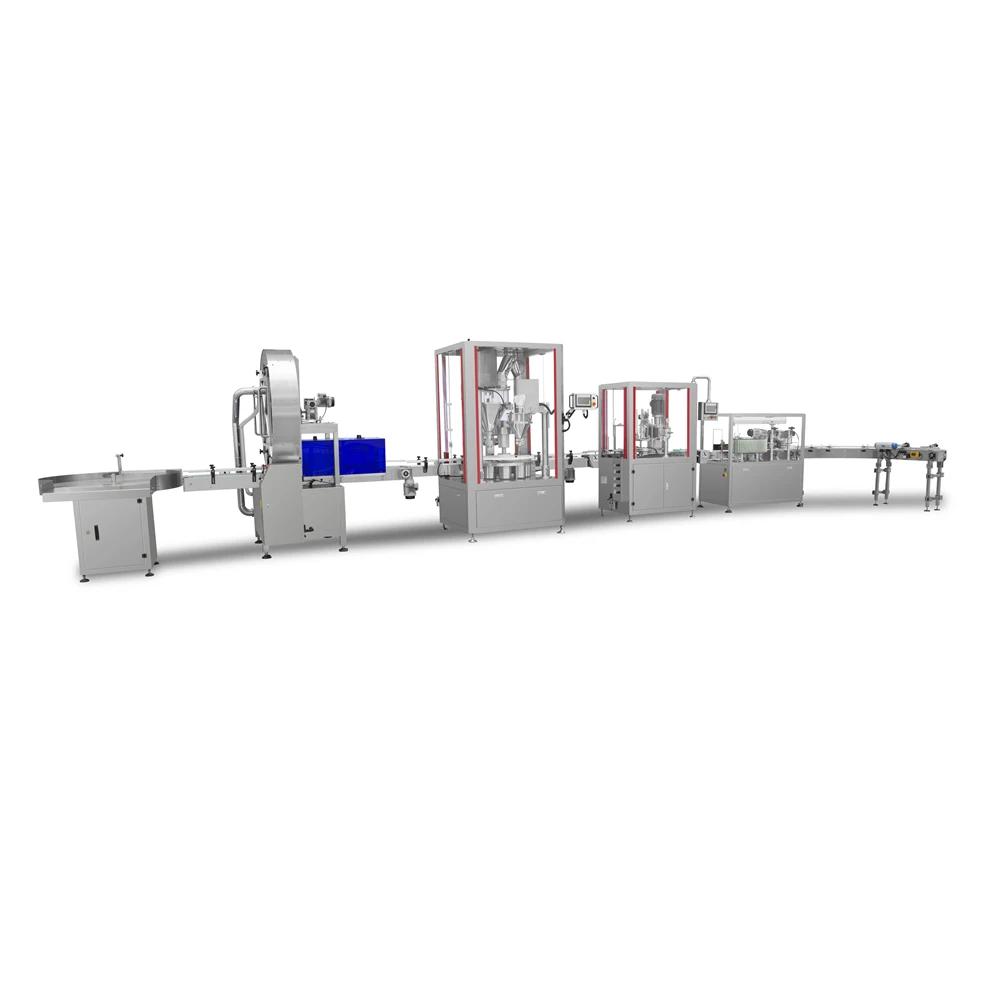
Tin Can Milk Powder Filling Line
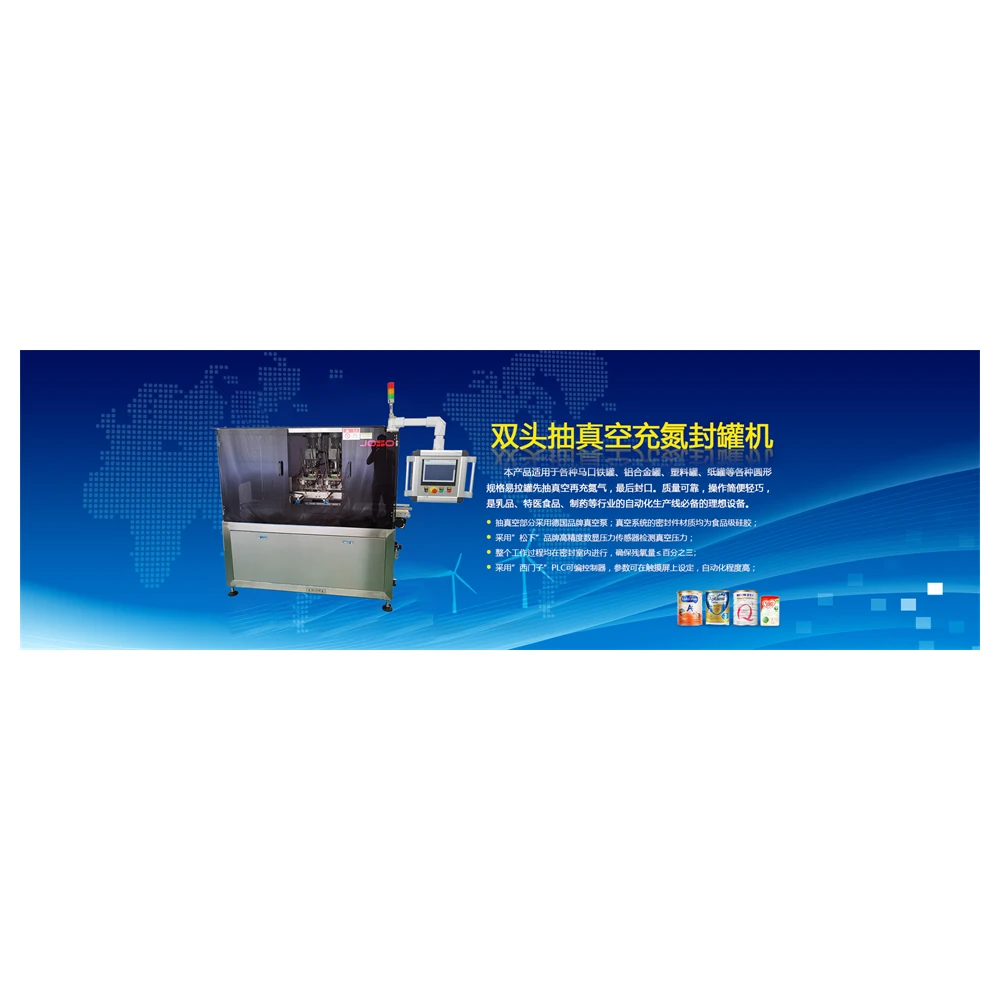
For metal cans rather than plastic, with vacuum-nitrogen seaming and a residual oxygen target under 3 percent.
View modelPowder does not hold a volume, so a powder line has to hold a weight. This line weighs every can in line as it fills, from 50 to 1,000 g, and closes the loop within 1 to 5 g across protein powder, nutrition blends and foods for special medical purposes, then caps, foil-seals, cleans, labels and codes the can without it leaving the flow.
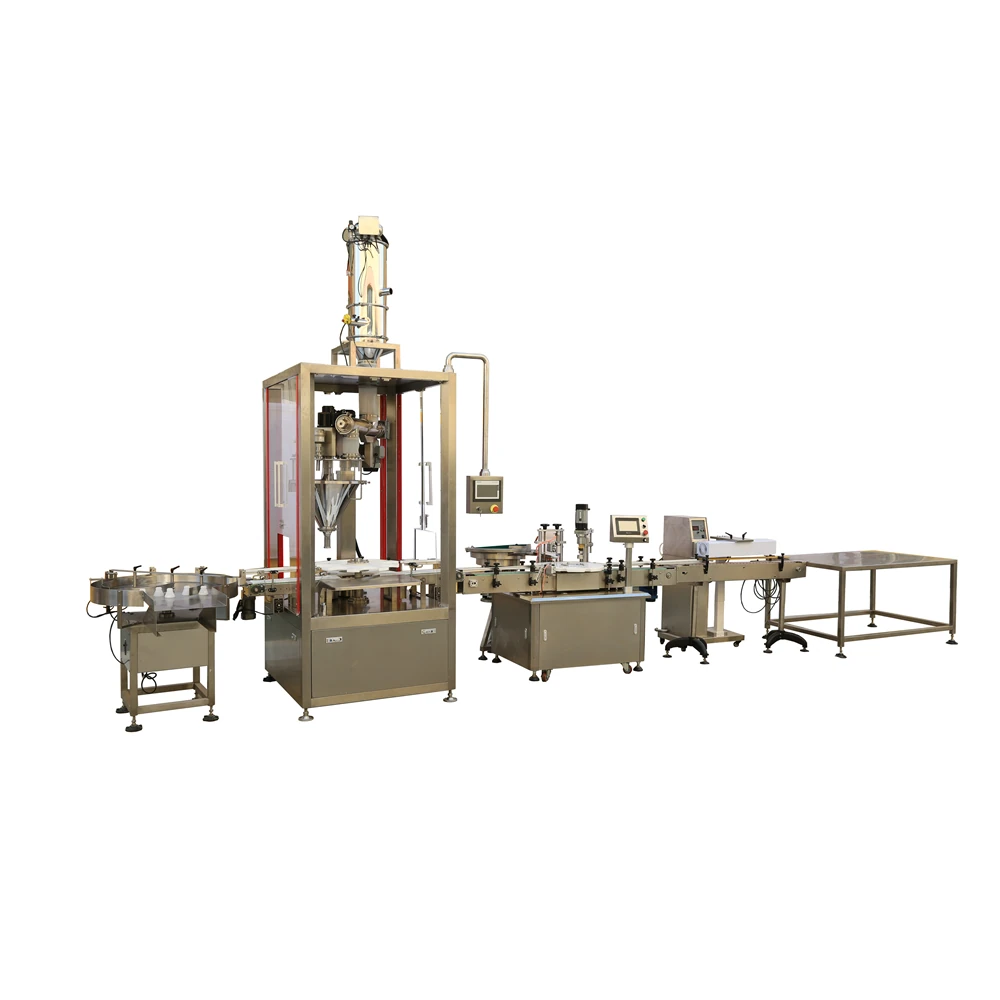
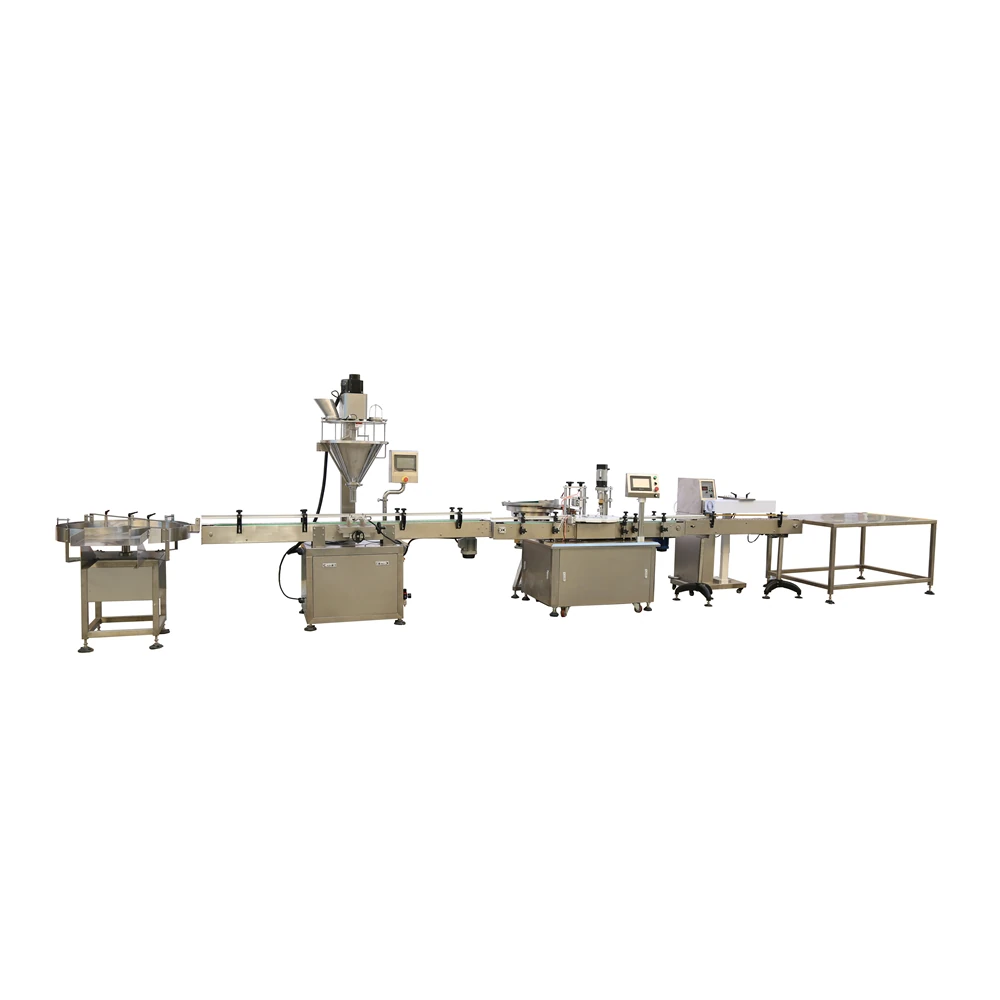
Two cans of the same volume can hold different weights of product, because bulk density shifts with humidity, particle size distribution and how the powder settles. A volumetric filler therefore needs constant recalibration and still drifts. This line weighs the can as it fills, so the target is a weight and the tolerance is stated in grams rather than as a percentage.
There are two things a powder line has to get right: the weight in the can, and the dust around it. The first decides yield, the second decides whether the foil seal holds.
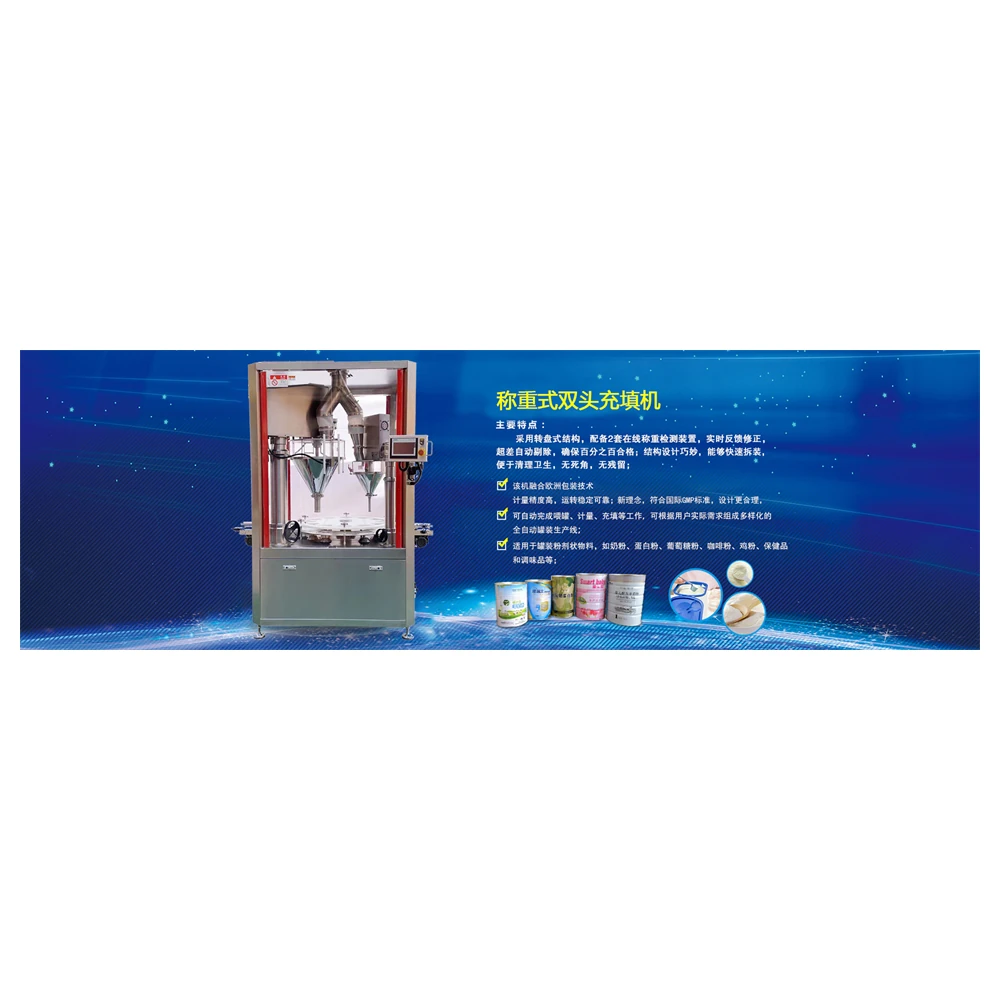
Product is fed into the can while the can sits on a weighing platform. The feed runs fast until it approaches the target and then slows to a trickle, so the final gram is placed rather than thrown. The result is a fill held within 1 to 5 g without changing a setting when the product density moves.
Fines are the enemy of a clean foil seal. The line purges and sterilises the empty can before filling, fills through a head that drops product straight into the can, and then cleans the can body after sealing. The result is a clean rim for the foil and a clean wall for the label.
| Dosing approach | What decides the dose | Behaviour when density changes | Suitability for this line |
|---|---|---|---|
| Volumetric screw only | Screw revolutions | Weight drifts with bulk density | Not used as the primary dose |
| Auger feed with timer | Feed time at fixed speed | Small drift, needs re-timing | Used only as the rough feed stage |
| Inline weigh filling | Measured weight on a load cell | Self-correcting every can | Primary dose on this line |
| Check-weigh after fill | Weight after the can is full | Detects drift but does not correct it | Used as a verification stage |
Comparison is drawn from the published description of this line and general powder-filling practice. The line uses inline weighing as its dose; any check-weighing stage is there to verify the result, not to correct it.
All values below are taken from the manufacturer specification for this line.
| Parameter | Specification |
|---|---|
| Fill weight | 50–1,000 g |
| Can diameter | Φ30–130 mm |
| Can height | 60–200 mm |
| Production capacity | 20–40 cans/minute |
| Filling accuracy | Within ±1–5 g |
| Supply voltage | 3-phase 380V, 50 Hz |
| Compressed air | 6 kg/cm² working pressure |
| Process sequence | Can unscrambling, empty-can purge and sterilisation, inline weigh filling, automatic cap unscrambling and capping, aluminium foil sealing, can body cleaning, automatic labelling, coding, cartoning |
| Product type | Free-flowing powders and powder blends |
| Container type | PET and plastic cans |
Capacity is quoted for the whole line and depends on the fill weight, the container format and the number of filling stations running. Station layout, conveyor lengths and the automation level of the cartoning end are specified per order.
Every stage before the filler prepares the can, and every stage after it protects what the filler has achieved.
Empty cans are air-purged and sterilised before the product goes in, so no packaging debris ends up under the fill or on the rim.
The weight is measured while the can is being filled rather than at the end of the line, so the error is corrected within the same cycle.
Caps are unscrambled automatically and the aluminium foil is sealed in the same flow, so the can is closed before it can pick up moisture.
Can body cleaning clears residual dust, then labelling and coding finish the pack without a manual handling step.
Fill weight, can size, rate and accuracy decide the layout and the number of stations.
From a 30 mm jar to a 130 mm tub, and from 60 to 200 mm tall, one line covers both single-serve and bulk nutrition packs.
The accuracy is quoted in grams, which is the figure a form-fill-seal declaration is checked against, rather than as a percentage.
A moderate compressed-air demand at 6 kg/cm² covers the pneumatic actuators across the capping, sealing and cleaning stations.
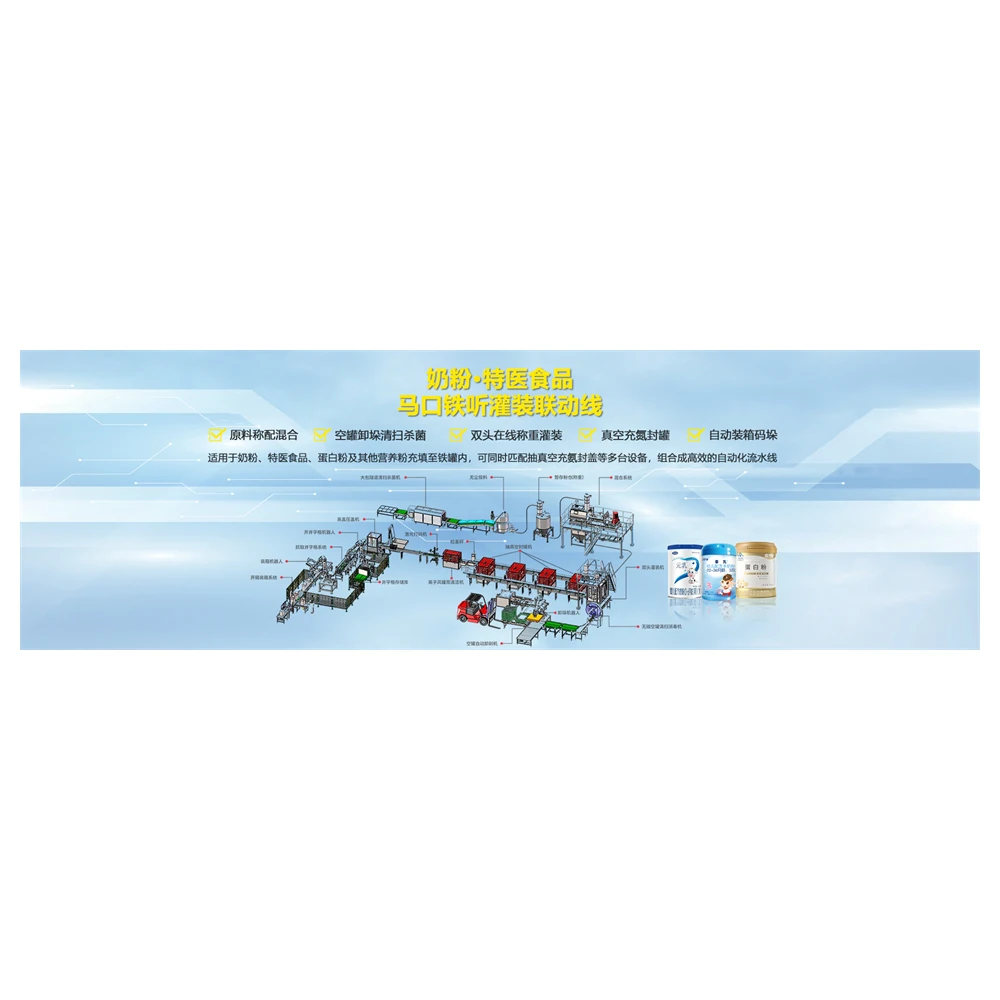
The can enters empty at one end and leaves sealed, labelled and coded at the other, without a manual transfer.
Cans are sorted, inverted for air purge and sterilised before they reach the filler.
The can is filled on a weighing platform and the feed stops at the target weight, within 1 to 5 g.
Caps are unscrambled and applied automatically, and the aluminium foil is sealed to the clean rim.
Can bodies are cleaned of dust, then labelled, coded and packed into cases to complete the flow.
Free-flowing powders and blends, from sports nutrition to specialised medical nutrition.
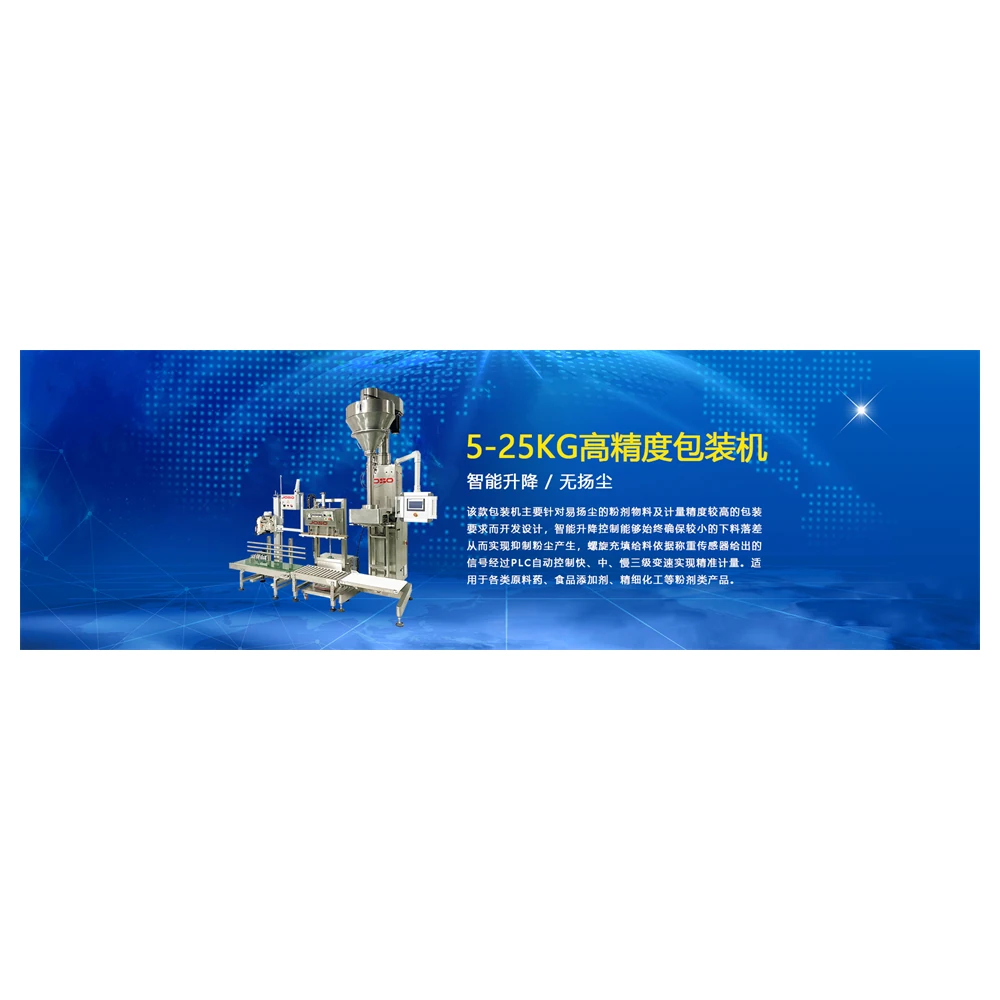
Protein powder, meal replacements and weight-gain blends packed into PET cans at retail and bulk sizes.
Clinical and medical nutrition powders, where the fill weight has to be both accurate and repeatable to support a declared value.
Malted drinks, fortified powders and beverage bases, filled into the same can formats with a stored recipe per product.
The line publishes a can envelope and a fill range; the two have to overlap for a given product. Use this table to check your pack before specifying the change parts.
| Pack type | Can diameter | Can height | Typical fill weight |
|---|---|---|---|
| Small single-serve jar | 30–60 mm | 60–100 mm | 50–200 g |
| Retail nutrition can | 60–100 mm | 100–160 mm | 200–600 g |
| Large retail can | 100–130 mm | 140–200 mm | 600–1,000 g |
Line configuration is agreed against your can and your product before production begins.
Line builds are quoted at roughly 30 to 45 working days, with shipment in sections and reassembly drawings supplied.
12 months of parts warranty on the line, with free replacement components and lifetime technical support.
Installation drawings, English manuals and remote support for setup, weighing calibration and first production.
Guide rails, cap chutes and filling apertures for additional can formats are quoted with the line. Volume terms are agreed per order.
Powder density changes with humidity, particle size and settling, so a fixed screw volume drifts away from the target weight over a shift. Weighing each can on a load cell closes that loop: the filler delivers product until the target weight is reached, which is why the line holds within 1 to 5 g across products ranging from fine protein powder to coarser nutritional blends.
The line is set up for PET and plastic cans with a diameter of 30 to 130 mm and a height of 60 to 200 mm, which covers most retail and bulk nutrition containers. Change parts for a different can size are quick-change items, and the recipe on the control system stores the fill weight, speeds and cap settings for each format.
The published capacity is 20 to 40 cans per minute. Where a line lands in that band depends mainly on the fill weight, because heavier fills take longer to weigh and settle, and on how many filling stations are running. Two-shift and three-shift operation simply multiply the daily figure.
Powders release fines at the fill point, and fines are what spoil a foil seal. The line handles this in three ways: can unscrambling and an empty-can purge and sterilisation stage before filling, a sealed filling head that drops product into the can rather than across it, and a can-body cleaning stage after sealing that clears any dust from the sidewall before labelling.
The flow runs automatically through can unscrambling, empty-can purge and sterilisation, inline weigh filling, automatic cap unscrambling and capping, aluminium foil sealing, can-body cleaning, automatic labelling and coding, and then cartoning. Each station can be configured in more than one way, and the level of automation at the end of the line is chosen with the order.
A three-phase 380V 50 Hz supply and compressed air at 6 kg/cm² pressure. Because the fill is checked by weight rather than by volume, there is no calibration fluid to supply and no product-level control on the hopper beyond the standard feed arrangement.
Yes, provided the powders are free-flowing and compatible with the same contact materials. Fill weight, feed speed and settling time are stored per product, and the product path is designed to be cleaned between campaigns. Where allergen or flavour segregation is required, the line can be specified with separate feeding and extraction rather than a shared hopper.
If the pack is a metal can, or the product is a liquid rather than a powder, these machines cover the alternative routes.
For metal cans rather than plastic, with vacuum-nitrogen seaming and a residual oxygen target under 3 percent.
View model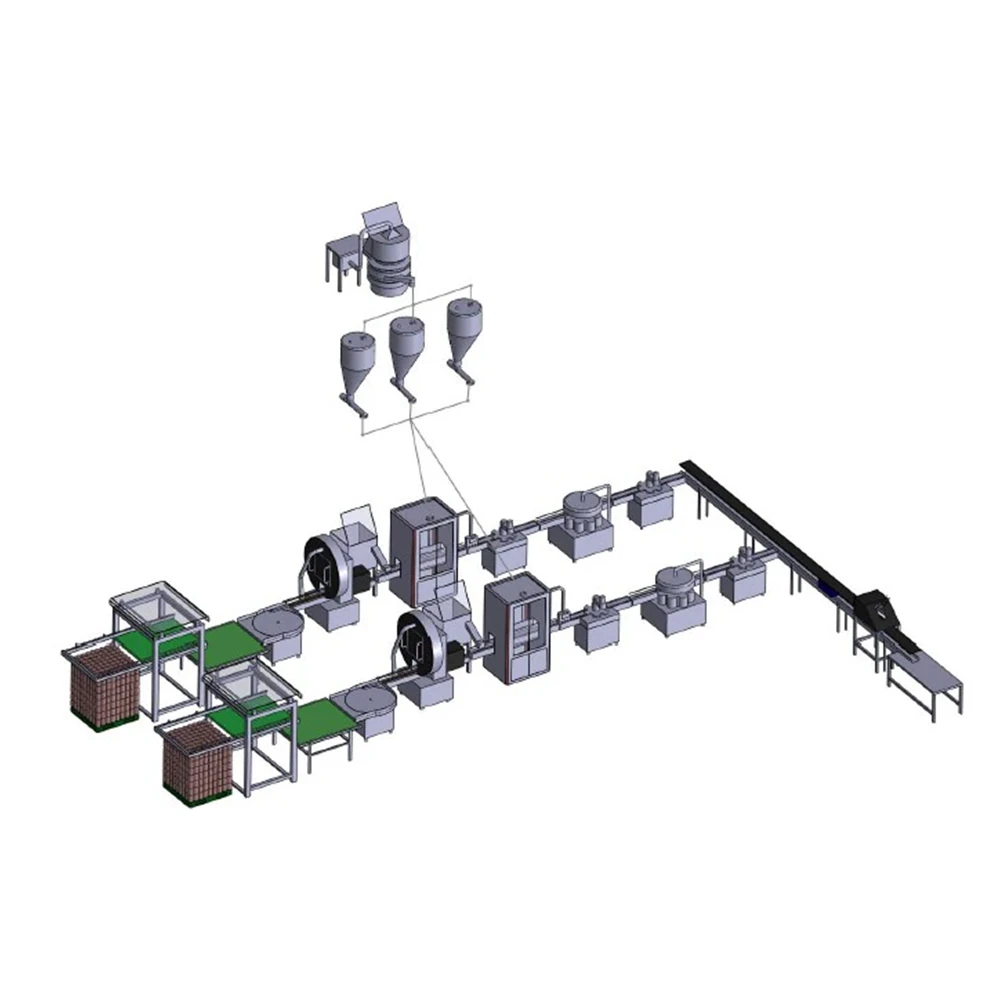
A GMP can line with depalletising, sterilising, spoon feeding, dual-head metering and soft lid pressing.
View model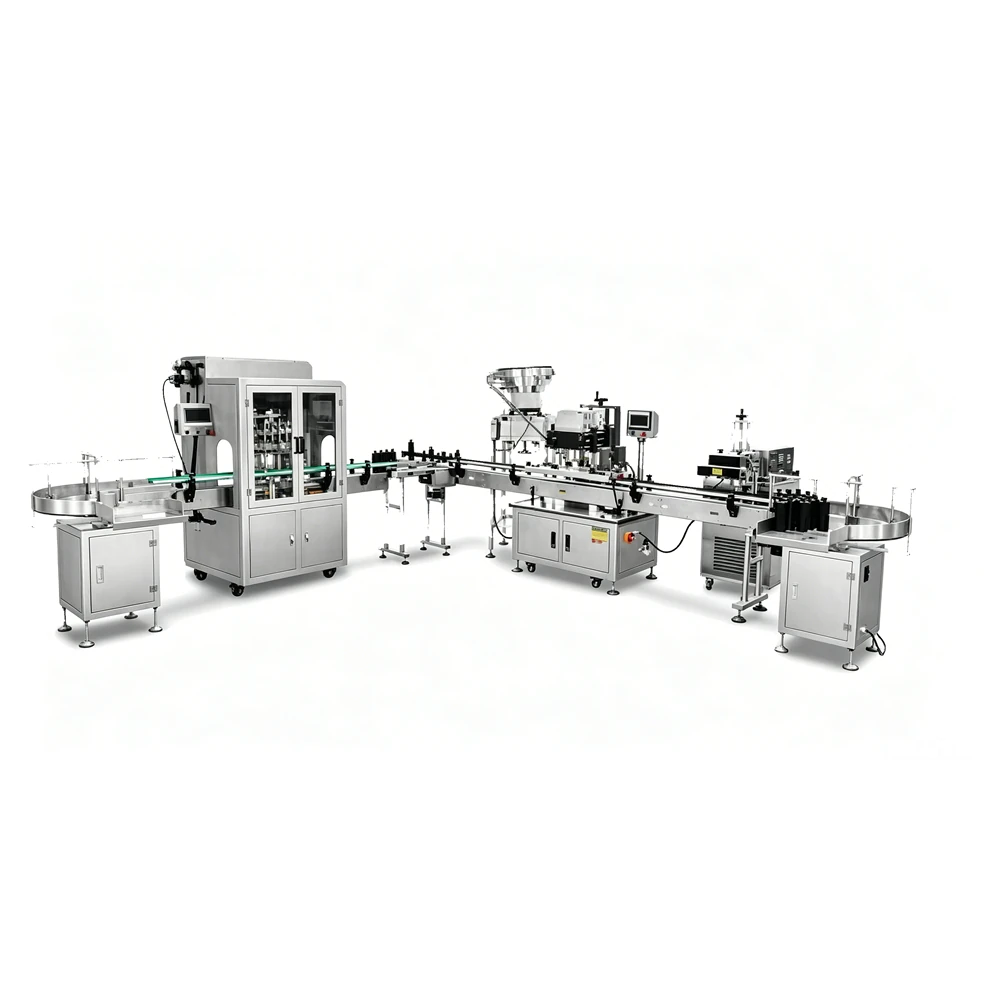
For liquids rather than powders, with three-stage anti-foam filling from 100 to 1,000 ml.
View model