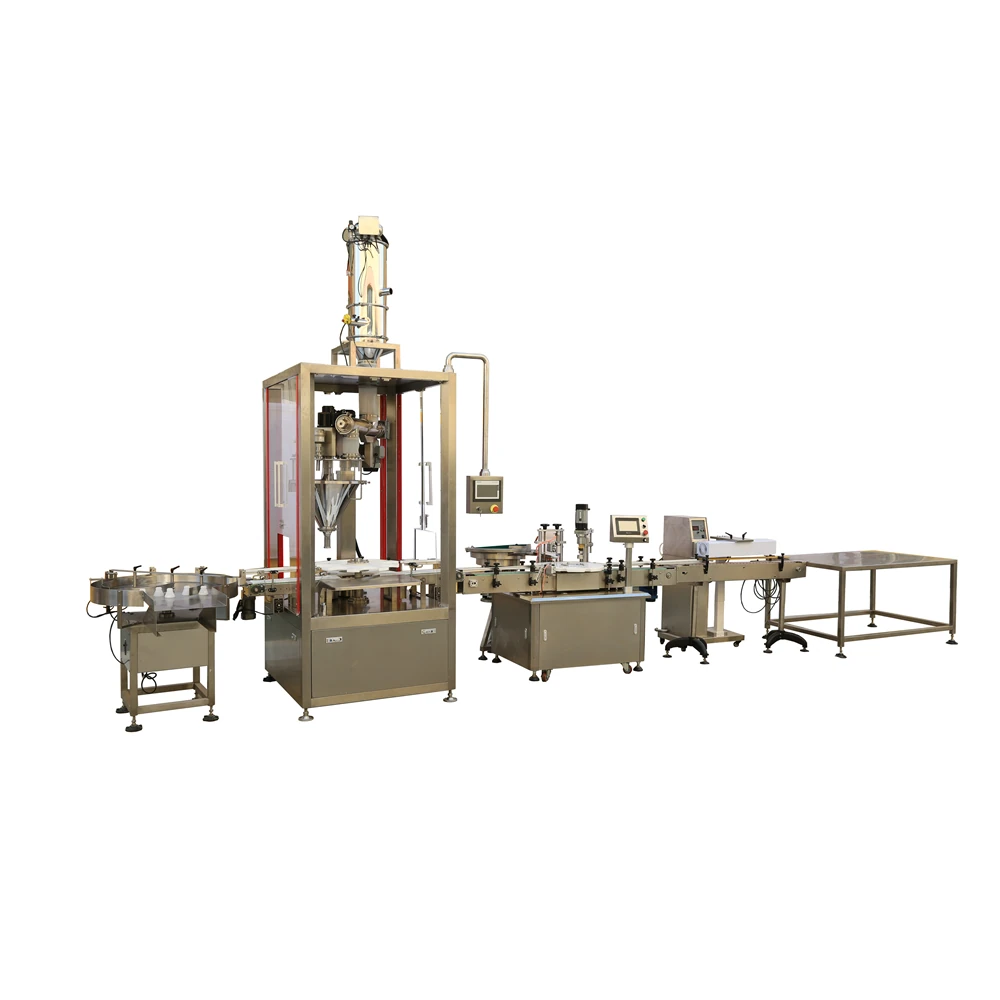
PET Bottle Powder Filling Line
The same powder duty in PET and plastic cans, with inline weigh filling and foil sealing instead of seaming.
View modelMilk powder is packed for shelf life, and shelf life in a tin can is decided by what is left in the headspace. This line fills 300 to 502 cans from 100 to 1,000 g, then pulls a vacuum and backfills with nitrogen before seaming, so the sealed can holds a residual oxygen content of 3 percent or less. Everything from can depalletising to lid pressing runs in one GMP sequence.
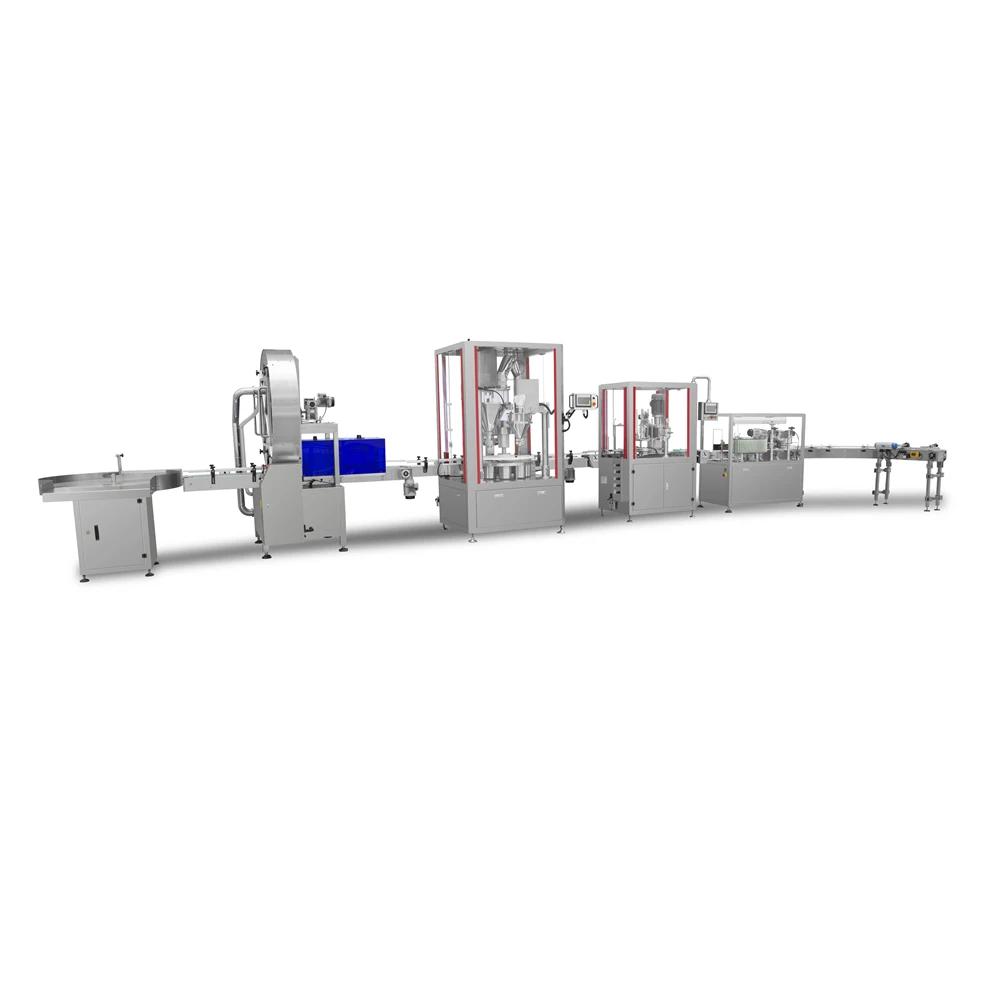
Powdered milk and nutrition blends contain fats that oxidise, and the enemy of a long shelf life is the oxygen trapped in the can once it is closed. This line is built around that single requirement: fill accurately, remove the air, replace it with nitrogen and seam the can tight, all on a continuous GMP flow.
Values are taken from the manufacturer specification for the complete line.
| Parameter | Specification |
|---|---|
| Packing material | Foods for special medical purposes, milk powder, protein powder and other nutritional powders |
| Fill weight | 100–1,000 g |
| Can specification | #300, #307, #401, #502 cans, height 60–200 mm |
| Production capacity | 12–48 cans/minute, set mainly by the number of vacuum nitrogen seamers |
| Single dual-head seamer rate | 12–14 cans/minute |
| Filling accuracy | Within ±1 g for 100–500 g, within ±2 g for 500 g and above |
| Residual oxygen | 3% or less |
| Supply voltage | 3-phase 380V, 50 Hz |
| Line power | 48.33 kW |
| Compressed air | 1.45 m³/min at 6 kg/cm² |
| Nitrogen | Purity above 99.99%, 0.4 MPa, about 10 m³/h per unit (30 m³/h for three units) |
The published filling accuracy appears in two forms: within plus or minus 1 to 1.5 g in the product description and as a graded tolerance of 1 g below 500 g and 2 g above it in the technical table. The graded figure is reproduced in the table above and the tighter 1 to 1.5 g band is achievable on the lower fill weights. Moulds for the filler and the seamer are specified per can size.
Residual oxygen is the number that decides the shelf life of the can, and it is bought with nitrogen. This table shows what the published target implies for a running line.
| Line configuration | Seamers running | Line rate | Nitrogen demand | Residual oxygen target |
|---|---|---|---|---|
| Single seamer | 1 dual head | 12–14 cans/min | About 10 m³/h | 3% or less |
| Two seamers | 2 dual head | About 24–28 cans/min | About 20 m³/h | 3% or less |
| Three seamers | 3 dual head | About 36 cans/min | About 30 m³/h | 3% or less |
| Maximum published | Multiple units | Up to 48 cans/min | Scales with seamer count | 3% or less |
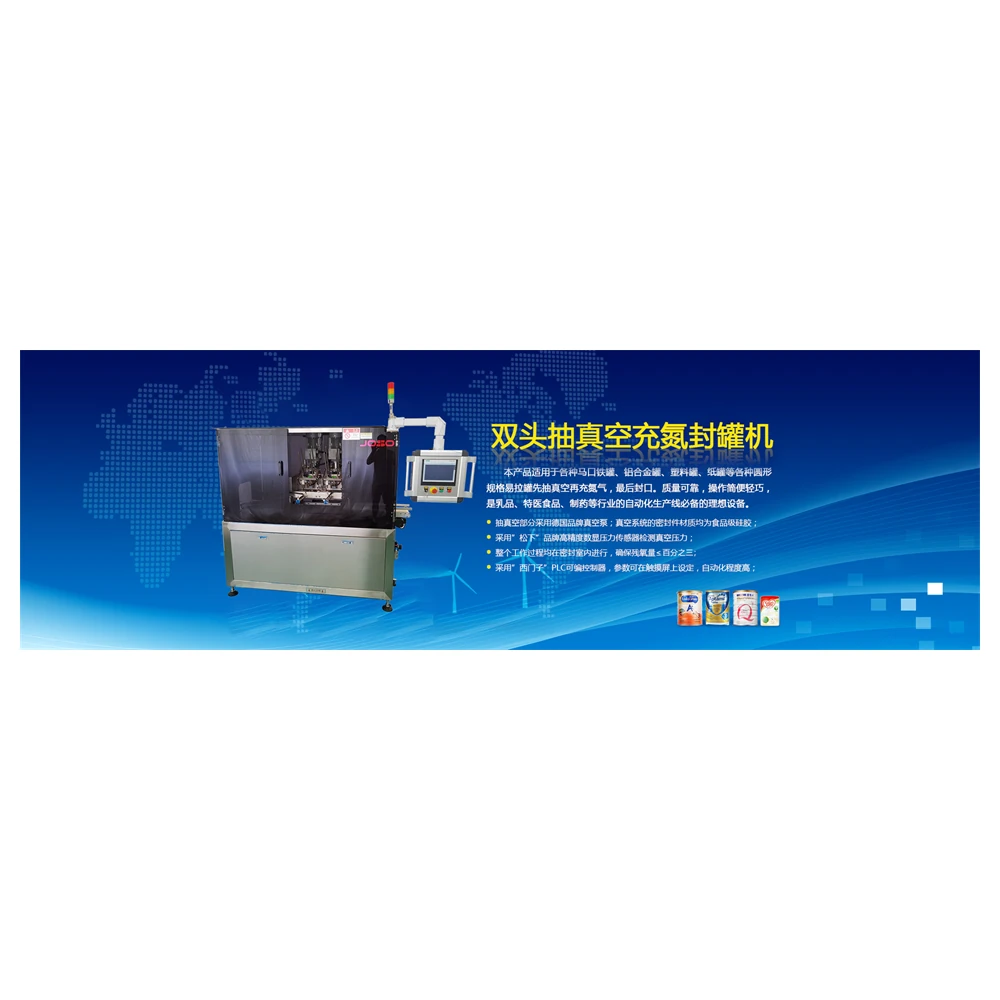
The seamer evacuates the can headspace first and only then admits nitrogen, so the gas displaces air rather than mixing with it.
Purity above 99.99 percent at 0.4 MPa is the published requirement; moisture or oil carry-over in the gas supply undermines the whole exercise.
A gas-flushed can only hold its atmosphere if the seam is sound, which is why the line inspects and cleans the closed can after seaming.
Nitrogen demand is quoted by the manufacturer at about 10 m³ per hour for each seaming unit and 30 m³/h for a three-unit configuration. Where a line runs more than three units, gas demand scales with the seamer count and the site nitrogen supply must be sized accordingly.
Rate, fill tolerance, headspace oxygen and can range are the parameters that set everything else.
Filling is faster than seaming, so the line rate is set by how many vacuum nitrogen seamers run in parallel rather than by the filler.
Compressed air at 6 kg/cm² drives the actuators across can handling, filling, seaming, cleaning and lid pressing.
300, 307, 401 and 502 cans from 60 to 200 mm tall are covered by one set of handling and seaming change parts.
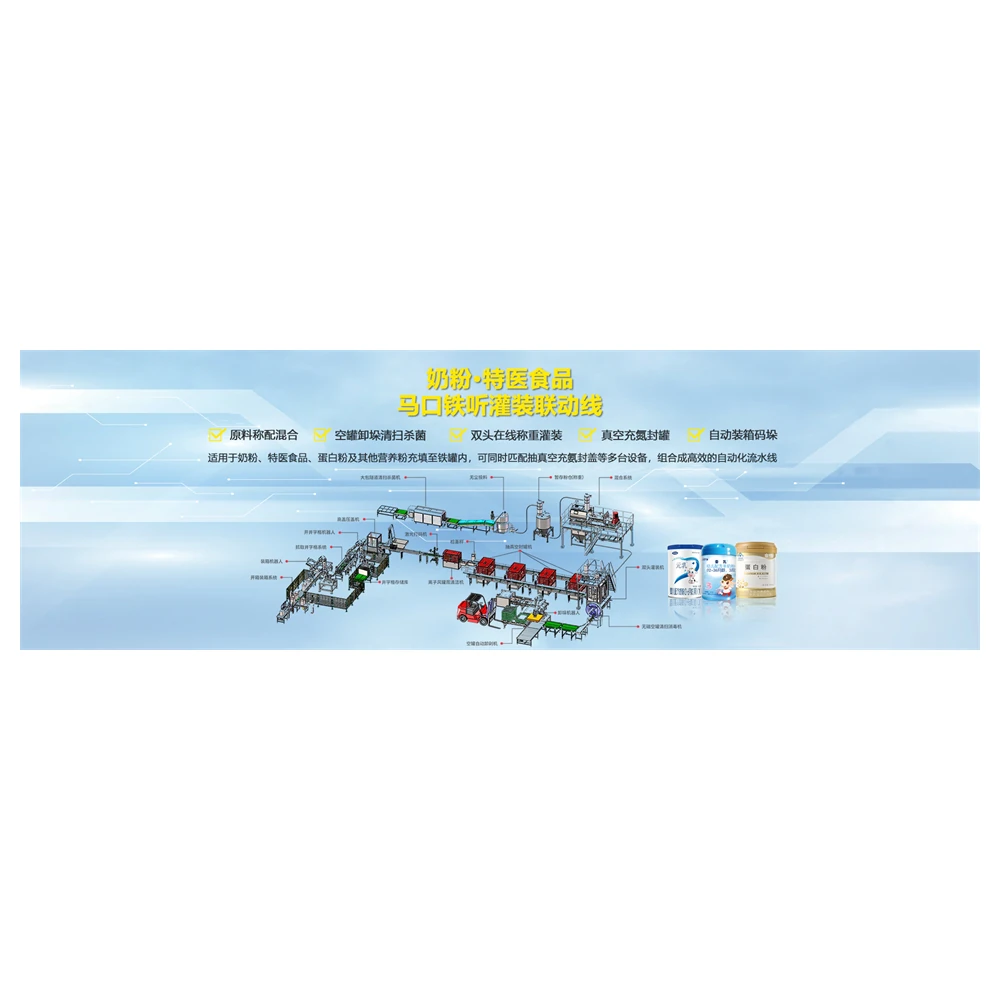
Every can travels the same route in the same order, with no manual transfer between stations.
Can stacks are broken down, cans are unscrambled, then turned, degaussed, blown clean and sterilised empty before filling.
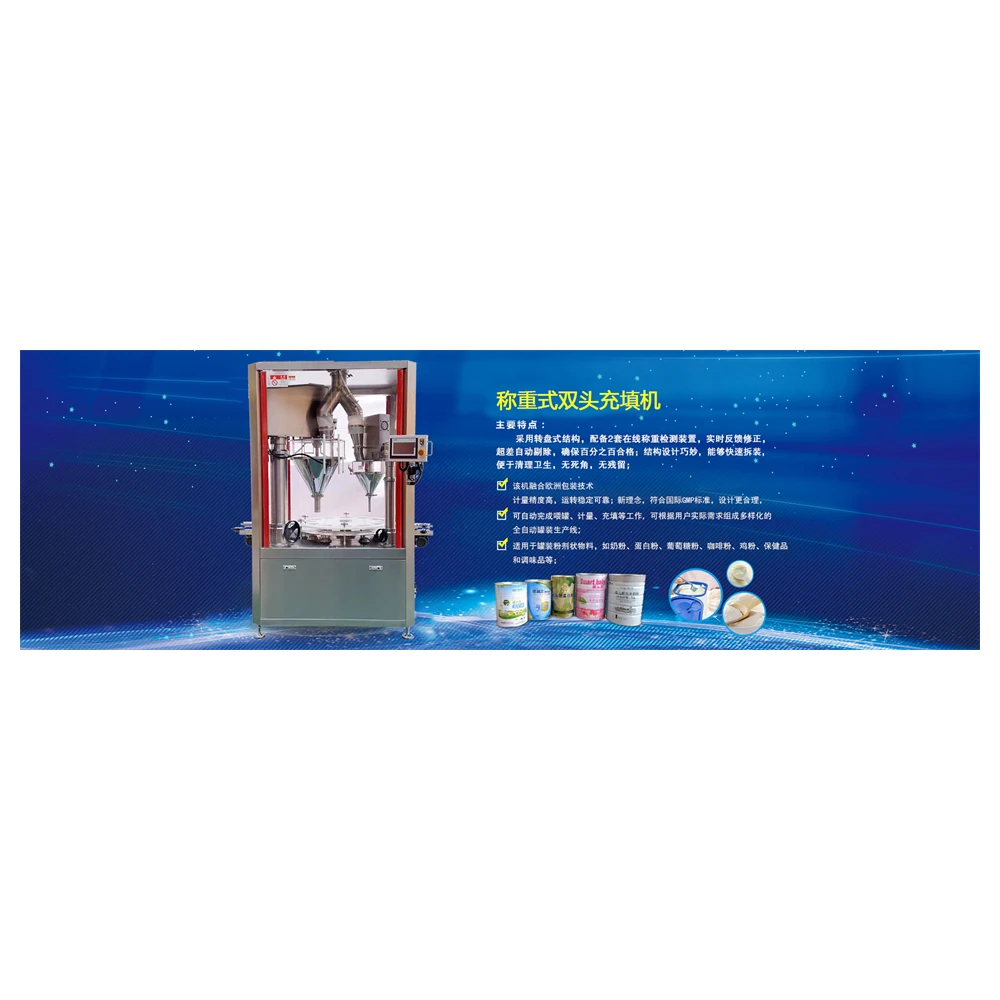
Powder is vacuum-fed to the filler and a spoon is placed in the empty can; the dual-head weigher fills to the target weight.
Cans are separated into lanes and the seamer evacuates the headspace, admits nitrogen and closes the lid.
The can is cleaned in an ion-air ring, coded on the base, turned upright and fitted with its plastic lid before packing.
The line is designed so that cleaning between products is a routine, not a project.
Every machine in the line is built in stainless steel unless otherwise specified, selected to food hygiene design standards.
The interior of every product-contact vessel is polished, which reduces powder adhesion and makes wash-down faster.
Parts that are cleaned regularly use quick-release connections, so a shift change or product change does not need tools.
The whole process follows GMP canning practice with a high degree of automation, leaving operators on supervision and packing.
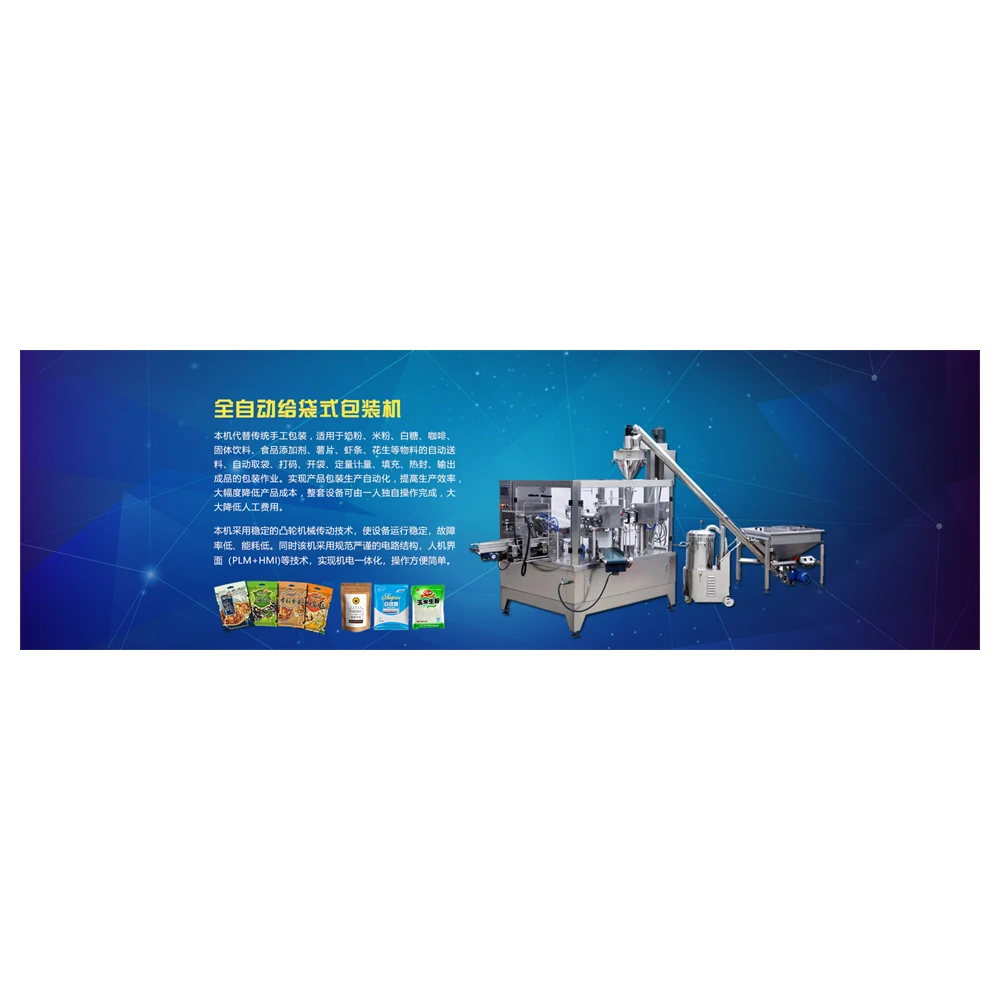
The line suits free-flowing powders that benefit from a sealed, gas-flushed metal pack.
Infant and adult milk powders in retail tins, where residual oxygen has a direct effect on shelf life and flavour.
Protein powder and nutritional blends in large tins, filled to within 1 to 1.5 g on the lower weights.
Clinical nutrition powders that need a controlled atmosphere and a verified fill weight inside a sealed metal can.
The datasheet sets out the complete station list. It is reproduced here in grouped form so the scope of the line is clear before it is specified.
Bag dismantling table, sterilising conveyor, large-pack sterilising machine, inclined conveyor, powder tipping platform, vibrating screen, transition hopper, vacuum feeder, mixer, platform, storage hopper, second vacuum feeder, screw conveyor and metal detector.
Automatic depalletiser, can unscrambler, conveyors, can turning and degaussing and blowing machine, empty can steriliser and spoon casting machine, all ahead of the filling stage.
Automatic can filling machine, conveyors, can separation system and vacuum nitrogen seaming machine, followed by the can cleaning machine that clears the seam area.
Laser coding machine, can turning machine, plastic lid capping machine and encasement table, after which the sealed and coded can is ready for packing and dispatch.
Milk powder and similar blends are sensitive to oxygen, which drives oxidation of fats and shortens shelf life. The seamer pulls a vacuum on the headspace and backfills it with nitrogen before closing the can, leaving a residual oxygen content of 3 percent or less. The nitrogen supply has to be clean and dry: the published requirement is a purity above 99.99 percent at 0.4 MPa, with about 10 cubic metres per hour for each seaming unit.
Each dual-head vacuum nitrogen seamer runs at 12 to 14 cans per minute, which is slower than the filling station, so the seamer becomes the constraint. The published line capacity of 12 to 48 cans per minute is therefore achieved by running several seamers in parallel: with three dual-head seamers the line runs at about 36 cans per minute. Adding a fourth raises the ceiling further.
The line handles 300, 307, 401 and 502 cans with a height of 60 to 200 mm, for fill weights under 1,500 g in standard seaming. Changing the moulds on the filling machine and the vacuum nitrogen seamer allows a different can specification to run, so a plant packing more than one size can cover both without a second line.
The line publishes a weight-based tolerance: within plus or minus 1 g for fills between 100 and 500 g, and within plus or minus 2 g for fills of 500 g and above. Filling is done by a dual-head weigher, so the dose is set by the measured weight rather than by a fixed volume, which is what keeps the accuracy stable as powder density changes.
The published configuration runs to about thirty-four stations, from the bag dismantling table, sterilising conveyor and powder handling group through the vacuum feeder, mixer, metal detector and storage hopper, then into can depalletising, unscrambling, turning and degaussing, empty can sterilising, spoon feeding, dual-head filling, can separation, vacuum nitrogen seaming, can cleaning, laser coding, can turning and plastic lid pressing to the cartoning table.
All machines in the line are built in stainless steel with food-hygiene design, and the interior of every product-contact vessel is polished. Structures that are cleaned regularly use quick-release connections, so a shift change or product change is handled with a strip-down and wash rather than a long shutdown. The line follows GMP practice for canning.
A three-phase 380V 50 Hz supply with a line power of 48.33 kW excluding ancillary plant, compressed air at 1.45 m³/min and 6 kg/cm², and nitrogen at above 99.99 percent purity and 0.4 MPa, consuming about 30 m³/h when three seaming units run. Floor drainage and wash-down facilities are also needed for the cleaning regime.
A canning line is a project rather than a machine, so scope and layout are agreed before production starts.
Complete lines are quoted at roughly 45 to 75 working days depending on scope, shipped in sections for site assembly.
12 months of parts warranty across the line, with free replacement components and lifetime technical support.
Layout drawings, utility schedules, English manuals and remote support for assembly, commissioning and residual oxygen verification.
Filler and seamer moulds for additional can sizes are quoted with the project. Volume terms are agreed per order.
If the pack is plastic rather than metal, or the product is a liquid, these lines cover the other routes.
The same powder duty in PET and plastic cans, with inline weigh filling and foil sealing instead of seaming.
View model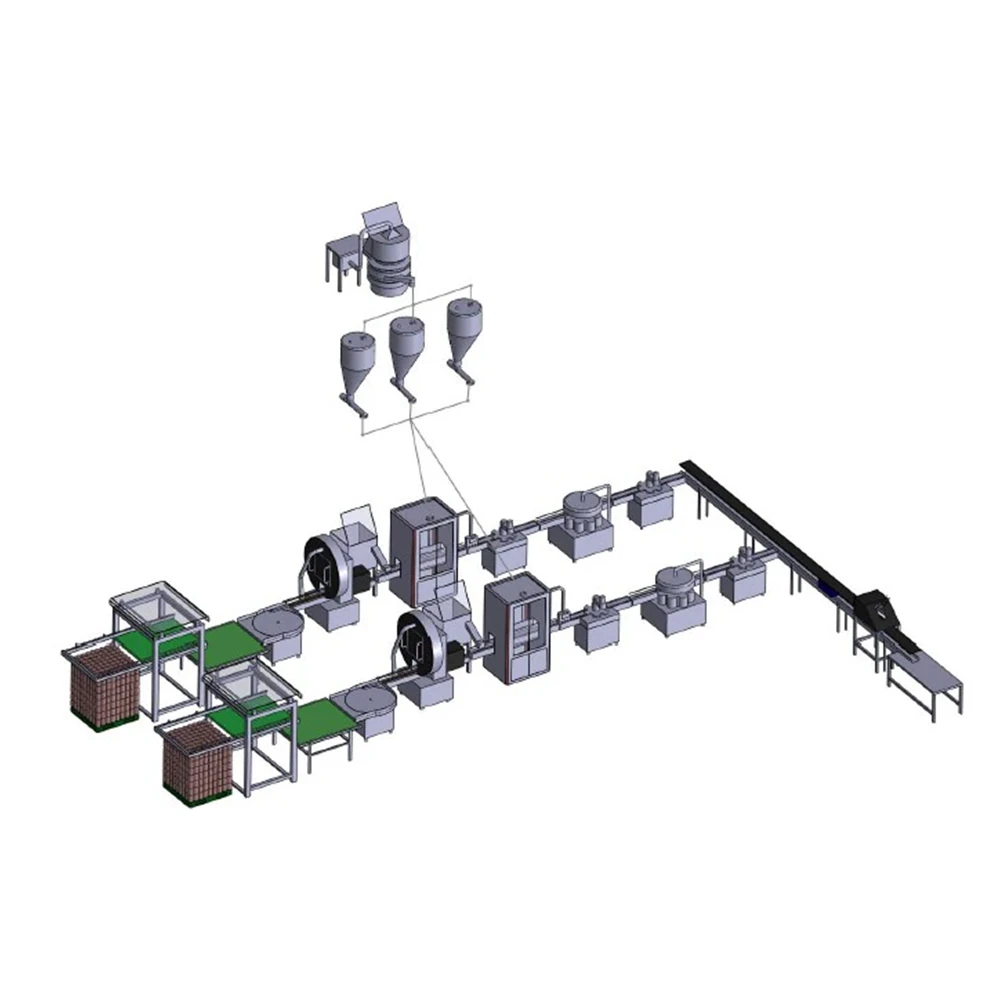
A GMP can line with depalletising, empty can sterilising, spoon feeding and soft lid pressing at 20 to 45 cans per minute.
View model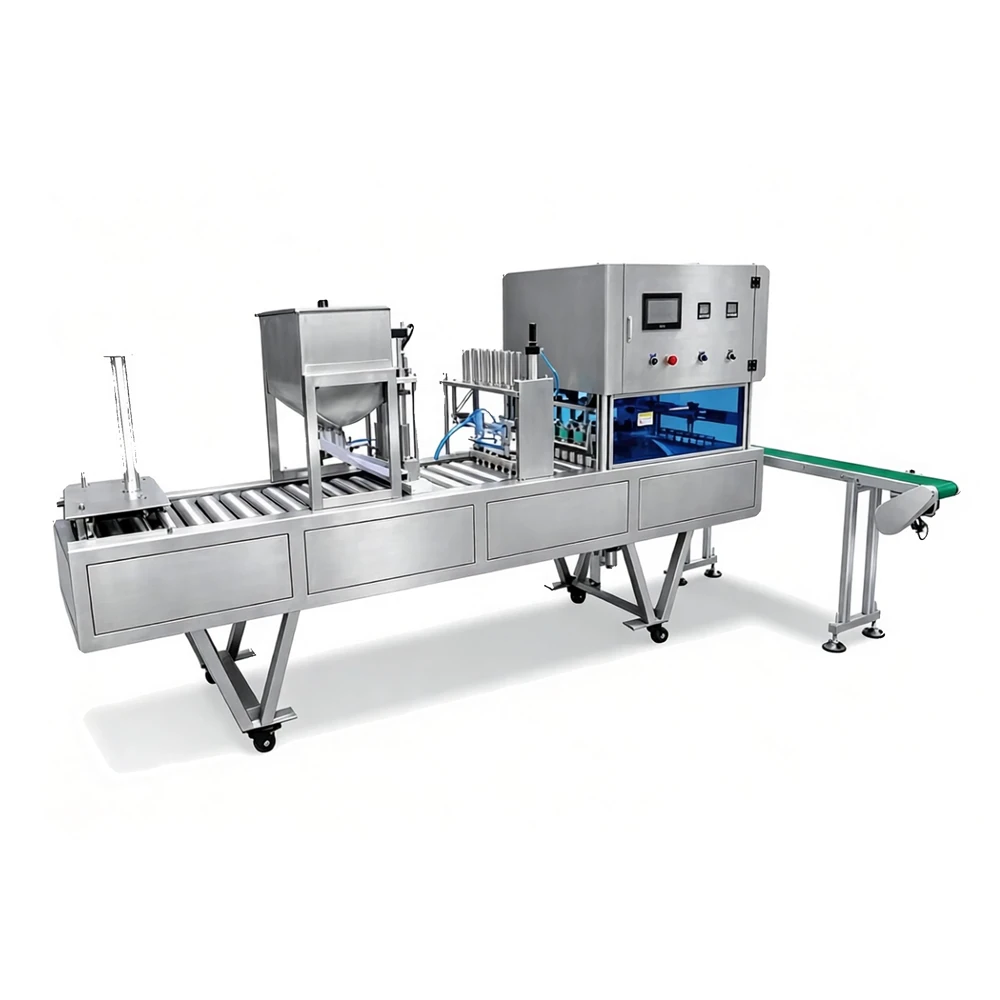
An inline alternative for cups and pouches, with six filling heads, film heat sealing and date coding.
View model