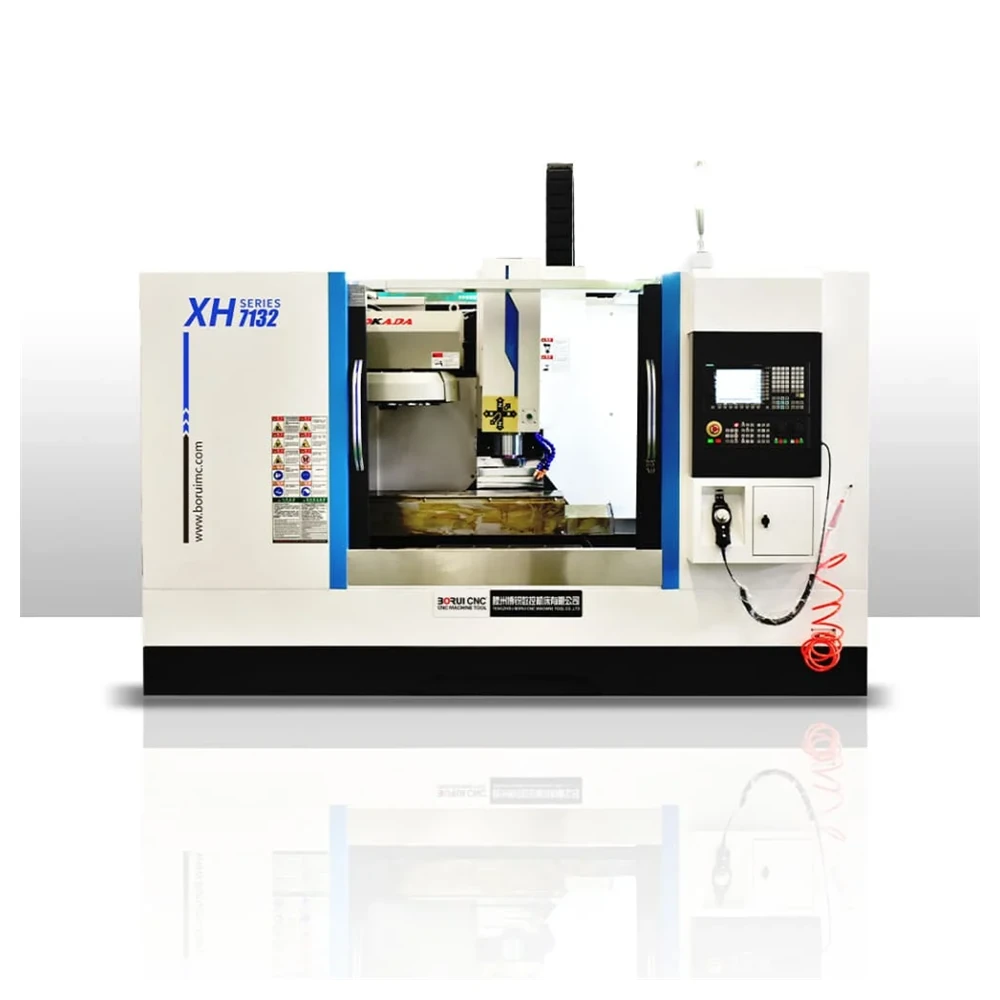
Vertical CNC Milling Machine XH7132
A shorter 1000 mm table on the same bridge-column mill platform, with box ways and a 10/12-tool option.
View modelElongated parts are the reason this machine exists. A 1250 mm table and 860 mm of X travel take long plates, rails and bases in a single setup, while a servo-driven Taiwan spindle, hardened box ways and pre-loaded ball screws keep the reversal points clean. Standard control functions cover line and arc interpolation, multi-point drilling and tapping, and a 16-station umbrella magazine can be added for multi-tool work.
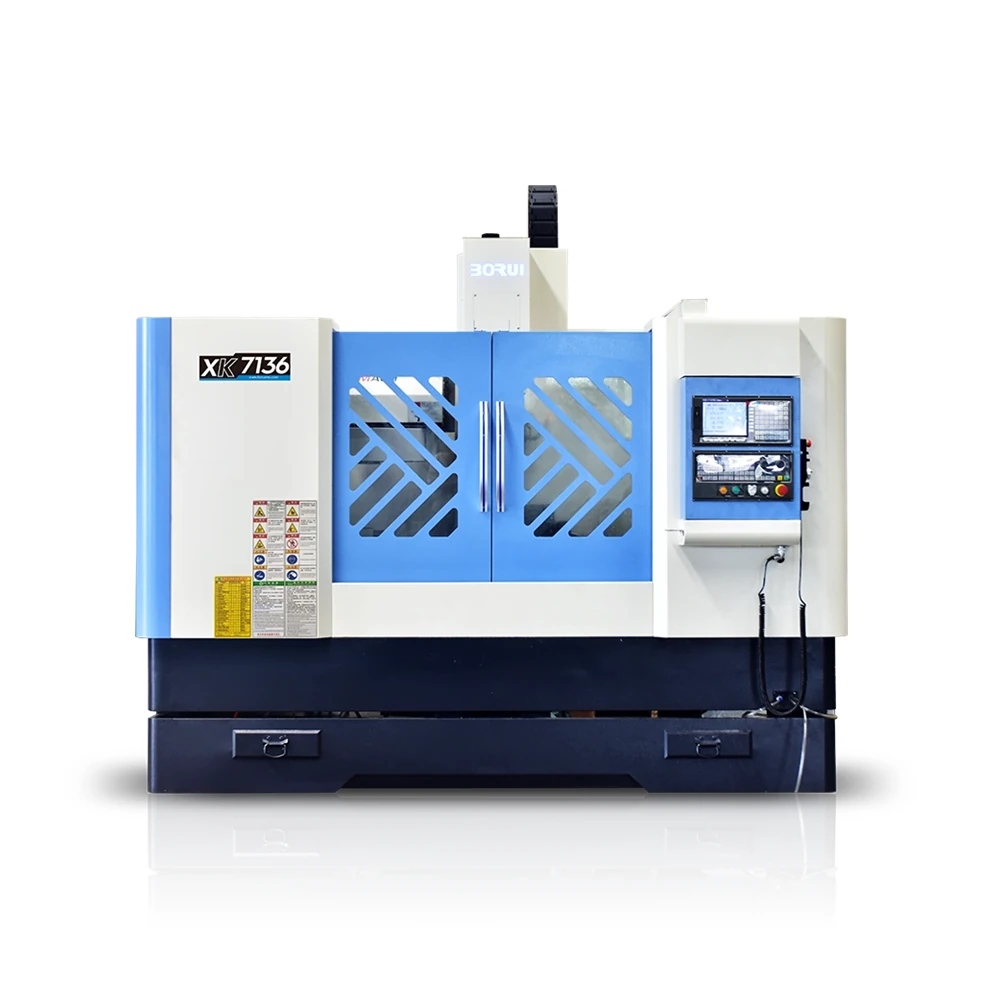
Not every shop needs a bigger machine — many need a longer one. Three features make this mill the natural choice for long, narrow parts.
A 1250 mm table with 860 mm of X travel lets long plates and rails be machined end to end without repositioning and re-datuming.
Pre-loaded ball screws remove the play that would otherwise show up as a lost move whenever an axis changes direction.
A servo spindle motor and drive with a Taiwan spindle unit running to 10,000 rpm, sized for both milling and drilling duty.
Table length, travel and load together decide the largest part the machine will actually take, and how much of it can be reached in one setup.
| Part category | Typical size | Setup notes |
|---|---|---|
| Short, thick parts | Up to 860 × 450 mm | Fully covered by X and Y travel in one setup |
| Long plates and rails | Up to 1250 mm long | Full length clamped on the table; long features reached without moving the part |
| Tall parts | Up to 600 mm above the table | Spindle nose clearance runs from 100 to 600 mm |
| Rotary work | Up to 460 kg with the rotary axis | Fourth axis indexes faces or turns cylindrical features |
| Heavy parts | Up to 460 kg on the table | Machined on hardened box ways for rigidity in the cut |
The capacities above are derived from the datasheet travel, table and load figures to help you size a part; they describe reach and support, not a guaranteed machining result. Send us the part and we will confirm the setup.
Transcribed from the machine parameter table.
| Parameter | Value |
|---|---|
| Table size | 1250 × 360 mm |
| Table load | 460 kg |
| T-slots | 3 − 18 × 80 mm |
| X axis travel | 860 mm |
| Y axis travel | 450 mm |
| Z axis travel | 550 mm |
| Spindle nose to table | 100–600 mm |
| Spindle axis to column | 465 mm |
| Spindle speed | 10,000 rpm maximum (8000 rpm option) |
| Spindle taper | BT40 |
| Main motor power | 5.5 kW servo |
| Guideway type | Hardened box ways |
| Rapid traverse X / Y / Z | 20 / 20 / 20 m/min |
| Cutting feed rate | 1–6000 mm/min |
| Positioning accuracy | ±0.008 mm |
| Repeatability | ±0.005 mm |
| Max tool weight | 18 kg |
| Tool changer | Optional umbrella 16 stations |
| Machine dimensions | 2380 × 1900 × 2350 mm |
| Machine weight | 3000 kg |
Two points from the datasheet are noted rather than reproduced literally. The cutting feed row prints the unit as m/min against a value of 1–6000, which is read as a millimetre per minute range. A second dimension figure appears in the datasheet as 3000 × 2300 × 25500 mm; the dimensions above follow the machine outline used throughout the same table.
Four steps describe what happens at every direction change, and why it matters for tolerance.
The ball screw is assembled with pre-load, so there is no free play between screw and nut to lose a move.
When the axis reverses, the commanded position is reached immediately, with no dead band at the turn.
Bores, pockets and shoulders come out round and to size instead of showing a witness mark at the reversal point.
Every part in the batch reverses at the same place, so the tolerance holds across the run, not just on the first part.
Finish milling of straight and curved profiles at any angle is covered by the standard control functions.
Hole patterns and tapped threads are programmed as cycles, so the umbrella magazine can run them in sequence.
A fourth axis can be fitted so cylindrical and multi-face work is machined without a second setup.
The jobs that reward a 1250 mm table and a backlash-free axis.
Base plates, rails and guide bars machined along their full length without repositioning.
Plates with dense hole and thread patterns produced with program cycles rather than manual indexing.
Long fixture bodies and tooling plates milled and drilled from one datum on one table.
Shafts, spacers and brackets for machine builders, run in small batches with the umbrella tool set.
Long mould and die plates where reversal accuracy decides whether bores stay on position.
Job-shop work where the part is long rather than heavy, and the table length is the deciding factor.
What can be specified, and what arrives with the machine.
Fanuc, Siemens, Mitsubishi or GSK, selected to suit your operators and your programming setup.
Taiwan spindle unit at 8000 or 10,000 rpm, with a servo spindle motor and drive as standard fitment.
24-month warranty on core components, with lifetime remote engineering support for the machine.
Levelling and commissioning support on site or over video, with operator training and English manuals.
A shorter table, a fully enclosed centre, or a large-bed gantry for parts beyond a column machine.
A shorter 1000 mm table on the same bridge-column mill platform, with box ways and a 10/12-tool option.
View model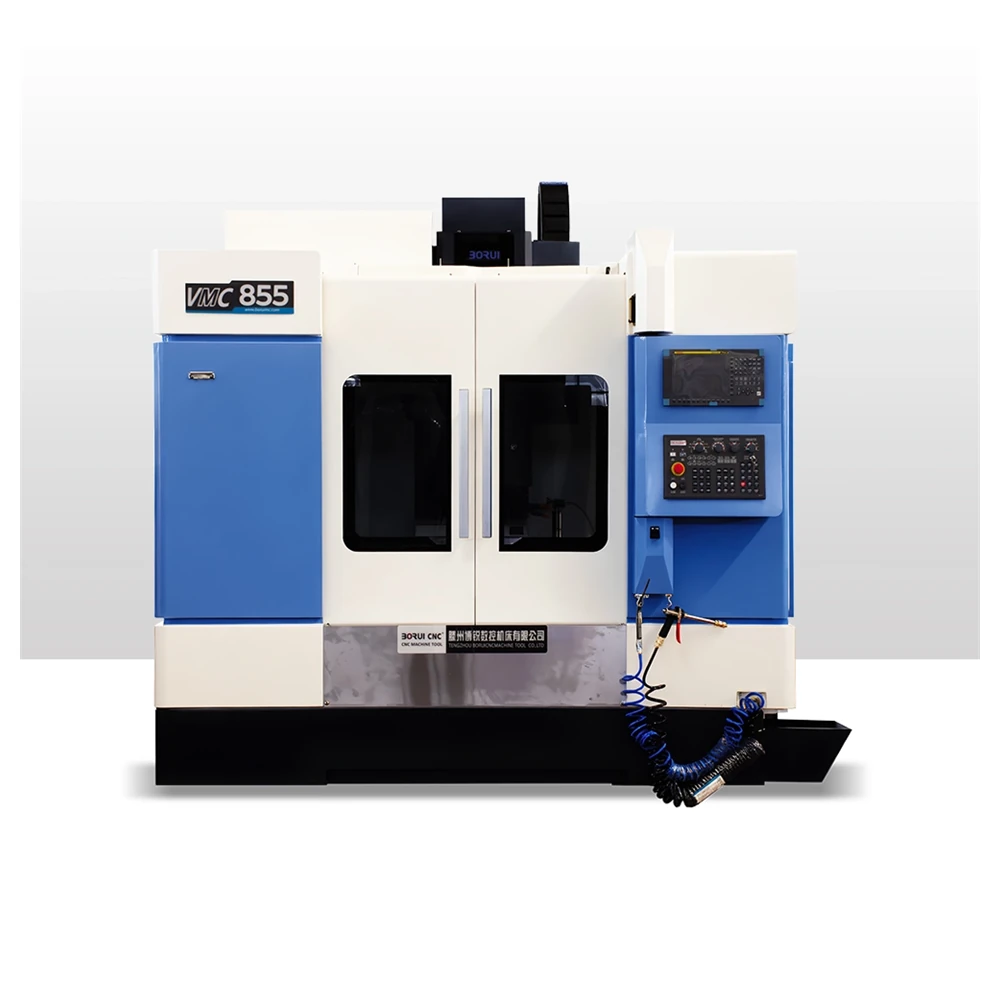
A wider 1000×500 mm table, roller linear guideways and a fast 24-station disc magazine.
View model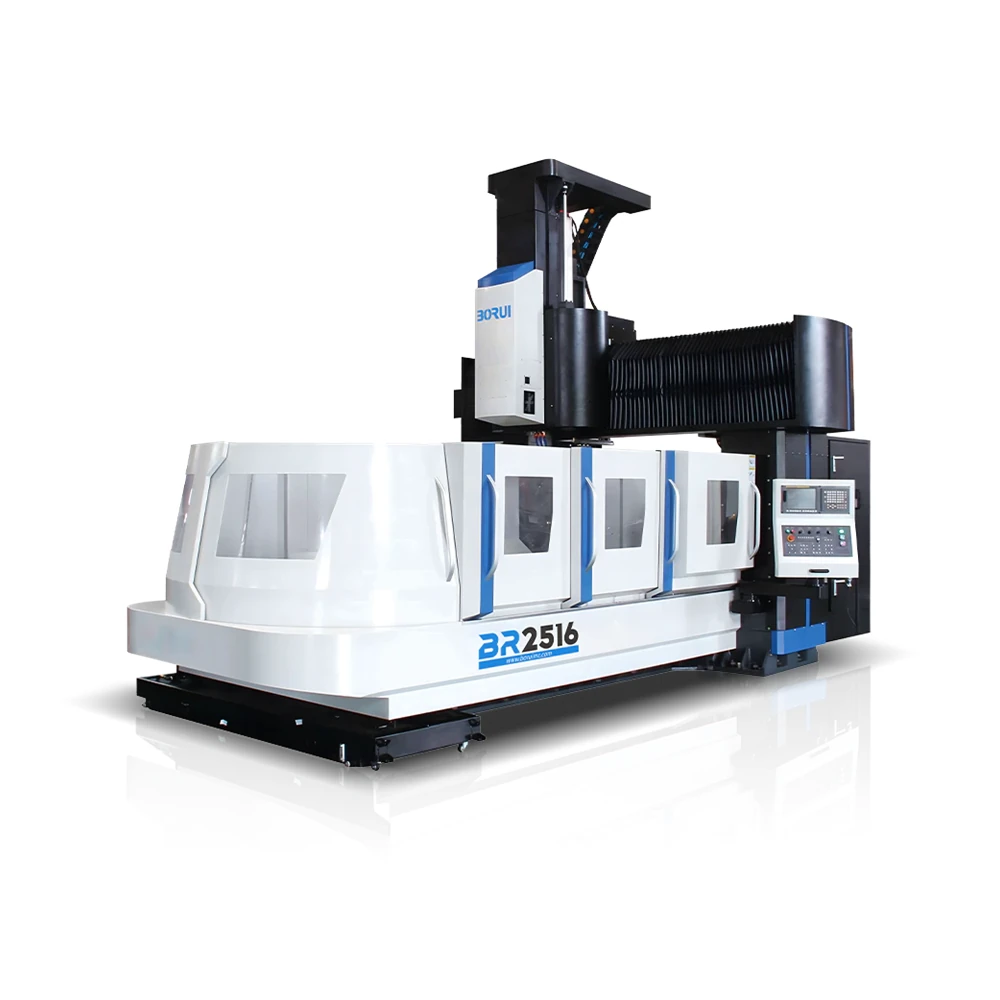
A 2500 mm gantry bed rated to 5 t when the part becomes too heavy for a column machine.
View modelThe difference is table length and travel. The XK7136 carries a 1250 mm table with 860 mm of X travel, against 1000 mm and 630 mm on the XH7132, so it accepts longer parts without repositioning. The spindle is a servo-driven Taiwan unit running up to 10,000 rpm, and a 16-station umbrella magazine is available as an option.
When an axis reverses direction, any free play in the screw and nut shows up as a lost move, which is what causes witness marks and out-of-tolerance bores. The XK7136 uses pre-loaded ball screws that eliminate that play, so the axis returns to exactly where the control commanded and reversal points stay clean.
Yes. The CNC control supports line and arc interpolation at any angle for contour milling, together with multi-point drilling and tapping cycles. With the optional 16-station umbrella magazine, a part sequence can run from spot drilling through tapping and on to profile milling without an operator changing tools by hand.
Positioning accuracy is plus or minus 0.008 mm with plus or minus 0.005 mm repeatability on a 300 kg table with a 460 kg load rating, and the rapid traverse is 20 m/min on all three axes. The datasheet prints the cutting feed range as 1 to 6000 with the unit shown as m/min, which is read here as a millimetre per minute range.
The bed is cast using an advanced process and then aged to relieve internal stress, meeting the applicable national standard for the casting. Aged iron holds its shape, so the machine's geometry stays stable over long service instead of moving as the casting relaxes in the first years of use.
Standard builds ship in 15 to 30 working days after deposit, with customised spindle or control configurations taking 30 to 45 working days. English manuals, parameter files, live video commissioning and operator training are included, along with lifetime remote technical support. Volume terms are agreed per order.